Table of Contents
Table of Contents
- Do you need a license to start a landscaping business in North Dakota?
- What are the types of landscaping business licenses & permits in North Dakota?
- Step-by-step process to get a landscaping business license in North Dakota
- How much does a North Dakota landscaping business license cost?
- What are the most common mistakes to avoid when getting a license?
- How Aspire helps landscaping businesses stay organized & compliant
- Over to you
- Disclaimer
Getting a North Dakota landscaping business license usually depends on the services you plan to offer, your company setup, and the local rules in each area you work.
This guide helps you understand what applies to your business and how to have a smooth licensing process:
Learn when basic lawn care needs licensing and when specialized work needs extra approvals
Compare business registration types, contractor credentials, specialty licenses, and local permits
Follow the application process from company setup to insurance coverage and final approvals
Understand the costs and fees that apply
Avoid common mistakes that can slow down your licensing process
Find practical ways to keep contracts, invoices, records, and job schedules organized once you get licensed
Use this guide to prepare yourself before submitting forms, paying fees, or accepting any work.
Do you need a license to start a landscaping business in North Dakota?
You don’t need a state-level landscaping license in North Dakota if you perform basic lawn maintenance. Mowing, edging, seasonal cleanup, and similar yard care usually fall within this category.
However, the requirements for a landscaping business license can change once you choose your company’s legal setup and service list. For instance, a limited liability company (LLC) or corporation must complete state business registration before operating. A sole proprietor that uses a separate trade name, on the other hand, needs to check whether name registration applies.
Extra credentials start to apply once the work moves beyond routine property care. Commercial pesticide application, for example, needs proper training and certification, while construction-related work sometimes falls under the state’s contractor rules.
Counties and cities also have their own rules for work, such as tree care, zoning, signage, and projects on public property. Fargo, for example, requires paid tree contractors working within the city limits to hold a local license.
The service offered, project scope, business setup, and location determine which license or permit applies.
What are the types of landscaping business licenses & permits in North Dakota?
North Dakota groups the required paperwork into business filings, construction licensing, service-specific credentials, and local approvals. The exact mix depends on your business structure, project value, and the work you perform.
General business license
This category covers entity registration and tax accounts. If you choose to be an LLC or corporation, you must register under its legal name; as a sole proprietor, you will need a trade name.
Your tax duties will also depend on the business structure and payroll setup. Relevant accounts include income tax withholding, corporate or pass-through taxes, and sales and use tax for taxable transactions.
Landscaping contractor license
If you alter the land or add permanent features, you are doing hardscaping work, which falls under construction rules. Examples include retaining walls, paved patios, and other built additions.
A contractor license applies if the value of the construction job you are doing exceeds $4,000. The rule also applies to subcontractors working on qualifying projects.
Specialized licenses
Chemical treatments follow a separate pesticide certification system. North Dakota State University Extension handles applicator training and certification for this work.
A fertilizer distributor’s license also applies if your business plans to sell or distribute fertilizer, soil amendments, or plant amendments. Each product must be registered with the state before you can offer it for sale.
If you plan on selling plants, you trigger another requirement. Landscaping work that includes selling trees, shrubs, or woody vines requires a nursery license, since the rule covers landscapers who sell nursery stock. You can apply online using a form.
Professional design work sometimes requires registration as a landscape architect. State law covers services such as grading, drainage plans, or irrigation plans and construction details when the work affects public health, safety, or welfare.
Follow these instructions to apply for a landscape architect license.
Permits and local regulations
County or city requirements depend on the service and project address. Paid tree care inside some municipal boundaries requires a local license, plus documents such as insurance certificates, a performance bond, and related state credentials.
Tax rates can also change across city and county boundaries. Check the project location before quoting taxable materials or services.
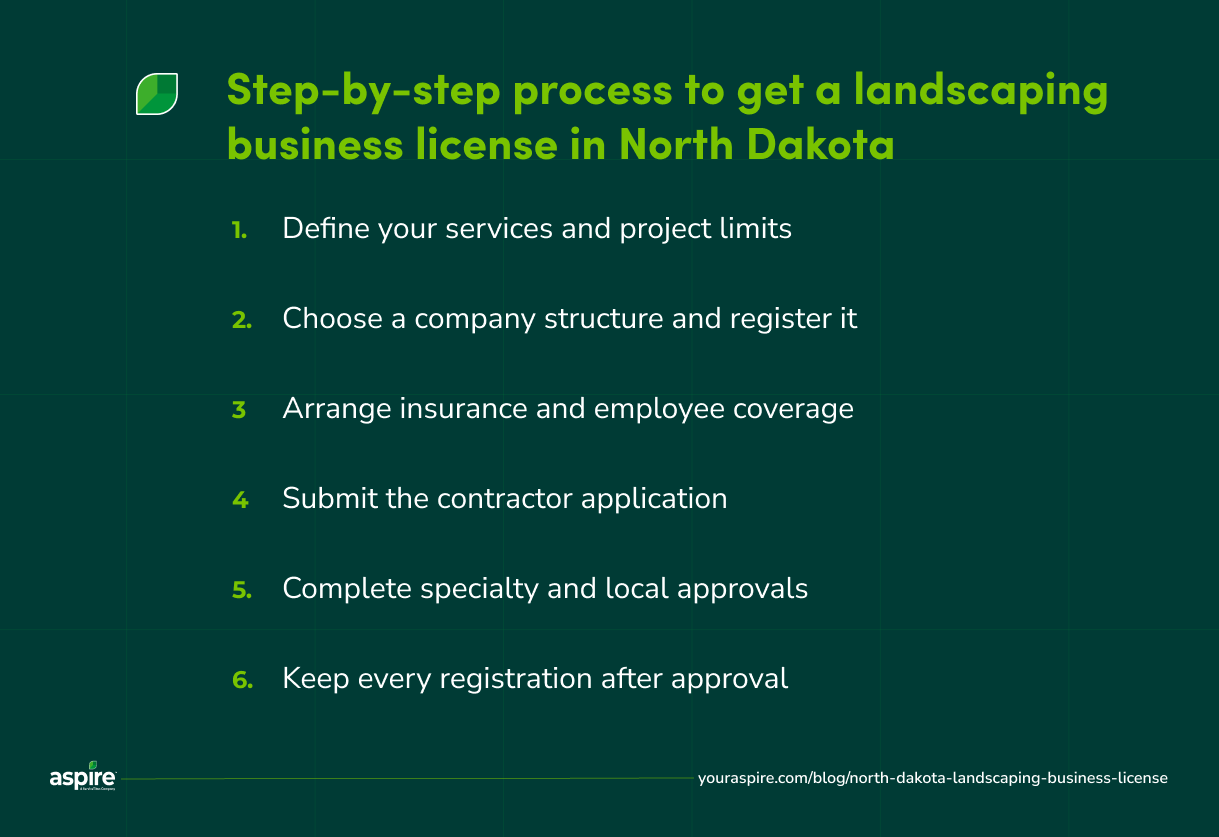
Step-by-step process to get a landscaping business license in North Dakota
Getting a landscaping business license in North Dakota starts with defining the work, then completing the related filings.
Follow the order below so that each approval supplies the documents needed for the next application.
1. Define your services and project limits
List the exact work you want your crews to perform and the highest contract value you plan to accept. Routine landscaping services are not the same as permanent construction, pesticide treatments, or plant sales.
Also, remember that any construction job over $4,000 requires a contractor credential. Review each estimate before signing, as all permanent work is classified as landscaping work under that rule.
If you plan to do eco-friendly landscaping, you also need a service review if the job includes chemical treatments or regulated construction.
2. Choose a company structure and register it
Based on your preferences regarding ownership, taxes, and liability, choose a business structure that fits your needs:
Sole proprietorship: The simplest and most affordable business structure, making it a popular choice for solo entrepreneurs. However, it doesn’t separate your personal and business assets, so you’re personally responsible for the business’s debts and liabilities.
LLC: A limited liability company is one of the most common options for small businesses because it protects your personal assets from business liabilities while offering pass-through taxation.
Corporation: A separate legal entity that provides strong liability protection and can make it easier to raise capital by issuing stock. In exchange, it requires more complex formation, ongoing compliance, and additional tax and reporting responsibilities.
After you’ve chosen your structure, follow these steps:
Search the state business portal before paying for signs, uniforms, or a website under the chosen name.
LLCs and corporations must complete a state filing with the North Dakota Secretary of State, and sole proprietors register a trade name through the same portal. Complete this stage before researching business grants, since funding applications rely on accurate company records.
After registration, open tax accounts for payroll and taxable transactions.
Keep the confirmation documents with the company’s formation records.
3. Arrange insurance and employee coverage
Request a general liability insurance policy under the exact legal name used on the business filing.
Contractor applicants must submit a certificate naming the North Dakota Secretary of State as the certificate holder.
Before hiring the first employee, apply for workers’ compensation insurance through Workforce Safety and Insurance (WSI) and register with the North Dakota Department of Labor.
A contractor application also requires WSI proof that matches the company’s employment status.
4. Submit the contractor application
When planned construction work crosses the state threshold, use the FirstStop portal to apply for specific licenses.
Choose the license class according to the largest contract your business plans to take.
The application requires a signed statement about your experience and qualifications.
Upload the liability certificate and the required WSI verification using the same business name.
Inconsistencies in your business name across official records can delay processing, so use the same legal business name on all forms and applications.
5. Complete specialty and local approvals
Apply for a pesticide applicator license before offering paid chemical applications.
North Dakota assigns commercial applicator training and certification to its university extension. Apply using this form and pass the exam after studying these materials. The North Dakota Department of Agriculture oversees legal pesticide use.
A good rule of thumb is to contact the city or county office in every area where you want to offer your services.
Ask which approvals apply to grading, work near public property, water use, or other location-specific activities.
Secure each permit before scheduling a project start date.
6. Keep every registration after approval
As soon as each filing becomes active, create a renewal calendar. State contractor licenses are renewed by March 1 each year, while entity report dates depend on the business structure.
Most registered entities file an annual report to remain in good standing. Trade names renew every five years. Update addresses and insurance records as changes occur, then keep filing receipts with job and payroll documents.
How much does a North Dakota landscaping business license cost?
Licensing costs for a new landscaping business in North Dakota range from $100 to $450 for construction work, with separate charges for company filings and service-specific approvals:
A Class D contractor license costs $100 (for jobs up to $100,000), Class C $225 (for jobs up to $300,000), Class B $300 (for jobs up to $500,000), and Class A $450 (for jobs over $500,000). Annual renewal fees range from $30 to $90.
Registering a trade name costs $25, while LLC and corporation filings add their own administrative charges.
The state contractor application includes no exam or bond fee.
Commercial pesticide certification costs $100 for the first category and $25 for each added category.
Insurance premiums vary based on payroll, work type, claims history, and coverage limits. Some licenses also require a surety bond.
Businesses planning to expand into nearby states also need room in their budget for another set of filings. The Montana landscaping business license process, for example, includes registration and administrative costs.
What are the most common mistakes to avoid when getting a license?
The most common licensing mistakes come from filing too early or letting business records fall out of sync. A quick review before submission saves time and prevents approval gaps.
1. Applying before your service list is final
A license choice works best when it reflects the work sold to customers. A business plan that lists routine work while crews quote grading, permanent installation, or chemical treatments with herbicides creates a mismatch.
Write down every paid service and separate routine property care from regulated work
Review the largest contracts before selecting the license type
Check rules at each job address before expanding into new areas, since municipalities such as Bismarck set their own permit conditions
Projects that require plans from a licensed landscape architect fall under a separate professional license and have different rules
Confirm whether the responsible office is a state agency, licensing board, or local department
Always check with the local office before accepting paid work to avoid fines or delays.
2. Submitting records with conflicting details
Small differences between documents can slow down an application. The legal name on the state filing, license request, and insurance certificate should match exactly.
Compare spelling, punctuation, addresses, and company suffixes before uploading each file
Ask the insurer to copy the registered business name and certificate-holder details from the application instructions
Request the correct employment status verification from Workforce Safety & Insurance
Seek legal advice when ownership changes, trade names, or out-of-state registration create uncertainty
Keep separate records for every state where you offer your services. Minnesota applications may need documents that differ from North Dakota filings, so reusing the same papers can create errors.
New York also follows its state and local rules. Store those records in a separate folder rather than mixing them with North Dakota forms.
Matching names, addresses, policy details, and workers’ compensation records before filing reduces correction requests and processing delays.
3. Treating approvals as a one-time task
Licenses and all company records need regular upkeep. Rules also vary between jurisdictions, so a permit accepted in one city may not cover the same work elsewhere.
To maintain proper landscaping business procedures, do the following:
Add every renewal date to one shared calendar
Review the license class whenever contract values rise
Record certification dates for crew members who handle pesticide work that affects natural resources
Check local requirements before taking jobs in a new city or county
Landscape industry statistics may reveal new revenue opportunities, but before expanding your services or adding crews, review your licensing requirements to ensure you’re compliant.
A monthly document review keeps expired credentials, missing filing dates, and location-specific rules from disrupting upcoming work.
How Aspire helps landscaping businesses stay organized & compliant
Aspire’s landscape business software brings sales, billing, reporting, and field activity into one business management platform. You gain a consistent record of each job without piecing together emails, spreadsheets, and paper files.
Contract & proposal management
Reusable templates help your estimators apply the same service description, pricing rules, and contract details to each bid. Clients review proposals and add digital signatures by email, through the customer portal, or on a tablet.
Aspire also links order changes to the original estimates. Each addition or removal stays connected to the job history, which makes changes easier to trace.
Invoicing & payment processing
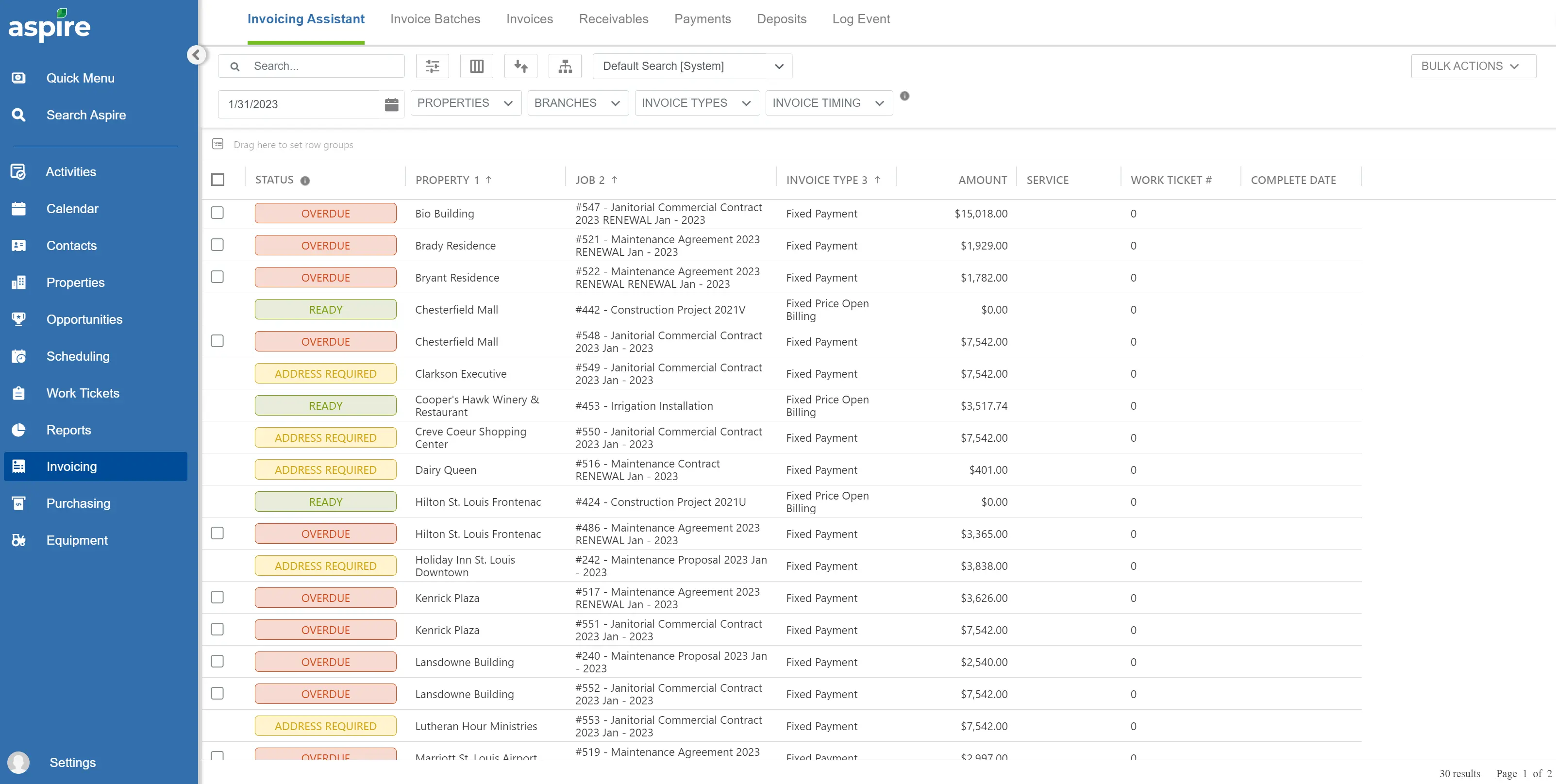
The invoicing feature shows work that is ready to bill, overdue balances, and invoices with missing information. Your office teams can filter records by property, branch, invoice type, or billing date. Teams can then send invoices one by one or in a full batch.
Billing options include immediate invoicing and progress billing. Clients receive electronic invoices through the portal, while office teams record payments, credits, statements, and invoice notes.
Business reporting & documentation
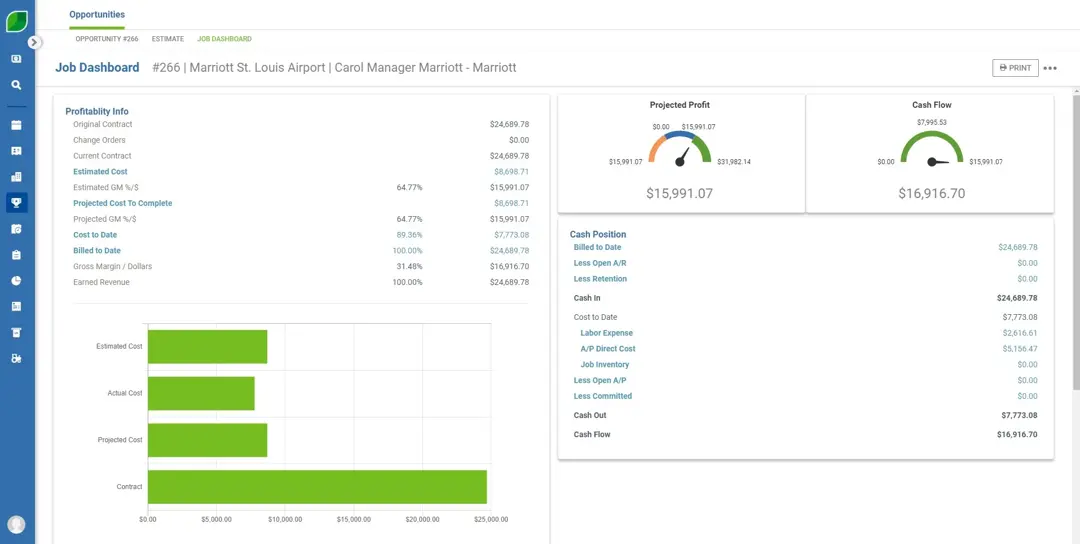
Aspire’s reporting feature turns job activity into records you can use during internal reviews. Profit-and-loss reports filter results by branch, property, service type, division, or crew leader.
Job dashboards also connect labor, purchases, work tickets, and material costs. Your teams spend less time rebuilding records when they need to examine completed work or prepare company documents for licensing renewals or audits.
Scheduling & job management
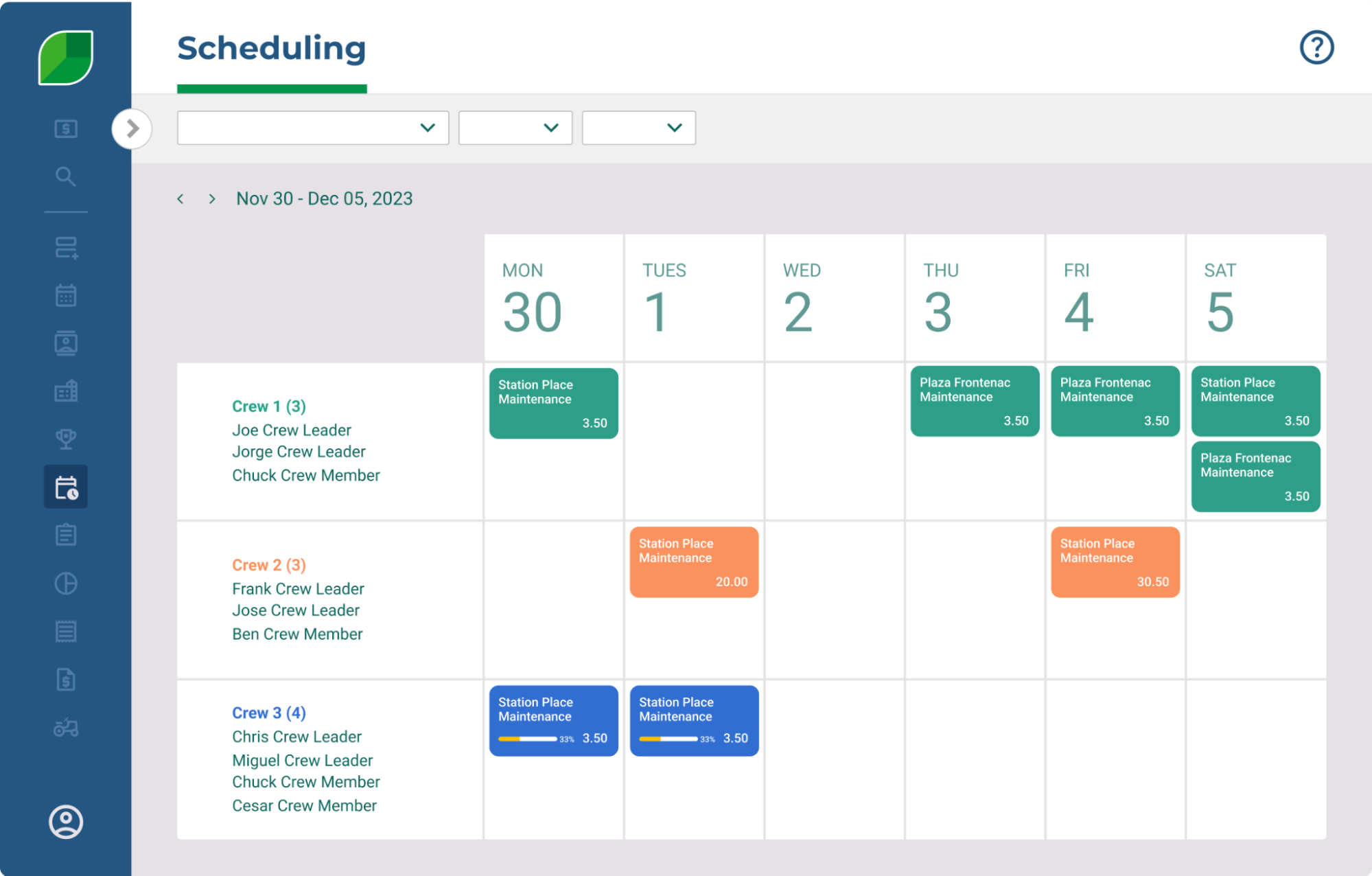
Signed contracts turn into work tickets for the schedule board. Dispatchers move visits around delays, divide work among crews, and set recurring jobs without recreating the job details.
Schedule changes appear in Crew Mobile for field staff, and each ticket also records actual hours, materials, labor expenses, equipment, and subcontractor costs. That keeps office records tied to the work completed on-site.
Over to you
Getting a North Dakota landscaping business license gives your business permission to take on the work you have planned. Keeping contracts, billing records, job details, and renewal dates in order helps protect your progress as the business grows.
Aspire helps by giving landscaping businesses one place to manage office and field work, so crews and managers work from the same information.
Ready to spend less time chasing paperwork and more time running a profitable business? Book a free demo with Aspire today.
Disclaimer
This article is for informational purposes only and should not be considered legal or financial advice. While we used official sources, you should always verify requirements on North Dakota government websites.










 866-727-7473
 Schedule Demo
 390 S Woods Mill Rd #300 Chesterfield, MO 63017


