

Table of Contents
Table of Contents
- Do you need a license to start a landscaping business in Vermont?
- What types of landscaping business licenses & permits does Vermont require?
- Step-by-step process to get a landscaping business license in Vermont
- How much does a Vermont landscaping business license cost?
- What are the most common mistakes to avoid when getting a license?
- How Aspire helps landscaping businesses stay organized & compliant
- Over to you
- Disclaimer
Starting a landscaping business in Vermont can quickly become confusing.
One service needs state approval. Another doesn’t. Before long, it’s hard to tell which licenses, permits, and registrations apply to your business.
This guide clarifies everything you need before taking on your first job in the Green Mountain State.
Do you need a license to start a landscaping business in Vermont?
No, you don’t need a statewide license to start a landscaping business in Vermont.
However, that doesn’t mean you’re ready to begin working right away.
Every landscaping business still needs to meet certain legal requirements before it can start operating.
The exact requirements depend on the services you plan to offer. Basic lawn care and landscape maintenance follow one set of rules, while specialized services such as pesticide application require additional state approval.
What types of landscaping business licenses & permits does Vermont require?
Vermont requires only a handful of landscaping licenses and permits, and each applies to a specific type of work.
Commercial Pesticide Applicator Certification
If you want to offer weed control, insect control, or other pesticide treatment services, you need to register as a commercial pesticide company.
At the same time, at least one crew member must hold a commercial pesticide applicator license.
Without this document, you cannot apply Class A, B, or C pesticides on a customer’s property.
Nursery license
A nursery license only applies if you start selling or installing nursery stock. This includes young trees, shrubs, vines, and other plants grown for sale or landscaping.
Businesses selling $1,000 or less of nursery stock each year don’t need a license.
Vermont uses this program to limit the spread of harmful insects, plant diseases, and invasive weeds.
Landscape architect license
A landscape architect license qualifies you to develop site plans for parks, commercial properties, campuses, streetscapes, and other outdoor spaces.
These plans include grading, drainage, accessibility, stormwater management, and other elements that affect public health, safety, and welfare.
However, general landscaping follows different rules. Your business can install patios and irrigation systems, plant trees, and handle seasonal cleanups without a landscape architect license.
Local permits
Some projects need approval before the first shovel hits the ground.
Local zoning and land use permits depend on the job site’s location and the work involved.
Projects that change grading, drainage, or land use typically require these approvals.
Check applicable regulations with the local planning or zoning office to save time and prevent any project delays.
Company-expansion requirements
If you intend to grow your landscaping business and expand into other trades or states, rules change.
Vermont doesn’t require a general contractor license, but residential contractors with projects exceeding $10K must register with the Vermont Office of Professional Regulation.
The Vermont Department of Public Safety’s Division of Fire Safety also strictly regulates some technical professions, such as electricians. For instance, you cannot perform trade-specific work without a plumbing or an electrical contractor license.
Then, once you’re ready to cross state lines, you must adhere to new landscaping business license requirements.
You’ll also be glad to know that Vermont's neighboring states, including Massachusetts, New Hampshire, and New York, don’t require a landscaping business license either.
Step-by-step process to get a landscaping business license in Vermont
While Vermont doesn’t ask for a landscaping contractor license, you still need to complete a few steps to legally operate a landscaping business.
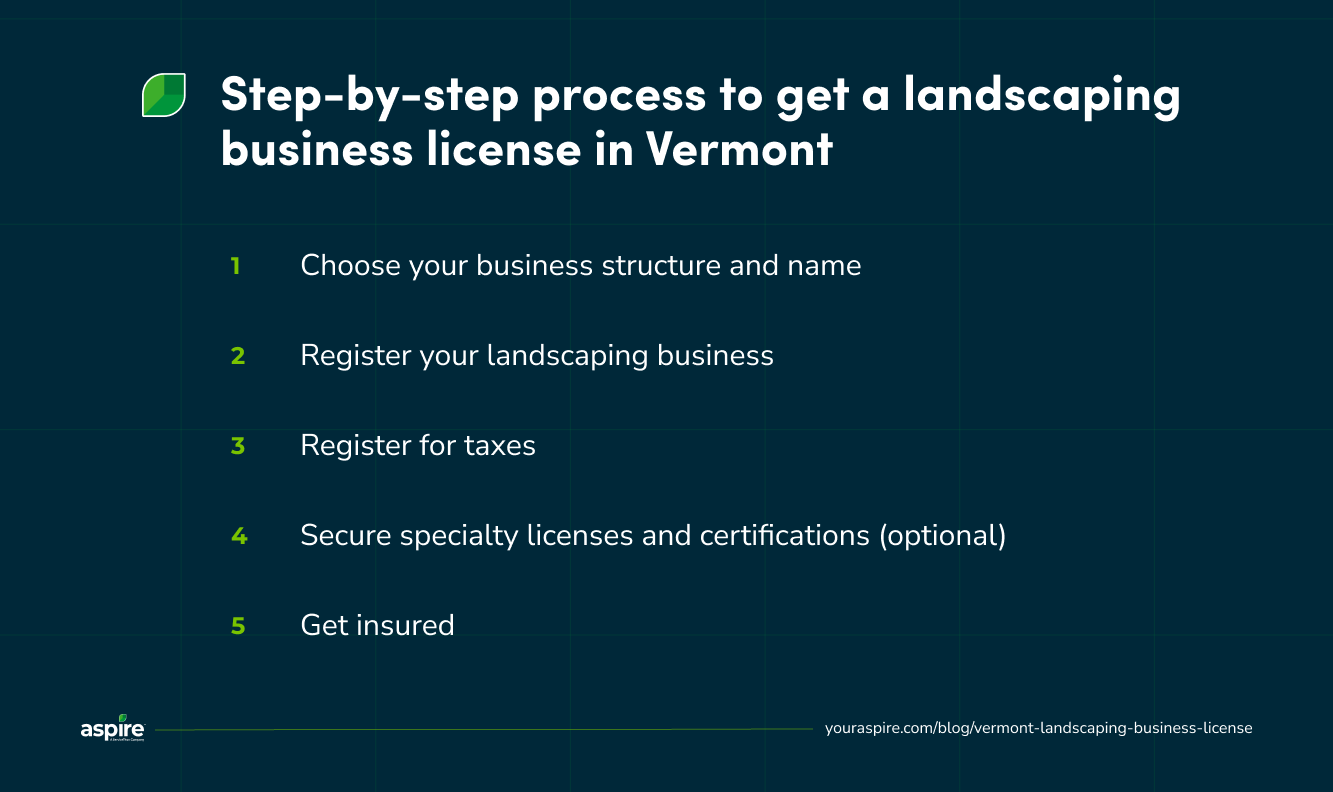
1. Choose your business structure and name
Decide how you want to operate your landscaping business. The most common legal structures are:
A sole proprietorship gets your business up and running with very little paperwork. It works well if you're working alone, buying basic equipment, and taking on smaller jobs. Just keep in mind that your personal assets remain tied to the business if legal or financial issues arise.
A limited liability company (LLC) separates your business from your personal finances. Choose this option if you want to purchase expensive equipment, hire employees, and work on higher-value commercial projects.
Explore more options and selection criteria in Aspire’s full guide to landscaping business legal structures.
Take a bit of time to think about your business name as well.
If you don’t want to operate under your legal name, you can opt for an Assumed Business Name (DBA — Doing Business As).
Search the Vermont Secretary of State’s business database first to make sure the name is still available.
2. Register your landscaping business
Once you’ve chosen your business structure, it’s time to make it official.
Register your business through the Vermont Secretary of State’s Online Business Service Center.
The portal gives you access to all the filing information you need and the required next steps.
Business registration isn’t a one-and-done task in Vermont. You also need to:
Keep your business in good standing by filing every required annual or biennial report on time.
Update your business address, mailing address, and registered agent as soon as anything changes.
3. Register for taxes
Apply for an Employer Identification Number (EIN) through the Internal Revenue Service (IRS) if you plan to hire crew members.
Then create a business tax account through the Vermont Department of Taxes’ myVTax portal.
As a landscaping contractor, you’ll generally pay taxes on the tools, equipment, plants, and other materials you use on the job. Set up a sales and use tax account to meet these obligations.
4. Secure specialty licenses and certifications (optional)
Apply for specialty licenses and certifications only if they match the work you want to perform.
Obtain a Commercial Pesticide Applicator Certification from the Vermont Agency of Agriculture, Food and Markets by passing the core exam and at least one category exam. Renew your certification every year and earn the required continuing education credits to keep it active.
Apply for a nursery license through the Vermont Agency of Agriculture, Food and Markets. Pay the annual licensing fee and keep your nursery stock sales and purchase records for at least one year.
Get your landscape architect license by applying to the Vermont Office of Professional Regulation (OPR) and paying the required fee. To become licensed, most states require candidates to earn a degree from a Landscape Architectural Accreditation Board (LAAB)-accredited program and pass the Landscape Architect Registration Examination (LARE).
5. Get insured
Don’t wait until your first project to think about insurance. The right coverage protects your business and allows you to take on bigger jobs.
Choose general liability insurance before working on a customer’s property. It covers accidental damage or injuries that happen during a project. Many commercial customers won’t consider a bid without it.
Purchase workers’ compensation insurance before hiring employees. Vermont requires most employers to carry workers’ comp, even if they only have a small crew. The Vermont Department of Labor’s website explains who needs coverage and when it applies.
Expect to provide a surety bond when bidding on certain public or commercial projects. A bond protects your customer if you don’t complete the work as promised.
How much does a Vermont landscaping business license cost?
Since you don’t need a landscaping license in Vermont, you only pay $70 for registering your landscaping business as an LLC.
The Vermont Secretary of State charges additional fees for name reservation, document processing, and similar services.
On the other hand, if you opt for a sole proprietorship under your legal name, business registration is free.
Specialty licenses and certifications come with extra costs:
Commercial Pesticide Applicator Certification: $25 per exam, plus $30 per category per year. You also pay a $75 annual fee to stay registered as a commercial pesticide company.
Nursery license: $30 or $60, depending on the size of the operation.
Landscape architect license: $115 application fee and $275 renewal fee. These costs don’t include the LAAB-accredited program or the LARE exam, which incur additional fees.
What are the most common mistakes to avoid when getting a license?
Even without a statewide landscaping license requirement, you still need to avoid some common mistakes to become and stay profitable in Vermont.
Failing to properly register your business can result in a $ 50-per-day fine, in addition to any unpaid fees and taxes.
Operating without a Commercial Pesticide Applicator Certification or other pesticide-related permits in Vermont can result in fines of up to $25,000. If the violation continues for more than six months, you risk imprisonment.
Failing to secure workers’ comp insurance results in daily fines of $100 to $250 and immediate business shutdown.
How Aspire helps landscaping businesses stay organized & compliant
Getting licensed is only the first step. Running a successful landscaping business is where the real challenge begins.
Every day brings new jobs, new customers, and new tasks to manage.
Aspire helps you stay on top of it all. Its end-to-end Landscape Business Software connects every part of your business in one place.
You get real-time visibility into your operations and the data you need to make smarter business decisions.
Contract & proposal management
Every potential landscaping project starts as an Opportunity in Aspire.
The system keeps everything related to that job in one dashboard, including customer, property, estimate, and contract status.
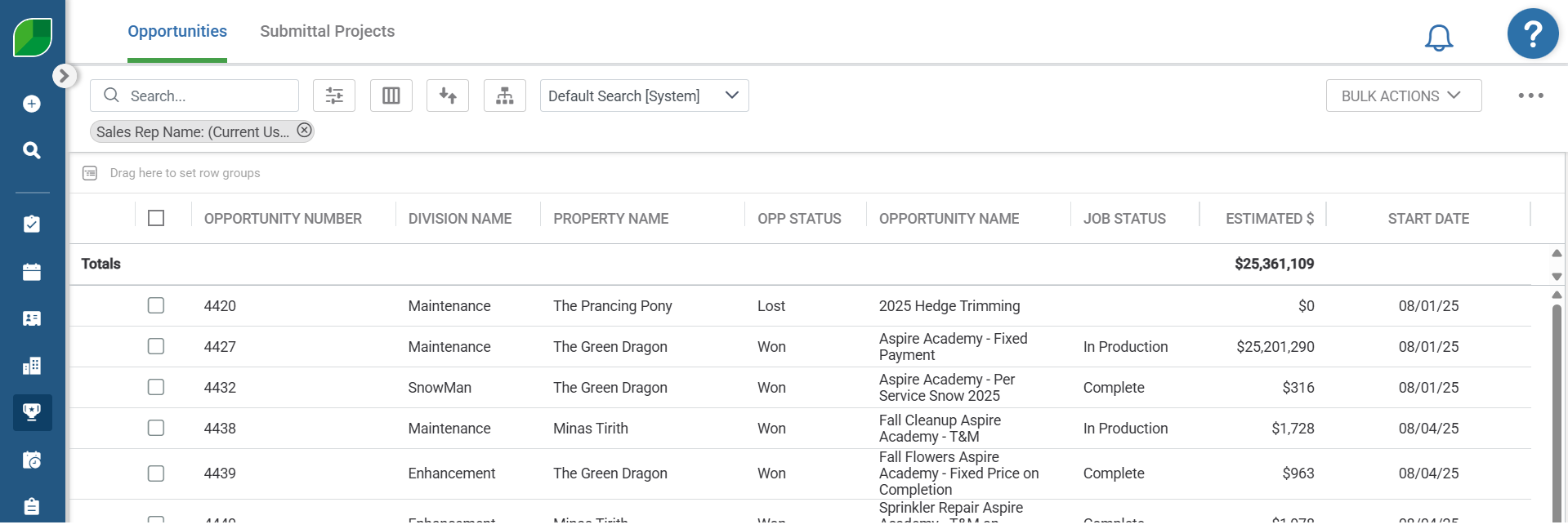
You always know where each opportunity stands without jumping between spreadsheets, emails, or paper files.
When the time comes, you just open an existing opportunity and start building the proposal.
Add the landscaping services and items, and Aspire’s Estimating Software will automatically calculate pricing based on your pre-set catalogs and kits.
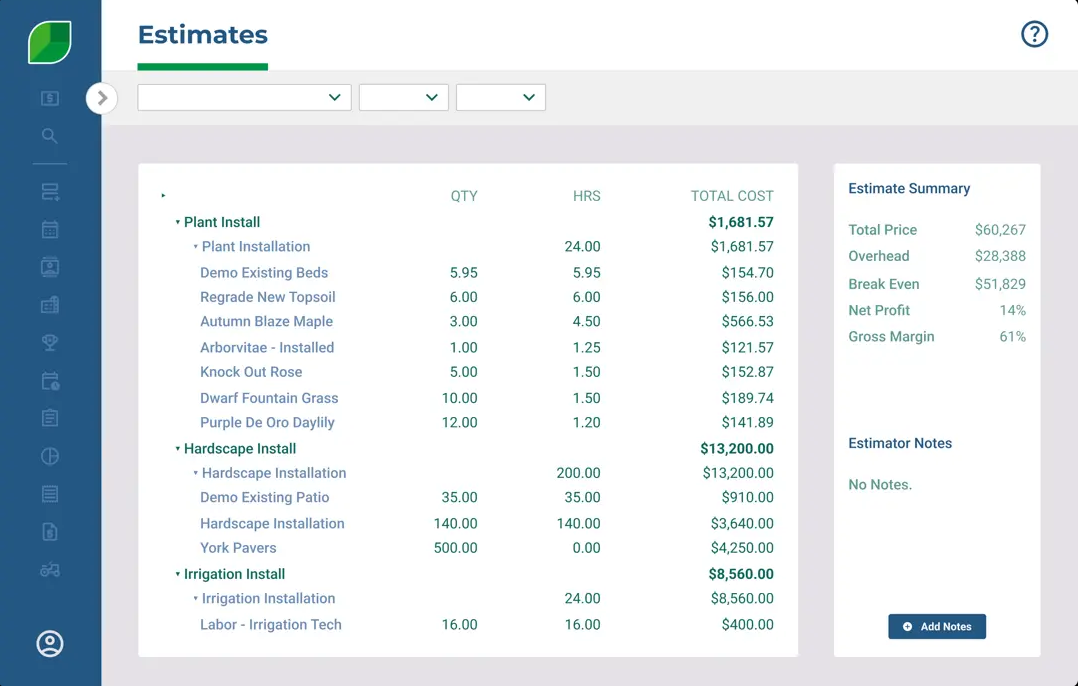
Pick a ready-made or custom proposal layout, then email the estimate directly from Aspire.
Invoicing & payment processing
Aspire’s Invoicing Software lets you match each customer’s billing preferences, whether you invoice after each visit or bill in stages.
The Invoicing Assistant tells you which invoices are ready to send, overdue, or missing key information to keep billing on track.
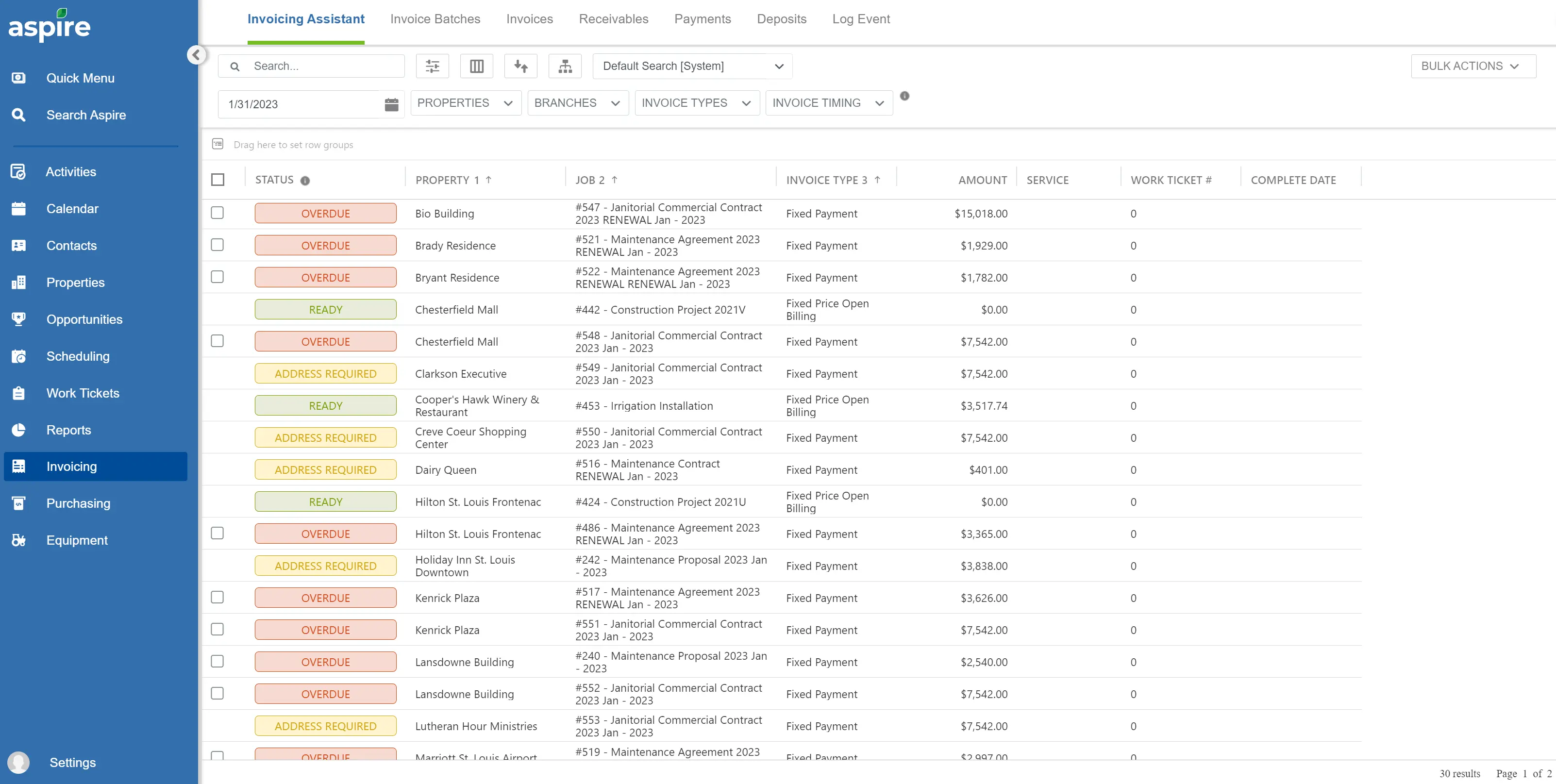
You simply select and review invoices from the list and send one or an entire batch at once without leaving Aspire.
The invoices immediately appear in the Customer Portal where clients can pay them with just a few clicks.
Aspire automatically registers online payments made through the portal, but you need to check for other payment types manually.
Business reporting & documentation
Aspire’s Reporting Software gives you real-time insights into your landscaping business’s health and performance.
Customize reports and search lists to focus on the numbers that matter most to you, from job costs and sales to customer satisfaction and team performance.
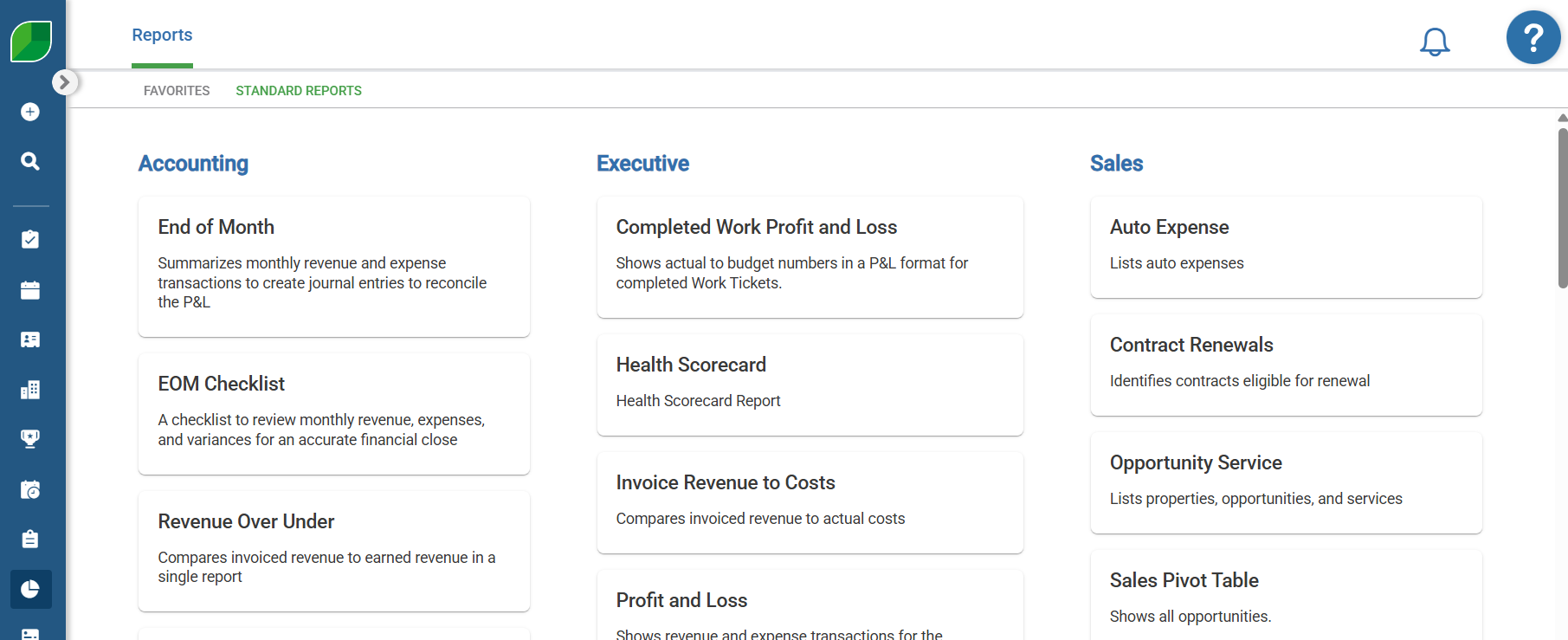
For example, the Completed Work Profit and Loss report compares estimated and actual results for finalized projects. This shows you which jobs stayed profitable and where costs started creeping up.
You can then open the Jobs dashboard to see what drove those results. Look for patterns in material costs, productivity, pricing, and other project details.
These insights help you adjust future estimates, improve operations, and protect your margins.
Scheduling & job management
Aspire automatically turns signed contracts into Work Tickets and adds them to the open tasks in the Scheduling Software.
From there, you just drag and drop jobs onto the schedule, assign the right crew, and switch between daily, weekly, or monthly views.
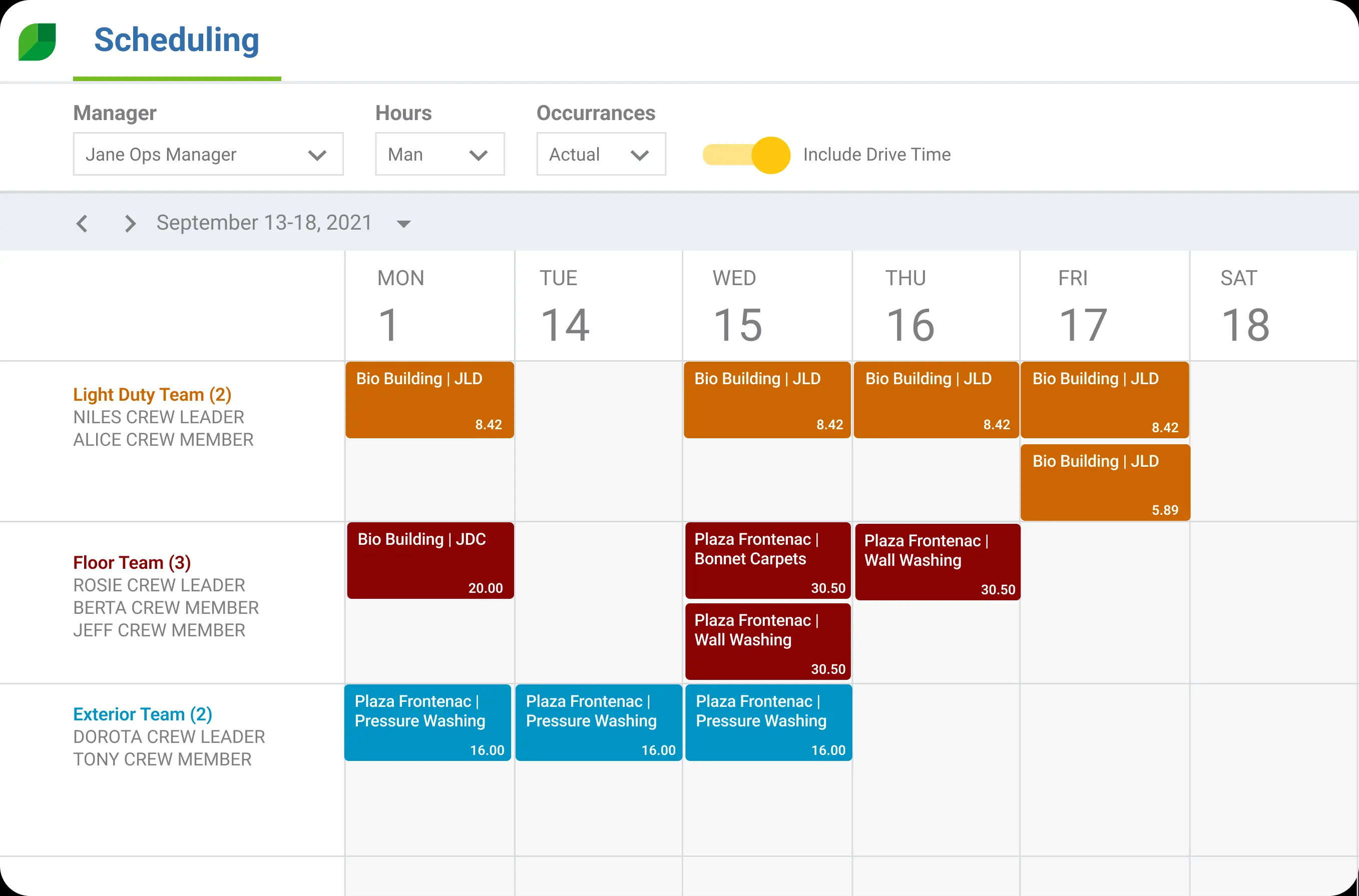
Last-minute changes don’t have to throw your whole day off. Aspire’s Scheduling Assistant finds open time slots based on your available routes, preferred dates, and estimated work hours.
Pick the option that works best, then rearrange visit order or adjust start and finish times in just a few clicks.
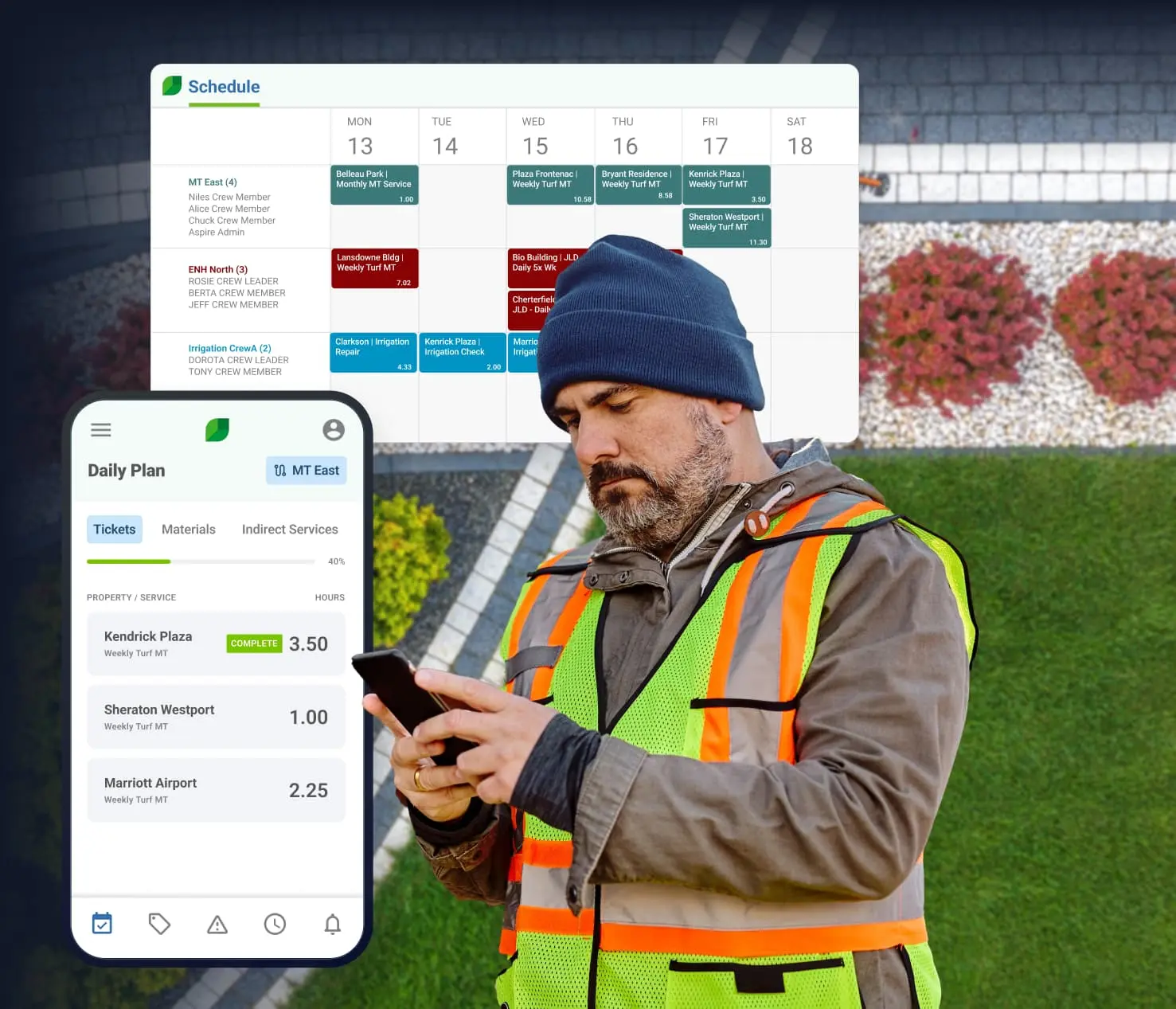
Every schedule change appears immediately on your crew’s Mobile App, so everyone arrives with the latest job details and route information.
Over to you
Since you don’t actually need a Vermont landscaping business license, getting started is quite easy.
Handle the registrations, permits, and certifications that match your services, then focus your energy on winning jobs.
Aspire helps you stay organized, protect your profits, and grow your business. Book a demo today to see it in action.
Disclaimer
This article is for informational purposes only and should not be considered legal or financial advice. While we took every care to use official sources, you should always check requirements on the Vermont government’s websites.








 866-727-7473
 Schedule Demo
 390 S Woods Mill Rd #300 Chesterfield, MO 63017


