Table of Contents
The opportunity is real if an owner wants to sell a landscaping business.
“Interest in the space is at an all-time high,” said Ed Bates, vice president of business development at 3PG Advisors, an investment banking and advisory firm for trade businesses looking to sell or buy.
Bates said his Rolodex with private equity groups interested in putting money into landscaping now has somewhere north of 225 contacts.
“With that, there are some challenges,” he said, “and it’s that they don’t know what they don’t know. But they know there’s opportunity in the space, and they want to maximize that.”
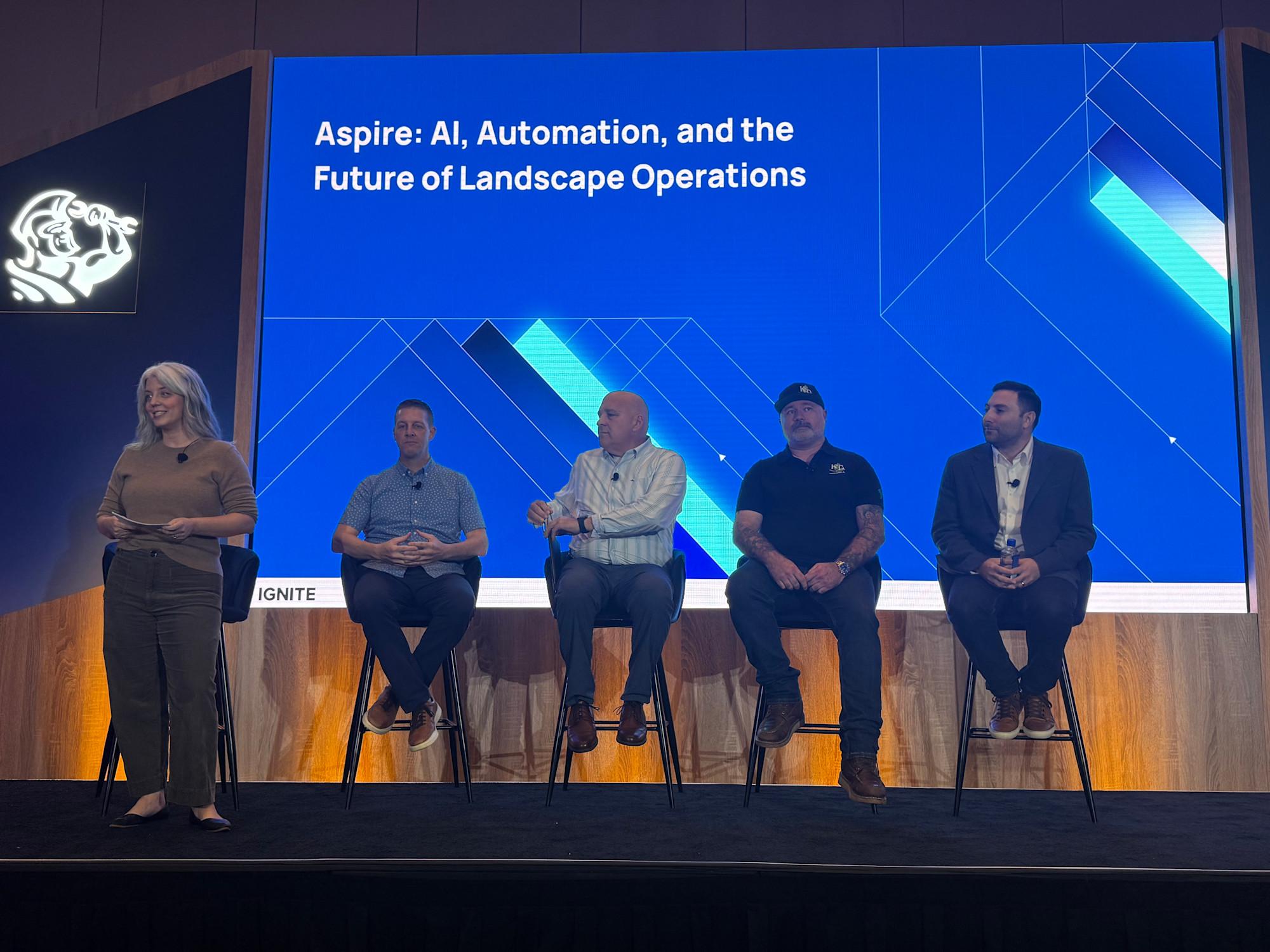
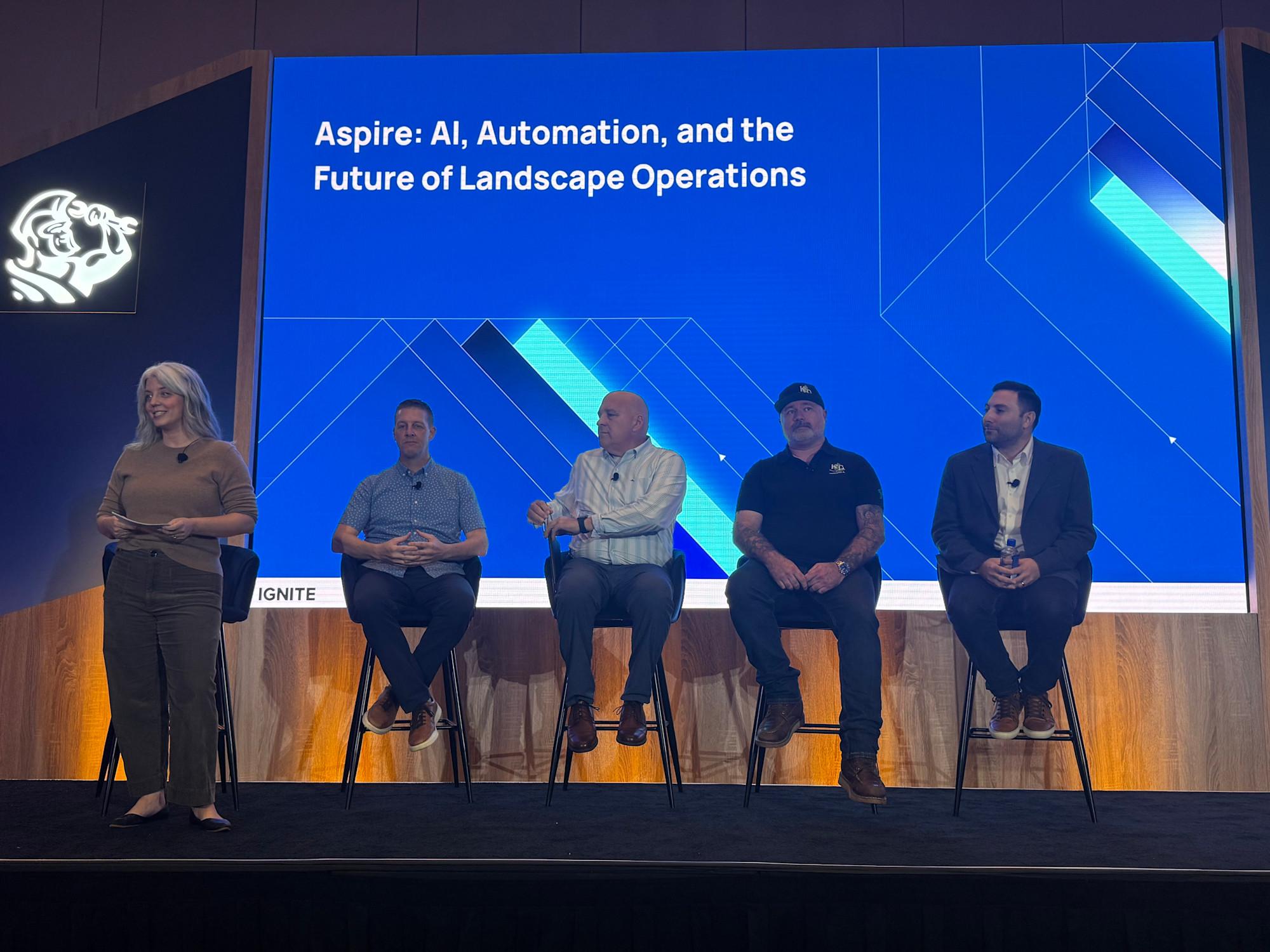
That means an owner of a landscape business also needs to know how to be ready to sell. Bates and Cris Poggi, vice president of integrations and optimization at Schill Landscape Collectives, took part in a panel discussion on the topic at Ignite 2026, the annual user conference hosted by Aspire, the cloud-based software for landscaping and commercial cleaning companies.
What the experts say
Schill is a multi-brand platform in the Upper Midwest, Mid-Atlantic and Ontario, Canada. Poggi said her work involves integrating acquisitions into the collective, then optimizing the business through standard procedures and best practices.
At 3PG, Bates provides support for factors as varied as clientele strategies, value, and tip-of-the-spear business development.
Both have experience with Aspire, and are aware how Aspire’s efficiencies can help in a sale as well as in day-to-day operations.
In an hour-long presentation, both agreed that one of the major factors a buyer seeks is a solidly built leadership group with clear structure.
“How it's evolved creates a statement about the organization,” Poggi said.
Even if an owner does not plan to stay after the company is sold, buyers want to understand the role the leader played and the organization he or she built.
Red flags for buyers on an organizational chart? Apparent needs.
“Understanding who's responsible for the relationship, and in addition property mix and ratio,” Poggi said. “The assumption is that a lot of the revenue generation is (from)a single person, (so) is the revenue tied to a single property, a single company? It's great to see more diversification across both sales, account management, and then also based upon company distribution for revenue.”
Another data point important to buyers is the level of “attachment” with customers via maintenance plans or contracts. Bates said that requires “a deep dive.”
“It’s really important to understand that as you’re going through the transaction,” Poggi said. “How that’s defined.”
She added it’s important when selling to be intentional in the way the business grows or develops.
“You're not necessarily interested in removing revenue,” she said. “You're interested in growing particular assets of that business.”
Volatility creates a wrinkle
One example: If an entity relies on snow removal in the winter, it can be volatile from year to year and even month to month.
“It creates a little bit of a wrinkle in regards to valuation,” said Poggi. “I would say that for snow, it’s similar to all aspects of the business; we take it into consideration over an historical timeframe. You can't necessarily just hone in on a particular year ...
“Along with the rest of the business and the way that it's valuated, there should be steady performance versus spikes, which are a call-out for further inquiry.”
What drives maximum value in a sale? Commercial maintenance, according to Bates. That facet of a business drives regular, dependable revenue, and turns one-time jobs into steady sources of income. Poggi did not disagree, though she added there is more acceptance of businesses that have a residential-commercial mix.
Aspire, Bates said, can help by providing data to back up a company’s story.
“The first thing that we do is (ask), ‘What does Aspire say was the financial side?’” Bates said. “I think you'd be surprised how many times there's a (discrepancy). … We've seen some pretty interesting things.”
The data also can show the depth of a company’s penetration into markets, and key factors about its customers.
“Its relationship, length of relationship,” Bates said. “You're talking about potential calculations, margin performance, contract renewals, when they are coming up, customer concentration. Those are the things that quite frankly make it tough to get out of the gate if they're not counseled appropriately, and you can't stand behind support.
“So for us, everything and anything having to do with reconciliation of your systems, and then everything tied to the customer data.”
Does the data match the story?
Poggi said her curiosity grows when the data does not match the story being shared. Ensuring the data matches the story allows the buyer to ensure he can hit the ground running after the purchase is closed.
That’s why a complete P&L report provided by Aspire is helpful for a potential buyer.
“You always want to see your utilization,” she said. “Also, what's the business? How is the business utilizing labor and quantity of overtime? There's just some consistent themes that you tend to look at and understand and it really, like I said, tells the story of the business.”
Both Poggi and Bates cautioned it is vital to ensure earned revenue and invoice revenue are consistent.
“Quite honestly, you’re losing out on revenue if you’re not making sure to keep that clean and consistent,” Poggi said.
It’s also important to set up divisions cleanly and clearly.
“Don’t get overly creative,” Poggi said. “Maintenance. Construction. Snow. Keep it simple and then you utilize your service types to get to that next level of detail.”
What’s the number?
The bottom line, of course, is the bottom line. So potential sellers can be encouraged by the market.
Bates said a sales price of 3.5-4X EBITDA is seen regularly, and a good commercial business of a decent size ($1.2-$1.25 million EBITDA) would be a bargain at 6X.
“There's some variability with regions of the country,” he said, “with the mix of revenue and leadership and all the other elements. But broad brush, I'd say a good solid maintenance business that is growing, has good leadership, a level of sophistication, no concentration issues … it’s not unusual to see low double-digit nowadays.”







 866-727-7473
 Schedule Demo
 390 S Woods Mill Rd #300 Chesterfield, MO 63017


