

Table of Contents
Table of Contents
- Do you need a license to start a landscaping business in Washington?
- What types of landscaping business licenses & permits do you need in Washington?
- What happens if you operate a landscaping business without a license in Washington?
- Step-by-step process to get a landscaping business license in Washington
- How much does a Washington landscaping business license cost?
- What are the most common mistakes to avoid when getting a license?
- How Aspire helps landscaping businesses stay organized & compliant
- Over to you
- Disclaimer
If you plan to offer yard maintenance services, such as lawn mowing, hedge trimming, mulching, and leaf cleanup, you don’t need a landscaping license to begin operations in Washington.
But for other services, you’ll need specific permits.
Washington explicitly outlines what licenses landscaping businesses need to operate in the state and the taxes they must pay.
This guide covers what’s required, how much it costs, and what to avoid so you can get licensed without guesswork.
Do you need a license to start a landscaping business in Washington?
Yes, you need one or several licenses to start your landscaping business in Washington, depending on the services you offer.
For simple yard maintenance, you can register your business with the state and register for taxes.
But services like irrigation, hardscaping, sodding, drainage installation, pesticide application, landscape design, or tree planting require specific permits.
The next section lists all landscaping-related permits your business might need.
What types of landscaping business licenses & permits do you need in Washington?
If you want to run a landscaping business in Washington state, here’s an overview of the permits and licenses you might need.
General business license
In the Evergreen State, new organizations need to register their LLC or corporation with the Secretary of State by filing a certificate of formation.
You must also apply for a business license from the Washington State Department of Revenue. This will give you a Unified Business Identifier (UBI), which you can use to register for state taxes.
This application also lets you register with the Employment Security Department if you plan to hire employees and with L&I for workers’ compensation insurance.
Landscaping contractor license
Washington doesn’t have a general landscaper license. Instead, it offers licenses based on the services you intend to provide.
For instance, if your service description includes installing patios, retaining walls, or irrigation systems, you’ll be classified as a construction contractor.
As such, you’ll need to register as a specialty contractor with the Department of Labor & Industries. Basic mowing, pruning, and maintenance work fall outside this requirement.
Specialized licenses
If your landscaping business applies pesticides, herbicides, or fertilizers with pest control claims, you will need a commercial pesticide applicator license from the Washington State Department of Agriculture (WSDA).
Thinking of selling nursery stock or plants?
You need a nursery retailer license from the WSDA.
Landscaping design services also require a landscape architect license from the Washington State Department of Licensing (DOL).
Permits and local regulations
Beyond state licensing, cities and counties may require their own local business licenses, occupational permits, or tax certificates. You may need building permits for hardscaping projects and noise-level permits, as some municipalities regulate work hours.
Research what your city requires before you begin operating.
Insurance requirements
L&I requires landscaping contractors to obtain general liability insurance before it approves registration.
Workers’ compensation is also required, even if you’re hiring just one employee, and it must be through the L&I state fund, not a private institution.
What happens if you operate a landscaping business without a license in Washington?
Operating unlicensed in Washington carries real financial and legal risk.
State laws (RCW 18.27.020) classify working, advertising, and bidding on projects as an unregistered contractor as a gross misdemeanor. Each additional day worked after being cited is a separate gross misdemeanor.
According to the Department of Labor & Industries (L&I), fines are $1,200 for first-time offenders and up to $10,000 for repeat offenders.
Under the Washington Pesticide Application Act, offering related services without the required licenses or registration is a misdemeanor and can carry civil penalties of up to $7,500 per violation.
Step-by-step process to get a landscaping business license in Washington
Getting licensed in Washington follows a clear sequence, especially when you know exactly what landscaping services you want to offer.
Here’s how to move through the different steps:
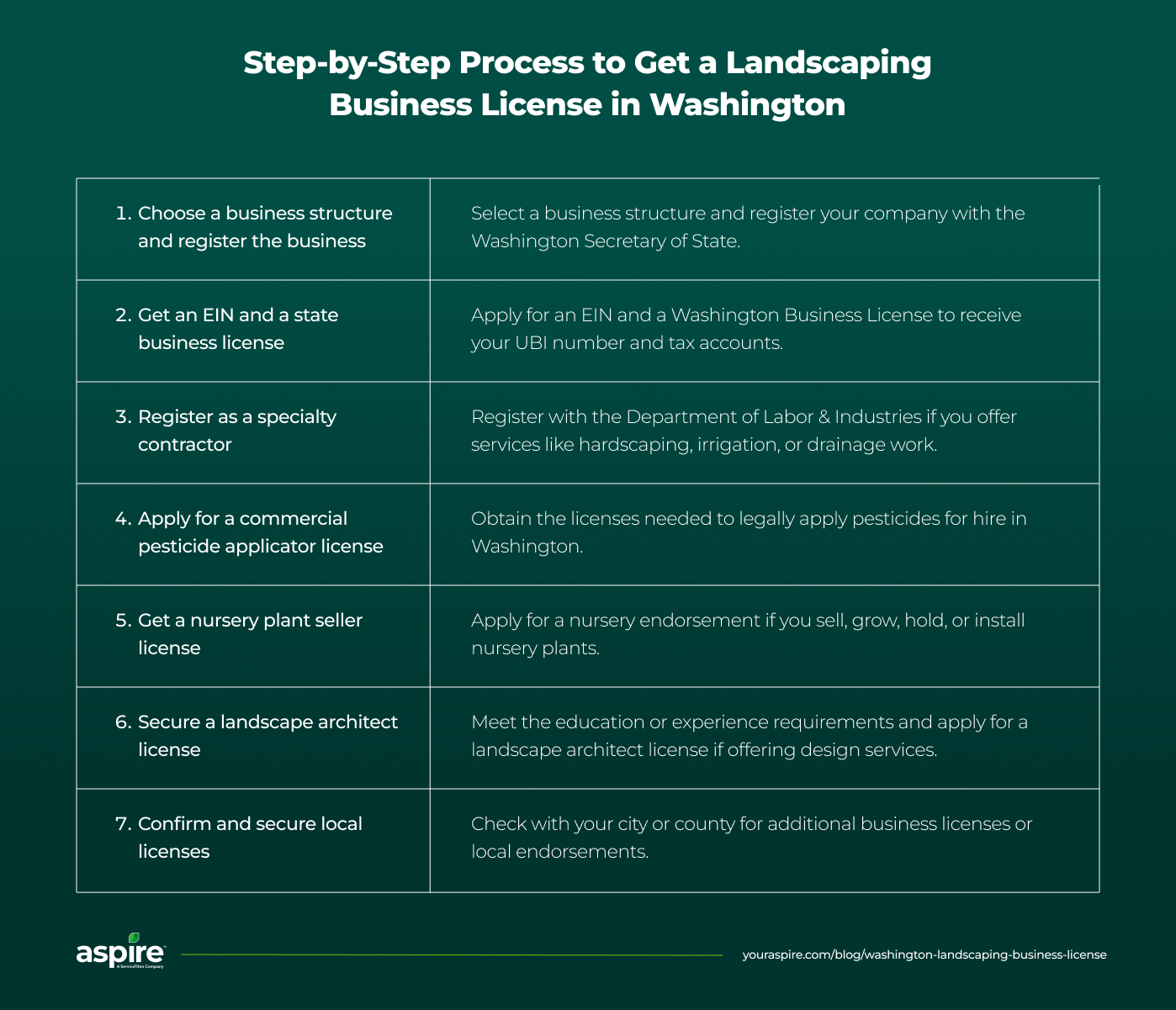
1. Choose a business structure and register the business
Start by choosing a business structure for your landscaping company.
Sole proprietorship: One of the simplest business structures to start since it’s solo. However, it doesn’t protect your assets, and you’re not required to register it formally. But you do need to register to pay taxes.
Limited Liability Company (LLC): A popular option for landscapers because it combines liability protection with simple tax processes.
Partnership: Lets multiple owners run the business together, share profits and losses, and make decisions together.
Corporation: Ideal for larger businesses that need stronger legal protection and can handle complex administrative and tax requirements.
Next, choose a business name and check availability by visiting the Secretary of State Corporations Search.
Then register the business by filing a certificate of formation with the WA Secretary of State Corporations and Charities Filing System online, by mail, or in person.
To file online, visit this corporations and charities page, pick a business structure, and follow the instructions to get started.
You’ll need a registered agent, a business address, and an organizer's name and address. State the date you want the filing to be effective, and pay a filing fee of $180 + processing charges.
2. Get an EIN and a state business license
Apply for a Federal Employer Identification Number from the IRS, which is required if you have employees.
This helps identify your business at the state and federal levels, open bank accounts, file taxes, and hire workers.
You’ll need an SSN and to have decided on a defined business structure to get started. Once you do, visit the IRS website and complete the EIN application.
Then, file for a business license from the Department of Revenue (DOR). You’ll need to start their business licensing wizard, which generates a list of agencies to contact and additional endorsements you’ll need.
From there, you can apply online through a secure system or complete forms by mail and pay the $50 fee.
Once approved, you'll receive a UBI number, which you’ll use to file taxes (retail sales tax and Business & Occupation tax) and for any future business changes.
You'll also register with the L&I and the Employment Security Department so you can pay workers’ compensation and submit tax reports.
Read this guide for more information about the taxes landscaping businesses need to pay in Washington state.
3. Register as a specialty contractor
This license from the Department of Labor and Industries is needed for irrigation, hardscape, drainage, tree cutting, or outdoor installations.
To get this license, you need to:
Have signed up with the DOR (discussed in the previous section).
Get a Washington continuous contractor surety bond worth $15,000 for specialty contractors.
Secure a general liability insurance policy of $200,000 in public liability and $50,000 in property damage, or $250,000 combined single limit.
Complete the registration form with notarized signatures and submit it in person or via mail with the appropriate documents and fees to “Contractor Registration P.O. BOX 44450, Olympia, WA 98504-4450.”
Pay the $150.20 application fee and renew the registration annually.
4. Apply for a commercial pesticide applicator license
The Department of Agriculture issues a pesticide applicator license and has a few more requirements than other departments.
Here’s how to get this permit:
Begin by securing your business license from the DOR.
Pass the required exams in Washington (Laws & Safety exam plus category exams for each area you operate in), or provide a valid reciprocal state license if you’re already licensed elsewhere.
Complete the Pesticide/Pest Inspector License Application and pay the $250 commercial applicator license fee, typically done at your exam session or online for computer-based testing.
Submit the Commercial Company License Application (and Supplemental Applicator Application if needed). There’s a $27 equipment fee per apparatus you may need to pay.
Provide proof of either a liability insurance policy ($50,000 public liability, $50,000 property damage, max $5,000 deductible) or a surety bond of at least $100,000.
Send your documents by email to license@agr.wa.gov or by mail to WSDA Pesticide Licensing, PO Box 42560, Olympia, WA 98504.
5. Get a nursery plant seller license
Also issued by the Department of Agriculture, the nursery plant seller license is an endorsement on your business license. It allows you to sell horticultural plants in Washington state, and fees depend on your expected gross sales of horticultural plants.
Even if you’re not selling plants, this license permits you to buy, hold, or grow plants to install for clients.
To apply, visit the DOR business licensing page and follow the instructions or visit a WSDA branch, get a mail application, or call the DOR BSL office at (360) 705-6741.
The license costs $80.64 for gross sales of $2,500 or less, $176.64 for gross sales between $2,501 and $15,000, and $350.40 for sales over $15,000.
6. Secure a landscape architect license
You can get a landscape architect license in three ways: with an accredited degree, without one, or by reciprocity.
If you have a degree, you need to:
Register and pass the Landscape Architect Registration Exam (LARE).
Share your exam record with the Department of Licensing.
Take and pass the Landscape Architect Law Review Exam ($328). Ensure it’s signed and dated.
Submit your license application online or by mail using paper forms to the Board of Licensure for Landscape Architects, Department of Licensing, PO Box 3777, Seattle, WA 98124-3777. The licensing fee here is $590.
If you don’t have a degree, you need to:
Have a high school diploma or equivalent and at least 8 years of experience in landscape architecture.
Submit an employment and experience verification form, ensure your employer completes their section, and have your school send official transcripts to DOL.
Apply online or by mail using paper forms; send them to the Board of Licensure for Landscape Architects, Department of Licensing, PO Box 3777, Seattle, WA 98124-3777.
If approved, you can apply to take the LARE and Landscape Architect Law Review Exam ($328).
Pay the $590 licensing fee.
If you’re licensed in another state:
Confirm you hold an active landscape architect license in another state or country.
Complete the Landscape Architect Law Review Exam ($328) and the Landscape Architect License Application.
Have your certification sent to the board if you have a CLARB Council record. If not, send your transcripts, exam certification, and current license certification yourself.
Submit your application and pay the $590 licensing fee online through SAW or by mail to the Board of Licensure for Landscape Architects.
7. Confirm and secure local licenses
Once you have the business registrations, licenses, and specialty permits in place, check with your city or county to see what else applies locally.
Requirements often shift depending on where you’re operating. Seattle expects most businesses to carry a tax certificate for their business license to operate within city limits, while Spokane requires a general business license endorsement to do business there.
Considering how these rules vary by city and county, confirm what applies to you before taking on projects.
How much does a Washington landscaping business license cost?
While the total startup cost varies based on the landscaping services you intend to offer, here are the estimates for registrations and licenses discussed above:
General business fees
Certificate of Formation: $180 + processing charges
Washington Business License: $50
Specialty contractor registration
Specialty contractor registration: $150.20 (renewed annually)
Commercial pesticide applicator license
Commercial Applicator License: $250
Commercial Company License equipment fee: $27 per application apparatus
Nursery plant seller license
Gross annual sales of $2,500 or less: $80.64
Gross annual sales of $2,501–$15,000: $176.64
Gross annual sales over $15,000: $350.40
Landscape architect license
Landscape Architect Law Review Exam: $328
Landscape architect license application: $590
When calculating total costs, account for the insurance coverage needed for the business and employees.
What are the most common mistakes to avoid when getting a license?
Even after clearing the licensing steps above, you may run into issues with the state or local government if you overlook certain details.
Here are a few of them you must be aware of or risk being penalized:
1. Not doing your due diligence
Sometimes, it’s not just about getting the permit; it’s about how the work is done. Doing it incorrectly could also expose the business to litigation.
For instance, before digging beyond 12 inches, whether it’s to plant a tree, dig trenches for irrigation, or set fence posts, you need to call 811 or visit callbeforeyoudig.com at least two days before. Failing to do so, even with a specialty contractor permit, puts the business at legal risk.
So ensure you do your due diligence to understand how different landscaping jobs are done in the state before operations begin.
2. Overlooking local rules
Local laws guide landscaping across Washington state, and not following them could lead to fines.
For example, Seattle requires you to register the business before performing any commercial tree work and classifies trees into tiers with different removal restrictions under municipal code SMC 25.11.
Violating the code could result in a fine based on the tree’s size or even license revocation.
To avoid suspension or fines, confirm with the county, city, or municipality what you need to operate freely.
3. Failing to register or file for the right taxes
It’s easy to assume landscaping counts as a service exempt from sales tax, the way it does in many other states. In Washington, that assumption can be costly.
Most landscape and horticultural work performed for consumers, including mowing, planting, grading, and pruning, is treated as a taxable retail sale.
That means you must collect and remit retail sales tax on the full invoice amount for both residential and commercial clients, on top of paying Business & Occupation (B&O) tax on your gross receipts.
Local city taxes can also apply depending on where the work takes place. Getting this wrong from the start often means scrambling to correct filings later, plus penalties and interest on top of what you already owed.
How Aspire helps landscaping businesses stay organized & compliant
Getting licensed is just the starting line. Once you’re clear to begin operations in the city, you need a system to run the business without the chaos of multiple permits disrupting your workflow.
A tool like Aspire centralizes landscaping operations like proposals, reporting, invoicing, and even marketing, so staying licensed and being organized doesn’t wear you out.
Contract & proposal management
Aspire offers an estimating tool that lets you create proposals with ease. You start by choosing a template and inserting prices and services from a catalog so you can send it to clients for approval.
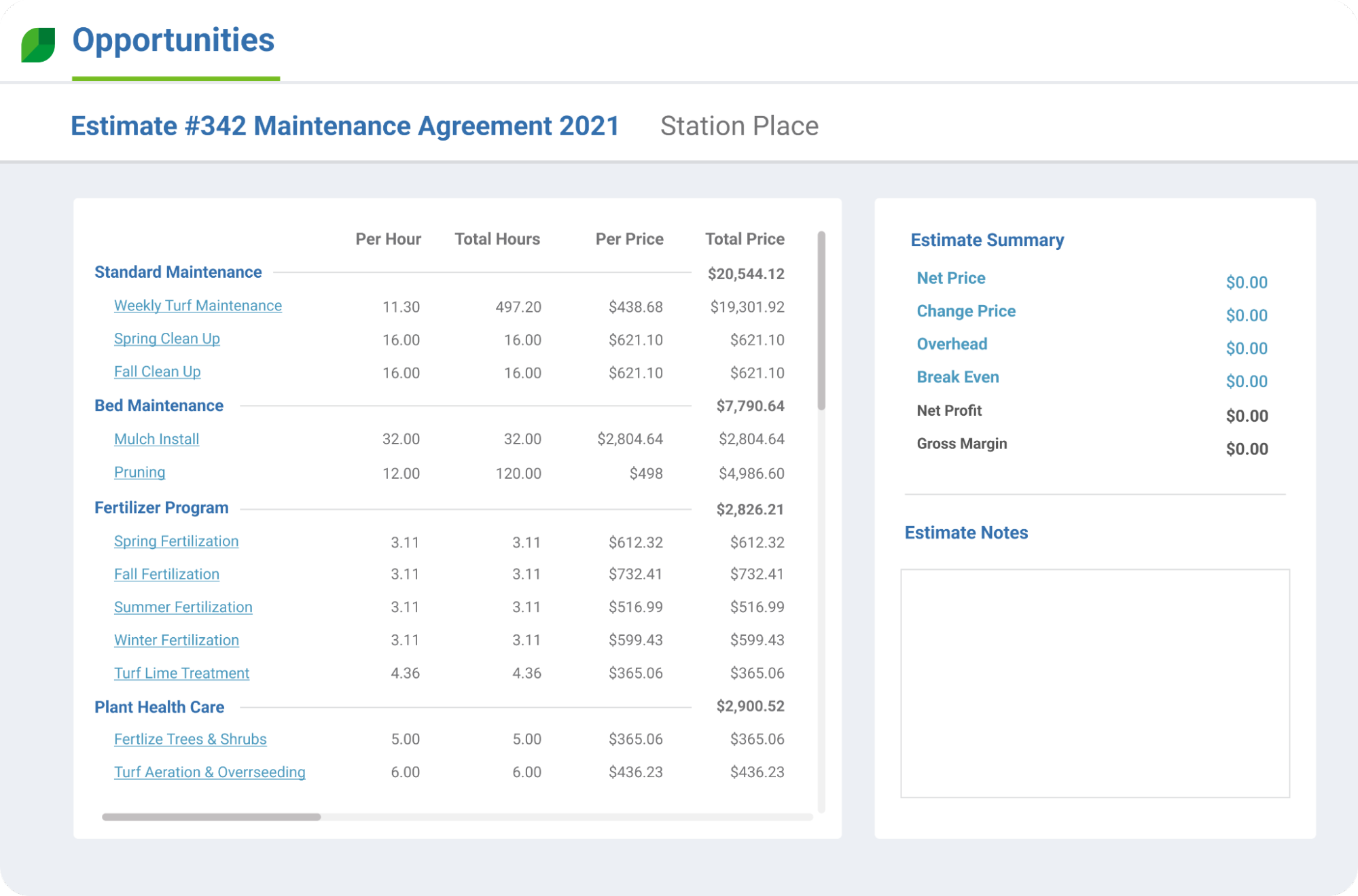
If you need to take measurements, Aspire integrates with PropertyIntel, which lets you measure properties on a digital map and pull that data into the estimation tool.
Your labor and material costs and profit margins are built in automatically, so every contract protects your profits.
With everything needed to create and send a proposal in one place, you can also categorize projects. You can flag which ones may need a permit, especially when your business spans multiple license types.
Invoicing & payment processing
Need a defined process to invoice clients with ease? Aspire’s invoicing tool tells you which projects are ready to bill and when to avoid delayed payments.
You can create invoices at scale from existing estimates. Plus, you can invoice the full project or a single opportunity at a time.
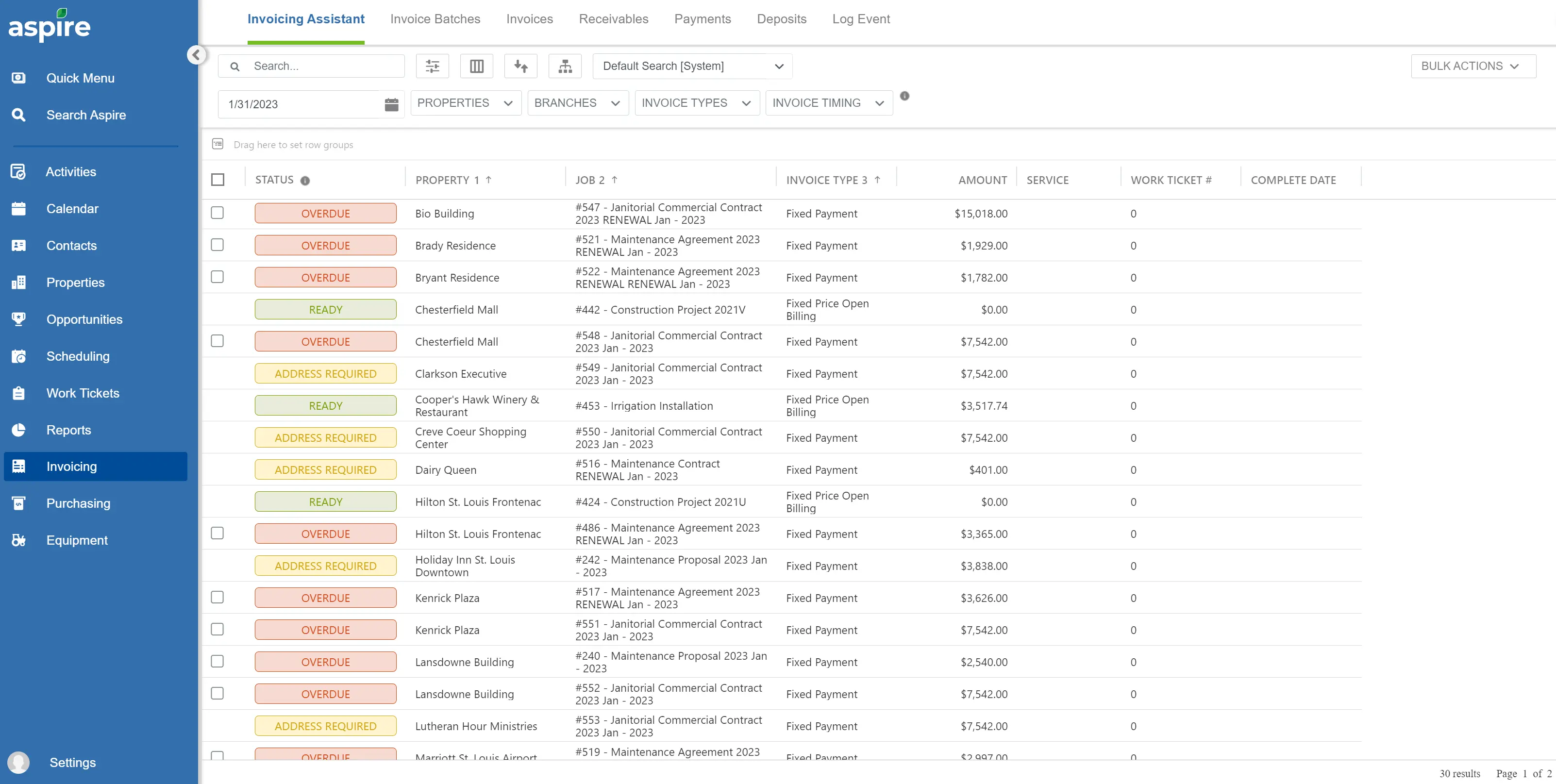
Aspire has a built-in assistant that flags overdue invoices and those that need more work, so cash flow isn’t interrupted because no one is monitoring it.
Since cash flow and revenue can be tracked automatically, it’s easy to put together a clean record when it’s time to file sales or B&O tax.
Business reporting & documentation
Aspire provides visibility into how your landscaping business is actually performing, including projects, overall costs, and profit or loss on each one.
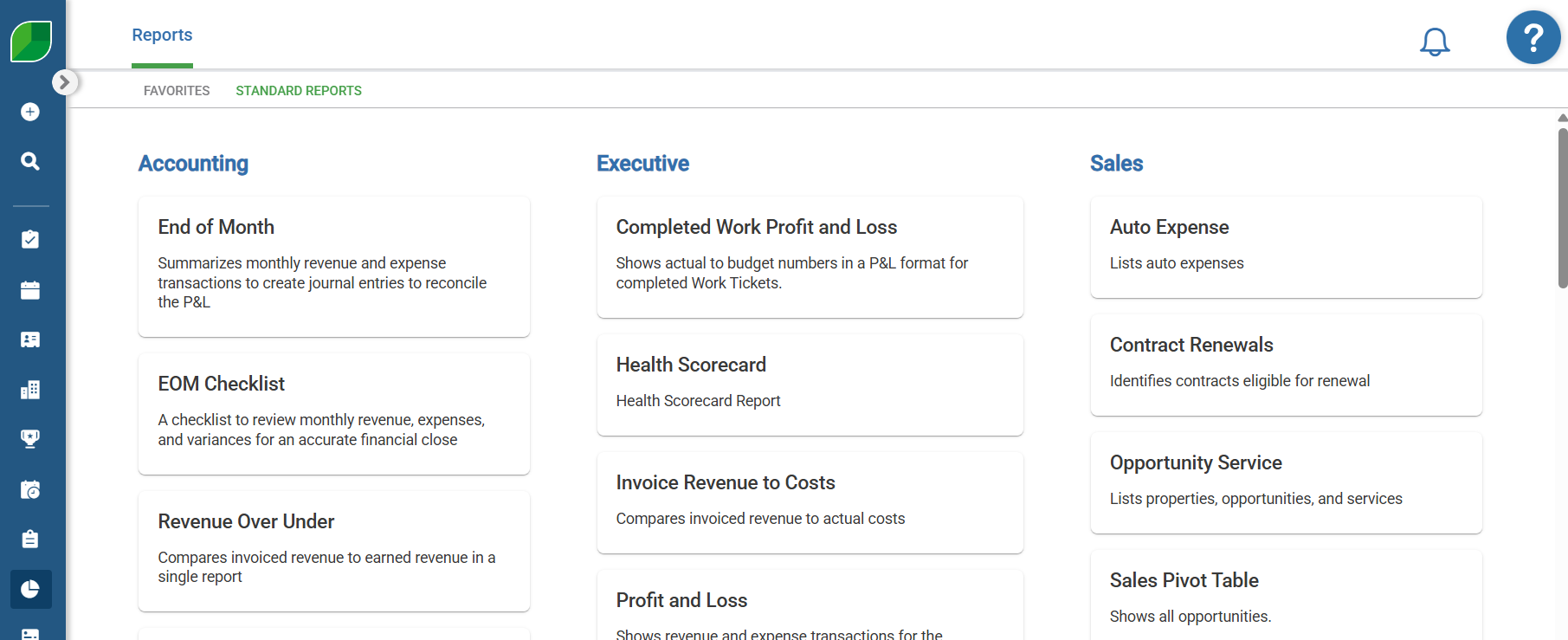
You can track current revenue, client retention, and which service offerings are most profitable.
This visibility helps you catch problems early and adjust before small issues lead to fines.
Scheduling & job management
Aspire’s scheduling feature works as a central view of every active and upcoming project. You can see which crews are available or qualified for a given job.
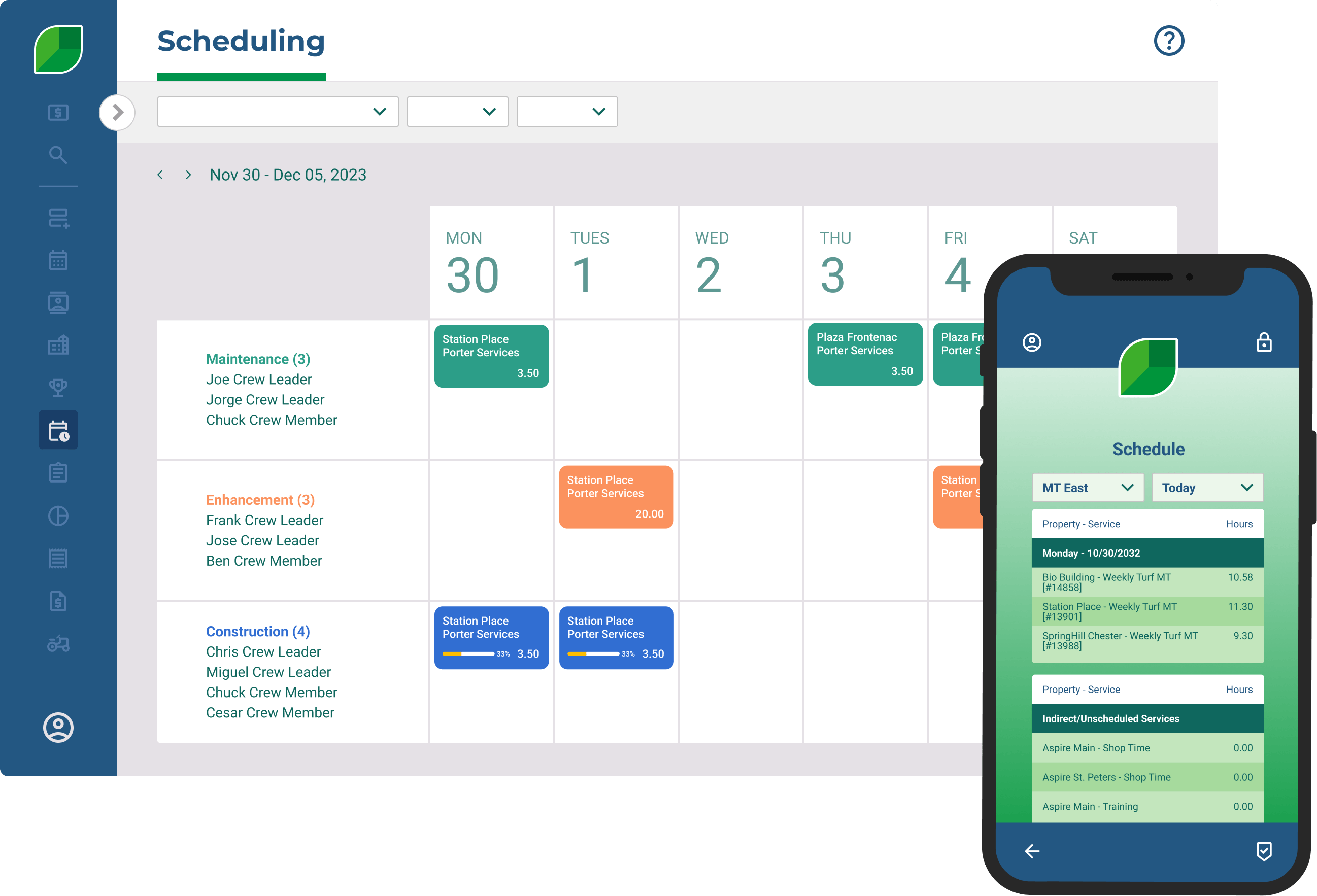
As such, you can keep workloads balanced and get flagged when materials are running low.
The outcome is an operation that stays on schedule and keeps crews on track.
Over to you
Launching a landscaping business while trying to get a handle on licenses and taxes can be challenging.
This article has shown you how to secure the permits.
Next, consider using Aspire to lighten your operational load so you can focus on growing the business you worked to license.
As a landscaping management tool, Aspire is built for landscapers who want to streamline their workflow and scale with ease.
Book a demo today to see how it fits into your operations and helps you run the business more smoothly.
Disclaimer
This article is for informational purposes only and should not be considered legal or financial advice. While we took every care to use official sources, you should always verify requirements on Washington government websites.







 866-727-7473
 Schedule Demo
 390 S Woods Mill Rd #300 Chesterfield, MO 63017


