![Landscaping Business Due Diligence: Complete Guide [2025]](/_next/image?url=https%3A%2F%2Fimages.ctfassets.net%2F3cnw7q4l5405%2F6FhiPCf8mCcAawEddWnUXm%2F69ff3b97b13c1f0ca6f6d956adc2dd07%2FLandscaping_business_due_diligence__complete__guide_-2025-.png&w=3840&q=75)
Table of Contents
Table of Contents
- What is due diligence in a landscaping business?
- Why is due diligence important when buying a landscaping business?
- What should be included in a landscaping business due diligence checklist?
- How do you review financial records in due diligence?
- What legal documents must be checked?
- How do you assess customer contracts and relationships?
- What operational factors should you verify?
- How do you evaluate landscaping equipment and assets?
- What questions should you ask employees during due diligence?
- How can you check for regulatory and environmental compliance?
- How long does due diligence take for a landscaping business?
- What are red flags when reviewing a landscaping business?
- What are the common mistakes in landscaping business due diligence?
- What happens after due diligence is complete?
- How can Aspire help streamline landscaping business due diligence?
- Built-in financial transparency
- Operational insights beyond the numbers
- Streamlined due diligence
- What is due diligence in a landscaping business?
- Why is due diligence important when buying a landscaping business?
- What should be included in a landscaping business due diligence checklist?
- How do you review financial records in due diligence?
- What legal documents must be checked?
- How do you assess customer contracts and relationships?
- What operational factors should you verify?
- How do you evaluate landscaping equipment and assets?
- What questions should you ask employees during due diligence?
- How can you check for regulatory and environmental compliance?
- How long does due diligence take for a landscaping business?
- What are red flags when reviewing a landscaping business?
- What are the common mistakes in landscaping business due diligence?
- What happens after due diligence is complete?
- How can Aspire help streamline landscaping business due diligence?
- Built-in financial transparency
- Operational insights beyond the numbers
- Streamlined due diligence
- Why is due diligence important when buying a landscaping business?
- What should be included in a landscaping business due diligence checklist?
- How do you review financial records in due diligence?
- What legal documents must be checked?
- How do you assess customer contracts and relationships?
- What operational factors should you verify?
- How do you evaluate landscaping equipment and assets?
- What questions should you ask employees during due diligence?
- How can you check for regulatory and environmental compliance?
- How long does due diligence take for a landscaping business?
- What are red flags when reviewing a landscaping business?
- What are the common mistakes in landscaping business due diligence?
- What happens after due diligence is complete?
- How can Aspire help streamline landscaping business due diligence?
- Built-in financial transparency
- Operational insights beyond the numbers
- Streamlined due diligence
- What should be included in a landscaping business due diligence checklist?
- How do you review financial records in due diligence?
- What legal documents must be checked?
- How do you assess customer contracts and relationships?
- What operational factors should you verify?
- How do you evaluate landscaping equipment and assets?
- What questions should you ask employees during due diligence?
- How can you check for regulatory and environmental compliance?
- How long does due diligence take for a landscaping business?
- What are red flags when reviewing a landscaping business?
- What are the common mistakes in landscaping business due diligence?
- What happens after due diligence is complete?
- How can Aspire help streamline landscaping business due diligence?
- Built-in financial transparency
- Operational insights beyond the numbers
- Streamlined due diligence
- What are red flags when reviewing a landscaping business?
- What are the common mistakes in landscaping business due diligence?
- What happens after due diligence is complete?
- How can Aspire help streamline landscaping business due diligence?
- Built-in financial transparency
- Operational insights beyond the numbers
- Streamlined due diligence
- What are the common mistakes in landscaping business due diligence?
- What happens after due diligence is complete?
- How can Aspire help streamline landscaping business due diligence?
- Built-in financial transparency
- Operational insights beyond the numbers
- Streamlined due diligence
- What happens after due diligence is complete?
- How can Aspire help streamline landscaping business due diligence?
- Built-in financial transparency
- Operational insights beyond the numbers
- Streamlined due diligence
- How can Aspire help streamline landscaping business due diligence?
- Built-in financial transparency
- Operational insights beyond the numbers
- Streamlined due diligence
- What does a bookkeeper do for landscapers?
- Why should landscapers hire a specialized bookkeeper?
- 1. Seasonal cash flow issues
- 2. Equipment depreciation schedules
- 3. Payroll complexity
- 4. Hidden and volatile costs
- When should a landscaping business hire a bookkeeper?
- How do you find qualified bookkeepers for landscaping companies?
- 1. Local firms
- 2. Online job boards
- 3. Referrals
- 4. Industry organizations
- 5. Your LinkedIn network
- 6. Events and trade shows
- 7. Online directories
- What questions should landscapers ask when hiring a bookkeeper?
- 1. Do you have experience with landscaping or other seasonal service businesses?
- 2. What accounting or bookkeeping software are you familiar with?
- 3. How do you handle job costing and tracking profitability by project?
- 4. Are you familiar with payroll and subcontractor compliance requirements?
- 5. How do you communicate and deliver reports?
- 6. What is your process for staying updated on tax laws affecting landscapers?
- What skills should a landscaping bookkeeper have?
- What are the red flags when hiring a bookkeeper?
- Should landscapers hire in-house or outsourced bookkeepers?
- How can Aspire help bookkeepers support landscaping businesses more effectively?
- Integrated job costing and budgeting
- Real-time financial visibility
- Streamlined invoicing and billing
- Subcontractor and payroll management
Due diligence is one of the most challenging aspects of landscaping M&A deals—yet it’s also one of the most important. In an industry where equipment conditions, seasonal cash flow, and regulatory compliance significantly impact profitability, thorough investigations are crucial for making a sound investment.
This comprehensive guide walks you through every aspect of landscaping business due diligence, including:
What to include in your due diligence checklist and why
How long you can expect the process to take
Red flags to watch out for when reviewing a landscaping business
Common due diligence mistakes to avoid
Next steps to take after due diligence is complete
Whether you’re buying or selling a landscaping business, being prepared for the due diligence process can make the difference between a smooth sale and one that stretches for months.
What is due diligence in a landscaping business?
Due diligence is a thorough investigation of a landscaping business's operations and documentation, typically conducted as part of the merger and acquisition process.
It includes a systematic review of financial, operational, and legal details, providing stakeholders with a comprehensive picture of the health of a landscaping business beyond its balance sheet. This enables investors to identify potential problems, risks, or hidden liabilities, allowing them to make informed decisions about negotiations and purchases.
Why is due diligence important when buying a landscaping business?
Due diligence helps investors avoid risks that could impact business profitability, scalability, or operations after purchase.
Common issues can include:
Landscaping equipment that’s in worse condition than business documentation suggests.
Contractors on work visas with improperly filled out I-9 forms.
Past lawsuits or fines that signal future issues.
High employee turnover due to management or operational issues.
Customer contracts with unfavorable terms or a lack of protective clauses.
Any of these issues can result in fines, expenses, and operational issues, but they’re not usually obvious from valuations alone.
However, due diligence doesn’t just protect buyers. A full disclosure of known issues creates legal protection for sellers, while identifying business strengths can ensure that the business is sold at full market value.
What should be included in a landscaping business due diligence checklist?
Buyers and sellers should compile a due diligence checklist before the process starts. Professional advisors, such as accountants, lawyers, and business brokers, typically help create checklists to ensure comprehensive coverage of all concerns.
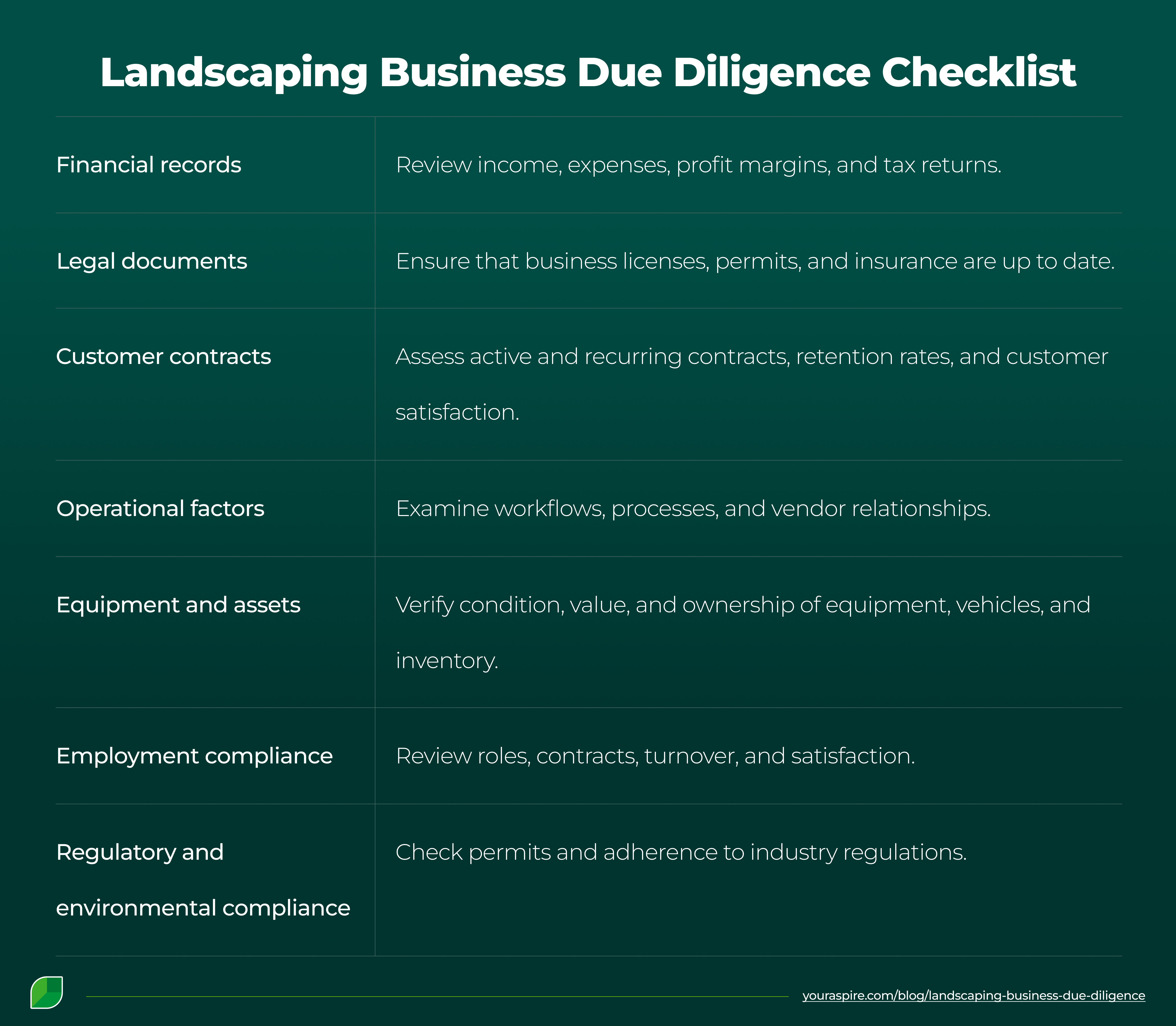
A due diligence checklist usually includes items such as:
Financial records: Review income, expenses, profit margins, and tax returns.
Legal documents: Ensure that business licenses, permits, and insurance are up to date.
Customer contracts: Assess active and recurring contracts, retention rates, and customer satisfaction.
Operational factors: Examine workflows, processes, and vendor relationships.
Equipment and assets: Verify condition, value, and ownership of equipment, vehicles, and inventory.
Employment compliance: Review roles, contracts, turnover, and satisfaction.
Regulatory and environmental compliance: Check permits and adherence to industry regulations.
Below is a detailed breakdown of what each category should include, along with the insights that each type of evaluation can uncover.
How do you review financial records in due diligence?
Accountants should examine income statements, balance sheets, and cash flow statements to assess the overall health of the business. They should look for:
Irregularities, including inconsistency between reported revenue and bank deposits.
Seasonal trends to assess whether the business plans for sustainable cash flow through the slower winter months.
Expenses, including material and supply purchasing patterns, as well as detailed expense reports.
This should include tax returns for the past three years at a minimum, to ensure tax records match financial reports and that there are no potential tax compliance issues. Late tax filings, outstanding balances with the IRS, or other tax issues can create cash flow or even legal issues for buyers.
What legal documents must be checked?
Lawyers should review business licenses and registrations to ensure they’re still valid. They should also review insurance policies and proof of coverage, as well as required local, state, and federal permits to verify compliance with state and federal laws.
Legal teams should also note any ongoing or past litigation, as this can create significant business costs or at least signal that the company is prone to legal issues.
Finally, lawyers should ensure that any environmental compliance documentation, such as pesticide applicator licenses and green waste disposal permits, is valid and current. This documentation is crucial as environmental violations can result in significant fines, cleanup costs, and ongoing liability for the new owner.
How do you assess customer contracts and relationships?
Buyers should review client rosters to assess the number of clients the business relies on for its revenue. They should also review the contract terms under which the vendor company does business with those clients to identify any inherent liabilities.
For example, extended payment terms of 60 days or more could strain cash flow, and vague project scopes could lead to disputes.
Buyers should also analyze contract duration, renewal rates, and customer retention history to assess future revenue potential from existing contracts.
Finally, customer satisfaction data can offer buyers valuable insights into the quality of completed work. This could include surveys, testimonial information, or online reviews that highlight the types of customer relationships the business can establish.
What operational factors should you verify?
Assessing business systems and workflows will provide buyers with insight into whether the business can operate profitably and consistently under new ownership, as well as identify the biggest operational hurdles.
This should include things like:
Core processes: How efficiently does the business move from customer acquisition to job completion? Are there documented processes, or is everything dependent on the owner’s involvement?
Staff management: How effectively does the company onboard and retain staff, and can it scale its workforce to meet seasonal demands?
Vendor contracts: Are supplier relationships stable, or is the business vulnerable to cost increases or supply disruptions?
Seasonal operations: Does the business have a mix of seasonal services? How does management handle peak season demand vs. slower periods?
Operational assessments like these may involve crew interviews, observing actual operations, and comparing documented procedures with what actually occurs in the field.
How do you evaluate landscaping equipment and assets?
Equipment and asset assessments start with an inventory of equipment, vehicles, and tools. Advisors assess the age, condition, and maintenance history of each piece of equipment and estimate its market value.
Landscaping equipment often faces harsh conditions that can accelerate depreciation beyond typical accounting schedules. This can result in equipment that appears good on paper but actually requires major repairs.
Asset ownership will also have a significant impact on business value and integration strategies. For example, leased equipment may have more predictable costs, but it also comes with contract terms that the new owner can’t renegotiate. Owned equipment is capital-intensive, but buyers can sell used landscaping equipment when integrating the business.
What questions should you ask employees during due diligence?
Since labor is the largest expense for most landscaping businesses, understanding the employee experience is crucial for M&A success. Employee interviews help buyers assess cultural fit, identify operational dependencies, and uncover potential risks to employee retention.
Common questions include:
What are your main responsibilities and daily workflow?
Who makes decisions when the owner isn’t available?
How long have you been with the company, and do you plan to stay?
Do you feel supported by management?
How would you describe communication between the office and field crews?
Are you satisfied with the pay, benefits, and workplace culture?
Why do you think employees at this company leave, and what makes others stay?
Answers could reveal warning signs, such as heavy dependence on the owner, poor communication, or widespread morale issues. Conversely, great landscaping employees who understand their roles and feel supported have a significant impact on growth potential.
How can you check for regulatory and environmental compliance?
In an industry where regulatory compliance is crucial, verifying licenses, permits, and certifications helps buyers avoid penalties after acquisitions. This includes business licenses, contractor registrations, and any specialized permits required for activities such as water use and pesticide application.
During due diligence, buyers usually request licenses, review their renewal dates, and check with regulatory agencies for any past violations or outstanding notices.
Employment compliance is also a key issue, especially when it comes to worker safety and classification, so you should verify the following:
That safety training, incident reporting, and PPE comply with OSHA standards.
That I-9 and other documentation are in order for H-2B workers.
That contract workers are properly classified.
Finally, it’s crucial to check for EPA compliance since violations can lead to severe fines and operational restrictions. Due diligence should include an EPA compliance history search, especially for outstanding EPA notices or pending enforcement actions. Verify proper chemical storage, hazardous waste disposal documentation, and stormwater management plans.
How long does due diligence take for a landscaping business?
Due diligence can take anywhere from four to 12 weeks or more, depending on the size of the business and the level of organization in the seller’s documentation.
Responsive small business sellers with well-organized financial records and experienced advisors will make their businesses more attractive to buyers and speed up the due diligence process.
Poor or missing documentation, complex business structures, or outstanding compliance issues can hinder the process. Timing also matters, as peak season can leave key crew members preoccupied with operational problems.
Sellers who invest time into organizing their documentation and addressing issues before the due diligence process can often achieve better sale terms.
What are red flags when reviewing a landscaping business?
Failing to spot red flags during the due diligence process can lead to significant issues post-acquisition. Here are a few of the most common issues to watch out for:
Legal or regulatory issues: Outstanding EPA or OSHA violations, labor law investigations, and liens against equipment or property are major red flags. These types of problems signal the potential for ongoing liabilities and operational restrictions in the future.
Revenue inconsistencies or declining sales: Unexplained revenue fluctuations, declining contract renewals, or a heavy dependence on a handful of customers indicate problems with service quality or market position that could accelerate after the business changes hands.
Poor customer reviews or excessive complaints: Consistent negative feedback and high customer churn reveal reputational damage that will require significant time to improve.
Unlicensed work or missing permits: Expired licenses, missing certifications, and inadequate safety training signal serious compliance issues that could result in shutdowns, penalties, and costly remediation.
Outdated or poorly maintained equipment: Deferred maintenance, neglected service schedules, and technology systems that can’t scale will require immediate capital that may not be reflected in the asking price or financial projections.
While these warning signs might seem obvious, they’re often missed or minimized by buyers eager to close a deal. Understanding common due diligence mistakes helps ensure red flags don’t get overlooked in the excitement of a potential acquisition.
What are the common mistakes in landscaping business due diligence?
How buyers approach due diligence is just as important as what they look for. Below are some common strategic mistakes buyers make during the process, along with tips on how to avoid them:
Rushing due diligence because of competitive pressure or artificial deadlines can lead to overlooked issues. Ensure you allocate sufficient time for the full due diligence process, allowing for some buffer room in case of any complications.
Skipping professional advisors to save costs up front, then missing complex financial, legal, or operational problems. Remember that advisors may be expensive, but they cost less than dealing with post-acquisition business problems.
Ignoring cultural fit by failing to involve or build rapport with key team members. Buyers should ensure that the seller’s team can adjust to their management style and existing team.
Over-relying on financial data while ignoring day-to-day operational issues, equipment condition, and workflow efficiency. Buyers who observe patterns on the ground won’t face surprises that don’t show up on balance sheets.
Inadequate market research on local competition, trends, and regulatory changes could lead to unrealistic growth assumptions. Due diligence processes should be informed by an understanding of the regional market to put findings into context.
Avoiding these common errors won’t always make due diligence run more smoothly but it will set both parties up for a more seamless closing and transition process.
What happens after due diligence is complete?
The findings from the due diligence process will directly impact how negotiations, closing, and transition unfold. Once due diligence is complete, both parties proceed to the final phases of the acquisition as follows:
Negotiation of terms: If buyers identify issues during the due diligence process, they might negotiate for equipment repairs, contract renegotiations, or seller warranties. Sellers should be prepared to justify their asking price or consider reasonable adjustments based on concerns uncovered during the buyer’s review.
Closing the sale: Once both parties agree on terms, the closing phase begins. It typically lasts about two to four weeks and involves finalizing legal documents, transferring licenses and permits, and handling asset transfers with attorneys and any relevant agencies.
Post-sale transition: After the sale is finalized, buyers must work on integrating clients, employees, and business processes to ensure a seamless post-purchase transition. Buyers should reach out to clients and vendors, communicate with employees, and identify any necessary training and development to ensure employees are well-equipped from the start.
Remember, the transition phase often determines the long-term success of the acquisition. Investing time in employee communication, customer outreach, and systems integration yields dividends in terms of business continuity and growth potential.
How can Aspire help streamline landscaping business due diligence?
Operational visibility is the most critical part of thorough due diligence, and Aspire’s landscaping business management platform offers clear, centralized data and workflows across all business processes.
Built-in financial transparency
Aspire provides real-time job costing, profitability tracking, and revenue analysis, making financial due diligence faster and more accurate. Instead of digging through spreadsheets or reconciling data from multiple systems, buyers can immediately see historical performance trends, estimate accuracy rates, and the true profitability of each job.
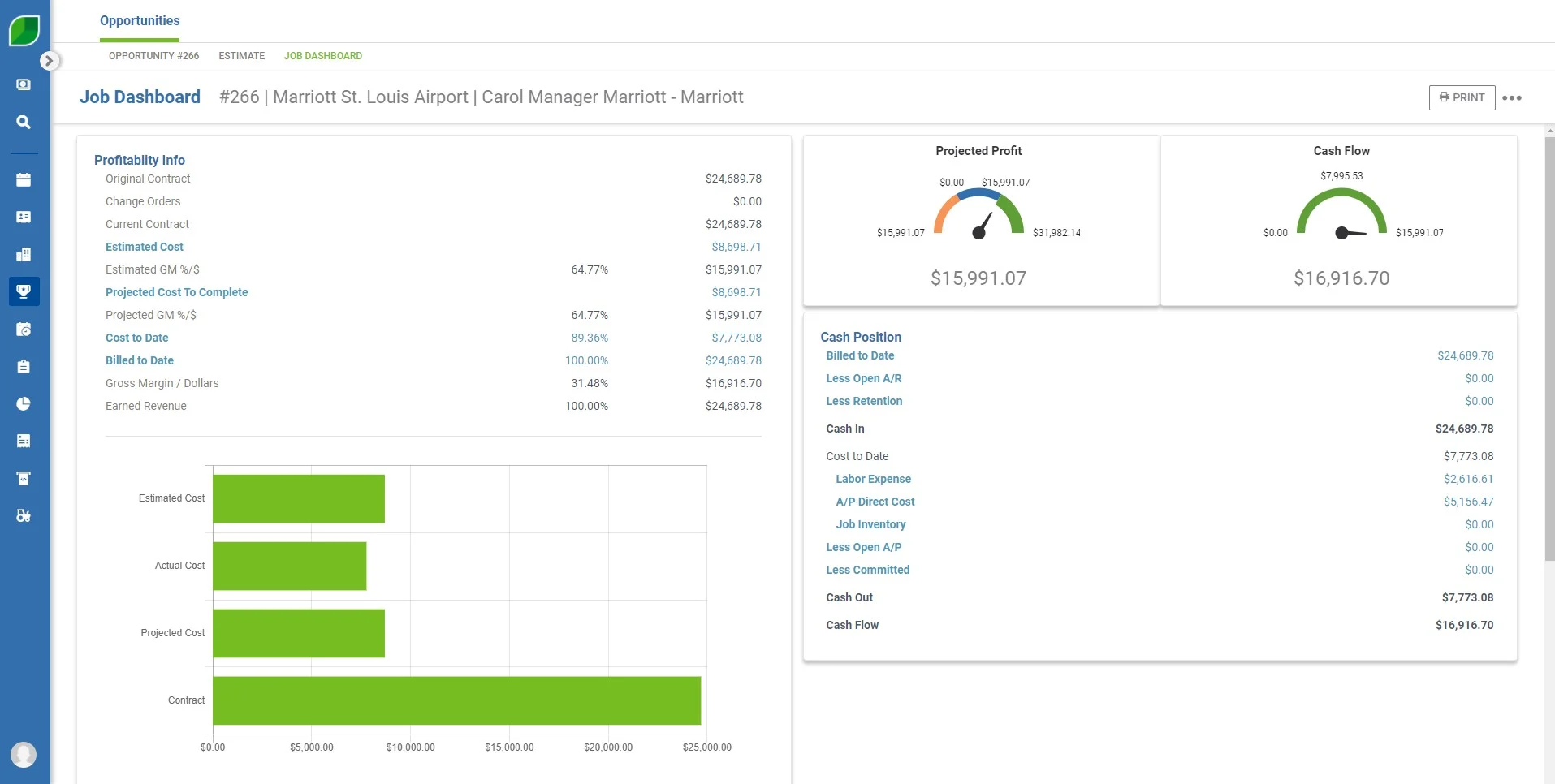
With Aspire, it’s easy to see what service lines are the most profitable, what contracts are underperforming, and how seasonal patterns impact cash flow.
Operational insights beyond the numbers
Aspire combines field service and back-office data to identify operational inefficiencies and bottlenecks that traditional software may overlook. Buyers can analyze crew productivity, equipment utilization, customer satisfaction trends, and service delivery patterns to gain a comprehensive understanding of operational health.
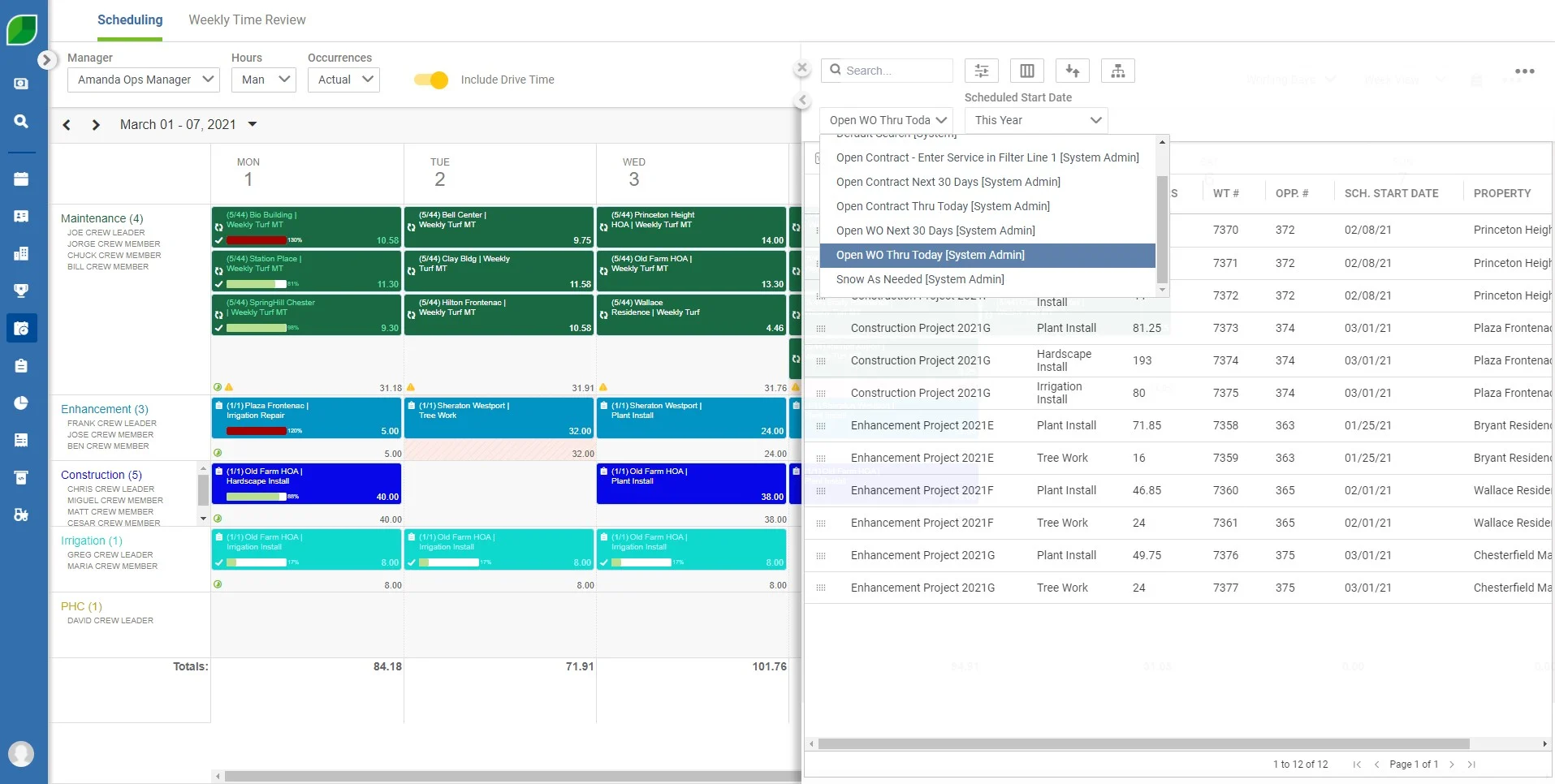
Integrated scheduling, CRM, and mobile features also make businesses more organized and scalable—critical factors for post-acquisition growth.
Streamlined due diligence
Aspire simplifies due diligence for both buyers and sellers. Professional advisors can generate the reports they need, while fast, accurate data boosts buyer confidence in the businesses they’re acquiring.
Best of all, Aspire makes all your business processes scalable for easier M&As. As John Puryear, owner of Puryear Farms, says, “Any business should be able to lose a key player, or two key players, or the owner and continue to operate without missing a beat.”
Ready to see how Aspire can make your business more visible, flexible, and scalable? Book a demo today for a personalized product tour.










 866-727-7473
 Schedule Demo
 390 S Woods Mill Rd #300 Chesterfield, MO 63017


