
The email lands in your inbox at 9 a.m. with the dreaded words: "We didn't see anyone last night. We're not paying."
You know for a fact your crew was there, you dispatched them, and they reported the job done, but now you've got to prove it.
Delayed payments for 30 days to 3 months, or no payment at all.
Claims that you weren't there eat away at customer relationships and turn into accounts receivable headaches that eat up hours of management time.
Most snow removal operations eventually prove service happened, but not before you've spent way too much time digging through logs, calling drivers, and piecing together evidence. By the time you do get the proof, the damage is done, and customer relations have taken a hit.
The solution is to make every visit a rock-solid record that's hard to dispute.
Your response to the customer now becomes simple: "Here's a photo showing your entrance at 2:47 a.m., a GPS track that shows we were there for 23 minutes, and a record of the 12 bags of salt we applied."
Dispute resolved, payment processed, customer loyalty saved.
What Counts as Proof—The Documentation Trifecta
Three metrics make service defensible and create operational success in protecting your business from payment disputes:
Time data: Digital timestamps showing exactly when you arrived and departed - not "around 3 a.m." but 2:47 a.m. sharp and outta there by 3:10. Precision matters when customers start questioning whether you were even there.
Location proof: GPS track or geo-fence entry/exit confirming physical presence at the address. Your GPS tracking system documents that your equipment was actually on-site.
Condition evidence: Before/after photos plus material usage records that show how many salt bags you used, gallons of brine, or what the spreader controller readouts were. Visual proof combined with data makes for airtight evidence that can't be argued with.
The thing is, just one of these elements can be disputed.
GPS alone? "Might have just driven past the lot".
Photos alone? "Could have been from the last snow".
But all three together? It's like having 100% proof that you were there and did the job properly.
The key documentation areas you need to capture (100% of the time):
Any areas with the highest liability exposure (like ADA spots)
Main entrances and exits (customers can see these spots)
Loading docks and fire lanes (super critical to business)
Any areas called out in your contract
The thing about disputes is that customers rarely argue about service when you share your documentation with the invoice. Being open and transparent right from the start builds trust and keeps that "you weren't here" nonsense at bay.
Companies that standardize this documentation get it right every time and turn service verification from a time-consuming nightmare into an automated process that keeps cash flow on track and frees up management to focus on other tasks.
Standardize the Evidence Pack
Having a consistent approach to documentation means you get reliable evidence every time, no matter where you're sending your crews.
Photo protocols that create solid visual proof:
Take a before-and-after sequence: start with a wide shot to show the whole scene, then zoom in on key areas to show what's changed.
Frame your shots so you can see what's where: grab a shot of the building sign, light poles, or anything else that puts the location in context.
Make sure they're decent shots: no glare or shadows, good lighting, and a clear focus.
Get those priority areas on camera every time: ADA spots, entrances, crosswalks, loading docks – anywhere where liability and customer experience matter most.
Material application documentation proves what you used:
Salt bag counts: "Applied 12 bags of rock salt" gets the details on paper.
Brine volumes: "Applied 45 gallons of liquid brine" gives a clear record of what you used and how much.
Spreader controller readouts: A screenshot showing material dispensed from your equipment provides automated verification.
Notes on your application: "Heavy application to the north entrance because the snow was drifting there" makes it clear why you made that decision.
The AR test determines whether your filing system can get your team to the proof for a specific site and date in under 60 seconds. If so, your system is too slow to handle disputes.
The “checklist” approach ensures complete documentation every time.
Tie site-specific checklists to each location to ensure nothing is missed.
Take a few minutes before you wrap up the job to go over the checklist: did you log the arrival and departure times, take the required photos, record the material applied, and capture the GPS location?
This way, you know for sure that you've got the proof you need and can hand it over to the customer. And when disputes come up, it's like having a ready-made case file.
Automate Where Possible
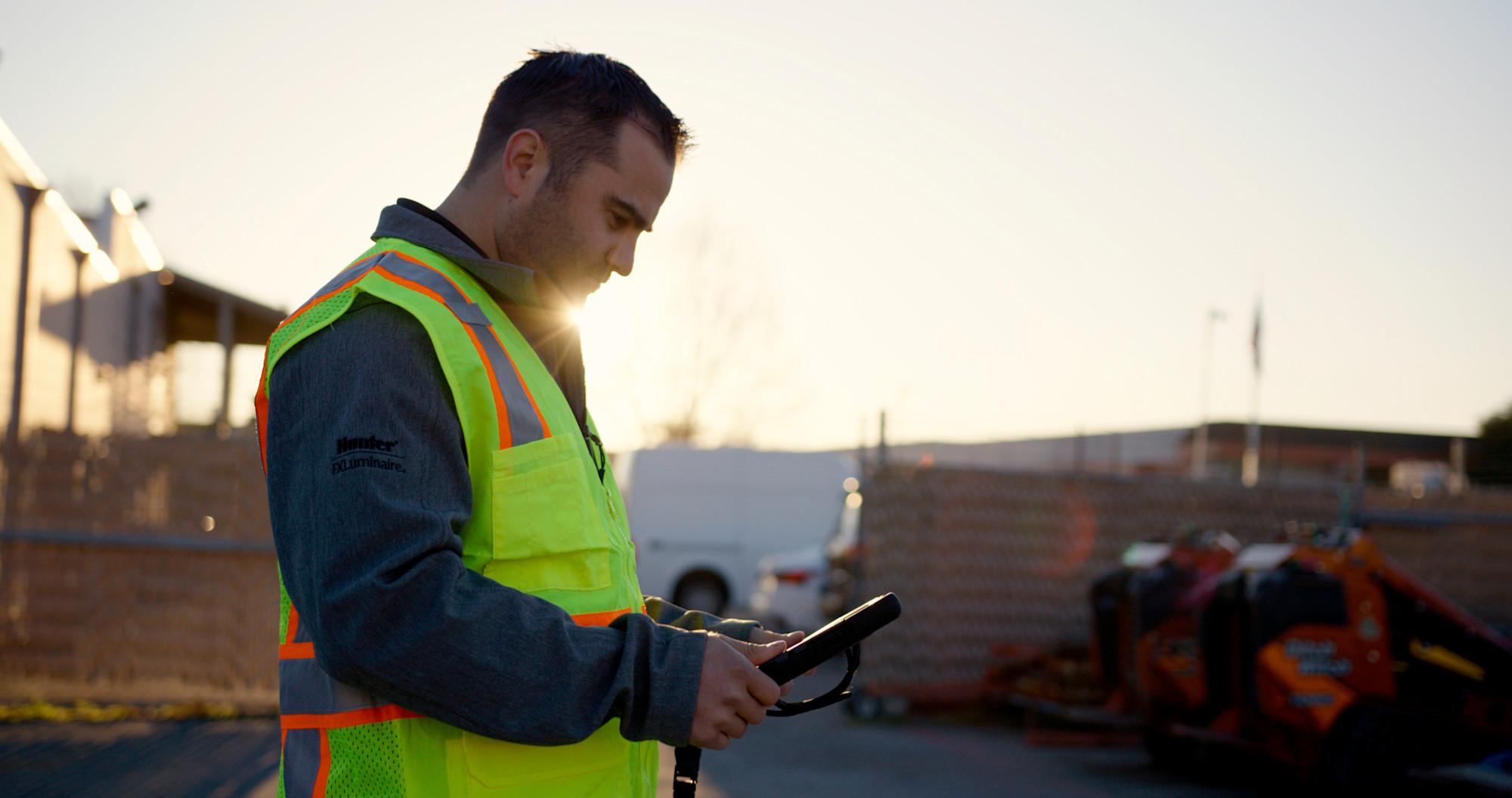
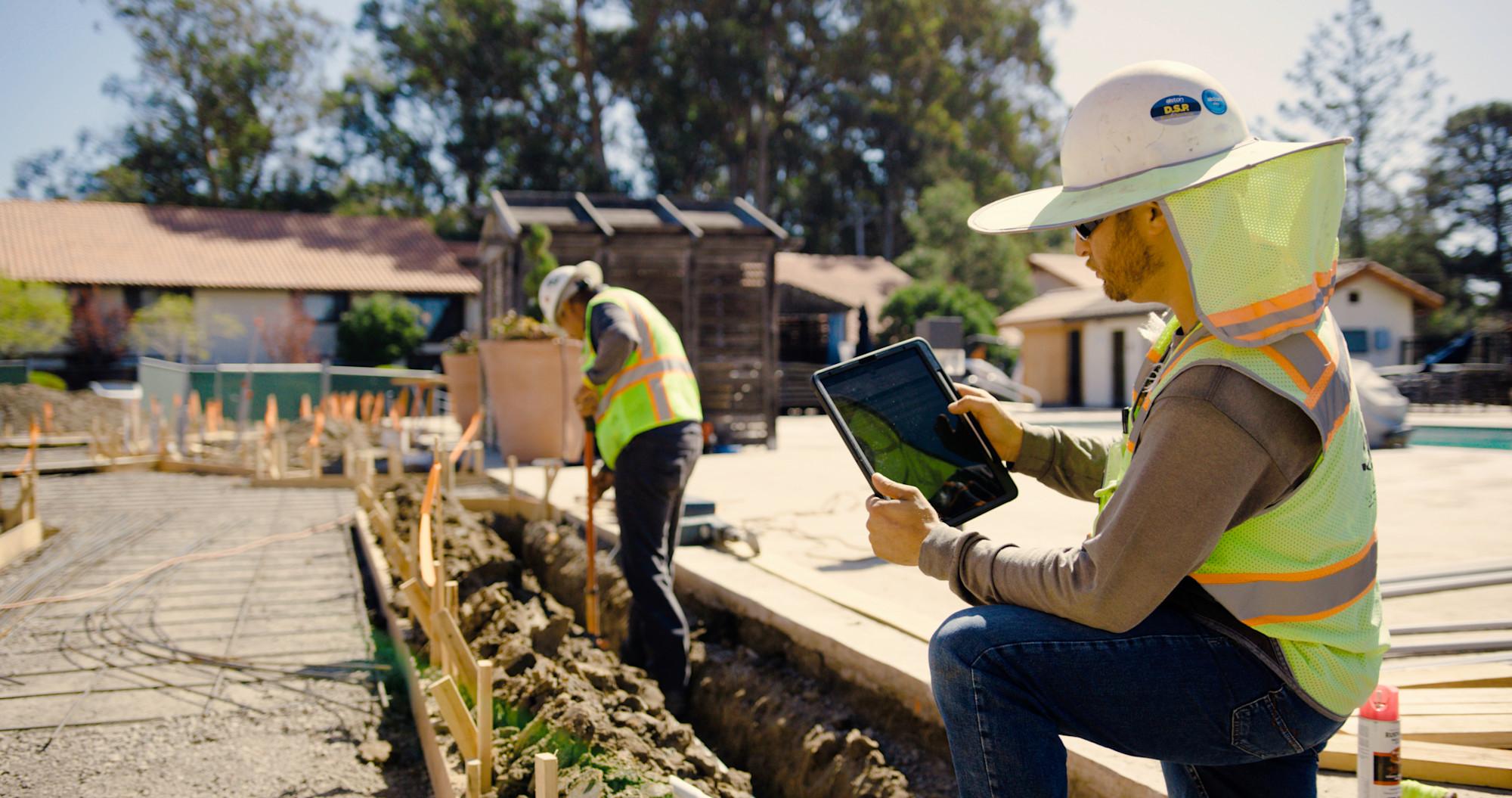
Mobile technology eliminates documentation gaps and reduces the burden on crew members focused on completing service efficiently.
Geo-stamped checklists tied to site addresses create automatic location verification:
Can't complete the checklist until the device location matches the geo-fence boundary
Photo capture required to mark job complete—prevents "I forgot" excuses
Arrival and departure times are automatically recorded when you open and close a checklist
GPS and mobile app integration create corroborated evidence:
The vehicle GPS tracks the route and confirms that all the equipment is present
The app captures the site details and the service completion info
A corroborated timeline shows the truck GPS location at the address while the app shows the completion times on the checklist - so if there's a dispute weeks later, we've got the evidence to back you up
The benefits compound across your entire operation:
It takes the documentation burden off your crew - the system does all the data capture for you as you work
It eliminates the time wasted on trying to read handwriting and figure out what it means
It creates consistent evidence quality across the whole team, regardless of how your crew members do things
It gives dispatch and management real-time visibility into how the service is going, so you can keep an eye on progress
It gives you instant access to accounts receivable info when a customer raises a claim
Start with something simple: a smartphone photo with the GPS metadata might seem basic, but it beats having no documentation at all. Then you can build up to more integrated systems as your team gets used to the process.
Sell automation to your crew as protection for them: "This shows you did the work, so the customer can't say you didn't."
When your crew understands that the tech is there to look out for them, adoption will speed up, and mobile updates will keep getting better.
How Proof Speeds Cash
Proactive documentation has a real impact on cash flow and accounts receivable. Companies that send proof with every invoice by default reduce payment disputes long before they occur.
Sending proof with every invoice creates transparency and builds trust:
Summary line: Service completed 1/15/26, 2:47 - 3:10 a.m., 12 bags salt applied
Linked documents: 4 to 6 key photos showing before and after conditions, a GPS summary confirming the location and time frame, and a material application log
Proactive transparency means customers can verify service immediately, instead of questioning whether you even did the job
The measurable impact of AR is reflected in your financial results:
You get fewer payment disputes when you send documentation with the invoice – customers can't dispute the fact that you were there when the evidence proves it
You get paid faster when customers verify the service as soon as they get it, rather than putting it on the back burner while they investigate
You cut down on all those back-and-forth cycles that waste time and delay payment by 1-2 weeks per dispute
Dispute resolution speed is what separates companies that are on top of it from those that are scrambling:
With documentation - one email, same day - customer raises a concern, you send over evidence, issue closed
Without documentation - multiple emails and phone calls, crew member interviews to try and reconstruct what happened - delay of at least 3-7 days
AR's benefit is that you can handle disputes without involving your operations team.
Use documentation in your quarterly business reviews to strengthen relationships and justify pricing:
Show clients your reliability with data they respect - 47 visits this quarter, 2.3-hour average response time.
That kind of consistency builds loyalty.
Justify scope changes when conditions are outside the contract parameters: "Photos show the storm caused drifting patterns that added 15 minutes per visit. Let's discuss adjusting the contract."
Show value against competitors with visual proof of operational success: "Here's before and after from that 14-inch storm. Your lot was clear for business while competitors were stuck."
Visual proof of operational success - that's what creates loyalty and supports retention at renewal time.
Close the Loop Internally
Documentation quality isn't something that improves by accident - it needs consistent management focus and accountability systems to drive the proper outcomes.
Weekly quality audits catch problems before customers do:
Look at 10 random sites from the last week
Check completeness - are all the photos there? Is the GPS data available? Are the materials recorded? Do the timestamps make sense?
Identify the gaps and find out which crew is lacking so you can address training needs and hold people accountable
System refinement turns feedback into better processes:
Track which documentation gaps actually cause payment disputes - missing photos, poor lighting that obscures the conditions, no material logs that leave you wondering what happened
Update the protocols to deal with the recurring issues instead of just fighting the same problems over and over
Celebrate the improvement when the teams deliver results - dispute rate dropped 30% this quarter. Your documentation is making a difference and protecting the cash flow.
Manager accountability keeps quality consistent:
Get a sample of documentation every week as standard ops, not just when you're dealing with a dispute that's already cost you time and credibility
Make documentation quality a metric in crew evaluations so people understand what's expected of them
Recognize crews with consistently good documentation to reinforce the behaviours that protect the business
Regular audits drive continuous improvement.
Crews know documentation matters, managers keep an eye on quality control, and the team benefits when disputes go down and payments go through faster.
When you rely on consistent evidence collection as a core function of service delivery, customers trust your transparency and professionalism.

Make Every Visit Defensible
It's simple: continue scrambling for proof or make every visit defensible by default.
The Accounts Receivable Reality Check starts by cutting through the red tape of disputed invoices and getting cash flowing faster - when customers get instant confirmation that the job was done right.
No more hassle - companies that get their act together and start collecting evidence can safeguard their margins and avoid the endless back-and-forth that holds up payments.
Start this week with a focused pilot: Pick 5 of your top-paying customer sites and make the whole spectrum of document collection work - track time, stamp in with GPS, take snaps, and keep a log of the materials. Then see what happens over the next 30 days - how much do disputes drop compared to your other customer sites without all this documentation?
Expand on what's working.
And that's when the magic starts to happen - when your crews begin to see the benefits for themselves - they're protected from getting nickel-and-dimed for nothing, and the payments start rolling in.
Before you know it, this is just the way things are done - no extra hassle, no added stress.
Turn service verification into a tool that puts you ahead of the game - one that keeps your customers happy and drives real results for your business.
Request a demo to see how the right business management software can give you automated documentation, GPS tracking, and mobile capture at your fingertips—all the tools you need to stop disputes before they get started.







 866-727-7473
 Schedule Demo
 390 S Woods Mill Rd #300 Chesterfield, MO 63017


