
Table of Contents
Table of Contents
- Do you need a license to start a landscaping business in Illinois?
- What are the types of landscaping business licenses & permits in Illinois?
- Step-by-step process to get a landscaping business license in Illinois
- How much does an Illinois landscaping business license cost?
- What are the most common mistakes to avoid when getting a license?
- How Aspire helps landscaping businesses stay organized & compliant
- Over to you
- Disclaimer
You’re about to start a new landscaping business in Illinois, but you struggle to understand the whole licensing process.
What legal requirements do you need to meet? Are there fees and paperwork involved?
Since it’s a new venture, you want to ensure full compliance with the law and avoid potential fines or business disruptions.
This guide will walk you through:
The types of licenses that are required to start a landscaping business in the Prairie State.
Detailed steps on how to get a license.
Tips to stay organized and avoid costly mistakes.
Let’s get started.
Do you need a license to start a landscaping business in Illinois?
Contractors do not need a state-level landscaping contractor license to start their landscaping business in Illinois.
However, certain cities (e.g., Highland Park, Highwood, Lake Forest, and Chicago) require landscaping licenses for businesses operating within their jurisdictions. You need to check with your local city and county to inquire about additional licenses your landscaping company may need.
At the state level, the licenses that landscaping companies need include:
Business registration license.
Commercial applicator license if your services include spraying pesticides.
Nursery dealer or Nurseryman license if you intend to sell shrubs, trees, or plants.
What are the types of landscaping business licenses & permits in Illinois?
Here are the permits and licenses you’ll need to launch a landscaping business in Illinois:
General business license
Businesses in Illinois need a certificate of registration or license from the Illinois Department of Revenue (IDOR) to conduct business in the state. It’s often referred to as a seller’s permit.
It’s an essential piece of the business puzzle. It provides a tax ID number for the business to track the kind of taxes you owe the state.
The registration can be done:
Online via MyTax Illinois, and it takes one to two business days.
By mailing a completed registration form to the address on the form. This takes four to six weeks.
Keep in mind that you need to define your business structure before starting the registration process.
Landscaping contractor license
Contractors don’t need a statewide landscaping license to operate in Illinois. However, certain cities require landscapers to be licensed and registered.
Here are some of them:
Evanston
Highland Park
Village of River Forest
Rolling Meadows
Lake Forest
Chicago
Village of Northbrook
Markham
Harwood Heights
Village of Schaumburg
Elgin
To apply for a landscaping contractor license in most of these cities, you need to:
Complete an application form.
Provide proof of insurance (general liability, workers’ compensation, and property damage).
Secure a surety bond.
Pay an application fee.
It’s always best to contact the officials in your city, village, or county to confirm which license is required for your landscaping business.
Pest control license
Will you be spraying pesticides or herbicides in your new landscaping venture?
If yes, you’ll need a commercial applicator license from the Illinois Department of Agriculture (IDOA). It certifies you to purchase and apply general and restricted-use pesticides.
To get this license, you must:
Pass a general and category exam with a score of 70% or more.
Complete a safety education program and training.
Nursery dealer permit
If your business involves selling plants, flowers, or shrubs, you need a nursery dealer license from IDOA.
This protects businesses and buyers by ensuring that pest-ridden plant stock isn’t passed around.
Step-by-step process to get a landscaping business license in Illinois
Here’s how to get the necessary permits your landscaping company needs to operate in Illinois:
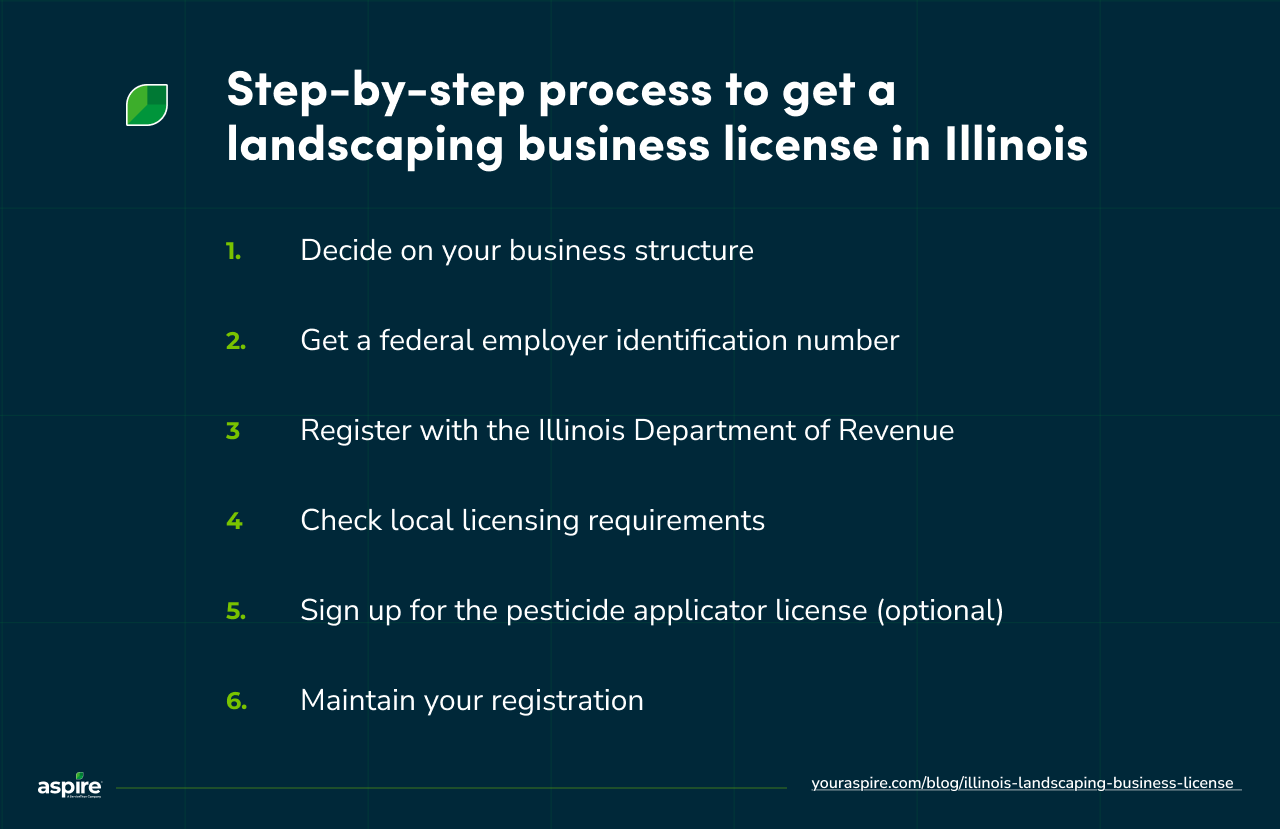
1. Decide on your business structure
Choose an appropriate legal structure for the business. Do you want a sole proprietorship, LLC, or corporation?
A sole proprietorship is a good fit if you want to handle things personally. You only have to register a doing-business-as (DBA) name as required by law.
If you would rather the business exists independently from you, a corporation or LLC is better. With this structure, your personal assets are protected from any liability that may arise from the business. Plus, there are several tax cuts and reductions you could benefit from.
2. Get a federal employer identification number (FEIN)
You need a FEIN if you intend to:
Hire employees
Operate a partnership or corporation
Change business structures or ownership
It also allows you to file business taxes.
To obtain a FEIN, visit this IRS website and complete the application. You’ll need a Social Security number and a business entity type.
3. Register with the Illinois Department of Revenue
Your landscaping business must be registered with the IDOR to operate in Illinois. You can register online, by mail, or in person.
To register electronically, visit MyTax Illinois. Select Register a New Business on the home page to get started, and wait one to two business days for feedback.
If you prefer to send mail, download and complete this Form Reg-1. Mail it to the address on the form and wait four to six weeks for approval.
Once approved, you’ll be issued a certificate of registration or license and a taxpayer ID.
4. Check local licensing requirements
Different cities in Illinois have their own licensing requirements and processes. Contact your local city or county clerk’s office or licensing department for additional information.
Most of them typically require that landscaping businesses:
Get insurance for general liability, workers’ compensation, and commercial vehicles.
Obtain a surety bond.
Pay a license application and renewal fee.
Provide proof that the owner doesn’t have a criminal record.
Once you have the required documents, complete and submit the application form to the local authorities for approval.
5. Sign up for the pesticide applicator license (optional)
This is important if you will apply pesticides as part of your landscaping service. There are two types of commercial licensing your business can apply for:
An applicator license that allows a person to use or supervise the use of pesticides.
An operator license that enables employees to use pesticides under the supervision of an applicator.
Here’s how to register for the license:
Register for the exam with the Pesticide Safety Education Program.
Pass both the general and category exams by 70% or more.
Receive the license application in your mail.
Fill out the application and submit it to the IDOA with the appropriate fee—$240 for a three-year applicator license with adequate insurance coverage or $180 for a three-year operator license.
6. Maintain your registration
Ensure your business is compliant by renewing your licenses regularly. Business licenses in most Illinois cities must be renewed annually.
Mark your calendar to stay up to date, avoid hefty fines, and prevent your business from being shut down.
You also need to maintain your insurance policies and any pesticide licenses.
How much does an Illinois landscaping business license cost?
Here’s what it costs to secure a landscaping license in Illinois:
General business fees:
Filing fee for an LLC: $150 per annum (required if you’re forming a limited liability company).
Annual renewal: $75.
Agent costs (optional): $40–$500.
Pesticide applicator license:
Certified applicator fee: $240 for a three-year license.
Certified operator fee: $180 for a three-year license.
Additional costs you may incur will come from the city in which you intend to do business and will vary from location to location.
What are the most common mistakes to avoid when getting a license?
As you begin the landscaping business journey, here are some errors you must avoid:
1. Skipping state registration
While Illinois doesn’t require a statewide landscaping business license, all state businesses must register with the Department of Revenue for tax purposes.
Failing to do so leads to sanctions or the shutdown of your business.
2. Overlooking local license requirements
While there’s no statewide landscaping license, many cities require businesses to obtain specific permits to operate within their territory.
Always check with the city office to confirm what’s required before your operations begin. This ensures clients won’t doubt your legitimacy and your business won’t be fined.
3. Neglecting FEIN
Even though you’ve obtained a certificate of registration from the state, you still need a federal employer identification number from the IRS.
Failure to acquire it exposes you to legal and operational issues. You may experience challenges with banking, hiring, or filing taxes.
In fact, most banks won’t allow a corporation to open a bank account without an FEIN.
4. Failing to register for a pesticide applicator license
If your services include spraying herbicides or pesticides, you need a permit.
Not getting one means opening the business to litigation, fines, and negative reviews.
How Aspire helps landscaping businesses stay organized & compliant
As you plan to start your landscaping venture, have you given much thought to how you will run business operations?
How will you submit proposals and bid on jobs? Do you have a system for scheduling projects and assigning tasks to the crew? How about sending invoices, tracking finances, or generating reports?
It’s okay if you haven’t thought about all of that yet.
That’s why Aspire was created. It’s a field service management software platform that helps landscapers take control of their operations and stay organized.
Here are the different ways it helps you do that.
Contract & proposal management
Bidding on new jobs doesn’t have to be a tedious process, and Aspire ensures that with its contract management feature. It provides proposal templates you can easily modify and send to customers.
The professional design makes it easy for clients to get a good grasp of the proposed project, including associated costs. If they like the contract, clients can approve it there and then on Aspire.
Additionally, you can find all of your proposals and contracts in a single location. This lets you review them for discrepancies or have the necessary documentation to hand if an incident occurs.
Invoicing & payment processing
The typical way to send an invoice to a landscaping client is to get to the office, create an Excel document, fill it in, double-check that all the information is correct, and email it to the client.
However, Aspire provides an easier alternative. Its invoicing feature lets you send invoices and receive payments on the platform.
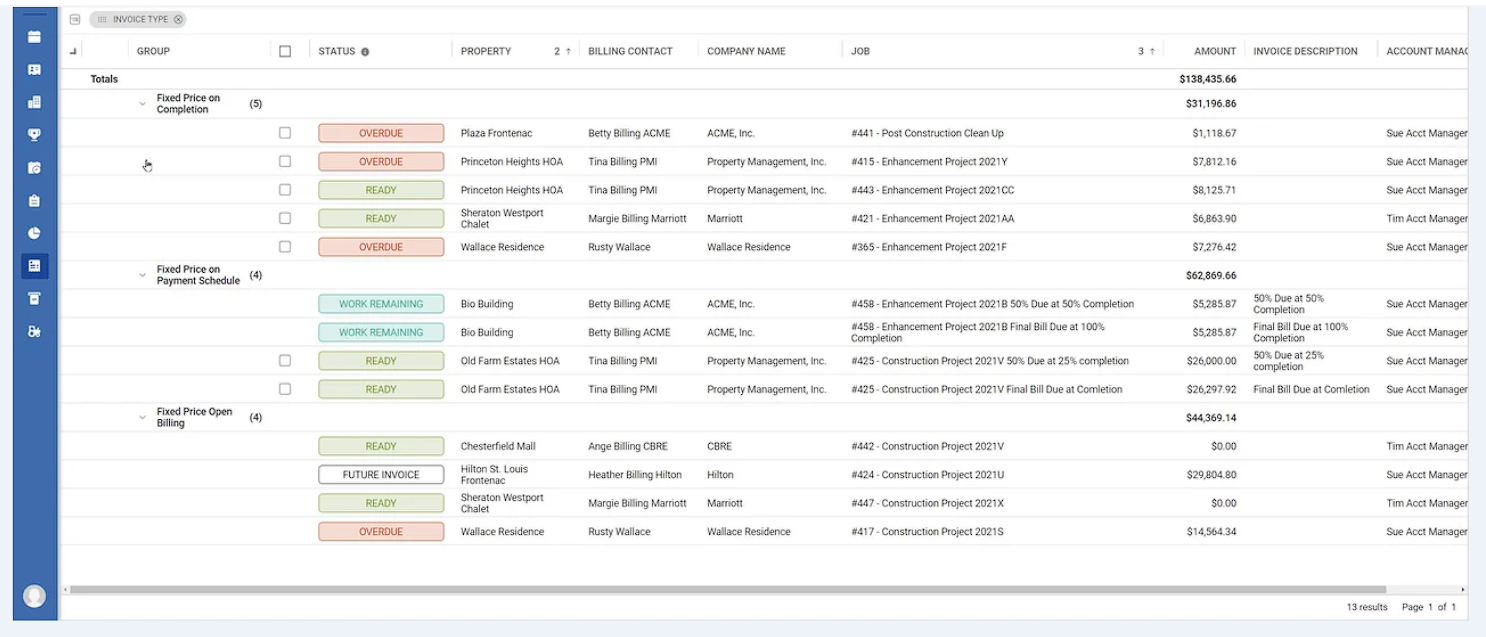
The feature lets you track financial transactions, including paid invoices, overdue payments, and partial payments. You can also find data such as project status, account management, and property name, providing a well-rounded view of your finances.
Business reporting & documentation
Another way Aspire helps you stay organized is by providing insights into your business operations.
Its reporting feature lets you monitor the client retention rate, total cash inflow and outflow, projected profit, job inventory, current losses, and direct costs.
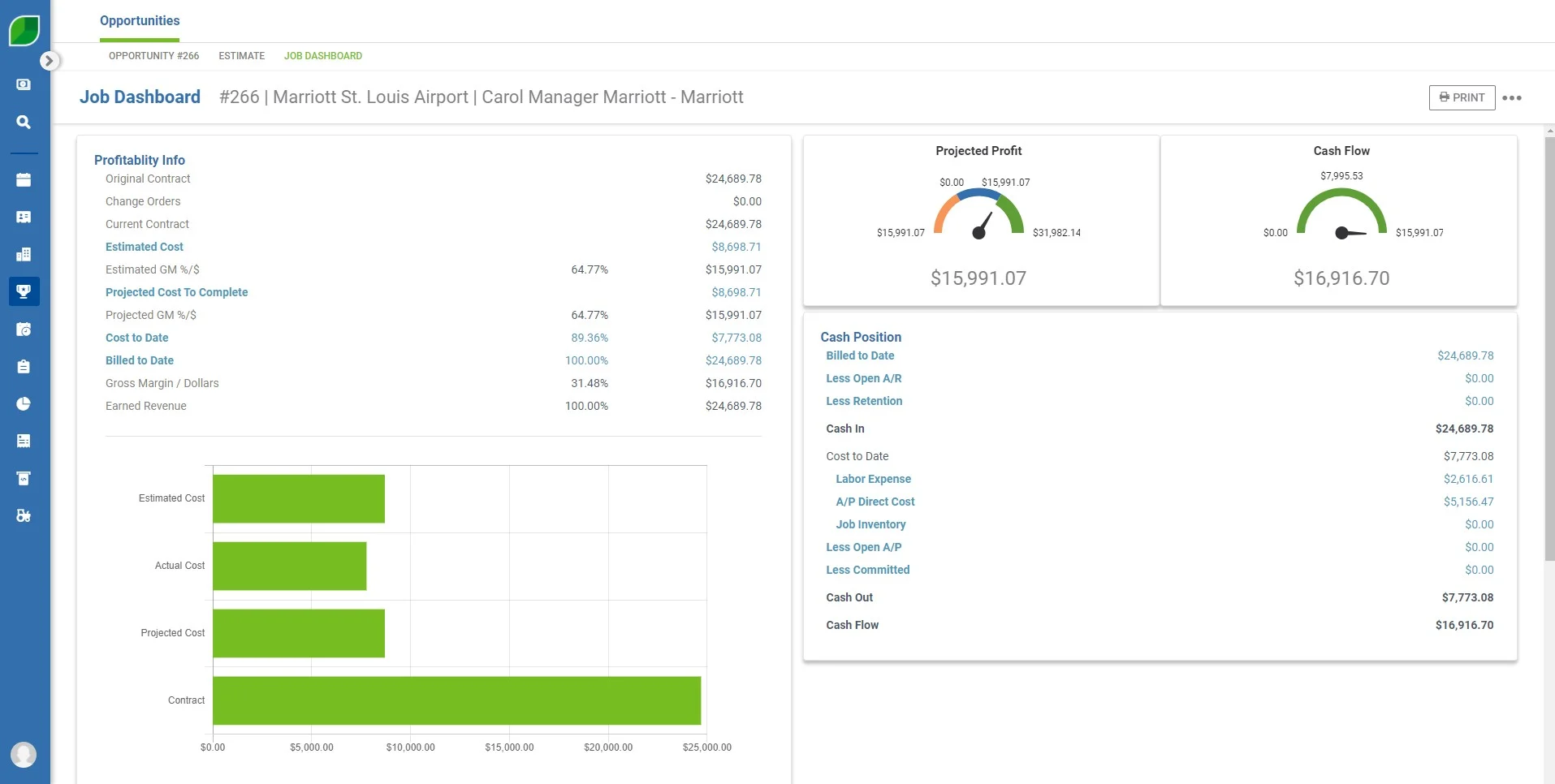
You get detailed information to help you make informed decisions, such as:
Labor and material costs
Employee productivity
Tax filings
Work tickets
This helps you identify areas where the business has improved or where proactive action is needed.
Because data is centralized on Aspire, you can make decisions based on the profitability of contracts and the service mix.
Are snow removal services improving the company's profit, or is it irrigation that’s bringing in the big bucks? You can find out on Aspire.
Scheduling & job management
Aspire provides a system that enables landscaping companies to plan projects effectively, avoiding double bookings and conflicts.
Its scheduling feature includes a specialized calendar that lets you distribute projects throughout the month. You can also assign or reassign crews to projects that match their expertise.
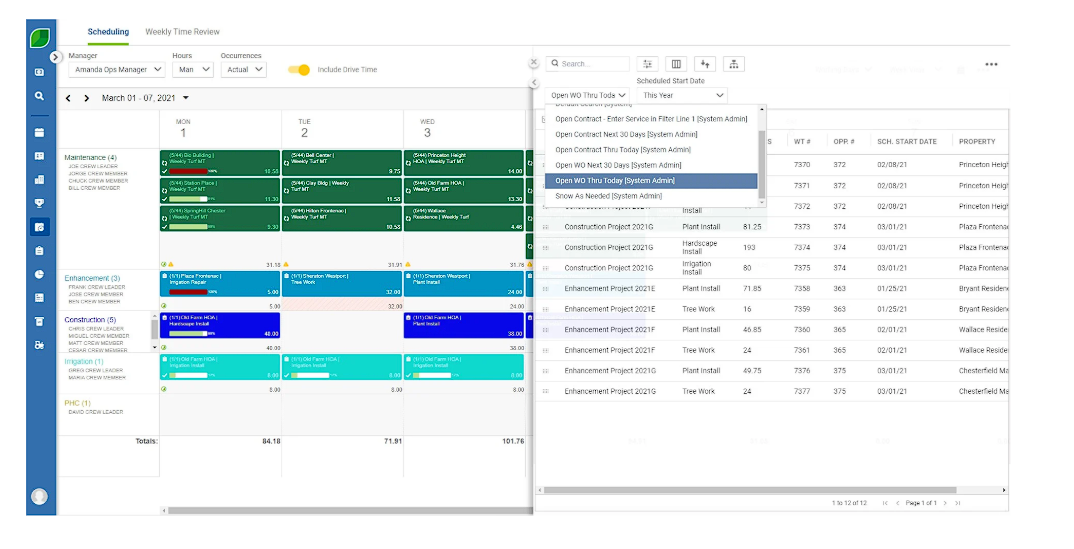
Aspire’s scheduling helps you manage your workload effectively, ensuring projects remain on track and productivity is maintained.
Over to you
You came looking for information on landscaping business licenses in Illinois, but you’re leaving with a clearer picture of how to manage your new operation.
Getting the required licenses will help you get started. However, Aspire lets you take control of the business.
It allows you to manage processes from anywhere and grow the company.
You get to create proposals from templates, follow up with clients, schedule and assign projects, receive payments, track hours, assess jobs, and generate reports, all from one platform.
Get a firsthand experience of how Aspire works. Book a free demo today.
Disclaimer
This article is for informational purposes only and should not be considered legal or financial advice. While every care was taken to use official sources, you should always verify requirements on the Illinois government websites.











 866-727-7473
 Schedule Demo
 390 S Woods Mill Rd #300 Chesterfield, MO 63017


