Table of Contents
Table of Contents
- What is landscaping business debt consolidation?
- How does debt consolidation help landscaping businesses?
- What are the potential downsides of debt consolidation for a landscaping business?
- Why do landscaping businesses accumulate debt?
- What types of debts can be consolidated?
- Who offers debt consolidation for landscaping businesses?
- How do you qualify for debt consolidation as a landscaping business?
- When should you consider debt consolidation for your landscaping business?
- What is the process for consolidating debt for a landscaping business?
- How do you choose the best debt consolidation lender?
- What alternatives exist to debt consolidation for landscapers?
- How can landscaping businesses avoid future debt problems?
- Frequently Asked Questions (FAQs)
Your landscaping business is thriving, thanks to several loans you’ve secured: equipment loans, invoice financing, a business line of credit, and term loans.
They’ve helped you through critical moments and covered essential expenses.
But now that your income is more consistent, a larger portion of it is going toward loan repayment rather than being saved. Each loan comes with various interest rates, due dates, and payment terms, making repayment overwhelming and harder to manage.
One way you can regain control is through consolidating your loans.
It simplifies repayment by consolidating multiple debts into a single loan with a single monthly payment. In some cases, it may even lower your interest rate.
Keep reading to learn how debt consolidation can help streamline finances, reduce costs, support long-term business growth, and give you peace of mind.
What is landscaping business debt consolidation?
Debt consolidation is a strategy that allows you to merge multiple loans or cash advances into a single, manageable loan. Instead of juggling several payments, you make one monthly payment.
It can reduce interest costs and simplify the repayment process.
The concept is simple: when you have several debts, interest adds up across multiple loans, and repayment timelines stretch out.
If not properly managed, this can lead to a cash crunch.
With debt consolidation, you have only one monthly payment, including interest, making it easier to manage your finances.
How does debt consolidation help landscaping businesses?
Consolidation enables you to streamline the repayment process, reduce financial stress, and create room to grow the landscaping business.
In practical terms, here’s how it helps:
Simplified debt management: Dealing with multiple creditors, varying interest rates, and due dates can become stressful. Debt consolidation helps combine multiple payments into one.
This helps with organization, budgeting, and financial planning. It also reduces the chances of missing a payment, which could impact your credit.
Improved cash flow: Multiple loans mean multiple interest charges that drain your monthly revenue. With consolidation, your debt costs are reduced, freeing up cash. Instead of fluctuating repayment amounts, you’ll have more structured, predictable payments.
This helps the business budget, save money (especially during slow seasons), and plan for future expenses.
Fixed repayment terms: With a consolidation loan, you get a set payment plan. That means you can nail down exactly when you’ll be debt-free, which makes budgeting easier and keeps you from dragging out those financial commitments too long.
Protects business credit and boosts your credit score: When servicing multiple landscaping loans, it’s easy to miss payments. And that, in turn, can hurt your business credit. Consolidation reduces that risk, enabling you to stabilize or improve your credit over time and get access to future financing.
Creates space for long-term growth: With loan repayments streamlined and predictable, your focus shifts from survival to strategy, and you invest in systems that support growth and expand your services.
What are the potential downsides of debt consolidation for a landscaping business?
Debt consolidation doesn’t always translate to lower costs and all-around ease for your landscaping business loans.
Sure, it can be helpful. But on the other hand, it could lead to:
Longer repayment terms: When you consolidate loans, you can lower your monthly payments by extending the repayment term. But you will likely be paying the loan over a longer period.
So, while your monthly payments are lower, the longer repayment period might mean you pay more interest overall. That’s why it’s important to figure out the total amount you’ll repay before you sign up for a debt consolidation loan.
Higher fees: There are often additional fees that come with consolidating loans, such as prepayment penalties, administrative fees, or origination charges. If these fees are high, they could undermine the financial benefits of consolidation, making it less cost-effective.
Deeper debt: Consolidation is a debt management tool. While it can help increase cash flow in your landscaping business, it’s not a substitute for financial management or for avoiding overspending. If you take on additional debt or spend the money saved from consolidation, you may end up in deeper debt.
Why do landscaping businesses accumulate debt?
Landscapers take out loans to cover startup costs, invest in growth, and manage operational issues such as payroll, equipment costs, and seasonal cash flow gaps.
While these loans can help keep the business running and support expansion, they can pile up over time, especially when multiple forms of financing are used, and the focus shifts away from profitability.
Olin Unruh, owner and CEO of Wetlands Irrigation, based in McPherson, Kansas, explains that his business went into debt due to poor management and a lack of profitability.
He describes having a grow-at-all-costs mentality and the entrepreneur’s eternal optimism — the belief that “just grow or sell more and these issues will work themselves out,” while ignoring the fact that, without profits, growing (through loan financing) can cause you to lose money even faster.
Other reasons why landscapers might accumulate debt include:
Delayed or inconsistent client payments: Sometimes, landscaping businesses, especially those with commercial contracts, have to wait weeks or even months for clients to pay.
To cover immediate expenses, such as payroll, overhead, or materials, landscapers may have to rely on short-term financing.
Underpricing or thin profit margins: Landscapers may also incur more debt by underpricing their services. In a bid to close more deals, they offer prices that don’t reflect actual labor, overhead, or growth costs. They have to take on more loans just to keep going.
Poor financial management: Taking out loans for equipment or getting startup cash can be a smart move for your landscaping business.
But if buying new gear becomes more of a flex — like when landscapers finance new mowers every year without landing those big-money contracts — the bills can pile up quickly.
What types of debts can be consolidated?
If you’re considering debt consolidation, here are common loan types you can merge into one:
Equipment loans: Financing you use to purchase landscaping equipment such as mowers, trucks, or specialized tools.
Business line of credit: Funds to cover payroll, materials, and short-term cash flow gaps.
Invoice financing: Loans taken against unpaid client invoices.
Merchant cash advances: High-cost advances repaid through daily or weekly deductions from business revenue.
Term loans: Business debts with stable interest rates and fixed repayment periods.
Business credit card debt: Used for fuel, supplies, and daily operational expenses.
Who offers debt consolidation for landscaping businesses?
If your landscaping business is juggling debt, you can select debt consolidation options from government-backed loan programs and certain finance companies.
Here’s a breakdown of the lenders that might be able to help you out:
SBA-backed lenders: Financial institutions, such as traditional banks, offer these government-backed loans to help consolidate business debt. They offer SBA loans (7(a) or microloans) with longer repayment terms and lower monthly payments.
Online/alternative business lenders: Institutions such as Value Capital Funding, SpringFi, and GreenBox Capital offer loans to consolidate your debt. They typically have flexible qualification criteria and fast approval times.
Equipment financing: If the bulk of your business debt is from equipment purchases, certain equipment lenders, like Mower Financing, allow you to consolidate existing loans.
Banks and credit unions: You can secure consolidation loans from traditional financial institutions through term loans or refinancing options. They’re good options for established landscaping companies with consistent revenue and clean financials.
How do you qualify for debt consolidation as a landscaping business?
As you consider debt consolidation, it’s important to understand what’s required to qualify and how to improve your chances of getting a consolidation loan.
Now, while requirements vary, here’s what most lenders are looking for:
Credit score: Lenders assess both your personal and business credit when evaluating your loan application. Strong credit scores (e.g., 700) can qualify you for lower interest rates. Lower scores may still qualify for loans, but at a potentially higher rate.
Consistent revenue: Loan companies want to see steady revenue that can support a single consolidated payment. While seasonal dips are normal in landscaping, you must demonstrate strong monthly revenue during active landscaping seasons to cover the loan.
Length in business: Landscapers with a long track record are more likely to qualify than those just starting out.
Debt-to-revenue ratio: Lenders typically evaluate the percentage of a business’s revenue that goes toward debt payments to assess its repayment capacity. If the ratio is low (<45%), you have a good chance of securing a loan.
Financial documentation: You need to provide documentation, such as bank statements, profit and loss statements, existing loan details, balance sheets, business registration, and proof of income.
When should you consider debt consolidation for your landscaping business?
If you have multiple debts with high interest rates, consider consolidation, as they can otherwise strain your finances.
To be more specific, your landscaping business could benefit from debt consolidation if any of the following happen:
Interest rates rise: Debt consolidation can reduce interest rates and repayment costs, improving cash flow.
Managing multiple loans becomes difficult: Missed some loan repayments? Consolidating them into a single one can make payments more manageable.
Cash flow is tight: When your debts are affecting the business capital or operating expenses, getting a loan with lower monthly payments and interest rates can ease things up.
Stable revenue and a good credit score: If your landscaping business has had consistent income and a good credit score, you could get favorable offers from credit companies to help manage debt more effectively.
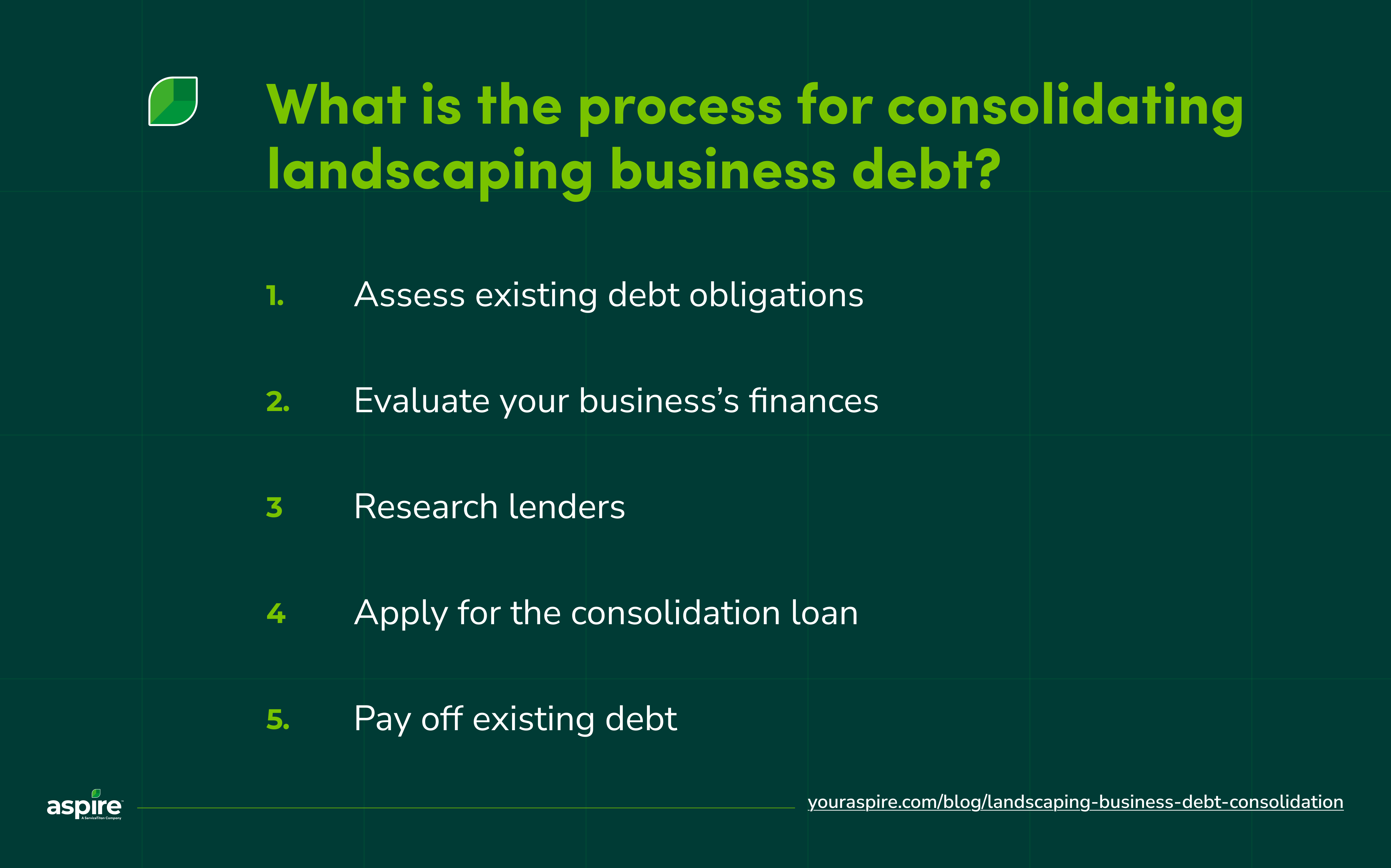
What is the process for consolidating debt for a landscaping business?
Ready to consolidate your debt? Here’s what you'll need to get started.
1. Assess existing debt obligations
Review your current loans and list their outstanding balances, repayment terms, interest rates, and monthly payment amounts. You’ll do your due diligence to understand how much debt you owe and where cash flow is strained.
2. Evaluate your business’s finances
You’ll need to understand your numbers first to ensure your business is generating enough cash to pay its bills reliably.
You can use Aspire’s reporting feature to check your landscaping business’s financial health.
It lets you keep tabs on your revenue and spending and gives you a good sense of your cash flow.
This is key because lenders will closely review your finances to determine whether consolidation makes sense and whether you can actually handle the payments. Solid finances mean a better shot at good loan terms.
3. Research lenders
There are several loan options and institutions providing them. Identify the right loan for your landscaping business, then compare products across different institutions.
For instance, if you’re going with equipment refinancing loans, compare loan terms, repayment length, administrative fees, and qualification requirements across different financial companies.
4. Apply for the consolidation loan
Submit an application for the loan along with the required documentation, such as bank statements, financial statements, tax returns, and details of your existing debts. Ensure you provide complete information to speed up the approval process.
When you get an offer, review the interest rate, repayment term, monthly payment, fees, and any prepayment penalties. You ultimately want a structure that supports long-term profitability.
5. Pay off existing debt
With your application approved, the lending company will either pay your creditors or provide you with the money to pay off existing debts. Once your debts are cleared, the business can have a single monthly payment under new terms. This simplifies budgeting and reduces the risk of missed payments.
How do you choose the best debt consolidation lender?
When choosing a lender, you first need to consider the types of loans you’re consolidating, as not every institution consolidates every type of debt. Some offer MCAs; others deal with invoice financing or term loans.
Pick lenders that offer the specific types of debt your landscaping business carries.
Once you have a list of lenders in that category:
Compare the total repayment amount for each lender. The best lender should reduce the overall cost, not just the monthly payments.
Evaluate repayment terms and flexibility. Considering the seasonality of landscaping, look for lenders offering reasonable terms and predictable monthly payments. You should avoid lenders with weekly payments.
Assess their industry experience. Lenders who’ve worked with landscapers can understand cash flow gaps, which can translate to better terms.
Read client reviews to learn what other clients have said about their services.
What alternatives exist to debt consolidation for landscapers?
Sometimes, landscapers with poor credit may not qualify for a debt consolidation loan. Or they do qualify but may find the origination fees and other associated costs too expensive.
If you fall into either category, here’s what you can do:
Adjust your budget: Start by creating a new budget for your landscaping business. Since you can’t expect funds from anywhere, you need to find areas to cut costs temporarily till the loan bills are cleared.
Track your expenses and ensure they never exceed the business’s income going forward. Downsize equipment, optimize crew schedules, and renegotiate supplier contracts to free up cash.
Debt settlement: Consider negotiating with the lenders you owe money to to accept less than what you owe. Use this option if it seems the business might go bankrupt.
You can handle the negotiations yourself or work with a debt relief company. Just keep in mind that working with debt relief firms is risky. There’s no guarantee it’ll work, and your credit score may take a hit.
Increase profit margins and pricing: When debt stems from thin margins rather than excessive borrowing, adjusting your pricing, reducing overhead, and monitoring job costs can improve your finances. You’d have enough to manage the debt without going under.
Apply for business grants: Find field service or landscaping grants from private, state, and federal agencies to help the business’s finances.
Several types, from environmental and green grants to grants for young entrepreneurs, female founders, and job creation, pop up periodically. So, always be on the lookout.
Refinance individual loans: Rather than consolidating everything, consider refinancing high-interest debts one at a time, such as equipment loans or credit cards. It can reduce costs without requiring you to take on a new umbrella loan.
How can landscaping businesses avoid future debt problems?
Avoiding future debt isn’t about not borrowing at all. There is such a thing as good debt, according to Olin Unruh of Wetlands Irrigation.
He recommends asking these questions before taking out loans:
Will this debt increase the value to our clients?
Is there a tangible asset tied to the debt?
How easily can I liquidate the asset to pay off the debt?
At its core, avoiding debt problems comes down to borrowing intentionally and running your landscaping business with visibility and control.
More practically, here’s what to do to avoid future debt issues:
Protect your profit margins and price work accurately
Landscaping businesses often slip into debt not because of low demand, but because of underpricing. To prevent this, it’s important to create accurate estimates when bidding on jobs, track labor and material costs during projects, and regularly review margins to ensure revenue covers expenses and growth.
Aspire helps landscapers price accurately and protect margins by tracking labor, materials, production rates, and work hours. When you understand exactly what goes into a project, such as an irrigation system installation, you reduce the risk of underbidding and losing money.
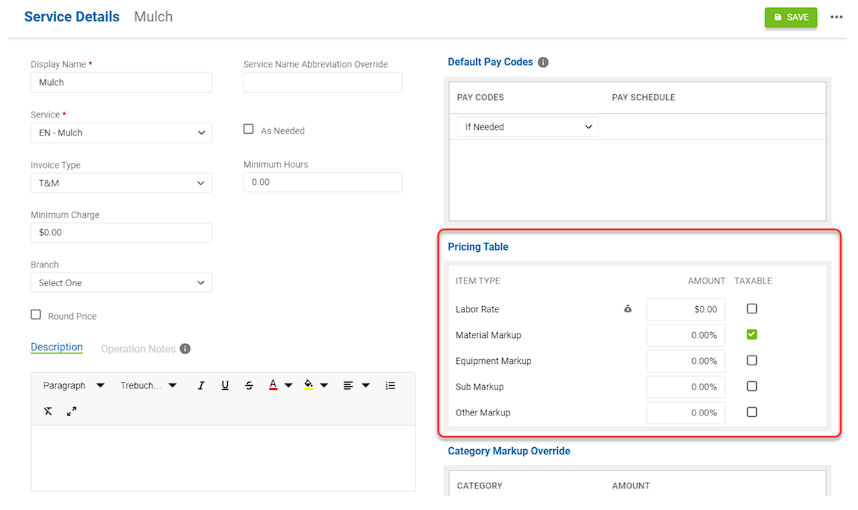
Aspire’s estimating feature also supports profitability by allowing you to add services with predefined prices and margins from your catalog when bidding on jobs. This ensures every proposal is consistently and accurately priced.
Monitor cash flow
Constantly tracking your landscaping business’s income and expenses helps you identify issues early, before you need emergency loans.
Clear financial insights enable you to make informed decisions rather than reacting under pressure.
Aspire supports cash flow monitoring through its reporting and insights features. You can track income generated from each job, daily expenses, and profit and loss performance.
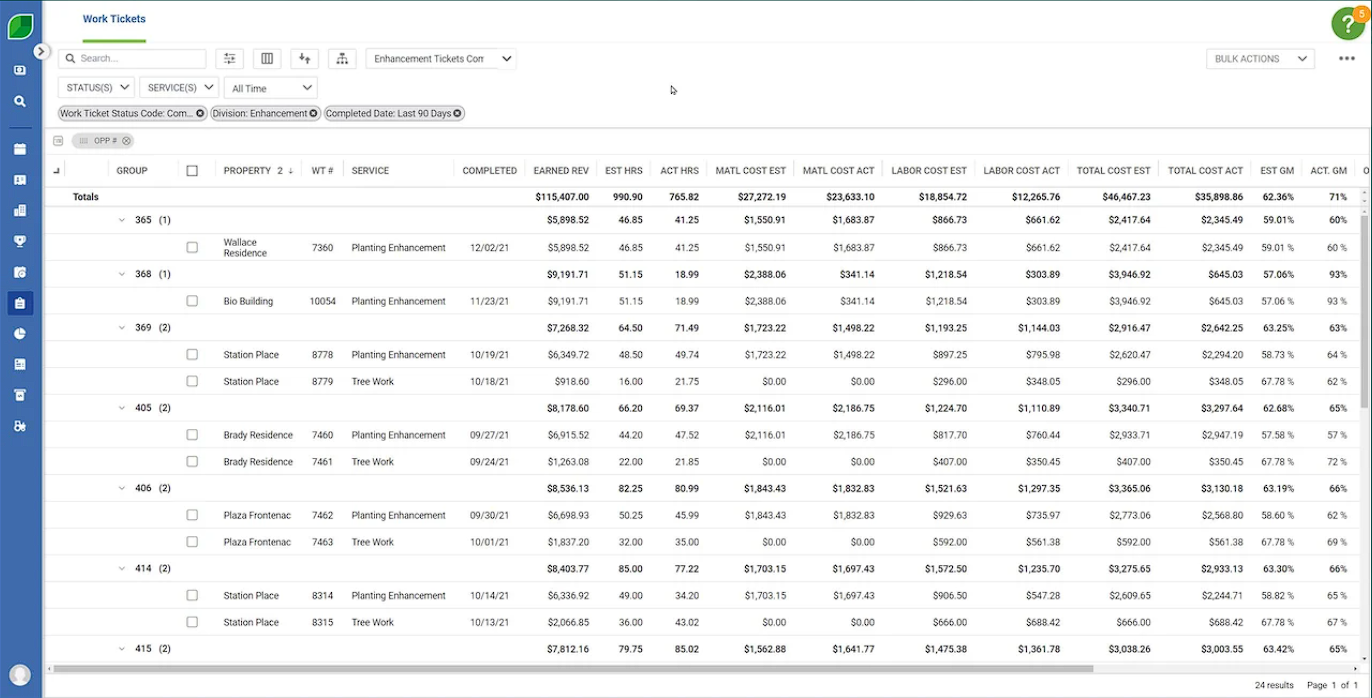
With built-in job costing, you can also compare actual project costs against estimates to confirm profitability and refine future pricing.
Build systems for your business
Success in landscaping is largely dependent on the systems you build.
Without clear workflows for estimating, scheduling, assigning work, invoicing, and reporting, businesses often rely on overtime, manual workarounds, or guesswork — leading to inefficiencies, financial losses, and eventually debt.
But with a centralized tool like Aspire, you can streamline your entire landscaping workflow. It brings estimating, scheduling, monitoring, tracking, invoicing, and reporting into a single system.
This way, you standardize operations and gain clear visibility into everything.
Essentially, landscaping businesses avoid debt problems by improving visibility, protecting margins, and planning ahead.
Aspire supports these goals by providing the systems needed to run the business consistently, profitably, and with confidence.
Would you like to see how helpful Aspire is to landscapers?
Frequently Asked Questions (FAQs)
How does debt consolidation affect business credit for landscapers?
Debt consolidation has both positive and negative impacts on business credit.
The positive impact is that a single payment reduces the risk of missed payments, which can improve credit over time.
The negative impact is that applying for a new loan can cause a temporary dip in your credit score due to hard or soft credit inquiries. Plus, missed payments on the consolidation loan can negatively impact your credit score.
Can landscaping businesses get SBA loans for debt consolidation?
Yes, landscaping businesses can qualify for SBA-backed loans to consolidate existing business debt. They often come with longer repayment terms and lower monthly payments.
However, they typically require strong financial documentation, good credit, and a longer time in business. The application process can also take longer compared to other options.
Are there grants or free funding for landscaping businesses in debt?
Grants designed for landscapers in debt are extremely rare, as free funding is typically tailored toward starting or expanding a business and sustainability initiatives.
What are the risks of debt consolidation for landscaping businesses?
Some risks associated with debt consolidation include:
Longer repayment periods with lower monthly payments and increased total interest.
Additional administrative fees, prepayment penalties, and origination charges.
Collateral requirements. Depending on the lender, you need to provide collateral to secure the loan, such as property, equipment, or client accounts.
Risk to personal assets, especially when collateral is required.









 866-727-7473
 Schedule Demo
 390 S Woods Mill Rd #300 Chesterfield, MO 63017


