
Table of Contents
Table of Contents
- Do you need a license to start a landscaping business in Arkansas?
- What are the types of landscaping business licenses & permits in Arkansas?
- Step-by-step process to get a landscaping business license in Arkansas
- How much does an Arkansas landscaping business license cost?
- What are the most common mistakes to avoid when getting a license?
- How Aspire helps landscaping businesses stay organized & compliant
- Over to you
- Disclaimer
About to start a landscaping business in Arkansas?
There are a handful of permits you may need from the Department of Agriculture for landscaping-related projects.
These licenses keep your operations above board and protect your clients.
This article will walk you through everything needed to start a landscaping business in Arkansas, from business registration to getting permits.
You will learn:
The different permits a landscaping business needs and their costs
A step-by-step process for securing a license
Mistakes to avoid
How to stay organized and boost your business
Do you need a license to start a landscaping business in Arkansas?
No, you don’t need a landscaping license to begin operations in Arkansas. If you intend to offer general landscaping or lawn maintenance services, a state-level license isn’t required.
However, if your projects exceed a certain property size, a landscape contractor license based on the square footage from the Department of Agriculture is required.
If you also intend to apply restricted-use pesticides on client properties, you’ll need a commercial pesticide applicator license.
Below is a breakdown of the different permits you may require to operate a landscaping business.
What are the types of landscaping business licenses & permits in Arkansas?
To start landscaping operations in Arkansas, here are the permits you may need.
General business license
While a landscaping license isn’t required to start a business, you need to register the business with the Arkansas Secretary of State to legitimize the company and build credibility with clients.
You’re basically forming an entity that the state recognizes. Plus, it’s how you can hire workers and pay taxes in line with state regulations.
Landscape contractor license
You need this license if your work exceeds specific property size thresholds. The state requires a permit for the following property areas:
0 to 5,000 square feet
5,001 to 15,000 square feet
15,001 square feet or more
The permit will require business information, such as the name, address, SSN, and property details.
Commercial pesticide applicator license
To apply restricted-use pesticides on clients’ properties, you need a commercial applicator license from the Department of Agriculture.
To obtain this permit, you must be a licensed commercial applicator.
Additionally, if you plan to operate multiple locations within the state, you will need a separate license for each location.
Nursery dealer license
As a landscaper, part of your job description involves getting and installing plants on clients’ properties.
A nursery dealer license allows you to legally purchase nursery stock for resale.
You must, however, provide facilities to keep the nursery stock in viable condition, either outdoors or indoors. The state’s inspector will check these facilities for infestations of insect pests, plant diseases, and noxious weeds.
Landscape architect license
With this license, your landscaping business can design outdoor spaces for parks, campuses, residential areas, and commercial properties, focusing on functionality, sustainability, and aesthetics.
You can even plan layouts, drainage, plant selection, and hardscape.
But to secure this permit, you need to meet education or experience requirements, pass the LARE exam, and complete the required professional experience.
You must also submit an affidavit confirming you understand and will comply with the state’s landscape architecture laws and regulations.
Permits and local regulations
Some cities with zoning or noise restriction laws may require special permits for you to operate freely.
Cities and counties can regulate where landscaping businesses operate (zoning), limit operating hours or equipment use (noise restrictions), and require local approvals for activities like debris disposal, grading, or work near waterways.
Before starting the landscaping company, research what’s needed in your city.
Now, as promised, keep reading to see how to secure the different permits your new business needs.
Step-by-step process to get a landscaping business license in Arkansas
Perhaps you only plan to provide lawn care services for residential clients or yard cleanup services. Maybe you want to offer the full range of landscaping services.
Regardless of the kind of landscaping business you intend to run, here’s how to get started and secure the permits you’ll need.
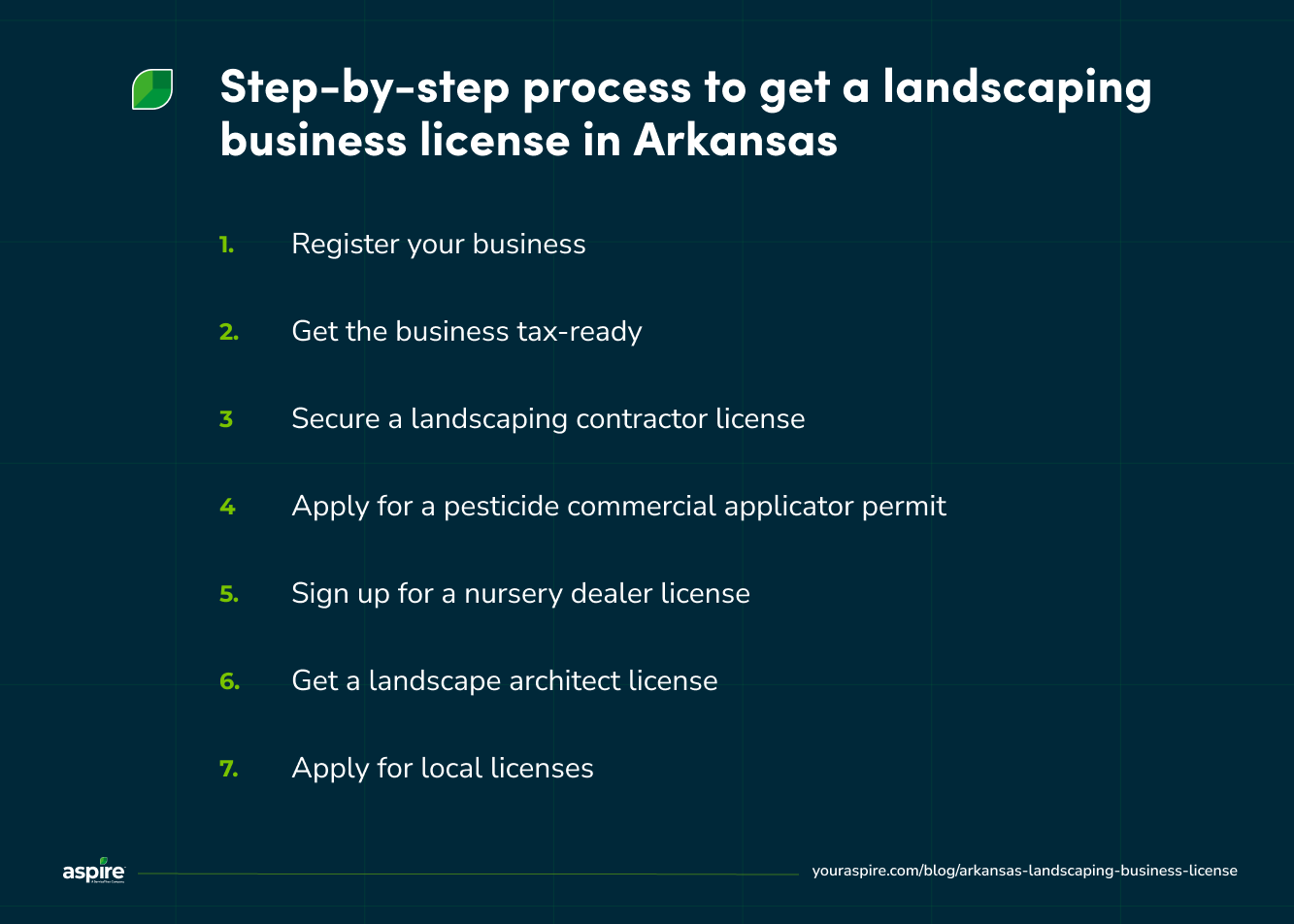
1. Register your business
You first need to register your business with Arkansas’ Secretary of State, and here’s how to do that:
Consider the legal structure your business needs. A sole proprietorship, LLC, corporation, or S-corp?
Select and confirm that your business name is available by searching the state’s database.
Reserve your preferred name and form the entity by filing an application online or via paper forms. Name reservation costs $25, and entity formation costs $50.
2. Get the business tax-ready
To get your business tax-ready, you need to first register for a federal employer identification number (EIN).
This allows you to pay federal taxes, register your business for state taxes, hire workers, obtain a state tax account, and open a business bank account.
You only need to visit the IRS website and fill out an application to get the EIN.
Once you have that, you can visit the Arkansas Taxpayer Access Point to register your business for state tax filing. In addition to the EIN, you’ll need the following, among other requirements:
The NAICS code(s) that describe your landscaping business (561730, according to the NAICS website).
The name, address, phone number, email, and Social Security Number of each owner, partner, or corporate officer in the business.
Bank account details to submit an application fee via ACH debit.
The business location address and a mailing address, if separate.
3. Secure a landscape contractor license
You can obtain this permit by registering online or by completing a PDF application form.
For either option, you must select a license level based on the property sizes you plan to work on:
LEVEL I: 0-5,000 square feet at $150
LEVEL II: 5,001-15,000 square feet at $300
LEVEL III: 15,001 and over square feet at $450
You’ll also need to provide your SSN, contact details, and business information to complete the application.
Click here to access the PDF form or use this link to begin the online application.
4. Apply for a commercial pesticide applicator permit
To get a pest control license for your business, you need to be licensed as an operator or be a commercial operator applicant yourself.
Here’s how to be licensed as an operator:
Submit a completed exam application and meet experience or education requirements, typically one year of pest control experience or two years of college coursework including entomology.
Register for the exam, select the appropriate classification, e.g., termite and other structural pest control, tree and turf pest control, weed control, or golf course pest control, and pay a $100 exam fee per category.
Exams can be taken onsite in Little Rock or online through EverBlue, which includes an additional $30 proctoring fee.
Pass the required written exams before licensure and take a retest if you fail.
Apply for the permit and pay the licensing fee of $150 for the first classification and $100 for each additional classification.
To get a license for your business, you need to fill out this application for a primary location and designate someone to represent the business.
You also need:
At least one licensed operator for each classification of pest control service you intend to offer.
Liability insurance to protect clients.
The cost of this permit varies based on the number of operators employed. If you have 30 or fewer operators, the license fee is $100; the fee is $250 for 31–60 operators and $500 for 61 or more operators.
5. Sign up for a nursery dealer license
You can apply for a nursery dealer permit online or by filling out a PDF form.
But to apply, you’ll need to:
Provide facilities for keeping nursery stock in viable condition, either outdoors or indoors, because the state inspector will check for infestations of insect pests, plant diseases, and noxious weeds.
Supply your business information.
Here’s what the license costs:
$150 for a 0-5,000 square feet area
$300 for a 5,001-15,000 square feet area
$450 for an area over 15,000 square feet
6. Get a landscape architect license
For this permit, ensure you meet the necessary educational requirements, have passed the LARE exams, and have completed the required professional experience.
If you do not meet them, someone on the team should.
Then, apply for the permit online. You will need to create an account and provide the necessary information the state requires.
Obtaining a license for landscape architecture costs $245.
7. Apply for local licenses
After securing the permits needed to operate your landscaping company at the state level, visit your city’s website or office to confirm the permits your business requires.
Are there zoning permits or tree removal licenses you need for specific jobs?
The conditions will vary from city to city, so it’s best to check in to find out what you need.
How much does an Arkansas landscaping business license cost?
Here’s a breakdown of all the fees you may need to operate a landscaping business in Arkansas:
General business registration fees
Name reservation: $25
Business entity formation: $50
Landscape contractor license
License application fee: $150-$450, depending on the property size
Renewal fee: $150-$450 and a 50% additional fee if the renewal application is postmarked after October 31
Pesticide applicator license
Operator exam fee: $100 per exam category
Operator license fee: $150 for the first classification and $100 per additional classification
Applicator license (business) fee: $100-$500, depending on the number of operators
License renewal fee: $100-$500
Nursery dealer license
License application fee: $150-$450, depending on the property size
Landscape architect license
Application fee: $245
Renewal fee: $98
Additional notes:
Local municipalities may require additional business licenses, with fees varying by location.
Insurance requirements also vary depending on the type of landscaping services you provide.
What are the most common mistakes to avoid when getting a license?
To ensure your landscaping operation begins without a hitch, it’s important to follow the right process when applying for permits. Overlooking any step can lead to fines, delays, and legal issues.
Below are common pitfalls that landscaping business owners must avoid when getting permits.
1. Assuming a pesticide application permit is one-size-fits-all
In Arkansas, a commercial pesticide license applies to only one business location and a specific classification of pest control services.
Offering services outside the approved classification — or operating across multiple locations under a single permit — can lead to fines or even a business shutdown.
If you plan to operate in multiple locations, you must apply for separate permits for each location and ensure you provide only the classifications listed in your application.
2. Not getting insurance
Insurance helps clients trust you with their property. Beyond that, it is a requirement for pesticide application permits and landscape contractor licenses.
To operate legally in the state, you must secure bonds for certain pest control classifications, such as termite or structural pest control and household pest control.
Failing to obtain the required insurance or bonding exposes your business to costly liability claims and can prevent you from obtaining the necessary permits.
3. Forgetting about continuing education
Almost all licenses required to operate a landscaping business in Arkansas must be renewed. To keep your business running year after year, you need to meet renewal deadlines.
Certain permits, such as pesticide application and landscape architect licenses, also require continuing education as part of the renewal process.
Forgetting these requirements can prevent renewal, result in late fees, and limit your ability to offer these services to clients.
How Aspire helps landscaping businesses stay organized & compliant
Once you have the permits required to start the landscaping company, you need a system to:
Keep operations organized
Streamline workflow
Manage every aspect of your landscaping business
Aspire is a landscaping business management platform that helps you stay on top of scheduling, work management, client communication, equipment tracking, and more.
By automating key workflows, Aspire makes it easier to stay organized and compliant while focusing on growing your business.
Contract & proposal management
Let’s say you need to send proposals or estimates to several clients. But with the current workload and pending projects, it’s just impossible to do that manually.
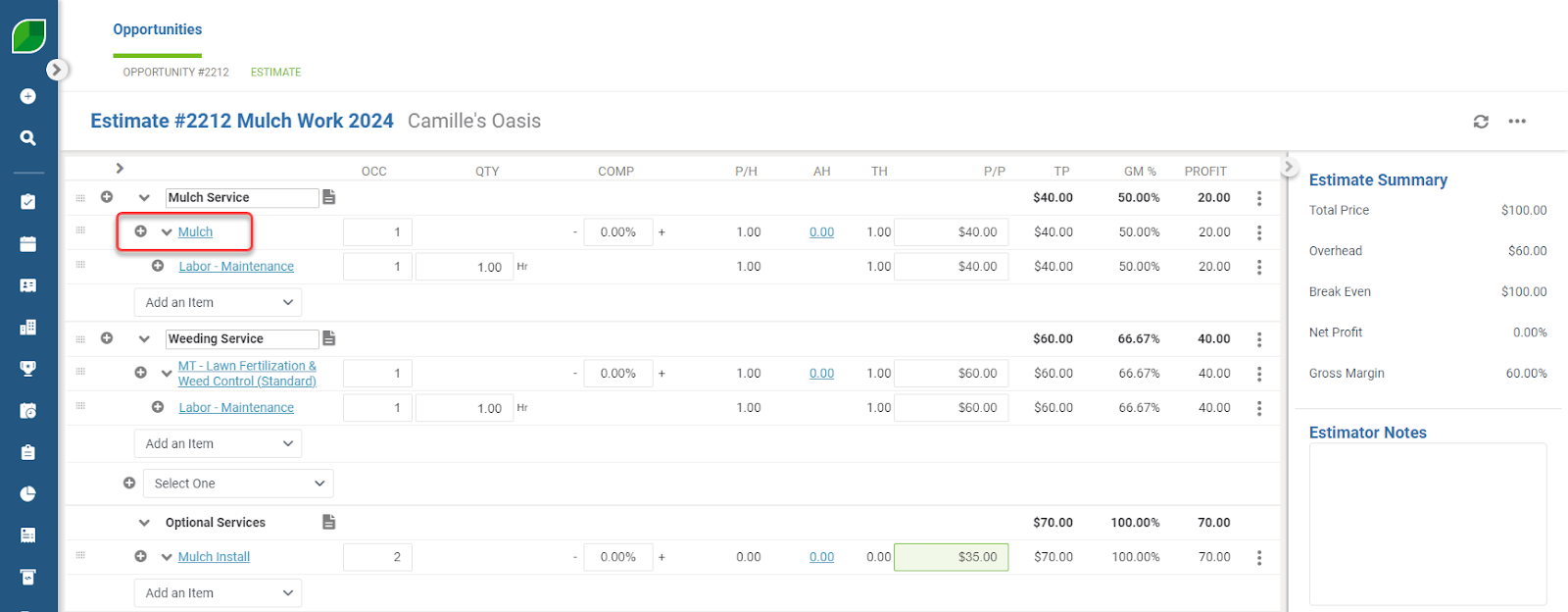
Aspire’s estimating tool lets you create and submit proposals fast using customizable templates.
Instead of measuring a client’s property and calculating materials needed before manually preparing estimates, you only need to add services, items, and pricing directly from your established catalog. The system does all the calculations for you, factoring in desired margins and markups to ensure profitability.
Aspire is integrated with PropertyIntel, allowing you to measure properties using digital maps without site visits.
And when the estimate is ready, you can send it to clients via email or Aspire’s customer portal.
This helps save time, keep contracts in a centralized location for easy access, and ensure proposals remain compliant with Arkansas’s state regulations.
Invoicing & payment processing
When clients accept your proposals and the landscaping crew starts working on their property, Aspire features an invoicing tool that makes requesting and receiving payments easy.
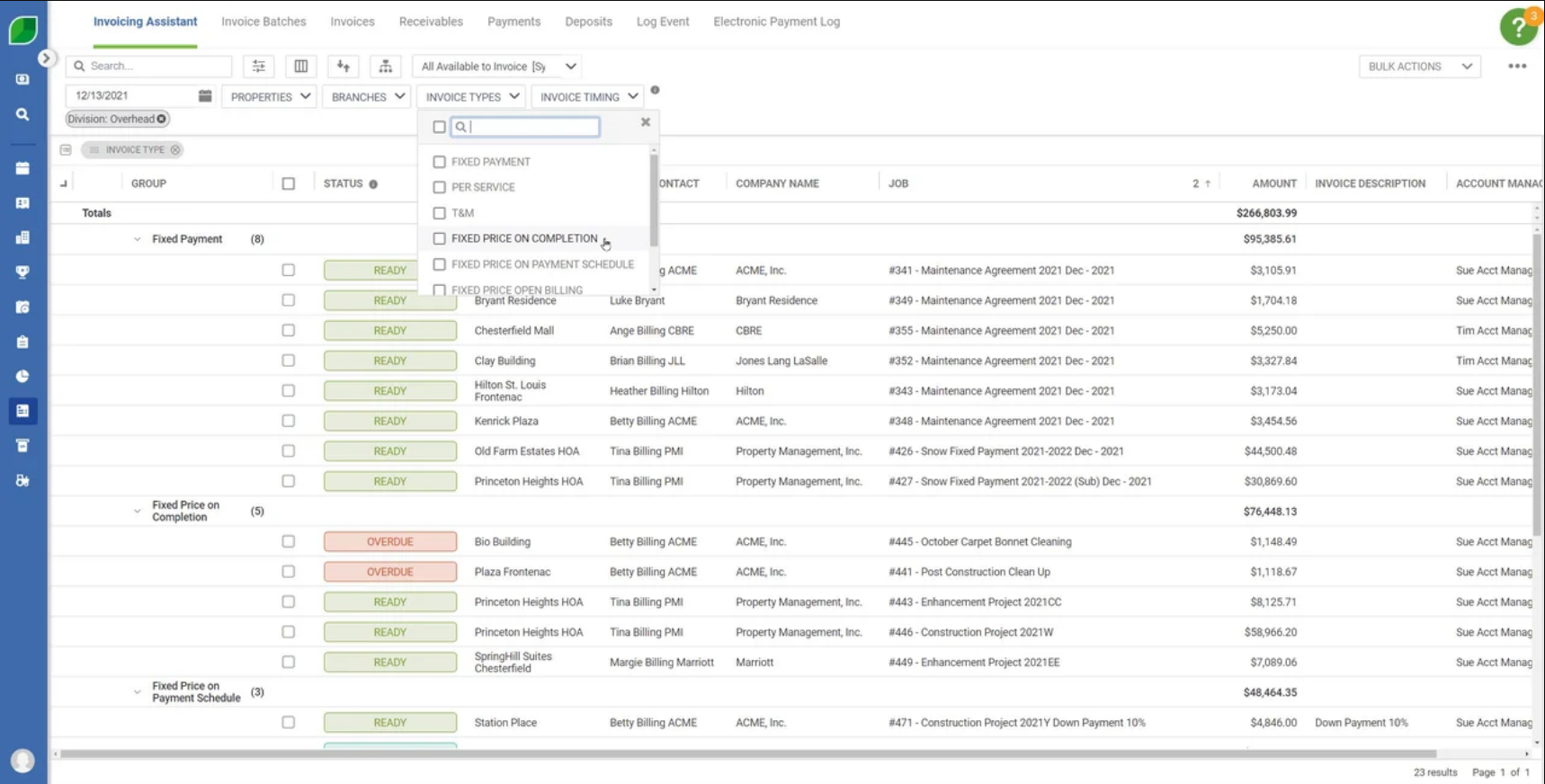
It uses data from the estimates, allowing you to create, send, and track accurate digital invoices. Aspire’s invoicing tools even let you monitor an invoice’s status so you know when a client has paid and when an invoice is outstanding or overdue.
Here are some other ways this Aspire feature helps you stay organized:
Automates your billing cycle
Ensures financial records are in sync with state tax regulations
Provides multiple ways to receive payments from clients, e.g., wire transfers and credit or debit cards
Business reporting & documentation
Imagine it’s license renewal season, and you need to confirm whether a specific service is generating enough revenue to justify renewing its license.
Aspire’s reporting feature provides the information you need to make such a decision. It gives you insight into every aspect of your operations so you can assess the business’s revenue.
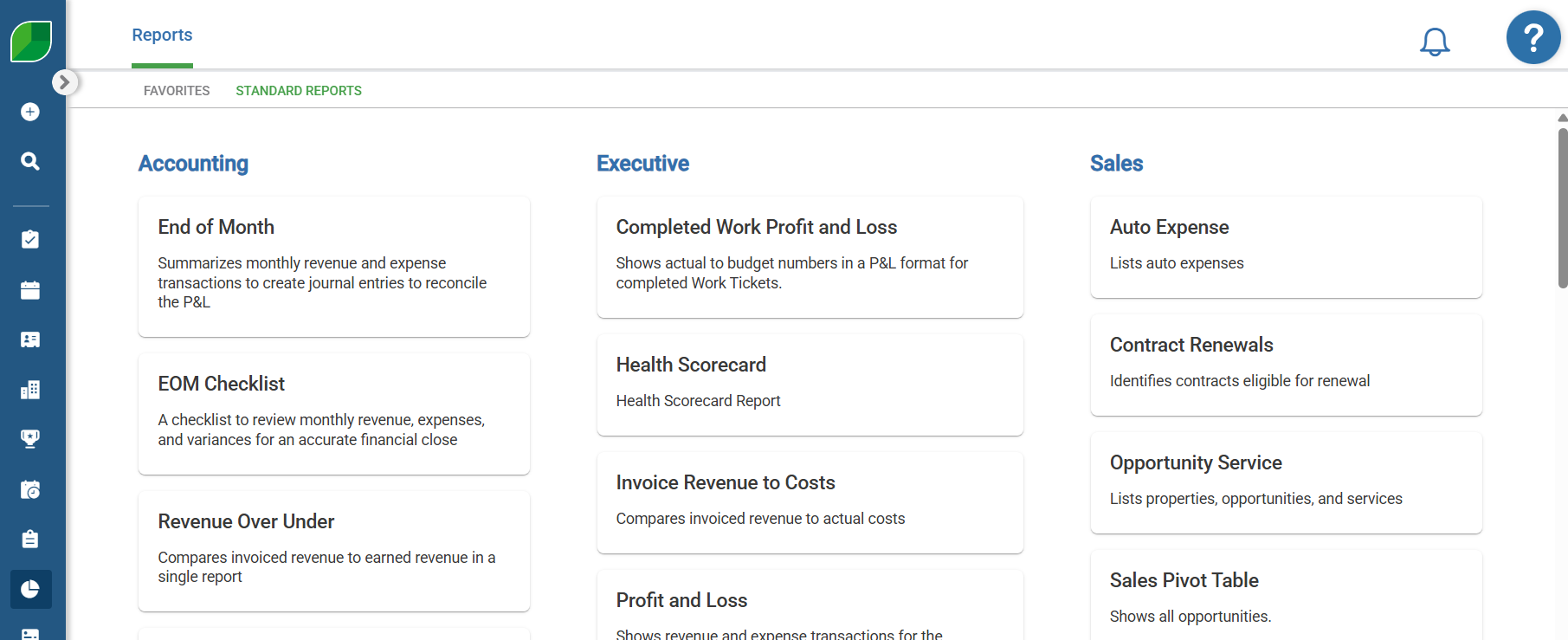
Whether you want a general overview of the business or information related to a specific service, Aspire has you covered, providing insights such as client retention rates, total cash inflow and outflow, job inventory, tax filing, or current losses.
It gives real-time data based on current contracts and reports from your landscaping crews.
Scheduling & job management
Another way Aspire helps you remain organized is through its scheduling tool, which lets you schedule projects and assign incoming jobs to your crew.
It replaces a calendar and a physical map typically used to schedule jobs with an automated system for planning projects based on the crew’s location and availability.
Aspire’s scheduling feature optimizes routes, creates a working checklist for crews to follow, and lets you track projects and crews’ productivity.
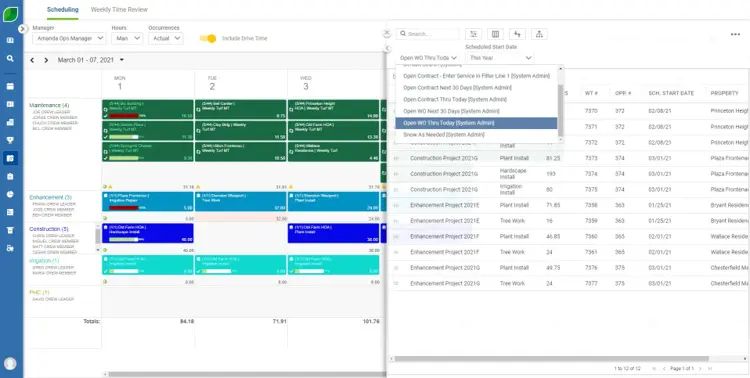
This lets you plan effectively, avoid double-booking clients, and manage the team’s workload right in Aspire.
Over to you
If you’re starting a landscaping business in Arkansas, you don’t need a general landscaping permit to begin operations unless your work:
Exceeds a certain property size
Includes applying restricted-use pesticides
Includes buying and installing plants
Includes offering landscape design services
In addition to the permits you may require, partnering with a business management tool like Aspire will help simplify your operations.
Aspire keeps you organized with features that simplify scheduling, estimating, equipment monitoring, crew productivity tracking, and reporting, so you can focus on scaling your business.
Schedule a free demo to learn how Aspire helps your landscaping business.
Disclaimer
This article is for informational purposes only and should not be considered legal or financial advice. While every effort was made to use official sources, you should always verify requirements with the Arkansas government’s websites.












 866-727-7473
 Schedule Demo
 390 S Woods Mill Rd #300 Chesterfield, MO 63017


