
Table of Contents
Table of Contents
- Do you need a license to start a landscaping business in Nebraska?
- What are the types of landscaping business licenses & permits in Nebraska?
- Step-by-step process to get a landscaping business license in Nebraska
- How much does a Nebraska landscaping business license cost?
- What are the most common mistakes to avoid when getting a license?
- How Aspire helps landscaping businesses stay organized & compliant
- Over to you
- Disclaimer
Are you planning to turn lawn care, hardscaping, or mowing work into a real business, but the process for obtaining a landscaping business license in Nebraska looks scattered? Don’t worry!
This guide breaks down the process into plain steps that you can easily understand and follow. You will learn:
When a landscaping business needs registration, permits, or specialty approvals
How to compare the main license and permit categories
How to apply for a license using a step-by-step list
What costs to expect
How to avoid common mistakes in the licensing process
Do you need a license to start a landscaping business in Nebraska?
In Nebraska, you don’t need a state license for landscaping, lawn mowing, or general lawn maintenance.
A mowing crew that cuts grass, trims edges, or handles routine property upkeep typically needs a standard business registration, not a trade-specific license.
However, the rules change once your services move beyond basic maintenance. Your landscaping business will need the right entity registration, tax accounts, contractor paperwork, and city or county approvals based on the services it sells.
For example, a business that applies lawn care pesticides for hire needs commercial applicator certification. Additionally, contractors and subcontractors working on properties must register with the Nebraska Department of Labor before taking on jobs.
Local rules matter, too. Omaha, Lincoln, Bellevue, and smaller towns set their own permit rules for certain types of work, vehicles, signage, and public right-of-way projects.
A good next step is to compare Nebraska rules with broader landscaping business license requirements, then confirm the paperwork for each service your business plans to offer.
What are the types of landscaping business licenses & permits in Nebraska?
Landscaping businesses in Nebraska usually deal with a mix of business registration, tax accounts, contractor paperwork, specialty credentials, and local permits rather than one single permit.
General business license
Nebraska does not issue a single general business license for every company.
Most business owners start by choosing a business structure, then submit the required paperwork to the Secretary of State. The Nebraska One-Stop Business Registration system can help you find forms tied to tax and state agency requirements.
You'll also need a sales tax permit if your business sells taxable goods or taxable landscaping and construction services. The Nebraska Department of Revenue gives specific tax guidance for landscapers that sell items like sod, plants, mulch, or taxable services.
Landscaping contractor license
You don’t need a statewide landscape contractor license in Nebraska if your business only does yard maintenance.
However, contractor registration matters if your landscaping business performs contractor or subcontractor work tied to real property. That type of work includes certain hardscape, grading, site prep, and construction work.
A city or county might also treat larger outdoor projects as building contractor work when permits or inspections apply.
In addition, the Nebraska Department of Labor states that contractors and subcontractors that are doing business in the state must also register under the Contractor Registration Act.
Specialized licenses
Some services trigger separate licensing requirements.
A pesticide applicator license is required if you plan to apply regulated lawn chemicals, herbicides, insecticides, or similar products for hire. You obtain that license from the Nebraska Department of Agriculture.
Other work falls under separate trades and requires a professional license. For example, irrigation pumps, electrical hookups, lighting, plumbing tie-ins, or major site work involve specialty contractors such as plumbers or electricians rather than a general lawn crew.
Permits and local regulations
Local licenses and permits depend on where the job takes place.
Municipalities set their own rules for contractor registration, right-of-way work, signage, parking, or building-related permits. For example, the city of Omaha has its own permit and registration rules for certain projects, so check local requirements before bidding.
If you have a new landscaping business that works in several municipalities, you also need to check the requirements of each location before bidding on jobs. Local permits and approvals can quickly delay projects, especially when crews build patios, install retaining walls or drainage systems, perform home improvement work, or work near streets and sidewalks.
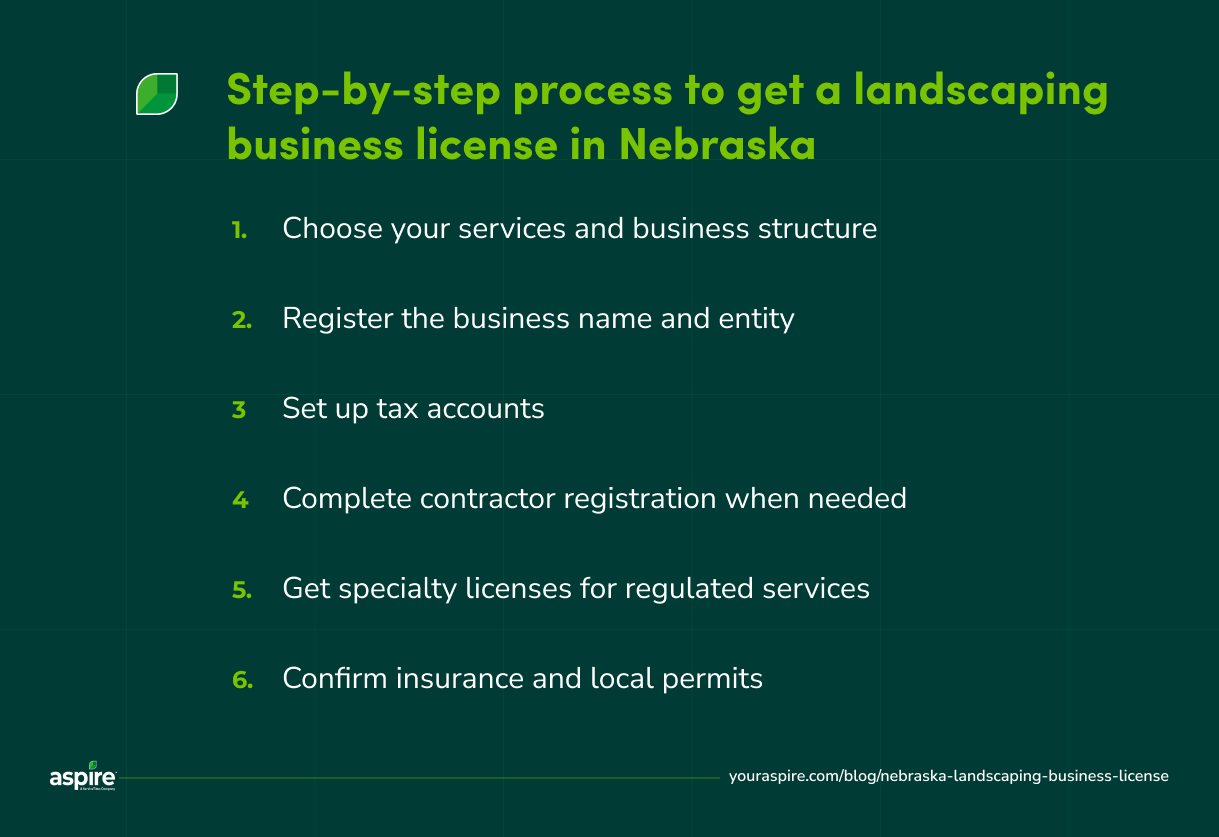
Step-by-step process to get a landscaping business license in Nebraska
The licensing process looks different for a mowing-only company than it does for a hardscape crew, a pesticide applicator, or a contractor that installs retaining walls.
Follow these steps to keep your license application aligned with the services that bring in revenue.
1. Choose your services and business structure
Before filing for a specific license type, list all the landscaping services you want to offer. Your paperwork changes when your services move from one category to another:
Mowing, trimming, edging, and seasonal cleanup
Mulch, planting, sod, and decorative bed work
Patios, retaining walls, grading, or site prep
Fertilizer, weed control, or pesticide application
Snow removal, drainage work, or tree-related services
Service mix affects tax accounts, contractor registration, and specialty permits. A simple service list also helps with insurance quotes, pricing, and early budgeting for landscaping business startup costs.
After choosing your services, pick a business structure that matches your risk, tax plan, and ownership.
A sole proprietor uses the owner’s legal name and reports business income on personal tax filings. An LLC gives your business its own legal identity and works well for many owner-operators.
2. Register the business name and entity
After deciding on a business legal structure, file entity paperwork with the Secretary of State. If your business uses a name other than the owner’s legal name, you’ll also need to file a trade name.
To make things easier, you can:
Search the business name before filing
File the entity or trade name record
Save copies of the approved filing
Use the same legal name on every application form, tax account, insurance certificate, and local permit request
Matching names prevents delays when a city clerk, insurer, bank, or tax officer reviews the company records.
3. Set up tax accounts
Register with the Nebraska Department of Revenue if you plan to have employees, sell retail products, rent or lease tangible property, or provide taxable services.
For an organized process, do the following:
Apply for tax accounts before collecting sales tax
Keep product sales separate from labor in the accounting system
Track taxable services, materials, and local sales tax by job address
You don’t need years of experience to know that effective bookkeeping for landscaping business taxes keeps your financial records organized from day one.
4. Complete contractor registration when needed
The Nebraska Contractor Registration Act (NCRA) requires contractors and subcontractors to register with the Nebraska Department of Labor. The department defines a contractor as a person or business that performs or arranges work on real property other than their own property.
Use this checklist before submitting the registration:
Register with the department before selling hardscaping, grading, site prep, or installation work
Keep the registration record on file for bids and client requests
Review the record before renewal season
This registration matters for businesses that move beyond mow-and-blow work into projects tied to land, structures, or site improvements.
5. Get specialty licenses for regulated services
Chemical application requires extra registration. As a commercial applicator in Nebraska, you must pass the required exams and pay a license fee; the license is valid for three years.
Here is a more detailed list of what you need to do:
Complete initial training and pass the general standard exam
Pass each category exam tied to the work sold
Pay the applicator fee after certification ($90)
Track expiration dates for every applicator on your crew
A pesticide applicator who works without the right specialty license risks fines, callbacks, and lost client trust.
6. Confirm insurance and local permits
Local offices set rules for permits, contractor cards, signs, and inspections. Most Nebraska employers also need workers’ compensation insurance when employees perform work for the business.
Check these items before booking work in a new city or county:
Ask about local permit rules before taking jobs
Review general liability insurance before sending crews to client property
Confirm workers’ compensation coverage before hiring field employees
Ask for a surety bond if local officers or project owners request one
If you want to send your crews to work in neighboring states such as South Dakota, Iowa, or Kansas, always check local requirements. Each state sets its own license, permit, and insurance rules, which can differ significantly from Nebraska's.
A final paperwork check before the first job will keep the licensing process tied to real services, real crews, and real job sites.
How much does a Nebraska landscaping business license cost?
A Nebraska landscaping business license has no single price because costs depend on business setup, services, location, and crew size.
Common licensing costs include:
LLC or corporation filing is $100 online or $110 for in-office filing, plus portal fees.
Contractor and subcontractor registration costs $25 per year.
The commercial pesticide applicator license fee is $90 for a 3-year license after certification.
Local permit, local registration, and inspection fees vary by city or county.
A surety bond, general liability policy, vehicle coverage, and payroll insurance add separate costs.
Fees also vary when a company decides to expand its services to other states, for example, in Oklahoma, because each state has its own filing and renewal requirements.
Add these fees to your first-year budget before pricing jobs, especially for projects that include materials, chemical treatment, or construction work.
What are the most common mistakes to avoid when getting a license?
When getting a landscaping business license in Nebraska, common mistakes often begin small but can lead to delayed jobs, rejected applications, or extra calls with state and local offices.
Here are some of these mistakes and how to avoid them.
1. Waiting until work is already booked
Some business owners start the paperwork only after a client accepts an estimate.
That can create pressure fast. Permits, registrations, insurance, and approvals take time to process, especially if a project involves inspections, subcontractors, or public property.
Handle paperwork before selling a new service or entering a new city.
A pre-bid check should cover:
The legal business name on every filing
Local permit rules for the job location
Required tax accounts for the service sold
Proof of insurance
Any trade or specialty approval tied to the work
Early planning helps protect cash flow and makes scheduling easier to manage.
2. Using different business names on forms
When documents show different names, licensing problems can start.
A business owner files one name with the state, uses another on estimates, and sends insurance documents under a third version. Banks, city clerks, tax officers, and clients all compare those records.
Pick one official name and use it everywhere.
3. Losing track of renewals and documentation
Approval marks the start of compliance work, not the end.
Each business filing, tax account, contractor record, insurance policy, applicator credential, and local permit follows its own timeline. A missed renewal creates problems during bids, inspections, and client onboarding.
To run a successful landscaping business, you must store every record in one place and track the following:
Filing date
Renewal deadline
Issuing office
Payment amount
Certificate or permit number
Person responsible for renewal
Copies of submitted forms and approvals
A simple renewal calendar works well for a solo operator, but a growing crew needs a shared system so that office staff, sales teams, and field crews work from the same records.
How Aspire helps landscaping businesses stay organized & compliant
Nebraska’s licensing rules become harder to manage as landscaping businesses add crews, service areas, and regulated work.
Aspire’s landscape business software helps you organize contracts, invoices, job records, schedules, and compliance documents in one place, so you're ready for renewals, audits, and customer requests.
Contract & proposal management
Contracts and proposals need consistent pricing, service details, and property records.
Aspire stores customer history, bid requests, site audits, contract renewals, budgets, and profitability data in one customer record. Estimating templates and kits combine labor, materials, subcontractors, and margins into repeatable line items, which helps build proposals with fewer manual edits.
Invoicing & payment processing
Invoicing has to match the job sold, the work completed, and the customer’s billing terms.
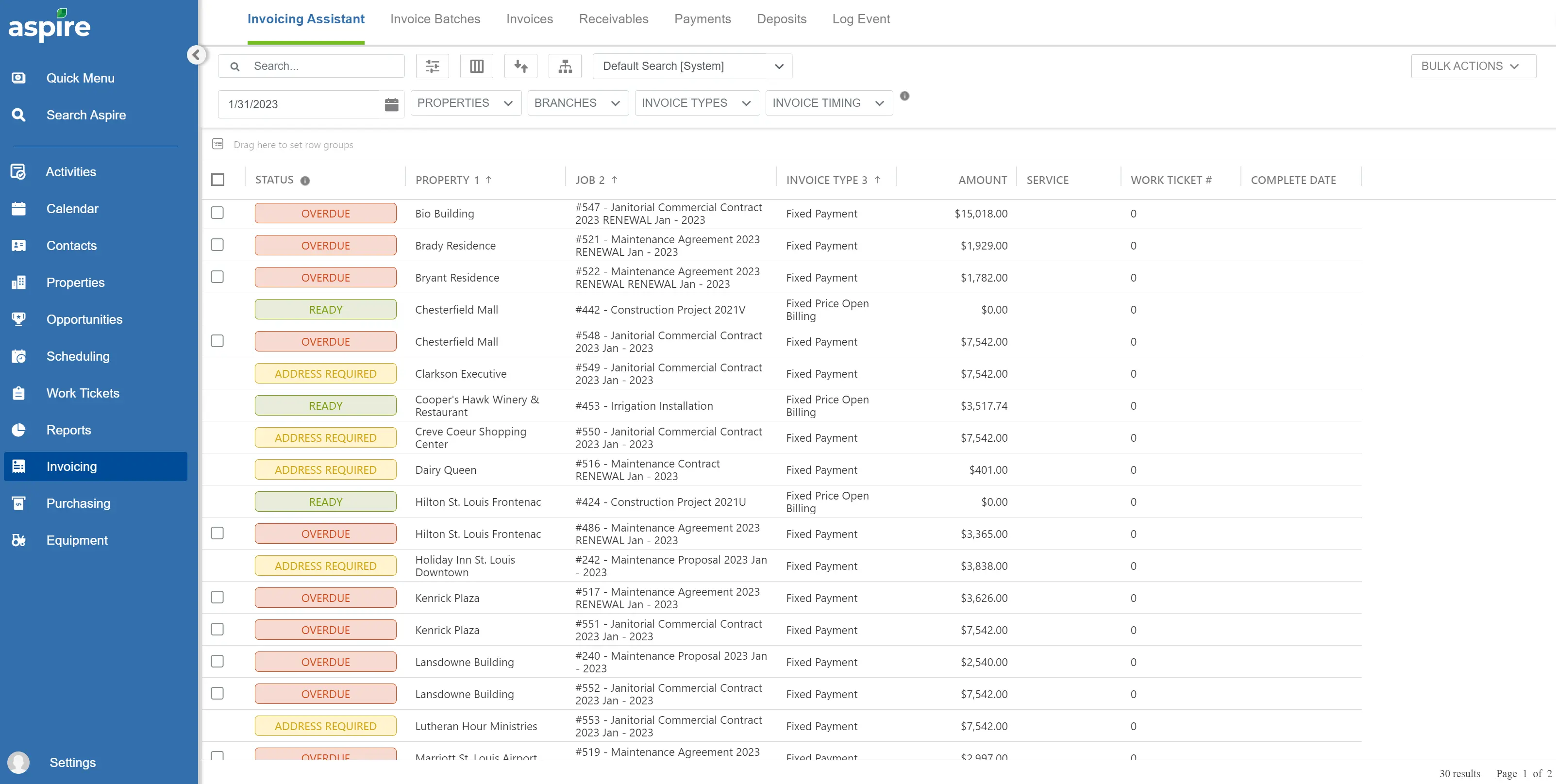
Estimates, work tickets, invoices, and accounts receivable data are all connected by Aspire’s invoicing feature. Your teams can send invoices one at a time or in bulk, track invoice status, review aging balances, and view earned versus invoiced revenue by property, service, or division.
Business reporting & documentation
Reports turn daily activity into usable business records.
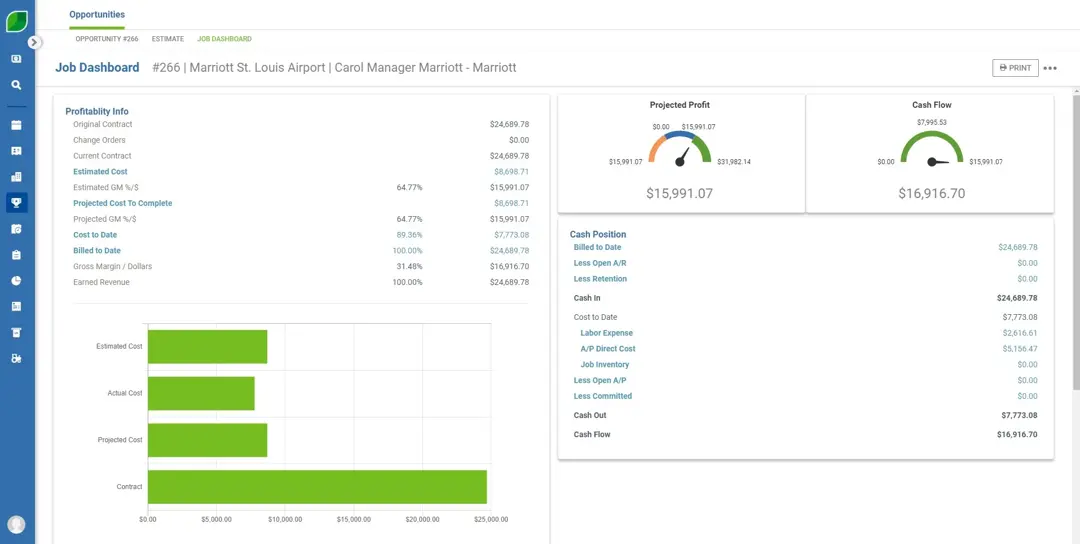
The reporting feature pulls financials, sales activity, customer data, job costs, crew performance, and KPIs into custom dashboards. Office teams see in real time what happens on each job, from estimated costs to actual outcomes.
Each user gets a focused view of the numbers that affect job progress, margins, and daily decisions. You also get better documentation if you want to review past work, answer customer questions, or prepare for planning meetings.
Scheduling & job management
Licensing work affects field planning when crews handle different service types in different cities, counties, or permit zones.
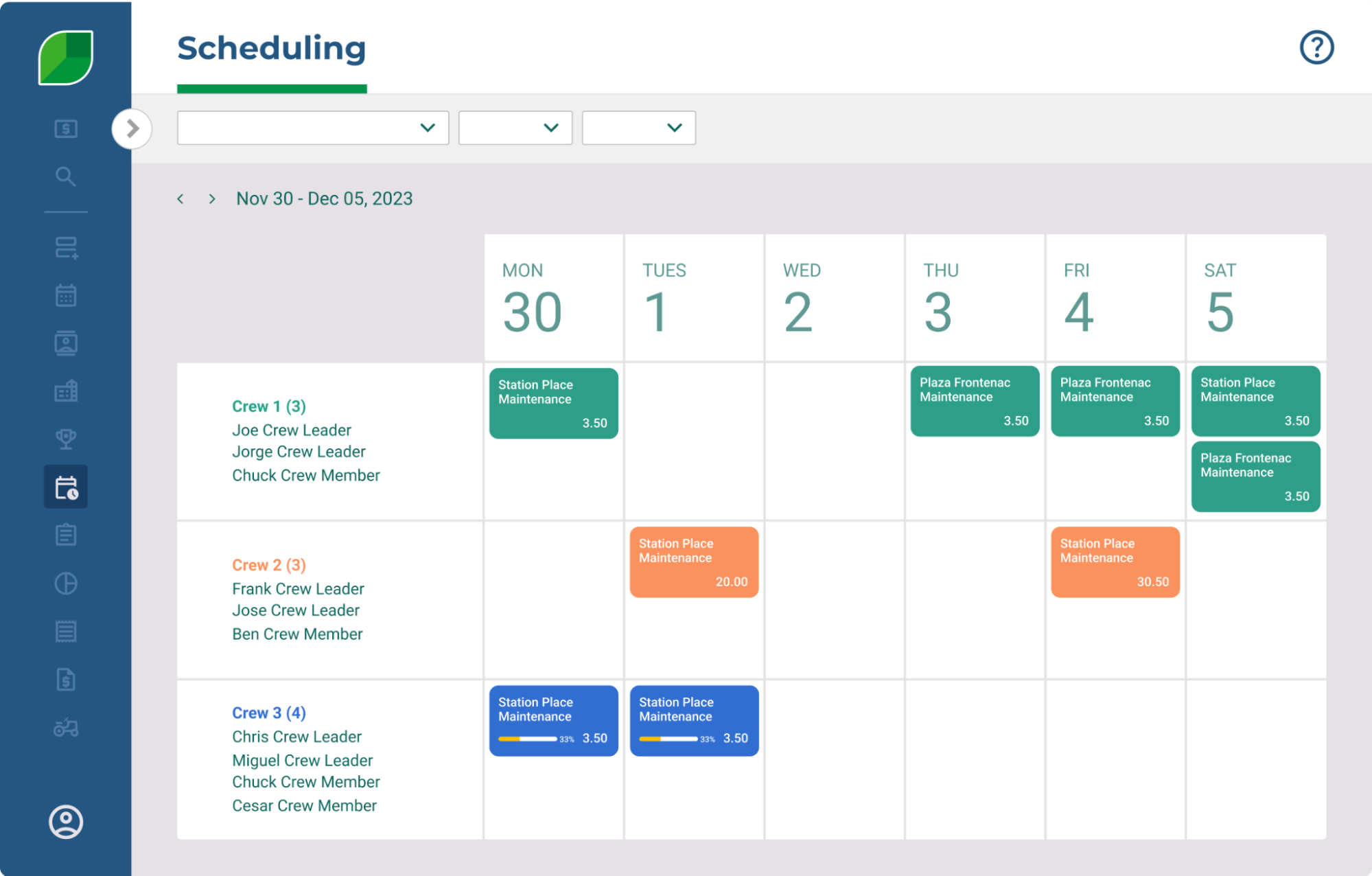
With Aspire’s scheduling feature, signed work turns into tickets that teams assign, move, split, and track from the schedule board. Crews receive updated job details in the field through a mobile app, while managers see labor needs, material notes, and open work before problems reach the customer.
That gives every team member a shared view of what needs to happen next, especially during busy weeks with multiple jobs on the calendar.
Over to you
Administrative work should not get in the way when you start or formalize the procedures for obtaining a landscaping license in Nebraska.
Aspire helps you keep operations organized as your business grows, with all the information your teams need stored in one connected system. That creates less room for missed details, late follow-ups, or scattered records.
Ready to see why landscaping businesses choose Aspire? Book a free demo today and start your business on the right foot.
Disclaimer
This article is for informational purposes only and should not be considered legal or financial advice. While we took every care to use official sources, you should always verify requirements on the Nebraska government websites.










 866-727-7473
 Schedule Demo
 390 S Woods Mill Rd #300 Chesterfield, MO 63017


