


Table of Contents
Table of Contents
- Do you need a license to start a landscaping business in Wisconsin?
- What types of landscaping business licenses & permits do you need in Wisconsin?
- What happens if you operate a landscaping business without a license in Wisconsin?
- Step-by-step process to get a landscaping business license in Wisconsin
- How much does a Wisconsin landscaping business license cost?
- What are the most common mistakes to avoid when getting a license?
- How Aspire helps landscaping businesses stay organized & compliant
- Over to You
- Disclaimer
Wondering whether or not you need a license to start a landscaping business in Wisconsin?
Most articles online say Wisconsin doesn’t have a statewide landscape contractor license.
While that’s true, there’s more to the story.
And this guide breaks it all down, explaining:
The different types of licenses that landscaping businesses in Wisconsin need
How to obtain each license
How much they cost
Mistakes to avoid as you plan to get licensed
Let’s get to it.
Do you need a license to start a landscaping business in Wisconsin?
Wisconsin doesn’t require a general landscaping license for basic lawn care services.
However, that doesn’t mean there are no licensing requirements at all.
To legally operate a landscaping business in Wisconsin, you need to register with the state and secure permits for chemical pesticide use, plant sales, and landscape design.
You may also require local permits from the city or town where the business is located, including a license for hardscaping or irrigation.
Basically, you’ll need to verify what the local government requires for landscaping companies to operate in its jurisdiction.
Below is a list of the different licenses your landscaping business may need in Wisconsin.
What types of landscaping business licenses & permits do you need in Wisconsin?
Here’s a rundown of the different permits you’ll need.
General business license
This is the first requirement for all businesses in the state. You must register with the Wisconsin Department of Financial Institutions to establish a distinct legal identity that protects your assets and lets you operate smoothly.
A business license gives your company credibility, qualifies it for financing, and allows it to pay taxes.
Landscaping architect license
You need this permit if your landscaping company will provide design services in the state.
The landscape architect license permit is issued by the Wisconsin Department of Safety and Professional Services (DSPS). To be certified, applicants are required to:
Earn a bachelor’s degree in landscape architecture or a master’s degree in landscape architecture.
Complete at least 2 years of practical experience in landscape architecture, subject to the examining board’s approval.
OR
Complete at least 7 years of combined training and experience in landscape architecture.
Include at least 2 years of board-approved landscape architecture coursework.
Complete 4 years of practical landscape architecture experience that is acceptable to the examining board.
Specialized licenses
Planning to provide pesticide application, distribute fertilizer, or sell plants as part of your landscaping business?
You need multiple permits from the Wisconsin Department of Agriculture, Trade, and Consumer Protection (DATCP).
Your landscaping business may also need a dwelling contractor certification for hardscaping projects, such as decks or retaining walls, that may require building permits.
Permits and local regulations
Besides the state-level permits your landscaping business may require, municipalities and towns in Wisconsin typically request local business licenses for:
Building structures
Irrigation projects
Landscaping services
Structural projects like retaining walls
The required certification varies by city, so contact your local building department or clerk’s office to confirm what your business needs.
Insurance requirements
While this isn’t a license, landscaping businesses that apply pesticides to client properties need liability insurance to protect both clients and their companies if incidents occur.
If you’re going to employ workers, you would also need workers’ compensation insurance from a licensed carrier to comply with state requirements.
What happens if you operate a landscaping business without a license in Wisconsin?
Providing landscaping services, such as pesticide application, without the appropriate license is a Class A misdemeanor in Wisconsin.
Here are the charges you might face:
First violation: $100–$500
Subsequent violations within five years: $200–$1,000
Knowingly violating provisions of §§ 94.67 to 94.71 or any rules or orders issued under them: A fine up to $5,000, imprisonment for up to one year in the county jail, or both.
Purchasing and reselling plants without the appropriate nursery dealer license could also result in civil or criminal charges with financial penalties of $200–$5,000 per offense.
Step-by-step process to get a landscaping business license in Wisconsin
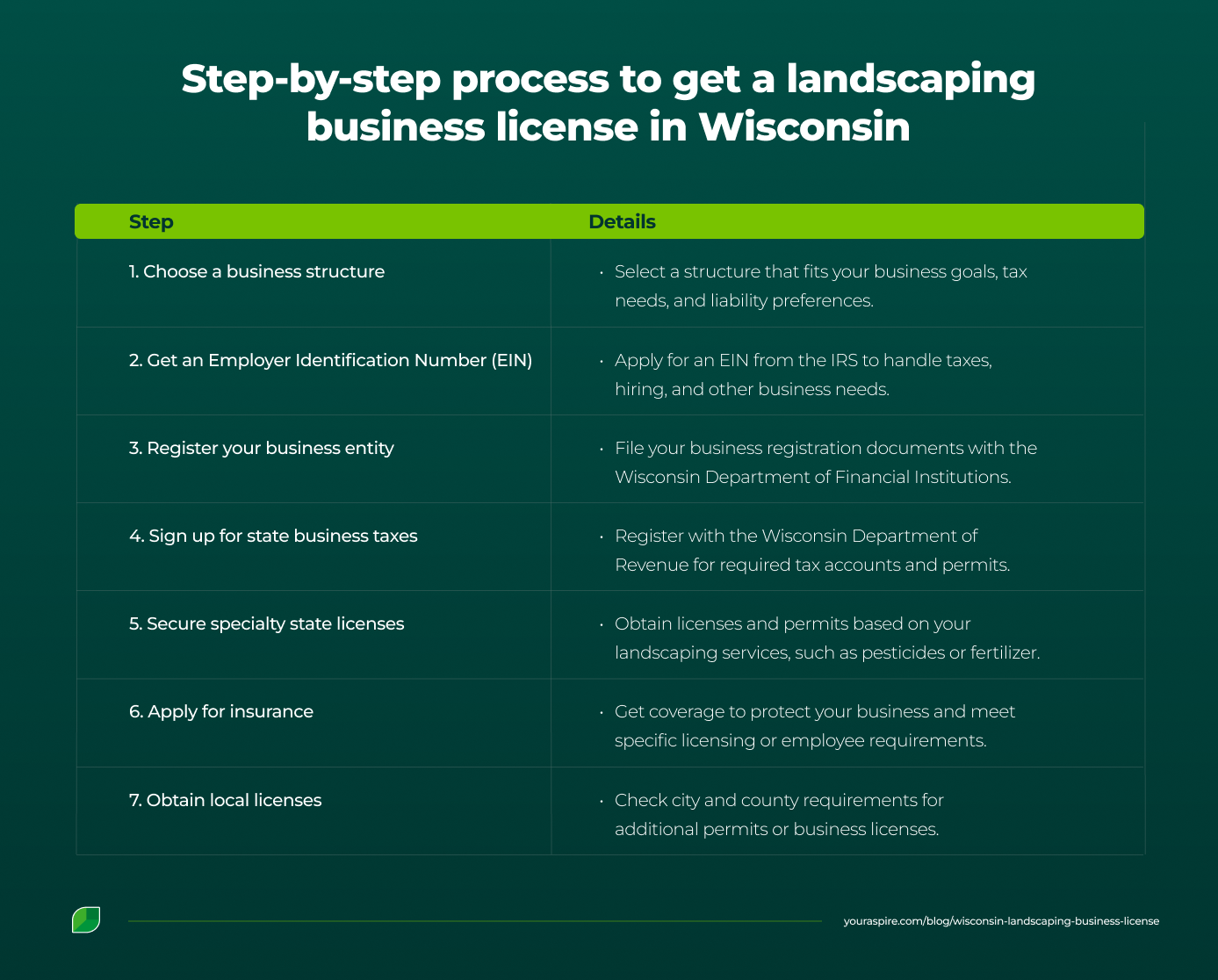
You’ve seen what licenses your landscaping business might need to launch. Now, let’s show you how to get them step by step:
1. Choose a business structure
First, choose a business structure, as it determines how the business is taxed, the level of personal liability protection you receive, and how much paperwork you need to manage.
Some options to consider include:
Sole proprietorship: Easy to set up, but it doesn't protect your personal assets.
LLC: Protects personal assets while keeping your tax requirements relatively simple.
Partnership: Similar to sole proprietorship, but shares ownership, profit, and responsibility among partners.
Corporation: Offers robust liability protection but with stricter reporting requirements and complex tax rules.
2. Get an Employer Identification Number (EIN)
Before you can register the business with the Department of Financial Institutions or Department of Revenue, you need an EIN from the Internal Revenue Service.
Besides helping with registration, an EIN enables you to open bank accounts, file taxes appropriately, and hire workers.
To get one, head over to the IRS website and complete the application. You’ll need your Social Security number (SSN) and business structure when applying.
3. Register your business entity
You can register your business in Wisconsin online or via paper forms.
Here’s what you’ll need in both cases:
The proposed name of the landscaping company
The name, email address, and office address of a registered agent
The location of the business office
The names and addresses of the business owner and partners
The name of the drafter (the person registering the business and filing documents)
The signature of one or more organizers
The name, address, email address, and phone number of the contact person filing documents
A payment of $100–$170, ideally made with a credit card
Once you have all of that, visit this page to register the business online. Choose a structure and follow the on-screen instructions to complete the process.
To go the paper-filing route, click here to view a list of the different business structures. Select an appropriate one, download the form, fill it out, and submit it to the WI Dept. of Financial Institutions, Box 93348, Milwaukee, WI, 53293-0348, together with a check for the filing fee, payable to the Department of Financial Institutions.
4. Sign up for state business taxes
Once you register your business with the state, the next step is to obtain a State Business Tax Registration through the Wisconsin Department of Revenue.
This registration gives you a tax account number, a seller’s permit, and any other tax-related certificates your landscaping business may need.
To complete the application, you’ll need:
An EIN and ID
The legal name of your landscaping business
A Department of Financial Institutions (DFI) ID number
Date of incorporation
State of incorporation
Business address
Business contact information
Estimated taxable sales
Estimated monthly payroll withholding
To register, visit the Department of Revenue’s registration page, follow the application wizard, and pay the required $20 fee.
During the application, you can register for the tax accounts your business needs, including:
Seller’s Permit, if you make taxable retail sales, such as selling plants.
Withholding Tax Account, if you hire employees and withhold Wisconsin income tax from their wages.
5. Secure specialty state licenses
The specialty licenses you may need include a commercial pesticide business license, a fertilizer permit, a nursery dealer license, and a landscape architect license.
Here’s how to apply for them:
Commercial pesticide business license: For this permit, you need to:
Have employees with an Individual Commercial Pesticide Applicator License (a.k.a. ICAL) who are also certified in the appropriate category. See how workers can get licensed here.
Submit an application by paper or online through the DATCP (Department of Agriculture, Trade, and Consumer Protection).
Pay the required licensing fee, $70 per location plus a $10 ACCP surcharge.
Maintain the license by renewing it annually.
Fertilizer permit: File your application online via the DATCP or by paper. Pay the $30 licensing fee, along with a $10 ACCP surcharge. Renew it every year to stay in compliance with state requirements.
Nursery dealer license: You need this permit if you sell more than $250 worth of nursery stock per year.
Apply online or by filling out a paper application form. The license fee is based on your gross annual purchases of nursery stock. For example, purchases worth $5,000 or less attract a $30 licensing fee; $5,001 to $20,000 costs $50; and so on.
Landscape architect license: Here, you need to meet the education and experience requirements mentioned further above before you can apply. Then apply online through LicensE and provide all required forms, supporting documents, the $55 application fee, and proof of your education and work experience.
Renew your license every two years by completing the required continuing education and submitting your renewal through LicensE.
6. Apply for insurance
The next step is securing the insurance coverage your operations require.
While Wisconsin doesn’t require general liability insurance for every landscaping company, it’s recommended you have it to protect your business against property damage, bodily injury, or other claims.
If you hire three or more employees, Wisconsin law may also require workers’ compensation insurance.
Take time to research insurance providers that can cover both types of insurance and any other coverage your business might need, such as equipment insurance.
7. Obtain local licenses
After obtaining the state-level licenses, visit the local clerk’s office or the municipal website to see what your landscaping business needs to operate in the state.
Cities like Milwaukee ask that landscaping companies call to find out what’s needed.
Beloit requires businesses operating within the city to get a business permit.
Other cities, like Baraboo, set minimum installation sizes and guidelines landscapers must follow.
Always check with your city to see whether your business needs a permit to operate.
How much does a Wisconsin landscaping business license cost?
Here’s what you can expect to pay for the registrations and licenses covered above:
General business fees
Business registration: $100–$170
State Business Tax Registration: $20
Commercial pesticide business license
Pesticide Business License: $80 per location ($70 license fee + $10 ACCP surcharge)
Businesses storing bulk pesticides: $92.50 per location ($80 license fee + $12.50 ACCP surcharge)
Fertilizer permit
Fertilizer license: $40 annually ($30 license fee + $10 ACCP surcharge)
Nursery dealer license
Gross annual nursery stock purchases of $5,000 or less: $30
Gross annual nursery stock purchases of $5,001–$20,000: $50
Larger businesses pay higher fees based on annual nursery stock purchases.
Landscape architect license
Application fee: $55
Renewal: Every two years (renewal fee set by DSPS at the time of renewal)
Keep in mind you may also need to pay for insurance coverage or local permits. Those aren’t included in this list because the costs vary.
What are the most common mistakes to avoid when getting a license?
It’s easy to assume there are no licensing requirements because “Wisconsin doesn’t have a general landscaping license.”
In reality, overlooking the state’s specialized licenses can lead to compliance issues.
To help you avoid further issues, here are common mistakes you should avoid when starting a new landscaping business in the state:
1. Neglecting registration with the Department of Revenue
To launch a business in Wisconsin, you need to register your business with the Department of Financial Institutions.
However, it isn’t the final step, especially if you intend to hire employees or sell fertilizers and plants to clients.
You also need to register with DOR to obtain tax accounts and a seller’s permit.
Skipping this step can delay your ability to operate legally and remain compliant with state tax laws.
2. Applying for a pesticide business license without an applicator permit
While a PBL is required to offer pesticide application services as a business, you can’t legally perform the service without an applicator license.
In fact, before you can obtain a PBL, every employee who performs pesticide applications must hold an Individual Commercial Applicator License (ICAL) and be certified in the appropriate category.
Applying without meeting this requirement could delay the PBL approval process or your ability to offer it as a service.
3. Missing license renewal deadlines
Several landscaping-related licenses in Wisconsin must be renewed annually or biennially to remain valid. One common mistake is confusing their renewal periods and missing the deadline altogether.
For example, pesticide business licenses are valid from January 1 through December 31, fertilizer permits run from October 1 through September 30, and landscape architect licenses must be renewed every two years.
Missing a renewal deadline can cause your license to lapse, interrupt your ability to offer certain services, and require additional time and paperwork to restore your license to good standing.
So, keep a calendar of renewal dates to avoid unnecessary disruptions.
How Aspire helps landscaping businesses stay organized & compliant
Launching a landscaping business from the ground up is no easy task.
After you’ve navigated the licensing maze, which we hope this guide has simplified, you need a way to manage operations without feeling overwhelmed.
Yes, you have the license. But how do you send proposals to new clients without leaving a job site to create one? How do you track job progress? How about requesting payments?
Aspire streamlines these processes so you can scale the business and focus on delivering the best service to your landscaping clients.
Here are some of the ways Aspire helps you out:
Contract & proposal management
Aspire’s estimation tool helps create on-brand proposals you can send to clients without starting from scratch.
You choose a template and add specific services along with pricing from a premade catalog.
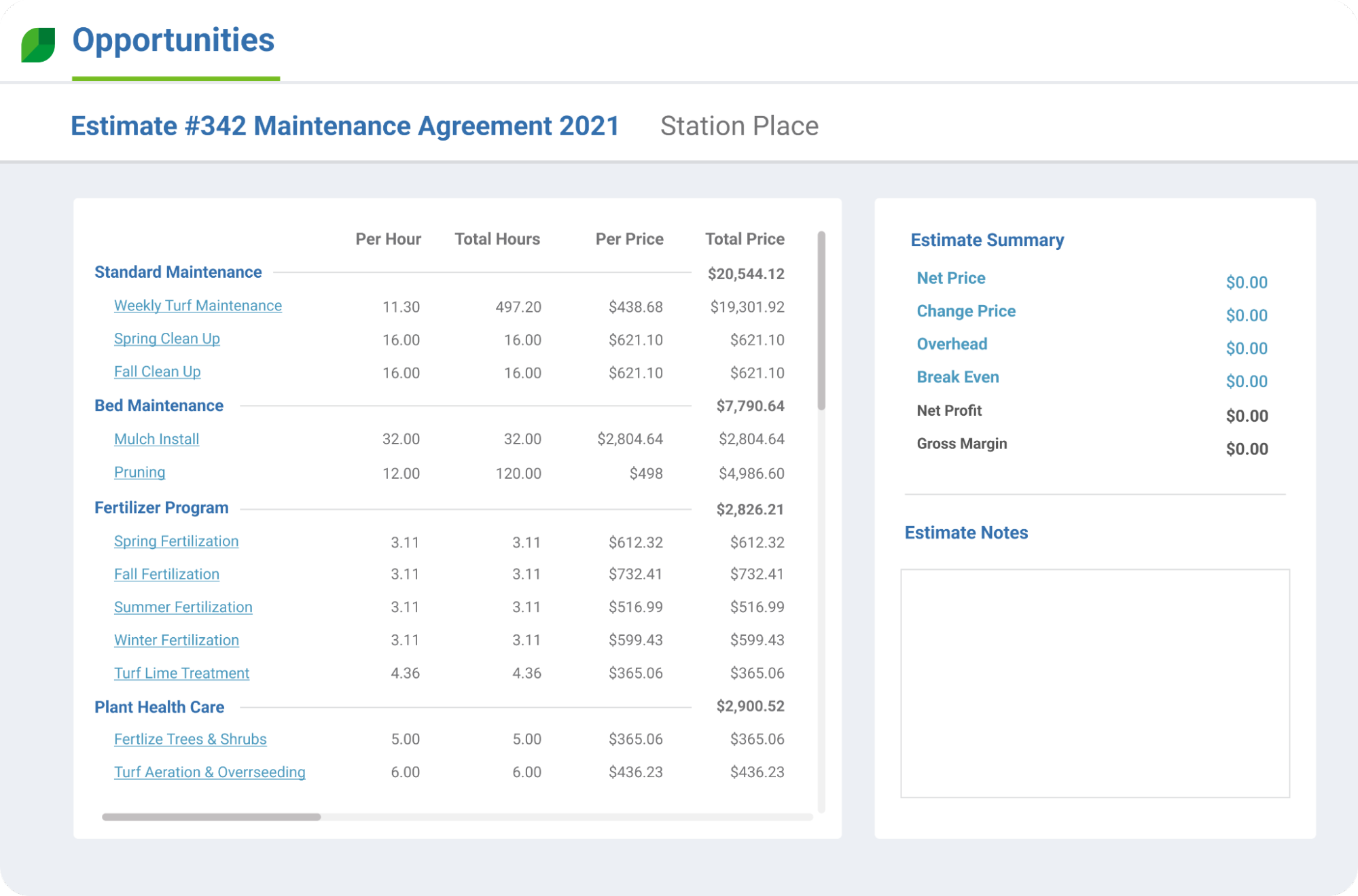
To ensure you turn a profit on any contract, the margins and markups you’ve set for labor, materials, and other costs are automatically added in.
You can share it with clients for approval without leaving Aspire.
This way, you have a structured and consistent way of sending proposals to clients.
Using Aspire for creating proposals means that all your information is centralized. As such, you can:
Categorize projects
Track which ones need a permit
Know whether or not your licenses are up to date
Invoicing & payment processing
This invoicing tool makes it easy for landscapers to request payment from clients.
It lets you know which project is ready to invoice and when it should be sent.
If a client has multiple jobs, Aspire’s invoicing allows you to either bill the entire project or send an invoice for a specific opportunity.
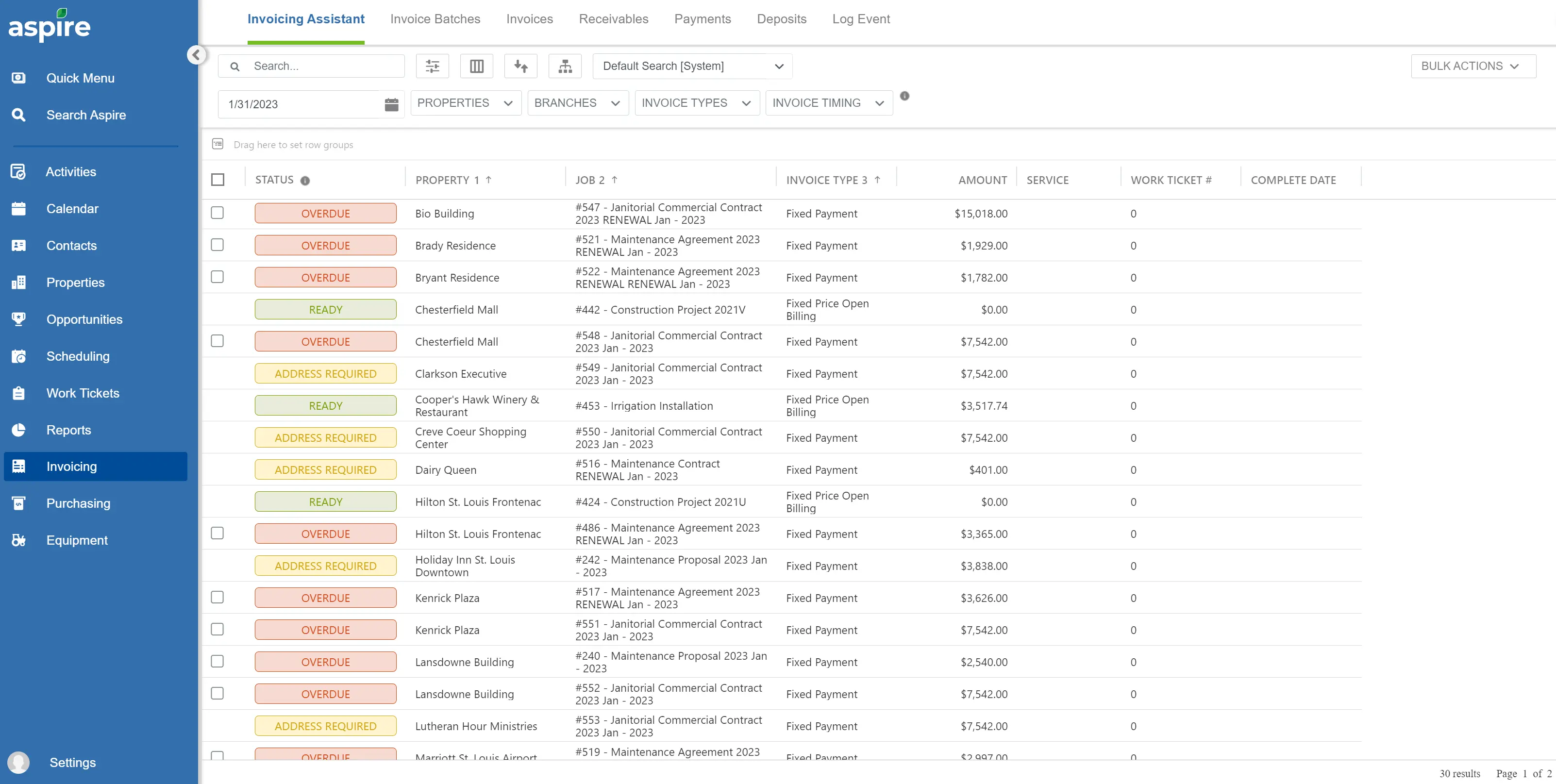
It also includes an intuitive assistant that helps you identify ready-to-send or overdue invoices, as well as projects with outstanding work or missing information. Plus, you can search or filter invoices by date, property, type, or timing.
Put simply, Aspire helps automate billing to streamline cash flow and track revenue across multiple business locations. This, in turn, ensures you have the information you need when it’s time to file taxes.
Business reporting & documentation
Aspire keeps you well informed by providing insights into everything that happens in your landscaping company.
It can show you how many projects you won, their overall costs, and whether you made a profit or loss.
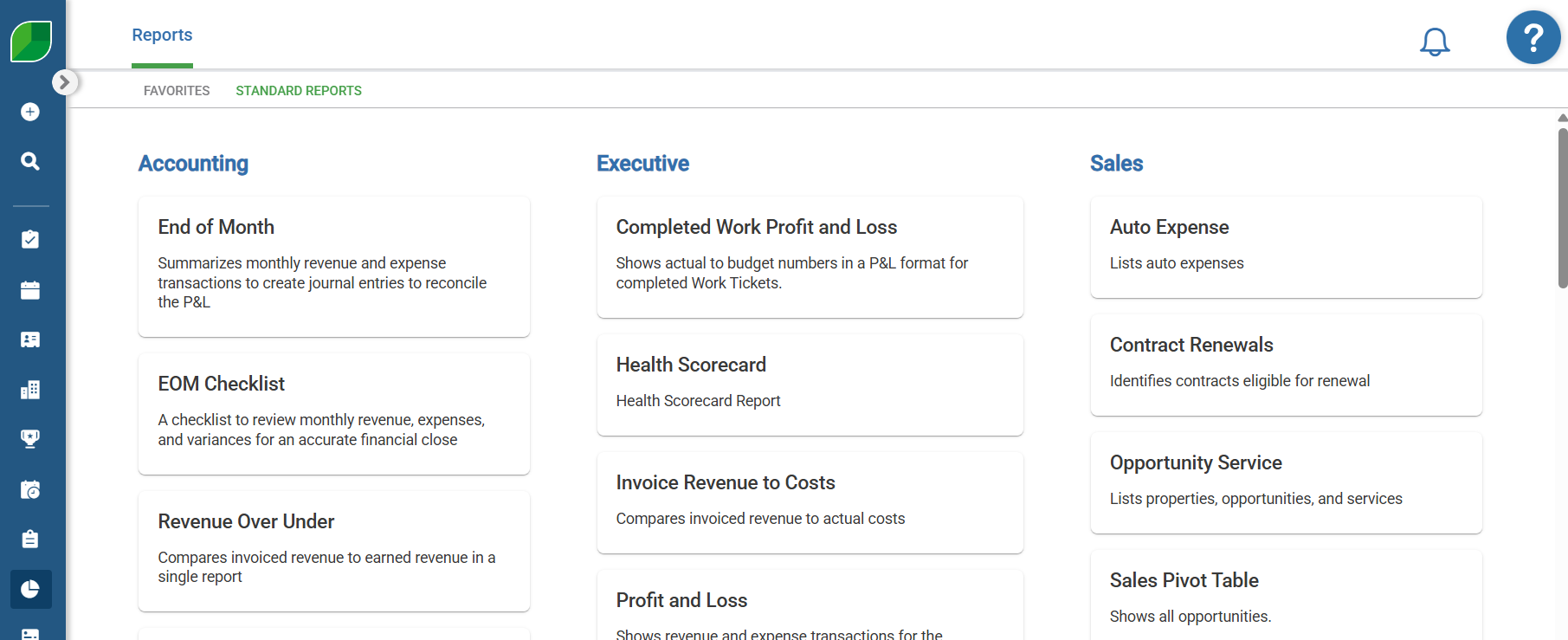
You can monitor client retention rate, current revenue, project inventory, or how profitable a particular service line or crew is.
This kind of information helps you act proactively and implement new strategies to achieve your goals.
Scheduling & job management
Another way Aspire helps you stay organized is through its scheduling feature.
This is like an operations powerhouse where you can see everything and plan projects the moment you win them.
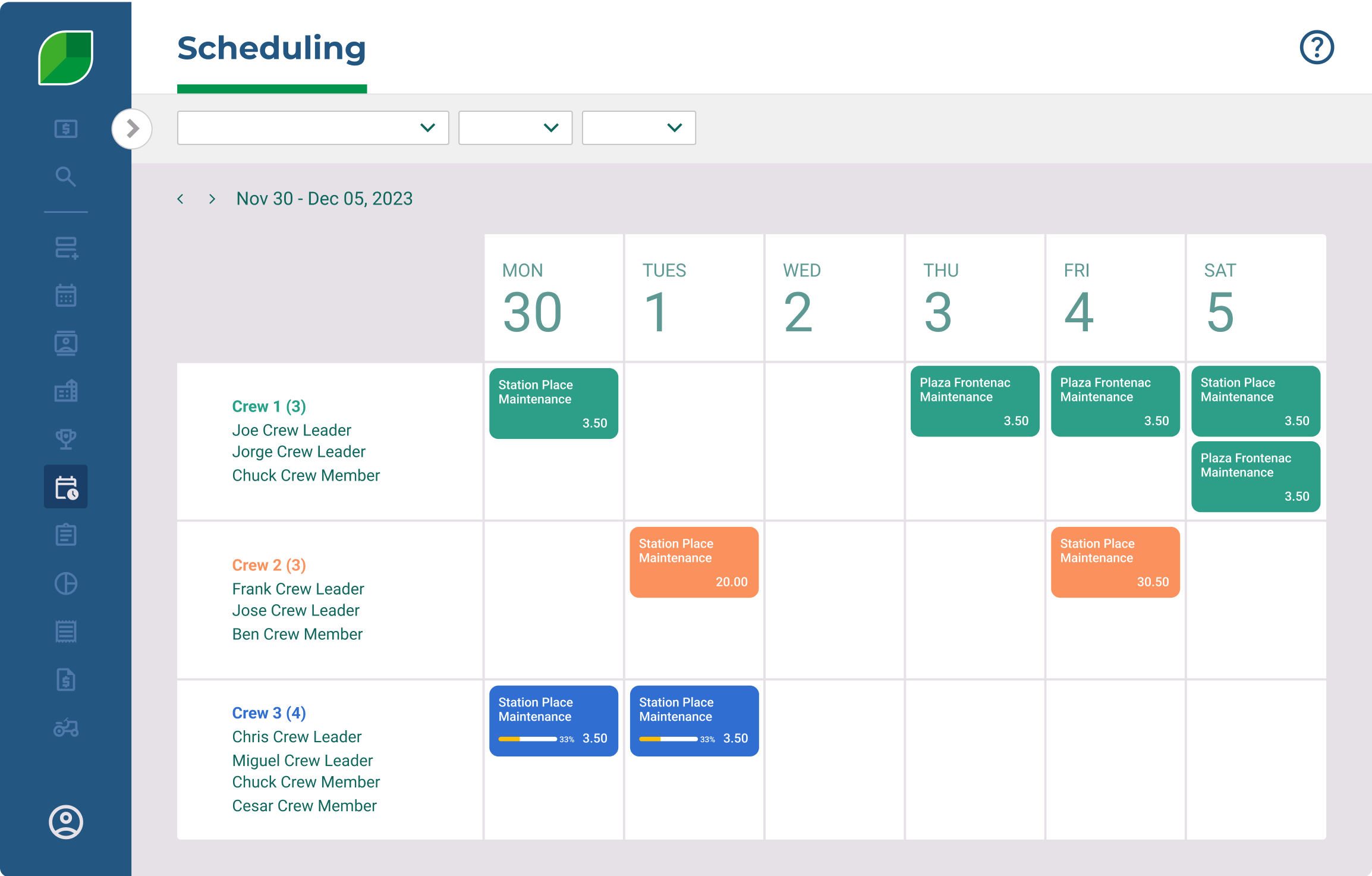
You know which crew is free and skilled enough for each project, so their workload stays well coordinated. The scheduling feature can also show when the team’s running out of materials, allowing you to make adjustments where needed.
This ultimately means your landscaping business stays on track, teams stay in sync, and clients stay happy with your services.
Over to You
In summary, running a landscaping business in Wisconsin starts with registering your business with the Department of Financial Institutions and the Department of Revenue.
Depending on the services you offer, you may also need several specialized licenses at the state and local levels.
Getting these licenses is one thing; managing your day-to-day operations is another. Handling everything manually can quickly become overwhelming.
Imagine visiting your local clerk’s office, then driving back to the office just to draft a proposal for a new lead.
With Aspire, you can pull out an iPad or laptop, open the estimating tool, and create a professional proposal or contract from virtually anywhere.
Want to see how it happens?
Book a demo with Aspire today.
Disclaimer
This article is for informational purposes only and should not be considered legal or financial advice. While every care was taken to use official sources, you should always verify requirements on Wisconsin government websites.







 866-727-7473
 Schedule Demo
 390 S Woods Mill Rd #300 Chesterfield, MO 63017


