
Table of Contents
Table of Contents
- Why niching is profitable for landscaping businesses
- What are the top landscaping niche ideas for 2026?
- What landscaping niches have the least competition?
- How to choose the right niche for your landscaping business
- How to move from generalist to niche landscaping
- How Aspire helps streamline and scale a niche landscaping business
- Over to You!
Too many bids in a crowded landscaping market can quickly turn into a price war. Choosing the right niche helps you stand out and win better-fit projects.
In this guide, you will learn the following:
How niching helps landscaping businesses raise margins, cut wasted sales time, and build a better referral path from clients who need the same type of work
Which are the best landscaping business ideas for 2026, such as hardscaping, xeriscaping, irrigation systems, outdoor lighting, holiday lighting, and commercial landscaping programs
How lower-competition niches rely on local know-how, such as expertise in native plants, rain gardens, snow removal, or specialty lawn care services
How finding the right niche that fits your crew, equipment, client base, cash flow, and local demand can become part of your marketing strategy
How to transition from generalist to niche landscaping with a phased plan that keeps revenue steady while your new offers gain traction.
Keep reading to compare your options, narrow the list, and choose the niche that best fits your business.
Why niching is profitable for landscaping businesses
Niching is profitable for landscaping businesses because they can stop chasing the same work as every generalist in town.
The U.S. landscaping industry has at least 692,777 businesses with more than 1.4 million employees, according to NALP data from IBISWorld, and generated $188.8 billion in revenue in 2025.
That puts the average revenue near $272,500 per business.
Revenue data also highlights the big gap between small generalists and large specialized operators.
Landscape Management’s 2025 LM 150 list tracks the highest-revenue firms, with BrightView reporting $2.77 billion in revenue, while the industry average is far lower because of the thousands of generalists.
Most of these businesses are small, local operators that are competing for mowing, mulching, lawn care, pruning, and cleanup jobs in the same ZIP code areas.
This overcrowds the market, but it leaves room for niche specialists.
As such, a specialized landscaping company doesn’t need to compete on a national scale to win bids. Whether you focus on hardscaping, xeriscaping, or commercial landscaping, becoming the local expert is often enough to stand out.
High margins
Specialized work gives you more control over pricing because clients compare skill, proof, and results, not just labor hours.
A lighting-only landscape company can charge 30 to 50% more per job than a general landscaper who also installs lighting, among other services.
Clients will always trust a specialist’s trained eye, product knowledge, fixture selection, and warranty process over a generalist’s limited knowledge.
Brand recognition and referrals
A narrower service list will make your company easier to remember in a crowded local market.
Property managers, realtors, HOA boards, and homeowners will remember you as “the irrigation company,” “the native plant landscaper,” or “the patio crew” faster than another full-service provider.
That kind of labeling helps referral partners send better-fit leads.
Low client acquisition cost
Niche marketing reaches fewer people, but the people you are looking for are searching for a specific service.
A landscaping business targeting “commercial xeriscaping LA” competes with far fewer businesses than those bidding on “landscaping LA.”
The same logic applies to social media, referral programs, website pages, and proposal follow-ups. A focused offer cuts wasted sales time and helps potential clients understand why you are the best fit for the job.
To run a successful landscaping business, offering more services doesn’t always mean growth. A good niche gives clients a specific reason to call, buy, and refer the next job.
What are the top landscaping niche ideas for 2026?
The top landscaping niche ideas for 2026 fall into three categories: repeat service work, large one-time jobs, and mixed services that bring a project first and add-on work later.
The niche you choose has to match the real conditions in your area. Crew skill, equipment, local weather, buyer habits, and service routines matter far more than chasing the latest landscaping trend.
Recurring-revenue niches
Recurring-revenue niches give a landscaping business work that repeats on a schedule or under a contract.
Commercial lawn maintenance and grounds management is a good fit for landscaping businesses that already serve offices, retail centers, high schools, or medical campuses. Your crews handle mowing, pruning, mulching, fertilization, weed control, cleanup, and routine site checks.
Irrigation system management and smart water solutions work well as niches for businesses that want to embrace eco-friendly landscaping and have teams with technical know-how. Your services would include leak repair, controller adjustments, sensor checks, water pressure management, and helping clients reduce water waste.
HOA and community association landscape programs make sense if your landscaping business has tight account follow-up. Boards expect clean shared outdoor spaces, budget planning, simple updates, and fast answers when residents complain.
Pest and weed management for turf aligns with a lawn care business that already knows soil issues, turf health, treatment, trimming, and local application rules.
These options suit you better if you want steadier cash flow and crews booked ahead of time.
Project-based niches
These niches bring more jobs that have a clear scope, price, and finish date.
Hardscaping covers patios, walkways, retaining walls, steps, fire pits, and built areas that make your yard easier to use.
Landscape lighting design and installation suit businesses that focus on placement and product quality. Your crews plan and take care of fixtures, wiring, timers, upgrades, and maintenance visits.
Synthetic turf and artificial lawn installation niches work well in markets where homeowners want less lawn mowing, cleaner pet areas, and practical small yards.
Outdoor kitchen and living space construction is a good idea for businesses that already build patios, sitting areas, grill stations, and outdoor living layouts.
Erosion control and land restoration are recommended for crews that understand drainage, slopes, soil loss, planting plans, and post-storm or post-construction repairs.
These options make sense for landscaping businesses with good estimating, trained crews, and enough sales experience to quote larger jobs correctly.
Hybrid niches
Hybrid niches sit between project income and repeated service work.
Xeriscaping and drought-tolerant landscape design work well in hot, dry markets where water bills and maintenance costs affect buying decisions. Services include lawn replacement, gravel beds, drip irrigation, and soil grading.
Native and pollinator garden design is for businesses that work with native plants, rain gardens, edible landscaping, and eco-friendly garden designs. Your crews would do soil prep, mulch, pruning, plant replacement, and garden cleanups.
Interior plantscaping and green wall installation suit teams that work with offices, hotels, restaurants, and other commercial clients that need someone to take care of plant selection, moss wall and living wall installation, watering, or plant health checks.
Holiday and event lighting installation brings paid work when lawn care services slow down. Your business should provide services such as roofline lighting, tree wrapping, wreaths, garlands, takedown, and lighting repairs during the season.
Tree care and arboriculture services work best for crews that have pruning skills, safety training, and the proper equipment. Crews offer tree trimming, structural pruning, stump grinding, and disease monitoring.
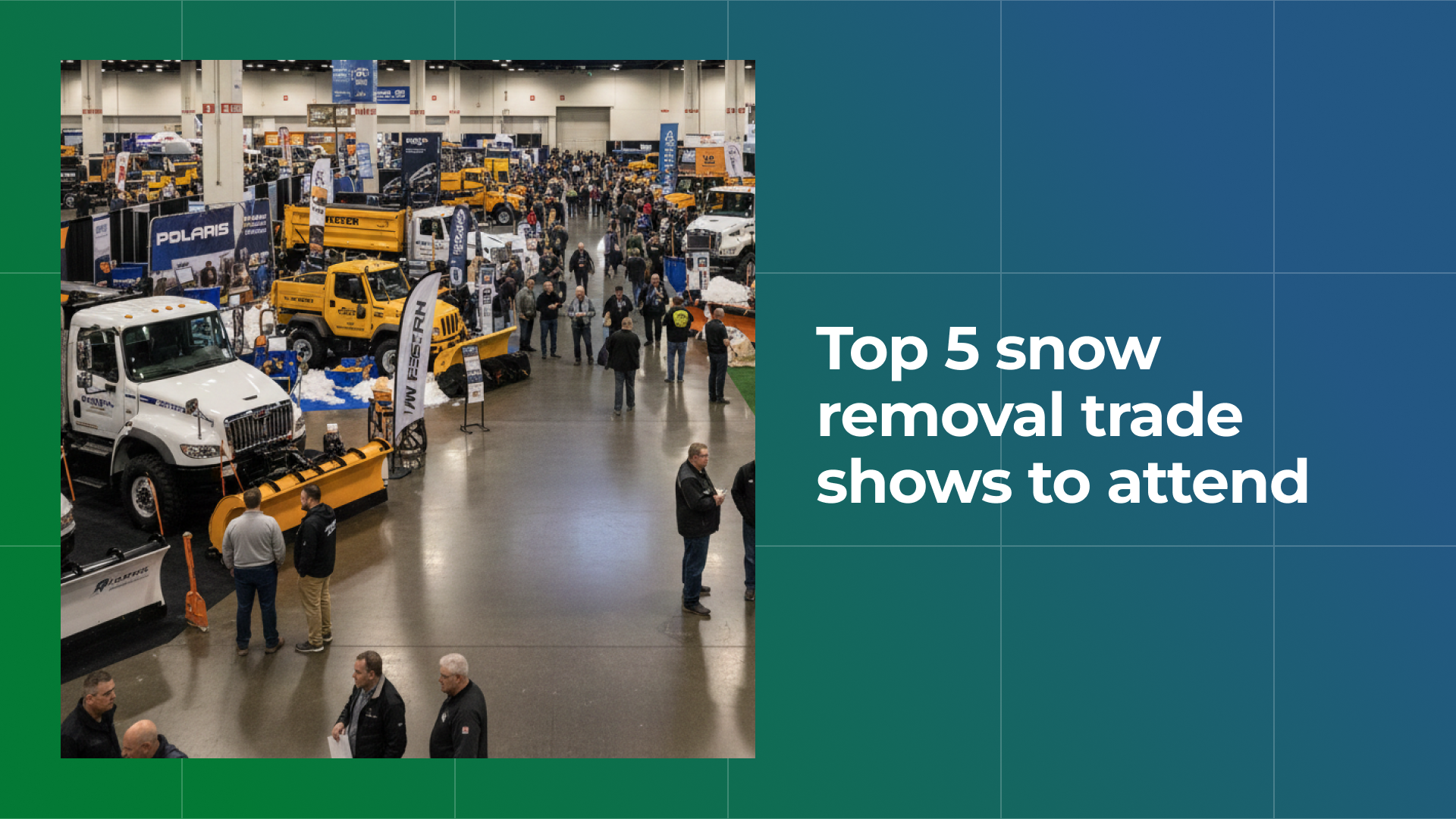
Snow and ice management is better suited for northern markets, where commercial clients need winter service plans such as snow removal, sidewalk clearing, or pre-storm salting.
These options suit landscaping businesses that want larger jobs while maintaining long-term client contact.
What landscaping niches have the least competition?
The least competitive landscaping niches require newer tools, water knowledge, field data, or soil work that other businesses rarely offer.
Low-competition niches are less crowded because they require training, different equipment, or a longer sales process. Many general landscaping businesses focus on mowing, mulching, and other basic lawn care because those services already fit their crews.
Specialty work gives your landscaping business an advantage, especially in markets where homeowners, schools, cities, or property managers want lower labor needs, better water control, or more sustainable landscaping.
Here are some of the least competitive landscaping niches:
Robotic mowing installations and fleet management are a suitable option if you have clients with large lawns, commercial campuses, HOAs, and high schools. Services include mower setup, boundary planning, property mapping, blade changes, cleaning, repairs, and routine fleet checks.
Green stormwater infrastructure and bioretention can work for crews with grading, drainage, maintenance, and planting experience. Your services should include rain gardens, bioswales, permeable walkways, erosion repairs, and inspection visits after heavy rain.
Regenerative landscaping is a good fit for businesses that work with soil health, native plants, compost, edible landscaping, and pollinator planting. Soil testing, compost topdressing, native bed care, and seasonal plant care should be listed among your services.
Drone-based landscape surveying and monitoring require managing larger or more complex properties. Services include site photos, progress tracking, irrigation issue spotting, storm damage records, and before-and-after reports for clients.
Vertical gardening and green walls require installing living wall systems and vertical gardens, specifically targeting urban areas with limited yard space. They require specialized horticultural knowledge of indoor/outdoor structural mounting, hydroponics, and microclimates.
These niches also help you attract clients with specific needs and have more meaningful conversations with them from the start. A property manager who is searching for “drone landscape survey” or “bioretention maintenance” already has a specific problem to solve.
How to choose the right niche for your landscaping business
The right niche fits your crew, local demand, licensing, and profit goals.
Use a simple scorecard before you commit to one. Rate each niche from 1 to 5 for demand, competition, crew and equipment fit, startup cost, margin, seasonality, and repeat sales potential.
Follow these steps to choose the right niche for your landscaping business.
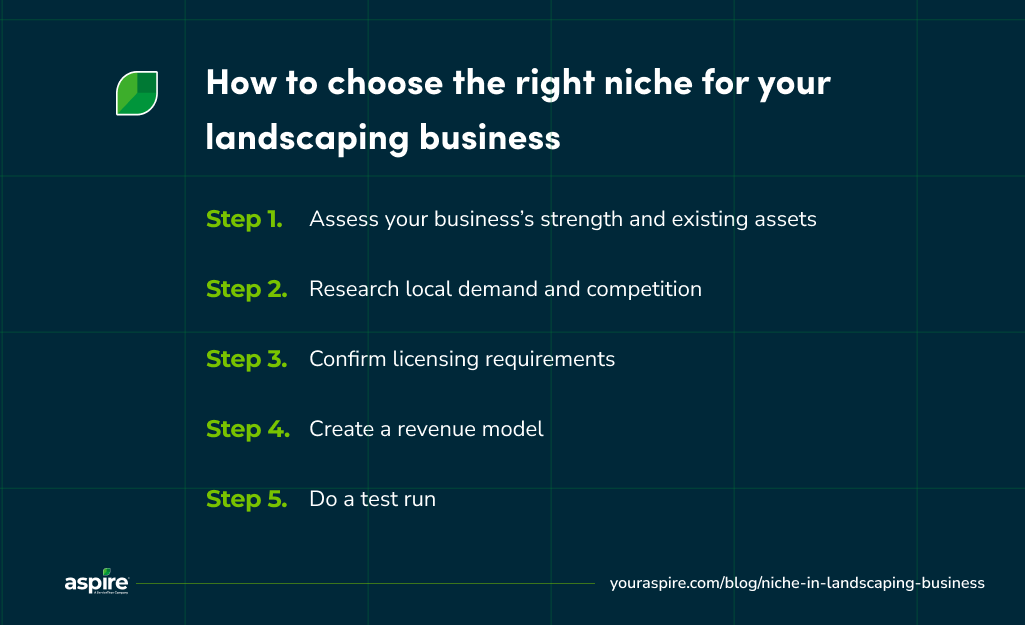
Step 1: Assess your business’s strength and existing assets
Start by analyzing what your business already does well.
Review your best projects from the past 12 months. Look at your crew’s skills, equipment, job size, callbacks, profit, client type, and work that your team can complete without extra supervision.
Working with a landscaping business consultant also helps you spot patterns in job cost, sales history, route density, or missed profit.
Step 2: Research local demand and competition
Always pick a niche with real and measurable demand and less competition in your area.
Check local search results, competitor websites, social media pages, municipal plans, HOA needs, and past client requests. A market with many general landscapers and only one or two real specialists gives you better opportunities.
Step 3: Confirm licensing requirements
Make sure you have the right licensing, insurance, and local permits before offering services in your chosen niche.
Irrigation work, pesticide application, tree care, drainage work, and construction-related services follow different rules by state, county, or city. A profitable idea will lose its value when compliance costs catch your business off guard.
Step 4: Create a revenue model
Build a simple financial model before you hire crews, buy trucks, or buy equipment.
Compare your current margins with projected niche margins. Include labor hours, materials, subcontractors, warranty work, sales time, training, software, and marketing costs.
Seasonal gaps matter, too. Counter-seasonal income or cash reserves protect the business when demand slows down.
Step 5: Do a test run
Before making a full rebrand or spinoff, run the niche as a branded service for 6 to 12 months.
Track close rates, ticket margins, customer satisfaction, referral rate, and repeat work separately from other services you provide. Real numbers will help you decide whether to expand, refine, or drop the niche.
As a general guideline, a niche should receive more investment only after it improves demand, profit, and operational fit.
How to move from generalist to niche landscaping
To transition from a generalist to a niche landscaping business, change gradually. Scale back your existing services only after your niche becomes consistently profitable.
Keep your current client base active while the new offer starts to draw attention. Dropping mowing, cleanup, and other core landscaping services too soon creates cash flow challenges and leaves crews underutilized.
Here is how you can make the transition smoother:
Pick one service line to test, such as hardscaping, irrigation, or outdoor lighting
Promote the niche to your best-fit clients before changing the full company profile
For every niche job you do, track labor hours, materials, close rate, average ticket, and callbacks
Reduce the list of general and unpopular services in small steps once the niche brings steady demand
Rebranding also needs a measured pace. Add niche pages to your website, update proposal language, share project photos on social media, and train sales staff to explain new offers in simple terms.
Client turnover matters, too. Some long-time customers might fit the new direction, while others keep your business tied to low-margin work.
Raise prices on low-fit accounts, stop bidding for poor-fit jobs, and refer smaller jobs to your trusted partners. This approach will keep the business steady while the niche becomes the main source for better work.
How Aspire helps streamline and scale a niche landscaping business
Aspire is business management software that helps niche landscaping businesses scale by keeping estimates, job costs, invoices, and client records in one place.
A niche offer works only if the back office tracks details by service type. Hardscaping needs different labor, materials, and sales than lawn care, irrigation, or holiday lighting.
With all the information in one place, business owners can better manage those differences instead of running each service line from separate spreadsheets. That becomes essential when a new niche starts as a test and then becomes the main job provider.
Real-time job costing
The real-time job costing feature gives owners a real-time view of profit while the job is still in progress and there’s still room for correction.
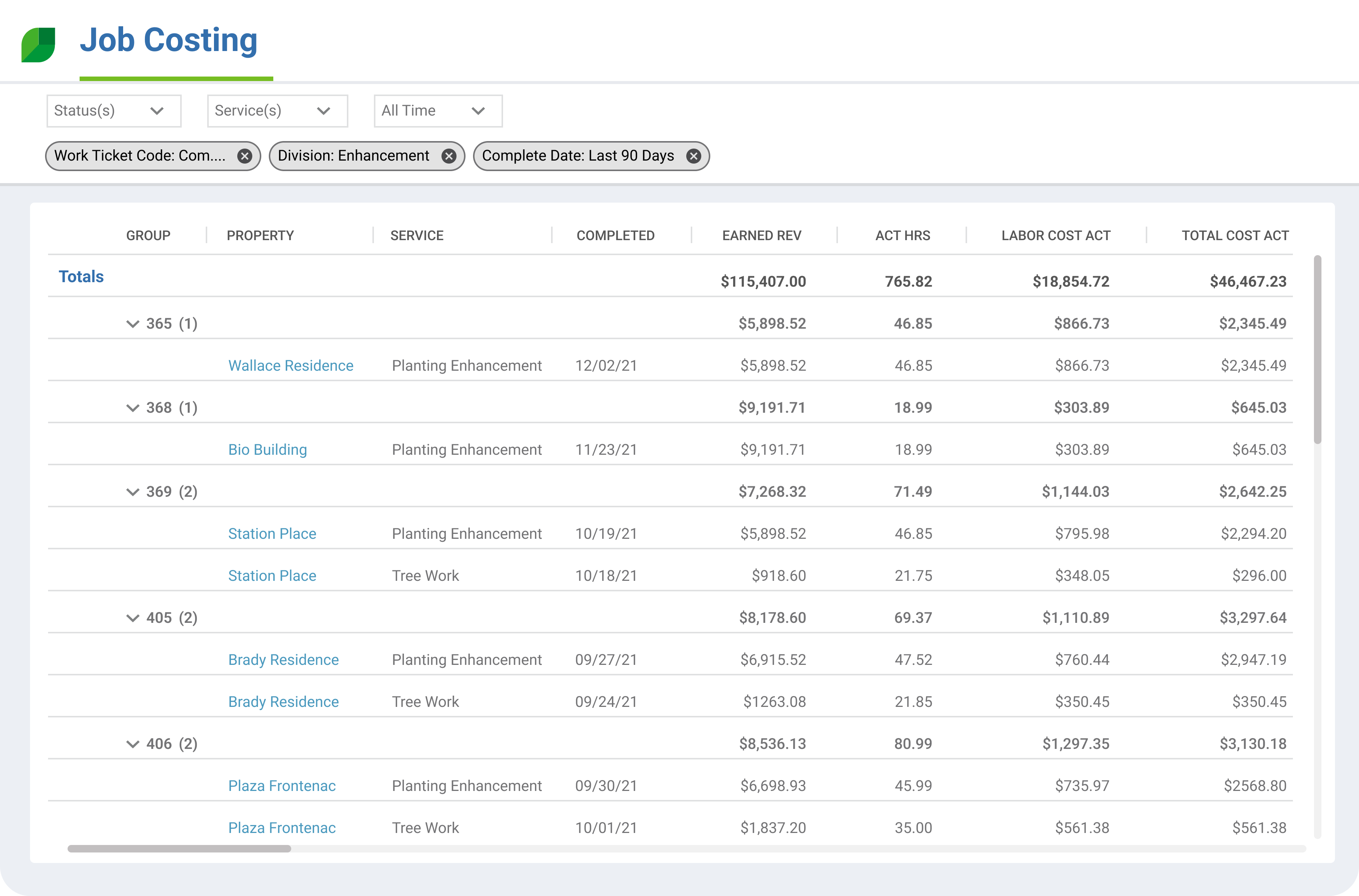
The platform tracks labor, materials, and other direct costs against the estimate. You can see when a patio crew works overtime, an irrigation repair uses more fixtures than planned, or a snow removal job burns through your budget during a storm cycle.
That helps you protect margins before small issues turn into big headaches and repeat losses.
Accurate estimating
Aspire’s accurate estimating feature turns niche work into a repeatable sale.
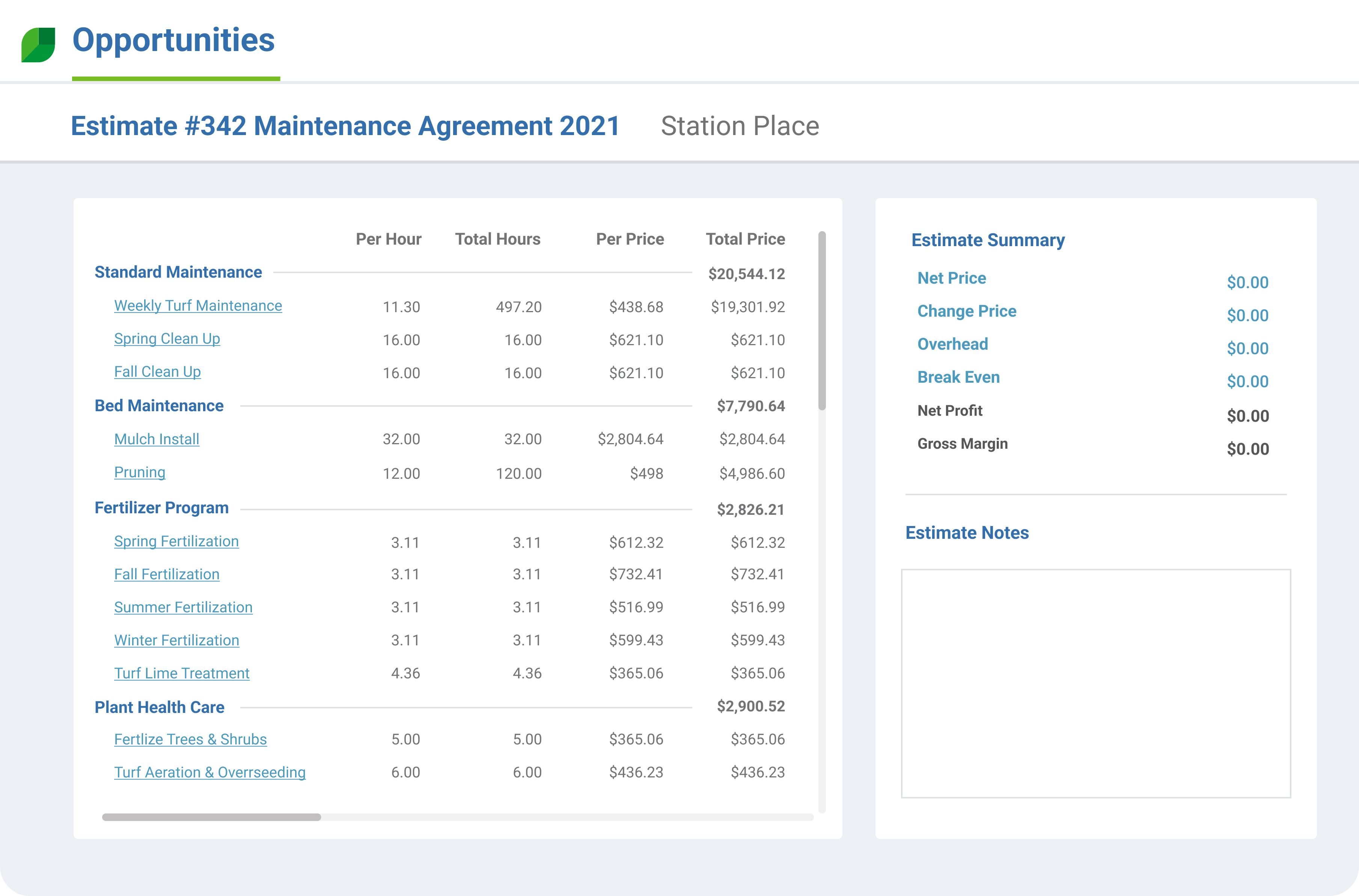
The platform allows teams to create estimating templates for specialized services such as xeriscaping, retaining walls, or outdoor lighting. Estimators price the work based on known labor items, material lists, and margin targets, which creates more consistent bids as sales grow.
Invoicing and finance management
Invoicing and finance management connect completed work to payment and reporting.
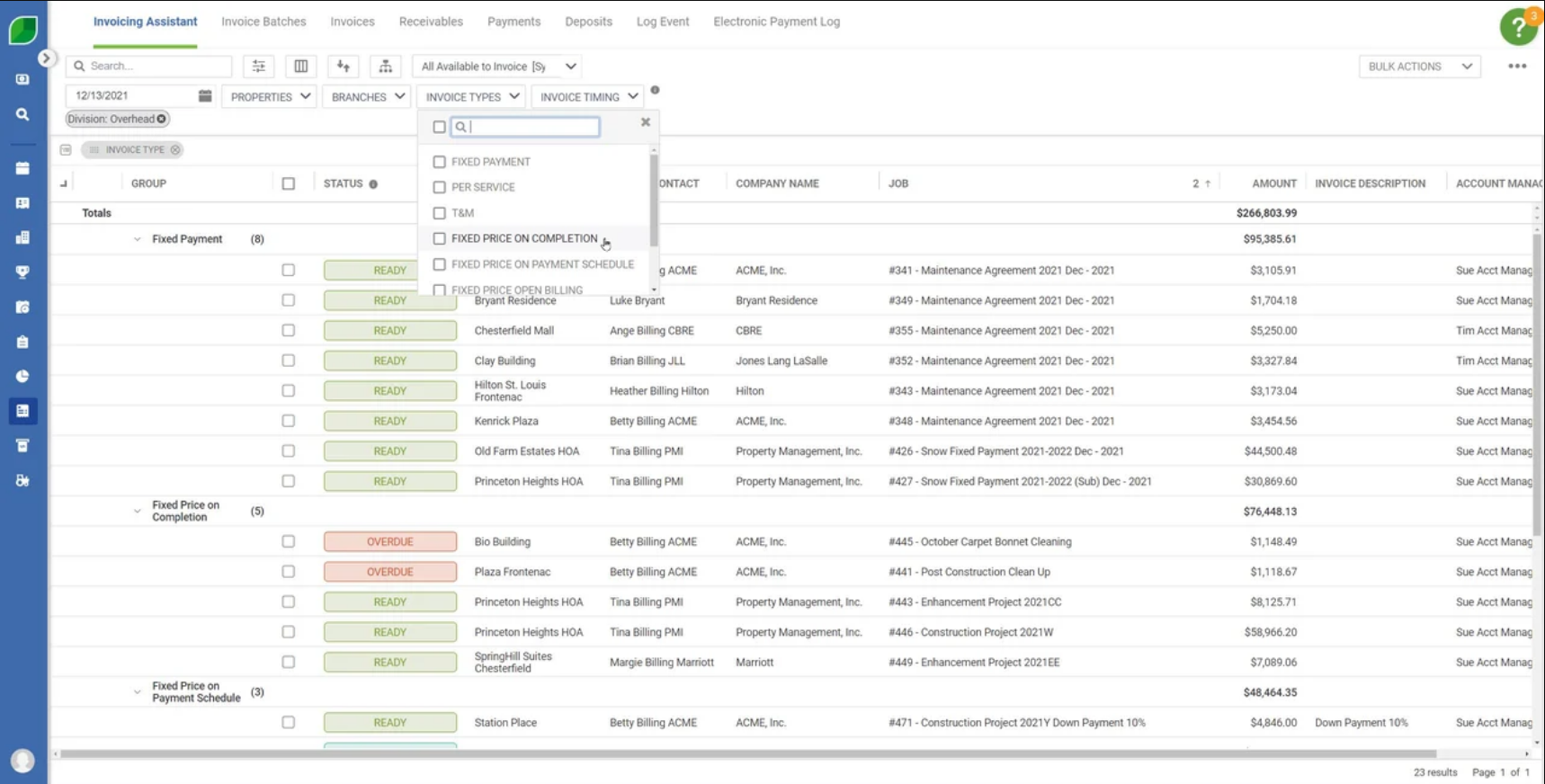
The platform’s invoicing feature lets teams bill from project records, track account status, and review financial results by service. As a niche business, you can see which jobs drive better cash flow and which offers need pricing changes.
Customer relationship management
Good CRM (customer relationship management) keeps sales, service history, and property details tied to each account.
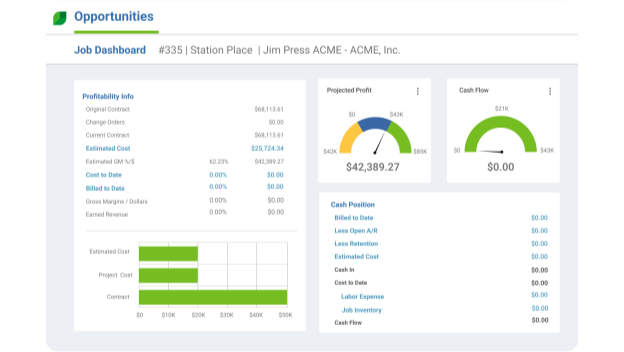
Aspire’s CRM functionality helps your teams track leads, proposals, client notes, property needs, and repeat work. This helps crews selling irrigation upgrades, garden design, or outdoor kitchens see an account's full history before the next call.
A niche landscaping business grows faster when operations match the promise in the sales pitch.
Equipment management
Niche jobs usually require specialized tools, trucks, and machines, as well as specialized crews.
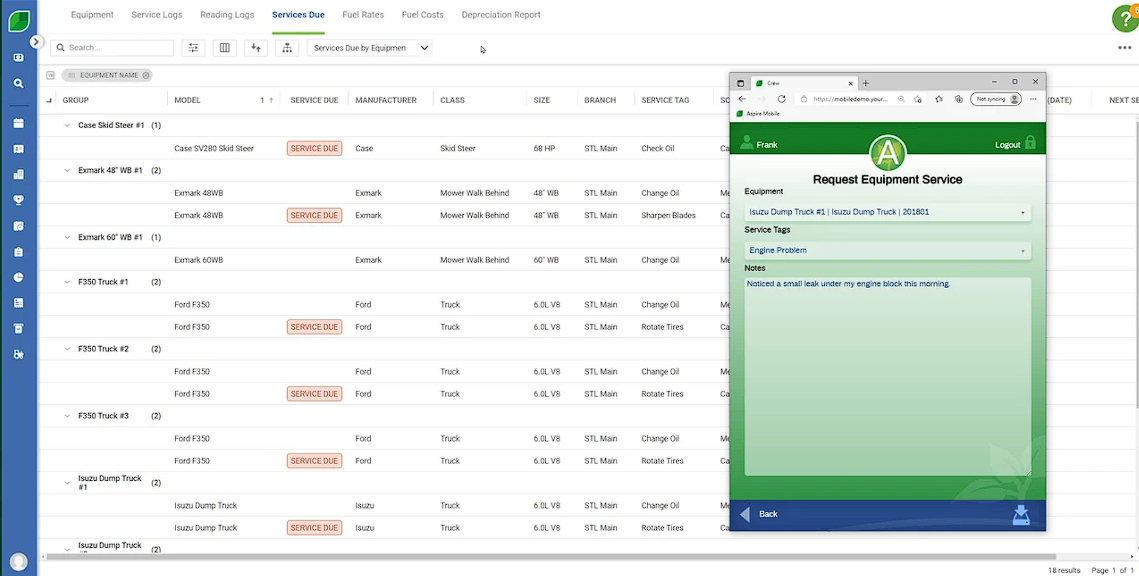
Through its equipment management feature, Aspire allows teams to track equipment and vehicles by details such as model, class, size, route, and manufacturer. Crews log hours and miles, and the system triggers service alerts based on individual maintenance intervals.
When your niche needs expensive or specialized equipment for jobs like snow removal or tree care, tracking its condition matters. A broken skid steer, plow, or trencher slows down the job and cuts into the margin fast.
Over to You!
Choosing the right landscaping niche can help you attract better-fit clients, command higher prices, and build more predictable cash flow. Evaluate your crew’s skills, local demand, profit margins, and seasonality to choose a service line worth testing.
Then measure each job before you expand. As your niche grows, use Aspire to keep your expansion organized with job costing, estimating, invoicing, CRM, and equipment management in one place.
Ready to see how that works? Book a free demo with Aspire today!









 866-727-7473
 Schedule Demo
 390 S Woods Mill Rd #300 Chesterfield, MO 63017


