Table of Contents
Table of Contents
- What are commercial snow removal business operations?
- What is the difference between residential and commercial snow removal?
- How should you prepare before the snow season?
- What role do equipment and staffing play?
- How are snow removal services executed?
- How do you manage clients and logistics?
- How can you market your snow removal business?
- What safety measures are essential in snow operations?
- What technology supports snow removal operations?
- Over to you!
Starting and running a commercial snow removal company isn’t just about who plows driveways the best or spreads salt the fastest. When snow starts falling, property managers and business owners count on snow professionals to keep parking lots safe, sidewalks clear, and businesses operational.
Behind any successful commercial snow removal business lies a lot of preparation: from logistics to equipment to crews.
This guide breaks down everything you need to know about running a commercial snow removal business, including:
How to prepare for the snow season
What role do equipment and staffing play?
How to manage clients and logistics
How to market a snow removal business
What safety measures are essential
Stay tuned to discover all the tips and tricks for succeeding in this field.
What are commercial snow removal business operations?
Commercial snow removal business operations involve planning, managing, and delivering snow removal services to keep public spaces (e.g., shopping centers, hospitals, schools, and office buildings) safe and accessible during the winter season.
Services can include plowing parking lots, shoveling walkways, moving snow off-site, applying deicing materials, or even 24/7 storm monitoring.
Commercial snow removal is more than just clearing snow. It’s about:
Ensuring safety: Clearing walkways and parking lots keeps customers and employees safe by preventing slips and falls.
Keeping business operations running: Excessive snow and ice can halt business activities, negatively impacting revenue.
Maintaining compliance: Adhering to local snow-removal laws, such as timely snow removal from hospital grounds.
Usually, commercial snow removal companies operate on seasonal contracts, meaning clients pay a fixed rate for ongoing services. But there are other ways to charge for services, such as per-event or per-push (a set rate for every time you use the plow).
Next, let’s discuss the difference between residential and commercial snow removal.
What is the difference between residential and commercial snow removal?
The main difference between commercial and residential snow removal is the scale and complexity of the job.
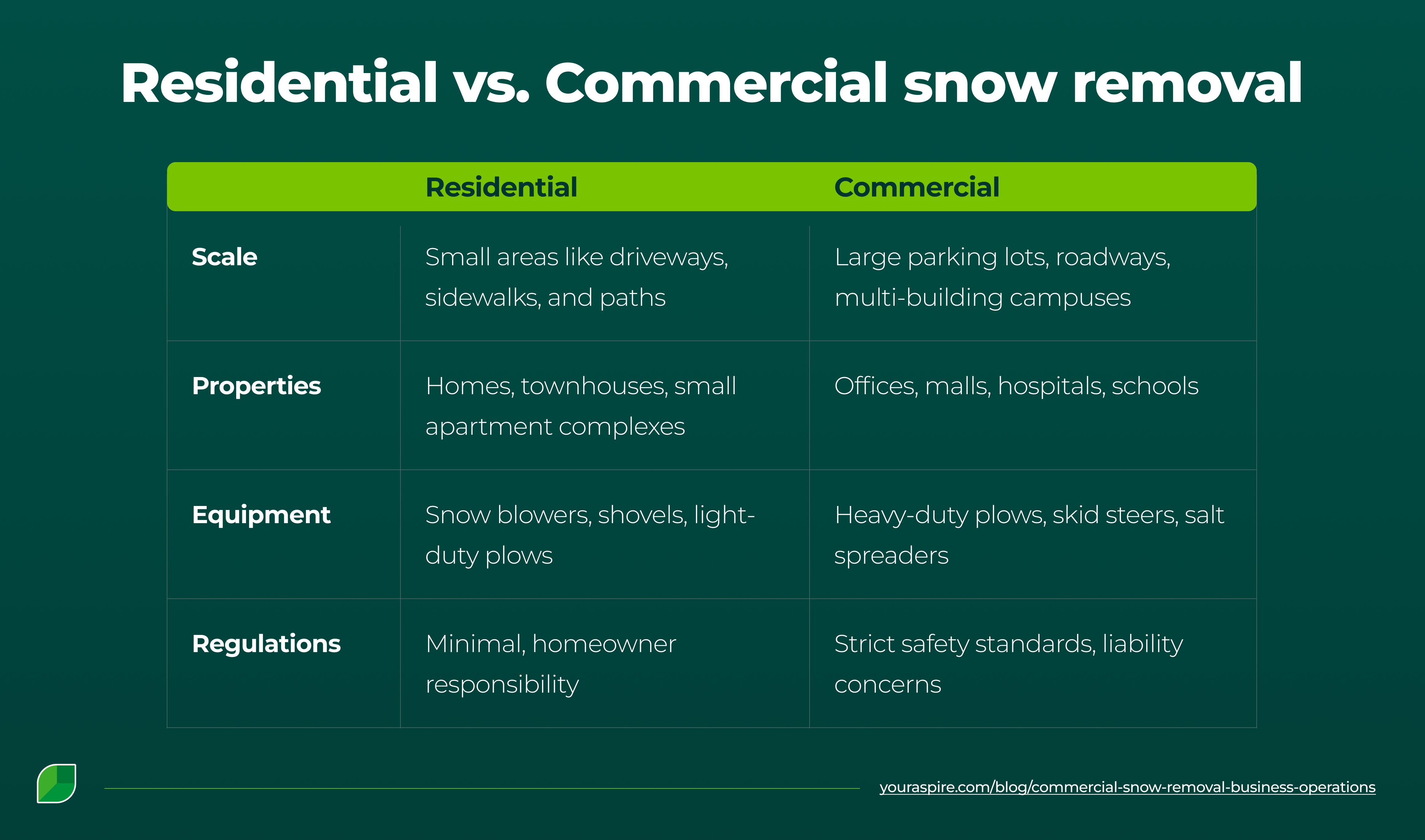
Residential snow removal involves clearing driveways, walkways, and small paths for individual homeowners, the properties usually being homes or small apartments. The job requires snow blowers and shovels, and there are minimal risks involved.
In contrast, commercial snow removal focuses on larger, high-traffic areas like parking lots, shopping centers, and industrial sites. These operations require more planning, heavier equipment, and compliance with stricter safety and municipal regulations.
Regardless of whether you’re just starting or are already a veteran in the field, here’s how to get ready for the snow season.
How should you prepare before the snow season?
Proactive planning is the secret to smooth snow removal operations. Waiting until the first snowfall can cause unexpected equipment failure, staffing shortages, and frustrated clients, so preparing ahead of time minimizes downtime, increases efficiency, and delivers reliable service.
Here’s what you need to do to prepare for the winter season.
Property site analysis
First, conduct a thorough property site analysis. By evaluating each commercial property in advance, you can anticipate challenges, plan efficient routes, and minimize risks.
The process involves mapping traffic flow, hazards, high-priority areas (e.g., loading docks, slopes, or icy walkways), and safe, accessible snow storage locations. Your goal is to create a detailed plan that keeps operations smooth at all times.
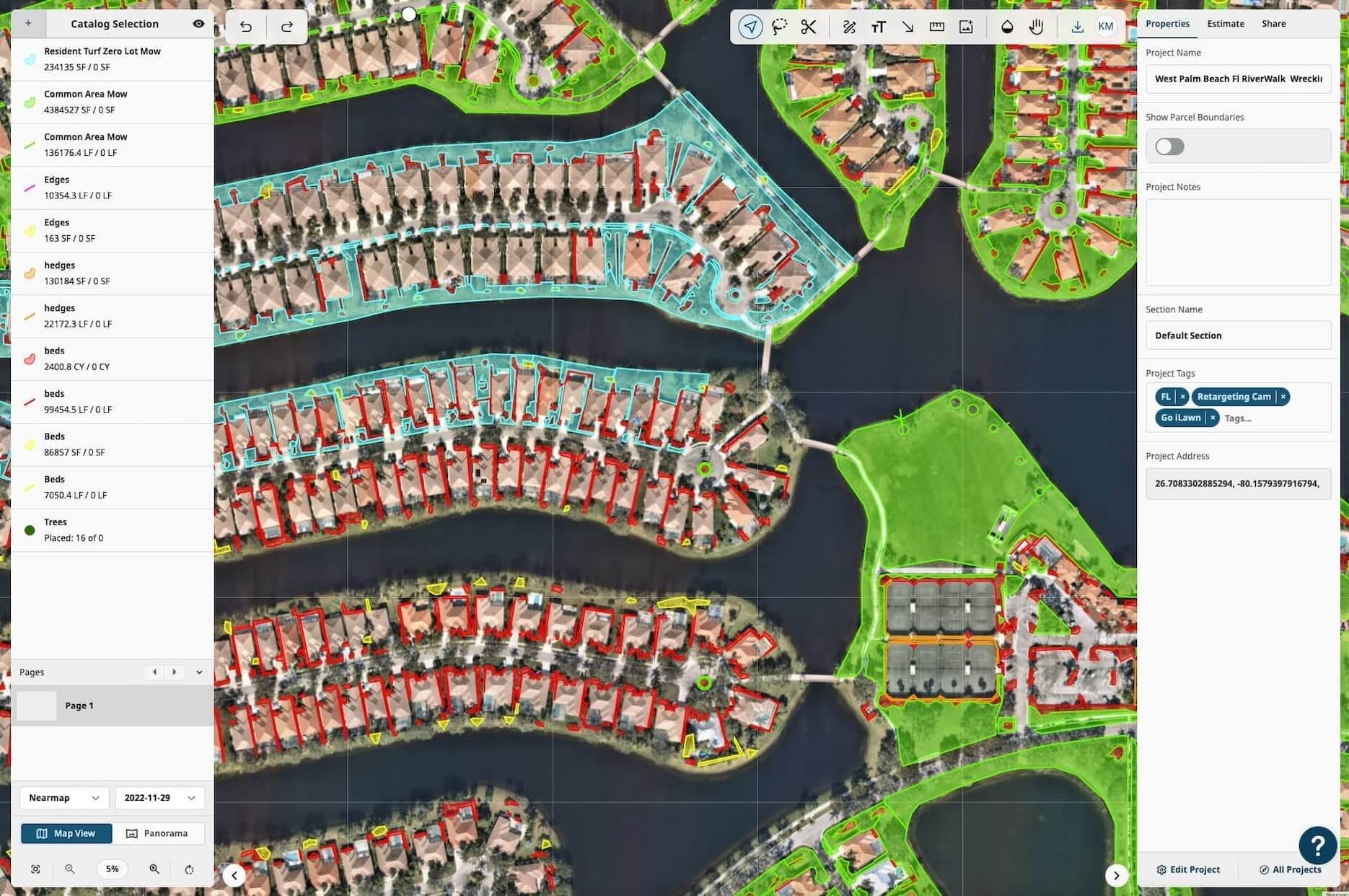
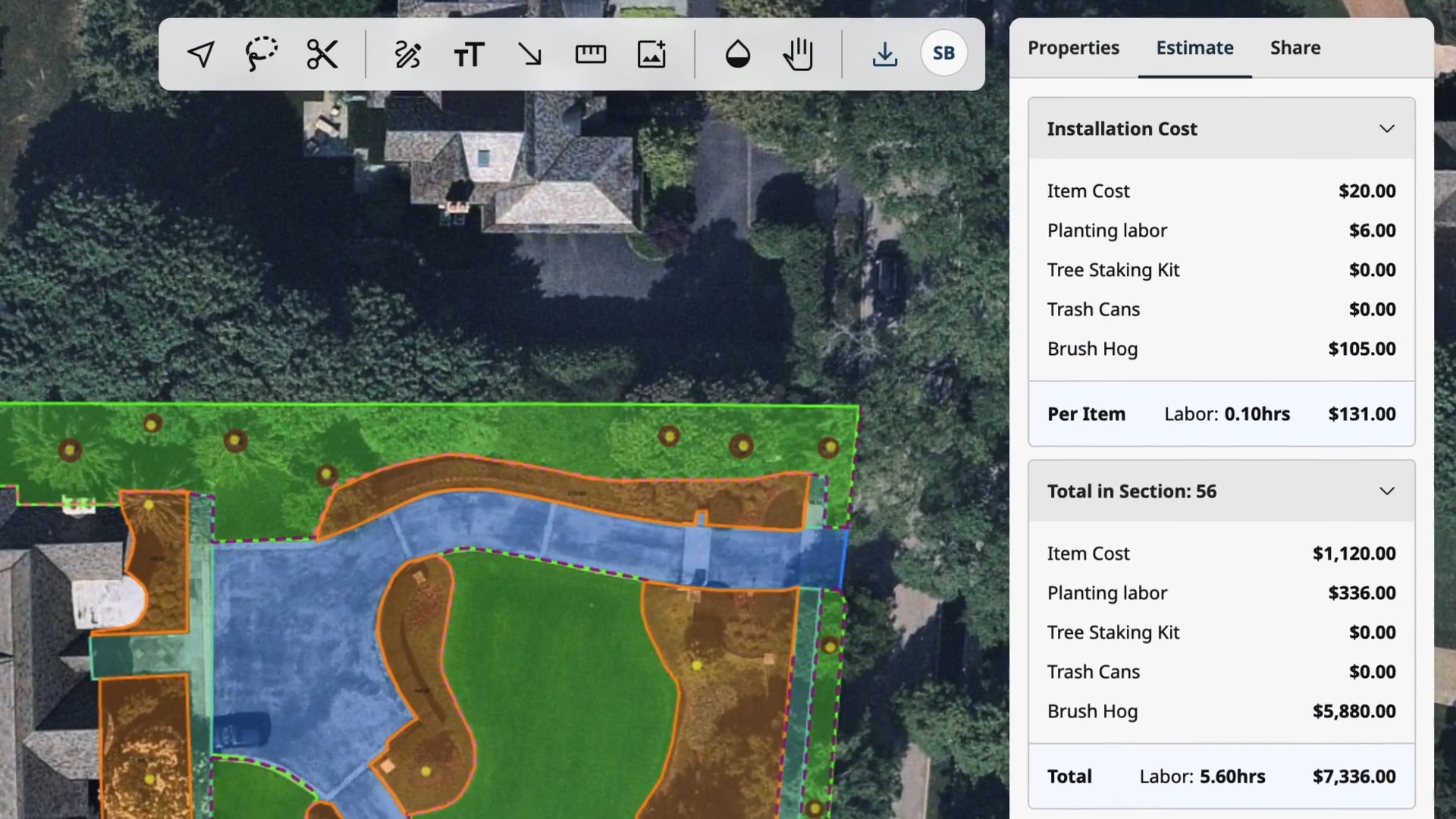
To help you with that, Aspire’s PropertyIntel is an estimating tool that optimizes your operations with:
Precision measuring tools: Helping you easily create takeoffs for maintenance work and design-build projects.
Automated estimating: Saving time and reducing errors by calculating material, time, and cost estimates.
Done-for-you measurements: Keeping salespeople focused on closing deals with automated property measurements.
Snow management plan
After carefully analyzing a property, it’s time to build a site-specific plan, which acts as a blueprint for how your team will respond before, during, and after a storm. In it, include priority zones, such as entryways, emergency access points, and main drive lanes, that you have to clear first to ensure people’s safety.
Compliance checklist
The last step is about staying compliant with safety and accessibility standards. Failing to meet these standards usually results in fines, liability claims, and even lost contracts, so make sure your compliance checklist is in place:
OSHA safety standards: The Occupational Safety and Health Administration is an organization that ensures crews follow proper protocols for equipment use, visibility gear, and cold stress exposure, keeping teams safe during a job.
ADA accessibility: The Americans with Disabilities Act requires that sidewalks, ramps, and entrances remain accessible during the winter months. Prioritizing these areas protects businesses from legal risks and keeps facilities inclusive.
Local ordinances: Each municipality has specific rules and regulations on snow removal timelines, snow disposal, and ice treatment. Stay up to date with these requirements to avoid costly penalties and build trust with customers.
Now that you know how to prepare for the snow season, let’s see the role your staff and equipment play in commercial snow removal.
What role do equipment and staffing play?
The backbone of any commercial snow removal operation is your tools and crew. Without the proper equipment or a reliable team, even the best plans fall apart.
Heavy-duty machinery
Heavy-duty machinery not only ensures efficiency but also allows crews to handle high-traffic areas quickly and with minimal disruption to daily activities.
Essential equipment includes:
Plow trucks: Ideal for clearing large lots.
Loaders and skid steers: Perfect for tight spaces and hauling snow off-site.
Salt spreaders: Ensuring even distribution of deicing material to reduce slip hazards.
Snow blowers: Useful for pedestrian-heavy areas.
It’s also important to keep this machinery in peak condition. Make sure to conduct pre-season inspections and preventative maintenance, and keep backup equipment on hand. This allows crews to stay on schedule.
Skilled workforce
Even if your equipment is the best, it’s useless without a skilled team to operate it. A reliable workforce is key to safety and efficiency during long storm hours.
Having a skilled crew starts with training that covers equipment operation and maintenance, deicing techniques, and communication protocols. Training should also cover emergency procedures in case of equipment failure or slipping accidents.
Another way to keep your workforce efficient is to assign each member specific tasks. Roles can include drivers, shovel teams, salt applicators, or even site supervisors, ensuring no area is overlooked.
Clear task delegation reduces confusion and maximizes productivity during heavy snowstorms.
Finally, don’t forget about safety protocols. OSHA standards require crew members to use high-visibility gear and proper lifting techniques. Make sure to hold regular safety briefings to remind people of safety practices and reinforce a culture of accountability and professionalism.
Flexible staffing needs
Your staffing needs can change with the weather, depending on storm size and client demand.
For example, light snow only requires a small crew to salt walkways and plow drives. Meanwhile, a major blizzard means all hands on deck, demanding multiple shovel teams and round-the-clock shifts.
When it comes to client demand, think about this: high-traffic sites like hospitals or retail centers need immediate, continuous service, while you can schedule other properties for later.
Managing these shifting needs is complicated, especially across multiple sites. With its scheduling and workforce management tools, Aspire makes it easy to update your schedule with a single drag-and-click.
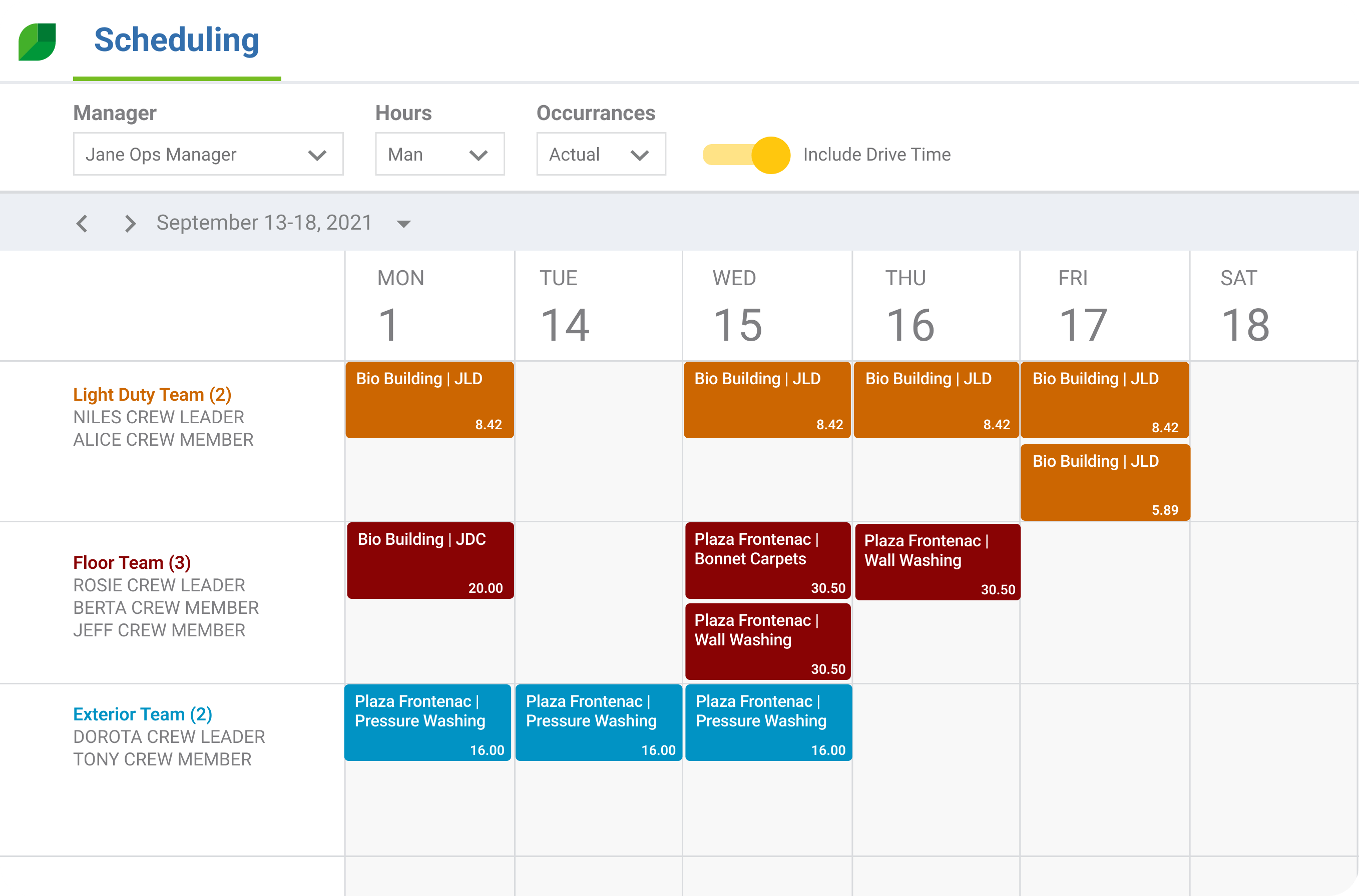
Aspire also offers the flexibility to ensure you’re never overstaffed or underprepared, no matter how unpredictable the weather is. It’s easy to assign the correct number of crew members to each property and adjust staffing on the fly.
Next up: the operational workflow during and after snow events.
How are snow removal services executed?
Executing snow removal services requires coordination, which begins before snow falls and continues until every property is safe and accessible. During the storm, crews follow site-specific procedures, such as plowing priority zones and clearing sidewalks.
Supervisors monitor conditions in real time, adjusting assignments and priorities as snowfall intensifies.
But operations don’t simply stop when the storm stops. Usually, snow removal companies follow up to address drifting snow or overlooked areas, while equipment undergoes inspections to prepare for the next snowstorm.
Let’s look at some of the most common snow removal operations.
Parking lot clearing
Clearing large commercial parking lots begins with plowing main drive lanes to restore traffic quickly. Then, you follow up with secondary lanes and parking rows. Typically, snow is pushed to designated hauling areas to keep space open and prevent hazards.
The technique involved in this process is to make long passes and work outward from building entrances. This helps speed up the process while reducing strain on the equipment.
Walkway shoveling
Walkways require a more precise, hands-on approach: using a shovel rather than heavy machinery.
Shoveling helps clear entryways, stairwells, ramps, and other pedestrian-heavy zones where fall risks are highest. Crews often start with ADA-accessible routes, then move to secondary paths and less-traveled areas.
Usually, crews use tools such as ergonomic shovels or compact snow blowers to clear these spaces, protecting workers from injury or fatigue.
Deicing applications
Deicing prevents slippery surfaces and reduces liability risks for property owners. It’s a vital part of snow removal because it prevents accidents and protects the pavement from long-term damage.
The most common method of deicing is spreading salt, which melts snow quickly. But for larger areas, snow-removal companies use brine solutions, a liquid that prevents ice from sticking to the pavement. This makes plowing more effective.
If you’re working in an environmentally sensitive area, use alternative products like sand or calcium magnesium acetate, which provide traction without the corrosive effects of salt.
Snow hauling off-site
Piling snow on-site is not always a good idea. When you have large amounts of snow, you quickly run out of designated snow storage areas, especially in large commercial properties like hospitals.
This leads to visibility issues, blocked parking, or drainage problems.
Snow hauling is necessary in this case. It involves loading accumulated snow into trucks or loaders and transporting it to approved disposal sites. This requires careful planning and attention, as crews have to coordinate hauling routes and secure dumping permits to avoid disrupting daily operations and harming the environment.
Snow hauling is a more costly and time-intensive task than on-site stacking, but sometimes it’s the only way to keep properties safe and fully functional.
How do you manage clients and logistics?
Yes, your main job is to clear snow. But as a side mission, you have to build strong client relationships, which means communicating clearly with property managers and business owners. It’s essential for setting expectations, handling service requests, and providing reassurance during a heavy and unpredictable snowstorm.
Real-time communication
Snowstorms are unpredictable. Sometimes there are barely any flakes, while others it’s falling too much, too fast.
Clear and timely communication is essential in these cases, and it’s just as important as plowing itself. Customers want to know when their lots will be cleared, whether sidewalks are safe, and how quickly your crew will respond if conditions worsen.
To build trust, a good rule of thumb is to send storm updates before, during, and after weather events. Just a simple confirmation that the job is complete, or a fast response during an emergency, is enough to reassure clients that you’re on top of things.
Plus, it helps reduce disputes over service timing and quality.
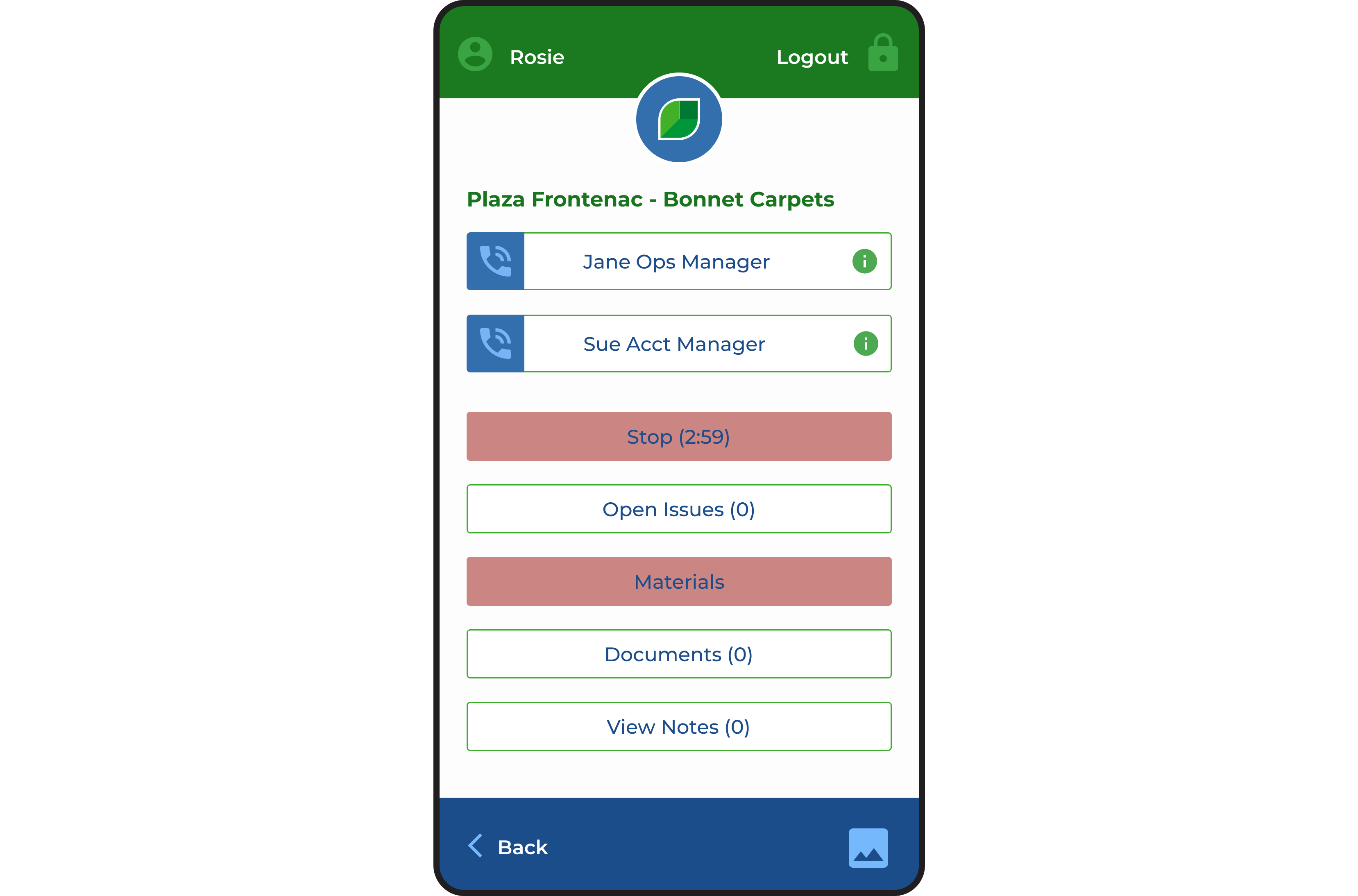
Aspire makes this process easier by offering client portals for transparency. These portals provide customers with web and mobile access to proposals, invoices, scheduled visits, and requests.
By keeping everyone informed, Aspire turns winter chaos into something predictable and manageable.
Around-the-clock service readiness
Facilities like hospitals, urgent care centers, and senior living communities require accessible entrances 24/7 for emergency staff, vehicles, and patients.
Similarly, retail centers, distribution hubs, and manufacturing plants depend on continuous snow removal to maintain operations during unfavorable weather.
Maintain crews and equipment on standby at all hours, with rotating shifts to prevent fatigue and ensure uninterrupted coverage. Have predefined response protocols and a reliable backup to prevent costly downtime.
Billing structures
There are several ways to bill snow removal services to meet client needs and property size.
For instance, seasonal flat rates provide predictable costs for clients and guaranteed revenue for your business, covering all snow events of the season.
Per-event billing charges after each snowstorm, offering flexibility for properties with irregular service requirements.
Per-inch pricing calculates fees based on actual snowfall, whether it’s two or ten inches.
Choosing the right billing structure depends on customer preferences, local climate, and property type. Make sure the contract details are clearly outlined, including response times, scope of work, and any additional charges, to prevent misunderstandings.
How can you market your snow removal business?
Marketing a commercial snow removal business is more than just flyers or cold calls. It demands a strong reputation, starting with referrals and word-of-mouth from satisfied clients, and with an established professional online presence (e.g., a website showcasing services, testimonials, or case studies).
The idea is to attract potential clients actively searching for snow removal services. You can do this through:
Local advertising channels
A good offline marketing strategy starts with a strong presence in the local community. Think print ads, vehicle signage, and local business partnerships.
Print ads refer to community newsletters, trade publications, or business journals that reach property managers and facility directors who are looking for snow removal services.
Signage on service vehicles, properties you maintain, or in high-traffic areas reinforces brand visibility while showcasing professionalism.
Another method to market your business is to build local business partnerships to expand your reach. Collaborating with landscaping companies, property management firms, or commercial real estate agencies leads to referrals and bundled service opportunities.
Sponsoring local events or participating in trade shows also positions your company as a trusted community partner.
Digital marketing strategies
Digital marketing is one of the most powerful ways to reach commercial clients.
Start with search engine optimization and ensure your website appears in local searches when business owners look for reliable snow removal services.
Then there are paid ads, such as Google Ads, which target decision makers and generate leads quickly.
It’s also vital to maintain an active social media presence on platforms like Facebook or Instagram to build credibility and engage with the local community.
Aspire Marketing Pro is an all-in-one marketing solution that helps you easily create highly targeted, automated campaigns across multiple platforms. Easily segment your customer lists to create hyper-targeted audiences and customize your email campaigns using a simple drag-and-drop editor to add a personal touch to your emails.
PS If you want to raise your bidding game for snow removal jobs, here’s how you do it.
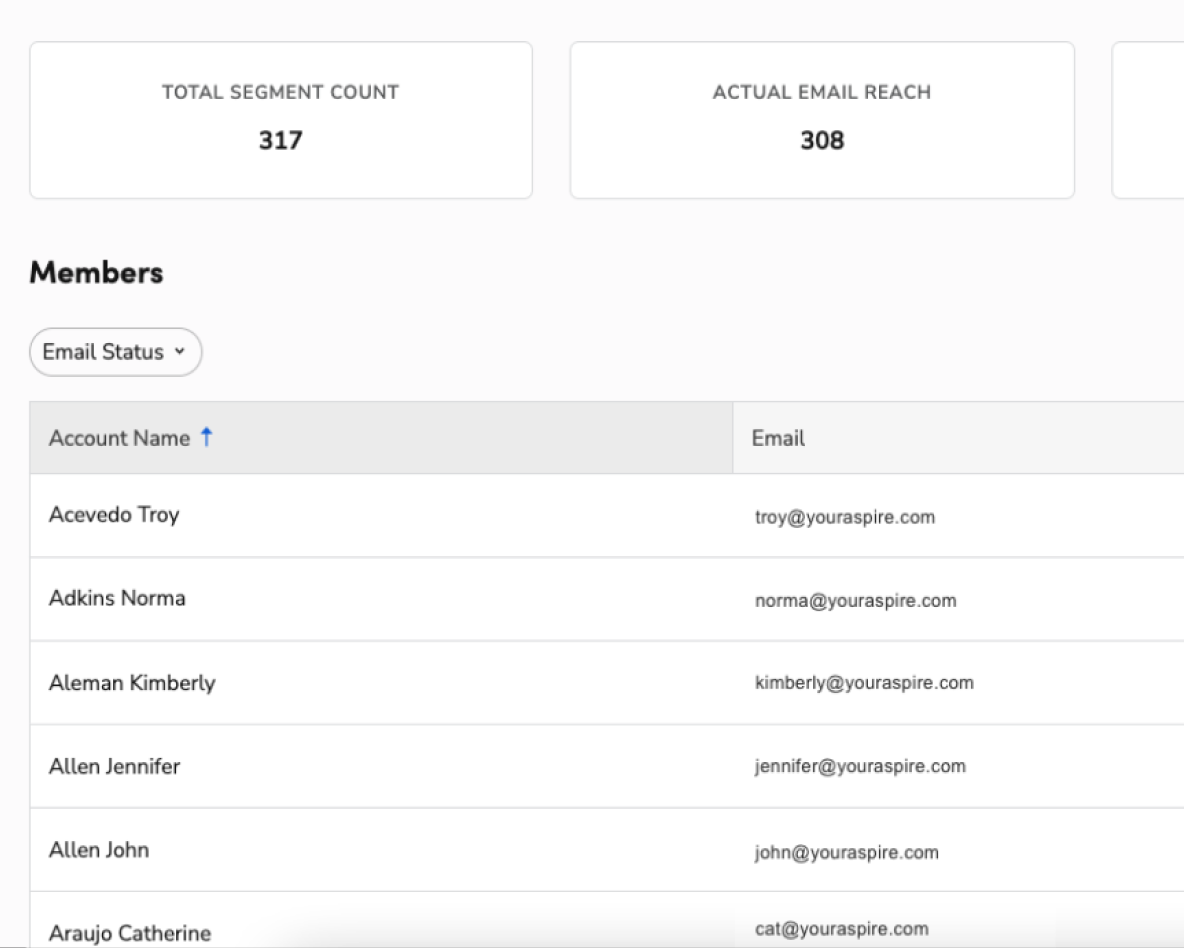
Aspire also helps improve response rates and drive sales by nurturing existing customers and winning back inactive ones.
How? By helping you share timely messages for upsells, cross-sells, and renewal opportunities.
Referral programs
Referral programs persuade clients to recommend your services to other businesses by offering rewards such as discounts, credits toward future services, and small gifts. They’re meant to motivate happy customers to actively promote your company.
This marketing strategy not only helps you generate leads but also strengthens your relationships with current clients, who feel recognized and appreciated. Over time, this builds trust and a long-term client base, while reducing marketing costs.
What safety measures are essential in snow operations?
Implementing risk-reduction measures in snow removal protects both workers and the public. Let’s see some of the most important safety measures for your business.
Crew safety training
You have to protect your team members from potential hazards, such as icy surfaces or accidents involving heavy machinery.
Comprehensive training programs ensure employees understand how to use tools and equipment properly and handle chemicals, such as deicers, safely. Wearing personal protective equipment, such as high-visibility clothing or insulated gloves, is another way to ensure their safety and reduce injuries.
Crews also need to know the protocol for emergencies, such as exposure to cold, slips, equipment malfunctions, and on-site accidents. Engaging in regular safety briefings and even drills reinforces knowledge and keeps everyone safe during the winter season.
Liability prevention
Accidents or property damage in snow removal can lead to costly claims, so minimizing liability is a crucial aspect of this business.
Key practices include maintaining thorough documentation of services performed and using incident-reporting procedures. Solid insurance coverage also protects against unexpected events.
Digital tools like Aspire allow operators to document everything, including logging completed work, tracking service times, and storing client confirmations in one centralized location.
With these insights, you can protect your business in the event of disputes or legal inquiries.
What technology supports snow removal operations?
Modern snow removal businesses rely on digital tools and apps to stay efficient, safe, and profitable. These tools streamline operations, reduce human error, and improve client satisfaction.
Key solutions include:
Scheduling software: Tools like Aspire allow operators to optimize plow paths and crew assignments in real time as conditions change.
Weather tracking tools: Integrating a tool that provides storm alerts and accurate forecasts reduces downtime and improves responsiveness.
GPS fleet management: The Aspire Mobile App, for example, monitors equipment location, usage, and performance in real time. Crews can log activity, report issues, and track job progress, keeping the team informed at all times.
Customer relationship management (CRM): Aspire’s CRM feature helps businesses maintain consistent client communication by centralizing client data and tracking service requests.
Billing and invoicing platforms: With Aspire Invoicing, you can automate recurring seasonal charges, per-event billing, and detailed reporting. Generate accurate invoices quickly to reduce administrative overhead.
Measurement and estimating software: PropertyIntel captures site-specific details, such as priority zones, hazard areas, and snow storage locations, ensuring everything is calculated accordingly.
Over to you!
Here’s a summary of what you need to run a successful commercial snow removal business:
Reliable equipment
Careful planning
Skilled crew
Strong client relationships
Every aspect plays a crucial role in delivering safe, efficient, and professional service. Additionally, technology helps you streamline operations, reduce risk, and enhance client satisfaction.
And the best part is, you only have to use one tool: Aspire.
Book a demo today to see for yourself how Aspire simplifies your life.










 866-727-7473
 Schedule Demo
 390 S Woods Mill Rd #300 Chesterfield, MO 63017


