Table of Contents
Table of Contents
- What is per-push snow removal pricing?
- What costs should be included in per-push pricing?
- How do you calculate per-push snow removal rates?
- What factors influence per-push snow removal prices?
- How much should residential snow removal cost per push?
- How much should commercial snow removal cost per push?
- What is the difference between per-push and per-inch pricing?
- When should you use per-push pricing instead of seasonal pricing?
- How do you bid on snow removal jobs per push?
- How can snow contractors increase profit per push?
- Over to you!
If you’re in the snow-removal game, one of your biggest questions is, “How much should I charge?”
You want to ensure your company makes enough money to cover all costs—after all, that’s the foundation of a successful business.
Enter ‘per-push’ pricing, a one-time charge you set for each distinct job.
In this guide, we’ll explore this pricing model, along with:
What costs to include
How to calculate the rates
What factors influence prices
When you should use it
A step-by-step guide on how to bid on snow removal jobs
Let’s get started!
What is per-push snow removal pricing?
Per-push snow removal pricing means a contractor charges for each separate visit to clear snow, rather than per inch or per season.
This means that every time you use a plow, whether it’s for two inches or ten, the client pays a set rate for that push. It’s a popular method among snow removal companies because it’s straightforward and flexible, ensuring contractors are paid fairly every time.
But what costs should be included in per-push pricing? Find out next.
What costs should be included in per-push pricing?
Your per-push snow removal rate must cover all essential expenses while still leaving room for profit. Here are the costs to include:
Labor: Includes operator wages, overtime pay, and benefits.
Equipment: Accounts for plow trucks, blowers, and shovels, plus maintenance.
Fuel: Ongoing fuel and oil for vehicles and machinery.
Materials: These include salt, deicer, sand, and other consumables per visit.
Insurance and licensing: Workers’ compensation, general liability, and other snow-removal-specific services.
Overhead and administration: Such as office rent, utilities, marketing, billing system, and admin staff time.
Markup and contingency: This margin covers unexpected expenses, such as equipment breakdowns, to ensure profit.
With so many costs to consider, calculating your per-push rate can feel overwhelming. It doesn’t have to be, as you’ll see next.
How do you calculate per-push snow removal rates?
Per-push price = (Hourly Rate x Number of Hours Per Push) + Material Cost + Overhead x (1 + Profit Margin)
This is the formula to set fair per-push pricing. Basically, you break down the cost of each visit and add a margin for profit, like so:
Estimate service time: Calculate how long it will take to remove snow and spread salt, and account for travel.
Labor costs: Multiply operator wages by the estimated hours.
Equipment costs: Don’t forget to factor in fuel, wear and tear, maintenance, and insurance.
Materials: Include the cost of each material used during the job.
Overhead: Apply a percentage to cover administrative expenses such as phones, software, and office space.
Profit margin: To ensure the job is profitable, add a markup of 15–30%.
Market check: Compare pricing with competitors in your area and make sure your numbers aren’t way off the mark.
For example, let’s say your hourly rate is $65, the time per push is 1.0 hour, the material cost is $10, the overhead is $15, and the profit margin is 25%. After applying the formula, the final price is $113 for that specific push.
It all sounds nice and easy, but what factors influence per-push snow removal prices?
What factors influence per-push snow removal prices?
Even with a formula, the actual price for per-push snow removal jobs depends on several factors, including:
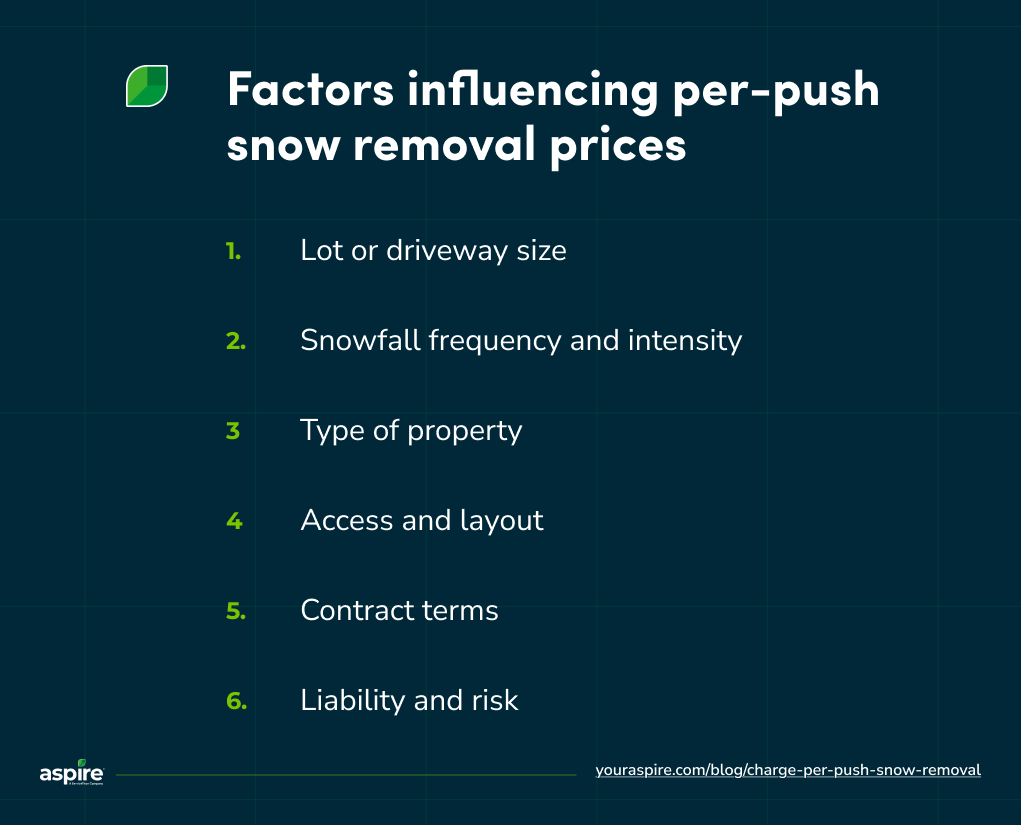
1. Lot or driveway size
The most obvious factor is the size of the area to be cleared. A small driveway takes only 15 minutes with a snowblower, but a commercial parking lot requires multiple passes with trucks and salt spreaders, significantly increasing the rate.
2. Snowfall frequency and intensity
Pricing also depends on how often and how heavily snow falls in your region. In areas with light storms, per-push rates stay lower since you don’t use the equipment all that often.
But if you’re living in an area with frequent blizzards or heavy snowfall, higher rates help cover increased labor costs, fuel costs, and equipment wear and tear.
3. Type of property
Another factor to consider is the kind of property you’re cleaning. Residential driveways are typically quick and straightforward, while commercial driveways demand multiple visits, salting, and attention to sidewalks.
4. Access and layout
The layout of a property can make snow removal simple or a time-consuming chore. For example, wide-open lots allow plows to clear quickly, whereas tight driveways and narrow lanes with many obstacles slow things down.
In addition, difficult access and complex layouts often require extra equipment or labor, contributing to higher snow removal rates.
5. Contract terms
Some clients want service only after a set snowfall depth, while others prefer multiple pushes during a single storm. Factors such as guaranteed response times or 24/7 availability significantly increase rates.
It’s a good idea to agree on these details beforehand to avoid misunderstandings.
6. Liability and risk
Last but not least, properties with higher liability concerns, such as schools or hospitals, require extra caution during snow removal. Contractors need additional insurance, more staff, and specialized equipment to prevent accidents.
Let’s see how to price residential snow removal jobs correctly.
How much should residential snow removal cost per push?
Per-push residential snow removal typically ranges from $30 to $100, with an average cost of $50 to $75 per visit. The price can even go to $150 or more for complex or large driveways, according to Ware Landscaping.
The most common factors that influence residential snow removal jobs include:
Driveway size: Smaller driveways incur lower charges.
Location: Areas with frequent or heavy snowfall have higher rates.
Access difficulty: Narrow, steep, or gravel driveways increase labor time and raise costs.
How much should commercial snow removal cost per push?
The cost of commercial snow removal per push ranges from $30 to $600+, depending heavily on property size, layout, and liability requirements. Sidewalks, walkways, and additional de-icing often add $20 to $50 per visit, and high-traffic areas like hospitals and retail centers further increase the cost.
So, for example, large lots or campuses reach $500 or more per push.
To accurately price commercial snow removal jobs, calculate your rate based on usage, labor, materials, and risk.
What is the difference between per-push and per-inch pricing?
The main difference between per-push and per-inch pricing is how the fee is calculated.
Per-push pricing is a flat fee per individual visit, no matter the amount of snow. So, the client is charged the same amount for each push, regardless of whether the snow is three inches or ten.
While this method is straightforward for clients to understand and helps ensure you’re paid fairly for your services, it sometimes leads to unpredictable income flows.
Per-inch pricing is tied to the snow depth. You set the pricing in tiers (e.g., one to three inches, four to six inches) with deeper accumulations costing more. This method accounts for the additional time and effort required to clear heavier snowfall and is highly flexible.
The only downside is that it requires precise measurement and is sometimes complex for clients to understand.
Now, let’s explore when you should use per-push pricing over seasonal pricing.
When should you use per-push pricing instead of seasonal pricing?
Per-push pricing works best when snowfall is unpredictable, and contractors want to limit financial risk. Unlike seasonal contracts, where clients pay a flat rate regardless of snowfall, per-push ensures you’re paid fairly for the work you do on each visit.
Here’s when to choose per-push pricing:
Snowfall is unpredictable: If your area has fluctuating winters, per-push pricing prevents undercharging.
Customers want flexibility: Many homeowners prefer paying for the service only when they need it, rather than committing to a hefty seasonal fee.
Variable property needs: Houses that don’t require consistent service every storm benefit from per-push billing.
In short, per-push pricing provides fairness and transparency for both parties when snow levels are unpredictable. Seasonal contracts are better for stable, predictable climates, but you risk losing money during heavy snowstorms.
How do you bid on snow removal jobs per push?
Bidding for per-push snow removal jobs requires careful planning to ensure profitability while staying competitive.
The process involves these key steps:
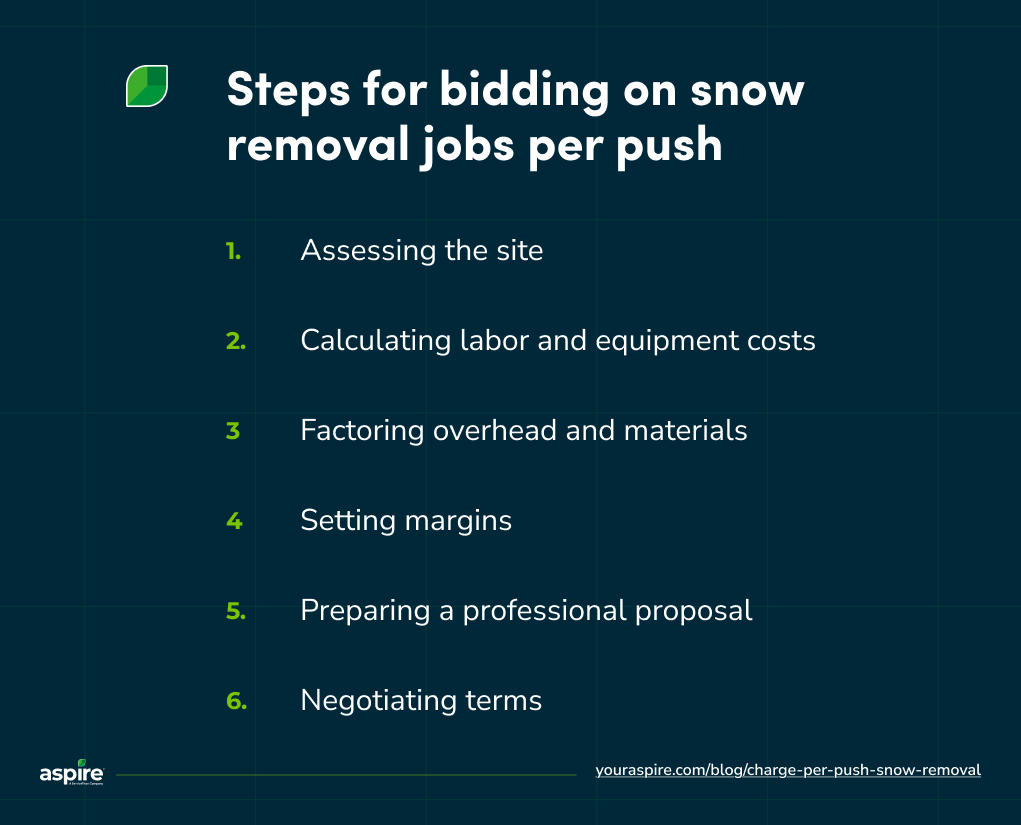
1. Assessing the site
The first step in any bidding process is a thorough site assessment. This means visiting the property to measure the space and note any obstacles, slopes, or tight access points.
Check for high-traffic areas and potential liability concerns.
These measurements will ensure that your labor and equipment estimates are realistic and prevent underquoting. Documenting the site with photos or videos also helps create a detailed and professional proposal that builds client trust and reduces the risk of disputes.
2. Calculating labor and equipment costs
Now, estimate the time and resources you need for each push. This means calculating labor hours based on driveway or lot size, obstacles, and anticipated snow depth.
Be sure to factor in equipment usage, including plow trucks, snow blowers, shovels, and fuel, as well as maintenance and wear-and-tear costs.
If you want to understand precisely how much your actual snow removal job costs, use tools like Aspire or snow removal apps to simplify this step.
With the Aspire platform, you gain real-time insights into your job data, organized by service type, team, or job.
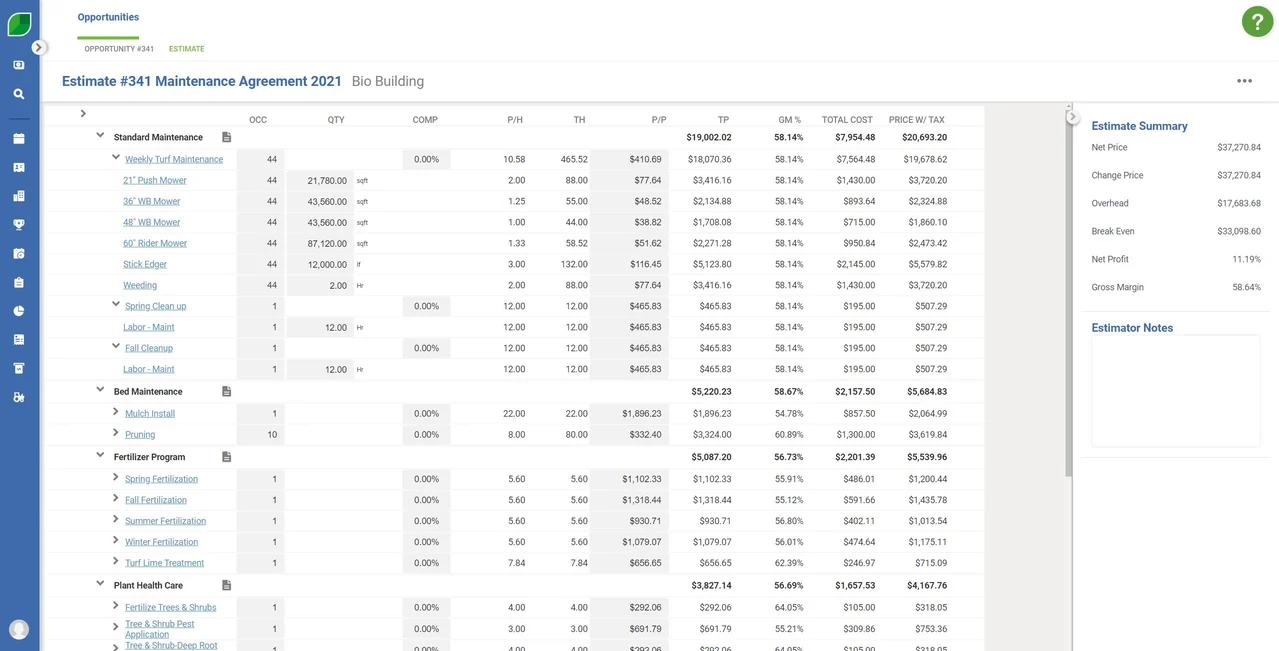
This insight will help you make impactful, data-driven decisions about your company’s future. The projections based on your work history ensure that your per-push snow removal work is priced profitably and that appropriate resources are budgeted for the job.
3. Factoring overhead and materials
You should also include overhead (such as administrative costs, insurance, software, and marketing) and materials (such as deicer, sand, salt, and other consumables). If you overlook these, they can quickly erode your profit margins.
Aspire helps you simplify the estimating process by customizing templates to ensure quick, consistent estimates. Plus, adding the services and items you want from your catalog to get accurate estimates is super easy in Aspire.
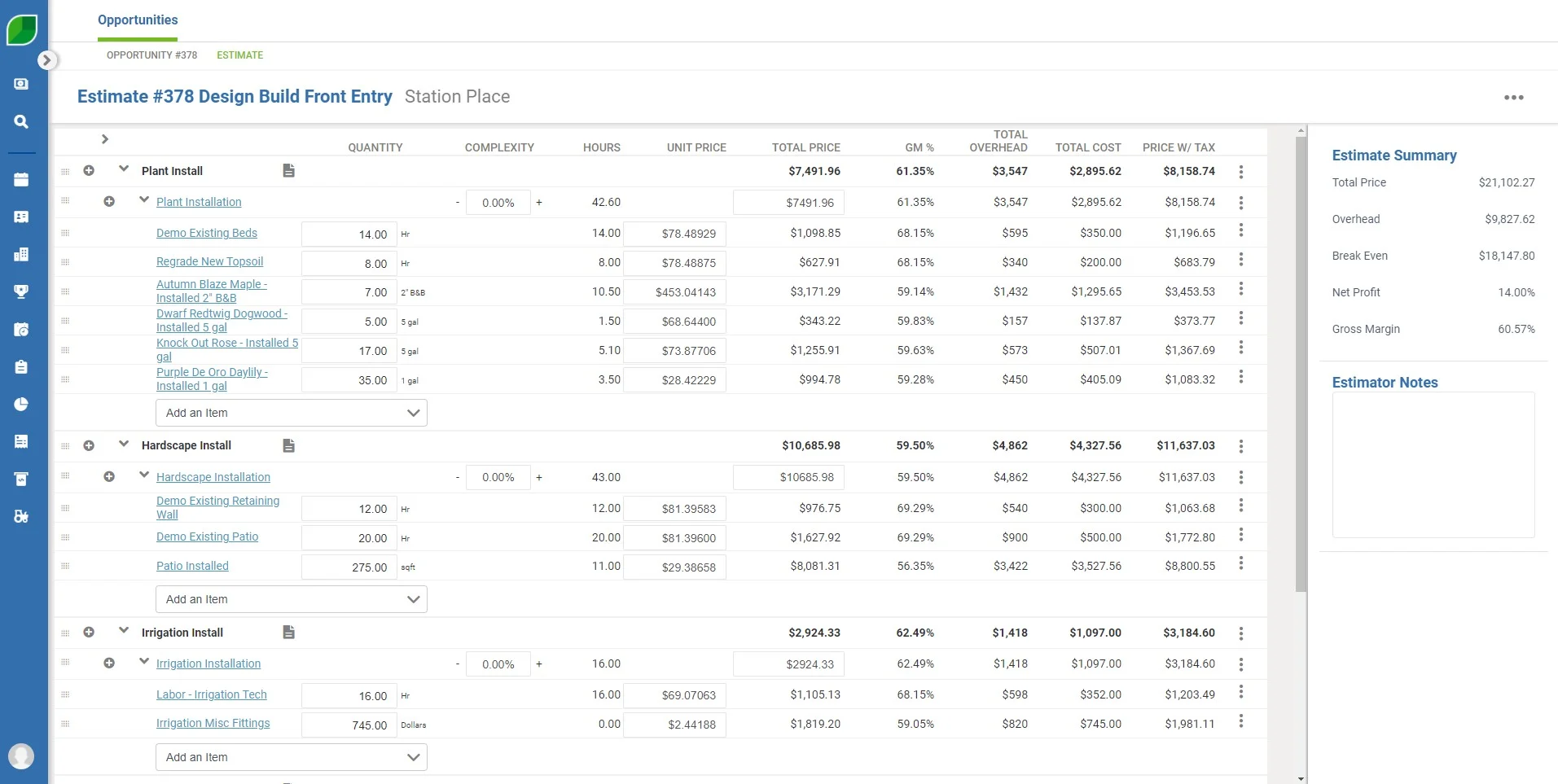
Your clients can easily view bids and provide their digital signature via email or through the Aspire customer portal.
4. Setting margins
Your next step is to apply the profit margin, which typically ranges from 15% to 30%. This highly depends on risk tolerance, market competition, and seasonal variability.
Setting a clear margin ensures that each per-push job remains profitable, even in unexpected circumstances.
Once again, Aspire comes to the rescue. The margins and markups you establish for labor, materials, subcontractors, and other direct costs are automatically factored into your estimates to ensure profitability.
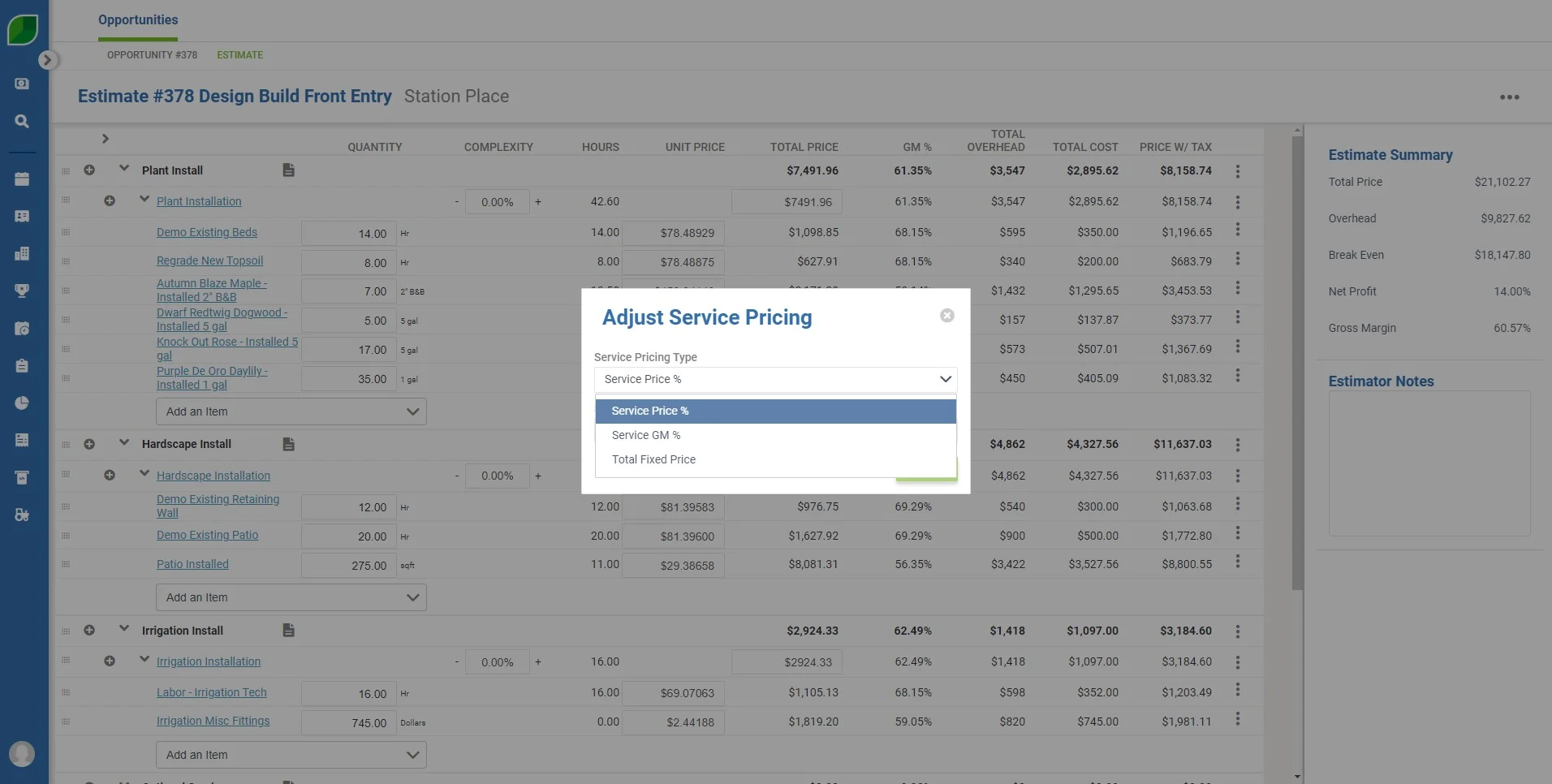
Aspire allows users to update the average price of their catalog items as needed.
5. Preparing a professional proposal
A well-structured proposal helps clients understand what they are paying for and builds trust in your capabilities and expertise. Make sure to include precise details, such as the scope of work, expected response times, and any additional services, such as salting or sidewalk clearing.
Add your site assessment, too, with observations, photos, videos, and other notes, to sound more professional and credible.
6. Negotiating terms
Once you submit your proposal, the next step is to negotiate contract terms with clients, including payment schedules, response times, and additional charges for repeat visits or extreme conditions.
Leave some room for flexibility, though, to accommodate client needs while still protecting your profit margins.
How can snow contractors increase profit per push?
Key strategies for increasing profit per push include:
Upselling additional services: For example, offer salting or walkway clearing as add-ons.
Bundling services: Combine multiple services under a single per-push contract to improve efficiency and margins.
Optimizing route efficiency: Plan your routes to minimize travel time between jobs, thereby reducing labor and fuel costs. Use efficient equipment scheduling to cut unnecessary fuel usage.
Tracking expenses in real time: A tool like Aspire lets you monitor labor, equipment, and material costs, helping you identify opportunities for cost reduction.
Using data to set competitive rates: Check the market often to see how your competitors price their services. Analyze historical job data to adjust pricing without sacrificing profit.
By combining these strategies, you can significantly boost profits per push.
Over to you!
Per push snow removal is a flexible, transparent, and fair compensation method for both clients and contractors.
But if you want to use it correctly, make sure to leverage Aspire.
With this platform, you streamline the entire workflow, from crafting professional proposals to estimating the costs of each job, while also boosting efficiency and protecting your profit margins.
Try Aspire now by booking a demo.












 866-727-7473
 Schedule Demo
 390 S Woods Mill Rd #300 Chesterfield, MO 63017


