Table of Contents
Table of Contents
- Do you need a license to start a landscaping business in Virginia?
- What are the types of landscaping business licenses & permits in Virginia?
- Step-by-step process to get a landscaping business license in Virginia
- How much does a Virginia landscaping business license cost?
- What are the most common mistakes to avoid when getting a license?
- How Aspire helps landscaping businesses stay organized & compliant
- Over to you
- Disclaimer
Whether you’re targeting private tech campuses, government contracts, or homeowners, Virginia offers many opportunities for landscaping businesses.
This advantage could be due to its proximity to Washington and to thriving hubs in tech, real estate, the military, and aerospace.
While you may start doing small landscaping jobs under $1,000 unlicensed, the rules change when you pass that threshold.
Cross it without proper licensing, and you risk fines, contract cancellations, and business disruption.
So, what do you need to do business in Virginia?
This guide shows you exactly what you need to operate legally and confidently, including:
The different permits a landscaping business may need and their costs
A detailed process outlining how to secure a license
Mistakes to avoid
Tips to stay organized and boost your business
Do you need a license to start a landscaping business in Virginia?
No, you don’t necessarily need a license to start a landscaping business in Virginia.
However, if a project or contract exceeds $1,000, the state requires the business to have a contractor license.
You’ll also need a license to offer pesticide application services, purchase or grow nursery stock for resale or installation, and provide landscape design services.
What are the types of landscaping business licenses & permits in Virginia?
Here’s a list of the different state permits you may need to start a landscaping business in Virginia.
General business license
All businesses in Virginia need to register with the state. It’s legally required and establishes credibility with customers when they need to verify your legitimacy.
Registering your business makes it eligible for:
Commercial business insurance
Business financing
Tax deductions
Personal asset protection
Plus, it gives you the right to apply for permits and hire workers without hassle.
Contractor license
Virginia requires a contractor’s license for landscaping projects over $1,000. The license is classified as Class A, B, or C based on project size and annual volume:
Class C license is for projects between $1,000 and $30,000, with total annual contracts under $250,000
Class B license for projects up to $150,000, with total annual contracts under $1 million
Class A license for projects of any size, with no annual limit
Each class has different financial, experience, and insurance requirements. For example, Class A requires your business to have $45,000 in net worth/equity, while Class B requires $15,000. You’ll also need to pass exams and demonstrate relevant experience for each level.
Pesticide business license
You need this permit to sell, store, distribute, mix, apply, or recommend pesticides to clients in Virginia.
If you intend to operate across multiple locations, a separate pesticide business license is required for each spot.
In addition, you or an employee needs to pass a license examination before the state issues a permit for your business.
Nursery stock dealer permit
The state requires landscaping businesses that intend to purchase nursery stock or plants for resale or installation on customers’ properties to get this license.
The license ensures that all nursery stock delivered, shipped, or transported within or into Virginia is inspected and free of pests. The plants must also be accompanied by an inspection certificate attached to the package.
Landscape architect license
Want to offer services to design outdoor spaces and create detailed plans for features like patios, walkways, retaining walls, drainage systems, and plant layouts?
You need this license from the state’s “Board for Architects, Professional Engineers, Land Surveyors, Certified Interior Designers and Landscape Architects” (APELSCIDLA).
Getting the license requires that you or an employee meet the education or experience requirements, pass the LARE exam, and complete the required professional experience.
Permits and local regulations
While a contractor’s license from the state permits your business to begin operations, your business needs to follow local licensing requirements defined by the cities where the business is based.
Some have zoning, landscaping, irrigation installation, or noise restriction laws that require additional permits for you to operate freely.
So, contact your local commissioner of the revenue and building official for more information.
Step-by-step process to get a landscaping business license in Virginia
Now that you know the permits your landscaping business may need, here’s a detailed process for obtaining them.
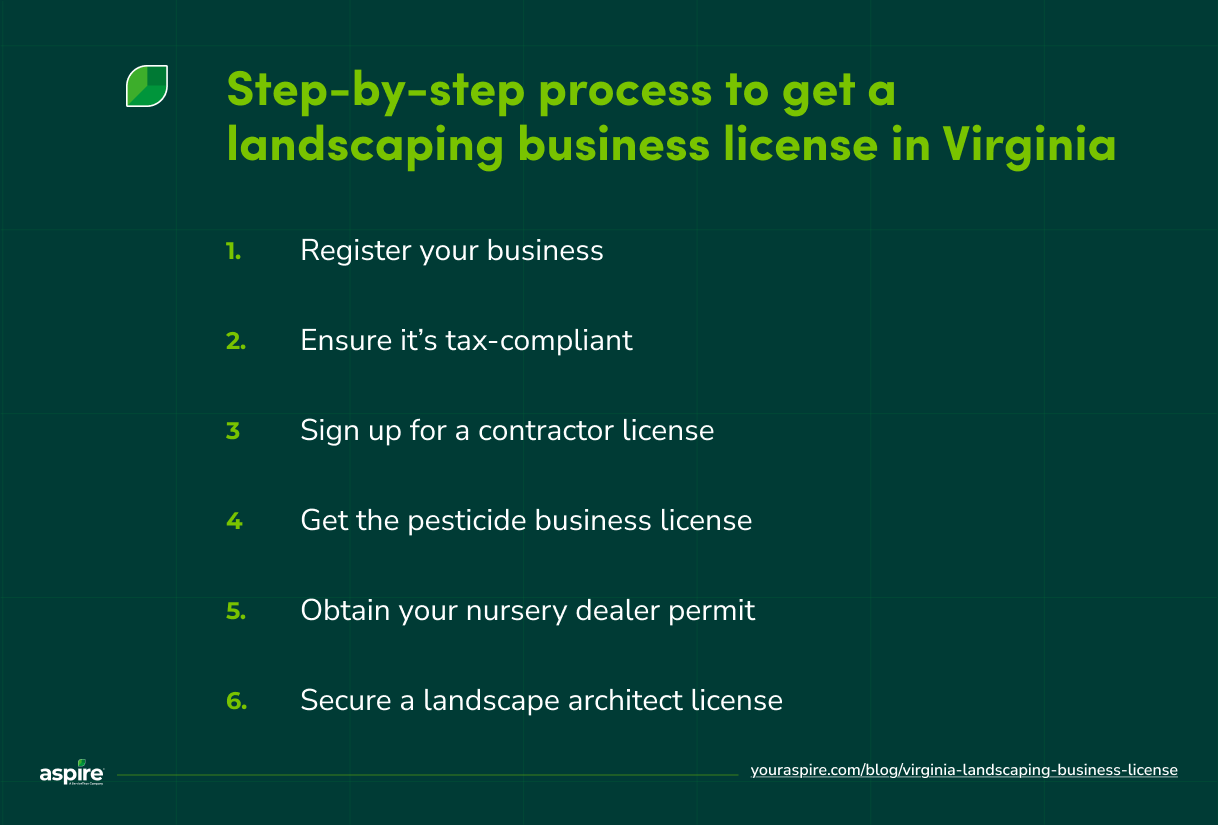
1. Register your business
Before you can apply for any landscaping business license, you need to register the business with the state. Here’s how to do that:
Select the appropriate legal structure for your new landscaping business. This can be a solo enterprise, LLC, corporation, or S-corp.
Next, check name availability to confirm that no other business is using your preferred business name. Visit the Clerk’s Information System (CIS) database to search for name availability.
Reserve your entity name by submitting a reservation filing online with the CIS.
Select a registered agent. This can be you, a business partner, or a lawyer, as long as they’re a Virginia resident with a physical business address, are available during business hours, and are a member of the Virginia state bar or the company’s management team.
Register the business with the State Corporation Commission by filing online via the CIS platform. The annual cost for LLCs is $50, with payment due on the last day of the month in which the business was registered.
2. Ensure it’s tax-compliant
After registering with the SCC, you also need to sign up with the Department of Taxation to comply with state tax obligations.
Here’s what you’ll need:
Federal Employer Identification Number (FEIN) from the IRS website.
A primary account user’s information (name, email, and phone number).
Business management team member’s contact and identification details (name, SSN, address, email, and phone number).
Business information (legal business name, entity type, primary business address, and mailing address).
North American Industry Classification System (NAICS) code.
A list of tax types you need to register for and the date you’ll begin business for the purposes of each tax type.
Once you have all the information, you can register the new business for tax payments.
3. Sign up for a contractor license
You need a contractor license to offer landscaping services for more than $1k. To get one:
Determine what license your business needs based on project sizes and financial capacity:
Class C: Projects $1,000-$30,000; annual total under $250,000 (no net worth requirement)
Class B: Projects up to $150,000; annual total under $1 million (requires $15,000 net worth)
Class A: Unlimited projects (requires $45,000 net worth)
Choose your specialty designation; for landscapers, these are landscape services (LSC) and landscape irrigation (ISC).
List all owners, officers, partners, or members, depending on your business structure. Get their names, addresses, dates of birth, Social Security Numbers or Virginia DMV Control Numbers, and government-issued photo IDs. They’re called Responsible Management.
Designate a Qualified Individual (QI) for each specialty who is either a full-time employee (30+ hours/week) or a member of Responsible Management. The QI must have at least 1 year of experience (Class C), 3 years (Class B), or 5 years (Class A). They must also pass the specialty technical exam and submit an experience verification form for each QI.
Have your QI (Class A/B) or a Responsible Management member complete a board-approved pre-license course. Find approved providers at www.dpor.virginia.gov/Boards/Contractors.
Identify designated employees and schedule business exams. For Class C, no designated employee is required. But for Class A and B, you need to designate an employee or a Responsible Management member to take business exams through PSI (www.psiexams.com). For Class B licenses, they need to take the general, Virginia, and specialty trade exams. For Class A, they need to take the advanced, general, Virginia, and specialty trade exams. Class C only requires the specialty trade exams.
Prepare financial documentation, such as a completed financial statement form, a CPA review/audit, or a surety bond form.
Submit your application along with the required fee ($260 for Class C, $405 for Class B, $425 for Class A) and allow up to 30 days for processing.
Here’s a detailed packet covering the contractor license application.
4. Get the pesticide business license
To apply herbicides, insecticides, or fungicides on clients’ properties, your business must be licensed by the Virginia Department of Agriculture and Consumer Services.
For that to happen, you need:
A Certificate of Insurance showing a minimum of $100,000 for property damage, $100,000 for personal injury or death of one person, and $300,000 per occurrence.
You or an employee can pass a written examination after requesting to take the Virginia Pesticide Business License Examination. A score of 76% is required to pass this exam. If you fail, the department will notify you and send you a new application. However, if you’re already certified as a commercial applicator, the exam requirement is waived.
Complete and mail the application, along with a $75 license fee and an insurance certificate, to the Office of Pesticide Services (OPS).
This packet has additional information from the OPS.
5. Obtain your nursery stock dealer permit
You can obtain this license by completing this application and mailing it to the Virginia Department of Agriculture and Consumer Services.
You’ll need to provide contact details and agree to comply with all the rules stated in this document. The permit will cost $25.
6. Secure a landscape architect license
There are several requirements you need to meet to get a landscape architect license in Virginia.
Here are the different requirements across different categories:
Education: You need an LAAB-accredited landscape architecture degree (bachelor’s or higher). And if you have a non-accredited degree, 8 years of combined education and experience are required.
Experience: You need 3+ years of documented experience (varies by education level) as verified on Experience Verification Forms.
Examination: You must pass a board-approved examination through CLARB (Council of Landscape Architectural Registration Boards) and the board examination on Virginia regulations and statutes.
References: Three Landscape Architect Reference Forms (less than one year old) documenting your competence and integrity are required.
Then, you can complete the license application along with a $150 fee for examination or comity applicants.
How much does a Virginia landscaping business license cost?
Here’s a breakdown of all the fees you may need to operate a landscaping business in Virginia:
General business registration fees
Business entity registration: $50
Landscape contractor license
Class C license application fee: $260
Class B license application fee: $405
Class A license application fee: $425
Annual renewal fee: Same as initial application fee for each class
Pesticide business license
License application fee: $75
Annual renewal fee: $75
Late renewal penalty: 20% after March 31
Commercial applicator certification fee: $25 for adding a second employer
Liability insurance requirement: Minimum $100,000 property damage, $100,000 personal injury, $300,000 per occurrence
Nursery dealer license
License application fee: $25
Landscape architect license
Application fee: $150
Reinstatement fee (for licenses expired for 5+ years): $490
What are the most common mistakes to avoid when getting a license?
Many landscaping business owners stumble during the application process, leading to fines and unnecessary delays. Here’s what not to do.
1. Applying for a contractor license without meeting the requirements
Before applying for a license for Class A or B, you need to ensure your business has the necessary experience and provide proof of financial standing.
If you can’t show eligibility, you’ll be given a Class C license, which may not be what your business needs.
Virginia has specific requirements for the contractor license. Assuming you have what’s required can cause unnecessary delays in obtaining the landscaping business license. Avoid that by reviewing the guidelines and necessary documentation before submitting your application.
2. Skipping local licenses and regulations
Several cities, such as Norfolk, Arlington, and Richmond, have guidelines for tree removal, pesticide application, conservative landscaping, and landscape design.
Failure to follow their guidelines, even with state licenses, may result in fines, business interruption, or being unable to start operations.
Before launching, you must research what you need to run a landscaping business in your city or county.
3. Purchasing plants without approval
As part of your job description, you may need to help clients buy plants to install on their property.
But doing so without state inspection and the required license leaves your business vulnerable to fines and legal action.
Virginia requires inspection certificates issued by the proper official and demands that plants be moved by a licensed nursery dealer or agent.
How Aspire helps landscaping businesses stay organized & compliant
Think of Aspire as a digital assistant that streamlines all your landscaping operations.
Once you’ve secured the necessary permits and jobs start coming in, Aspire helps you stay organized no matter how many projects you’re juggling.
By offering several features, it simplifies aspects of your operations, such as:
Contract & proposal management
When you have multiple bids to create and clients are asking for project quotes, Aspire’s estimating tool lets you create and submit proposals with customizable templates.
The traditional way is to visit each client’s site to measure their property, calculate the materials needed, and prepare the estimates.
With Aspire, you simplify the process: pick a template and add services, items, and pricing directly from your catalog. Then, the platform calculates the right prices and materials, factoring in your desired profit margins and markups to ensure profitability.
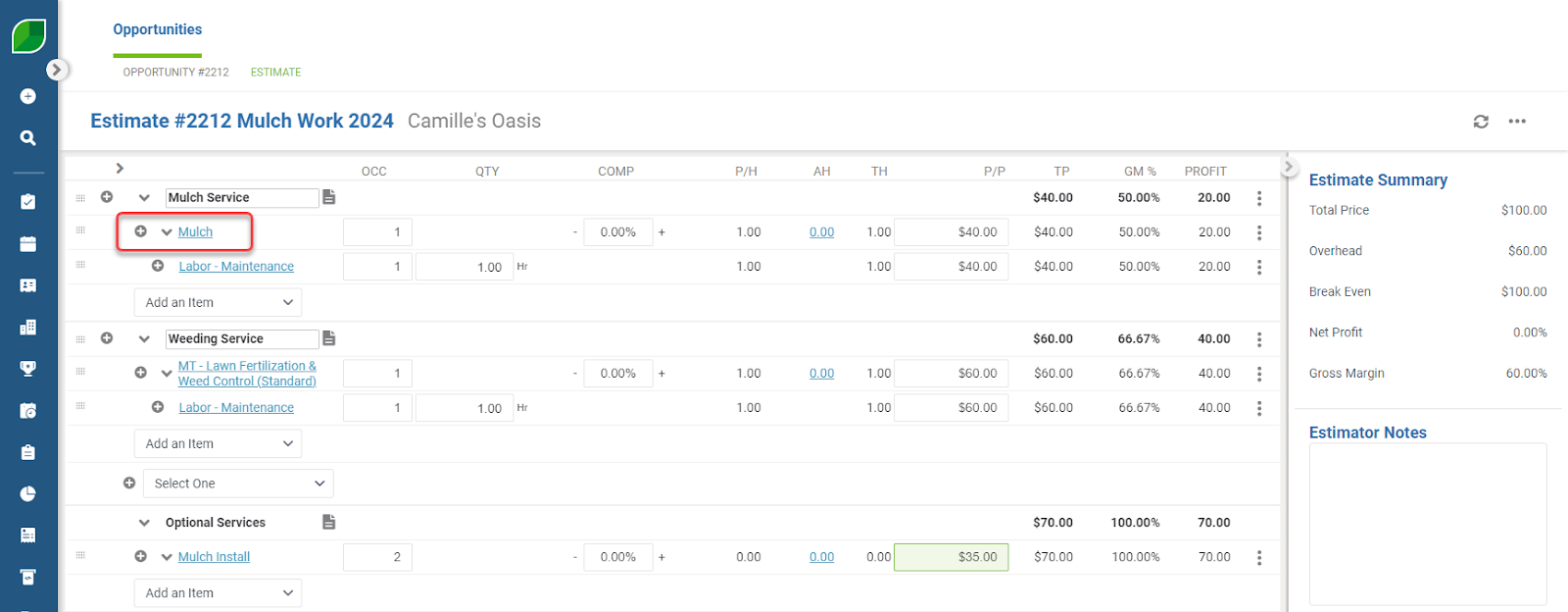
Its integration with PropertyIntel allows you to measure properties without visiting the sites, making it easy to calculate materials and project supplies.
This saves you time and lets you quickly send estimates/quotes to customers through Aspire’s customer portal or email.
The clients can, in turn, approve the estimates right on the platform.
Invoicing & payment processing
Landscaping projects can be tedious. Besides lawn care, turf installation, or irrigation system installation, you also have administrative tasks like estimation or invoicing, which ensure you get paid on time.
Aspire makes it easy for you to request and receive payment wherever you are.
It has an invoicing tool that pulls information from approved estimates and ongoing projects, allowing you to create, send, and track digital invoices with ease.
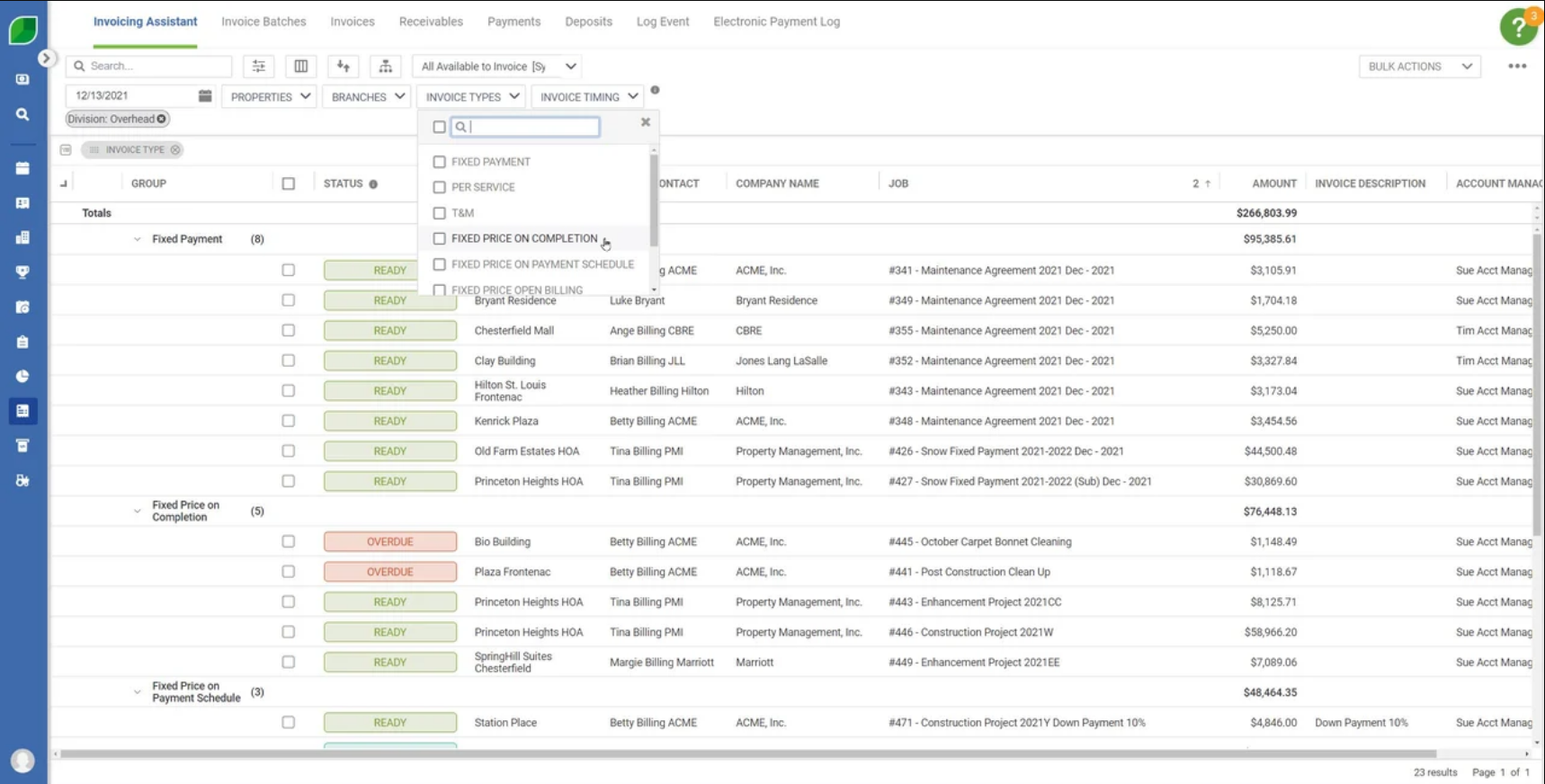
Aspire automates the invoicing process, allowing you to bill once or progressively. It lets you accommodate your customers’ billing preferences and desired payment schedules.
When you then send the invoices, you can track which ones are paid, outstanding, or overdue.
Plus, there are different ways to accept payments on Aspire, including wire transfers, checks, and credit or debit cards.
Business reporting & documentation
As a business owner, you need to know everything that goes on in real time, and Aspire’s reporting feature ensures you do.
Thanks to data entered by the landscaping field and office crews, the reporting tool centralizes all your business information.
This provides insights into your entire business operation, so you can make informed decisions.
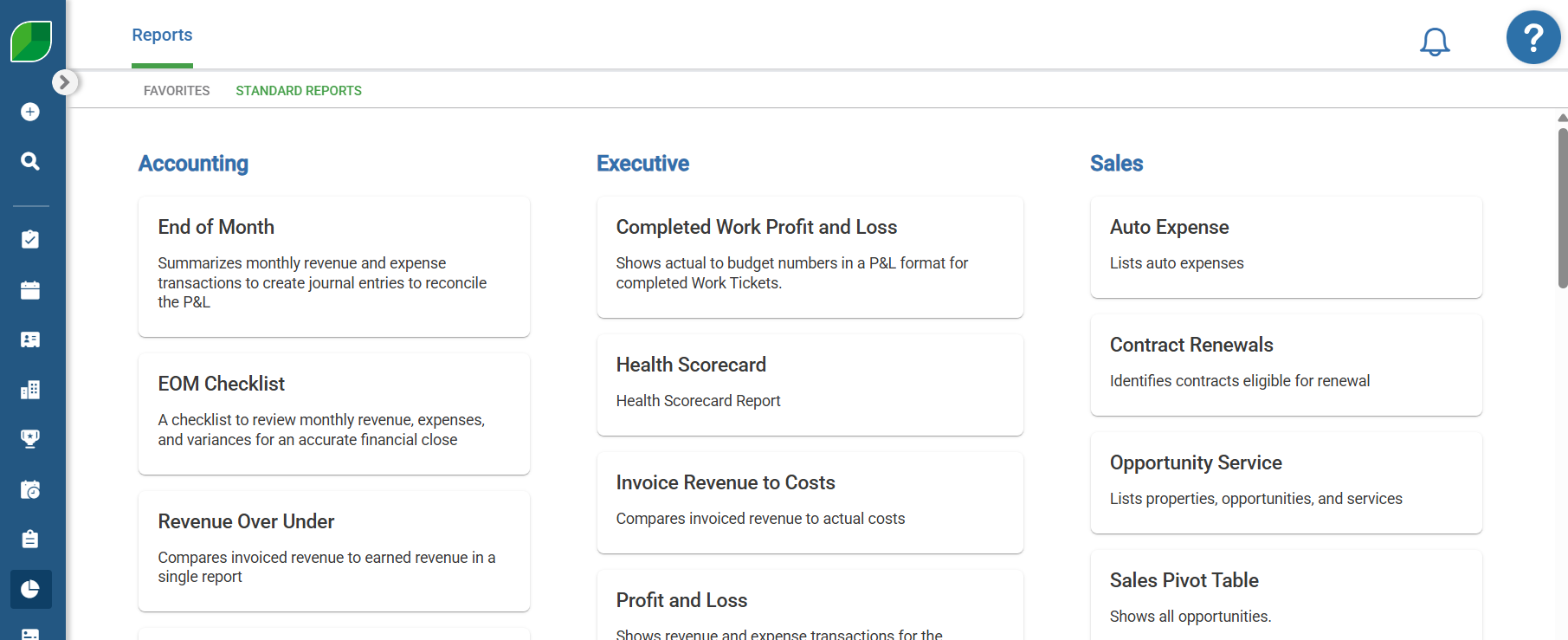
With this feature, you know what goes on in sales, accounting, and operations. Think client retention rates, total cash inflow and outflow, job inventory, current losses, labor and material costs, and tax filings.
Scheduling & job management
Managing projects, schedules, and responsibilities as a landscaper can be difficult. While a spreadsheet might help you organize your setup, it doesn’t improve productivity or prevent anything from being overlooked.
Aspire, however, has a feature built for scheduling and job management.
It moves projects into the scheduling platform once an estimate has been marked as won. This way, when you’re scheduling a project, it has all the contextual information the team needs.
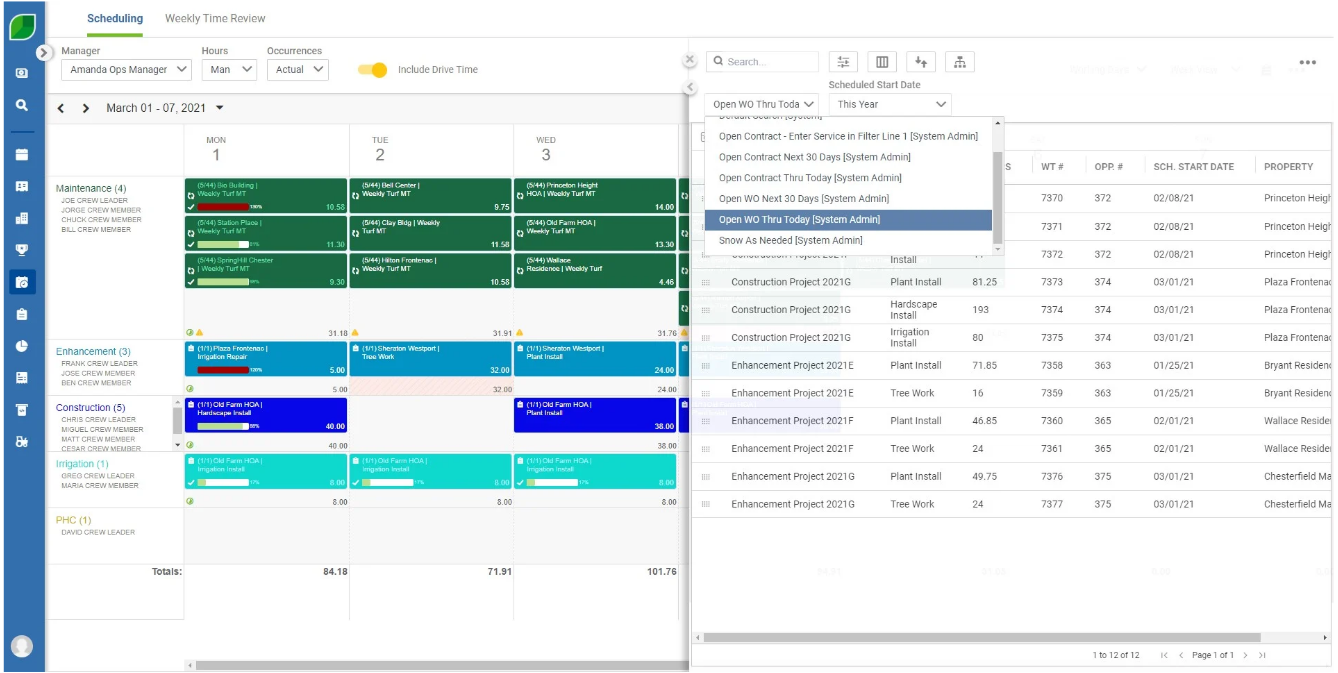
Aspire’s scheduling feature is a digital calendar where you can set project start and end dates, assign crews, and add additional details for your workers.
It also optimizes routes to reduce drive time, lets you create a checklist for field crews, and tracks crews’ productivity.
Over to you
Getting the right licenses to start your landscaping business in Virginia is a bit more complex than in other states.
Between contractor licenses, pesticide permits, and potential landscape architect credentials, each with different agencies, requirements, and renewal schedules, the process can feel overwhelming.
But once you’ve secured your permits and you’re ready to operate, the real work begins: managing crews, scheduling jobs, tracking expenses, and scaling your business.
Enter Aspire.
While this guide walked you through the licensing maze, Aspire streamlines everything that comes after, helping you run a profitable, organized operation from day one.
Book a free demo to see how Aspire transforms your business in real time.
Disclaimer
This article is for informational purposes only and should not be considered legal or financial advice. While every care was taken to use official sources, you should always verify requirements with the Virginia government’s websites.











 866-727-7473
 Schedule Demo
 390 S Woods Mill Rd #300 Chesterfield, MO 63017


