Table of Contents
Table of Contents
- Do you need a license to start a landscaping business in Oklahoma?
- How does Oklahoma’s Landscaping Licensing Law affect your business?
- What are the types of landscaping business licenses & permits in Oklahoma?
- Step-by-step process to get a landscaping business license in Oklahoma
- How much does an Oklahoma landscaping business license cost?
- What are the most common mistakes to avoid when getting a license?
- How Aspire helps landscaping businesses stay organized & compliant
- Over to you
- Disclaimer
Getting an Oklahoma landscaping business license means completing state registrations, city permits, trade credentials, and insurance requirements.
This guide puts all the requirements in the right order:
Learn which landscaping businesses need a license and how the services you choose to offer affect the answer
See how the Oklahoma licensing law applies to lawn care, hardscaping, and landscape design
Compare types of business registrations, contractor credentials, local permits, and insurance requirements
Follow the application process from choosing a business structure to submitting the papers
Review typical costs and factors that change your total cost
Spot application mistakes and how to avoid them
Let’s get to it!
Do you need a license to start a landscaping business in Oklahoma?
In Oklahoma, you can start a basic landscaping business without needing a general contractor license or trade-specific state license.
The state’s business guide classified routine lawn maintenance and shrub trimming as activities that do not require a state occupational license. However, business registration still applies, and some services require additional credentials.
The specific requirements for a landscaping business license depend on your service mix and work location:
An entity registration establishes your chosen legal structure with the state.
A trade name registration will apply if the business name differs from the owner’s legal name.
A city or county registration is needed if the local rules require one.
An ODAFF (Oklahoma Department of Agriculture, Food and Forestry) landscaper license will cover businesses that sell or install nursery plants.
A commercial pesticide applicator license is required for paid pesticide treatments.
A landscape architect license applies to regulated professional design work.
To stay in line with state and local rules, review every service before advertising it or adding it to a contract.
How does Oklahoma’s Landscaping Licensing Law affect your business?
Oklahoma’s Landscaping Licensing Law outlines when professional licensing applies and which everyday landscaping services remain exempt.
The law governs individuals and businesses that practice landscape architecture or advertise under that professional title. Licensed professionals must renew their credentials, display them at work, and sign plans they prepare or control.
Late payments lead to license cancellation and added reinstatement requirements. The state board also investigates fraud, reckless work, false applications, and unauthorized license use.
Several landscaping services fall outside professional licensing:
Landscape contractors may install plans created by licensed landscape architects.
Gardeners and lawn care crews may select, place, plant, and maintain plant material.
Landscape designers may choose plants and plan their placement for residential projects.
Employees can work under the supervision of a licensed landscape architect.
Homeowners may design and install landscaping at their residences.
Builders may supervise landscape architecture projects as part of their normal duties.
The Construction Industries Board oversees licensed plumbing and electrical work attached to irrigation or lighting projects. Cities and counties manage contractor registrations, site approvals, and construction permits.
Businesses that only provide maintenance services fall outside state occupational licensing. Homeowners also receive an exemption for landscape design and installation at their residences.
A complete service list makes the next task easier: matching each job with the correct license or permit.
What are the types of landscaping business licenses & permits in Oklahoma?
If you want to start a landscaping business in Oklahoma, you will need several registrations, licenses, and permits that change based on the services you sell and the location of each job.
General business license
The state handles business setup through entity filings instead of a statewide general license.
A limited liability company (LLC) files documents with the Oklahoma Secretary of State. A corporation files a certificate of incorporation. A limited partnership or limited liability partnership files the certificate tied to its entity type.
Register the required tax accounts, and if your business sells plants or other products, you also need a sales tax permit from the Oklahoma Tax Commission.
Landscaping contractor license
Oklahoma doesn’t require a statewide contractor license for routine lawn maintenance.
Trade licensing applies if a project includes regulated plumbing or electrical work. An irrigation connection tied to a building’s water system requires a licensed plumbing contractor, and permanent outdoor lighting connected to fixed wiring requires a licensed electrician.
Confirm local registration and permit requirements before starting any work. Also submit proof of insurance or a surety bond when local rules require it.
Specialized licenses
The services you choose to sell determine which occupational credentials apply:
A nursery landscaper license covers purchasing, installing, and selling nursery stock.
A pesticide applicator license allows for paid pesticide treatments, including herbicides used for weed control.
A landscape architect license applies to regulated design services.
The ODAFF administers the first two licenses.
Permits and local regulations
Local jurisdictions control site plan reviews and building permits for structural landscaping projects. Retaining walls, grading work, and permanent irrigation systems usually require local review.
For example, Tulsa uses separate zoning and building approvals based on a retaining wall’s height and design. Check with the local offices of each city or county before scheduling construction jobs.
Insurance requirements
As a landscaping business, you will need general liability insurance that covers injuries and accidental property damage. Permit officers and commercial clients often request proof of insurance before leaving their properties in your hands.
If you plan to hire crews, you will need workers’ compensation insurance. A sole proprietorship that qualifies for an exemption uses the state’s affidavit process.
Your insurance package also needs coverage for your vehicles and field equipment.
Reviewing each requirement before bidding prevents paperwork from delaying a scheduled job.
Step-by-step process to get a landscaping business license in Oklahoma
Getting a landscaping business license in Oklahoma starts with defining your services and ends with renewing each approval on schedule.
Follow these steps in order, as later applications use information from earlier filings.
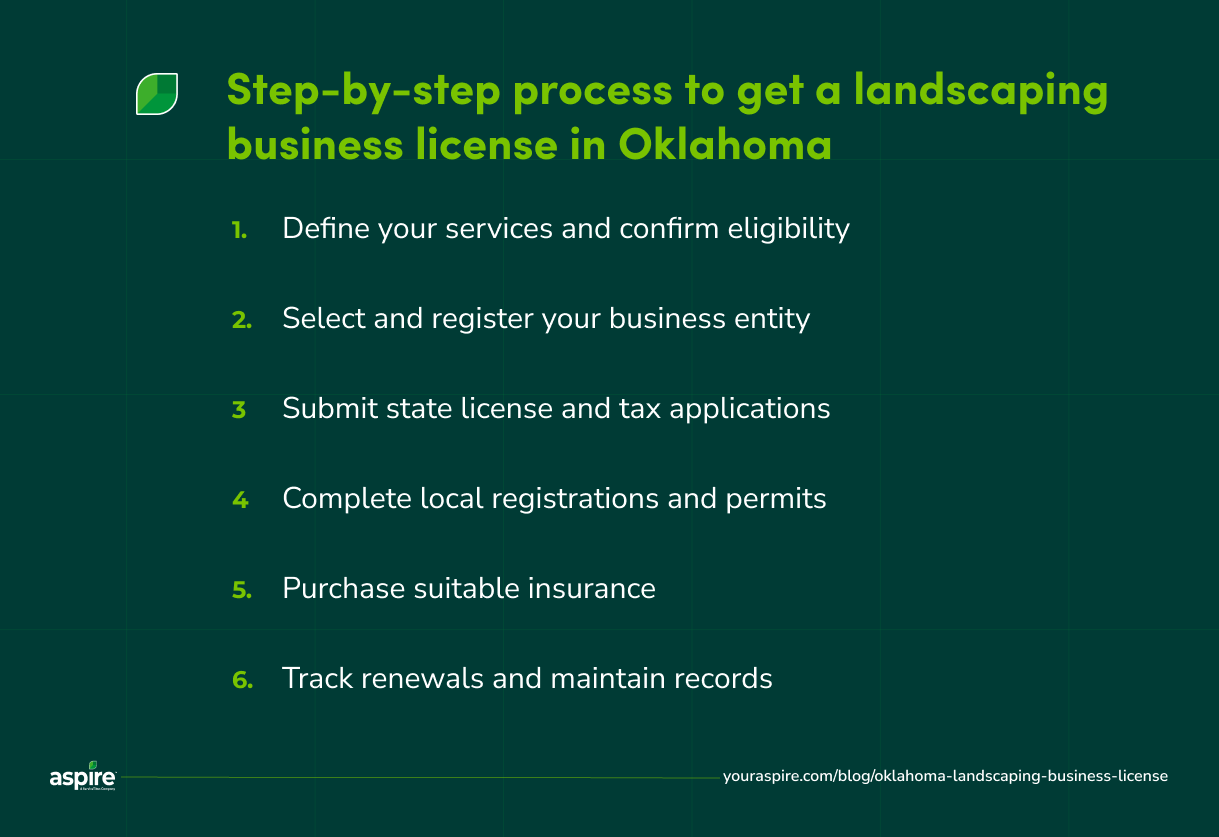
1. Define your services and confirm eligibility
Your service menu determines which state or local rules apply:
List every service your business plans to sell before starting an application.
Routine lawn maintenance doesn’t require state licensing, but local business rules still apply.
Nursery stock installation and pesticide work need separate licensing.
Professional design and structural construction have their own state or municipal requirements.
A defined service list prevents your business from applying for unnecessary credentials or overlooking required ones.
2. Select and register your business entity
Choose the legal structure of your landscaping business before submitting tax or license applications.
A sole proprietorship is great if you’re working alone and taking on smaller jobs, but your personal assets are tied to the business.
A limited liability company (LLC) separates your business from your personal finances, and it’s probably one of the most popular options for many would-be landscaping professionals.
Then take these steps:
Confirm that your chosen business name is available.
File the needed formation documents and retain the filing number.
Register a trade name if the business operates under a different public-facing name.
Request an EIN (Employer Identification Number) from the IRS after forming the entity and use the same legal name on every application.
Consistent entity details tie each permit, tax account, and insurance policy to the correct business.
3. Submit state license and tax applications
Apply only for the credentials that apply to the services you sell.
Get a nursery license if you buy nursery stock for resale or installation. You can apply through ODAFF either online or via paper forms.
Get pesticide certification and licensing for chemical treatments (restricted-use pesticides require a certified applicator). Apply via paper forms.
Get a sales tax permit when selling plants or products.
Check city rules for an arborist or tree-service license. Oklahoma has no general statewide arborist license, but some public projects and right-of-way work require International Society of Arboriculture certification.
Check every form to ensure the name and address match before paying the application fee.
4. Complete local registrations and permits
Check the rules in every city or county where your crews will perform work.
Ask the local permit office about business registration and contractor registration requirements.
Get project approval for structural work.
Hire licensed professionals for irrigation or lighting connected to regulated building systems.
Record each permit number in the related customer file.
Local checks will prevent crews from arriving on site before the municipality approves the work.
5. Purchase suitable insurance
Arrange for proper business insurance and coverage before employees or equipment enter a customer’s property.
Purchase general liability insurance for third-party injuries and accidental property damage.
Have workers’ compensation insurance when your business falls under the state’s employer coverage rules.
File the state’s exemption affidavit when a qualifying sole proprietor claims exempt status.
Add commercial vehicle and equipment coverage.
Proper coverage protects your business’s finances and satisfies insurance requests from customers.
6. Track renewals and maintain records
Your licensing work continues even after the first application receives approval.
Add every license and insurance expiration date to a shared compliance calendar.
Complete continuing education or testing tied to pesticide application before the renewal deadline.
Report any changes in ownership or business address.
Recheck local rules before entering another city or adding a service.
A reliable renewal routine prevents expired paperwork from interrupting scheduled work.
How much does an Oklahoma landscaping business license cost?
Oklahoma has different costs for each registration, so your total depends on the business structure and services offered:
Forming an LLC costs $100 plus a service fee, while a corporation starts at $50.
An LLC annual certification costs $25, name reservations cost $10, and registered-agent changes cost $25.
A sales or use tax permit costs $20 plus a handling fee.
A nursery landscaper license costs $100 per business location.
A commercial pesticide business license costs $100 per category, with a $500 annual maximum (exams and renewals add separate charges).
Pesticide service technician cards cost $20, and duplicate licenses and card transfers cost $10.
Local permits, insurance premiums, and contractor registrations vary, while a surety bond adds costs only when a city or contract requires one.
If you plan to expand into nearby states, budget separately. For example, costs tied to a Texas landscaping business license come from service-specific and local approvals instead of a statewide fee.
Check for current changes before applying and include renewal fees in your yearly operating budget.
What are the most common mistakes to avoid when getting a license?
To run a successful landscaping business, review the following licensing mistakes and learn how to avoid them.
1. Starting work before receiving approval
Some landscaping business owners treat submitted applications as permission to begin operating. However, state agencies and local offices need time to review forms, verify insurance, and request corrections.
Wait for written approval before advertising or performing regulated work. Starting too early can cause fines and stop-work orders. It can also create problems if a client asks for proof of licensing.
2. Ignoring municipal permits and contractor registration
State approval does not replace county or city requirements. Local rules cover construction work, irrigation systems, right-of-way access, signs, tree removal, and commercial property improvements.
For example, Oklahoma City requires contractors to register before purchasing permits for construction work. A landscaper installing a retaining wall or altering public property has different requirements than a crew performing lawn maintenance.
Contact each city or county where you plan to sell your services and ask about contractor registration, project permits, inspections, arborist rules, and surety bonds before signing work contracts.
3. Submitting inconsistent information or missing renewals
Differences between business records delay applications. The legal name, trade name, physical address, registered agent, and ownership details must match across all documents.
You should also track each renewal date on a shared calendar. Oklahoma pesticide business licenses require annual renewal, while applicator certification follows a different recertification schedule.
How Aspire helps landscaping businesses stay organized & compliant
Aspire is a landscape business tool that brings field records and office paperwork into one system. With its help, Oklahoma business owners can track the information connected to each job.
Contract & proposal management
Signed agreements, estimates, site plans, and customer approvals stay connected to the related property or opportunity. Aspire also supports electronic signatures, creating a record of proposal acceptance.
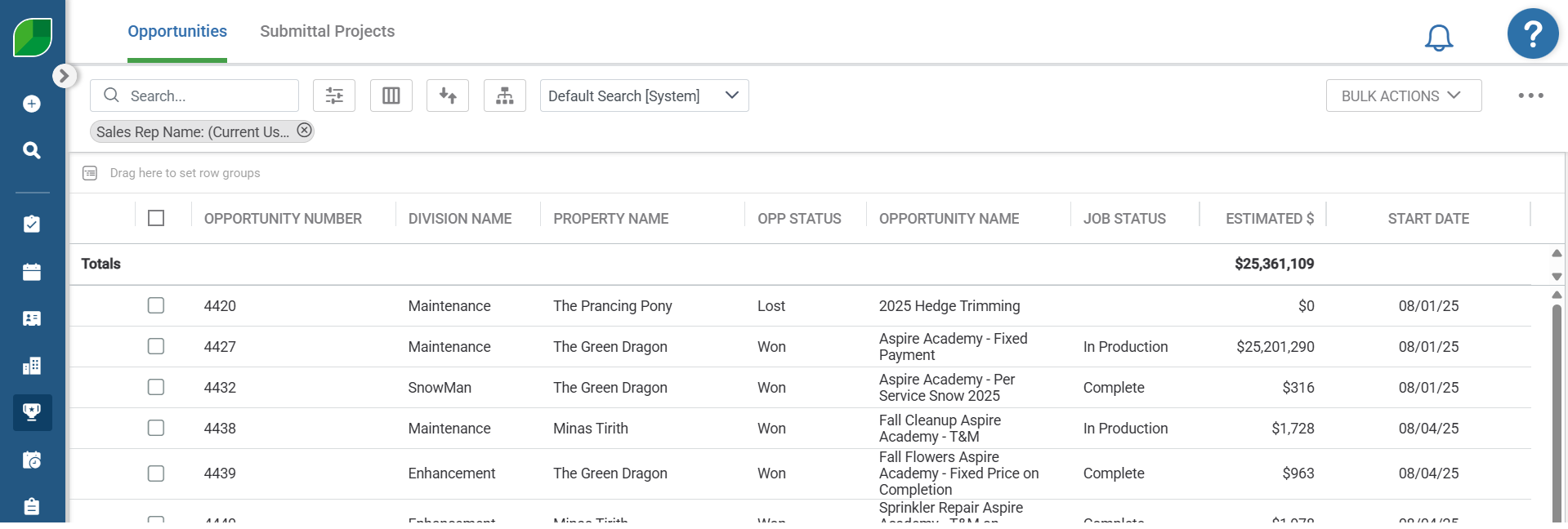
Office staff can attach insurance certificates and permit copies to relevant accounts. File types and tags make documents easier to find during renewals, audits, or customer disputes.
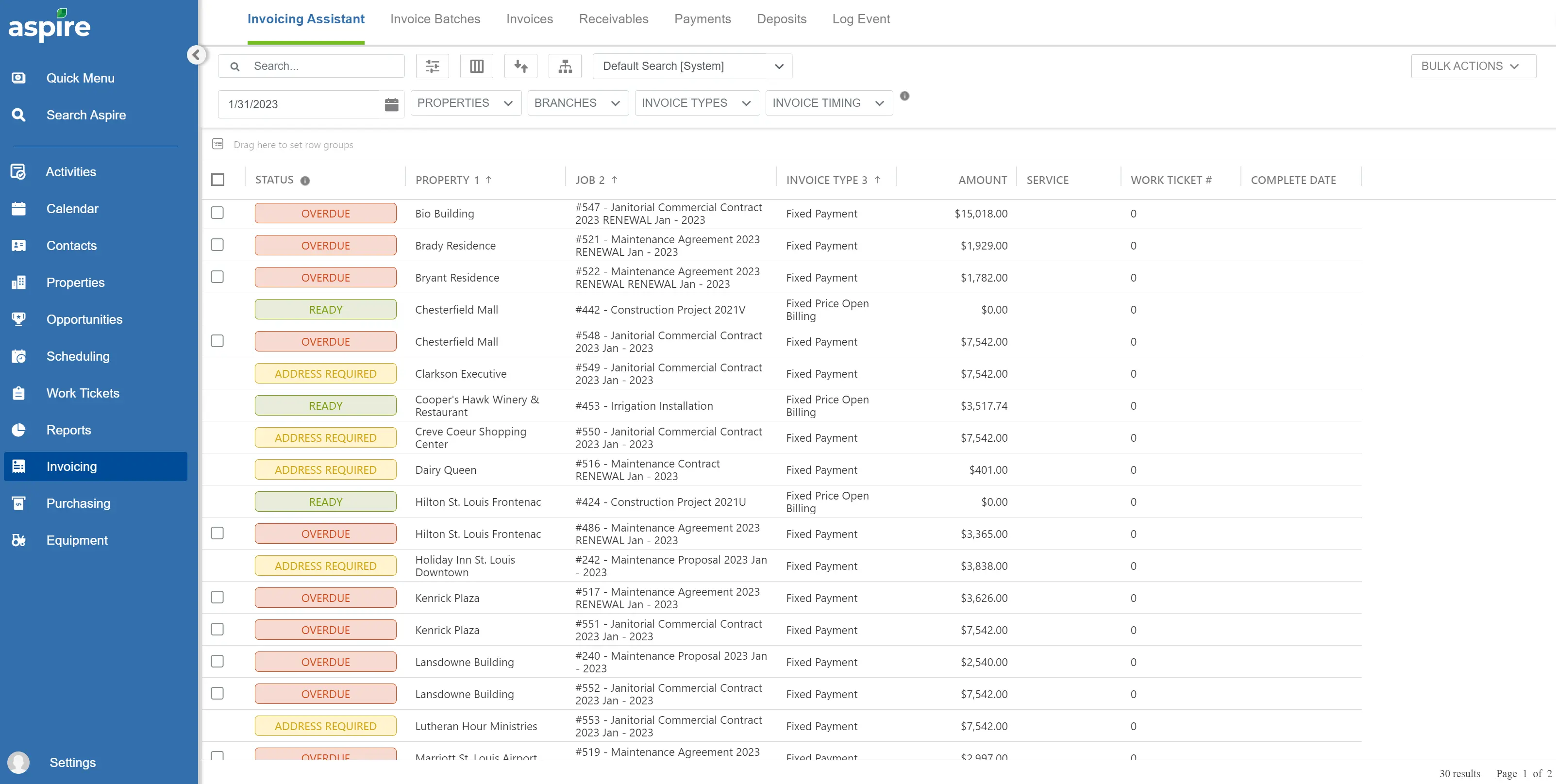
Invoicing & payment processing
Completed work flows into Aspire’s Invoicing Feature, where staff can create and email invoices. Payment records, outstanding balances, and account notes all remain available and accessible from the customer account.
Invoice batches help your teams process multiple bills together, and staff can also add work-ticket photos to invoices. That gives customers a clear record of completed work and site conditions.
Business reporting & documentation
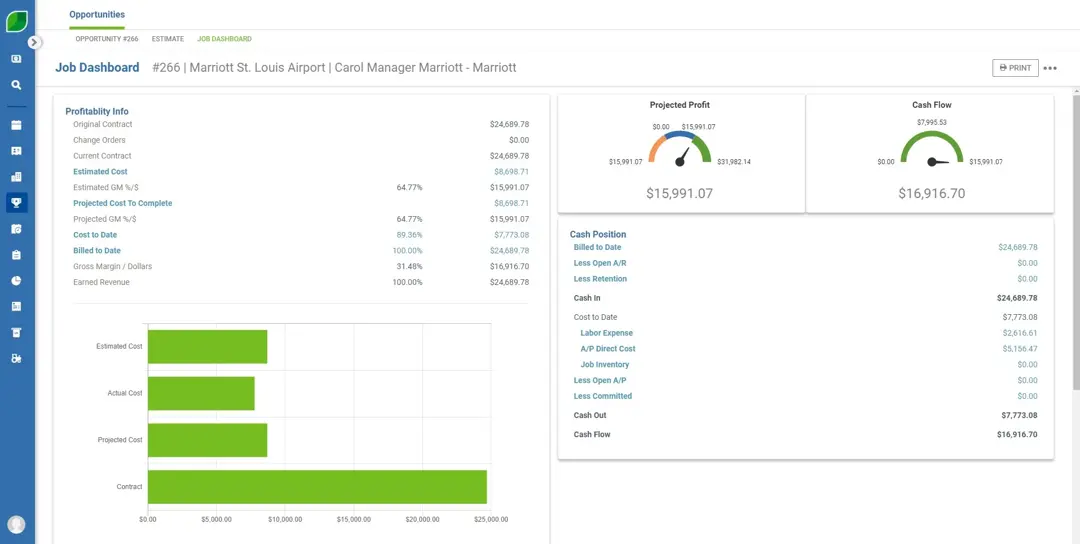
With the Reporting Software, dashboards and reports turn recorded job information into usable business records. You can review labor hours and job costs, while accounting teams keep track of invoices and material expenses.
Custom fields provide space for permit numbers or expiration dates, while attachment-uploading tools connect documents and photos to properties and work tickets.
Scheduling & job management
Route planning becomes much easier through Aspire’s Scheduling Feature. You can assign visits to crews and review the qualifications connected to each service.
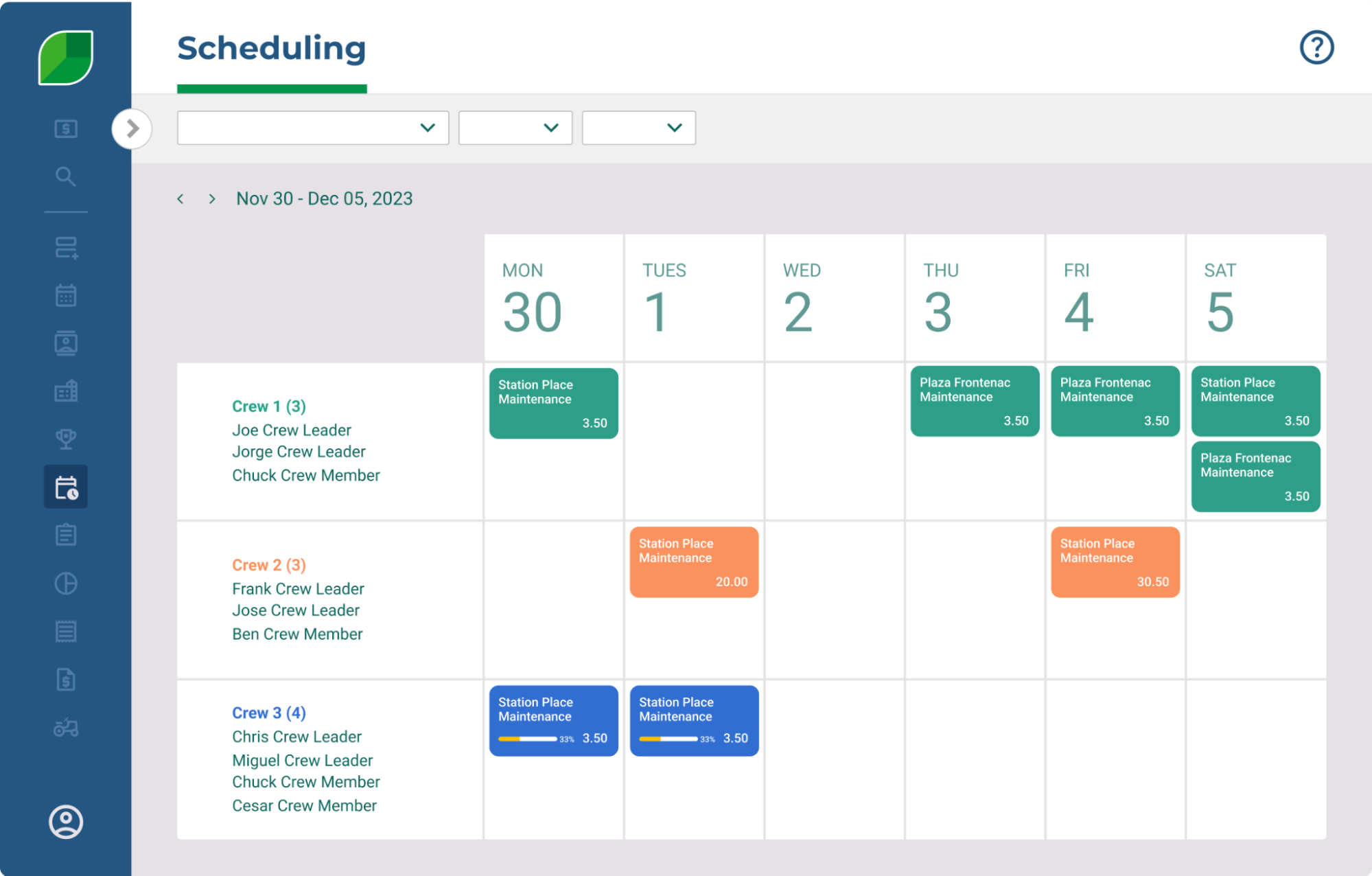
Configured certifications and skills trigger a scheduling warning when a route lacks a qualified worker. In addition, Aspire Mobile adds field records through job notes, photos, labor tracking, and material entries, keeping office crews up to date on what happens at a job site.
Together, these tools create a more organized record of each customer, crew, and completed job.

Over to you
Applying for a landscaping business license in Oklahoma starts with matching each service to the correct registration, permit, or credential. Accurate records and timely renewals protect your business from preventable delays.
Aspire allows you to store permit documents and track renewal dates while also managing contracts, invoices, and job scheduling in one place.
Book a free demo with Aspire to see how the software connects licensing records with customer work and field schedules across every branch.
Disclaimer
This article is for informational purposes only and should not be considered legal or financial advice. While we used official sources, you should always verify requirements on Oklahoma government websites.












 866-727-7473
 Schedule Demo
 390 S Woods Mill Rd #300 Chesterfield, MO 63017


