
Table of Contents
Table of Contents
- Do you need a license to start a landscaping business in Utah?
- What are the types of landscaping business licenses & permits in Utah?
- Step-by-step process to get a landscaping business license in Utah
- How much does a Utah landscaping business license cost?
- What are the most common mistakes to avoid when getting a license?
- How Aspire helps landscaping businesses stay organized & compliant
- Over to you
- Disclaimer
Ready to launch your landscaping business in Utah?
Before you take on clients or bid on jobs, you need to understand the state’s landscaping license requirements.
Depending on the type of landscaping services you intend to offer, you may be required to obtain specific state licenses or permits to legally operate.
Landscaping licenses in Utah help protect businesses from liability issues, demonstrate your qualifications, and keep you compliant with state regulations.
So, before you begin operations, you need to understand Utah’s licensing requirements to avoid penalties, protect your business, and build credibility from day one.
That’s what this guide covers. By the time you’re done reading, you’ll know:
The types of licenses needed to start a landscaping business
How to apply for the different permits you need
Costs associated with securing your landscaping licenses
Common mistakes to avoid when securing the permits
Do you need a license to start a landscaping business in Utah?
You need a license to start a landscaping business in Utah, depending on the type of jobs you take on. To take on jobs such as planting, irrigation, patio installation, and high-ticket jobs, you need a landscaping contractor license from the Utah Division of Occupational and Professional Licensing (DOPL).
For basic lawn maintenance projects, your business only needs to be registered with the state before operations can begin.
In addition, you will need a pesticide applicator license if the business offers pesticide services and registration with your local municipality or city.
Check out the different types of permits you’ll need to start operations in Utah.
What are the types of landscaping business licenses & permits in Utah?
In addition to your business registration, landscaping licenses in Utah depend on the types of landscaping services you intend to offer.
Here’s a list of permits you need to start operations in the state:
General business license
Every new landscaping business needs to be registered with the Utah Division of Corporations before starting operations to show compliance with state laws, establish credibility with customers, and protect the business.
This also lets you apply for the necessary business permits, register for commercial business insurance, secure loans, and file business taxes.
Landscape and recreation license
You need this permit to cover projects beyond routine lawn maintenance.
It covers hardscaping, planting, patio installation, fireplaces, retaining walls, irrigation systems not connected to the culinary water system, or garden lights.
To qualify, you must complete a pre-license course from the Associated Builders and Contractors, Inc. (ABC), the Utah Home Builders Association (UHBA), or the Associated General Contractors of Utah (AGC).
You will also need an insurance certificate and state withholding tax registration from the Utah State Tax Commission to secure the permits.
Pesticide business license
To commercially apply pesticides on clients’ properties, you need a pesticide business license. Here, qualification requires you to be a licensed commercial applicator (qualifying party) or to hire someone who is.
Some other requirements include:
Being licensed as a commercial or non-commercial applicator for at least 2 years within the last 10 years in any state.
Qualifying with relevant education, such as an associate degree in landscape management or an entomology degree.
The only time you may not need to be a QP or hire one is when you’re only:
Providing ornamental and turf pest control spot treatment services
Working with herbicides whose labels contain signal words such as "caution" or "warning".
Nursery license
All businesses that intend to sell or distribute nursery stock in Utah need to register as a nursery agent or nurseryman.
To qualify, you may only need to provide the business details, track your gross sales, and send in your application.
Landscape architect license
If you intend to provide landscape design services to clients, such as design plans for patios, gardens, landscapes, walkways, and drainage systems, you need this permit from the Division of Occupational and Professional Licensing.
The application requires that you pass the Landscape Architect Registration Examination (LARE) or have a current CLARB council record.
Permits and local regulations
You will also need a local business license or contractor permit from the city or municipality where you’re located.
The requirements are sometimes aligned with the state’s. But when they’re not, you need to confirm what the city officials require to legally start your landscaping business.
Step-by-step process to get a landscaping business license in Utah
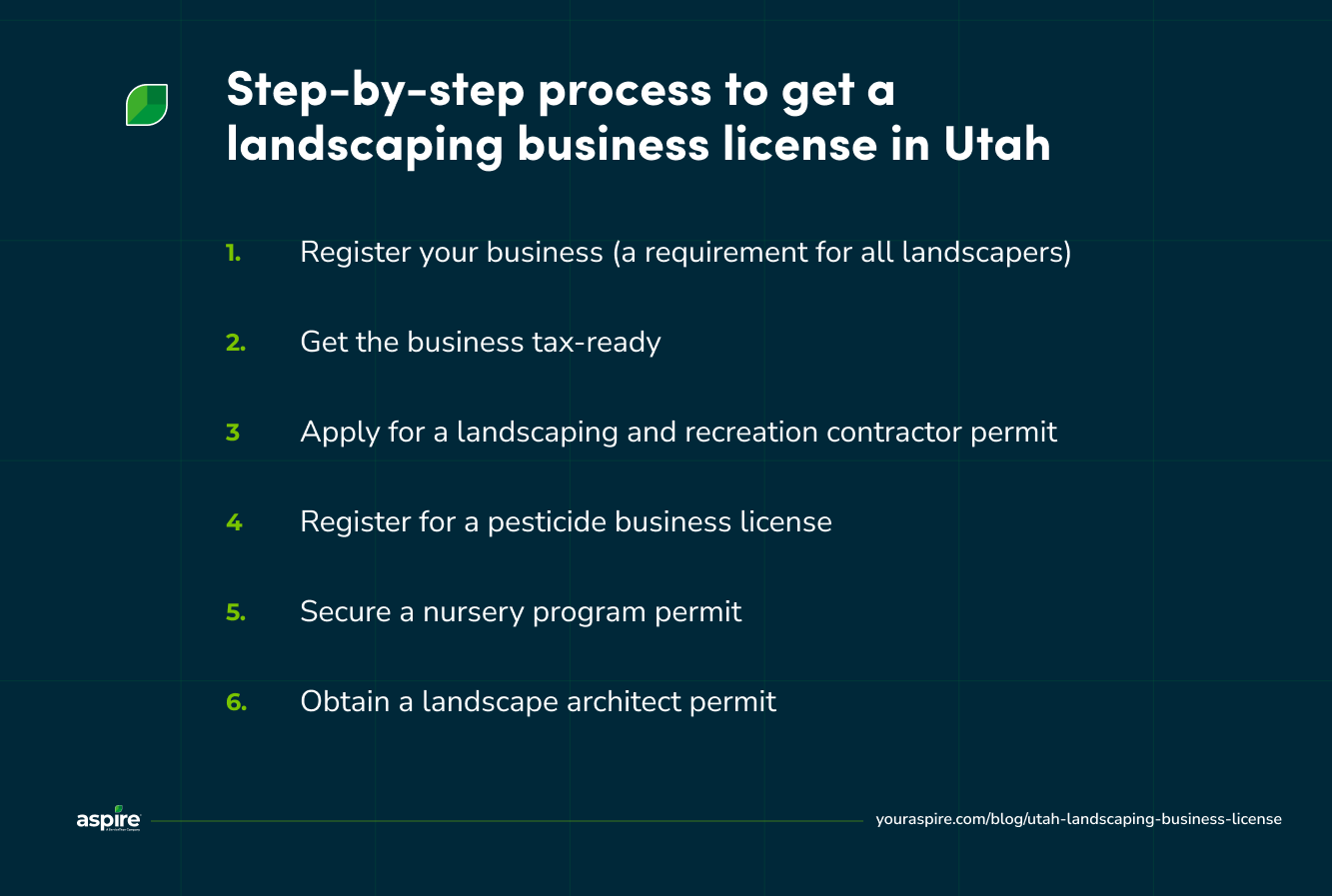
To be licensed in Utah, you first need to register your landscaping business, then apply for the necessary permits based on the services you offer.
Here’s a detailed step-by-step process on how to obtain the licenses you need:
1. Register your business (a requirement for all landscapers)
You need to register the business with Utah’s Division of Corporations and Commercial Code.
Here’s how to do that:
Choose a legal structure for your landscaping company. You can choose a sole proprietorship, LLC, corporation, or S-Corp.
Pick a business name and check that it’s available here. If it’s available and you’re ready to register the business, you can proceed with the application. If you’re not ready, you can file a name reservation with a $22 fee.
After confirming or reserving the business name, you can register the business online by visiting the business registration platform. Follow the on-screen instructions, provide the registered agent information (which can be you), and enter the information of your entity’s managers, owners, and organizers. Then sign and pay the registration fee. The fee ranges from $27 to $70, depending on your business structure, and the renewal charge is $18.
Register with the IRS to obtain a Federal Employer Identification Number (EIN), as you’ll need it to file taxes and register the business online.
2. Get the business tax-ready
Next up, get your business ready to file and pay taxes in Utah by registering with the IRS and Utah State Tax Commission.
An application with the IRS gets you a Federal Employer Identification Number (FEIN) that lets you hire workers, open a business bank account, get loans, and register with the state commission. Simply visit the IRS website and sign up for the FEIN.
Once you get the number, proceed to Utah’s tax information center to apply for a tax account.
Just follow the on-screen instructions, and you’ll be all set in no time.
3. Apply for a landscaping and recreation contractor permit
You can register for this license digitally or manually with the Division of Professional Licensing (DOPL). But before you proceed, you’ll need to:
Complete a 25-hour pre-license course from Associated Builders and Contractors Inc. (ABC), Utah Home Builders Association (UHBA), or Associated General Contractors of Utah (AGC).
Obtain a general liability insurance certificate with the minimum required coverage of $100,000 per incident and $300,000 in total, covering the required operations, and listing DOPL as the certificate holder.
If you have workers or plan to hire them, a certificate of workers’ compensation insurance with DOPL as the certificate holder will be required.
You also need to get a state withholding tax registration from the Utah State Tax Commission and an unemployment registration from the Utah Department of Workforce Services.
But if you don’t have, or intend to employ, workers, a Workers’ Compensation Coverage Waiver from the Utah Labor Commission will be required for the application.
Once you fulfill the requirements, visit the licensing platform to begin the online application.
4. Register for a pesticide business license
You need this permit to offer pesticide application services. But before you apply for the commercial pesticide business license, you need to be a commercial applicator or hire one.
Here’s how to apply for a commercial pesticide license:
Visit the Department of Agriculture’s website to create a UtahID account.
Provide your personal information, complete the license application, and pay a $75 fee along with $25 for educational materials.
Wait for the application to be reviewed and approved for testing.
Take and pass the core and category exam with a 70% score or higher.
Wait for another review within seven days and receive your license.
After receiving the license, you must have been a commercial or non-commercial applicator for at least 2 years within the last 10 years before applying for the pesticide business license. Or have the relevant education, such as an associate degree in landscape management or an entomology degree, with transcripts submitted to UDAF for review.
If you meet the requirements, visit the UDAF AIMS home page. Follow the on-page instructions to complete the application and pay the necessary fees.
5. Secure a nursery program permit
For this license, you need to first determine a license category that applies to your business.
Want to grow nursery stock? You need a nurseryman’s license.
Only want to buy and resell plants to clients? A nursery outlet permit is required.
Your license fee will then be based on the category and your business’s gross sales.
$0 to $5,000 = $40
$5,001 to $100,000 = $80
$100,001 to $250,000 = $120
$250,001 to $500,000 = $160
$500,001 and up = $200
If you’re clear on the classification and annual gross sales, complete this application to the Department of Agriculture and Food.
6. Obtain a landscape architect permit
To apply for a landscape architect license in Utah, you either need to:
Pass the Landscape Architect Registration Examination (LARE) developed by the Council of Landscape Architectural Registration Boards (CLARB),
Have a CLARB record, or
Have passed the LARE in a state other than Utah.
You’re also required to have a professional supervisor or guarantor for the application.
Then, you can complete the application form and submit it to the DOPL.
How much does a Utah landscaping business license cost?
Here’s a breakdown of all the fees you may need to operate a landscaping business in Utah:
General business registration fees
Name reservation: $22
Business filing: $27-$70, depending on the entity structure
Annual filing: $18
Landscape and recreation contractor license
Application fee: $175 per classification
Wage bond affidavit: Equal to 4 weeks' gross payroll at full capacity or production
Pesticide business license
Exam materials fee: $25
Commercial applicator license fee: $75
Pesticide business licensing fee: Undisclosed
Nursery registration license
Nursery registration and renewal fee: $40-$200, depending on your business’s annual gross sales
Landscape architect license
Application fee: $110
License renewal fee: $63
Exam fee: $30
What are the most common mistakes to avoid when getting a license?
When applying for licenses in Utah, small mistakes can cause delays or result in penalties. Below are common mistakes contractors make when getting licensed in Utah and how to avoid them.
1. Failing to meet the qualifying party requirement for a pesticide business license
To get licensed as a commercial pesticide business in Utah, you typically need to be a qualifying party (licensed commercial applicator) or hire one.
You may be exempt from needing a QP if your business provides mainly lawn and turf management, but even then, only spot treatment with certain herbicides is allowed, and the applicator must still hold a commercial applicator license.
If your business provides other pesticide services and chooses an exemption form, the state will penalize you.
According to the Utah Department of Agriculture and Food, violations of a QP exemption are taken very seriously and may result in substantial fines.
To avoid penalties, read the documents explaining which QP forms you’ll need before submitting the application.
2. Forgetting to renew
Whether you’re registering the business or applying for a landscape & recreation license, a commercial pesticide business license, a nursery permit, or a landscape architect permit, Utah requires timely renewals to remain compliant.
Forgetting to file annual reports for the business or to renew licenses leaves your business at risk of fines or late fees.
Such oversights can impact business operations and leave you operating at a loss.
3. Skipping required courses and tests
To get licensed as a contractor, you must take certain courses.
For landscaping, the process typically involves a pre-licensing course from Associated Builders and Contractors Inc. (ABC), Utah Home Builders Association (UHBA), or Associated General Contractors of Utah (AGC).
Forgetting to take the course or delaying can stall your application or lead to denial.
To avoid such issues, review the education and testing requirements for your specific landscaping license early and complete all required courses before submitting your application.
How Aspire helps landscaping businesses stay organized & compliant
With the right licenses, your landscaping business can begin operations fast.
Once licensed, managing quotes, crews, schedules, and payments across multiple jobs can quickly overwhelm growing businesses without the right systems in place.
A management tool like Aspire can help manage different parts of the business, from estimates to scheduling, invoicing, reporting, and crew coordination, from one platform.
Contract & proposal management
Aspire makes it easy for landscapers to create estimates and respond to requests for proposals.
It features an estimation tool that lets you design contracts using templates, reducing the time spent building one from scratch.
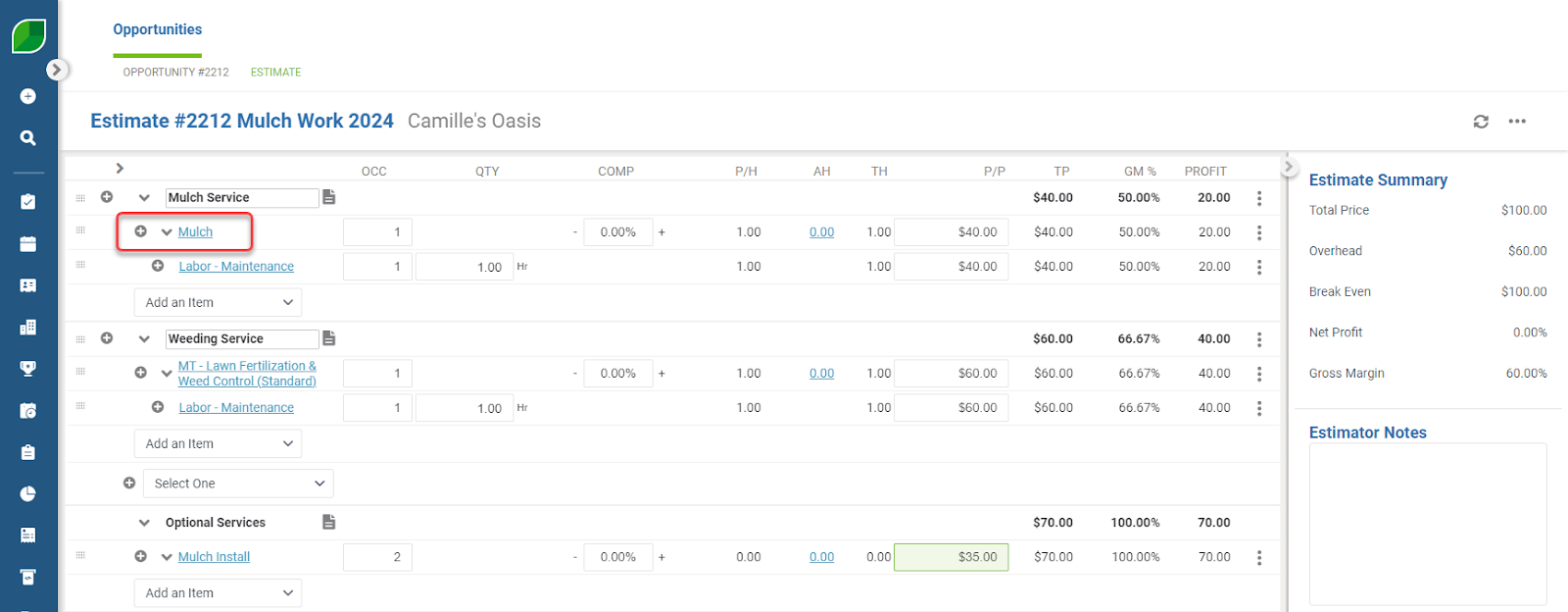
Aspire integrates with PropertyIntel, a tool that lets you measure client properties on digital maps, so you can calculate the materials and supplies needed to complete a project.
Once that’s done, you typically just need to pick a template and add services from your catalog as line items, along with your pricing and profit margin.
Estimates created on Aspire carry your branding and are ready to share with clients via email or the customer portal.
Invoicing & payment processing
After clients accept an estimate, you need a way to request payment without long email threads.
Aspire’s invoicing software lets you request and receive payments from clients with ease.
You can create invoices with details from the estimate and ongoing projects and bill clients per project, progressively, or after reaching a milestone.
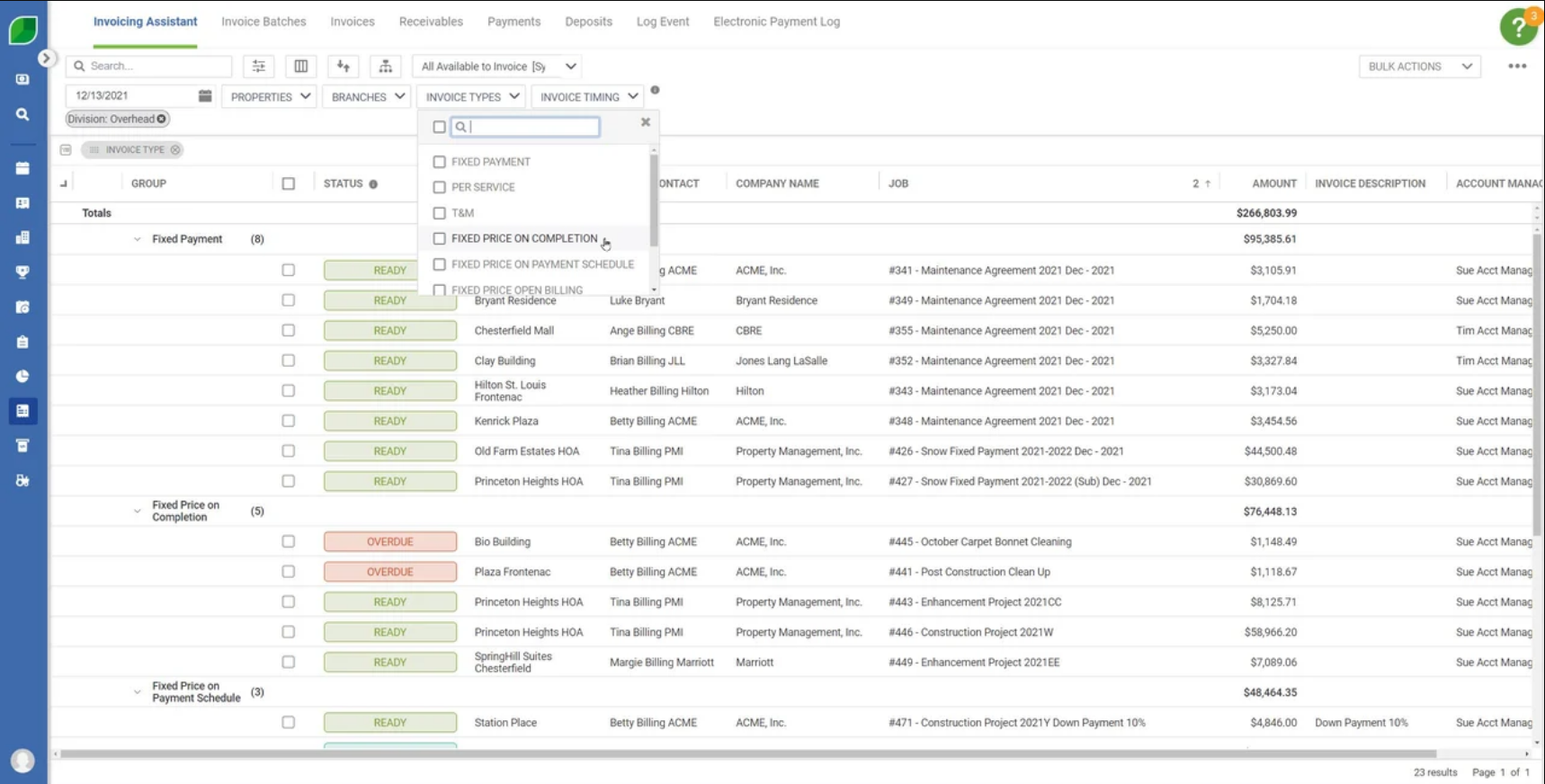
Besides creating and sending invoices, Aspire’s invoicing feature lets you track payment status so you know when an invoice has been paid, is still pending, or is overdue. Plus, it supports payment processing, allowing clients to pay for services without leaving the platform.
Business reporting & documentation
To manage your business effectively, you need to understand what happens every day so you can plan and make strategic decisions.
With Aspire’s reporting feature, you get complete visibility into everything happening in your landscaping business.
It draws on data from field workers and clients, so you can track invoiced revenue, earned revenue, business expenses, opportunities, and more.
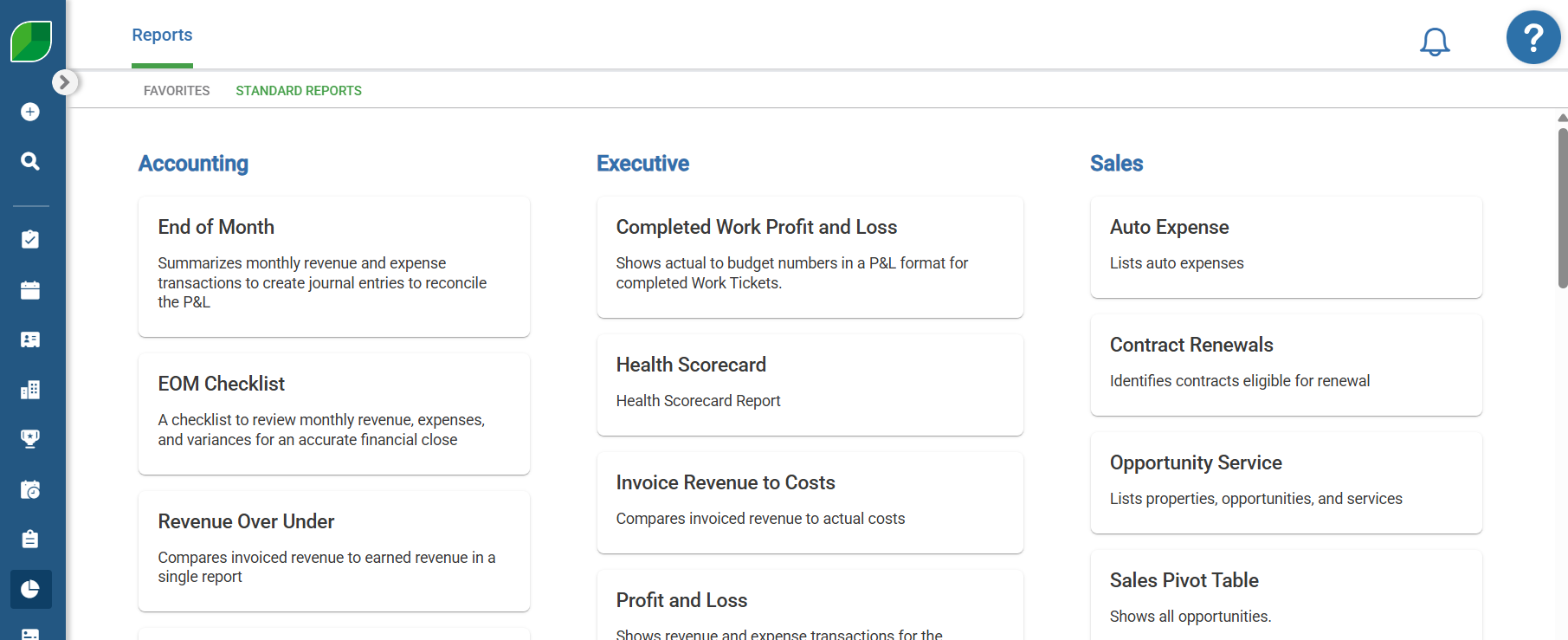
You only need to visit the reports dashboard and click on a department to get insights.
This saves you time and helps you make prompt decisions when needed.
Scheduling & job management
Planning projects and assigning responsibilities are challenging, especially when several jobs are on the horizon.
Aspire simplifies this process with its scheduling tool. It helps you stay organized by streamlining work schedules and roles.
Once you win a project, Aspire’s scheduling feature lets you assign it to a day or spread it across weeks, depending on the team’s availability.
Crews are assigned to specific jobs and provided with client information and the necessary details to execute the project.
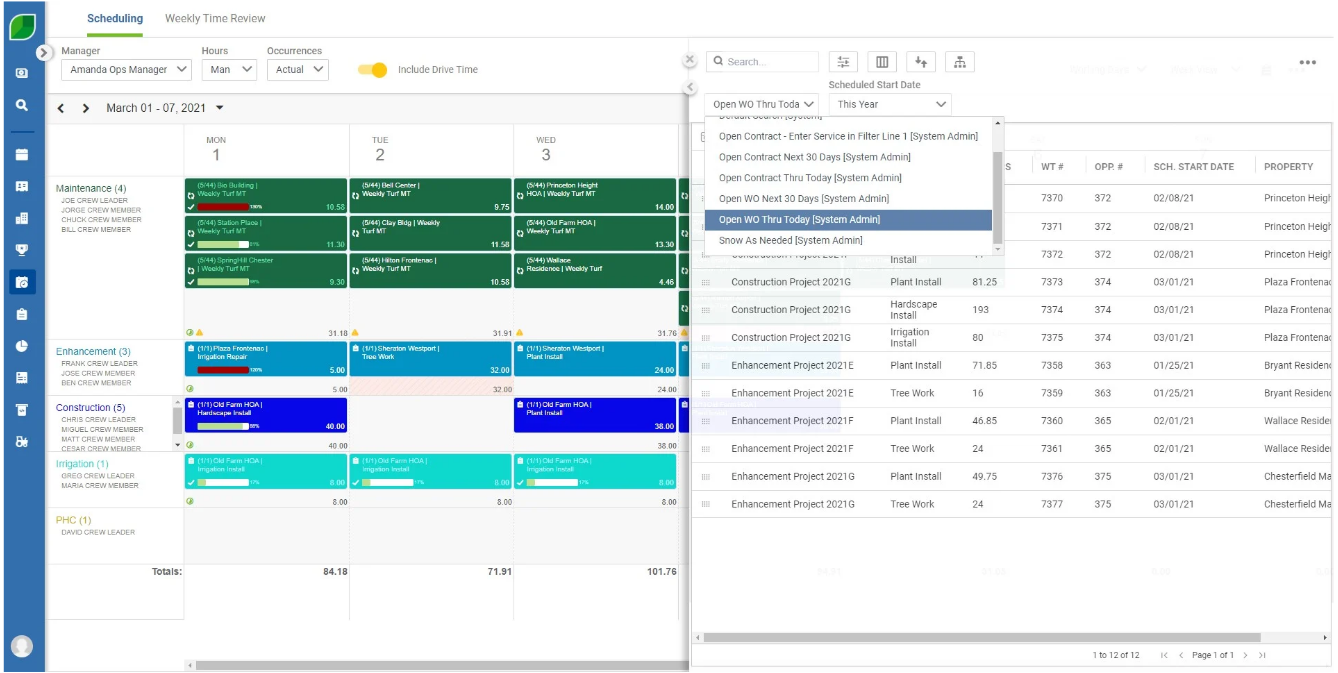
With Aspire, you can optimize routes to reduce drive times and labor costs. Plus, you can track how well a project is going or manage schedules during weather events, emergencies, or changes to client schedules.
Essentially, Aspire gives you complete control over how your projects are planned, scheduled, and executed.
Over to you
This guide provides all the permits you may need to begin your landscaping operations in Utah.
To ensure the business goes smoothly and you can scale, you need a management suite like Aspire to streamline workflows and keep everything running.
Aspire lets you take control of various aspects of your landscaping business, including bidding on projects, client management, scheduling, invoicing, equipment management, and reporting.
This way, you can provide excellent service to your Utah clients every single time.
Want to see how it works?
Book a free demo with Aspire.
Disclaimer
This article is for informational purposes only and should not be considered legal or financial advice. While we took every care to use official sources, you should always verify requirements with the Utah government’s websites.













 866-727-7473
 Schedule Demo
 390 S Woods Mill Rd #300 Chesterfield, MO 63017


