
Table of Contents
Table of Contents
- Do you need a license to start a landscaping business in Alabama?
- What are the types of landscaping business licenses & permits in Alabama?
- Step-by-step process to get a landscaping business license in Alabama
- How much does an Alabama landscaping business license cost?
- What are the most common mistakes to avoid when getting a license?
- How Aspire helps landscaping businesses stay organized & compliant
- Over to you
- Disclaimer
Your first job when starting a landscaping business is to know the licenses you need to operate in your region. It should come before investing in landscaping equipment or renting a place.
This would save you from unnecessary fines, business disruptions, and a possible tarnished reputation.
In Alabama, you need different permits depending on the landscaping service you intend to offer.
This guide lists the landscaping licenses and outlines how to get them, so you can launch and grow your business legally.
You will discover:
The types of permits the business needs and their costs
How to get licensed step-by-step
Errors to avoid on the journey
How to leverage digital tools to stay organized and boost your business
Do you need a license to start a landscaping business in Alabama?
Yes, you need multiple licenses to run a landscaping business in Alabama.
This applies to all landscapers before they can begin operations and to all services they offer, including landscaping maintenance, pesticide application, hardscaping, and landscape installation.
You may also need certain permits from the city where your landscaping business will be located.
But what licenses would you need to do business in the state?
A comprehensive list is outlined below.
What are the types of landscaping business licenses & permits in Alabama?
To run a landscaping business in the Cotton State, you’ll need these permits.
General business license
Before applying for any license, landscapers need to register their business with Alabama’s Secretary of State to establish legitimacy, build credibility with customers, and comply with tax laws.
They are also required to register for taxes with the Department of Revenue to formalize their relationship with state authorities for income, payroll, and sales/use taxes.
Horticultural professional services license
This is the main permit landscapers need to operate in the state. It covers landscape design, planting, tree surgery, and ornamental and turf pest control.
To be licensed, landscaping businesses need a certified SLP (Setting of Landscape Plants) operator who has passed the required category exam(s) and completed the registration requirements.
Landscape architect license
You need this license to provide services such as designing, planning, and managing outdoor spaces, and to create functional, beautiful, and sustainable places.
To get this permit, you need a degree in landscape architecture from an accredited university, along with transcripts, relevant experience, references, and a passing score on a licensing examination.
Pesticide applicator permit
If your services include applying pesticides, you need a commercial pesticide applicator license from the state.
As with the landscape architect license, you will need to pass certain examinations to demonstrate your knowledge of legal pesticide use.
Nursery dealer certificate
A nursery permit is required to purchase plants for installation or to provide them to customers, even at no charge. An SLP-certified operator is also needed to obtain this certificate.
Step-by-step process to get a landscaping business license in Alabama
Here’s how and where to get the licenses you need for your new landscaping company:
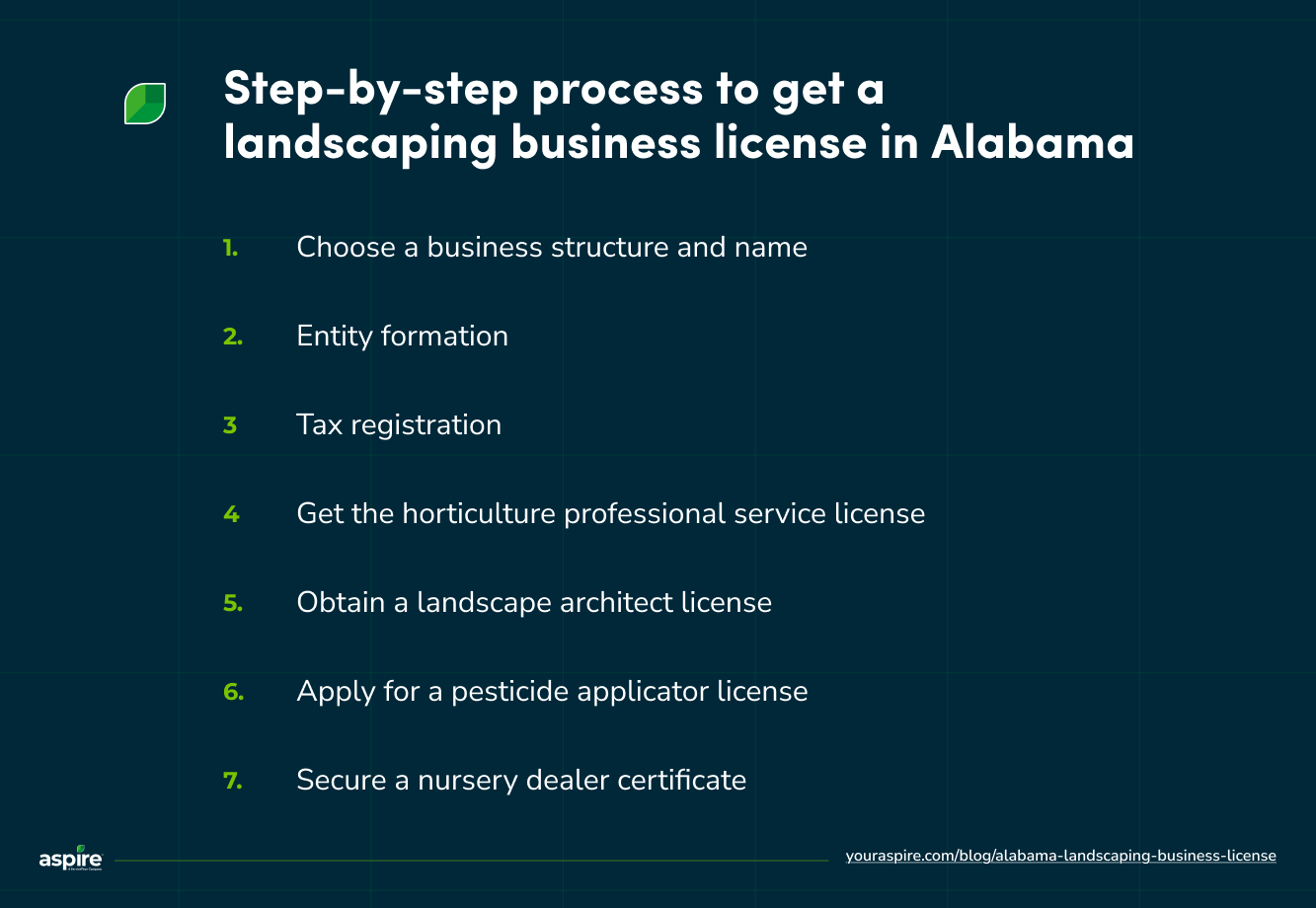
1. Choose a business structure and name
First, consider the legal structure your business needs. Do you want to start solo, partner up with a friend, or go big from the outset? This is important because it defines the registration process, liability, legal requirements, and forms you’ll fill out.
Here are options to choose from:
Sole proprietorship to run the landscaping business alone and do things your way. Just keep in mind you will be responsible for any liability claim against the business.
LLC to protect you against liability, such as financial losses or lawsuits. It’s also a suitable option if you want to bring other business partners on board.
Corporation is a good choice if you plan to invite investors at some point. It offers more protection against liabilities but has additional formal complexities.
Next, confirm that the business name you chose is available. Visit Alabama’s business entity records page to search for the name and reserve it if it’s available.
To reserve the name, log on to the Name Reservation Menu, follow the on-screen instructions, and pay a fee ($25 for subscribers and $28 for non-subscribers).
2. Entity formation
With the name reserved and structure chosen, you can create the business.
To do that, you need:
A registered agent. This can be you or anyone authorized to receive legal documents (such as lawsuits), tax notices, and other government correspondence on behalf of your business.
The reserved business name.
An application fee ($208).
Once that’s all set, form the business entity by visiting the SOS’s domestic formation portal.
This ensures your business remains compliant with state laws and regulations.
You also need to register for state taxes with the Alabama Department of Revenue. To do this, create a new profile with My Alabama Taxes and complete the registration application.
It will require you to obtain an EIN, as it will serve as the Treasury Business Account Number. But if you don’t have one yet, you will be assigned one in the interim. You may need to register for sales tax, corporate income tax, or withholding tax, depending on the different business activities.
3. Tax registration
Get your business tax-ready by getting a federal employer identification number and applying for a tax account number with the Alabama Department of Revenue (DOR).
With the EIN, you can hire workers, get the state tax account number, file federal taxes, open a bank account, and run operations smoothly.
To get one, visit the IRS website and complete an application for an FEIN.
For the state tax, go to the My Alabama Taxes center to register your business and get the tax account information.
4. Get the horticultural professional service license
To get this permit, you need to either hire an operator with a Setting of Landscape Plants (SLP) license or obtain the permit yourself.
Here’s how to get the permit:
Step 1: Take the SLP exam, which is administered by the Alabama Department of Agriculture. Submit an application online on the ADAI testing platform for a computer-based test. It costs $125 per exam ($50 for admin fees and $75 for state fees). If you prefer a paper-based exam, you can also register for that.
Step 2: Apply for the professional service license. Visit the licensing portal, download the application form for the horticulture license, fill it out, and return it to the Department of Agriculture and Industries. It costs $175/year between October 1 and September 30, and it must be renewed before November 1 each year to avoid delinquency.
5. Obtain a landscape architect license
For a landscape architect license, you need to:
Send your professional records to the Council of Landscape Architectural Registration Board (CLARB) if you have one. Coordinate with them to send your council record and LARE score report to the state board (ABELA). Don’t have one? You can go the reciprocity route — gather license verifications, CE reports, education documents, and references.
Complete this application and submit it with a $500 application fee. The renewal fee is $150.
Submit proof of U.S. citizenship or legal presence and complete the required immigration form.
After that, the ABELA handbook covering the Code of Conduct, statutes, and rules will be sent to you to read, and you will complete an exam within the allotted timeframe.
Once you have completed all documentation and exam materials, the board will review your application for final approval.
6. Apply for a pesticide applicator license
You need this permit to offer pesticide application services to clients, and here’s how to get one:
Pass the necessary examination, e.g., commodity fumigation, agricultural animal pest control (AA), agricultural plant pest control (AP), aerial equipment (AIR), aquatic pest control (AQ), public health pest control (PH), or right-of-way pest control (ROW).
Apply for the commercial license by completing and submitting this form to the Pesticide Management Unit of the Department of Agriculture.
Each exam will cost $75, with both the permit and renewal fees costing $45 per category.
7. Secure a nursery dealer certificate
A nursery dealer permit requires you to:
Take the Setting of Landscape Plants (SLP) exam described in step 4 above.
Complete an online application here and pay the required fee ($20 per location). You will also need to get certificate tags for when you ship plants. They cost $17.97 per bundle.
How much does an Alabama landscaping business license cost?
Here’s a breakdown of all the fees you may need to operate a landscaping business in Alabama:
General business registration fees
Name reservation: $25 for subscribers and $28 for non-subscribers
Business entity formation: $208
Horticultural professional service license
Setting of Landscape Plants (SLP) exam: $125
License application fee: $175
Renewal fee: $175
Pesticide applicator license
Examination fee: $75 per exam category
Commercial applicator license: $45 for each category
License renewal fee: $45 for each category
Landscape architect license
Application fee: $500
Renewal fee: $150
Nursery license
Setting of Landscape Plants (SLP) exam: $125
License fee: $20 per location
Certificate tag: $17.97 per bundle
Additional notes:
Local municipalities may require separate business licenses (fees vary by location)
Insurance requirements vary by service type
What are the most common mistakes to avoid when getting a license?
Getting a license can be straightforward when you meet the licensing requirements. But even the slightest errors, sometimes due to a misunderstanding, can lead to unnecessary delays and financial penalties.
Want to avoid hiccups in the licensing process?
Here are mistakes landscapers make and how to avoid them:
1. Mixing up pest control with pesticide application
Alabama’s horticulture professional services license covers turf pest control, which involves managing or removing insects, weeds, or organisms that can damage landscapes.
It’s not a license to apply chemicals for pest control. If you want to apply pesticides on a client’s property, you need a commercial pesticide applicator license.
Offering applicator services without the required license can result in administrative fines, misdemeanor charges, and ineligibility for a permit for up to 12 months.
2. Failing to maintain your licenses
In Alabama, most landscaping permits — such as the horticulture professional services license, nursery dealer certificate, and pesticide applicator license — must be renewed to remain legally authorized to operate.
State inspectors regularly check in with landscapers to confirm their businesses remain compliant with state regulations. If you’re not, your company could be shut down and may face additional civil penalties.
To avoid missing renewal deadlines, add license expiration dates to your calendar. You can also set reminders one or two weeks in advance to ensure you stay on track.
3. Not getting the right insurance
Insurance not only protects landscaping businesses from third-party claims but is also required by the state.
Plus, landscapers with multiple employees need workers’ compensation insurance and general liability coverage for commercial contracts.
Not having insurance can lead to financial liabilities.
How Aspire helps landscaping businesses stay organized & compliant
You’ve secured the permits needed to run your new landscaping business in Alabama. The next step is to use a landscaping management tool like Aspire to ensure everything remains organized once the company becomes fully operational.
This would help you maintain good client relationships and provide quality services.
With Aspire, you have access to features for:
Contract & proposal management
Aspire’s estimating tool lets you bid on new projects and submit proposals faster. It helps you skip the traditional process of measuring a client’s property, manually calculating materials per inch or square meter, and preparing estimates and proposals by hand.
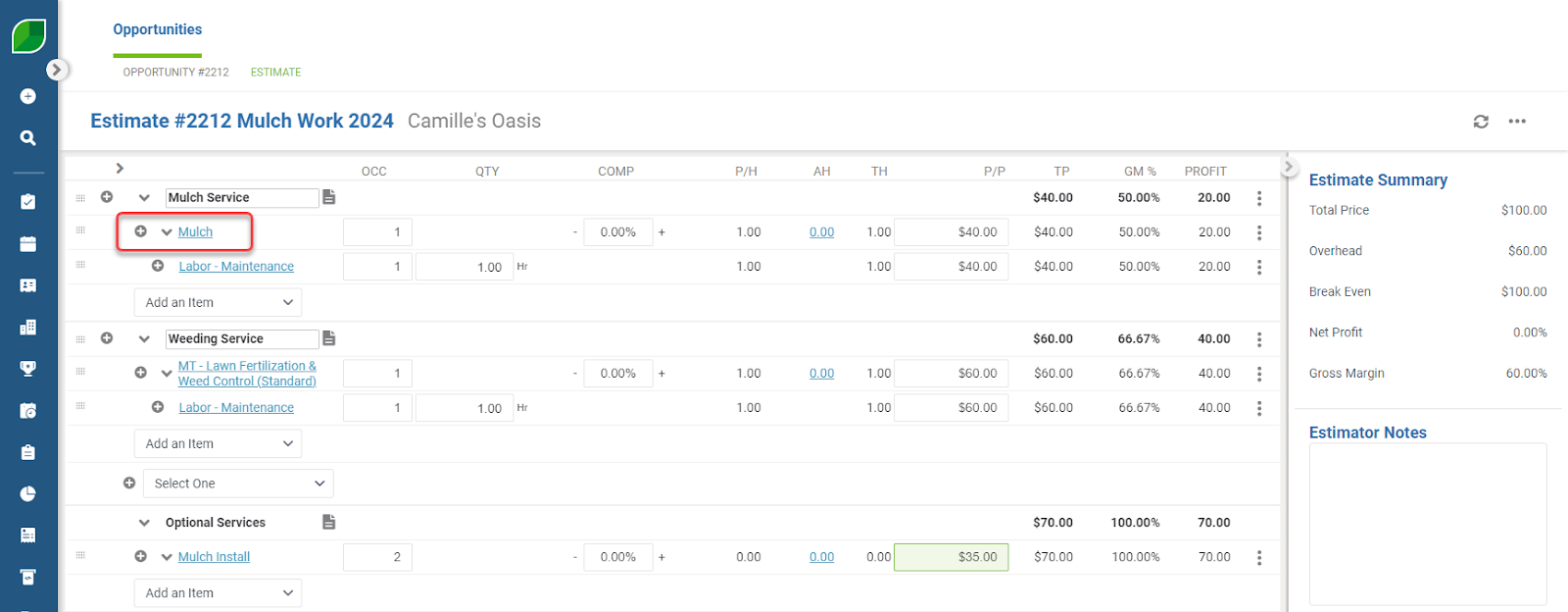
Integrated with PropertyIntel, Aspire allows you to measure properties using digital maps, eliminating the need for site visits.
It also features customizable proposal templates, where you can add services, items, and pricing directly from your preset catalog, and the platform handles the calculations.
This saves time, centralizes contracts, and helps ensure your proposals remain compliant with state regulations.
Invoicing & payment processing
Once bids are accepted and the project is underway, Aspire makes it easy to request and receive payments with its invoicing tool.
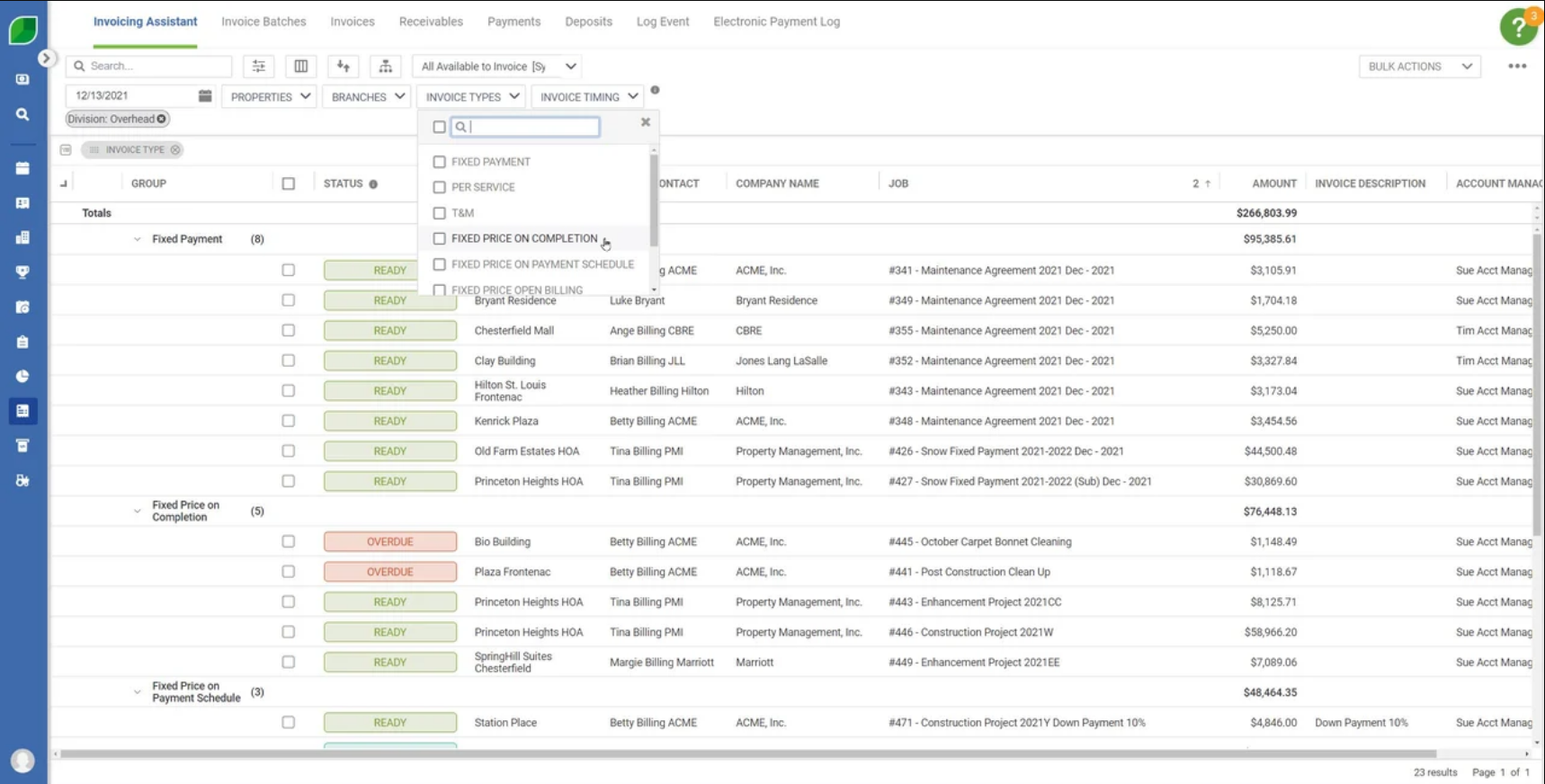
By pulling information directly from the approved estimate, you can create, send, and track digital invoices with confidence that clients receive accurate pricing. Once invoices are sent, you can monitor their status to see whether they’re paid, outstanding, or overdue.
Aspire also automates the billing cycle, helping align your financial records with state tax regulations. Plus, it offers multiple ways to accept payments, including wire transfers and credit or debit cards through integrated payment processors.
Business reporting & documentation
To run a business effectively and scale it over time, you need to know what goes on in the company.
For instance, how many landscape maintenance projects did the team handle last quarter, and how much revenue did they generate? What’s your company’s best-selling service?
Did you make a profit from hardscaping, design, or pesticide application last year?
Aspire’s reporting feature gives you insight into such data, so you’re always in the loop about what goes on in the business and can make informed decisions.
It lets you view client retention rates, total cash inflow and outflow, job inventory, current losses, labor and material costs, and tax filings.
Aspire provides real data based on estimates and what your landscaping crews report while in the field.
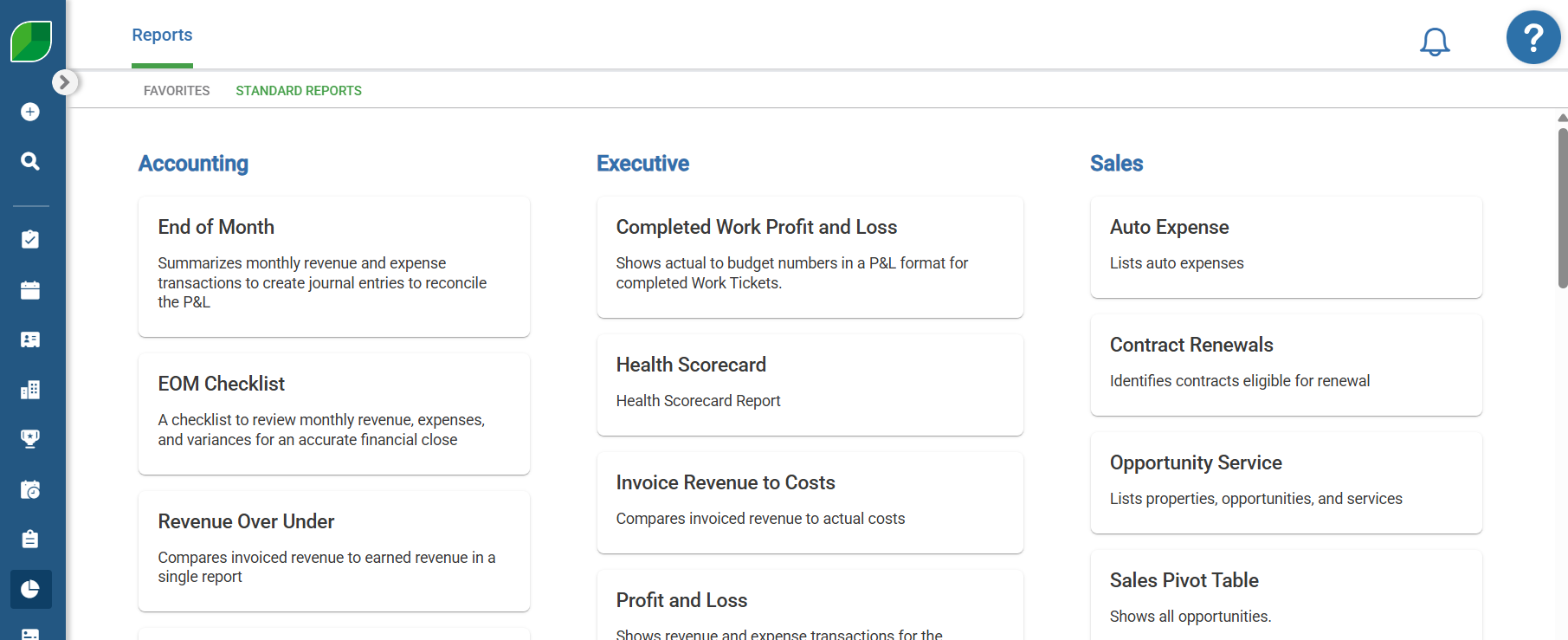
You can maintain the required documentation for workers’ compensation and general liability insurance and organize business expenses, revenue tracking, and payroll records for tax compliance.
Scheduling & job management
An important part of being organized is having an efficient system that lets you schedule and assign projects to manage crew workload, avoid missing deadlines, and avoid double-booking.
With Aspire’s scheduling feature, you can plan projects based on your crew’s availability, experience, and proximity to a site. It replaces manual, error-prone scheduling, helping you organize workflows and optimize your crew’s route.
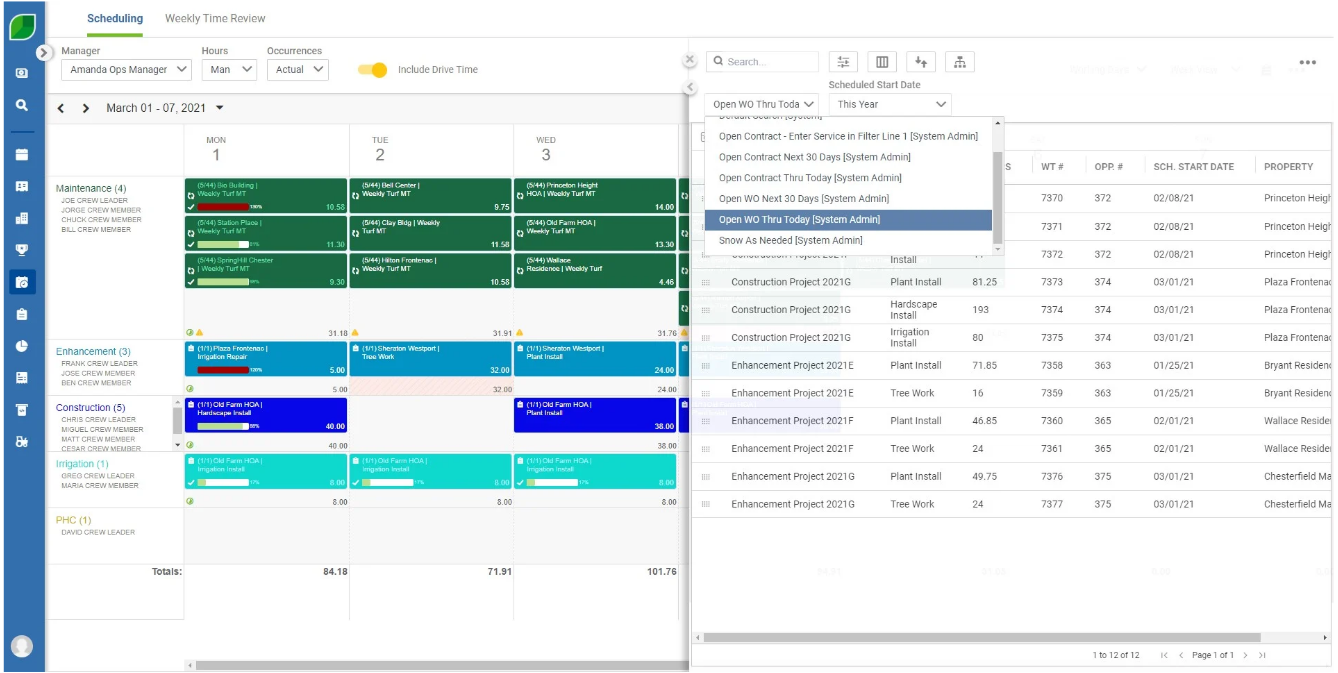
It also helps prevent scheduling conflicts that violate local noise ordinances or zoning laws. And you can comfortably track project timelines, job completions, and team availability in real time.
Over to you
In Alabama, the type of landscaping services you plan to offer determines the permit you need.
Want to provide pesticide application, plant installation, or landscape design services?
Identify the relevant license, apply for it, and maintain it through renewals.
Then, leverage Aspire to streamline operations, keep the business organized, and stay compliant with state regulations.
Schedule a free demo to see how Aspire can help your landscaping business.
Disclaimer
This article is for informational purposes only and should not be considered legal or financial advice. While we took every care to use official sources, you should always verify requirements with the Alabama government’s websites.












 866-727-7473
 Schedule Demo
 390 S Woods Mill Rd #300 Chesterfield, MO 63017


