Table of Contents
Table of Contents
You’re thinking about selling, scaling, or exiting your landscaping business. However, you don’t understand the current state and trajectory of consolidation in the landscaping industry.
You are curious about what’s going on in the space, including:
Who is acquiring
How deals are structured
How independent owners should prepare either for a sale or expansion
This guide will help you understand these questions – and more – so you can make the right decision and plan the next phase of your landscaping business.
How is consolidation reshaping the landscaping industry?
Consolidation is reshaping the landscaping industry by creating larger green companies and increasing pressure on independent businesses to scale, improve operations, or sell.
It’s transforming the highly fragmented nature of landscaping organizations into a thriving hub of roll-up activity, where strategic buyers merge or acquire businesses to expand market share, enter new geographic markets, and gain operational efficiencies.
There are several reasons for these shifts:
Recurring revenue: Landscaping contracts, such as maintenance, irrigation, and turf projects, generate consistent revenue for businesses because they are typically annual. Purchasing multiple businesses could mean guaranteed revenue.
Route density economics: Consolidating landscaping businesses means there’s less time driving between job sites, less fuel usage, less equipment wear and tear, and higher profit margins.
Labor shortages: Consolidation ensures that large landscaping companies can take over with an experienced team, rather than recruiting or training from scratch.
Regional expansion: Acquiring an existing landscaping business helps you get into new markets with an established client base.
High ROI: The current fragmented state of landscaping, along with its recurring revenue model, is one that’s attractive to investors. It means investors can buy individual landscaping businesses at 3–4x EBITDA and build platforms that exit at 11–14x EBITDA.
Rise of institutional capital: With many niche landscaping services still highly fragmented, there’s been an increase in the pace of consolidation by top buyers (private equity). And according to L.E.K., this trend is expected to continue. National brands and institutional investors will acquire specialty landscaping services to benefit from route density and consistent revenue.
Speaking of trends, the next section highlights some of the top trends in landscaping consolidation.
Key trends in landscaping consolidation
According to J. T. Price, CEO of Landscape Workshop, and Lawn and Lawnscape’s State of the Mergers & Acquisitions Market report, here are some key M&A and consolidation trends in the landscaping industry:
Business owners are becoming more M&A-friendly: Awareness of mergers and acquisitions is growing across the green industry. The share of survey respondents who rated their mergers & acquisitions knowledge as "average" increased from 37% in 2025 to 43% in 2026, suggesting more owners are actively educating themselves about exit opportunities and acquisition strategies.
Buyers are approaching landscaping companies more aggressively: Acquisition activity continues to accelerate. The percentage of landscaping businesses receiving 6-10 acquisition inquiries per month jumped from 8% in 2025 to 26% in 2026, reflecting sustained buyer demand and increased competition for quality businesses.
Buyer demand has grown beyond traditional landscaping: Demand remains particularly strong for technician-driven service businesses, including those focused on turf care, tree care, irrigation, landscape lighting, and pest control.
Private equity buyers are becoming more selective: Investors are placing more emphasis on proven growth strategies, operational performance, and value creation, leading to more rigorous due diligence for sellers.
Certainty beats higher offers: Sellers are increasingly choosing acquirers based on cultural fit and a track record of closing deals, rather than chasing the top bid from buyers who might not follow through.
Residential segments are drawing more interest: Commercial maintenance still commands the strongest valuation because of its recurring and high revenue potential, but buyer interest in residential landscaping businesses is also rising.
Buyers reward operational excellence: Landscaping companies that invest in strong leadership, consistent organic growth, high customer retention, and acquisition readiness are building greater enterprise value. These fundamentals continue to make businesses more attractive to buyers and better positioned for long-term growth or a successful exit.
Labor strategy is a key acquisition consideration: Investors are paying closer attention to workforce stability and labor compliance during acquisitions. Lawn care businesses that rely less on seasonal visa programs and have strong domestic hiring, retention, or long-term workforce strategies are becoming more attractive acquisition targets.
Economic uncertainty means more buyer scrutiny: While long-term economic conditions have improved compared to 2024–2025, near-term uncertainty, including geopolitical tensions, inflationary pressures, labor shortages, and political developments, is making lenders and investors more cautious. As a result, buyers are conducting more thorough due diligence before completing acquisitions.
Who is acquiring landscaping companies?
The consolidation happening across the industry is led by these stakeholders:
Private equity-backed platforms
These are alternative investment classes where firms pool capital from institutional or high-net-worth investors to acquire ownership stakes in landscaping companies.
Some of them include:
GTCR Private Equity
HCI Equity Partner
Percheron Capital
Trivest Private Equity
Shoreline Equity Partners
Experigreen
Here’s what they typically look for in a landscaping company:
Recurring contracts that make up over 60% of revenue, as this lowers the risk associated with the capital PE funnels into the business.
Commercial clients with multi-year contracts. This signals predictable revenue for the PE.
Geographic density that enables route optimization and crew utilization across a concentrated territory.
Tech stack maturity, which signals the landscaping operation is scalable and able to integrate with new workflows.
Certified crews with irrigation or pesticide licensing to reduce compliance risks and widen the service mix that buyers can offer.
Strategic buyers (AKA large operators)
These are companies with a background in the landscaping industry that are looking to break into new or existing markets. Compared to PE firms that want to make an initial investment, strategic buyers tend to view acquiring new businesses as an add-on.
Strategic buyers typically also have a variety of capital sources, mostly PE firms.
Here are some examples of buyers in this category:
BrightView
DJ Landscape
Yellowstone Landscape
Davey Tree
Juniper Landscaping
TruGreen
Buyers here prefer landscaping businesses with:
Specialized capabilities: Companies that want to break into new markets consider landscaping businesses with depth of expertise in specialized niches such as tree removal, irrigation, etc.
High route density: Strategic buyers pay handsomely for businesses with deep routes in a metro area, as this translates into lower labor costs and higher profits.
Recurring contracts: Buyers would pay a premium for companies with stable client contracts.
Crew depth: Given landscaping's high employee turnover, businesses with a stable foreman bench, low turnover, and a clear training pipeline are attractive to strategic buyers.
Independent sponsors & family offices
These categories of buyers are less common; independent sponsors or investors don’t have committed capital of their own.
They do, however, look for businesses to buy and leverage their network to pool capital from investors for a transaction they identified.
Family offices, AKA private capital holdings, are wealthy families or individuals considering investment in landscaping companies.
Here’s what these parties look for:
Flexible deal structures: Given these buyers don’t have committed capital, they prefer landscaping businesses that are open to flexible terms, e.g., seller financing, equity rollovers, minority investments, or partial buyouts.
Businesses willing to accept investors with longer hold periods: Family offices and independent sponsors typically emphasize sustained value creation rather than rapid divestment. Because their objective is long-term ownership rather than a short-term flip, they invest across a much broader time horizon.
Strong management teams: Since they intend to own the business long term, they favor businesses with experienced leadership that can continue running the day-to-day operations after the transaction. This reduces the need for hands-on oversight.
How are landscaping businesses valued?
There are different ways to value your landscaping business, based on valuation multiples:
Multiple of revenue: This involves multiplying your annual revenue by an industry-specific multiple, typically ranging from 0.5 to 2. Say your annual revenue is $2 million and the multiple is 0.8; the business’s value is $1,600,000.
Earnings Before Interest, Taxes, Depreciation, and Amortization (EBITDA): The valuation is calculated by taking net income, adding interest, taxes, depreciation, and amortization, and multiplying the result by the EBITDA multiple. This strategy highlights the business’s core earnings power and provides a clear picture of profitability, excluding non-operational factors like financing and accounting decisions.
Example: Your business has a net income of $200,000, additional expenses for interest ($20,000), taxes ($10,000), depreciation ($8,000), and amortization ($5,000). The industry EBITDA multiple is 4x.
EBITDA total = $200,000 + $20,000 + $10,000 + $8,000 + $5,000 = $243,000.
Valuation = $243,000 x 4 = $972,000
Seller’s Discretionary Earnings (SDE): This valuation method provides a clear picture of the profits buyers can expect. SDE takes business profits before taxes into account and includes interest, the owner’s personal expenses, investments, and benefits.
It’s calculated by taking net profit, adding back discretionary or owner-specific expenses, such as the owner’s salary, personal benefits, and non-essential business expenses, and multiplying the result by the SDE multiple.
Example:
Annual profit for a landscaping company: $170,000
Additional owner salary/benefits: $80,000
SDE: $170,000 + $80,000 = $250,000.
SDE multiplier: 3.0
Valuation: $250,000 x 3.0 = $750,000
Now, multipliers, if you’re wondering, are pulled from real transaction data, franchise disclosure documents, or public company benchmarks.
What drives higher valuations?
According to Tom Heaviland, CEO of Verdi Property Services, your landscaping business needs the following to be considered high-value to buyers:
Increased commercial maintenance contract mix: More than half of your client base should consist of commercial maintenance clients, as this signals stable revenue for buyers. If you don’t have this, target property management companies, HOAs, university campuses, schools, industrial facilities, and retail centers.
Low payroll costs: Buyers typically assess your business costs against the industry average, since payroll is one of the most expensive parts of running a landscape company. Low costs could mean high profit margins for your business, increasing its value.
Upsell capabilities: Businesses with a strong track record of upselling services such as tree care, irrigation, water management, landscape lighting, or property maintenance are considered valuable because they offer expansion opportunities for investors when they buy the business.
High client retention rate: The growth and stability of your customer base are other important factors. Businesses with high client retention are more appealing to investors because they reduce marketing and acquisition costs and provide predictable cash flow.
High employee retention: A stable workforce reduces operational risk and helps preserve customer relationships after the sale. Having landscape professionals with certifications and training is a plus, as it demonstrates professionalism and consistent service quality.
Dedicated account managers: They ensure potential buyers have the support they need to manage the business post-sale. Buyers won’t have to worry about hiring people to handle day-to-day operational tasks.
What lowers a landscaping business’s valuation?
Here are different factors that may lower your landscaping business’s valuation:
Owner dependence: Landscaping businesses structured around the owner are rarely attractive to investors because they likely lack continuity when the owner leaves.
Scaling the business may also be challenging with no existing workflow, team, or system.
Poor job costing visibility: Businesses with little to no visibility into how much landscaping projects cost relative to project estimates may find it difficult to calculate their profits and losses.
As such, it also becomes challenging for buyers to properly evaluate the business and determine whether it will be a profitable investment. This can drag out negotiations and cause uncertainty with investors, reducing offers.
Weak contract documentation: Verbal contracts or the absence of proper documentation in a landscaping business makes it difficult to estimate the number of clients the company has and exposes it to lawsuits.
It becomes challenging to predict the business’s cash flow, which leads buyers to classify it as highly volatile.
Poor margins: High operating and labor costs, coupled with low profit margins, signal inefficiencies and low ROI for landscaping buyers. This deters premium offers or reduces the landscaping business’s value.
How are landscaping business deals structured?
If you’re ready to sell your landscaping business, there are different structures you can choose from to finalize the deal.
Let's run through the options available and when to use them:
Cash-at-close: Buyers or investors pay your asking price at closing, financing the deal themselves or via a third-party lender.
The best time to use this method is if:
The landscaping business promises a high ROI
You need to secure an exit quickly
You have multiple buyers with the freedom to choose
Seller financing: Landscaping business owners are open to receiving payments over time with interest. In other words, the buyer makes an upfront payment and pays the remainder in installments over a specified period.
This is a good option if you:
Don’t mind the financing proposal
Trust the business’s profitability
Can get collateral from the investor
Execute a legally binding contract to protect the agreement
Earnouts tied to performance (ETTP): This involves a partial down payment, along with additional future payments contingent on the business meeting specific milestones, such as revenue targets, profitability, expansion, or recurring client retention.
Best used if:
Buyers see strong growth potential but aren't ready to pay a full premium upfront
Your business has recurring revenue from contracts that is easy to prove
You're willing to stay involved during the transition to support a smooth handoff
What buyers look for during due diligence
Before a merger or purchase, buyers need to verify that the landscaping business is as profitable as promised and can run without you.
That involves doing their due diligence, a review of the business’s financial, operational, and legal details. This gives buyers a full picture of the business beyond its balance sheet.
Here’s what they look at during this phase:
Financial records: They review profit-and-loss statements, tax returns, debt obligations, tax compliance, and cash flow summaries over several years, ideally using accrual accounting so that growth trends are clear rather than obscured by seasonal cash-flow timing.
Buyers also assess inconsistencies between reported revenue and deposits, as well as material purchasing patterns.
Customer contracts and retention: Investors will look at customer contracts for the number of clients the business relies on for its monthly revenue.
They also look at contract duration, renewal rates, and customer retention history to assess future revenue potential from existing contracts.
Equipment condition: A detailed inventory of the business’s landscaping equipment, including age and maintenance history, lets investors know how much to allocate there post-purchase. If the equipment is too old or has a history of repairs, it could devalue the business.
Employee records: Buyers also look at your employee records before purchase. A high turnover rate or misclassifying independent contractors as employees, or vice versa, could expose the business to penalties and back taxes no one wants.
Legal and compliance documentation: Complying with regulations is important in landscaping. As such, investors will request to see the landscaping business’s licenses, review their renewal dates, and check with regulatory agencies for past violations. They need to ensure the company has no violations or run-ins with the law, or else they become liable.
How Aspire strengthens M&A outcomes
The due diligence section above shows that buyers pay more for businesses that can prove their numbers.
Using a business management platform like Aspire centralizes your landscaping operations across employee productivity, finances, and project management.
This way, you can pull clean data buyers need without reconstructing operational history from scratch.
Here are some ways Aspire does that.
Real-time job costing
Investors and buyers want to see cost and profitability across every job level. Aspire’s job costing tool tracks each project’s estimated labor, materials, equipment, and other costs against actual spend to show owners whether or not a job was profitable.
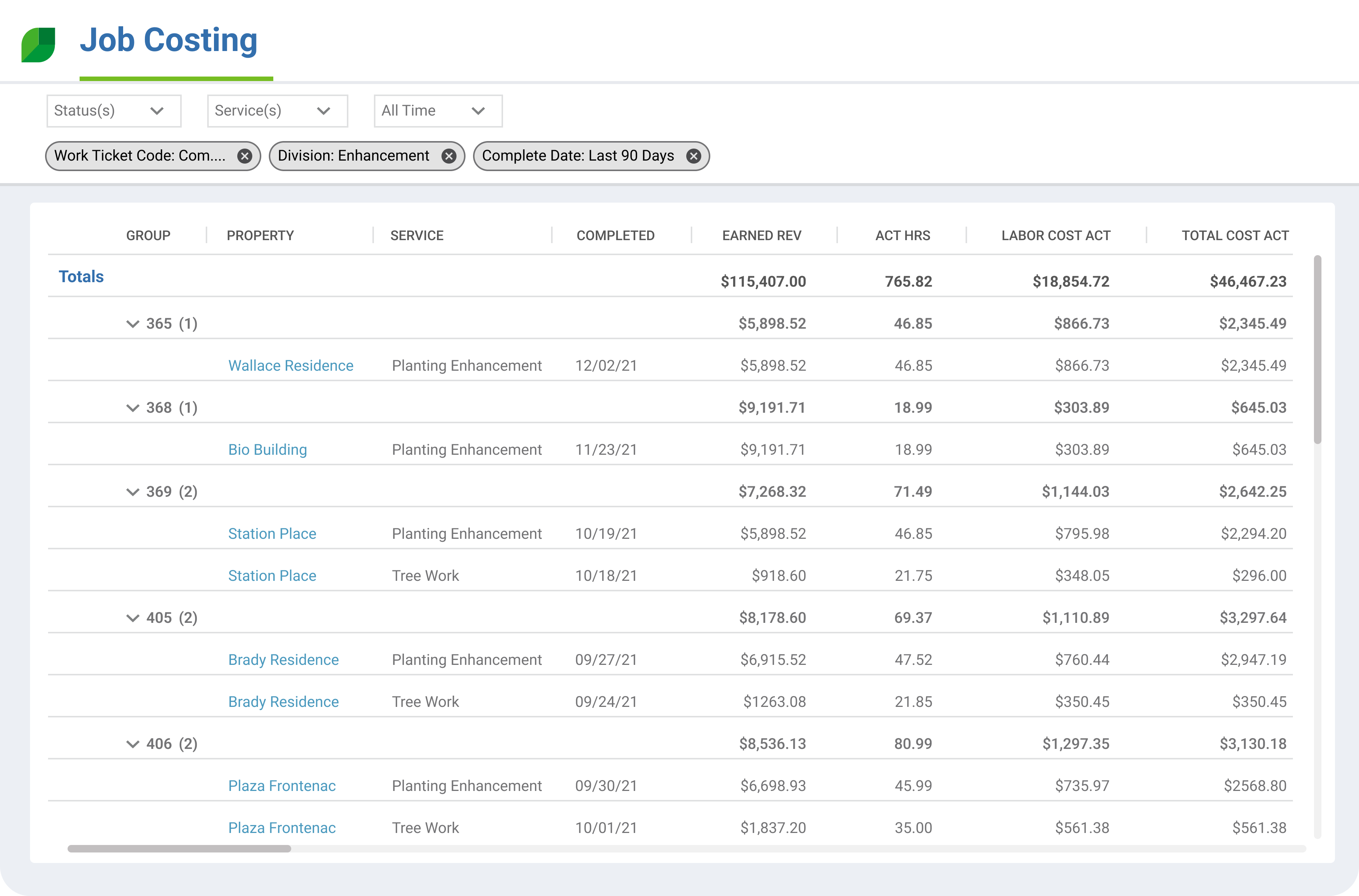
During an acquisition, this provides a paper trail to help investors verify the business owner's claim.
Financial reporting
On Aspire, landscaping businesses can send invoices to customers, receive payment, and even bill vendors.
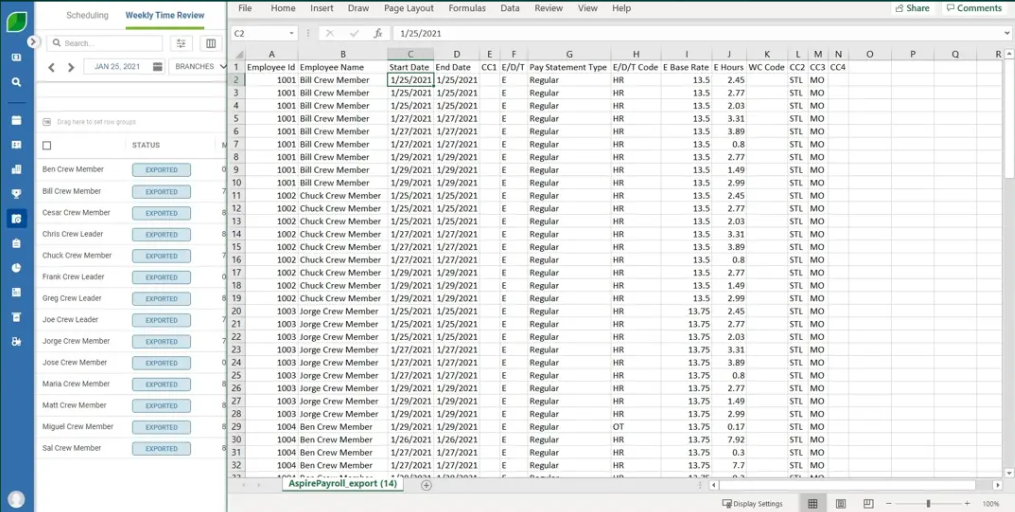
This means you can create a financial report that consolidates key data without waiting for a monthly report to know how the business performed within a specific timeframe.
As such, you can provide buyers with accurate financials on demand, helping them close the deal faster.
Estimating and proposals
Aspire helps landscapers create accurate estimates from templates. They can use PropertyIntel to measure properties from digital maps rather than manual site walks, enabling them to build precise takeoffs for maintenance work, design-build projects, and enhancements.
As the property is being measured, Aspire pulls from the company’s data to automatically calculate time, material, and cost estimates for the project.
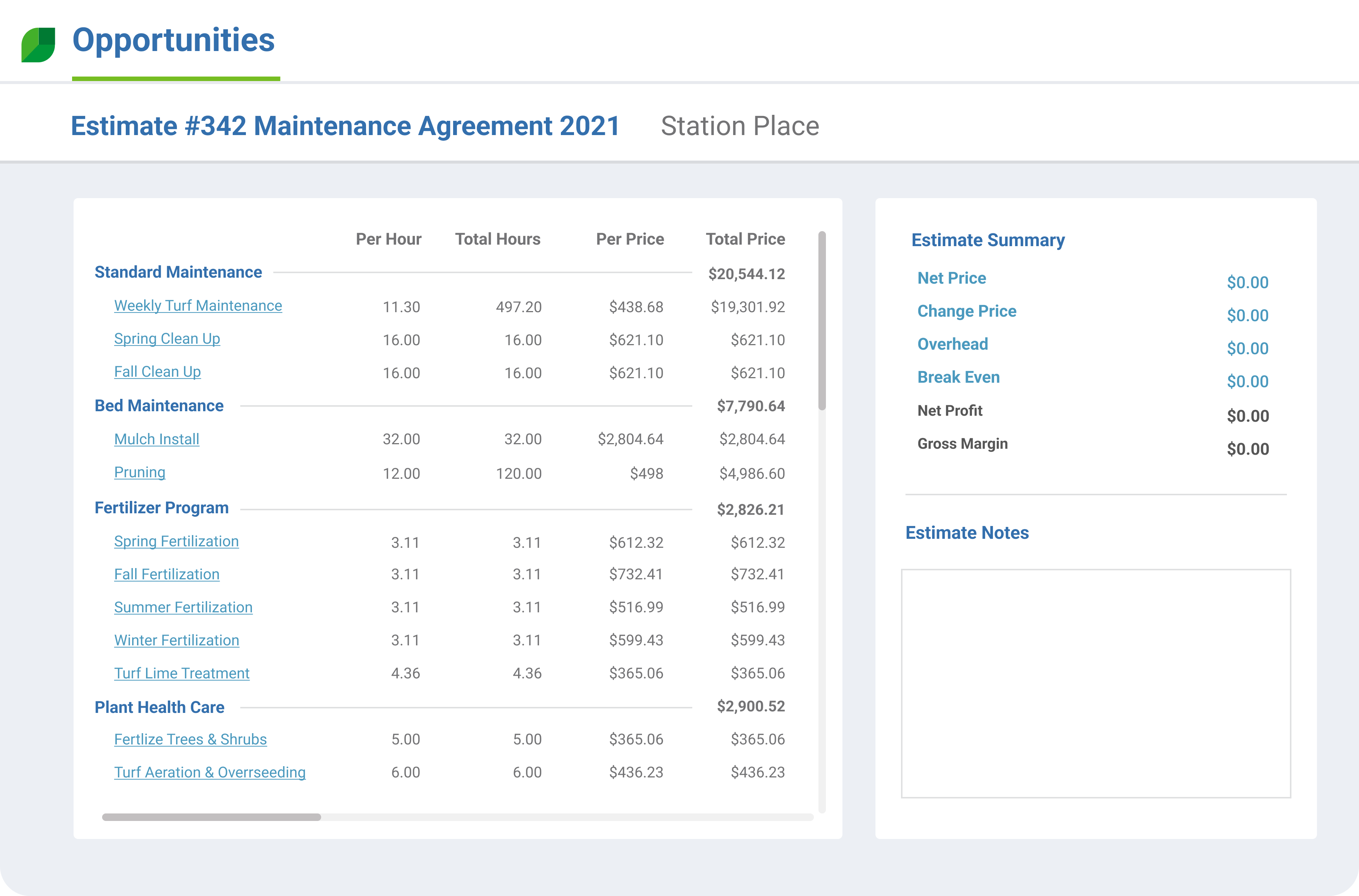
Consistent estimation signals operational discipline to buyers.
Customer relationship management
Aspire’s CRM centralizes customer information, such as service records, proposals, and renewals, making it easy to show buyers contract terms, renewal patterns, and customer concentration.
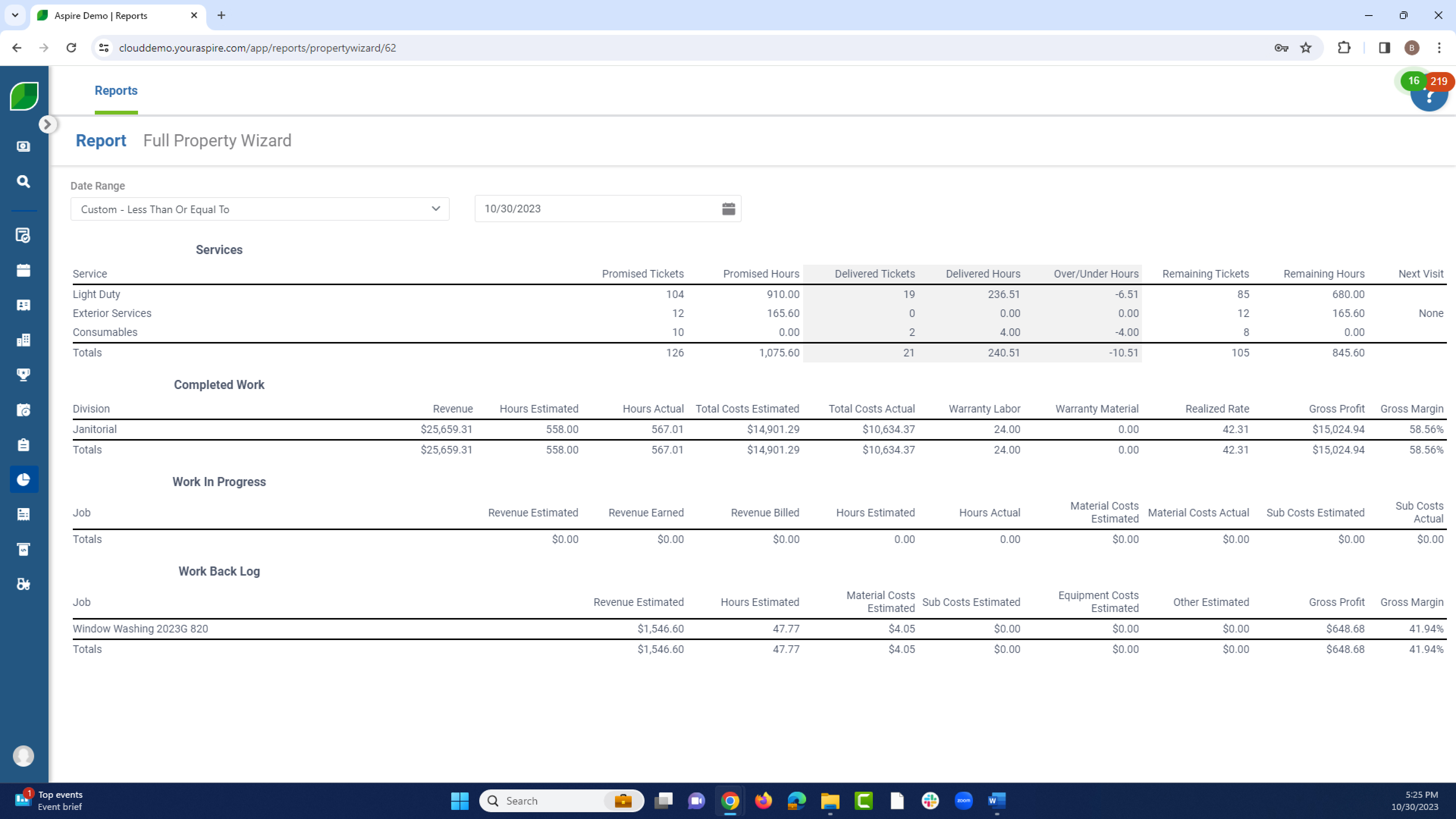
Because client mix, renewal rate, and route density attract buyers, access to information like this helps buyers assess profitability and revenue durability.
These systems don’t just make landscaping businesses easier to run; they equip owners with the resources to improve the company’s value and make selling easier.
J. T. Price’s Landscape Workshop, a full-service commercial grounds management company, for example, uses Aspire to standardize processes, streamline workflows, integrate new acquisitions, and provide real-time insights across its growing business.
Here’s how Price describes the company’s experience with Aspire:
“Aspire has played an important role in helping us build a disciplined and scalable operating platform as we’ve grown.
Our performance culture is rooted in accountability and execution, and having the right systems in place serves as a critical operational foundation that allows us to maintain visibility across our business while continuing to expand.”
Want to see how it can streamline your landscaping operations and help you get ready for expansion or purchase?










 866-727-7473
 Schedule Demo
 390 S Woods Mill Rd #300 Chesterfield, MO 63017


