Table of Contents
Table of Contents
- Do you need a license to start a landscaping business in Georgia?
- What are the types of landscaping business licenses & permits in Georgia?
- Step-by-step process to get a landscaping business license in Georgia
- How much does a Georgia landscaping business license cost?
- What are the most common mistakes to avoid when getting a license?
- How Aspire helps landscaping businesses stay organized & compliant
- Over to you
- Disclaimer
Mild climates, coastal neighborhoods, and greenery are just some of the reasons why Georgia is a good place for landscaping businesses.
Its growing population may lead to high demand for lawn care services such as yard design, exterior renovation, maintenance, and plant care.
All music to the ears of an aspiring landscaper in the state. But before you start advertising your services, it’s important to know Georgia's licensing process to avoid fines or other penalties.
So, what kind of permits would you need to start a landscaping business in this state?
Find out in this guide.
Do you need a license to start a landscaping business in Georgia?
Yes, a business license is required to operate a landscaping company in Georgia.
Although there isn’t one specific statewide landscape permit, you have to register your business with the Secretary of State and the city where you’ll be operating.
Plus, depending on the specific landscaping services you intend to offer, your business will require certain licenses.
For instance, if you plan to take on projects such as hardscaping, irrigation system installation, or pesticide application, you will need separate permits for each.
The next section outlines the different licenses your landscaping business needs to operate in Georgia.
What are the types of landscaping business licenses & permits in Georgia?
To launch a landscaping company in Georgia, your business will require the following:
Business license
Your landscaping business must be registered with the Secretary of State to operate in Georgia.
After that, a business permit from your city of operation is also required. And if you plan to expand the business to other counties in the state, you may need business licenses from each of them.
So, confirm with the different municipal license offices whether a business permit will be needed.
Nursery dealer license
Want to purchase and distribute plant materials?
You need a nursery dealer permit from the Department of Agriculture. This ensures all plants in the state are disease- and pest-free at the time of installation.
If you intend to grow your own plant materials for commercial purposes, a grower permit is also required.
Pesticide applicator license
If your business will apply pesticides on client properties, you must have a commercial pesticide contractor license and a certified commercial pesticide applicator.
The contractor permit provides legal grounds for your landscaping company to perform such services, while the applicator license is required for the individual who will apply the pesticide.
Contractor’s license
You need this permit to execute hardscape installation projects for residential and commercial clients in the state.
It has two main categories:
An individual contractor license, if you run a sole proprietorship.
A qualifying agent permit for a business organization, e.g., LLC, joint venture, or a corporation. The agent is a person affiliated with the business by ownership or employment who wants to engage in contracting under the business’s name. So, it can be you, the owner.
Low-voltage electrician’s license
In Georgia, this license is required for installing irrigation systems and low-voltage lighting on client properties.
It’s issued by the Secretary of State and requires contractors to pass a written test.
Commercial driver’s license
You may need a commercial driver’s license if you own:
Vehicles weighing 26,001 lb or more.
Single vehicle with a gross weight of 26,001 lb or more.
Single vehicle that can transport over 15 persons with the driver.
A vehicle of any size that requires hazardous material placards.
Step-by-step process to get a landscaping business license in Georgia
To get the different permits mentioned above, here’s what you need to do:
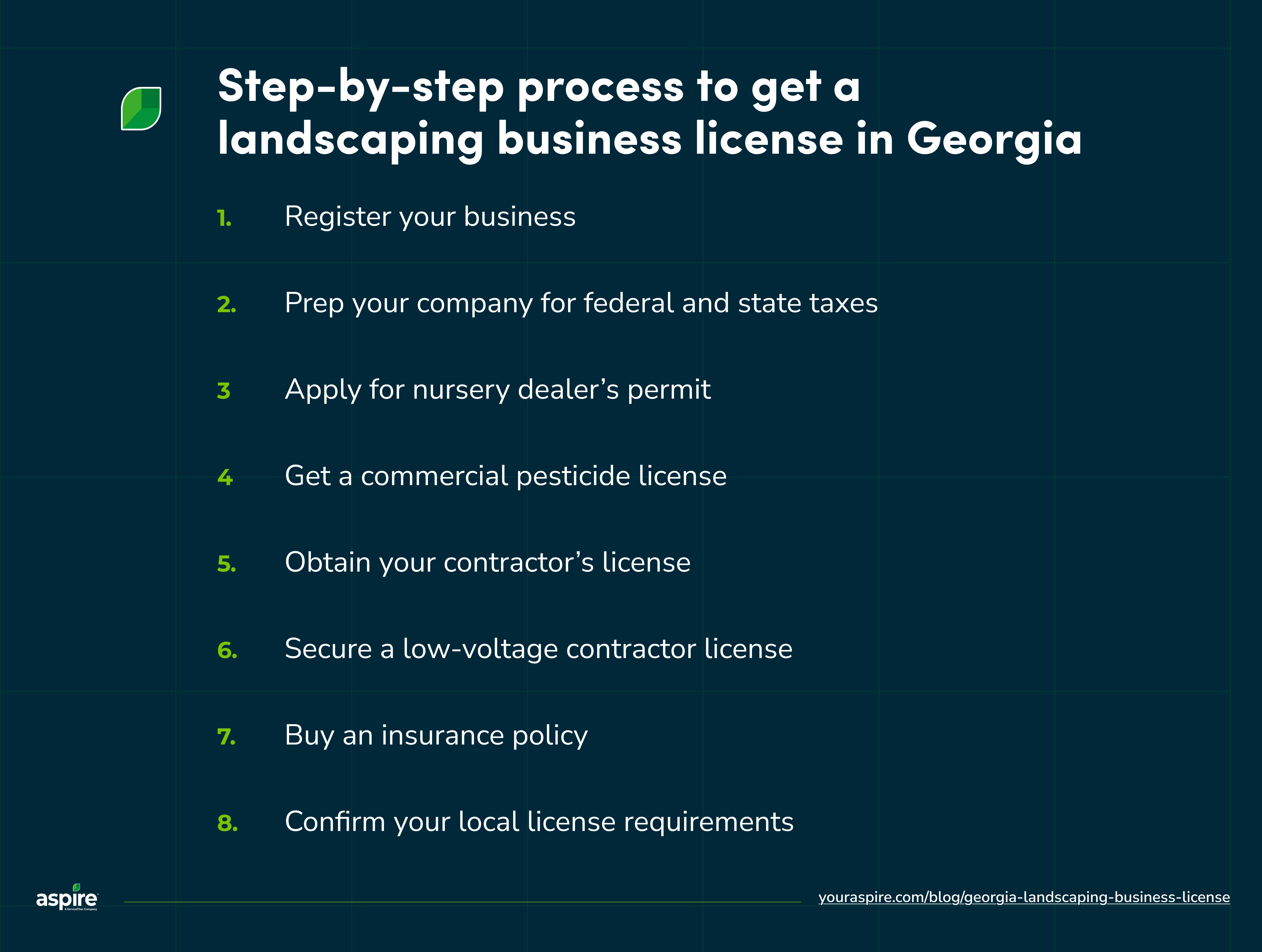
1. Register your business
The first step to getting your business off the ground is to register it as a domestic entity with the Secretary of State.
To do that, choose the ideal legal structure for your business: a sole proprietorship, a limited liability company, or a corporation.
Sole proprietors must register for business-related taxes through the Georgia Tax Center platform. Here are the requirements you’ll need:
Social Security number (SSN)
Recent federal adjusted gross income (FAGI)
An NAICS code for the registration. You can look up your NAICS code here.
For LLCs or corporations, you can register online or mail the required forms. Here’s how to register your business online:
Go to the Secretary of State’s online services page and create a new user account.
Select ‘create or register a business.’ Then, proceed to create a new domestic business and choose "Domestic Limited Liability Company."
Fill out the required business information and pay the $110 fee ($100 filing fee + $10 service charge).
Filings are generally processed in seven business days, but you can speed up the process by paying additional fees.
Once the filing is reviewed and approved, you’ll be issued a certificate of organization for your business entity.
2. Prep your company for federal and state taxes
All businesses need a tax ID or employer identification number (EIN) from the IRS, as it allows the federal government to identify your organization.
Getting the EIN allows you to open a bank account for the business, employ staff, and pay taxes.
To apply for the tax ID, log on to the IRS website and follow the on-screen instructions to complete an application.
In addition, Georgia requires businesses that employ workers to register for withholding, sales, and use tax if they offer tangible goods like nursery stock.
3. Apply for a nursery dealer’s permit
This is also known as a live plant license, and it is required if you intend to grow, buy, or sell plants in the state.
To obtain this permit, you need to complete an application via the Kelly Registration System.
Once that’s done, it’ll be reviewed by the department for approval. If it’s approved, you’ll get an email to verify your citizen/immigration status.
Thereafter, you will receive another email with details on how to pay the license fee ($75). After payment, wait for 1-7 working days for the license certificate or log in to the Kelly Registration System to print it out.
4. Get a commercial pesticide license
In Georgia, a commercial applicator license and a pesticide contractor license are required to provide pesticide applications to a client’s property in exchange for a fee.
The commercial applicator license is used to purchase, use, or supervise the use of restricted pesticides on one’s property or one's employer’s property.
A pesticide contractor license is for a company (like yours) that offers pesticide application services.
To apply for a pesticide contractor license:
Complete an application via the Kelly Registration System.
Wait for it to be reviewed by the department for approval.
Once approved, confirm your citizen/immigration status.
Wait for an email to pay the license fee ($55).
Receive the license certificate within 1-7 business days.
For commercial applicators, register and take an exam through Georgia Technical Colleges. You must score at least 70% to pass, and the exam costs $45. After passing, mail a $90 check or money order payable to the Georgia Department of Agriculture. If all documents and test results are accurate, expect to receive your license within two weeks.
5. Obtain your contractor’s license
You’ll need a contractor license for hardscape installation projects. Here’s how to get one for residential or commercial jobs:
Go to the GOALS system (Georgia Online Application and Licensing System) and create an account if you don't already have one.
Pick a license type that suits the clients you’d be serving: residential or commercial.
Select your preferred license type in GOALS, follow the application flow to complete the required fields, and submit the necessary documentation.
Write and pass the examination for either license type.
Submit your application, pay the required fee (typically $200), and wait for it to be reviewed.
Respond to requests for additional information and wait for an email regarding the outcome.
6. Secure a low-voltage contractor license
This permit is required to install irrigation systems for clients and low-voltage lighting. Perhaps that’s why it’s called a low-voltage contractor license.
To get licensed:
Log in to the GOALS system.
Select the license type (low voltage general application) you want to apply for.
Provide the necessary documentation:
Background check data from a local law enforcement agency
Disciplinary action/sanctions (court documents and letter of explanation)
Work experience
Three references
Secure & verifiable document: Affidavit of citizenship or immigration documents
Schedule exams once your application has been approved.
Complete the application process and submit the $100 fee.
7. Buy an insurance policy
Since you’ll be working on people’s property and hiring staff for your landscaping business, you really need insurance policies such as general liability and workers’ compensation.
It's a smart way to protect your clients, employees, and business. In fact, workers’ compensation is required by Georgia law if you hire more than three workers.
So, research affordable options in your city, request quotes, and compare options to buy a policy with the best coverage options for your needs.
8. Confirm your local license requirements
Besides state-level permits, different cities in Georgia have their own specific requirements.
Atlanta and Macon, for example, require businesses operating within their city limits to have occupational tax certificates.
In Columbus, a business license is required to run a company.
As such, you need to check with the permits and licensing or business office in your city to confirm what is needed.
How much does a Georgia landscaping business license cost?
Registering your business and getting the necessary permits in the Peach State costs money. Here’s a projected breakdown of the fees so you can plan accordingly:
Business registration fees
Filing fees
LLC and corporations: $110
Processing in two business days: $120
Same-day processing: $275
Renewal fees
LLC and corporations: $60
Nursery dealer’s permit (Live plant license)
Application fee: $75
Annual renewal: $75
Commercial pesticide license
Pesticide contractor
Application fee: $55
Renewal fees: $55
Commercial applicator
Exam fee: $45
Licensing fee: $90, valid for five years
Contractor’s license
Residential and commercial contractors (Qualifying agent)
Application fee: $200
Examination fee: $200
Renewal: $100
Low-voltage contractor license
Application/examination fee: $100
Renewal fees: $100
Besides these fees, keep in mind the cost of buying insurance and getting a local business license in your city of operation.
What are the most common mistakes to avoid when getting a license?
Building a landscaping business from scratch can be stressful, and knowing just what to avoid makes the process significantly easier.
So, as you dot the i’s and cross the t’s, make sure to avoid these pitfalls.
1. Ignoring local regulations
While several permits are required at the state level, it’s crucial to visit the municipality’s website or licensing office for a rundown of the requirements.
Assuming your business only needs state licenses may put you at risk with the city government—fines, penalties, or even being shut down.
Always think about the state and city first.
2. Confusing pesticide permit rules
Pesticide licensing has two requirements that work together:
Applicator license: You (or your qualifying agent) must get this first
Contractor license: Your business needs this to legally take on pesticide projects
You can't get the contractor license without the applicator license, and having only the applicator license doesn't allow your business to operate. You need both.
3. Forgetting about insurance
When you have a lot of permits to secure, the need to protect the business or to comply with laws requiring you to provide insurance for employees can fall through the cracks.
That’s a big mistake, as operating without one exposes you to legal disputes from clients and employees—accidents, property damage, or workers’ injuries.
When that happens, your entire savings could be wiped out or, worse, force you to shut down the business.
General liability or workers’ compensation insurance shouldn’t be an afterthought; it’s essential for protecting your personal assets and business.
How Aspire helps landscaping businesses stay organized & compliant
Imagine that your new landscaping business is taking off: prospects are reaching out, new projects are in the pipeline, and crews are stretched thin.
But this growth creates a new problem. If there are no proper systems in place, operations become disorganized, preventing you from scaling the business.
Since everyone has a lot to do, field staff are being assigned to the wrong site, prospects aren’t being nurtured into customers, and tracking multiple projects is almost impossible.
That’s where Aspire comes in. It offers several features to automate processes, making it easy to stay organized and grow the company.
Here’s a brief overview of how Aspire helps streamline operations:
Contract & proposal management
Picture this: You have multiple prospects to send proposals to, and creating them from scratch is a lot of work. You don’t even have the time to do that.
With Aspire’s estimating feature, you can create professional proposals for clients in minutes.
Here, you pick a template, add the specific service to be offered, and include preset labor and material costs. The format to follow is there, so your job is to fill in the template based on the specific project.
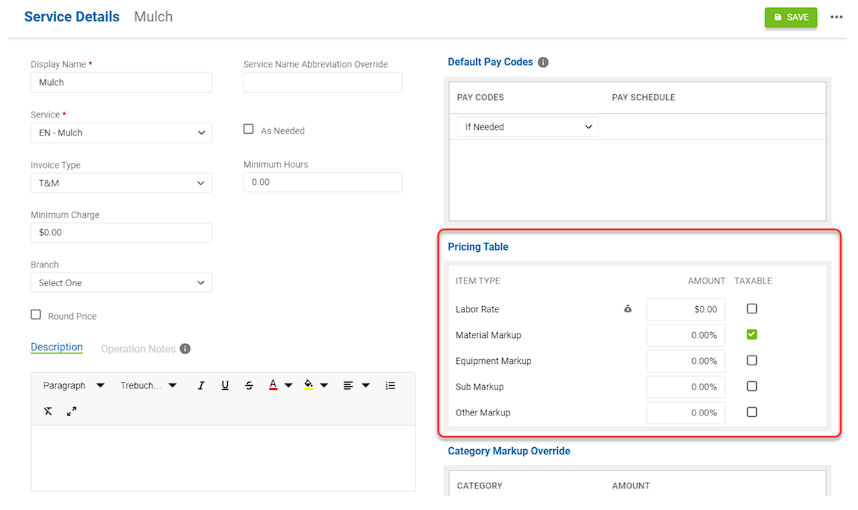
Another good thing about this feature is that it ensures your proposals are always profitable. How? By allowing you to define profitable margins and markups for labor, materials, and overhead, and automatically apply them to the proposal.
The proposal can then be shared with the prospect through email or Aspire’s customer portal.
Invoicing & payment processing
Let’s assume you got the project and have completed it. Now, it’s time to send an invoice and get paid, but there are other projects on the horizon.
Aspire can help you generate an invoice for that project quickly.
Instead of building from scratch, it helps you create an invoice by pulling data from the proposal, so you can add other details like date, invoice number, and client before sending it across.
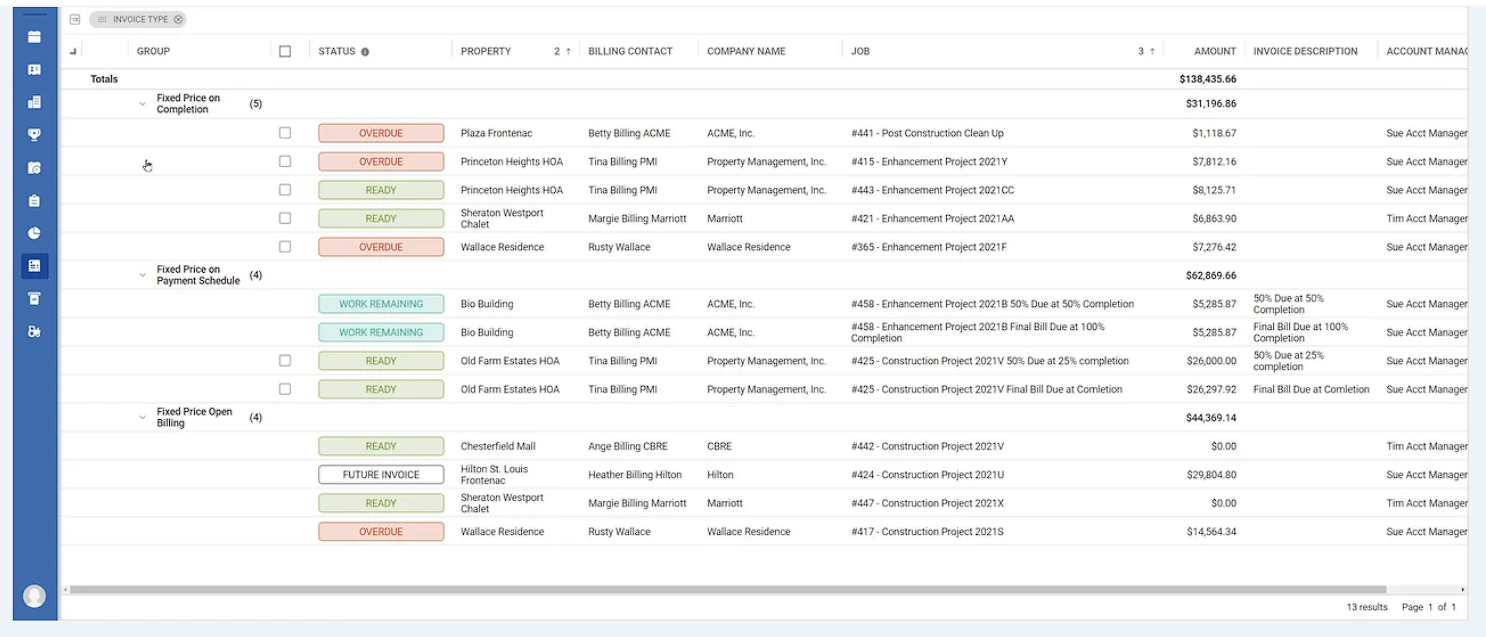
Besides creating and sending invoices, you can:
Track an invoice’s status on Aspire to determine whether it's been paid, pending, or overdue.
Receive payment from clients with credit cards, debit cards, or cheques.
Manage your business’s finances thanks to Aspire’s integration with QuickBooks.
Business reporting & documentation
Need to see project performance across multiple sites?
Aspire’s reporting feature gives you insights into everything that goes on in the business, not just project sites.
The system enables field and office crews to share updates in the app. Field staff can report equipment breakdowns, incidents, time spent on a project, and materials used.
Office workers, on the other hand, can record estimated project costs, materials supplied, or the number of spare parts purchased.
With all of this information stored in a central location, it’s easy for Aspire to help you pull up useful data when needed.
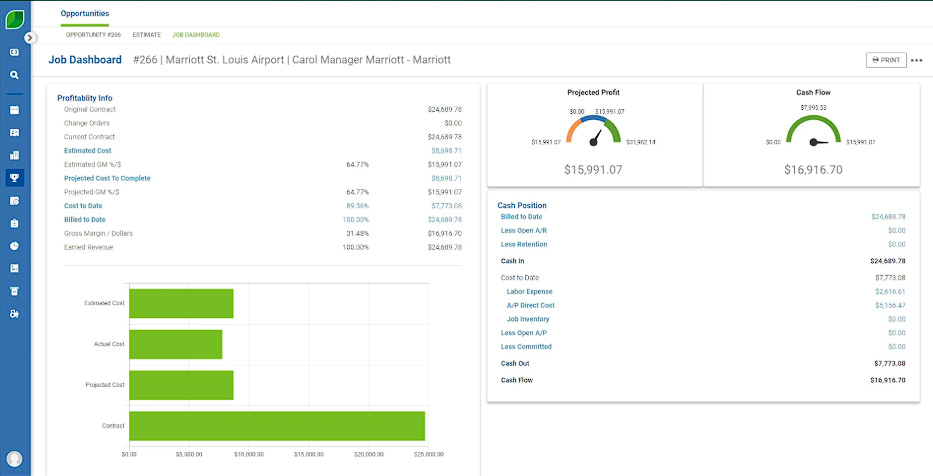
You have access to various metrics, such as client retention rate, employee productivity, cash inflows and outflows, projected profit, and direct costs. Plus, you can monitor key information to make effective decisions.
Scheduling & job management
With Aspire, you can ensure the crew isn’t overbooked and stretched beyond their capacity.
Aspire’s scheduling feature enables you to organize, schedule, and assign projects the moment they’re won.
It provides a digital calendar so you can clearly see free periods over the next few days or weeks before scheduling a job. This way, you can give clients an accurate timeline without overloading the crew.
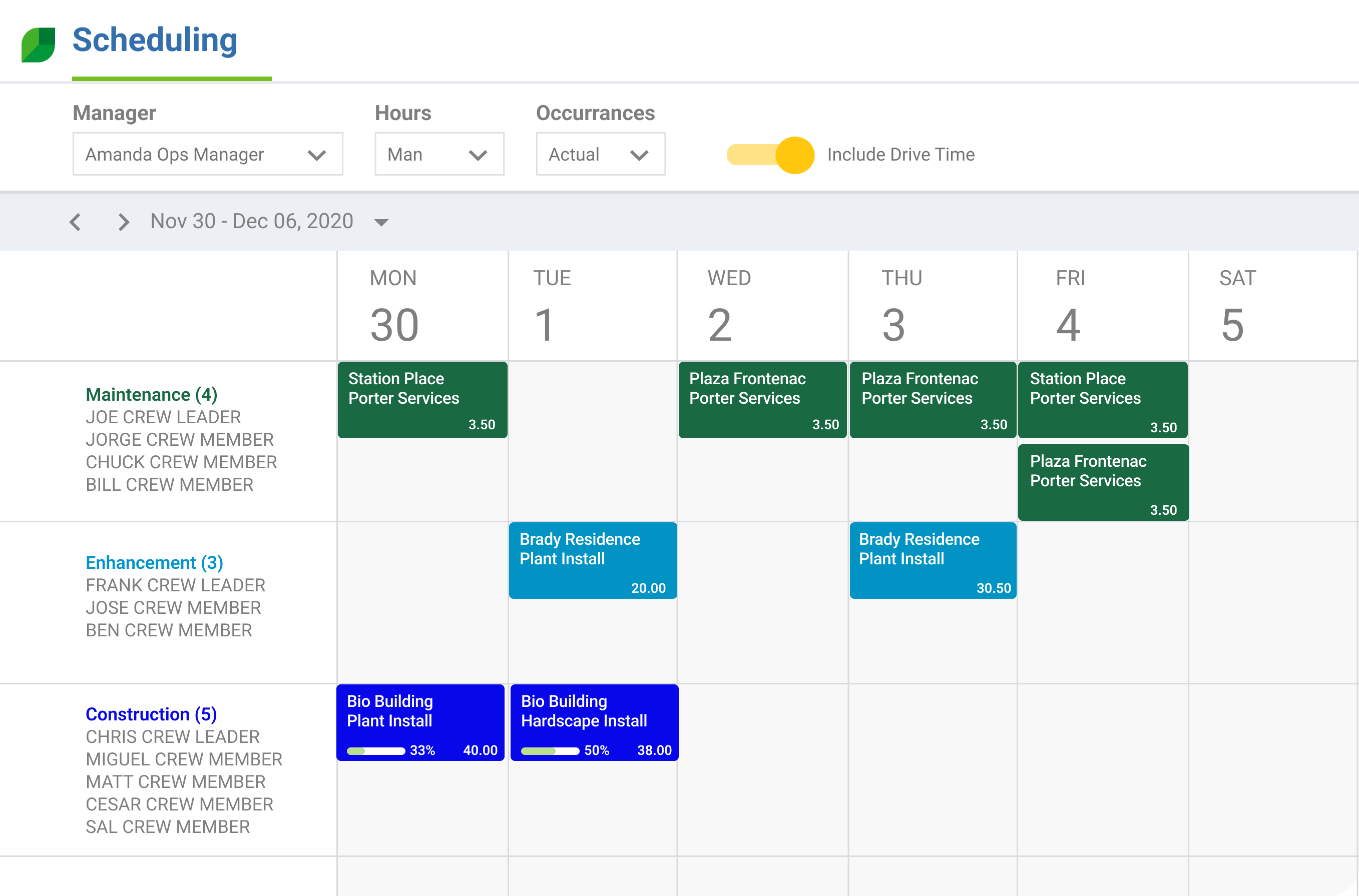
With Aspire’s scheduling tool, you can also:
Add details for each project.
Provide checklists for how jobs should be done.
Optimize routes to help crews reduce drive time.
Over to you
You’re about to embark on an exciting entrepreneurial journey, and this guide outlines what you need to prepare.
To ensure a smooth ride down the line, investing in a tool like Aspire will do your company a world of good.
It can keep the business organized, help save time, ensure professionalism, and streamline operations so you can scale comfortably.
Aspire enables you to build and send proposals in minutes, rather than starting from scratch. Send automated emails to prospects until they become clients and monitor project costs to maintain profitability.
Curious about how it does all that?
Book a demo with Aspire today.
Disclaimer
This article is for informational purposes only and should not be considered legal or financial advice. While every care was taken to use official sources, you should always verify requirements on Georgia’s government websites.









 866-727-7473
 Schedule Demo
 390 S Woods Mill Rd #300 Chesterfield, MO 63017


