Table of Contents
Table of Contents
- Do you need a license to start a landscaping business in Wyoming?
- What are the types of landscaping business licenses & permits in Wyoming?
- Step-by-step process to get a landscaping business license in Wyoming
- How much does a Wyoming landscaping business license cost?
- What are the most common mistakes to avoid when getting a license?
- How Aspire helps landscaping businesses stay organized & compliant
- Over to you
- Disclaimer
Looking up Wyoming landscaping business license requirements raises more questions than answers.
Without a single statewide license requirement, your specific location and the services you offer determine what you actually need.
This guide helps you sort out local requirements, specialty licenses, and state registrations so you can get your business up and running without delay.
Do you need a license to start a landscaping business in Wyoming?
No, Wyoming doesn't require a statewide landscaping business license.
However, if you want to start a landscaping business in Gillette City, you need a local license.
You also need separate state licenses and certifications for specialized landscaping services such as pesticide application or nursery stock sale.
Your next steps depend on the type of work you plan to do and where you plan to do it.
What are the types of landscaping business licenses & permits in Wyoming?
Wyoming keeps landscaping licensing fairly simple, but some services and cities come with extra requirements.
Class C Specialty Contractor License (Gillette only)
Gillette follows different rules than the rest of Wyoming.
Any business offering general landscaping, sprinkler system installation, fencing, or tree trimming in the city needs a Class C Specialty Contractor License.
The requirement applies to every job, big or small.
One license covers the whole business; your employees work under your contractor license, so they don't need their own.
Lawn Sprinkler Contractor License (Laramie only)
If you plan to install irrigation systems in Laramie, you need a Lawn Sprinkler Contractor License.
This regulation covers both residential and commercial irrigation projects.
Every license holder also needs someone who holds a City of Laramie Master or Supervisor Certificate of Qualification. That person oversees the installation work and serves as the city's main point of contact throughout the project.
Commercial Pesticide Applicator License
You need a Commercial Pesticide Applicator License to offer weed control or any other pesticide application services.
This statewide license covers anyone who buys, uses, or supervises the application of restricted-use pesticides.
The Wyoming Department of Agriculture manages the licensing program under the rules set by the U.S. Environmental Protection Agency (EPA).
Nursery Stock License
Planting trees and shrubs is one thing. Selling them is another.
A Nursery Stock License is required if your business sells or distributes nursery stock in Wyoming.
Your nursery stock must also pass state inspections to ensure it’s free of harmful insects and plant diseases.
Landscape Architect License
You only need a Landscape Architect License if you design outdoor spaces instead of simply building or maintaining them.
This license lets you create detailed landscaping plans that include grading, drainage, accessibility, stormwater management, and other site improvements.
Just keep in mind that the Wyoming Board of Architects and Landscape Architects (WBALA) licenses individuals, not businesses.
Local permits
Basic lawn care and general landscaping services rarely need local permits, but bigger projects do.
For example, Cheyenne requires permits for certain earth-moving work and irrigation utility connections. The City of Cheyenne Department of Building Permitting & Licensing and the Cheyenne Board of Public Utilities oversee those approvals.
Cody follows a similar approach. The City of Cody Building Division and the Community Development Department have to review and approve major excavations, structural hardscaping, and public right-of-way work.
Always check your local jurisdiction's requirements before breaking ground on a new project.
Out-of-state licenses
Crossing state lines brings a new set of landscaping business license requirements.
While most neighboring states follow rules similar to Wyoming's, this doesn’t apply everywhere. For instance, you do need a landscaping business license in Utah.
Always review a state’s licensing and business registration rules before expanding.
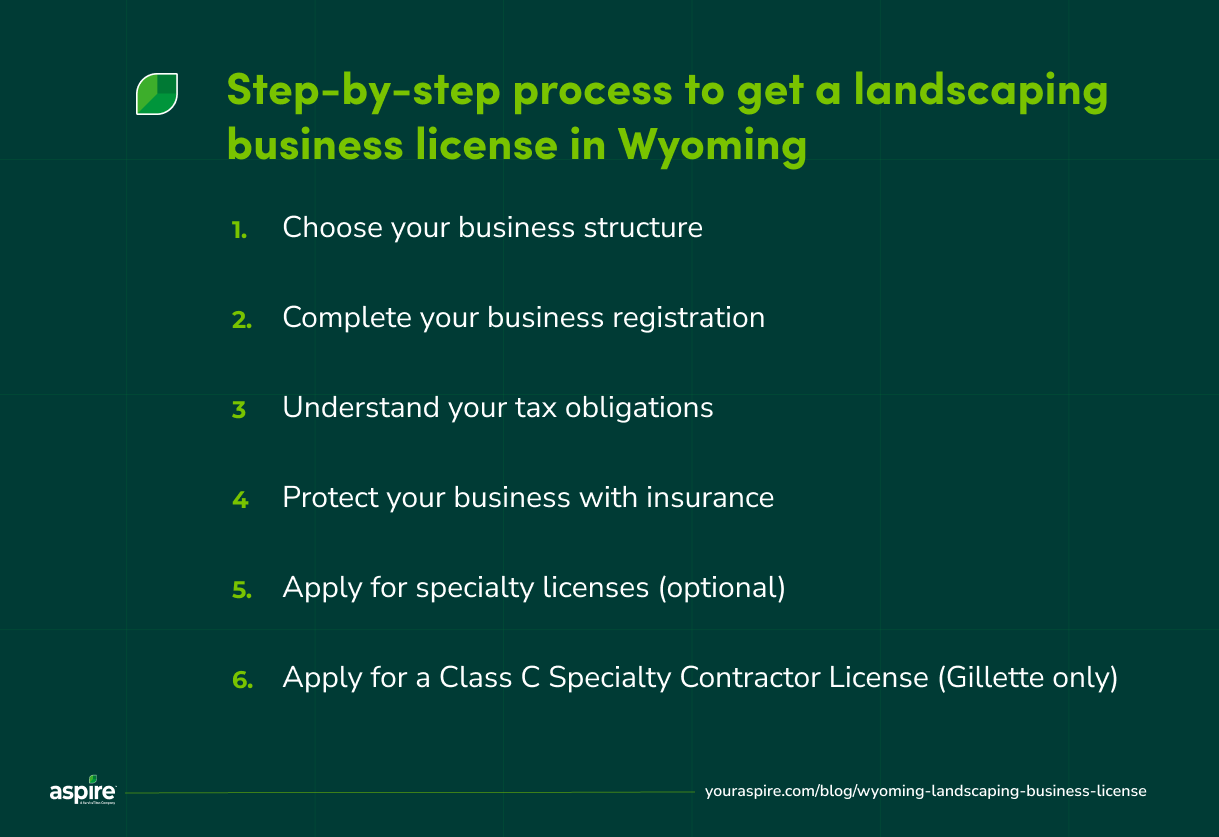
Step-by-step process to get a landscaping business license in Wyoming
Wyoming skips the statewide landscaping license, but your business still needs a few registrations, approvals, and protections before opening its doors.
Here are the major steps to put it all together.
1. Choose your business structure
Your business structure affects taxes, liability, and day-to-day operations, so don’t rush this decision.
Wyoming landscaping businesses can typically start as:
A sole proprietorship that keeps things simple. You don’t have to file any paperwork unless you want to operate under a trade name. Since you run the business as an individual, you keep all the profits but also take full responsibility for any debts or lawsuits.
A limited liability company (LLC) that gives your business its own legal identity. Your personal assets stay separate as your landscaping business grows and liability increases. However, forming an LLC requires state registration, additional paperwork, and filing fees.
Explore the pros and cons of each option in Aspire's guide to choosing the right legal structure for your landscaping business.
2. Complete your business registration
Choose a company name and check its availability through the Wyoming Secretary of State's business search tool. A proper name search helps you avoid extra paperwork and fees later.
Next, appoint a registered agent with a physical address in Wyoming. Every business entity needs one to receive legal notices and official state correspondence.
Complete your business registration by filing your documents online with the Wyoming Secretary of State's Business Division.
Once your company is active, don't forget to submit the mandatory annual reports to keep your business in good standing.
3. Understand your tax obligations
Apply for an employer identification number (EIN) with the Internal Revenue Service (IRS) before adding anyone to your payroll.
You need an EIN to pay employees, file federal taxes, and keep your business finances separate from your personal accounts.
Wyoming treats landscaping contractors as the end users of the materials they install. You pay sales tax when buying plants, mulch, gravel, irrigation parts, and other materials instead of charging it to your customers later.
If you want to sell those materials without installation, you need to apply for a Sales and Use Tax License with the Wyoming Excise Tax Division.
Double-check your tax obligations with the Wyoming Department of Revenue before setting your landscaping business pricing.
4. Protect your business with insurance
Insurance protects everything you’ve worked to build.
Buy general liability insurance before taking on your first job. Wyoming doesn't require it by law, but many commercial customers do. It covers property damage, customer injuries, and legal claims arising from your work.
Get workers' compensation insurance before adding crew members to your payroll. Wyoming requires most employers to carry this coverage, so it’s not optional. Purchase it through the Wyoming Department of Workforce Services Workers' Compensation Division.
5. Apply for specialty licenses (optional)
Only complete the steps that match the services you plan to offer:
Apply for a Lawn Sprinkler Contractor License through the City of Laramie Code Administration Division. Pay the required fee and submit the application, a notarized Verification of Experience form, proof of general liability coverage, and a Wyoming Workers' Compensation Certificate of Good Standing.
Get your Commercial Pesticide Applicator License by passing the required exams at an approved testing location. Training is available online, but it’s not required. Renew your license every two years through continuing education, the Casper recertification school, or another round of exams.
Submit your Nursery Stock License application to the Wyoming Department of Agriculture. Inspectors examine your nursery stock before issuing a license. If they find pests or plant diseases, fix those issues before the follow-up inspection.
Apply for a Landscape Architect License only after completing an accredited landscape architecture program and passing the Landscape Architect Registration Examination (LARE). Submit your application, proof of lawful presence, and your CLARB (Council of Landscape Architectural Registration Boards) record to the WBALA.
6. Apply for a Class C Specialty Contractor License (Gillette only)
Gillette asks for a little more paperwork than the rest of Wyoming.
File your Class C Specialty Contractor License application with the City of Gillette Building Inspection Division.
Include proof of your Wyoming business registration, workers' compensation insurance, general liability insurance, a minimum $5,000 surety bond, and a letter confirming your business is in good financial standing.
The license stays active for one year. Mark your renewal date on the calendar because the city expects you to renew it before it expires.
How much does a Wyoming landscaping business license cost?
Since Wyoming doesn’t require a statewide landscaping license, you pay a $75 Class C Specialty Contractor License fee if you want to operate in Gillette City.
However, you still need to pay the $100 Wyoming LLC registration fee unless you choose a sole proprietorship, which is free.
Any additional costs depend on the specialized landscaping services you want to offer:
Lawn Sprinkler Contractor License (Laramie): $150 first-time license fee and $20 renewal fee.
Commercial Pesticide Applicator License: $25 licensing fee, plus $25 for renewal.
Nursery Stock License: $25 license and renewal fee.
What are the most common mistakes to avoid when getting a license?
Wyoming keeps licensing simple, but overlooking local or specialty requirements can become a costly mistake.
Performing landscaping work in Gillette without a Class C Specialty Contractor License is a misdemeanor. The city will fine you up to $750, and each day you continue working counts as a separate violation.
Installing irrigation systems in Laramie without a Lawn Sprinkler Contractor License brings your project to a halt. The city can issue a Stop Work Order and impose fines ranging from $250 to $750.
Selling nursery stock without a valid license carries a fine of up to $750.
How Aspire helps landscaping businesses stay organized & compliant
Licenses and registrations get your landscaping business through the door, but day-to-day operations determine how profitable it becomes.
Growth brings more customers, crews, and moving parts. Losing track of just one slows everything down and eats into your margins.
Aspire's Landscape Business Software keeps everything organized in one place, from the first estimate to the final payment.
You always know what's happening across your business and where to focus your attention.
Contract & proposal management
Aspire turns every lead into an Opportunity and gives you one dashboard to track them by customer, property, estimate, and status.
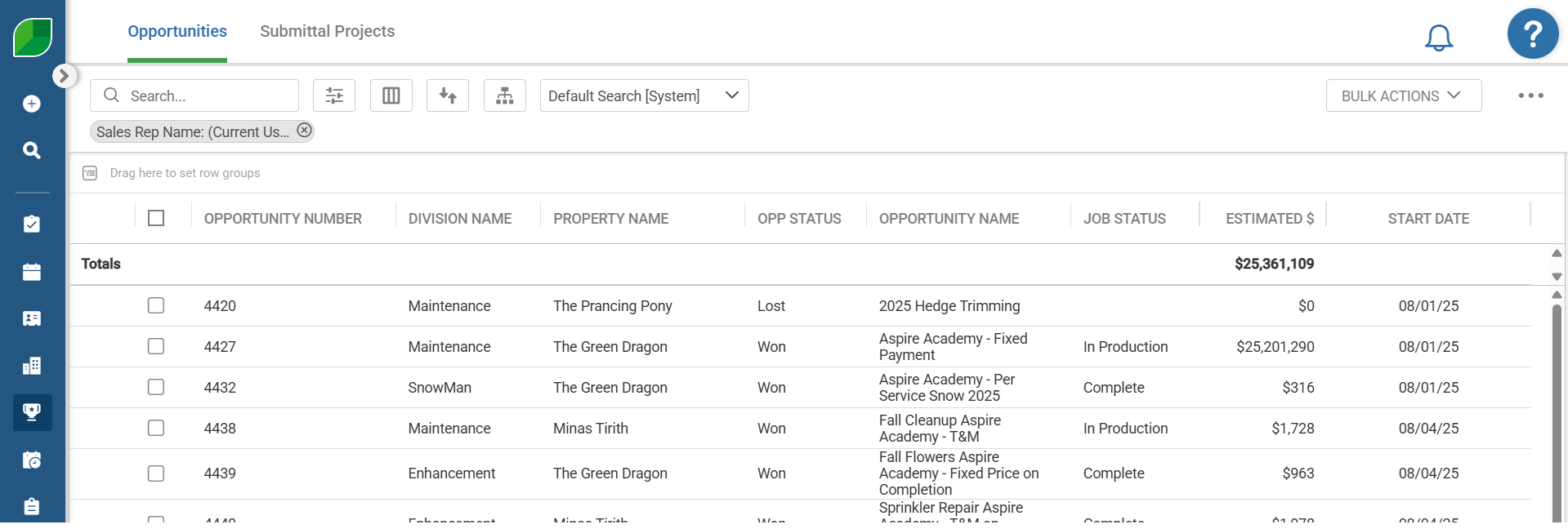
Open opportunities never sit unnoticed, so you can follow up before leads go cold.
Creating proposals is much faster, too. You just add the services and materials, and Aspire's Estimating Software calculates pricing from your preconfigured catalogs and kits.
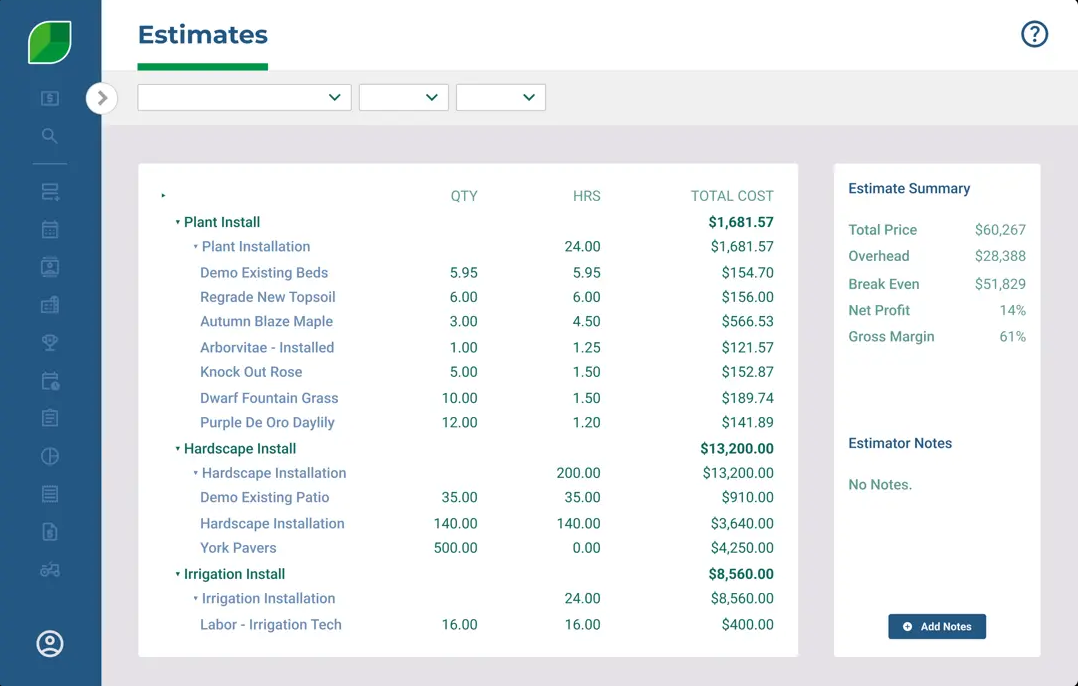
Choose a standard or custom proposal layout that fits the job and send it to your customer without leaving Aspire.
Invoicing & payment processing
Aspire's Invoicing Software lets you invoice after every visit or bill projects in stages, depending on your client agreement.
The Invoicing Assistant acts like a second set of eyes. It highlights invoices that are ready, overdue, or missing important details to prevent payment delays.
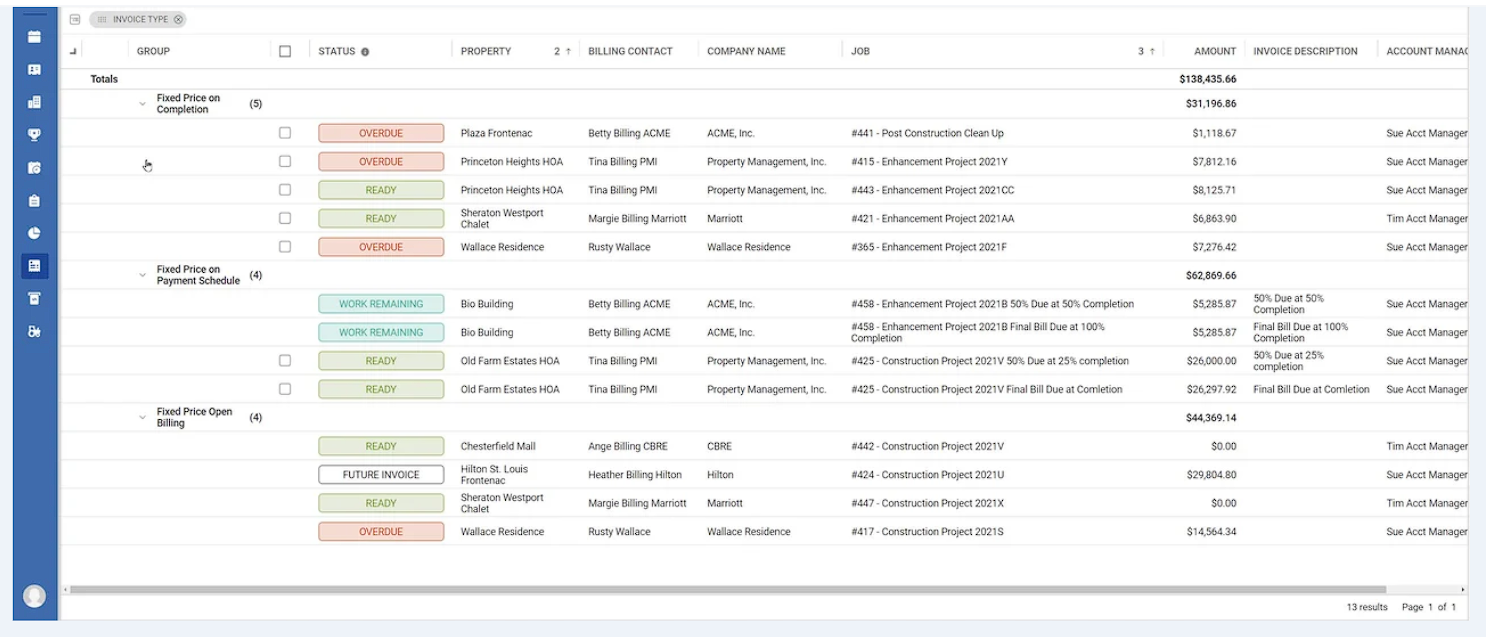
Check all invoices, then send them one by one or in batches without switching systems.
Clients can access and pay their bills through the Customer Portal, and Aspire automatically records their online payments.
Business reporting & documentation
Every completed project leaves behind useful data. Aspire's Reporting Software turns those numbers into reports that help you understand what's working and what needs improving.
Build custom reports and search lists around job costing, revenue, customer satisfaction, or crew performance to see exactly where your business stands.
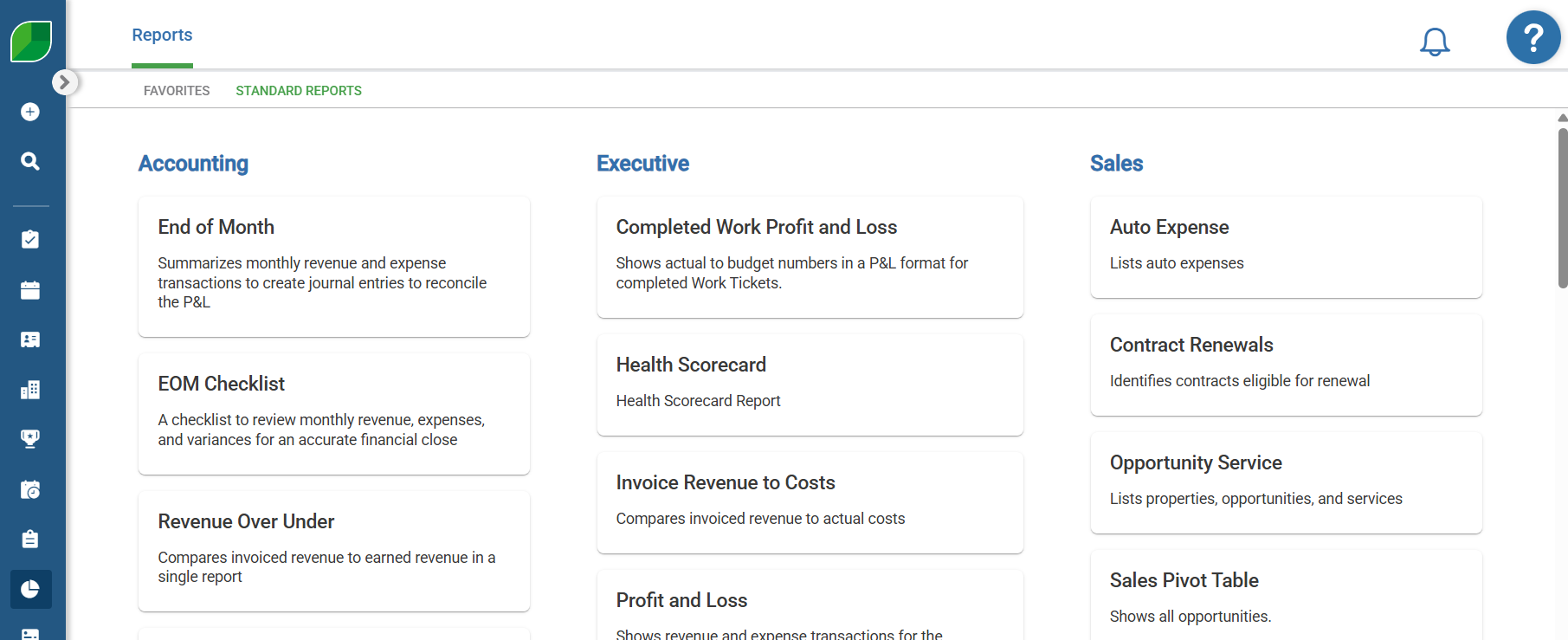
For instance, you can check initial job estimates against final costs in the Completed Work Profit and Loss report.
If a project falls short, open the Jobs dashboard to find out why. Review material costs, productivity, pricing, and other project details.
Once you know what affects profitability, you can improve future bids and daily operations.
Scheduling & job management
Signed contracts move straight into Aspire’s Scheduling Software as open Work Tickets so you don’t forget about them.
You can then drag and drop every job onto the schedule board and assign crew members.
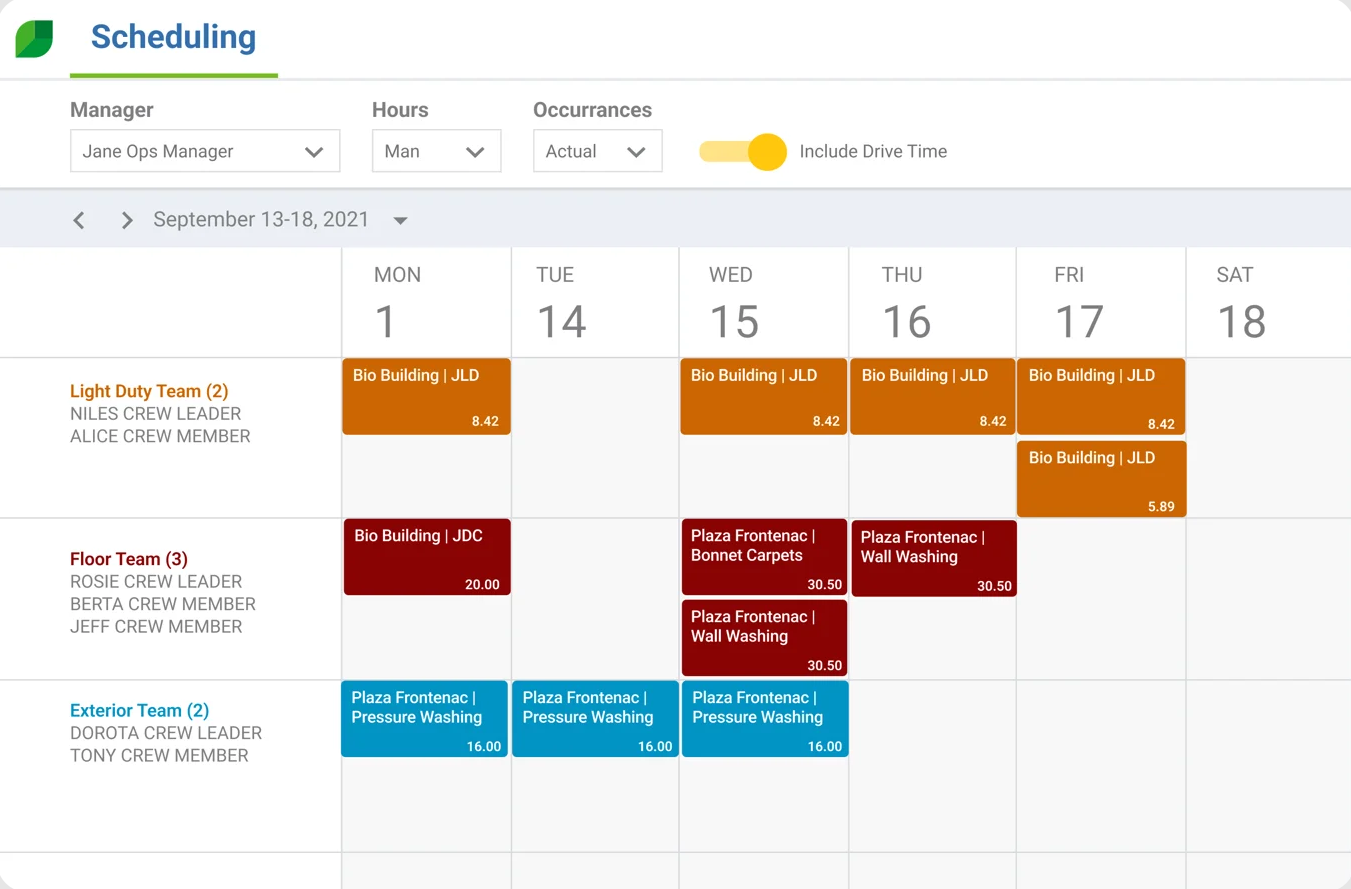
As more Work Tickets come in, switch between daily, weekly, or monthly calendar views to simplify scheduling.
You don’t need to worry about last-minute changes because Aspire's Scheduling Assistant handles them for you. It immediately finds available openings based on your routes, preferred dates, and estimated work hours.
Once you update the schedule, every change appears instantly in the crew's Mobile App. This keeps everyone on the same page before they arrive on site.
Over to you
Every successful business starts with a solid foundation.
Getting your Wyoming landscaping business licenses, registrations, and insurance in place is part of it, but it’s not the finish line.
The real work begins when customers start calling.
Aspire helps you stay organized and profitable from day one. Book a demo and see how it supports your business as it grows.
Disclaimer
This article is for informational purposes only and should not be considered legal or financial advice. While we took every care to use official sources, you should always check requirements on the Wyoming government’s websites.









 866-727-7473
 Schedule Demo
 390 S Woods Mill Rd #300 Chesterfield, MO 63017


