
Do you know if your landscape acquisition comes with tech debt? It’s the gap between the systems the M&A target actually uses and the operational infrastructure your platform requires.
The companies that price this debt into the deal structure integrate faster.
Those who discover it post-close spend six months paying it down before integration even starts.
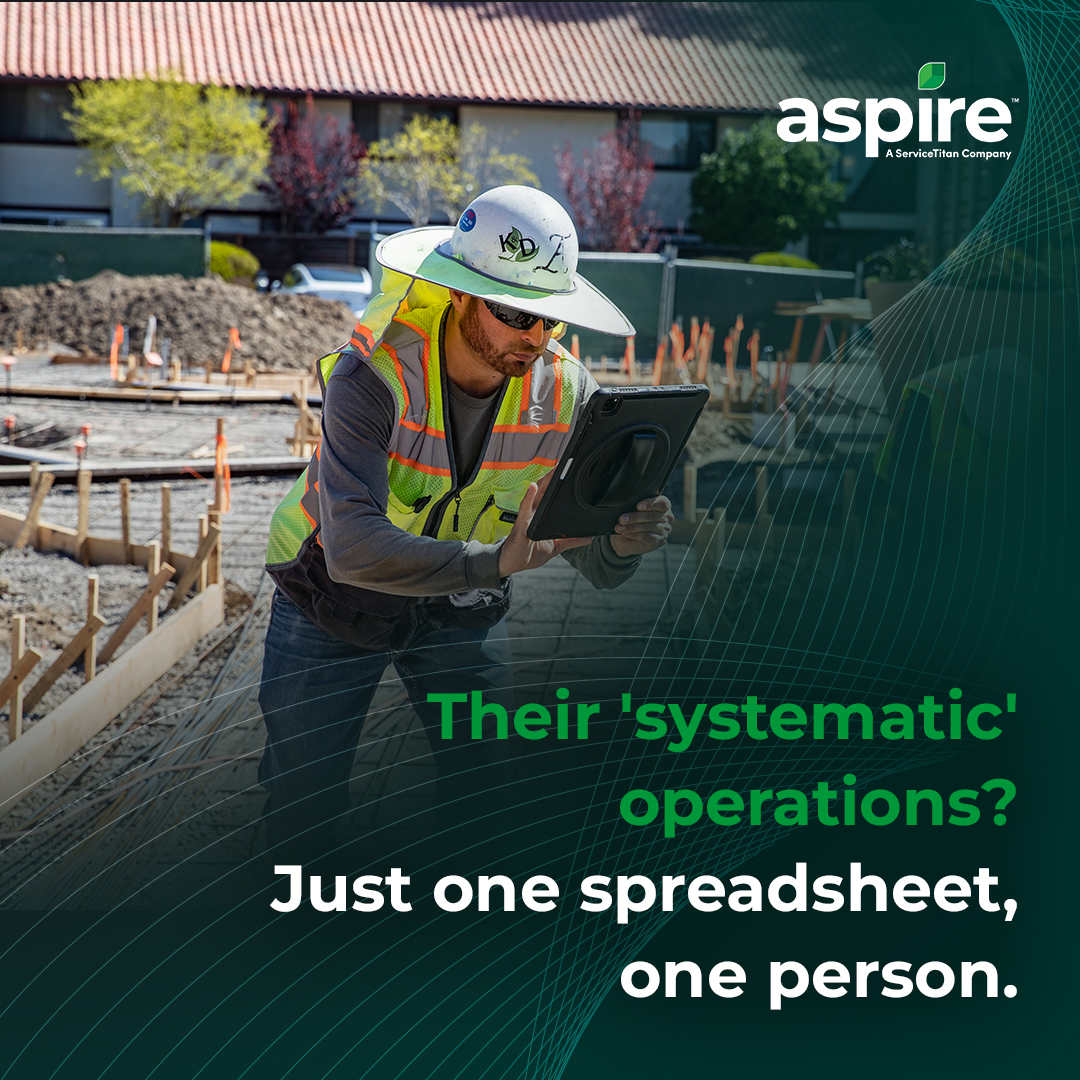
They said they had "a system." They meant a person.
During due diligence, the seller described their operations as "systematic."
They talked about established processes, reliable workflows, and operational consistency that delivered the 12% EBITDA margin you saw in the financials. The narrative painted a picture of a well-oiled machine ready to plug into your platform infrastructure.
Post-close, you discover what "systematic" actually meant.
The "system" is an office manager who manually enters time from paper sheets into QuickBooks every Friday:
Crews fill out paper timesheets in the trucks at the end of each day. Sometimes they remember. Sometimes they estimate hours from memory on Friday morning.
The office manager types those hours into QuickBooks, manually allocating them to jobs based on handwritten notes that sometimes say "maintenance" without specifying which of the 40 maintenance properties the crew actually serviced.
Job costing accuracy depends entirely on whether the crew wrote legible notes and whether the office manager correctly interpreted which job code to use.
The "system" is an estimator who prices from a personal Excel workbook he's maintained since 2017:
The workbook contains production rates, material costs, and markup formulas that haven't been validated against actual job performance in years.
Only the estimator understands the logic behind the calculations. The formulas reference other tabs with cryptic labels like "old rates backup" and "adjusted for 2019."
When the estimator takes a vacation, nobody can generate estimates because the system exists entirely in one person's spreadsheet and one person's head.
The "system" is a dispatcher who schedules from a combination of whiteboard and text messages:
Route assignments get written on a whiteboard each morning. Crew leads photograph it with their phones.
Changes throughout the day occur via text message group chats that leave no permanent record or accountability trail.
When the dispatcher calls in sick, nobody knows which crews are assigned to which properties because the "system" is a person standing in front of a whiteboard.
No integration between any of these tools means no data trail connecting estimating to production to invoicing:
The seller's "systematic" operations are actually existing knowledge held together by three people's personal workflows. Yet, these manual data transfers break the moment any of those people leave, get sick, or burn out.
The tech debt you inherited isn't a software problem you can solve with better training. It's a structural absence of systems that will require complete process redesign before integration can even begin.
The Three Layers of Tech Debt in Landscape Operations
Tech debt in a landscape acquisition isn't one problem; it's three distinct layers, each hiding in a different part of the business and requiring its own fix.
Data debt: information that exists but isn't connected
Disconnected systems generate disconnected data, making margin drift invisible until quarterly reconciliation forces someone to manually compile information scattered across QuickBooks, Excel, paper timesheets, and text message threads.
The estimator builds bids in Excel using 2019 production rates.
Crews track time on paper. Job costing happens in QuickBooks using manually entered hours that may or may not match what crews actually worked. Invoicing references job numbers that don't connect back to estimates.
On a $6M operation, even a 3% estimating variance compounds to $180K annually in margin leakage, and nobody sees it because the systems don't talk to each other.
The estimator never learns whether their bids were accurate. The operations team never knows whether crews operated at the assumed efficiency.
Financial reporting shows aggregate labor costs without connecting them to specific jobs, properties, or service lines at the granularity required for margin analysis.
Process debt: workflows that depend on tribal knowledge
Ghost processes exist entirely in specific people's heads, maintained through personal discipline rather than systematic enforcement.
The dispatcher knows which crews handle which properties based on years of experience managing relationships between crew leads and property managers. That knowledge doesn't exist in any system, any documentation, or any training manual.
When people leave, transition, or burn out, the process breaks because it was never a process.
It was a person with institutional knowledge executing a workflow that no one else could replicate.
The estimator's Excel workbook contains formulas that reference tabs called "backup rates old" and produce numbers no one else can explain or validate. The office manager knows which clients are invoiced on the 1st versus the 15th based on personal relationships and informal agreements that exist only in the office manager's head.
Tribal knowledge doesn't scale, doesn't transfer, and walks out the door during turnover exactly when you need operational continuity most.
Platform debt: the cost of migration you didn't budget for
The migration from a patchwork stack to a unified platform requires data cleanup, process redesign, and change management, which financial due diligence has never quantified.
Production rates buried in the estimator's Excel workbook need to be extracted, validated against actual performance data, and migrated into a structured production-rate library.
Client preferences, service notes, and relationship history stored in the dispatcher's memory need to be documented and captured in a CRM.
The $5M acquisition you modeled with a $40K integration budget actually requires $120K for consulting, data migration labor, and change management because the seller's "systematic operations" were manual workarounds held together by the heroic efforts of three people.
The platform debt compounds when you discover that the office manager who manually enters timesheets gives two weeks' notice in month two of integration, taking the entire job-costing workflow with her.
What This Looks Like in Aspire
Aspire eliminates tech debt through a unified platform architecture that replaces patchwork systems with integrated workflows.
Aspire replaces patchwork tech stacks with a single platform for estimating, scheduling, time tracking, job costing, and invoicing:
Estimating workflows connect to production-rate libraries that update automatically based on actual crew performance data instead of living in someone's personal Excel workbook.
Mobile time tracking captures crew hours at the task and property level in real time, eliminating paper timesheets and Friday data-entry marathons.
Digital scheduling and dispatch tools replace whiteboard workflows and text message coordination with structured route assignments that create permanent records and accountability trails.
Job costing happens automatically as labor hours and material costs flow into the system, connecting estimated costs to actuals without manual reconciliation.
Structured workflows capture tribal knowledge in the system instead of leaving it trapped in individual people's heads:
Production rates become institutional data, accessible to all estimators, rather than personal knowledge that walks out the door during turnover.
Scheduling rules, client preferences, and QC standards are documented in the platform, where they inform dispatch decisions systematically rather than existing as informal knowledge that the dispatcher keeps in memory.
Service notes, relationship history, and property-specific instructions live in the CRM structure, where account managers access them instead of relying on the person who's managed the account for eight years.
The platform eliminates the reconciliation layer that tech debt creates:
Data flows from estimating through production to invoicing without CSV exports, manual account mapping, or waiting for someone to compile spreadsheets from disconnected sources.
Integration timelines compress because unified systems eliminate the technical-debt paydown period that patchwork stacks require before operational standardization can begin.
Price the Debt Before You Pay the Multiple
Tech debt isn't on the seller's balance sheet, but it's in your integration budget whether you planned for it or not.
The acquirer's job is to see it, price it, and plan for it before close, not after you've already paid the purchase price based on financial statements that never quantified the operational infrastructure gap.
The $5M acquisition with "systematic operations" actually requires $120K in integration costs instead of the $40K you modeled:
Data migration from the estimator's Excel workbook requires extracting production rates, validating them against actual performance, and rebuilding them in a structured library accessible to your entire estimating team.
Process redesign replaces the dispatcher's whiteboard with digital scheduling tools that create permanent records, accountability trails, and optimization capabilities the manual system never supported.
Change management addresses the resistance that arises when people whose jobs depend on tribal knowledge discover that the new system institutionalizes that knowledge and renders their personal indispensability obsolete.
The tech debt you inherit compounds when key people leave during integration:
The office manager who manually enters timesheets gives two weeks' notice in month two, taking the entire job costing workflow with her.
The estimator refuses to migrate his Excel workbook because "it works fine," and the new system "doesn't understand how we price."
The dispatcher resists digital tools because the whiteboard workflow is "faster," even though it creates zero data trail and prevents route optimization.
Tech debt isn't a software problem you discover post-close. It's a structural absence of systems you should identify during operational due diligence, quantify in your integration budget, and reflect in your valuation model before you sign the Letter of Intent.
Book a demo to see how Aspire can help reduce your tech debt.








 866-727-7473
 Schedule Demo
 390 S Woods Mill Rd #300 Chesterfield, MO 63017


