
Table of Contents
Table of Contents
- The Client-to-Estimator Phrasebook—Common Euphemisms Decoded
- Translation Keys: Collecting Data from Common Phrases
- Avoiding the Scope Mirage—Site Walk Rituals That Save Margins
- Measurement discipline replaces hope with data
- Seasonal assumption documentation prevents disputes
- Putting Guardrails on "Small"—Scope Documentation That Protects Margins
- Price breaks tied to actual quantities eliminate ambiguity
- Clarify assumptions in every proposal to prevent mid-season disputes
- The validation test determines if your documentation is sufficient
- From Guesswork to Specifications—The Sanity-Saving Results
- The results of systematic scope documentation
- Stop Taking Euphemisms at Face Value
- The payoff protects your business
The client's smile during the conference call says it all: "It's a small property - should be a breeze".
You show up for the site visit and discover it's anything but a breeze.
The property has got some real elevation going on - three tiers to navigate with different equipment needs. Eight ornamental beds are bursting with 18 different plant varieties, each with its own specific pruning schedule that must be followed to the letter. And then there's the slope, which isn't just a slope - it's a safety hazard that needs actual safety gear to tackle.
To top it all off, there's a 38-inch gate that makes it impossible to bring in anything larger than a walk-behind mower, and mature hedges that form a labyrinth that adds an extra twenty minutes to every visit. As for the "water feature that just needs a bit of TLC", think of a fountain system with twelve heads and a pump that hasn't worked since 2019.
The thing is, every landscape euphemism is secretly code for "way more complex and time-consuming than you think". And if you take client descriptions at face value, you're going to underbid by 40-60% and spend the season struggling to make ends meet - all while the client is still saying "but you said it was a piece of cake.”
The answer isn't to be a cynic - it's to learn to decode these euphemisms.
Ask the right questions, document your assumptions obsessively, and price up the job based on what you actually find, not what the client is telling you.
The Client-to-Estimator Phrasebook—Common Euphemisms Decoded
Every phrase carries a hidden meaning.
Learn to translate euphemisms into actual scope requirements, and you'll be protecting your margins long before the contract is signed.
"It's a small property."
What they mean: Lot size is under an acre.
What you'll discover: Steep slopes, narrow gates, complex bed layouts that make your job four times harder.
The reality: Size doesn't always equal simplicity; sometimes it's a nightmare.
"Low maintenance"
What they mean: They don't want to have to think about it much.
What you'll discover: A bunch of high-maintenance plants, specific pruning schedules, and finicky irrigation zones that need constant fiddling.
The reality: "Low maintenance" is just code for "I don't usually do any work to it."
"Just clean it up."
What they mean: Make it look better.
What you'll discover: A whole lot of work - from spring cleaning out winter debris to refreshing overgrown beds in the summer.
The reality: "Clean up" can mean anything from 4 hours to 4 days, depending on the severity of the property's damage.
"We're easy to work with."
What they mean: We're nice people.
What you'll discover: A whole bunch of stakeholders with conflicting opinions and decision-making processes that are about as clear as mud
The reality: Nice people can still cause chaos. Just because they're nice doesn't mean they're easy to work with
"The last contractor said it would take X hours."
What they mean: That's our target for negotiations
What you'll discover: The last contractor underbid the job, lost money on every visit, and probably quit in frustration
The reality: Previous failures are a warning sign - not a blueprint for success
When you don't have a standard scoping process in place, each location develops its own workarounds and manual processes, leading to inefficiencies and errors down the line.
Translation Keys: Collecting Data from Common Phrases
A good estimator will take all the vague descriptions and translate them into specific, measurable data points. If they don't, their estimates can become nothing more than a wild guess, leaving a massive hole in the bottom line when reality finally kicks in.
"Small property" translation:
When we're talking about pricing up this job, we're going to need to know the actual square footage of the property, broken down by area - is it lawn, beds, or hardscape?
We'll also need to know the elevation change, the width of any access points, and their distance from the parking area.
Data to collect during site visit:
A breakdown of the square footage by area to ensure an accurate labor calculation.
The slope percentage using an inclinometer app or a good old-fashioned eyeball - that way we can figure out whether we need to bring out a slope mower or get the guys up on ropes.
Any constraints on access - gate widths, weight limits on the surface, HOA restrictions on equipment or timing, and so on.
Where will we stage our equipment, and how far is it from the actual work?
How far and how long is the truck going to have to travel to get to the furthest point in the property?
"Low maintenance" translation:
When pricing the garden work, you need to know which plants are involved, how much work needs to be done on them, and what the client expects in terms of seasonal color.
Data to collect:
A count of beds and the square footage they cover, for accurate material ordering.
What kind of plants are you dealing with? Ornamental grasses are quite different from boxwoods, perennials, and so on.
What's the pruning requirement? And what about seasonal expectations? Will you need to plant annuals every season?
Is irrigation a complex system? How many zones and what kind of heads?
How many times per year does the client want us to replace the annuals?
"Just clean it up" translation:
When the client says "just clean it up," you’ll have to get more specific. Define precisely what "clean" means, and what constitutes a "clean up" in terms of boundaries and scope.
Data to collect:
How much debris is on site? What's the leaf coverage like? Has there been any winter damage? How much overgrowth is there?
How many linear feet of edging?
How many plants need to be pruned? And how severe is the pruning requirement? Are we talking light shaping or renovation pruning?
What's the disposal method? Mulching on site or hauling it away and paying dump fees?
What's the seasonality of this job? Is it a spring cleanup job or a summer refresh?
Companies that lack standardized data collection processes face "skyrocketing administrative overhead" when every estimate becomes a custom investigation.
Every vague client description needs 3 to 5 specific, measurable data points before estimators can accurately price the job.
Avoiding the Scope Mirage—Site Walk Rituals That Save Margins
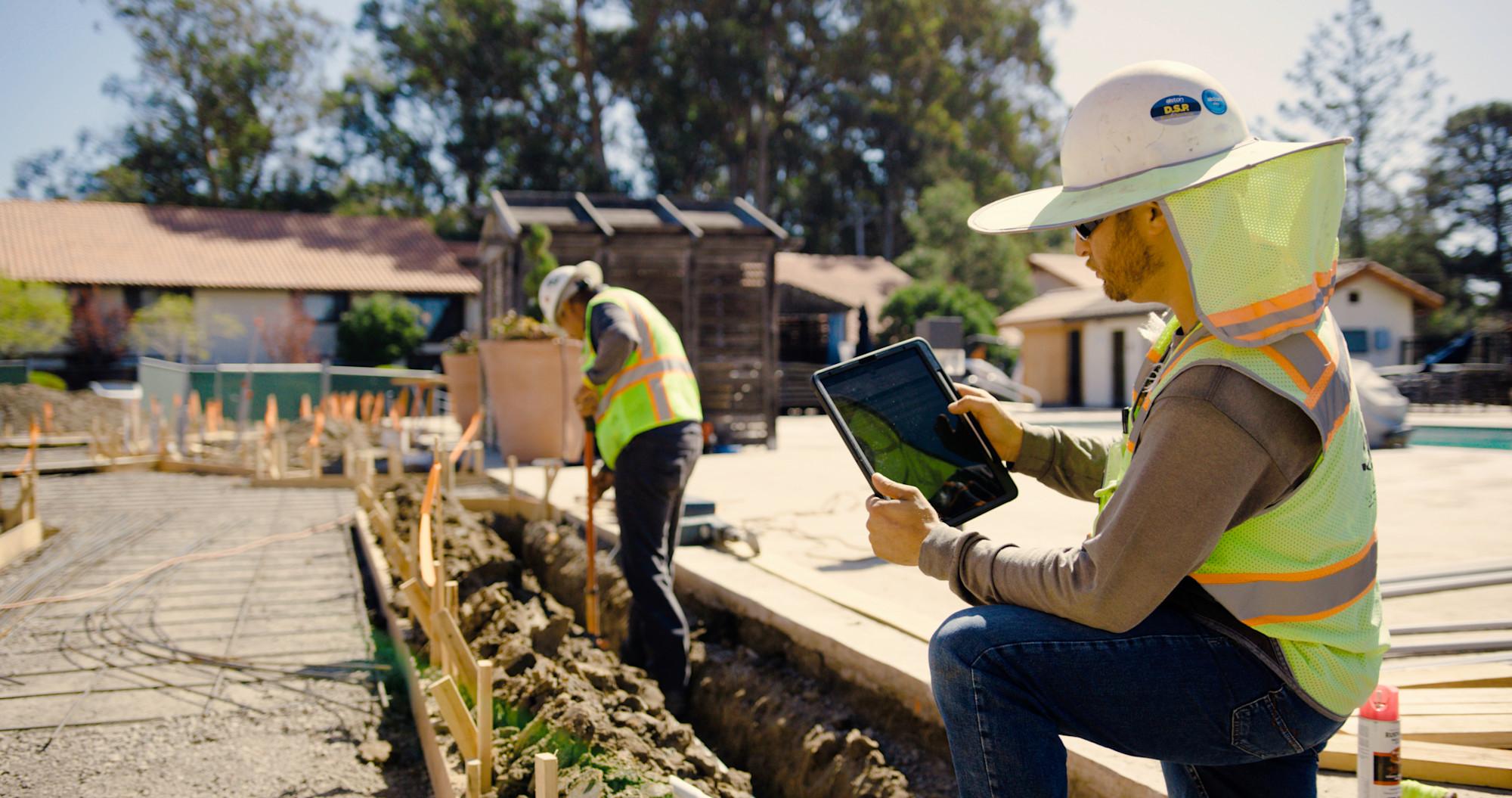
Site visits are where good estimators separate profitable estimates from those that go down the drain. Non-negotiable protocols eliminate guesswork and document reality before we even start to think about pricing.
The photo documentation ritual - a safety net for later on
A wide shot of the property to show context and scale for anyone who wasn't there
Close-ups of the problem areas, access constraints, and any unique features that are going to affect labour time
A "before" photo to show the condition of the property at the time of the estimate
Measurement discipline replaces hope with data
Actual measurements, not estimates.
"Looks like about 10,000 square feet" is closer to a recipe for disaster than a measurement.
We need to be talking about actual figures.
And it's not just about taking a measurement. There are bed dimensions, not just counts. Linear feet of edging, fencing, and hedges determine labor hours more accurately than any old vague assessment.
Ensure you are measuring with a wheel, laser measure, smartphone apps, and satellite imagery verification through tools like PropertyIntel, which provide virtual measurements powered by high-resolution aerial imagery.
These systems automatically calculate time, materials, and costs as you measure, delivering done-for-you measurements that supercharge operations during your busiest season.
Seasonal assumption documentation prevents disputes
When are we going to do the service?
Spring cleanup is one thing, but June service after all the additional growth is a whole different ball game.
Weather contingencies are a must. Consider drainage during the wet season and irrigation during the summer months and droughts. And then there's client occupancy patterns - busy in summer, quiet in winter.
Companies lacking standardized site visit protocols face "data siloes that create blind spots" in their estimation process. Alex Dukhin at Sila Services described the pre-system process as "terrible"—one that runs separate assessments for each property with no consistent methodology.
The site visit isn't really done until you can tell the client, with confidence, backed up by measurements and documentation, how long the job will take. Not just "hope for the best" based on the client telling you what they think they need.
This discipline separates profitable landscaping businesses from those constantly surprised by reality.
Putting Guardrails on "Small"—Scope Documentation That Protects Margins
Vague pricing leads to disputes.
Specific documentation, on the other hand, creates clear boundaries that help keep your profits safe from disputes with clients who think they can get more out of you than you originally quoted.
Price breaks tied to actual quantities eliminate ambiguity
Rather than just saying "mowing service $X per visit", break it down into what you'll actually do: "Mow 12,500 square feet of turf, edge 340 linear feet, trim around 18 obstacles, blow off the hard surfaces."
By using quantities, you turn the job scope into something that's concrete and can be used as a basis for changing orders when the reality of the job turns out to be different from what you assumed.
This kind of specificity matters because all that vagueness and lack of clear scope turn into administrative headaches when every service visit has to be negotiated over what you included in the first place.
Clarify assumptions in every proposal to prevent mid-season disputes
Service windows: "We'll mow between 8 am & 4 pm, Tuesday to Friday, April to October, weather permitting."
Debris handling: "We'll toss the grass clippings on site, but we'll take the bed debris off site (up to 2 cubic yards a visit, extra charged at $X per yard)."
Disposal fees: "We've got disposal fees up to $X per season included - any increases in municipal fees will get passed on to you so we can keep up the service quality."
Exclusions: "We don't include: any tree work that's over 10 feet up, hardscape repairs, irrigation repairs, or pest/disease treatments (all available as add-ons)."
Scope change protocol: "Any changes to the service scope need to be written and agreed to - and could affect pricing if it turns out we need more resources."
The validation test determines if your documentation is sufficient
Can someone who's never seen the property read your proposal and figure out exactly what you'll be doing and what you won't be doing? If not, add a bit more detail.
This way, you don't end up in a situation where the client thinks they're getting the work done, but you're only pricing for basic maintenance.
Scott Stewart over at Southern Home Services said that before they started documenting their scope, they were in a world of chaos trying to manage service expectations at different locations - they had to create 27 different campaigns for every single job. Standardized scope documentation wipes out that complexity by setting clear boundaries from the start.
Your landscaping business earns a reputation through quality delivery, but quality requires a scope that's clearly defined so both parties know what to expect before the work even starts.
Documentation isn't just doing busywork - it's the foundation for building strong relationships with clients based on realistic expectations rather than client-speak euphemisms.
From Guesswork to Specifications—The Sanity-Saving Results
Rigorous scoping turns estimation into a predictable business process that protects both your profits and keeps your clients happy.
The results of systematic scope documentation
Estimates that actually match the work that needs doing, rather than what the client said they needed, filtered through a whole lot of optimism.
Fewer mid-season surprises and scope disputes because you set the boundaries and documented them before the contracts were even signed.
Margin protection through accurate pricing that takes into account all the complexity hidden behind things like "small" and "easy."
Client satisfaction is maintained because you set clear expectations and provide specific deliverables rather than vague promises that are open to interpretation.
Ability to walk away from jobs where the client's expectations just can't be met, protecting your team from taking on work that's not profitable.
Data show this transformation delivers real results.
Companies that implement standard processes report that "the more eyes looking at the reports, the faster we find the issues" and that they can "track how well we're doing that day, week, month." Sila Services found that systematic documentation 'saves hundreds of hours a month - not dozens, hundreds.
Properties are rarely as "small", "low-maintenance" or "easy" as clients make out on the phone.
Client-speak masks the complexity that only becomes obvious during a proper site visit with the correct measurement protocols.
But when you translate vague language into specifications, document your assumptions with precision, and price according to the data rather than just hoping for the best, you can service even complex properties profitably.
The difference between profitable landscaping operations and those constantly fighting margin erosion isn't the properties they serve—it's the discipline they apply to understanding and documenting what those properties actually require.
Specifications replace guesswork. Documentation replaces disputes.
Accurate pricing replaces the cycle of underbidding and financial stress that can destroy a business run on optimistic assumptions rather than actual reality.

Stop Taking Euphemisms at Face Value
Every experienced estimator has at one point or another been burned by taking a client's description at face value.
"Small property" turns into a margin-killer complex site. "Low maintenance" reveals itself as high-touch perennial gardens requiring specialist knowledge. "Easy" turns out to be challenging terrain and access constraints.
Successful estimators take a step back and turn fuzzy talk into a clear, measurable scope before even considering pricing.
They create site visit checklists that methodically pin down measurements, snap photos, note constraints, and sniff out any assumptions that might be hiding. They then lay out in black and white exactly what's included and what's being left out.
And they price things based on what they can actually see, rather than what the client is hoping for.
The payoff protects your business
Getting estimates right from the get-go that don't chew into your margins all season long. You don't get caught with a bunch of "oh yeah, we need this too" - because you've already locked in the boundaries upfront.
And if/when reality doesn't match up with those initial assumptions, you can finally have an honest conversation about it - armed with the data you collected from those site visits.
Companies using business management software with built-in scoping tools report hundreds of hours saved monthly through standardized processes that eliminate guesswork.
Request a demo to see how systematic scope documentation, measurement tools, and automated workflows transform estimation from art into profitable science.










 866-727-7473
 Schedule Demo
 390 S Woods Mill Rd #300 Chesterfield, MO 63017


