Table of Contents
Michael Palmer knew within his first few months at Schill Grounds Management what the problem was.
He'd spent that time doing a listening tour across the company's 12 brands. Palmer met branch managers, asking what tools they were using and watching how they communicated with customers. Schill operates across the Great Lakes and Mid-Atlantic region with more than 70 account managers.
The answer Palmer kept finding was inconsistency. Some branches sent emails regularly. Others sent nothing. Nobody was watching what happened after they hit send.
"I didn't see anybody doing it with a great repetition," Palmer said. "I didn't see anybody doing it at a systematic level where they were watching every email that was going out."
That became the problem he set out to fix.
The person, not the platform
Palmer's solution started with a single rule: Every outreach had to feel like it came from the customer's account manager, not a company address. Messages go out under the account manager's name, from a domain mirroring the branch's brand, with a reply button routing directly back to that person.
"It should feel personal and one-to-one," said Palmer, who spoke during an Aspire webinar, “From Automation to Revenue." "Give the person you're reaching out to a quick chance to just hit reply and get right back to their account manager."
The open rates reflect it. Schill's branches consistently run around 50%, roughly double the business-to-business industry average of 20%.
What January looked like
In January 2026, Palmer tracked results from two sends at a single branch.
A targeted segment received three emails: one snow service update, two marketing campaigns focused on driving green season proposals. Of 384 emails delivered, 216 were opened. They generated a 56% open rate, 9% click-through rate, 16 influenced opportunities, and $35,613 in influenced revenue. A broader branch send covered five snow service updates to a larger audience.
With 2,116 emails delivered and a 50% open rate, the branch influenced 44 opportunities and $194,622 in revenue, even with a click-through rate of just 1.1%.
The contrast matters. Service updates carry information, not asks. Marketing emails carry buttons. Both worked. The difference was what each email was designed to do.
Three rules Palmer lives by
Send more than you think you need, Palmer says, because not every customer opens every email. Some open none one month and all the next. The consistency is what builds the habit.
Always include an ask.
"You can't be afraid to put the ask in there and be direct about it," Palmer said. "Give them something to engage with. Give them a reason to reach back out."
Watch the data, not just for revenue but as a diagnostic. Palmer described noticing open rates declining in one market while organic growth looked healthy. That gap sent him back to the operational side to understand what was happening with account manager relationships before it became a bigger problem.
"We cannot just do stuff and not pay attention to what's happening," he said. "That's kind of the secret sauce."

Ready to put your customer list to work?
Palmer's point is a simple one: The customers most likely to buy something else from Schill are already in the system. They just need someone to reach out.
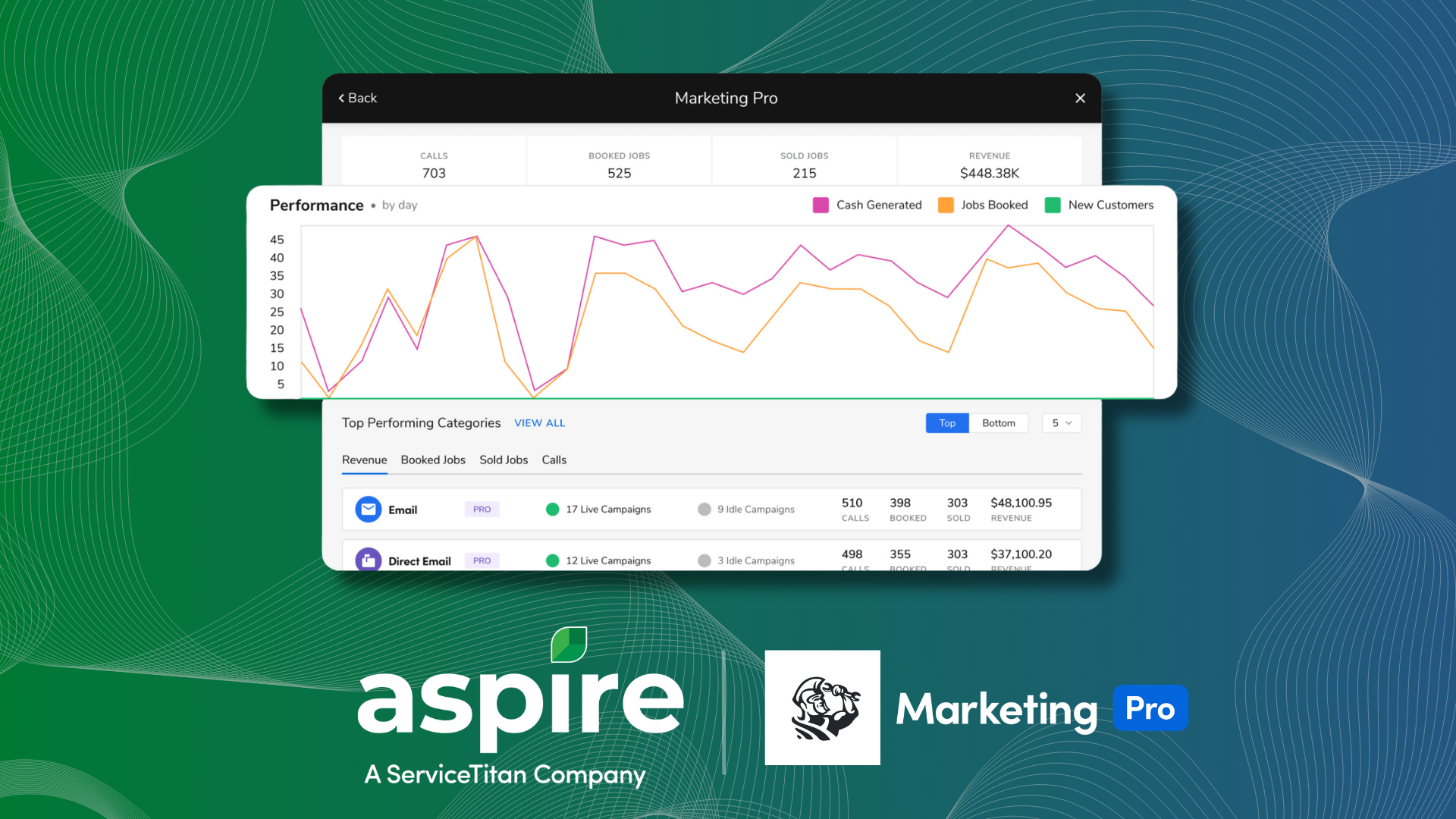
With Marketing Pro, an only all-in-one marketing solution directly integrated with Aspire, your company can leverage customer and property data to create highly targeted and automated campaigns across multiple channels.
Ready to see Marketing Pro at work? Click below to sign up for a free demo.









 866-727-7473
 Schedule Demo
 390 S Woods Mill Rd #300 Chesterfield, MO 63017


