Table of Contents
Table of Contents
- What is the average profit margin for snow removal?
- How do you calculate profit margin in snow removal?
- What factors affect snow removal profit margins?
- How much should you charge for snow removal?
- How can you increase your snow removal profit margins?
- 1. Price accurately based on data, not guesswork
- 2. Improve route efficiency and reduce wasted drive time
- 3. Streamline crew management
- 4. Automate billing and get paid faster
- 5. Monitor expenses and adjust in real time
- What are the common mistakes that reduce snow removal profits?
- What are typical startup costs for a snow removal business?
- What are the main ongoing expenses in snow removal?
- Over to you!
- Frequently Asked Questions (FAQs)
- Is snow removal a good side hustle?
- How does location affect snow removal profitability?
- How does season length impact snow removal margins?
- How do snow removal profit margins compare to landscaping?
You need to send a quote for a commercial snow removal job. Unsure how much to charge, you check what your competitors charge.
While that seems like a good move, it tells you nothing about whether you can be profitable at that price. Every business has different costs for labor, equipment, insurance, or overhead.
What works for your competitors might put your account in the red.
Price too low, and you risk barely breaking even or paying out of pocket for certain expenses.
Price too high, and clients might say you’re overcharging, and you lose to competitors who figured out their pricing.
So, how do you find the sweet spot between being competitive enough to win jobs and profitable enough to sustain and grow your business?
This guide breaks it down. Here, you’ll learn:
Industry-standard profit margins for snow removal services
How to calculate your profit margin
Elements that affect your profitability
Proven strategies to increase your profits without losing clients
What is the average profit margin for snow removal?
The average profit margin for snow removal businesses ranges from 15% to 50%, depending on the predominant client type, operational efficiency, and local market conditions.
David Gallagher, principal at Spiritus Business Advisors—a consulting firm primarily focused on the snow and green industries—recommends aiming for at least a 15% profit margin.
According to him, this is a benchmark that many snow removal companies strive to meet, as noted in a SIMA Foundation Industry Benchmark Study. This allows room to cover expenses, reinvest, and stay sustainable during slow seasons.
How do you calculate profit margin in snow removal?
You can calculate the profit margin for your snow removal service using this formula:
Profit Margin (%) = Net ProfitTotal revenue 100
Here’s how to get it done:
Define your business’s gross revenue, which is the total amount earned from snow removal jobs over a season or year.
Let’s say this is $200,000, before subtracting expenses or profit.
Add up all your expenses. In our example, expenses include:
Labor (crew wages, benefits): $90,000
Materials (salt, deicer, fuel): $25,000
Equipment costs (maintenance, depreciation, lease): $25,000
Overhead (insurance, admin, marketing, office): $30,000
Total expenses: $90,000 + $25,000 + $25,000 + $30,000 = $170,000
Calculate your net profit by subtracting your total expenses from the revenue.
Net profit = Gross revenue - Total expenses
Net profit= $200,000- $170,000= $30,000
Calculate the profit margin
Profit margin: 30,000200,000 100=15%
Your profit margin is 15%.
What factors affect snow removal profit margins?
A healthy profit margin for your business is dependent on factors such as:
Pricing strategy: How your services are priced impacts profitability. Seasonal contracts, for instance, guarantee income stability but reduce your profit margins during heavy winters.
Per-event pricing generates more revenue during severe snowfall but less during mild winters.
To maximize profits regardless of the pricing structure, keep overhead costs under control and streamline field operations.
Job costing: Tracking the cost of each snow removal project helps you price services profitably. It reveals whether you’re undercharging, overcharging, or need to adjust material, labor, and equipment costs.
Not knowing actual project costs can lead to underbidding, underperforming, and losses.
Local market: Market conditions determine how large your profit margins can be. If you’re in a frequent snowfall region, you have to deal with competitors and lower prices or find a unique selling point to maintain a healthy profit margin.
But in light snowfall areas? You could charge higher and secure better margins.
Client type: Your target audience and their willingness to pay can affect your profit margin.
Residential clients often bring smaller contracts with higher margins, while commercial projects offer larger contracts and smaller margins due to higher overhead costs.
Labor and equipment: High costs for labor, equipment, and overtime are major expenses that impact your snow removal business’s profitability. If you add inefficient scheduling, long routes, or unreliable equipment to the mix, profits will drop significantly.
How much should you charge for snow removal?
A quick online search shows that companies charge between $25 and $500 on average for snow removal services.
But that range is too broad and doesn’t help you price jobs efficiently.
What actually helps are factors like:
Where you remove snow from
How often your services are needed
The actual cost of completing a job
For instance, you can easily charge $50–$100 per visit for a residential driveway. But a 20,000 square foot busy commercial parking lot that needs to be cleared before 8:00 a.m. on a Saturday?
That can be a smooth $300–$700 per plow.
The difference between the two instances? These variables:
Client’s property: Its size, surface type (asphalt or concrete), obstacles (light poles, parked cars, or curbs), and accessibility (steep slopes and narrow driveways) affect how quickly the job can be completed, impacting your rates.
Service requirements: Emergency services, such as a 5:00 a.m. or 7:00 a.m. call, will cost more. Service frequency also affects whether you offer a discount. Will you be using simple or heavy equipment? That’s a factor, too.
Market reality: Be clear on the local labor cost and how competitors price their services. This will help you charge accurately.
Your pricing must account for all three variables described above before you can select one or more of the following pricing models:
Per hour: This model is useful for complex projects and in regions with heavy snowfall. The average hourly rate for shovels and blowers ranges from $25 to $75, according to HomeAdvisor.
Per season: Use this for clients who want consistent service and a locked-in budget. With this approach, your business has guaranteed revenue for the season. The average seasonal contract for residential snow removal ranges from $300 to $700, and for commercial contracts, $2,000 to $10,000.
Per event: Ideal for light-snowfall regions and for customers who need removal services only after a major snowstorm or fall. You can charge between $30 and $200.
Per visit: Works for clients, mainly residential, who want flexibility.
To set rates for residential and commercial clients, calculate your labor, overhead, materials, and equipment costs first, and multiply the sum by your profit margin.
Simply put, snow removal rates: (Labor cost + overhead + materials) x (1 + profit margin %)
How can you increase your snow removal profit margins?
You researched local competitor pricing, and it’s clear your previous snow removal bids were too low. Or maybe you already price correctly, but there’s barely anything left after all the bills are paid.
Either way, you need a healthy profit margin to survive, grow the snow removal business, and pay your crew members well.
Here’s how to do that:
1. Price accurately based on data, not guesswork
To price jobs profitably, you need to analyze past job costs—labor hours, material prices, and equipment used for residential and commercial customers. Relying solely on average price ranges or assumptions can lead to underpricing and lost profits.
Use digital tools such as Aspire’s Job Costing Software to collect, track, and analyze material, labor, and expense data for each project.
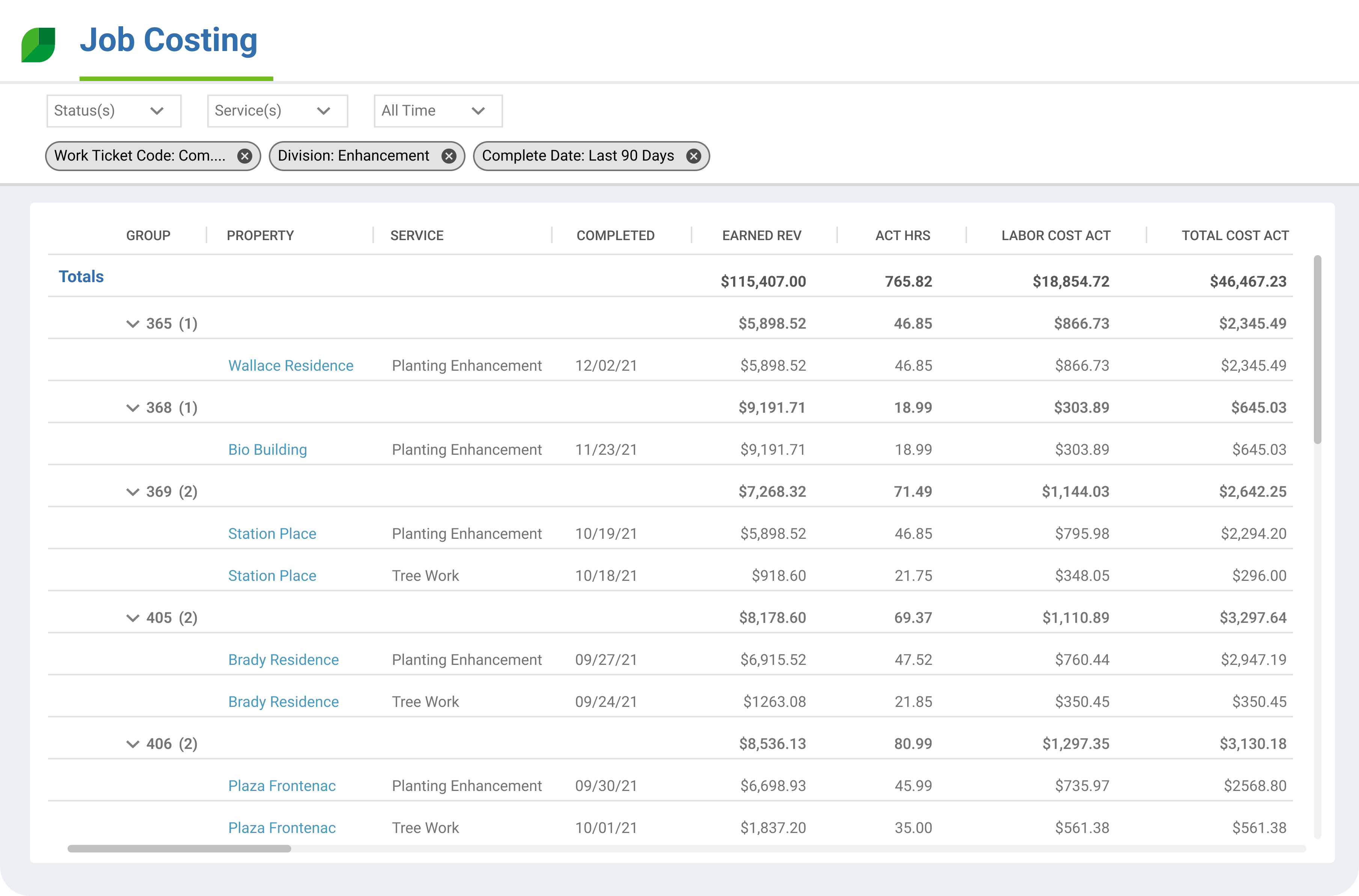
Aspire helps you identify areas where costs are out of control or processes are inefficient, enabling you to adjust accordingly.
Once you have historical pricing data, compare it with current competitor rates, regional labor costs, and supplier material quotes.
This reveals pricing patterns and helps you standardize profitable rates that reflect your actual operating costs.
2. Improve route efficiency and reduce wasted drive time
Poor routing might be eating into your profits.
If your crews zigzag across town, going northside for a job, then the east side, south, and back northside, you’re burning fuel and paying labor for unproductive driving time.
Let’s do the math: A crew that spends an extra two hours per day driving between scattered jobs wastes about 10 hours weekly.
At $25/hr. for a two-person crew, you get 10 hrs. x 2 people x $25 = $500/week in wasted labor. Plus, fuel costs.
That’s over $500 in profit lost.
Here’s a better way that saves time and money:
Use a scheduling tool like Aspire’s to assign tasks to crews based on routes and track them in real time to ensure productivity.

This way, your teams are assigned to specific routes, reducing drive time and lowering costs, rather than zigzagging.
3. Streamline crew management
Has this ever happened to you: your crew is out in the field, but there are new client instructions to be communicated before the project can be completed?
You called, but no one responded. Now they have to make another trip to the site for rework, resulting in higher labor costs.
Inconsistent communication and unclear expectations result in low-quality work that doesn’t meet client needs, budget overruns, billing disputes, and delays.
Want to avoid this?
Streamline crew communication with Aspire’s Mobile App. It helps you centralize conversations in a single location rather than in silos.
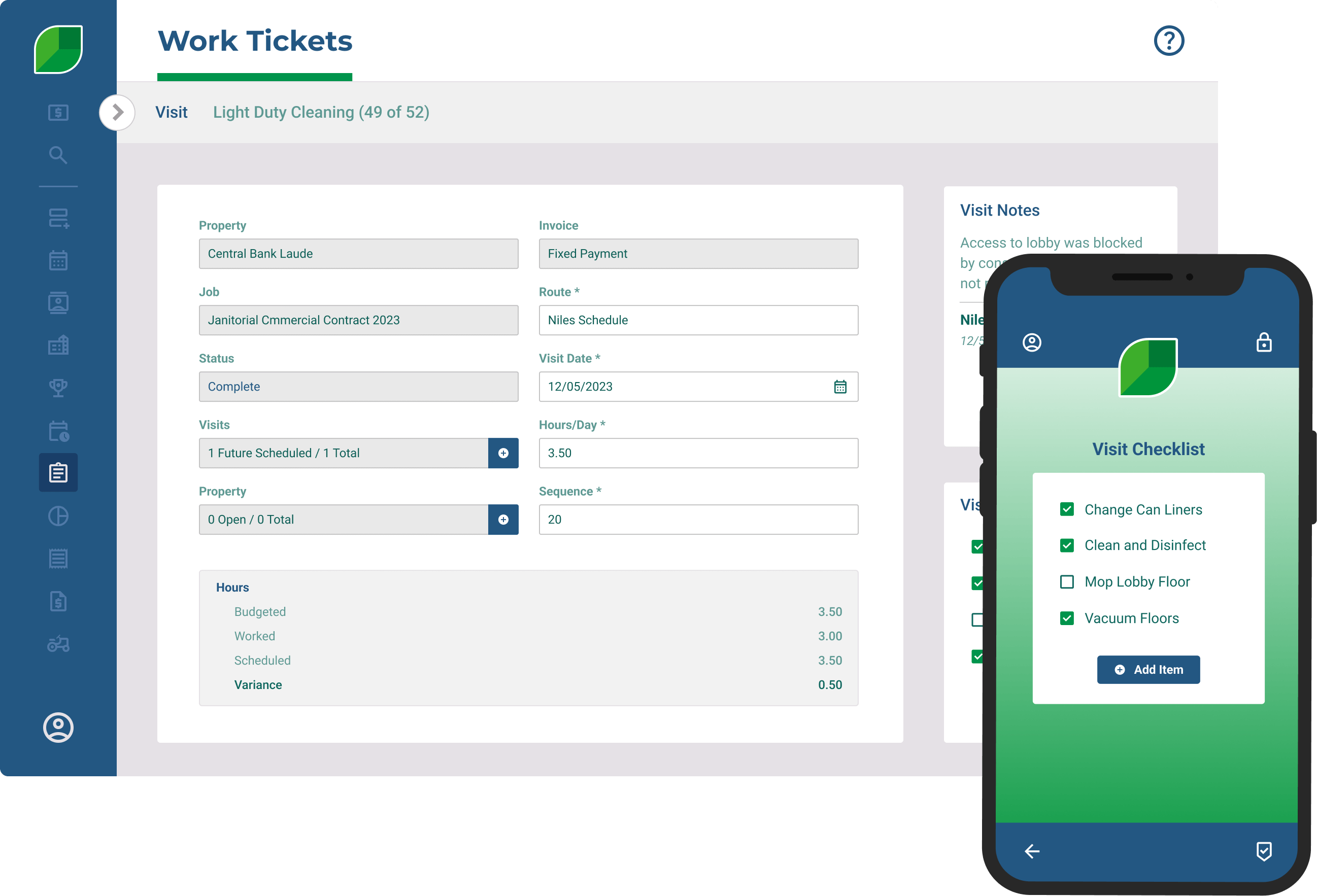
When job details change, add a comment to the work order, and crews receive instant push notifications. If they're in areas with spotty service, updates sync automatically when they reconnect.
Crews can also clock in/out, upload job photos, and report issues directly through the app. This gives you real-time visibility into job progress and labor hours, reducing disputes and ensuring accountability.
4. Automate billing and get paid faster
Another way to increase profits is to get paid faster.
The longer invoices sit unpaid, the longer cash is tied up. That’s cash you need for fuel, payroll, equipment maintenance, and insurance.
Use Aspire’s invoicing feature to generate invoices quickly instead of starting from scratch. Client data and job information are already present on Aspire, allowing you to create professional invoices in just a few steps.
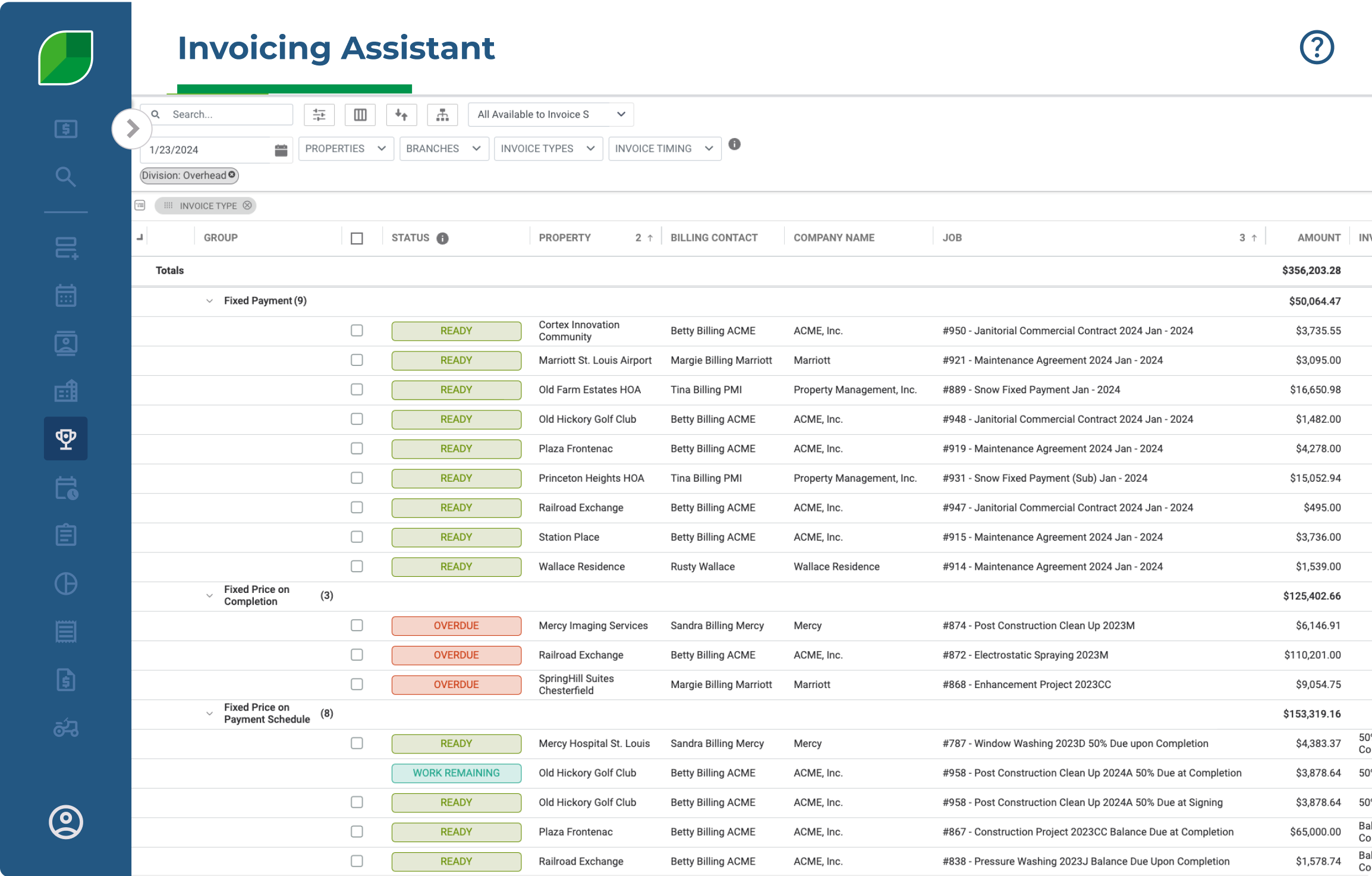
You can send invoices to customers via email or the client portal, where they can view and pay in only a couple of clicks.
This way, you receive payments faster and improve cash flow. No more chasing down checks, struggling to identify outstanding invoices, or waiting weeks to get paid.
5. Monitor expenses and adjust in real time
Sometimes, to increase profit, you need to reduce expenses. The best way to do that is to monitor your costs regularly.
Leverage Aspire’s reporting tool to know how much you have coming in and going out. With clear visibility into live costs, you can identify where to cut back.
For example, this could be switching from buying materials in small quantities to bulk purchases at the start of winter.
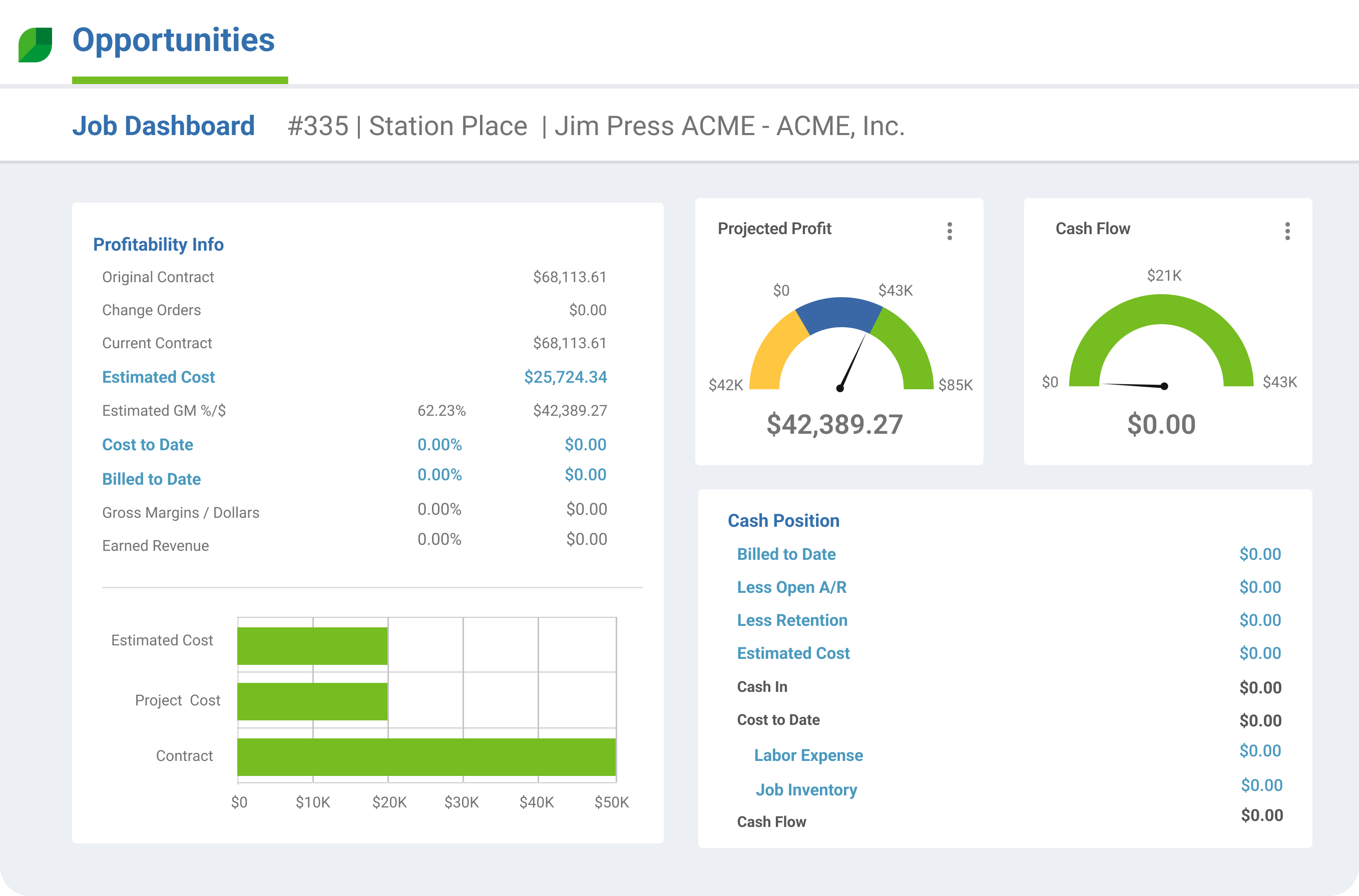
Review reports weekly or after major storms to make data-driven decisions and protect your business’s profitability.
What are the common mistakes that reduce snow removal profits?
While the strategies above help increase your profit margins, the following mistakes will erode them and, in some cases, threaten the business entirely:
Not increasing prices: Fuel costs go up, labor rates increase, and insurance premiums rise. Yet many snow removal contractors maintain the same rates year after year.
They’re afraid that raising prices will drive clients to competitors. But the truth is, as costs rise and revenue remains the same, your profit margin shrinks until it disappears.
Spiritus Business Advisors’ David Gallagher put it correctly: “...Some of the most formal service businesses in the world, like television, cellular, internet, and trash, regularly pass on annual increases. Snow and ice management services are equally or more important than these, so our practices for pricing and renewals should at least keep pace.”
The solution: gradually increase prices by three to five percent annually and confidently explain the reasons to clients.
Not tracking real-time job data: You can have a consistent cash flow and still be losing money if you're not tracking what each job actually costs you.
Without data on labor hours, fuel costs, salt usage, project type, and equipment condition, it is difficult to identify where profit is leaking.
You might think a job was profitable based on your estimate, but if your crew took 30% longer than expected or used twice the salt you budgeted, you would have lost money.
The solution: Use job costing software, such as Aspire, to monitor performance data and compare estimated and actual costs.
This shows which jobs are profitable and which are not, providing data to adjust pricing. In fact, David Gallagher notes that understanding your job costs is essential for snow removal business owners to justify price increases.
Failing to document: Documentation helps you limit liability whenever your crew is on a client’s property. As such, you want to keep records of:
The project completed
Before-and-after photos of the job
Pre-existing or new damages
Date and weather conditions
This ensures you’re covered in the event of litigation that could drain your profits.
What are typical startup costs for a snow removal business?
If you’re an entrepreneur starting a new snow removal business, you’ve learned about its profitability.
Now, here’s an overview of the starting costs:
For residential-focused services, a typical startup investment ranges between $5,000 and $20,000.
For commercial-focused businesses, budget between $25,000 and $50,000+.
For large enterprise ventures, the startup costs can exceed $100,000.
And a breakdown of what you’ll need:
Vehicles: To reduce costs, used pickups can range from $10,000 to $25,000, depending on the year and location. New plow blades and mounting systems for the trucks will cost $4,000 to $8,000. Add the installation and setup costs of $500–$1,500, and the total vehicle system cost will range from $14,500 to $34,000+.
Snow-cleaning equipment: Snow blowers range from $800 to $3,500; salt and sand spreaders from $1,500 to $4,000; hand tools (e.g., shovels and ice choppers) from $200 to $500; reflective gear and emergency lights from $300 to $800.
Insurance premiums: Covering general liability, workers’ compensation, and commercial auto insurance may cost between $3,000 and $8,000.
Registration and licensing fees: Requirements vary by state of operation. On average, you can expect to spend $50 to $600.
Marketing: Cost of branding materials, digital marketing campaigns, and traditional advertising can range from $100 to $2,000.
What are the main ongoing expenses in snow removal?
In addition to initial startup costs, there are major expenses you need to account for to keep your snow removal business running.
They include:
Fuel costs: Fueling is one of your largest expenses, as your crew—especially plow truck drivers with loaders and spreaders—must travel to work. Keep in mind that fuel prices might fluctuate during the season.
Equipment maintenance and repairs: Consistent maintenance keeps your tools and crew ready for emergencies during heavy snowfall. Budget for oil changes, tire replacements, wear parts such as the sharp wear blade, and hydraulic repairs.
Labor costs: Plan for training, stipends, overtime, seasonal workers, and premium pay during peak storm periods.
Insurance: While insurance is part of your startup costs, it’s a recurring expense that can rise depending on your claims history and coverage needs. For instance, if you add more vehicles to your fleet or crew members, you’ll be required to purchase insurance for them, too.
Materials: Deicing chemicals, sand, and salt must be restocked regularly. Their costs can spike during peak weather.
Office and administrative costs: Rent, software subscriptions, electricity, accounting, internet, and general office overhead are also expenses you need to plan for.
Over to you!
From this guide, you’ve learned how to calculate your profit margin and how much to charge your snow removal clients.
As a parting gift, here are key takeaways when it comes to pricing your services:
Always leverage real-time data in pricing. Check local competitors and your previous job history before setting a price.
Use Aspire to monitor ongoing job costs, track profitability, identify what’s draining your revenue, and standardize pricing.
Schedule a live demo with Aspire to see how it helps you take control of your snow-removal business's profitability.
Frequently Asked Questions (FAQs)
Is snow removal a good side hustle?
Yes, snow removal can be a good side hustle, especially for service contractors who already own the necessary equipment. It’s most effective when paired with off-season services such as cleaning, landscaping, or property maintenance.
How does location affect snow removal profitability?
Location plays a huge role in a snow removal business’s profitability. High-snowfall areas offer strong revenue potential but entail higher labor and equipment costs.
Low-snowfall regions have unpredictable demand, making income less reliable unless you diversify with other seasonal services.
Neighborhood demographics also matter: upscale areas typically support higher pricing, while middle-income communities are more price-sensitive and require competitive rates and efficient operations to maintain margins.
How does season length impact snow removal margins?
Longer snow seasons enable more billable events, increasing revenue and equipment use. However, they also increase labor, fuel, and maintenance costs.
Shorter seasons might limit income possibilities but reduce expenses.
How do snow removal profit margins compare to landscaping?
Snow removal typically offers higher profit margins (15 to 30%+ net profit) compared to landscaping margins (10 to 20%) primarily because it's seasonal, demand-driven, and requires immediate response during weather events. This typically allows contractors to charge premium rates.












 866-727-7473
 Schedule Demo
 390 S Woods Mill Rd #300 Chesterfield, MO 63017


