Table of Contents
Table of Contents
- Benefits of budgeting for landscaping businesses
- Financial ratios every landscaping business should track
- Field labor ratio
- Revenue per hour
- Material and equipment ratio
- Overhead recovery
- How to calculate labor budgets for landscaping jobs
- How to create accurate landscaping quotes
- Step 1: Start with historical job data
- Step 2: Calculate true labor costs
- Step 3: Add materials and equipment
- Step 4: Build in overhead
- Step 5: Review and refine
- Direct vs. indirect costs: understanding landscaping job expenses
- Job costing vs. revenue
- Key factors affecting your landscaping business's profitability
- Leveraging cost ratios for long-term business growth
- Frequently Asked Questions (FAQs)
- Q1. What are typical landscaping costs?
- Q2. What is the most expensive part of landscaping?
- Q3. How can I improve my materials-to-labor cost ratio?
- Q4. Should I adjust the materials-to-labor cost ratio for different types of landscaping projects?
Landscaping jobs are notoriously difficult to price correctly – and getting it wrong can quietly drain your profits.
A key part of accurate estimates is understanding your materials-to-labor cost ratio.
This guide will help you:
Track the financial ratios that matter most for each job
Calculate labor expenses accurately
Create quotes that protect your profit margin
Understand direct vs. indirect costs, and why job costing beats revenue tracking
Break down true job costs and calculate profitability
Identify the factors that impact your bottom line
To do all the above, you’ll need to set the stage with a budget that provides an accurate picture of your business's overall health.
Benefits of budgeting for landscaping businesses
When your team understands the budget for each job, they’ll know exactly how many labor hours they have to work with and what the material spend limits are.
This helps crews flag unexpected expenses with management, such as challenging job sites that eat into labor hours or material spend.
It also encourages crews to be mindful about labor hours and waste; when they know the numbers, they’re much less likely to over-order supplies or spend too much time on details that don’t matter to your bottom line.
Financial ratios every landscaping business should track
Tracking a few key ratios will give you insight into the health of your landscaping business.
The most important ones include your field labor ratio, revenue per hour, material and equipment ratios, and the overhead recovery rate.
Together, they tell you whether your jobs are correctly priced and how efficiently you’re allocating resources.
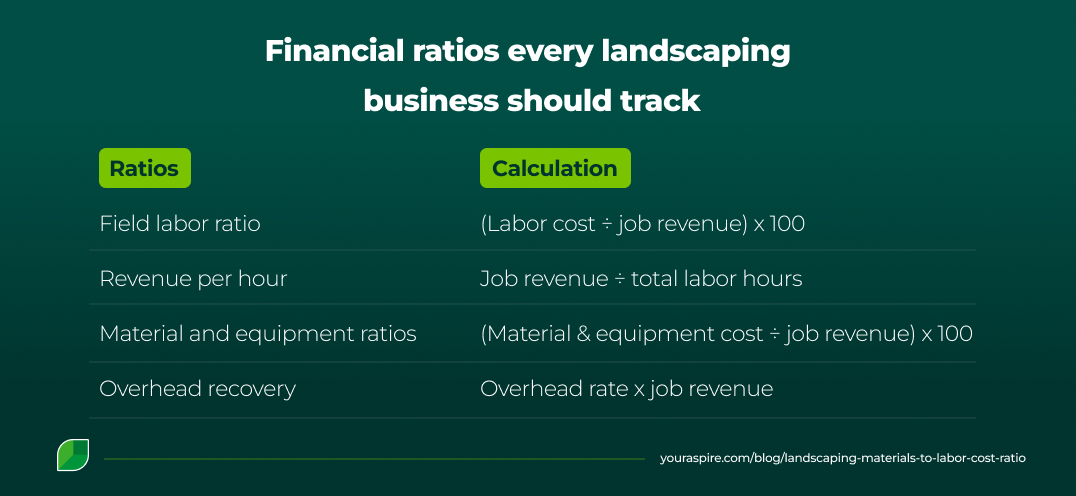
Now that you have a broad picture of the key ratios to track, it’s time to dive deeper into how they impact your operations.
Field labor ratio
Labor costs should make up about 25% of revenue on each job. So if you’re charging $10k for a project, labor costs should ideally be in the $2,500 range. To calculate this number, divide the field labor cost by total job revenue, then multiply by 100 to get a percentage.
(Field labor cost / Total job revenue) x 100 = Field labor ratio (%)
To ensure your proposal captures labor costs, start with an accurate estimate of labor hours, then factor in the hourly wage of the contractors assigned to the job, including payroll taxes, benefits, and paid time off as a percentage of their base wage.
Once you have an estimate, track the field labor ratio by:
Checking in daily to compare hours worked against the estimate.
Briefing crews on the budget and timeline to ensure they understand labor targets.
Breaking estimates into phases so supervisors can see which phases take longer than expected.
If labor consistently ends up being more than expected, adjust your future estimates accordingly.
Revenue per hour
Revenue per hour measures how much your business earns for every hour of labor invested.
To calculate it, divide total job revenue by total labor hours.
For example, a $500 job that takes 4 labor hours earns $125 in revenue per hour.
This answers the question: “Is this job worth my crew’s time?”
Here’s a concrete example:
Job A = $2,000 in revenue, 40 labor hours, $500 labor cost.
Labor ratio: 25%
Revenue per hour: $50/hour
Job B = $4,000 revenue, 40 labor hours, $1,000 labor cost.
Labor ratio: 25%
Revenue per hour: $100/hour
Job B might have higher labor costs, but it also generates more revenue per hour. If you have to choose where to send your experienced crew, Job B is a better use of their time.
This helps you prioritize which jobs to pursue. It also helps you spot efficiency issues when a job comes in below target.
Material and equipment ratio
Materials typically account for 20–25% of job revenue on a healthy project, but that percentage varies by job type. Hardscape installations will have higher material and equipment costs, while maintenance work skews toward higher labor costs.
Tracking material and equipment ratios will help you identify whether crews are using more materials than estimated or whether specific suppliers are driving up costs.
To calculate this number, divide the material and equipment cost by the total job revenue, then multiply by 100 to get a percentage.
To keep material ratios in check:
Log materials used on every job, not just materials purchased.
Compare estimated vs. actual material costs when jobs are finished.
Include equipment in material costs. If a job requires a skid steer for a few days, that cost should show up in the job’s numbers.
When material and equipment ratios stay within target, labor costs have room to breathe. If materials creep above 25–30%, they start eating into the margin you need for labor, overhead, and profit.
Overhead recovery
Your overhead recovery rate tells you what percentage of revenue goes to overhead. Overhead includes both fixed costs (such as rent and administrative labor) and variable costs (such as office supplies and equipment) – and it’s often overlooked in profit margin calculations.
To calculate it, start with your overhead rate:
Overhead rate = (Total overhead costs / Total revenue) x 100
Then, multiply job revenue by your overhead rate to get overhead recovery.
For example, if your overhead rate is 15%, a $10,000 job should absorb $1,500 in overhead.
You can also calculate overhead recovery per labor hour by dividing total annual overhead by total annual labor hours.
If overhead is $150,000 and you have 10,000 billable hours in a year, that’s $15/hour in overhead that needs to be built into your labor rate.
The goal is to set pricing that covers overhead without pushing your bids out of market range. If you’re having trouble covering overhead, it may be time to reduce your indirect expenses.
How to calculate labor budgets for landscaping jobs
Accurate labor estimates start with total labor hours: crew size multiplied by time on site.
But crew size also affects efficiency: a well-matched crew can split tasks and reduce total labor hours, while an oversized crew wastes time and money.
Add hours for difficult terrain, access barriers, or detailed finishes that tend to take longer.
Don’t forget to factor in the full cost of labor: payroll taxes, benefits, and workers’ comp can add 20–30% to base wages.
How to create accurate landscaping quotes
Creating accurate quotes means capturing and presenting every cost – including materials, labor, equipment, and overhead – before your client commits to a final price.
Here’s how to build quotes that protect your margins.
Step 1: Start with historical job data
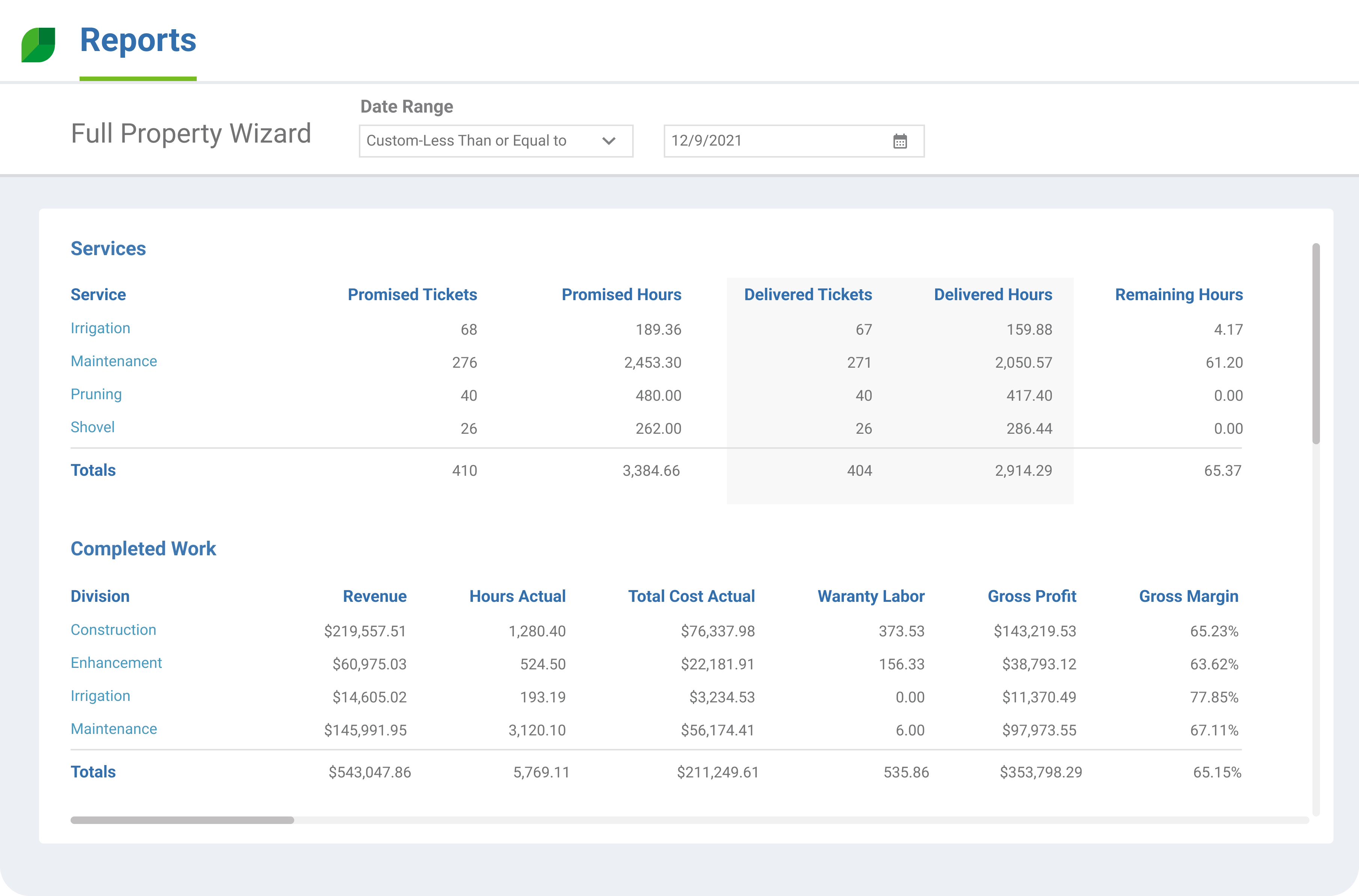
Review actual costs from similar past jobs. Aspire’s job costing tools track every expense as it happens, so you can compare estimated vs. actual costs and adjust quotes as necessary.
Step 2: Calculate true labor costs
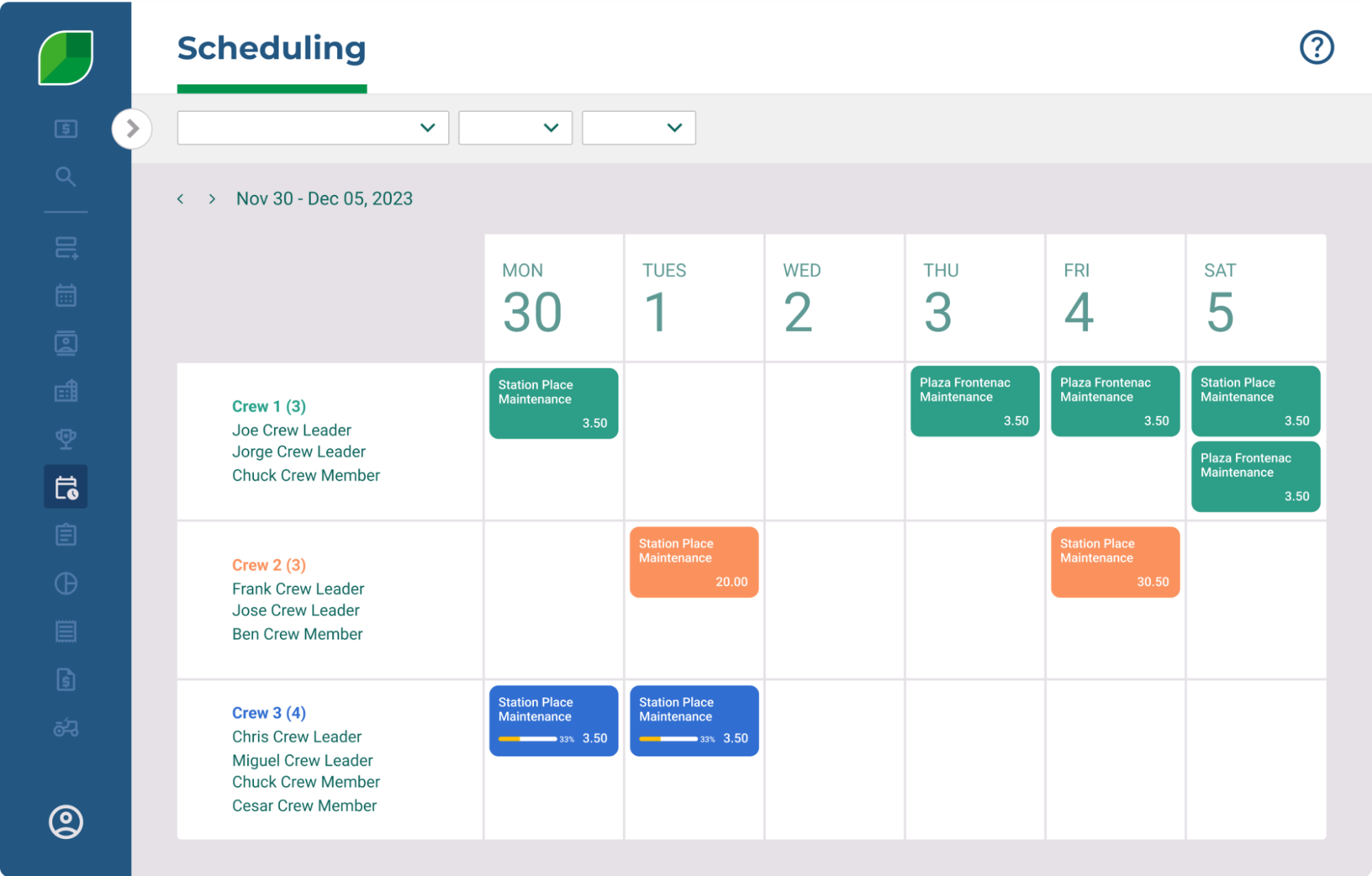
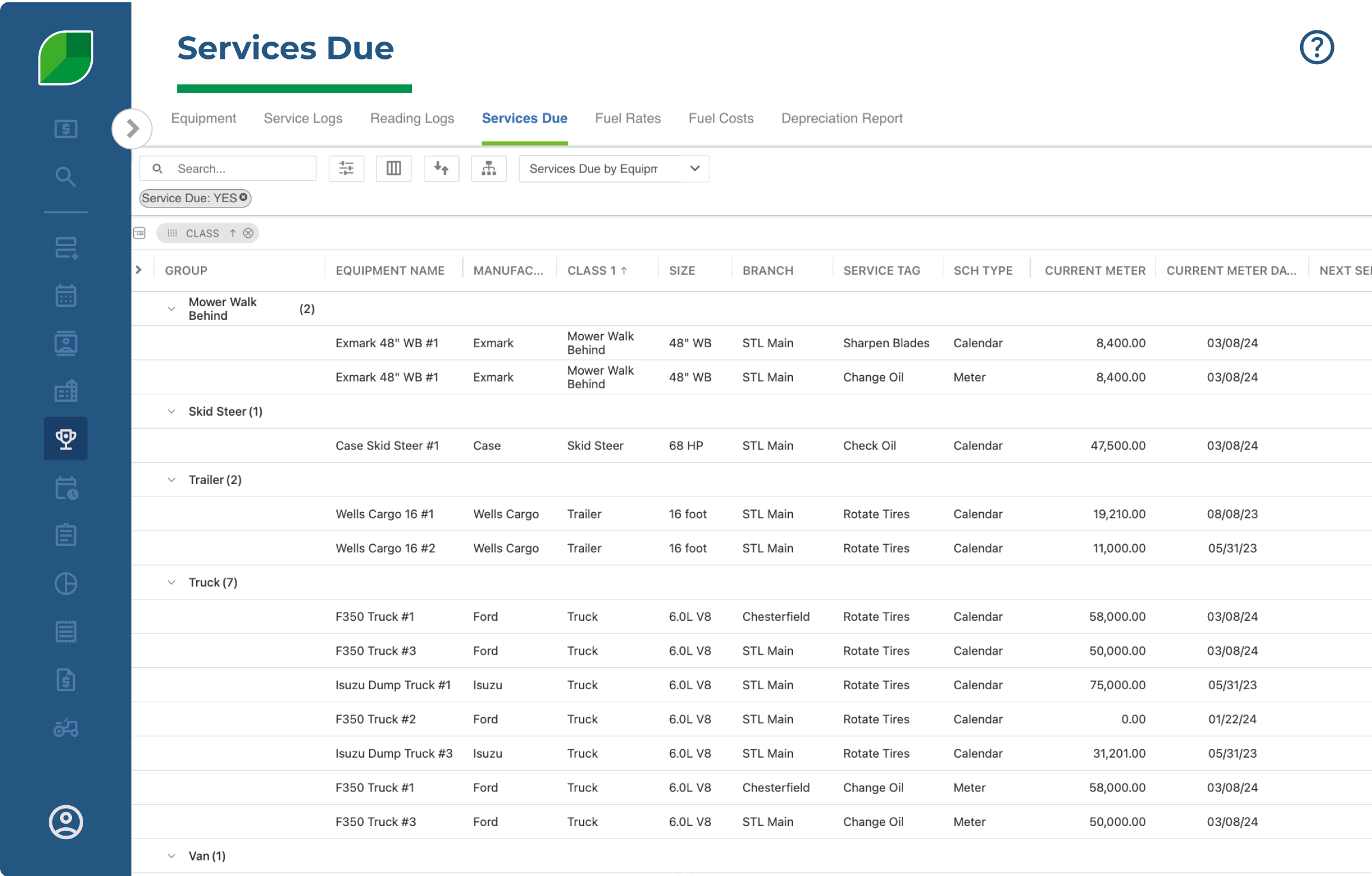
Factor in crew size, estimated hours, and the full cost of labor. Aspire pulls scheduling and crew data into the same system, so you have a real-time overview of crew availability.
Step 3: Add materials and equipment
List every material and equipment cost for the job. Aspire makes it easy to update material prices from suppliers and track equipment, keeping estimates aligned with current material costs.
Step 4: Build in overhead
Apply your overhead rate to ensure indirect costs don’t cut into profit margins. Aspire’s reporting tools let you calculate overhead easily, so you can ensure pricing keeps pace with all of your expenses.
Step 5: Review and refine
Before you send the quote, check your material-to-labor ratio against your targets. If something looks off, dig into the data and make adjustments.
Grunder Landscaping Co grew from $4.5 million to $14.5 million with help from Aspire’s job costing tools: “When we started with Aspire, our utilization rate was 71%, which meant 29% of all hours were not being billed,” said owner Marty Grunder. “Fast-forward to August of 2024 and we're at 93.5%.”
Direct vs. indirect costs: understanding landscaping job expenses
Direct costs tend to be more straightforward to track, but indirect costs are still important to recover on every job so they don’t eat into profit margins.
Direct costs are all the expenses tied to a specific job. That includes the labor hours your crew works on site, and the materials and equipment they use.
Indirect costs include overhead expenses like rent for office or storage space, administrative labor, insurance, and vehicle maintenance – costs that keep your business running but don’t belong to any single job.
Recover both through your pricing, and you’ll ensure every job covers the full cost of doing business.
Job costing vs. revenue
Revenue tells you how much money is coming in, but job costing tells you how much you actually kept and why.
A job that brings in $10,000 looks great on paper. But if extra labor, material waste, and untracked overhead push true costs to $9,500, your profit margin could be much smaller.
Without job costing, you won’t know until it’s too late.
Accurate job costing reveals what services, crews, and clients are actually profitable – and when to raise rates with a clearer picture of your break-even point.
Over time, accurate job costing builds a more valuable business with cleaner financials, predictable margins, and better cash flow.
Key factors affecting your landscaping business's profitability
A number of different factors can affect the profitability of your business:
Material prices: Supplier costs fluctuate seasonally and may vary with market conditions. Lock in pricing where possible, and update estimates as soon as costs change.
Labor rates: Wages rise over time, so make sure your pricing keeps pace with what you’re paying your crew.
Job complexity: Difficult or unusual jobs often take longer and cost more, so build in a buffer – especially when jobs seem out of the norm.
Seasonality: Peak season brings in more work, but overtime costs, rushed estimates, and stretched crews can erode margins if you’re not careful.
Keep on top of labor and material rates to ensure they’re aligned with your pricing strategies – and make sure you have systems in place for busy seasons and complex jobs.
Leveraging cost ratios for long-term business growth
Building a more profitable business means tracking more than just revenue. When you understand your true costs, you can spot inefficiencies and make decisions based on real data rather than guesswork.
Start by benchmarking your current ratios, then build systems to track them consistently. Over time, the numbers will show exactly what you need to know to ensure steady long-term growth.
Ready to see your job costs in real time? Book a demo with Aspire today.
Frequently Asked Questions (FAQs)
Below are a few commonly asked questions about materials-to-labor cost ratios in landscaping.
Q1. What are typical landscaping costs?
Typical costs include labor (25–30% of revenue), materials (20–25%), equipment, and overhead. The exact cost breakdown will vary by job type: hardscape installations tend to have more material costs, while maintenance tends to lean more heavily toward labor.
Q2. What is the most expensive part of landscaping?
Labor is usually the largest expense, though this can vary by job type and stage of business growth. Because labor is semi-fixed once you’ve sent an estimate, underestimating hours is one of the biggest mistakes business owners make when bidding for jobs.
Q3. How can I improve my materials-to-labor cost ratio?
Start by tracking actual costs against estimates on every job. Look for patterns: are certain crews ordering too many materials? Do some types of jobs consistently need more labor hours than expected? Use that data to adjust estimates, crew assignments, and material spend.
Q4. Should I adjust the materials-to-labor cost ratio for different types of landscaping projects?
Yes. Expect hardscape and installation jobs to have higher material ratios, and maintenance work to skew toward higher labor costs. Set benchmarks by job type rather than using a single target across your business for a more accurate picture of profitability.









 866-727-7473
 Schedule Demo
 390 S Woods Mill Rd #300 Chesterfield, MO 63017


