Table of Contents
Table of Contents
- Do you need a license to start a landscaping business in Louisiana?
- What are the types of landscaping business licenses & permits in Louisiana?
- Step-by-step process to get a landscaping business license in Louisiana
- How much does a Louisiana landscaping business license cost?
- What are the most common mistakes to avoid when getting a license?
- How Aspire helps landscaping businesses stay organized & compliant
- Over to you
- Disclaimer
Louisiana is very intentional about beautification, and as such, requires permits for almost every landscaping project.
Want to install plants? Prune bushes? Trim or remove trees? Design landscape plans? Engage in seeding, pest control, or hardscaping services?
You need specific licenses for each service you want to provide.
It can get confusing, so this article will explain the different types you need, as well as:
Step-by-step guidance on how to apply for the required permits
How much it costs to secure the different licenses
Common mistakes to avoid during the licensing process
How to streamline your landscaping operations and keep processes organized as you grow
Do you need a license to start a landscaping business in Louisiana?
Yes, several licenses may be required for most landscaping work.
However, general yard maintenance like mowing, edging, and hand-weeding doesn’t require a permit. Trimming hedges and shrubs or pruning tree branches (two inches or less in diameter, within ten feet of the ground) is also exempt, as long as the property owner is directing the work.
Beyond that, licensing is required. The business must first be registered with the Louisiana Secretary of State, the Louisiana Department of Revenue, and Louisiana Works.
From there, licenses are required for:
Plant installation, grass sodding, bush pruning, mulching, and fertilizing
Lawn irrigation and hardscaping
Tree surgery, trimming, pruning, cutting down, and removal
Preparing landscape design, landscape grading, drainage, or irrigation plans
Nursery stock sales
Outlined below is a list of different permits that may be required to run a landscaping business in Louisiana.
What are the types of landscaping business licenses & permits in Louisiana?
The specific permits your business needs to operate depend on the type of landscaping services you intend to offer.
General business license
New businesses must be registered with the Louisiana Secretary of State, the Louisiana Department of Revenue, and the Louisiana Workforce Commission to stay compliant with the law and protect their entities.
This is the first step on this journey, allowing you to conduct business and remain accountable. You’re also required to sign up with the IRS to pay taxes.
Landscape horticulturist license
You need this permit to provide services such as preparing beds, installing landscape plants or sod, advising clients on plant selection and placement, fertilizing, and shrub pruning.
It lets you provide landscaping maintenance services, prepare drawings indicating the placement of nursery stock (provided you do not charge a fee), and operate a nursery.
To get this license, you need to take and pass a Landscape Horticulturist exam with a score of 70% or higher.
Landscape irrigation contractor license
If you want to work on landscape irrigation projects — construct, install, connect, repair, maintain, improve, or modify landscape irrigation systems — you need a Landscape Irrigation Contractor License.
To qualify for it, you need to pass an irrigation contractor exam with a score of 70% or more.
And when you get the license, you must stay compliant to remain in good standing by having:
Liability insurance
A written contract with clients specifying the services to be provided
A water supply protection specialist endorsement from the State Plumbing Board to connect to a public or private water supply system
You also need to attend a continuing education seminar every three years to renew the license.
Landscaping, grading, and beautification licenses
This permit is a bit different from others because it only kicks in for commercial projects worth $50,000 or more. Think of it as an add-on to your horticultural license when you need to take on landscaping contracts for campuses, industrial plants, or public sites.
It’s a subclassification (L.2) under the building contractor license and covers landscaping, irrigation, finish grading, and removal of tree and plant materials from curbside across all property types.
Pesticide applicator licenses
If you want to apply herbicides for lawn weeds or use fungicides or insecticides on landscape plants as a service, state law requires your business to have a Ground Owner Operator License.
In addition, anyone applying the chemical must hold a commercial pesticide applicator certification, obtained by passing the General Standards exam and at least one category exam.
To stay compliant, landscape professionals will need to register their equipment used and provide proof of general liability insurance. In addition, pesticide applicators will need to attend recertification meetings or take a retest every three years.
Landscape architect licenses
You need this license to prepare landscape design, landscape grading, drainage, or irrigation plans, and related landscape construction details and specifications for a fee.
Getting a landscape architect license requires applicants to have one year of experience under a licensed professional and a LAAB or LAAC-accredited degree.
You then need to take the LARE and the Louisiana exam before a license can be issued.
Permits and local regulations
Last but not least, there might be specific permits required by your city.
So, confirm what’s needed for the landscaping business to operate in your city/county.
The requirements will typically vary, with some having zoning laws, noise restrictions, irrigation laws, building permits, or tree removal permits.
Step-by-step process to get a landscaping business license in Louisiana
Once you know the licenses your landscaping business might need, follow the steps below to get them.
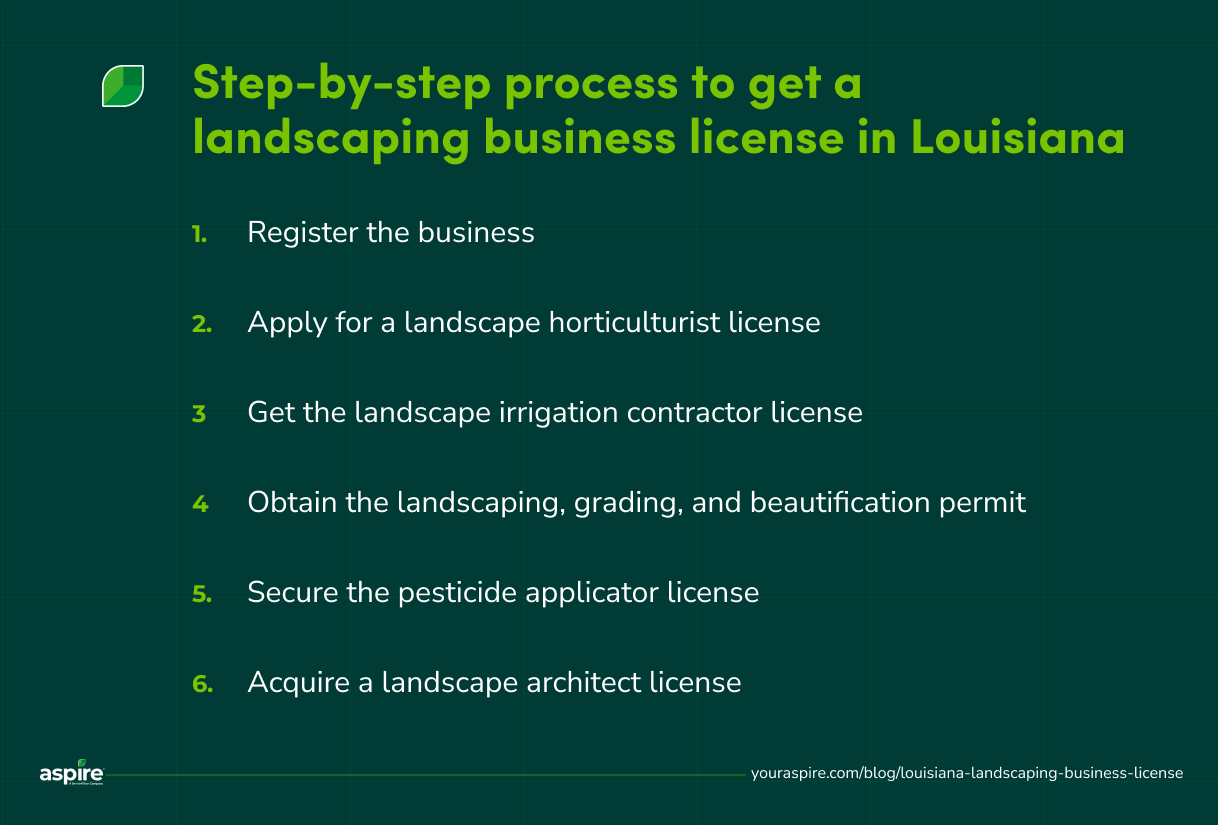
1. Register the business
The first step to forming a new business is choosing a legal structure, and there are several types to select from:
Sole proprietorship: Run only by the business owner, this structure offers no liability protection. Your personal assets are at risk, and income is taxed on the owner’s personal tax return.
Limited liability company (LLC): This option offers personal liability protection and flexible taxation. The business isn’t taxed, but income is passed through to member-owners.
Corporation: This also offers stronger liability protection than the LLC, and is taxed separately (on the company and owners).
Limited liability partnerships (LLP): This is a partnership that offers liability protection to all partners. Here, each partner is not personally responsible for the other partners’ mistakes or debts. Plus, income is usually passed through to partners for taxation.
Sole proprietorship and general partnership structures do not need to register with the SOS. You only need to sign up with the Louisiana Department of Revenue for taxes and the Louisiana Workforce Commission if you plan to hire workers.
For other business types, you need to register with all three agencies.
Here’s how to file via paper forms:
File a name reservation with the state for $25
Choose the form with your preferred business structure
Fill out and submit the form along with the associated fees: corporations: $75, LLC: $100, LLP: $125
You can also file online, and that lets you register with the SOS, Department of Revenue, and the Louisiana Workforce Commission.
Visit geauxBIZ and create an account
Create a checklist to help plan and complete legal activities before launching the new business
Reserve a business name for your new business
Register your business with the Louisiana Secretary of State, the Louisiana Department of Revenue, and Louisiana Works
File amendments, such as annual reports, with the Louisiana Secretary of State
Essentially, in Louisiana, the online version lets you open a new business and get tax-ready at the state level.
For federal taxes, you need to get a Federal Employer Identification Number (FEIN) from the IRS. It’s quite simple; visit their website and sign up for an EIN.
2. Apply for a landscape horticulturist license
This license is exam-dependent. To apply:
Prepare for the exam using this resource as a guide and this manual.
Apply to take the exam, attach a $150 fee, and mail the license application to the Horticulture Commission. Once approved, you can do it online or receive a call to schedule an exam date in person.
Get a score of 70% or higher.
Pay $125 for your license and wait to receive it.
3. Get the landscape irrigation contractor license
Applying for this permit is similar to applying for the horticulturist license.
Prepare for the exam using this irrigation resource as a guide, this manual, and turf irrigation material.
Apply to take the exam, attach a $150 fee, and mail the application to the Horticulture Commission. Once approved, you can do it online or receive a call to schedule an exam date in person.
Get a score of 70% or higher.
Pay $125 for your license and wait to receive it.
4. Obtain the landscaping, grading, and beautification permit
This is a subclassification (L.2) under the building contractor license, covering all landscaping projects across several property types.
And it’s typically an add-on to your horticulturist license.
To get the L.2 added to your license, you need the horticulturist permit, as that’s the credential that qualifies you for it.
Then, contact the Louisiana Licensing Board for Contractors to apply for the building contractor license. Alternatively, you can register online here and follow the onscreen instructions to get your Louisiana landscaping license.
5. Secure the pesticide applicator license
Your business needs the Ground Owner Operator License and commercial pesticide applicator certification (for anyone) to offer pesticide application services.
To apply for the Ground Owner Operator License, you need:
$200 fee if you’re a Louisiana resident or $500 if you’re not
$50 equipment registration fee
Proof of liability insurance not less than $25,000
Certified commercial pesticide applicator
Description of all mechanically powered pesticide equipment
Then complete this application.
When applying for the commercial pesticide applicator certification, you or an employee need to:
Prepare for the exams: Study the core manual and category-specific guides, and complete review questions.
Apply and take exams: Submit your application, then pass the General Standards exam and at least one category exam (a $50 fee applies).
Get certified: Once you pass, you receive your pesticide applicator certification (waivers may apply if already licensed in another state).
Stay compliant: Renew annually ($25), keep records, and complete recertification every 3 years.
6. Acquire a landscape architect license
Here’s how to secure this permit:
Have an accredited degree or get approval, along with at least 1 year of supervised experience.
Take the LARE exam through CLARB.
Prepare, apply, and pass the Louisiana Landscape Architect Exam (LLAE) ($200 fee).
Pay annual fees ($125) and complete continuing education to maintain your license.
For more information on horticulturist, irrigation contractor, and landscape architect licenses, visit this page.
How much does a Louisiana landscaping business license cost?
Here’s what it would cost to get the permits your landscaping business may need.
General business registration
Name reservation: $25
Filing fees:
LLC: $100
Corporations: $75
LLP: $125
Landscape horticulturist license
Exam fee: $150
License: $125
Landscape irrigation contractor license
Exam fee: $150
License: $125
Pesticide applicator license
Ground Owner Operator License: $200 for Louisiana residents and $500 for non-residents
Commercial applicator license
Exam and licensing fees: $50
Renewal fees: $25
Landscape architect license
Exam fee: $200
License fee: $125
What are the most common mistakes to avoid when getting a license?
While securing landscaping permits or licenses is pretty straightforward in the state of Louisiana, here are mistakes you must avoid.
1. Misinterpreting the scope of a landscape horticulturist license
The horticulturist license covers many landscaping services, including preparing designs of nursery stock placements (much like a landscape architect).
However, you’re not permitted to make designs for a fee. You can prepare drawings showing placement, but the moment a client pays for them, a landscape architect license is required.
It’s easy to blur the line between licenses without realizing it’s a legal distinction. The license also doesn’t cover irrigation; you need a separate Landscape Irrigation Contractor License.
The bottom line is that you need different permits, depending on the services you want to offer.
2. Forgetting to stay compliant
Licenses issued by the Louisiana Department of Agriculture and Forestry, such as Landscape Irrigation Contractor, Commercial Pesticide Applicator, and Landscape Architect licenses, have specific requirements.
Licenses expire January 31st each year. Landscape architects need 8 hours of continuing education annually.
Irrigation contractors must attend a recertification seminar every three years. Horticulturists drawing plans must include their name, the words "Landscape Horticulturist," and their license number on all drawings.
And if you hold a contractor license through LSLBC, renewal there is separate from your LDAF renewal entirely.
Missing either one creates a gap that can cost you bids or expose you to penalties.
3. Assuming you qualify for reciprocity licensing as a landscape architect
If you’re a fully licensed landscape architect in another state hoping to be licensed by reciprocity, you would be disappointed. Louisiana doesn’t offer reciprocity for the Landscape Architect License.
You need to pass the Louisiana Landscape Architect Examination (LLAE), a separate, state-specific exam that covers local regulations and plants unique to Louisiana.
If you’ve already passed the CLARB exams and have professional experience, you can use that toward the LLAE process.
How Aspire helps landscaping businesses stay organized & compliant
Getting the right landscaping licenses gets your business one foot in the door, but a disorganized operation will slow down the company’s growth.
Even if disorganization isn’t a challenge for you, handling tasks such as estimation, contract preparation, scheduling, invoicing, or reporting manually slows your processes.
Aspire’s end-to-end landscape business software helps automate your workflow so you can provide quality landscaping services to your Louisiana clients.
Contract & proposal management
Chasing new contracts with active projects is always a challenging process. And it’s typically where margins are lost.
With Aspire, you get to create estimates from templates and preset production factors, not guesswork. You can measure clients’ properties from digitized maps.
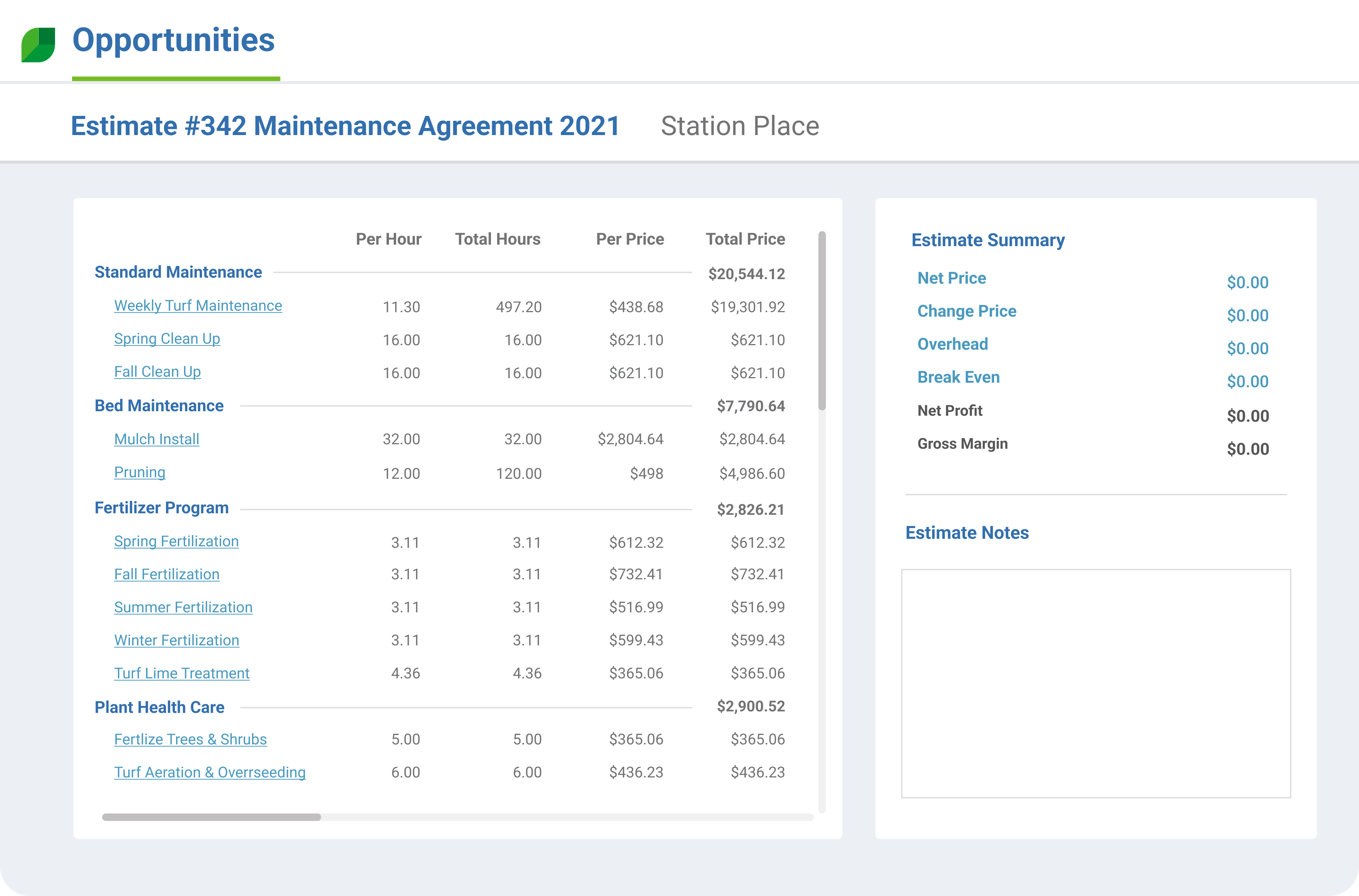
This ensures you can estimate projects without having to leave the job site or the office.
Aspire lets you build, send, and track proposals in one place. It standardizes contract terms and protects your markups and profit margins. You can bid on new work even when you’re already in the field.
Invoicing & payment processing
Landscaping businesses need consistent cash flow to stay in operation. And sometimes, that can be difficult because you have to do it manually. You may even forget to send invoices at the right time, leading to delayed payment.
With Aspire, invoicing clients is quite straightforward as they’re generated from completed work and estimates. Your invoices reflect what was done in the field and are sent out on time, set to the clients’ billing preferences.
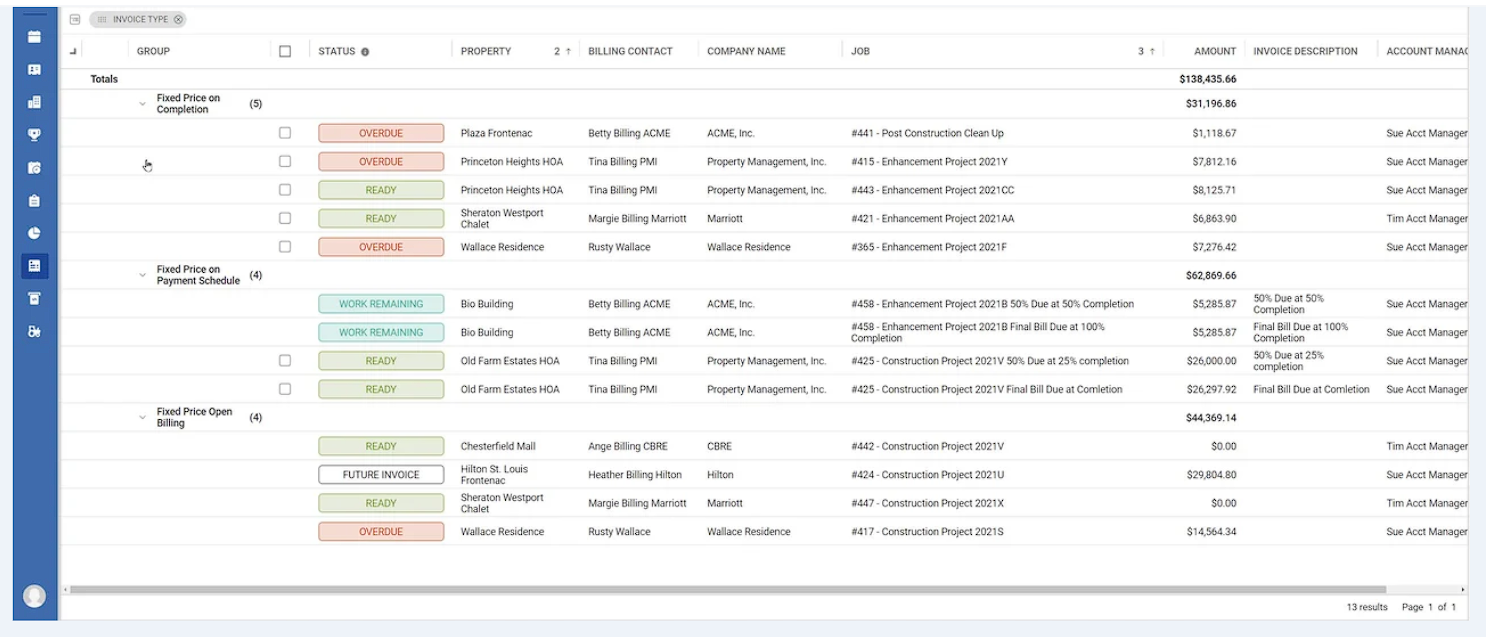
The invoices can be sent upon project completion or at milestones. After they’re shared with clients, Aspire lets you track invoices from paid to pending to overdue. This ensures you can follow up where necessary and update your records.
There’s also a clear audit trail of every transaction, simplifying tax filings for the company.
Business reporting & documentation
As a business owner, how do you grow or make strategic decisions without measuring performance or tracking operations?
The usual approach is to gather reports from field crew leaders, finance teams, and operations. But that process can be too slow when fast decisions are required.
Aspire's reporting feature gives you real-time visibility into job costs, team productivity, revenue, and profit margins.
It lets you pull historical data, track performance over time, and keep organized records, all from one place.
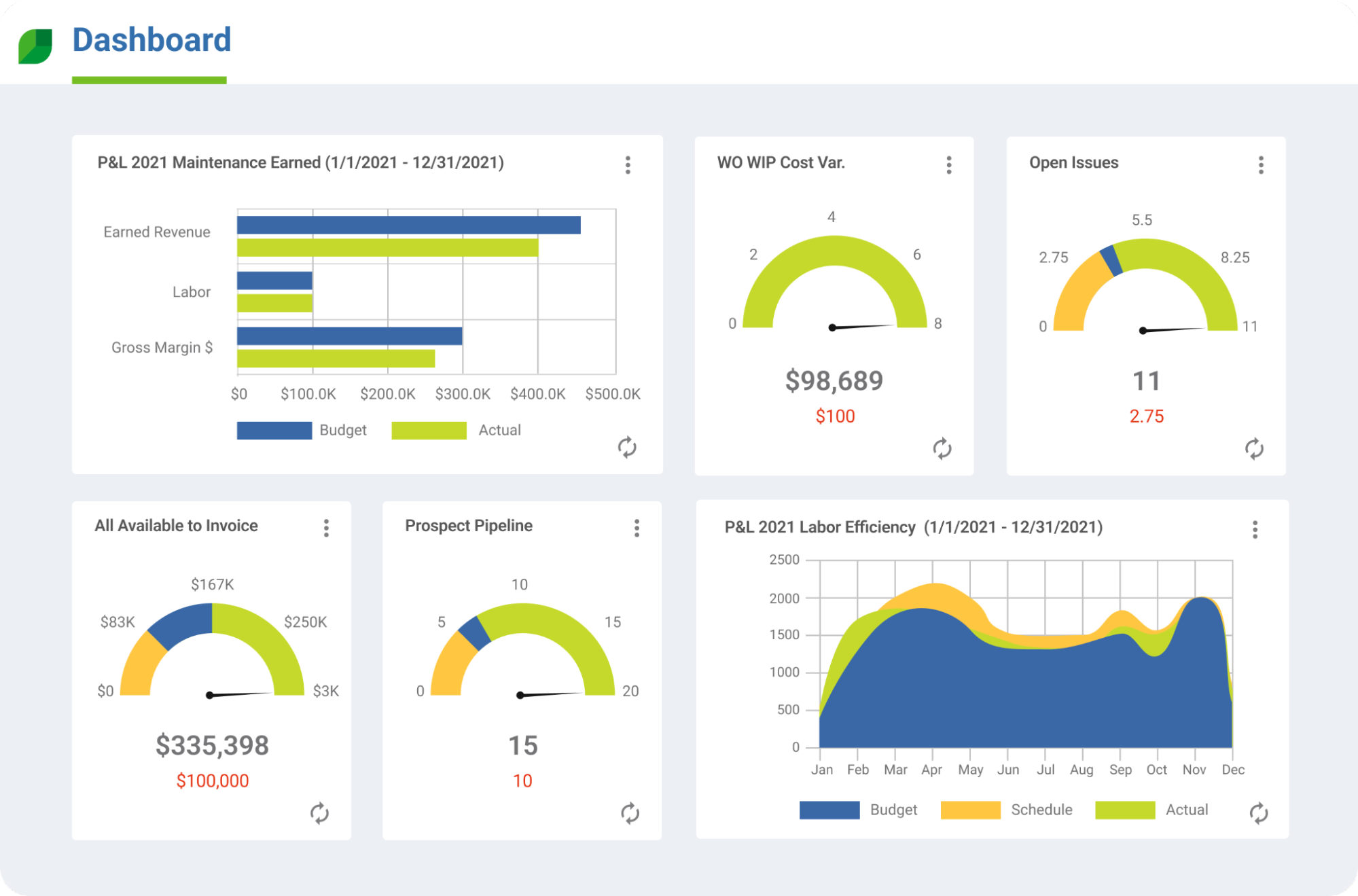
Having that detailed documentation and insights in a single system ensures you don’t miss out on any information. Plus, you know about everything that happens in your landscaping business.
Scheduling & job management
Overlapping jobs, missed appointments, and unhappy clients are typically the results of unorganized or manual scheduling.
Aspire has a scheduling feature that lets you assign crews, track job progress, and manage workloads weeks out. Everyone knows where to be and what to do, and there’s a clear operational record to back it up.
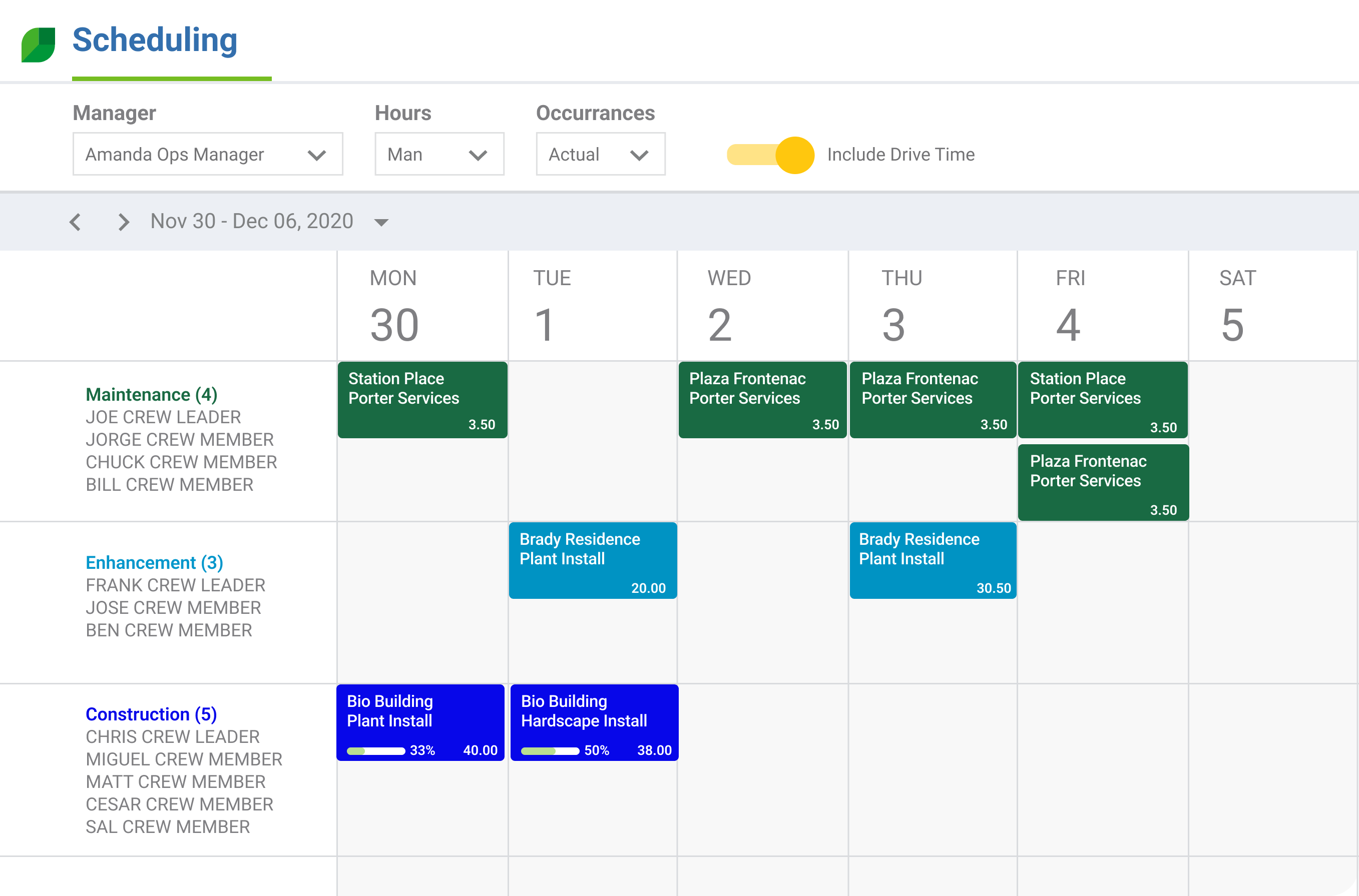
The moment a project is secured, Aspire lets you drag and drop jobs on your scheduling calendar based on the team’s availability.
From there, you can even create checklists for the landscaping crew to follow, along with equipment to be used or permits the job needs.
Over to you
Louisiana’s licensing requirements are layered, with permits needed depending on the landscaping services you’re providing:
Plant installation, sodding, pruning, fertilizing, and general beautification
Selling, leasing, or maintaining nursery stock
Installing or maintaining landscape irrigation systems
Drawing landscape designs for a fee
This guide has shown you how and where to get the licenses to execute these projects.
But having a tool like Aspire helps you manage the business and admin side of your company, keeping things organized, streamlined, and scalable.
Schedule a live demo to see it in action.
Disclaimer
This article is for informational purposes only and should not be considered legal or financial advice. While every care was taken to use official sources, you should always verify requirements on Louisiana’s government websites.








 866-727-7473
 Schedule Demo
 390 S Woods Mill Rd #300 Chesterfield, MO 63017


