Table of Contents
Table of Contents
The snow came, and everything fell apart.
Beau Hartman doesn't need to look up the details. He remembers what it felt like when a winter storm exposed exactly how fragile his operation had become.
His crew management software, the one in which he'd invested to replace spreadsheets and move the company forward, couldn't handle the volume and complexity of snow events.
Schedules broke down.
Communication broke down.
Hartman Landscaping went back to paper to get through it.
"There were several moments where it just made sense to do it," Hartman says.
Hartman, 35, is the president and founder of Hartman Landscaping in Zanesville, Ohio. The company he incorporated in 2011 now employs more than 50 people and generated approximately $6.8 million in revenue in 2025.
Before Aspire, Hartman Landscaping’s estimating process ran through a 10-page Excel spreadsheet loaded with production rates. His team would take property measurements from aerial tools, plug the square footage into the spreadsheet, pull the hours, and then transfer everything manually into a separate system.
It worked, in the way that manual processes work. That is, until someone made an error or an estimator developed their own version of the spreadsheet. The field problems were just as basic. To find a job site, crew leaders had to copy and paste the address from a work ticket into Google Maps by hand.
"In Aspire, you just open it and click, and it takes you to navigation,” Hartman says. “That just makes sense."
Building the infrastructure
The switch to Aspire, in 2021, didn't just fix the navigation problem or get the company through snow events without reverting to paper.
It changed how the entire organization operates.
Estimating now runs through PropertyIntel, Aspire's property measurement integration. Takeoffs transfer automatically. The templates and kits Hartman's team has built inside Aspire generate starting prices for estimators, and they’re accurate, consistent, and based on the company's own production rates. Fine-tuning still happens, but the guesswork is largely gone.
"Our goal is to be within 10% on estimated hours and materials," Hartman says. "(Aspire) has allowed us to get our estimating pretty well systemized."
The scheduling transformation was similar. Hartman Landscaping used to manage its work schedule on a magnetic dry-erase board with job names on magnets, moved around by hand. It wasn't chaos exactly; Hartman describes it with a certain wry affection.
"Basically, we were using tickets," he says. "We just didn't know it. Each magnet was a ticket."
What Aspire added wasn't just a digital version of the same system. It was structure, and it was imposed across every department, simultaneously.
"It forces every department to do what it's supposed to do and plan for material purchases, route scheduling, and job scheduling," Hartman says. "If crews don't know where they're going, it's a scramble."
Built to last
The results are measurable, which is, in a way, the whole point. Hartman has held a gross margin of 50% to 52% for five consecutive years, and he says that’s eight to 10 points better than with his previous software.
“There's no contest,” Hartman says. “You can't see the margin if you don't track the margin. And if you don't have all the data in one place, you can't measure it. And most other softwares don't do what Aspire does.”
Hartman Landscaping’s three-year revenue goal is $10 million to $12 million, he says.
Companies that run on Aspire tend to be well-organized, financially visible, and built around documented processes. That's not an accident; rather, it's what the platform demands of the businesses that use it well. And it's the kind of operational profile that private equity firms, which contact Hartman regularly, are specifically looking for.
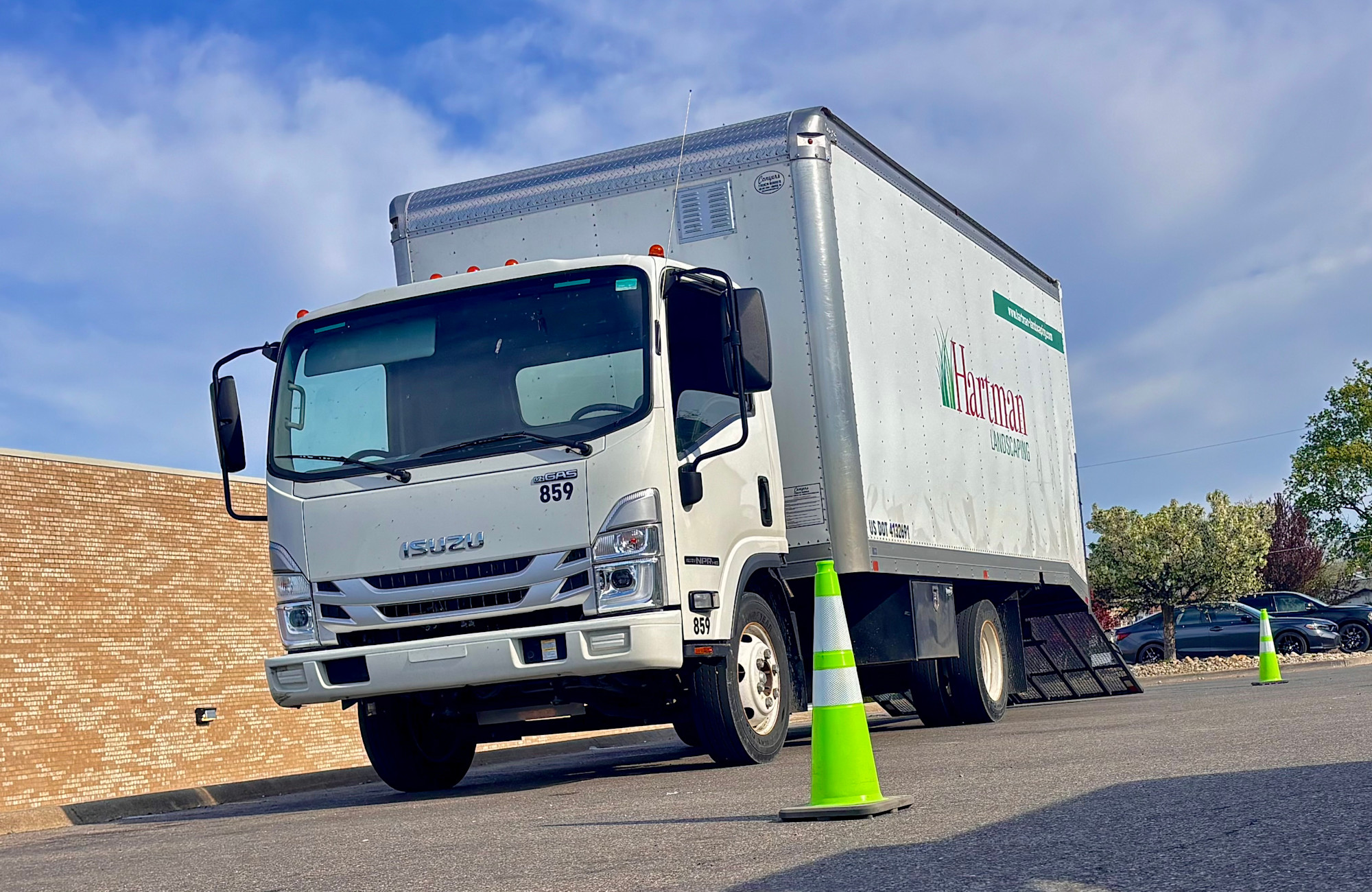
"The fact we're using Aspire is a huge reason," Hartman says. "A lot of the nationals and large PE-owned companies are running on Aspire, so the integration becomes very easy. Aspire is very scalable. That's why that becomes an attraction."
He's not interested. Not yet. He's 35, he has a team he's built and wants to keep building, and he has years of growth ahead of him before that conversation becomes relevant. But the fact that it's a conversation at all says something about what the right infrastructure can do for a business.
"To my business, Aspire is the heartbeat," Hartman says. "It's everything the entire company operates on."
He thought about whether he'd go back to the old way: the spreadsheets, the magnets, the software that quit on him in the snow.
"I can't imagine going back," he says. "That's not even an option."
HARTMAN LANDSCAPING | |
Location: | Zanesville, Ohio |
Owner: | Beau Hartman |
Years in business: | Opened in 2005 |
Employees: | 50 (40 are field staff) |
Key services: | Landscape maintenance, enhancements, snow, and ice management |
Learn more: |








 866-727-7473
 Schedule Demo
 390 S Woods Mill Rd #300 Chesterfield, MO 63017


