Table of Contents
Table of Contents
- What is a checklist template for cleaning educational buildings?
- Why is a cleaning checklist important in education?
- What should be included in an educational building cleaning checklist?
- What are the daily cleaning tasks for educational buildings?
- What are the weekly cleaning tasks in schools and other educational buildings?
- How do you use an educational building cleaning checklist?
- What are the common mistakes with cleaning checklist templates?
- How do you train staff to use cleaning checklist templates?
- Going beyond templates: streamline your education cleaning operations with Aspire
You’re responsible for maintaining cleanliness and hygiene in schools, universities, and libraries. However, considering that you have multiple crews handling cleaning projects across different locations, it can be challenging to ensure consistent hygiene standards.
This could result in inconsistent service quality, potentially missing critical areas that require cleaning, and compromising the health of occupants, as well as your company’s reputation.
To avoid that, you need a cleaning checklist to help maintain high standards at all times.
Below is a cleaning educational buildings checklist template you can leverage for consistency.
What is a checklist template for cleaning educational buildings?
It is a structured outline that lists specific cleaning areas, tasks, and frequencies required to maintain cleanliness, hygiene, and safety within an educational facility.
It’s a guide that:
Cleaning supervisors can use to ensure high cleaning standards and train new cleaners.
External cleaning services can follow to meet contract requirements and client expectations.
Janitorial staff can use to ensure they adhere to cleaning routines and maintain quality standards
A typical template should cover things like:
Areas or zones: Specific locations within the building that require attention, e.g., libraries, classrooms, offices, hallways, restrooms, cafeterias, lobbies, or gyms.
Tasks: A list of specific cleaning tasks for each area, such as mopping and disinfecting restrooms, dusting surfaces in offices and the library, or mopping hallways.
Frequency: How often should each task be performed? Daily, weekly, monthly, or quarterly?
Supplies: A list of equipment and cleaning materials needed for each task or area.
Check-off status: Small boxes should be available so each task can be marked as completed.
Supervisor sign-off: A section should be provided in which cleaning supervisors approve each task’s completion.
Why is a cleaning checklist important in education?
Educational facilities, such as schools, universities, and similar venues, are typically high-traffic and high-touch areas that require consistent and strategic cleaning to maintain a safe and optimal learning environment.
Occupants come into contact with multiple surfaces, creating numerous opportunities for contamination. This is especially true in daycare or kindergarten facilities, where young children have not yet developed hygienic habits and are prone to illnesses.
These environments need regular cleaning and disinfecting to protect children and prevent the spread of germs.
Here’s how a cleaning checklist helps you achieve that:
Ensures nothing gets missed: With multiple jobs and areas to cover, janitors can easily miss certain areas when cleaning. A checklist helps prevent oversight in any area, ensuring that all required surfaces and spaces are cleaned.
Maintains consistency: A checklist ensures that everyone, including different cleaning crews, supervisors, or shifts, follows the same thorough cleaning routine, rather than relying on personal memory or habit.
Provides an accountability system: With a checklist, crews can check off their completed tasks, and supervisors can confirm the job is finished to the required standard.
Prioritizes high-risk areas: An efficient checklist emphasizes the most critical cleaning spots and tasks in order of importance for health and safety.
Meets regulatory requirements: The EPA suggests chemicals and cleaning supplies that cleaners can use in schools. A checklist helps ensure compliance.
What should be included in an educational building cleaning checklist?
An educational building cleaning checklist should be thorough, covering every area that impacts the building’s safety, hygiene, learning environment, and overall appearance.
Here’s a breakdown of specific areas to include and tasks to be done:
General areas, e.g., hallways, stairs, and lobbies. The cleaning tasks required here include:
Sweep and mop floors
Vacuum rugs
Dust and wipe down railings, ledges, and baseboards
Clean glass doors and interior windows
Disinfect high-touch areas
Empty trash bins
Classrooms, libraries, and offices:
Clean and disinfect desks, chairs, and office tables
Dust boards, shelves, and electronics
Sanitize or disinfect door handles, shared equipment, toys, and light switches
Refill hand sanitizer dispensers
Restrooms:
Clean and disinfect sinks, urinals, toilets, mirrors, and hand dryers
Mop and disinfect the toilet floors
Replace toiletries
Wipe down partitions and walls
Check for leaks or plumbing issues
Empty trash bins
Food service areas:
Wipe down and sanitize serving areas, tables, and chairs
Sweep and mop floors
Clean sinks and appliances
Wipe and disinfect food preparation areas
Gymnasium/locker rooms:
Clean and disinfect mats and equipment
Mop floors with disinfectant
Clean showers, benches, knobs, and lockers
Disinfect high-touch surfaces
Empty trash bins
Entrances/exits:
Clean glass and doors
Sweep walkways and dust mats
Disinfect push bars and handles
Keep areas debris-free
Empty trash can
You should also include the frequency of each task. What should be done daily, weekly, or monthly?
Continue reading to find a list of daily and weekly cleaning tasks.
What are the daily cleaning tasks for educational buildings?
Cleaning daily keeps the facility spotless, gives it an appealing look, and protects your cleaning company’s reputation. It also prevents the need for deeper cleaning and repairs down the line.
Here are daily cleaning tasks to keep the educational facility safe, sanitary, and professional:
Entry and exit areas
Sweep and mop entryway floors
Clean and polish the door glass
Wipe door handles and push bars
Remove debris or litter from entrances
Sanitize any handrails
Dust and clean the sitting area furniture and the reception desk
Clean wall fittings and light fixtures
Empty trash bins and replace liners
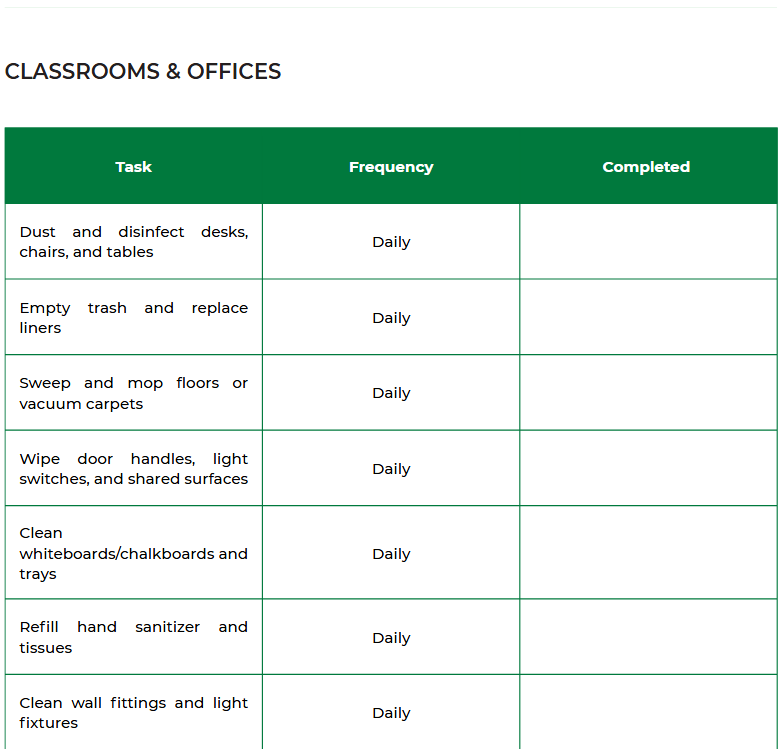
Office and classrooms
Dust and disinfect desks, chairs, and tables
Empty trash and replace liners
Sweep and mop floors or vacuum carpets
Wipe down door handles, light switches, and shared surfaces
Clean whiteboards/chalkboards and trays
Refill hand sanitizer and tissues (if applicable)
Clean wall fittings and light fixtures
Clean display screens, projectors, and computer systems
Hallways and common areas
Sweep and mop floors
Vacuum rugs or mats
Disinfect handrails, doorknobs, and light switches
Empty and clean trash and recycling bins
Clean interior glass doors and remove smudges from walls
Spot clean walls and lockers
Restrooms
Disinfect toilets, urinals, sinks, and countertops
Clean mirrors and partitions
Refill soap, toilet paper, and paper towels
Sweep and mop floors with disinfectant
Empty and sanitize trash bins
Wipe down stall doors and handles
Food service area
Wipe and sanitize tables and chairs after meals
Sweep and mop floors
Clean food prep surfaces and service lines
Empty and clean trash bins
Sanitize trays and wipe dispensers
Refill soap and paper towels at sinks
Labs and specialized classrooms
Wipe down workstations and equipment with proper disinfectant
Sweep or vacuum floors
Empty trash
Sanitize shared tools and devices (keyboards, mice, lab tools)
Check and restock any cleaning or hygiene supplies
Dust computers and other electronic devices
Gymnasiums
Disinfect gym equipment and mats
Mop floors with disinfectant
Clean and disinfect locker handles and benches
Wipe down shower and restroom areas
Empty trash bins
Refill soap and paper towels
What are the weekly cleaning tasks in schools and other educational buildings?
Weekly cleaning addresses deeper janitorial concerns, especially those out-of-sight and hard-to-reach areas that are often overlooked.
Below are weekly janitorial activities to prevent dirt accumulation:
Entrances and exits
Clean and polish door frames, handles, and glass
Deep clean entry rugs or mats
Power wash exterior steps or walkways (if needed)
Dust light fixtures, signage, and entry cameras
Check and clean exterior trash bins or smoking areas
Classrooms and offices
Deep clean and disinfect all desks and chairs
Dust ceiling fans, vents, and light fixtures
Wipe walls, doors, and baseboards
Clean windows and window sills
Organize and sanitize shared supplies and cabinets
Vacuum under furniture and hard-to-reach areas
Hallways and lobbies
Buff or polish floors
Clean interior glass
Dust signage, artwork, and display boards
Vacuum and spot-clean rugs or mats
Wipe down lockers or cubbies
Disinfect drinking fountains or water bottle refill stations
Restroom
Deep clean grout and tile
Clean faucets, sinks, and urinals
Wipe down stall walls and doors thoroughly
Clean behind toilets and under sinks
Check for and report plumbing issues or mold
Sanitize trash bins
Food service area
Deep clean chairs, table legs, and undersides
Scrub and sanitize floors, including corners and baseboards
Clean behind appliances and serving counters
Organize and wipe down pantry or storage shelves
Clean sinks and faucet fixtures
Disinfect all touchpoints (e.g., cabinets or vending machines)
Labs and specialized classrooms
Deep clean and disinfect lab benches and workstations
Wipe down walls, cabinets, and storage areas
Clean and inspect shared tools/equipment thoroughly
Vacuum and mop under movable equipment
Dust and sanitize electronics (e.g., computer labs)
Gymnasiums
Deep clean showers, tile walls, and floors
Disinfect benches, lockers (inside and out)
Scrub rubber mats and sanitize all gym equipment
Clean mirrors and wipe down windows
Remove buildup in drains and sinks
Recheck ventilation systems for dust/mold
How do you use an educational building cleaning checklist?
First, do a property walkthrough and identify the areas your crews will be cleaning. Is it the lobby, the restroom, or the library?
Next, determine how often each area requires cleaning (daily, weekly, or monthly). With that information, create a detailed checklist outlining tasks and frequencies for each space.
The janitorial staff can then use the checklist to:
Understand their specific responsibility at the property
Follow the cleaning standard and complete tasks accordingly
Check off each task once it’s completed
Afterward, cleaning supervisors can review the crew’s work using the checklist. They can verify that all tasks were done correctly and ensure nothing was missed.
What are the common mistakes with cleaning checklist templates?
While checklist templates are handy for cleaning crews, the inevitable mistakes people make with them reduce their effectiveness.
Here are some of the pitfalls and how to avoid them:
Overly complex or too lengthy: Checklists should be concise and easy to understand, with clear and scannable instructions. With busy shifts and numerous tasks, your cleaning crew can’t afford delays due to lengthy explanations. Keep the checklist short, clear, and actionable.
Too vague or generic: A checklist that says ‘clean classroom’ isn’t very helpful to the cleaner. It should be detailed and as actionable as possible to maintain high cleaning standards.
An example could be: Clean classroom—vacuum the floor, dust desks, chairs, and tables. Clean the windows. Disinfect the doorknobs and other high-touch areas.
Outdated checklists: You must continually update the checklist to remain relevant and reflect evolving health guidelines.
Limited or no training: Not every cleaner knows how to use a checklist effectively. Thinking otherwise could lead to subpar cleaning results. Ensure every cleaning crew member knows how to use the checklist template you provide.
How do you train staff to use cleaning checklist templates?
Here’s how you can train your janitorial crew to use a cleaning checklist:
Explain the checklist's purpose: Begin by explaining why the checklist is crucial to the company’s workflow and its importance in maintaining cleaning standards.
Introduce the checklist as part of the onboarding process: When you hire new employees, inform them about the cleaning checklist. Let them know it’s part of your operating procedure, and guide them through its use so they become accustomed to it.
Pair new hires with current employees: This partnership provides new workers with hands-on experience. It ensures they quickly learn how to incorporate the checklist into their cleaning routines.
Organize periodic refresher training: Use periodic retraining as an opportunity to reinforce the team's use of the checklist. Address concerns, correct repetitive habits, and answer questions as needed.
Going beyond templates: streamline your education cleaning operations with Aspire
The idea of a checklist is to ensure consistency and accountability. It reduces the need to recall all that needs to be done and serves as a record of completed tasks.
However, the conventional paper checklist, where every party ticks boxes with a pen, is tiresome and prone to errors.
A better solution is to digitize the checklists using Aspire’s cleaning software, making it easy for your cleaning crew to track its tasks.
With the Aspire Mobile app on their smartphones, crew members can check off tasks, clock in and out of work, notify supervisors, and log issues using photo or video documentation.
Aspire’s software also serves as a centralized platform to help streamline your cleaning operations using features such as:
Scheduling to assign tasks and organize projects, ensuring everyone is where they need to be.
Crew management to monitor employee performance, optimize routes, and improve accountability.
Managing cleaning equipment, helping you handle usage records, track maintenance, and repairs.
Reporting to gain insight into operations to minimize waste and identify ways to improve your services and revenue potential.
Want to see how Aspire further simplifies and improves your cleaning operations?
Schedule a demo to see how the software works.






 866-727-7473
 Schedule Demo
 390 S Woods Mill Rd #300 Chesterfield, MO 63017


