Requests for proposals (RFPs) are a crucial formal document that helps landscaping businesses secure commercial contracts.
However, unclear RFPs waste time and can lead to poor-fit proposals, which in turn cause businesses to lose contracts.
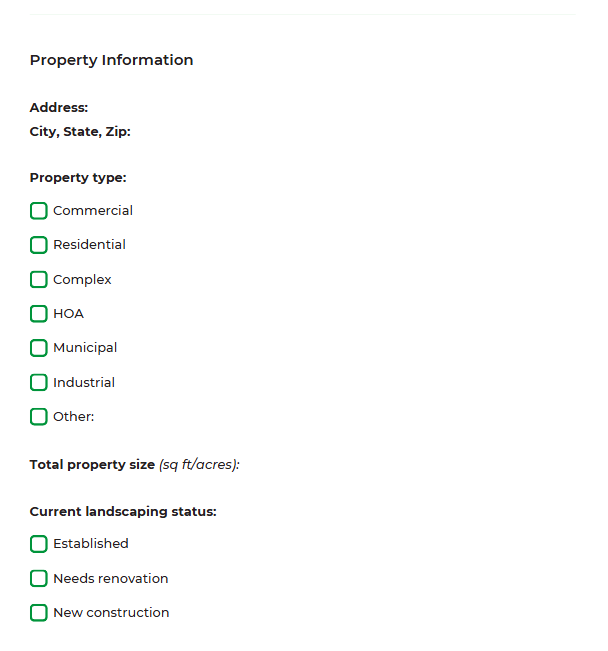
A free, downloadable landscaping RFP template, like the one below, helps landscaping contractors position themselves as professionals and drives better proposal outcomes.
This article covers all the details included in the template and provides a guide on how to use it effectively.
How to use the free landscaping RFP template
Using the free landscaping RFP template is straightforward. Business owners can download the template, customize it with their company information, and then edit the service categories to match their offerings.
Once you’ve set up the RFP template to fit your business, you can send it to your prospective clients before they write their own or ask for a proposal. This offers extra value to your prospects, saving them time while ensuring you receive a clear and informative RFP.
Upon receipt of the completed RFP, you can assess the service needs, budget fit, and timeline alignment to qualify leads and identify follow-up opportunities.
Track RFP status and client info using your customer relationship management system.
Then, use the information from the RFP to build your proposal using Aspire’s comprehensive estimating tools.
What is a landscaping RFP?
A landscaping RFP is a document that property managers and commercial organizations use to collect bids from landscaping contractors.
The primary purpose of an RFP is to explain the scope of the landscaping work required, outline expectations and timelines, and define the criteria for service evaluation.
This information ensures the contacted landscaping businesses can submit accurate, informed, and competitive proposals.
RFPs help property managers and stakeholders find the right contractors, fostering fair competition among landscaping businesses.
Why does your landscaping business need an RFP template?
RFPs are the client’s responsibility, but in many cases, your prospects won’t know the full extent of the details they should include in their landscaping RFP. This means you might receive a vague, confusing request that is open to misinterpretation.
Instead, an RFP template allows you to take the initiative and provide a robust, structured RFP layout that ensures you gather all the necessary details for your proposal.
Here are some other key reasons why landscaping contractors need an RFP template:
Avoid incomplete or inconsistent requests: Missing information leads to wasted time on guesswork and back-and-forth with the client. It could even cause you to dismiss an RFP as a bad match. An RFP template prompts clients to provide all the critical details you need.
Stand out with professionalism: Providing your prospective client with a well-structured, comprehensive RFP template showcases your professionalism and helps you differentiate yourself from the competition.
Get better-fit opportunities: By gathering all the right details through your RFP template, you can quickly assess and qualify job fit and respond to projects that match your capabilities and services.
Accelerate your sales cycle: A template ensures that the completed RFP you receive from your prospective customer contains all the necessary information for you to create an accurate estimate. This means your team can generate accurate bids more quickly, speeding up the sales process.
What should a landscaping RFP include?
The exact details included in a landscaping RFP will differ slightly depending on the client and the type of work needed.
However, there are some common elements you should include:
Company and property details: Request the names and contact details of the primary and secondary contacts, as well as the address and property type where the services will be provided.
Scope of work: Ask the client to outline the services they require, such as landscaping enhancements, routine maintenance, or seasonal work.
Service frequency and timing: The client should also define their expectations regarding when services will start, how often they are needed (weekly, monthly, seasonally), and for how long they will continue (one-off, short-term, seasonal, ongoing).
Budget expectations: A clearly defined budget is vital for ensuring your bid is affordable. Ask the client to outline a budget range or cap if available.
Evaluation criteria: Understanding how the client will choose their vendor helps you tick all the boxes in your proposal. Ask them what criteria they will use to evaluate, such as price, references, and experience.
Site access or special requirements: Request details about business hours, after-hours restrictions, on-site contacts, and required certifications.
Timeline for RFP and decision: Understanding the timeline for responses and decisions helps you deliver a timely proposal, so include a field for this at the end.
From RFP to contract: how Aspire streamlines the sales process
There are several steps involved in turning an RFP into a signed contract, and the process can be time-consuming.
Thankfully, a comprehensive field service management platform, such as Aspire, simplifies each step and helps landscaping businesses manage bids, close deals, and stay organized throughout the entire process, from request to scheduling.
Here are some of the ways Aspire can help:
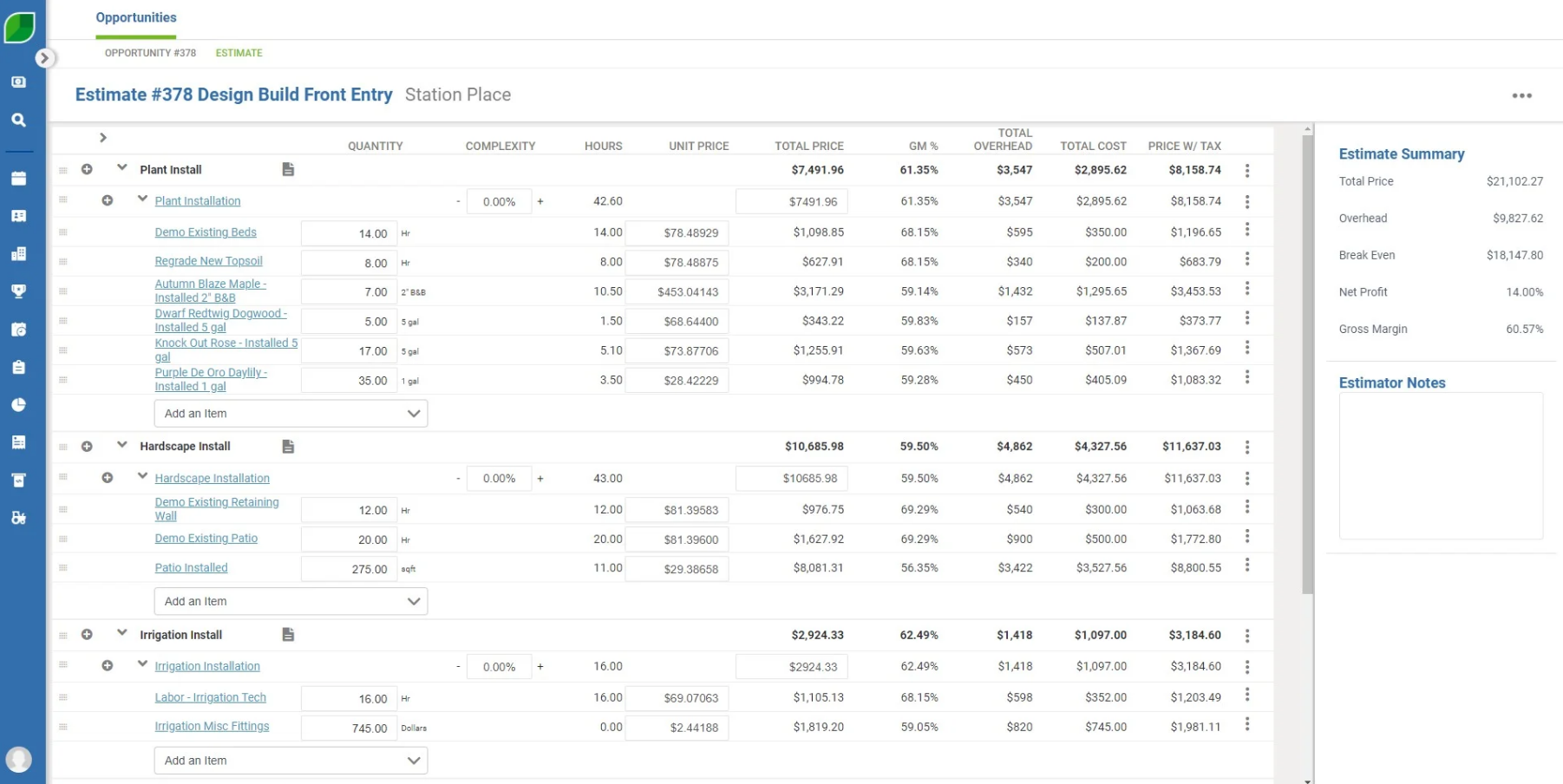
Track and manage every RFP: Use Aspire’s CRM to log incoming requests and track client conversations, ensuring no communication goes unanswered.
Build fast, consistent estimates: With Aspire’s estimating tools, businesses can quickly create professional estimates from customizable templates. Users can even collect client signatures through the client portal, mobile app, and email.
Generate precise proposals: Aspire’s job costing features enable businesses to leverage job histories and real-time business data regarding labor, materials, and subcontractor costs, helping them create accurate and profitable proposals.
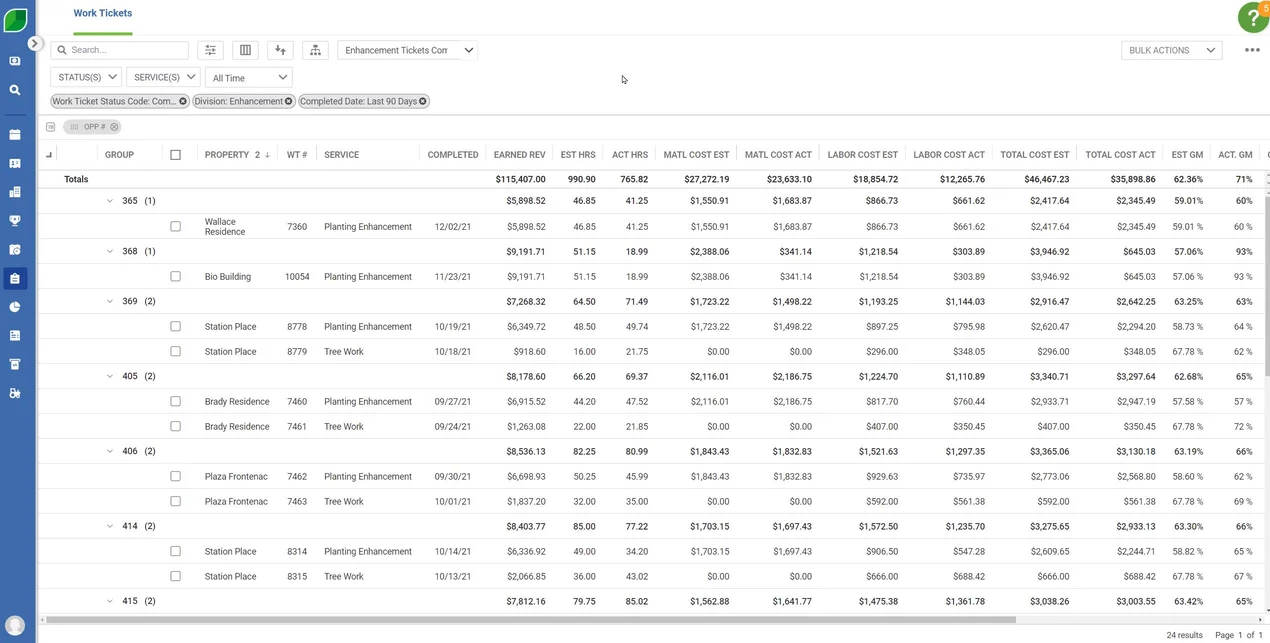
Move from estimate to schedule: Once your proposal is accepted, Aspire’s scheduling software enables you to automate work ticket generation and easily manage scheduling through a drag-and-drop interface.
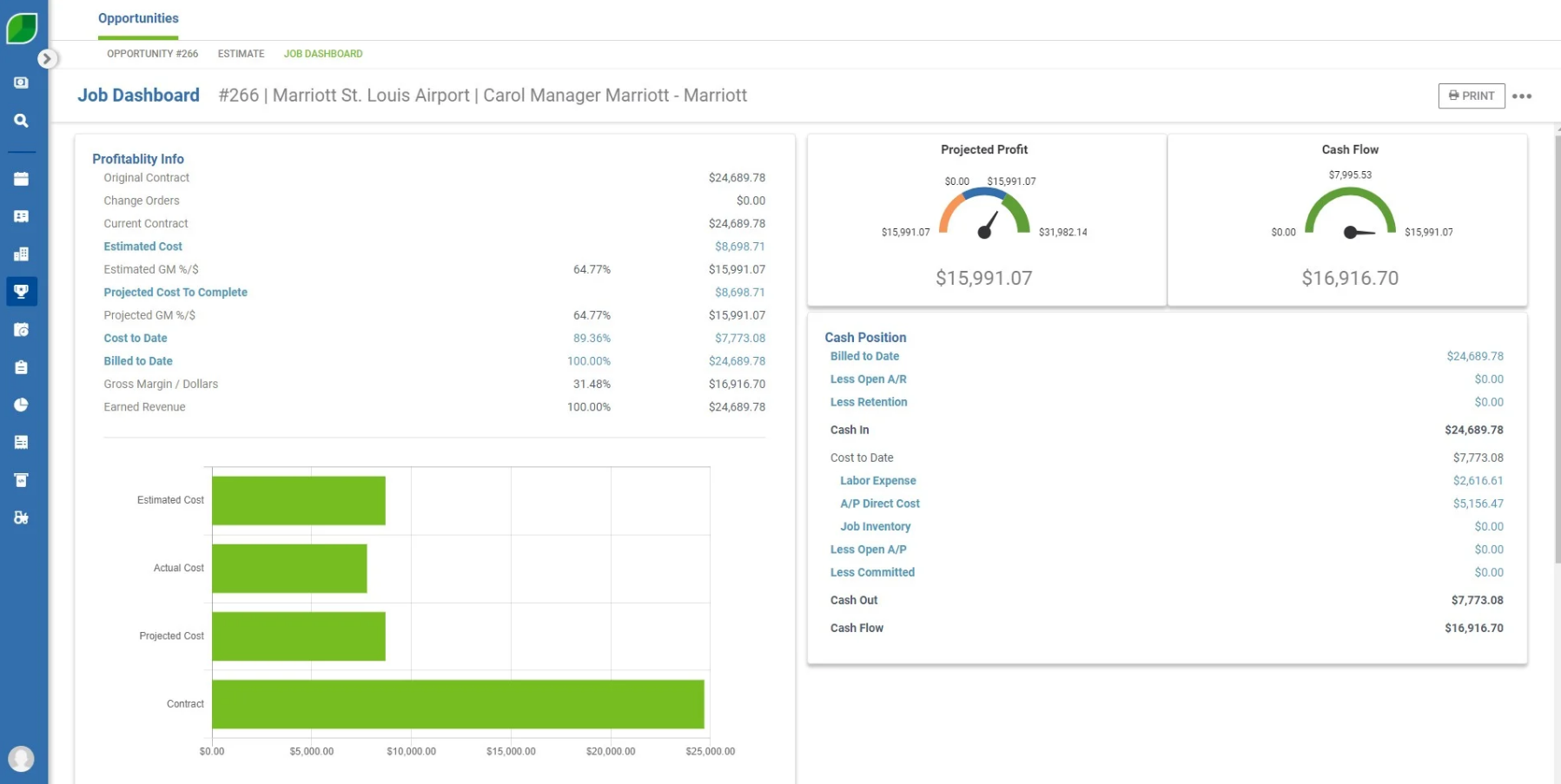
Measure close rates and margins: Aspire’s robust reporting features enable landscaping business owners to understand which types of clients and services drive results, allowing for informed, data-driven business decisions.
It’s your turn now
A professional RFP template guides your proposal process, ensuring clarity and consistency while creating a strong impression with your potential clients. It helps you gather the right information, tailor your proposal, and ultimately win more bids.
Pairing a strong RFP template with Aspire’s all-in-one business management platform provides even more efficiency in your sales operations.
Book a demo with Aspire today to see how it can streamline your sales process.






 866-727-7473
 Schedule Demo
 390 S Woods Mill Rd #300 Chesterfield, MO 63017


