Table of Contents
Table of Contents
- Do you need a license to start a landscaping business in Massachusetts?
- What are the types of landscaping business licenses & permits in Massachusetts?
- Step-by-step process to get a landscaping business license in Massachusetts
- How much does a Massachusetts landscaping business license cost?
- What are the most common mistakes to avoid when getting a license?
- How Aspire helps landscaping businesses stay organized & compliant
- Over to you
- Disclaimer
Starting a landscaping business in Massachusetts can seem complicated at first glance, but it shouldn’t be.
To ensure your business operates legally and in compliance with state regulations, you need the appropriate licenses.
This guide will break it all down for you.
It explores licensing requirements in Massachusetts, their costs, and application steps.
You’ll also discover how Aspire helps your business stay organized and compliant with local regulations.
Do you need a license to start a landscaping business in Massachusetts?
The state does not require a general license for basic services such as lawn mowing, edging, planting, or seasonal cleanups.
However, licensing becomes mandatory once your services expand beyond basic maintenance. If you apply fertilizers, herbicides, or pesticides, you need certification from the Massachusetts Department of Agricultural Resources.
If your work includes hardscaping or structural improvements, such as patios, retaining walls, or walkways, you need a Home Improvement Contractor (HIC) registration through the Massachusetts Office of Consumer Affairs and Business Regulation.
In short, it’s possible to start without a license, but as your services grow, the state requires specific certification and registration.
What are the types of landscaping business licenses & permits in Massachusetts?
Understanding which licenses and permits apply to your services is key to staying compliant.
General business license
Massachusetts does not issue a single statewide general business license, but you still need to register your business legally, which involves registering with the state and filing a DBA (Doing Business As) certificate with the local city if operating under a trade name.
Landscaping contractor license
While Massachusetts doesn’t have a specific landscaping contractor license, certain landscaping services are subject to contractor regulations.
If your work involves hardscaping or structural improvements, you’ll need a Home Improvement Contractor (HIC) registration. This is required for those working on owner-occupied residential properties to ensure compliance with consumer protection requirements.
For larger construction projects, you need a Construction Supervisor License (CSL), which allows you to supervise building-related projects.
Specialized licenses
You require specialized state licenses if you work with chemicals (e.g., fertilizers, herbicides, or pesticides) and should obtain a pesticide applicator license through the Massachusetts Department of Agricultural Resources.
State law requires anyone applying pesticides for hire to hold a valid license or certification, typically obtained by passing an exam.
Permits and local regulations
Depending on your location and service area, you might need permits for grading, drainage, or land disturbance.
For instance, projects in wetlands or coastal areas require approvals under laws such as the Wetlands Protection Act, especially if they affect protected habitats.
Cities and towns also enforce zoning rules, signage permits, and noise ordinances that affect your daily operations.
Step-by-step process to get a landscaping business license in Massachusetts
Starting a landscaping company in Massachusetts requires you to follow these steps:
Here’s how the process works.
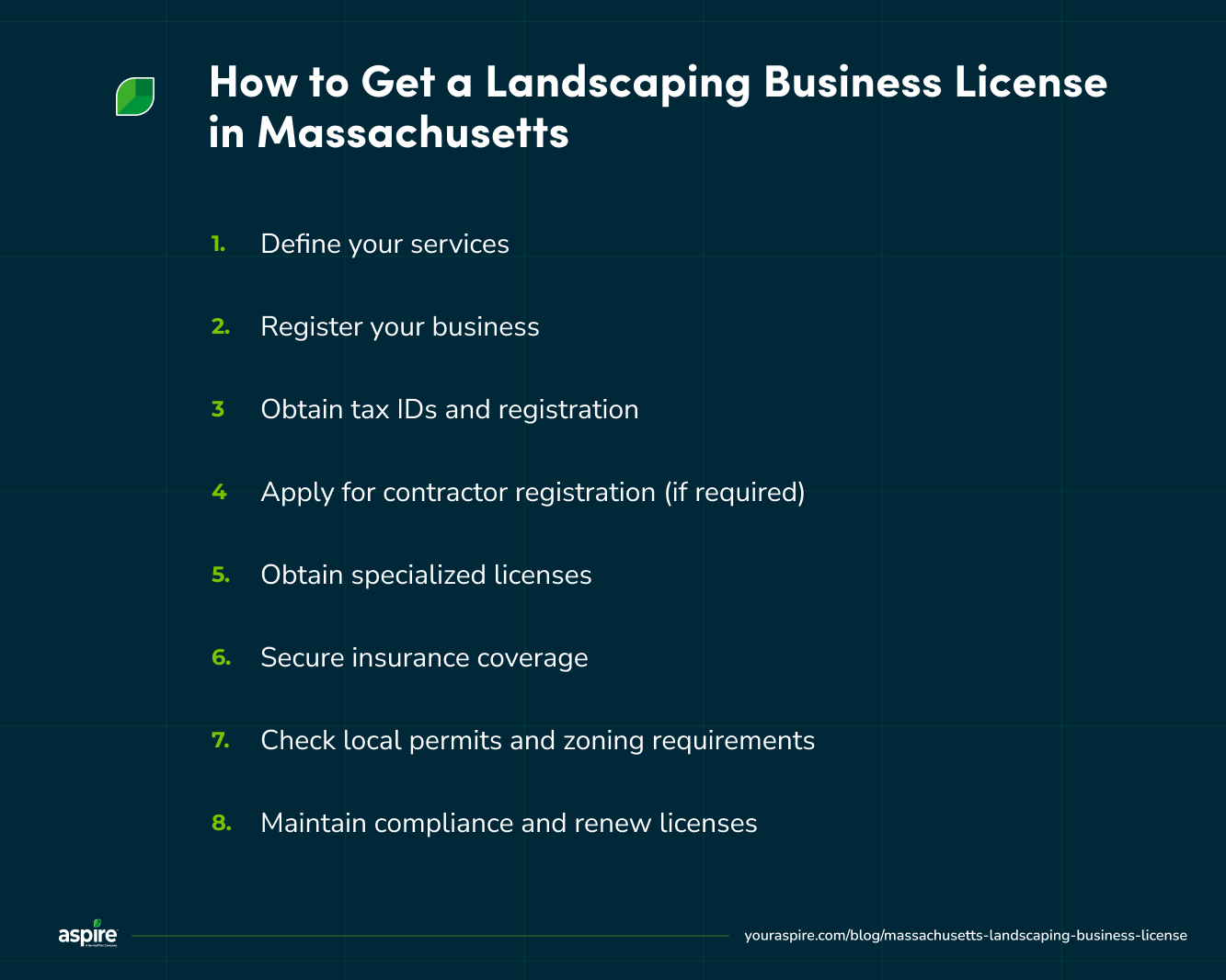
1. Define your services
Identify exactly what services you’ll be offering. Basic lawn care requires minimal licensing, while pesticide application or hardscaping requires certifications or contractor registration.
2. Register your business
Register your business with the Massachusetts Secretary of the Commonwealth and choose a business structure that fits your goals.
Sole proprietorship: The simplest and least expensive option to set up. Ideal for solo landscapers just starting out, but it doesn’t provide personal liability protection.
Limited liability company (LLC): A popular choice among landscapers because it separates your personal and business assets while offering flexible management and pass-through taxation.
Corporation: Best suited for larger landscaping companies planning to raise capital or bring on shareholders. It offers strong liability protection but requires more paperwork, ongoing compliance, and formal recordkeeping.
If operating under a trade name, file a DBA with your local city or town.
3. Obtain tax IDs and registrations
Apply for an EIN (Employee Identification Number) through the IRS if you plan to hire employees.
You also need to register with the state for taxes, especially if you sell materials like plants, mulch, or other goods.
4. Apply for contractor registration (if required)
If your work involves structural landscaping, such as patios or retaining walls, register as a home improvement contractor with the Massachusetts Office of Consumer Affairs and Business Regulation.
You’re required to complete the registration and pay the $150 registration fee using the MA Contractor Hub. Create an account and follow the on-screen instructions to get your home improvement contractor registration.
For advanced work, you also need a construction supervisor license (CSL).
Here’s how to apply for a CSL:
Determine the type of license you’re applying for.
You must have 3 years of experience in building construction or design.
Take an exam using this candidate handbook.
Mail your score to the Board of Building Regulations and Standards along with some items indicated on the score report.
5. Obtain specialized licenses
Is your business using pesticides or fertilizers? Then you need specialized certification from the Massachusetts Department of Agricultural Resources.
You can apply online. To get licensed, create an account through the state’s EEA ePLACE Portal, where you register for the required exam, submit your application, and renew your license.
Then, after you pass your exam, log in to your ePLACE Portal account and ‘Apply for an MDAR Authorization’ using the exam identification number provided via email. Provide the requested information, and you’re ready to go.
The exam registration fee for a pesticide applicator license is $75, while the license costs $100. View all pesticide applicator licensing and certification fees here.
6. Secure insurance coverage
Most landscaping businesses should carry general liability insurance to protect against property damage or injuries.
Some licenses require proof of insurance, and workers’ compensation is mandatory if you have employees.
7. Check local permits and zoning requirements
Contact your local city or town to confirm zoning rules and permit requirements.
You need approvals to operate from home, store equipment, or complete projects involving land disturbance or environmental impact.
8. Maintain compliance and renew licenses
Once your business is up and running, stay compliant by renewing licenses, maintaining insurance, and following regulations.
Pesticide licenses require periodic renewal and continuing education, while contractor registrations must remain active.
How much does a Massachusetts landscaping business license cost?
The costs of starting a landscaping business in Massachusetts depend on your services, licenses, and business setup, but you’re expected to spend around $2,200+ to get fully compliant.
Business registration and local filings, like a DBA certificate, are relatively inexpensive, typically ranging from $50 to $200, depending on your location.
An HIC registration costs about $150 for the application, plus a required Guaranty Fund contribution of $100–$500, depending on the number of employees.
Additional costs include:
Insurance: $300–$1,000 annually
Specialized services: Exam and license cost, often ranging from $50 to $150+
Training or exam fees: $50–$200
Local permits: Vary by municipality
Overall, a landscaping business should budget around $700 to $2,200+ to cover all these expenses.
What are the most common mistakes to avoid when getting a license?
While it’s relatively straightforward to get licensed in Massachusetts, the state’s strict rules make it easy to slip up. Avoiding these common mistakes saves you time, money, and legal headaches.
1. Misunderstanding which licenses you need
Assuming one license covers everything is a mistake many make. In Massachusetts, different licenses apply to different types of work.
For example, HIC registration covers residential projects, while a CSL is required for structural work. Many contractors apply for the wrong credential or skip one entirely. This prevents you from pulling permits or even legally working on certain jobs.
To fix this, you need to clearly define your services and align them with the appropriate licensing requirements before applying.
2. Skipping permits or local requirements
Massachusetts has strict building codes and highly localized permitting rules, so working without proper permits can result in fines, project shutdowns, or legal issues.
Another issue is assuming rules are the same across towns, but each municipality interprets requirements differently.
Always check with local authorities before starting a project, especially for grading, construction, or drainage work.
3. Ignoring compliance and renewal requirements
Many contractors let licenses expire or fail to meet ongoing obligations. You need to renew licenses on time, or you face delays.
You also need to maintain insurance, proper contracts, and documentation to stay compliant with state laws.
Set reminders for renewals, keep your paperwork organized, and stay up to date with Massachusetts regulations.
How Aspire helps landscaping businesses stay organized & compliant
Managing a landscaping business in Massachusetts means balancing contracts, finances, compliance records, and field operations.
As an all-in-one landscaping business platform, Aspire stands out as a great solution for centralizing everything, helping businesses reduce errors, improve visibility, and stay compliant with state and local requirements.
Contract & proposal management
Build accurate, professional proposals using templates and prebuilt estimating kits
Track leads, bids, and proposal approvals through an integrated CRM pipeline
Maintain a centralized record of client agreements for compliance and disputes
Invoicing & payment processing
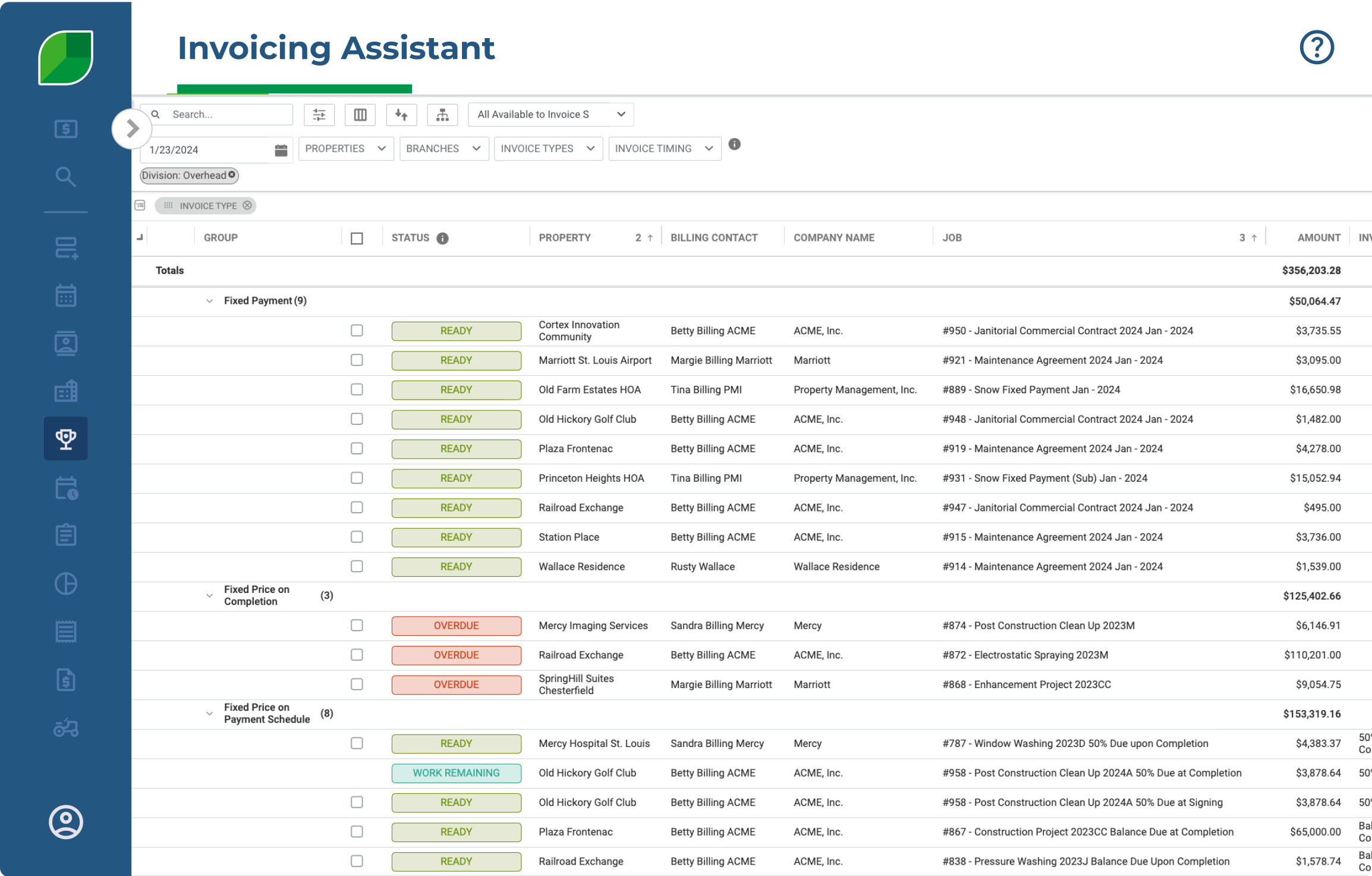
Generate and send invoices digitally
Sync with accounting tools for seamless financial management
Speed up cash flow with faster invoice-to-payment cycles
Business reporting & documentation
Access real-time job costing and financial data to monitor profitability
Track KPIs like sales pipeline, job performance, and labor forecasts
Make data-driven decisions with full operational visibility
Scheduling & job management
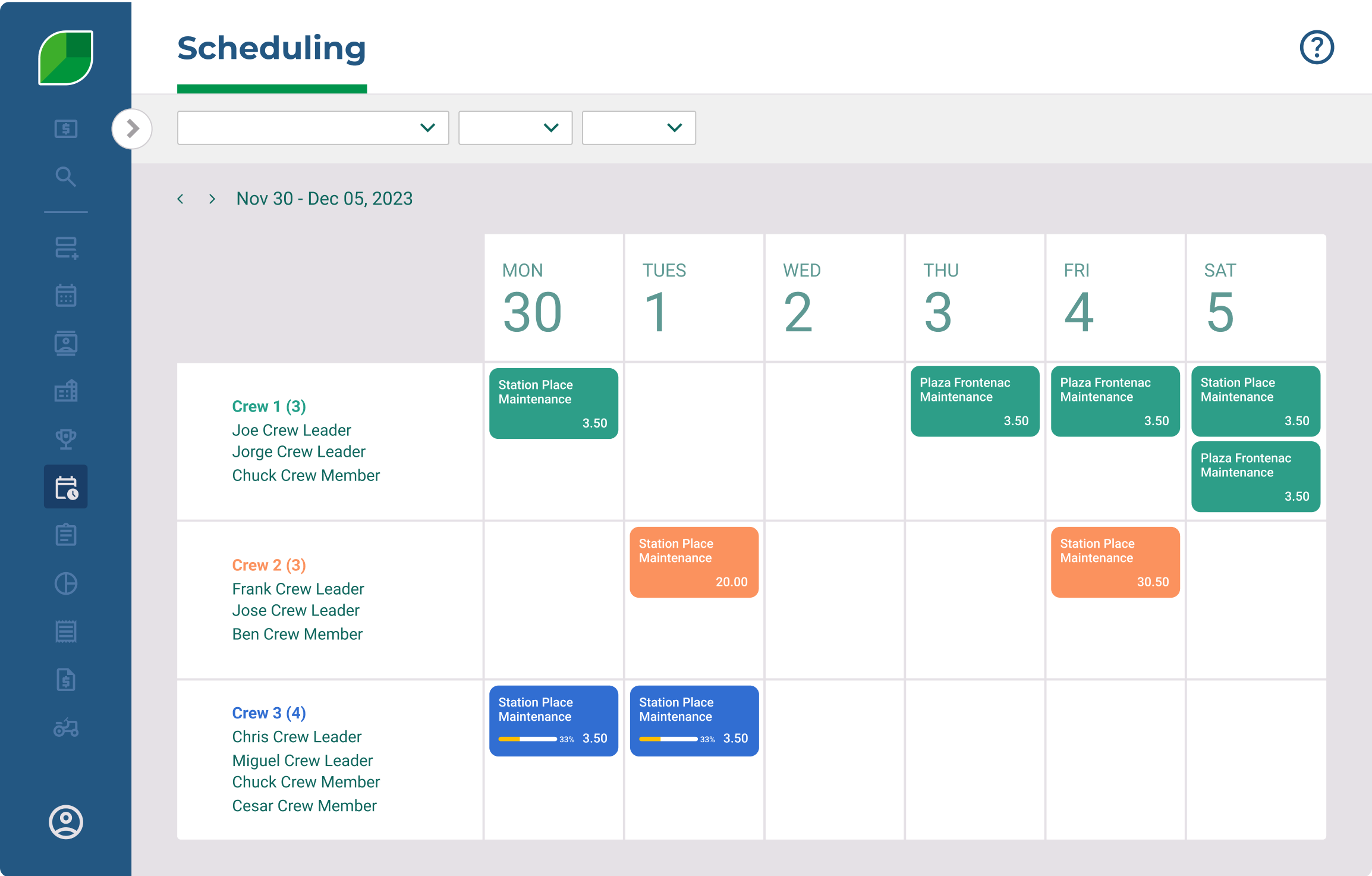
Use a live scheduling board to assign crews and manage workloads
Drag-and-drop scheduling with real-time updates for field teams
Enable mobile access for crews to view schedules and update tasks in the field
Over to you
Operating as a landscaping business in Massachusetts means navigating multiple licenses and permits, along with ongoing compliance, to build something that lasts.
By nailing your licensing early and staying ahead of compliance, you’ll spend less time chasing requirements and more time growing your client base.
The difference between chaos and control? Aspire. Book your demo today to run a smoother, more scalable operation.
Disclaimer
This content is for informational purposes only and does not constitute legal, financial, or licensing advice. Requirements for landscaping businesses in Massachusetts vary based on your services, location, and changes in state or local regulations. Always consult with the appropriate authorities before making a business decision.










 866-727-7473
 Schedule Demo
 390 S Woods Mill Rd #300 Chesterfield, MO 63017


