Table of Contents
Table of Contents
- Do you need a license to start a landscaping business in Iowa?
- What are the types of landscaping business licenses & permits in Iowa?
- Step-by-step process to get a landscaping business license in Iowa
- How much does an Iowa landscaping business license cost?
- What are the most common mistakes to avoid when getting a license?
- How Aspire helps landscaping businesses stay organized & compliant
- Over to you
- Disclaimer
With profit margins ranging between 10–40% and the landscaping industry generating about $184.1 billion in 2025, starting a landscaping business certainly looks like a good venture.
But before you begin, it’s important to understand the legal requirements for launching a landscaping company in your state.
Most regions have laws guiding the practice, and failure to follow regulations can lead to business disruptions, fines, and delays.
In Iowa, for instance, new landscapers need to register their business and secure several licenses depending on their preferred service offerings before they can operate.
If you’re thinking of starting a landscaping business in Iowa, this guide will help you navigate the licensing process efficiently so you can launch and grow the business legally.
Do you need a license to start a landscaping business in Iowa?
Yes, a business license is needed to launch your landscaping company in Iowa.
While the state doesn’t have a general landscaping permit, you must register your business with the state.
Also, if your services extend beyond lawn maintenance to include landscape design and installation, pesticide application, and the sale of plants, trees, and shrubs, you’ll need a separate permit for each.
Wondering what licenses might be required to launch a landscaping business in Iowa?
The next section outlines them.
What are the types of landscaping business licenses & permits in Iowa?
At the state level, here are the licensing requirements you will need:
Business license
To start a company in Iowa, you need to register the landscaping business with the Secretary of State so it’s established as a legal entity.
It’s crucial to do this because it:
Fulfills the state requirements to operate legally and allows you to get the necessary state permits and tax IDs.
Ensures your business appears trustworthy to clients, partners, and financial lenders.
Construction contractor license
You need this permit to take on projects like hardscaping, turf installation, sprinkler system installation, and irrigation system installation.
It is required for the hardscaping and installation aspects of landscaping work, especially if those projects bring in more than $2,000 annually.
If your projects won’t generate as much revenue, the license isn’t needed.
Pesticide business license
Do you intend to offer pesticide applications on client properties?
You need to get a commercial business license for the company and a commercial pesticide applicator certification for whoever will supervise or execute projects.
Both permits provide legal grounds for carrying out pesticide application services.
Landscape architecture license
Landscape design is a profession that people go to school for. And to offer your services as a landscape architect, you need to be licensed by the state.
This license is required if you plan to provide professional design services that affect people’s health, safety, and welfare.
Nursery dealer permit
You need a nursery dealer permit to legally grow and sell plants, shrubs, or trees. Besides the fact that it’s a legal requirement, the main idea is to prevent the spread of plant diseases and damaging insects.
It also ensures clients only buy healthy plants.
Permits and local regulations
Different cities in Iowa require landscaping businesses to have a permit before they can operate.
You need to check with the city’s licensing office or website to verify whether or not your business requires any permits.
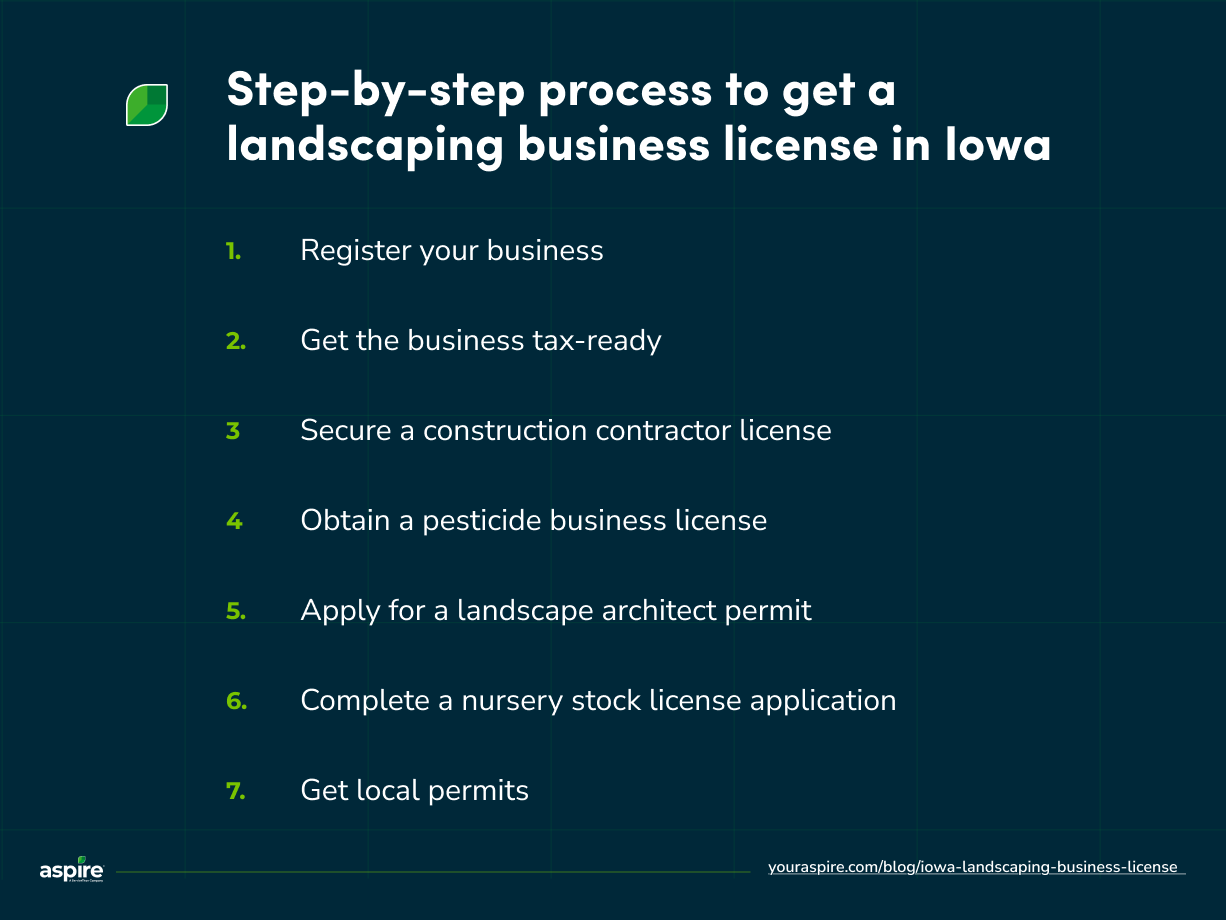
Step-by-step process to get a landscaping business license in Iowa
You now know what it takes to get licensed. But the real question is, how do you actually go from just knowing what you need to having it in hand?
This section gives you a clear, step-by-step roadmap for making that happen.
1. Register your business
Before applying for any permit in Iowa, your business must be registered with the state. This informs the state government that you intend to conduct business in the region.
To register the business, you need to decide on a specific legal structure: sole proprietorship, partnership, LLC, or corporation.
For sole proprietors, you will have to file a Trade Name form with your county recorder’s office if your business name is different from your full name. This costs about $10 to file and is valid until you close the business or the recorder’s office revokes the form.
If the business name matches your legal name, you can skip this and proceed to getting tax-ready and securing other licenses.
For partnerships, you will also file a Trade Name form with your county recorder’s office at a $10 cost.
And for LLCs and corporations, here’s how to register your business:
Create an account on the Secretary of State’s Fast Track Filing system.
Once you’re within the platform, click “Create Account” to sign up. Input the necessary information, and click “Sign Up.” Next, confirm your account from an email sent to your inbox and log in to the home page.
Complete the registration form and your Certificate of Organization.
From the Home page, select “File a Business Document” and click the “Form an Iowa Limited Liability Company” or “Form an Iowa Corporation” link.
Provide the necessary information and upload a PDF version of your Certificate of Organization.
When you set up an LLC, the Certificate of Organization (also called Articles of Organization or Certificate of Formation) is the key document. It spells out the rights, powers, duties, and liabilities for everyone involved in the LLC. It also lists the names and addresses of the members, the name of your registered agent (the person registering the business), and what the business plans to do.
Pay for the registration
You should be able to review and pay for the filing through the online form. The cost for filing the LLC or corporation is $50.
After payment and once you’ve been approved, you will have an official LLC or corporation.
2. Get the business tax-ready
All businesses are required to pay their taxes to the state and federal governments. It’s the law.
To do that, you need a federal Employer Identification Number (EIN) from the IRS, which allows the federal government to identify your organization.
This ID also lets you open a bank account, employ staff, and pay your taxes. You can get this by visiting the IRS website.
Registration with the Iowa Department of Revenue is also required. You can get a sales & use tax license if you sell tangible goods, such as plants. Or register for withholding tax if you intend to employ workers.
3. Secure a construction contractor license
For landscaping projects such as hardscaping, turf installation, or irrigation system installation, you’ll need a construction license. Here’s how to register for one:
Choose how you want to apply: Online through the state’s portal or by mail.
Gather the required information, which includes:
A valid unemployment insurance account number
Your NAICS code (business activity classification)
Proof of workers’ compensation insurance, if applicable
An out-of-state contractor bond with Power of Attorney or a DOT letter, if applicable
Complete the application. Whether applying online or by mail, your application must be fully completed and signed. If it’s incomplete, the process will be delayed or returned.
Pay the registration fee. Submit a $50 non-refundable annual fee online or include a check or money order with your mailed application.
Once you submit the application, check your email and the state contractor database. If your payment is processed, but your business does not appear as registered, your application was likely returned due to missing information.
4. Obtain a pesticide business license
To get a pesticide business license, you'll either need to bring on a commercial pesticide applicator or get certified as one yourself.
But to even get certified, you'll have to pass two tests. One is a 50-question, closed-book exam based on the Iowa Core Manual, and the other is a 35-question exam covering the specific categories you want to work in. Also, make sure to save the proof of passing the exams, then proceed to apply for your certification.
After that, sign up with the Iowa Department of Agriculture and Land Stewardship (IDALS) pesticide applicator portal.
Click “First time user?” and enter your personal details using a unique email address. Choose:
User type: Applicator
Certification number: No
License number: No
Once submitted, you’ll receive an email to set up your password.
Log in to the IDALS portal > “Apply for a New Applicator/Individual Certification.” Choose Commercial as the certification type, enter your employer’s business license number, complete the applicant information form, and save your tracking number.
Next, enter exam details and upload documents. Add your Core and category exam pass dates (if applicable), upload your exam verification files, and electronically sign the application.
Your application will be reviewed within 1–7 business days. Once approved, you’ll need to log back in to pay the required fees ($75) using a credit/debit card or electronic check.
After payment, your certification is issued. Digital cards appear within 1–2 business days, while mailed cards typically arrive in about two weeks.
For the pesticide business license, here’s what you’ll need to do:
Create an IDALS portal account, choose business owner/ representative as the user type, and wait 1–2 business days for account verification.
Begin the application process by selecting “Apply for a New Company License.” Enter your company and site information, choose whether you want a mailed or digital license, and save the tracking number.
List the applicators who will operate under your company.
Respond to secondary containment questions, sign the application, and upload a certificate of insurance.
Upload proof that your applicators passed their core and category exams.
Once you’ve completed the sections, the application enters pending review for about 1-7 business days. After approval, log back in to pay the fees ($25 per business location) and wait for the license.
5. Apply for a landscape architect license
You need a landscape architect license to offer services that design and plan the use of outdoor spaces. To qualify for a license, you must meet one of the following:
Hold a 4-year landscape architectural degree, complete 3 years of practical experience, including 1 year under a licensed architect
Graduate from a non-accredited 4-year program and complete 4 years of practical experience, including 1 supervised year.
Have 10 years of practical landscape architecture experience deemed satisfactory by the board.
Next, you must pass the CLARB-administered Landscape Architect Registration Examination (LARE). After that, submit an application provided by the licensing board outlining your education and professional experience.
6. Complete a nursery stock license application
If you intend to sell plants, a nursery dealer permit is needed from the Department of Agriculture.
Fill out this form and submit it to the Entomology and Plant Science Bureau to get licensed.
Want to grow your own nursery stock and sell, too?
You’ll need to fill out a request form for the Iowa Nursery Grower’s Inspection.
7. Get local permits
Besides the state-level requirements, you'll need to figure out if your city or town has its own rules for landscaping permits.
Some places, like Wahpeton, make you get a permit just to run your business, and Sioux City specifically requires a license if you're doing landscape irrigation.
Always check with your local city hall or municipal office to make sure you have everything you need to legally work in their area.
How much does an Iowa landscaping business license cost?
Here’s what it costs to secure licenses for your landscaping business in Iowa:
Business registration fees
Filing fees
LLCs and corporations: $50
Trade name (sole proprietorship): $10
Renewal fees
LLCs and corporations: $30 (online) and $45 (by mail)
Nursery license
Dealer’s license: $25
Grower’s license: Payment after inspection is done
Commercial pesticide license
Contractor
Application fee: $25
Renewal fees: $25
Commercial applicator
Exam fee: $25 per test
Licensing fee: $75, valid for three years
Commercial contractor license
Registration fee: $50
Renewal: $50
Landscape architect license
Application fee: $300
Exam fees: $15
Renewal fees: $350
What are the most common mistakes to avoid when getting a license?
When securing a license, there are certain mistakes business owners make that you should be aware of to ensure a smooth process.
1. Ignoring city-level rules
While several licenses are handled at the state level, some cities like Wahpeton require additional registrations or permits.
If you forget to check local requirements, your new business is at risk of issues with the city government. This could mean legal disputes or failing to secure the client’s trust.
2. Skimping on insurance
Specific licenses, like contractor registration and pesticide business permits, require insurance for clients and employees.
Failing to get insurance might mean your business isn’t registered, and clients and employees don’t feel protected.
3. Forgetting renewals
Almost every license required for your landscaping business must be renewed at both the state and city levels to remain legal.
If you don’t, business operations can be brought to a halt. Plus, you could be fined, damage your professional reputation, and even delay future projects.
How Aspire helps landscaping businesses stay organized & compliant
Starting a landscaping business is an exciting venture, but it comes with several operational challenges as you grow:
Difficulty responding to prospects as projects increase
Maintaining accurate schedules
Real-time monitoring of the entire business
Requesting payments and getting paid promptly
These issues usually stem from relying on manual systems, which become harder to manage as the business scales.
Aspire helps replace the ‘disorder’ with structure, giving landscaping businesses the tools they need to stay organized and compliant as they grow.
Here’s how:
Contract & proposal management
When you’ve got multiple prospects waiting on a proposal or estimate, creating one from scratch for each of them is a lot.
But with Aspire’s estimating feature, that process becomes a whole lot easier, as it enables you to create and send professional proposals fast.
Aspire provides templates that make the job simple, so you just need to include the service to be offered, along with the labor and material costs.
To ensure you don’t always have to calculate the cost for each job, the software allows you to preset profitable margins and markups for labor, materials, and overhead based on previous projects.
Then, it automatically applies them to the estimate, so every proposal sent is profitable.
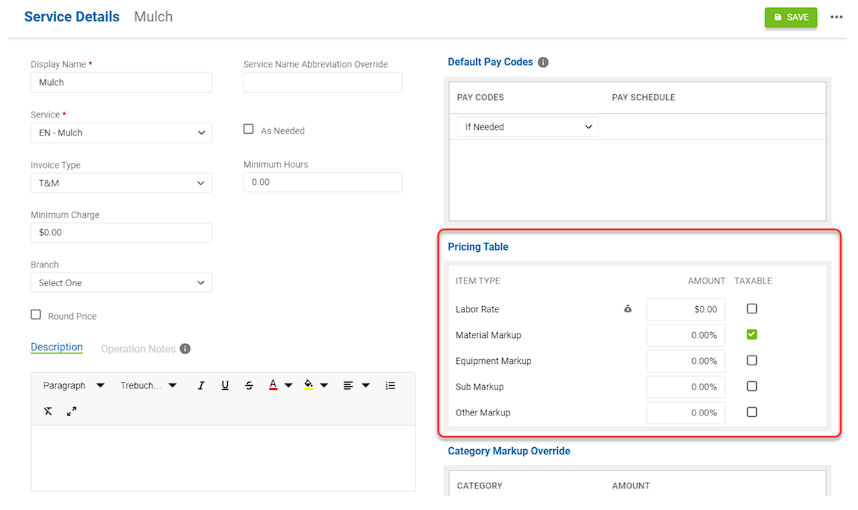
You can then send it over to clients or prospects via email or Aspire’s very own customer portal.
Invoicing & payment processing
If you only need to send invoices to, say, five clients, whipping up a new one in Google or an Excel sheet is totally doable.
But when you've got over 20 clients with varying project timelines, things can get messy fast if you stick with that method, especially since you'll need to make sure the invoice info is accurate every single time.
That’s not the case when you use Aspire’s invoicing feature.
Since you used the platform to create proposals, it pulls the data for each project so you can create the invoice quickly.
You only need to add details, such as the date and invoice number, before sending it over.
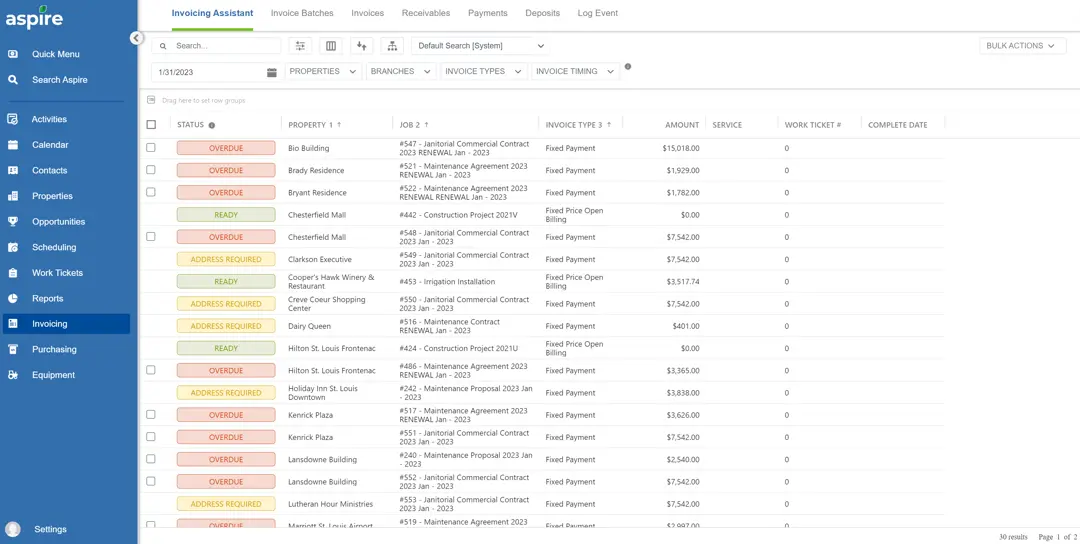
Aspire doesn’t just help you create or send invoices. It allows you to keep a close eye on each invoice’s status, from pending to paid or overdue.
You can also receive payment from clients, ensuring consistent cash flow.
Business reporting & documentation
Another way Aspire helps your landscaping business is by providing insights into your company’s daily operations.
Thanks to its reporting feature, you can access metrics such as client retention rate, employee productivity, cash inflows and outflows, projected profit, and direct costs. It enables you to identify opportunities and losses and, essentially, make strategic decisions.
And how does it provide such information?
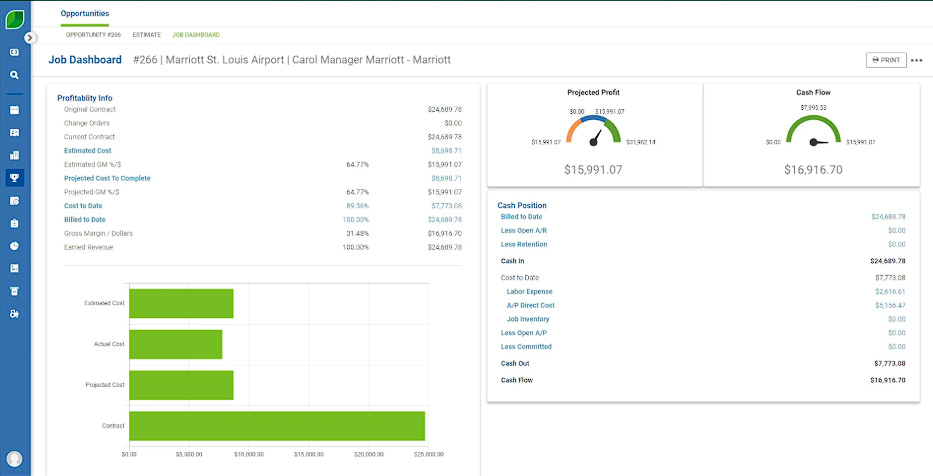
The system enables field and office staff to perform several operations and share updates.
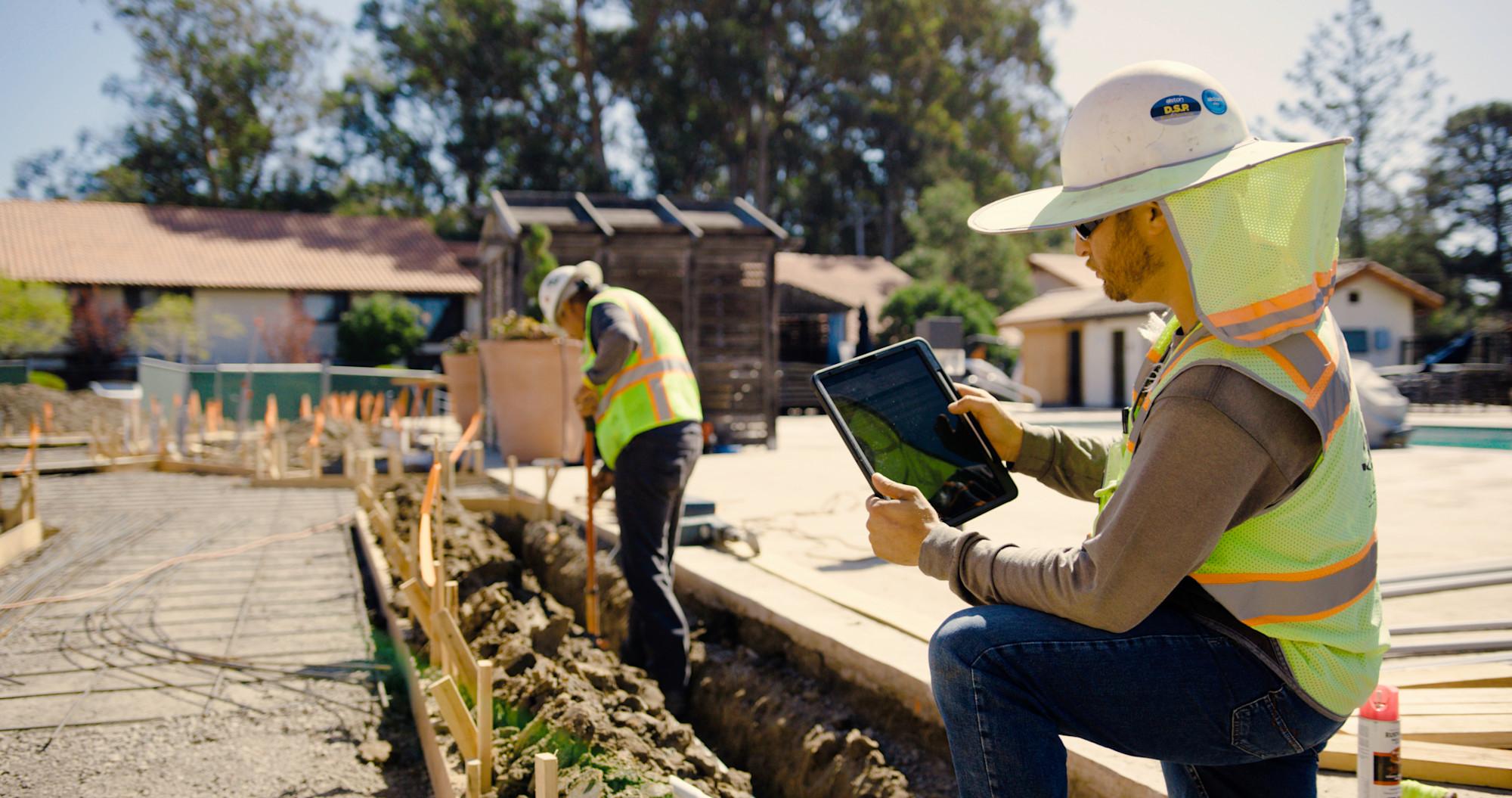
For example, your field crew can report incidents, clock in and out, take photos of client sites, note materials used, and create estimates on Aspire’s mobile app.
On the flip side, your office staff can schedule projects, send automated messages to customers and prospects, create estimates, monitor crews, record estimated project costs and materials supplied, and much more.
All of this is done on Aspire, keeping data stored in one location and enabling you to look up any information when you need it.
Scheduling & job management
As your business grows, there’s a high tendency you’ll soon get overbooked or schedule multiple projects on the same day and time, especially when it's all done on a spreadsheet.
Aspire ensures that never happens with its scheduling feature. It’s set up as a digital calendar that shows your entire schedule, so you can plan for new projects. This ensures clients get accurate project timelines and crews aren’t overworked.
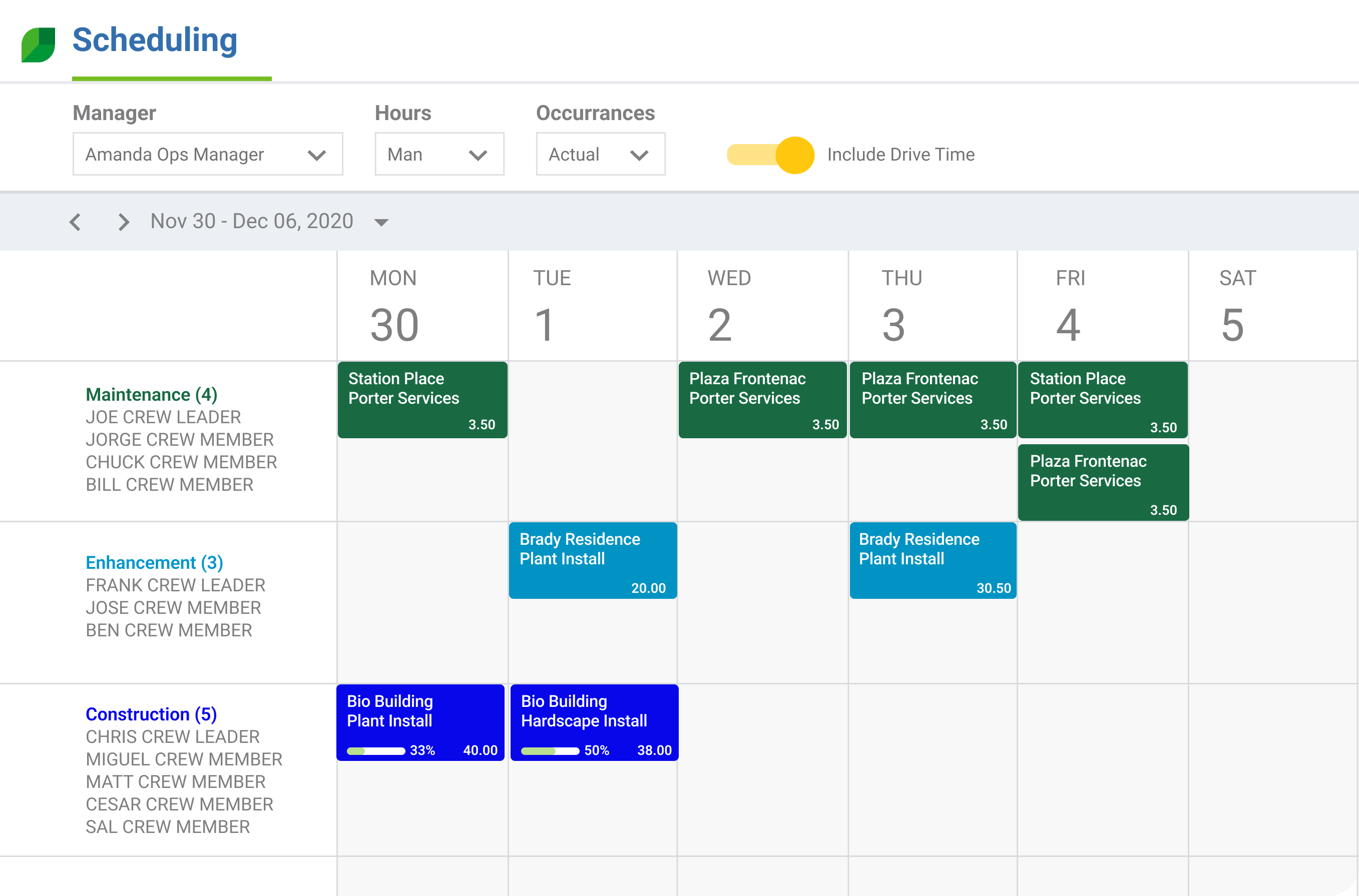
Aspire’s scheduling feature essentially allows you to organize, schedule, and assign projects to crews once a client accepts the proposal.
To ensure everything goes smoothly, you can include details for each project, add checklists that crews must follow, and optimize routes to reduce drive times.
Over to you
Securing the right licenses for your landscaping business increases your earning potential.
Think about it:
If you only register the business, you’re limited to landscaping maintenance jobs—reliable work, but with capped earning power.
With a construction contractor permit, however, you can bid on hardscaping projects known to have higher profit margins.
But to truly grow sustainably, you also need the right systems in place.
Tools like Aspire, included in your workflow, will help automate operations, keep your business organized, and provide insights into everything that goes on.
With better visibility, you can market more effectively, spot growth opportunities faster, and keep the business running smoothly.
Want to see how Aspire does that?
Book a free demo with Aspire to get a glimpse into how it works.
Disclaimer
This article is for informational purposes only and should not be considered legal or financial advice. While every care was taken to use official sources, you should always verify requirements on Iowa’s government websites.










 866-727-7473
 Schedule Demo
 390 S Woods Mill Rd #300 Chesterfield, MO 63017


