Table of Contents
Table of Contents
- What is the snow removal industry?
- What is the market size and growth outlook for snow removal?
- What are the top snow removal trends for 2026?
- Why is commercial snow removal dominant in the industry?
- What are the main challenges facing the snow removal industry?
- How is technology changing snow removal services?
- Over to you!
- Frequently Asked Questions (FAQs)
Snow and ice management keeps properties safe during the winter months. For landscaping businesses, adding snow removal services to their roster is a highly effective way to maintain steady contracts (and keep customers happy) even during the off-season.
That said, it’s also tough work, and the stakes climb every year. Only those who monitor industry trends and adapt remain competitive.
This guide outlines what your business should know about the snow removal industry:
What snow removal is and how it fits into your service offerings
Current market size and the exciting outlook
Top snow removal industry trends shaping 2026
Why commercial snow removal is dominating the market
Key challenges you’ll face and how to overcome them
Technology as a major game-changer in the industry
By planning your operations strategically, you’ll position yourself for success season after season. So let’s dive in.
What is the snow removal industry?
The snow removal industry provides services that, as the name suggests, remove snow and manage ice to keep properties safe and accessible. Examples include plowing, shoveling, and spreading salt or ice melt on lots, roads, and public spaces.
The industry primarily serves three market segments:
Residential: Driveways, sidewalks, and small properties.
Commercial: Parking lots, office complexes, and retail spaces.
Municipal: Roads, sidewalks, public facilities, and government properties.
Snow work is a natural extension for companies that already mow and maintain all year. After all, grass might slow down, but property needs won’t.
Pro Tip: When you’re starting out, invest in essential removal equipment like plows, pushers, and salt spreaders. Over time, you can always expand further. Snow removal positions you as your clients’ go-to partner for every season.
Success ultimately depends on how ready your business is, whether you have trained crews or are well-equipped (with tools, labor, and systems) for this type of work.
What is the market size and growth outlook for snow removal?
The snow removal services market continues to grow. This means that for multi-service contractors, it’s becoming a must-have service.
Here are a few removal industry statistics worth noting:
Global snow removal services market size: Estimated at $16.31 billion in 2026, projected to reach $25.51 billion by 2033.
Growth rate: About 6.6% CAGR (2026-2033).
Regional share: North America leads with 40.2% of the market in 2026.
Service type: Commercial snow removal services account for a large portion (40.9%) of total demand.
Revenue per provider: Average snow and ice revenue is $152,000; multi-line operators (including landscaping) earn around $435,000, with snow accounting for about one-third of total income.
Before operating, businesses should pay attention to labor market trends, such as seasonal hiring, local wages, and regional differences in demand based on where they operate and whether the area has heavier or lighter snowfall.
What are the top snow removal trends for 2026?
Trends in the snow removal sector affect how snow removal crews operate. This year, there’s a focus on emerging technologies and eco-friendly practices.
These are the top snow removal industry trends for 2026.
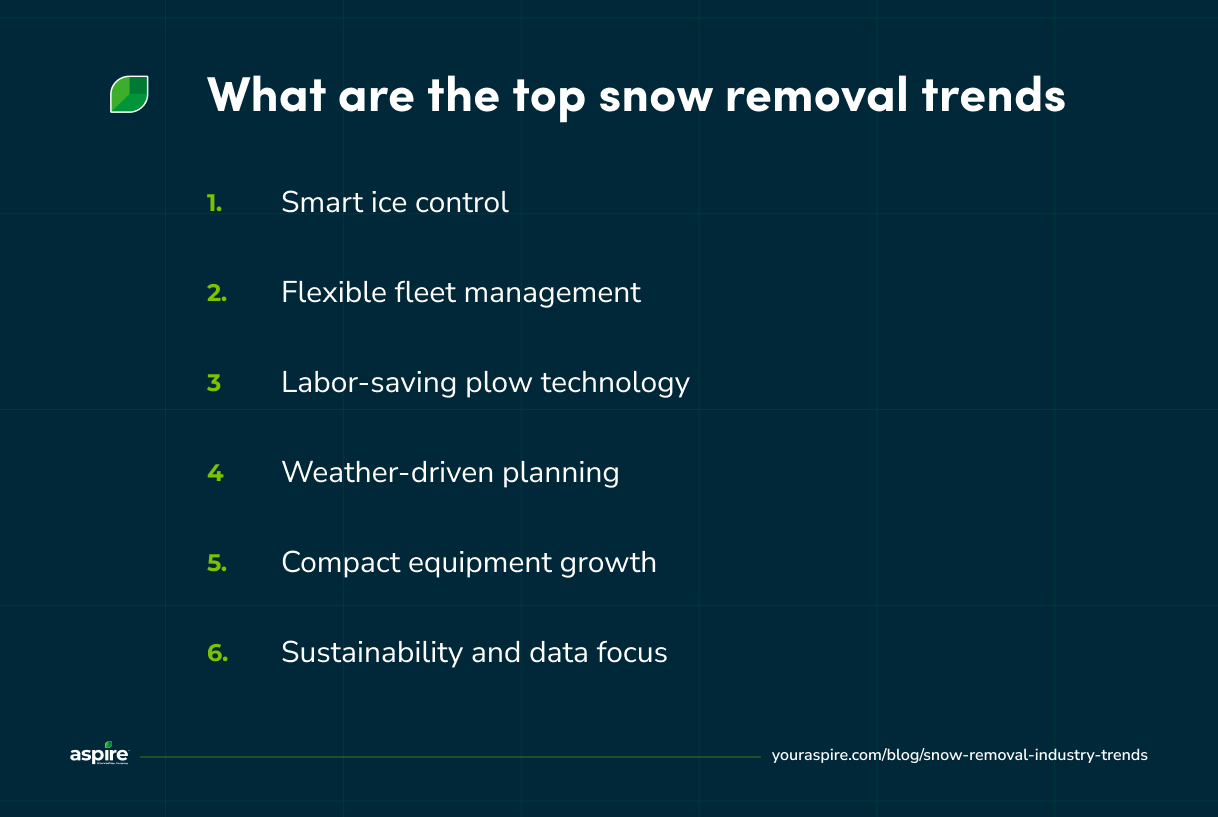
Let’s take a closer look at each of these trends and see how they’d impact your snow removal business.
1. Smart ice control
Ice control refers to methods used to remove ice and prevent its formation. Yet traditional methods (such as excessive chemical applications and manual de-icing) waste a lot of time, materials, and money.
The move is now towards precision ice management. Here’s what smart ice control entails:
Applying salt more precisely through data and tracking
Tracking usage to reduce environmental impact
Alerts for crews when conditions change for faster adjustments
Integration with route planning for more efficient coverage
Adopting this tech for snow removal services lowers material costs, reduces equipment wear, and demonstrates to clients that you’re committed to innovation.
2. Flexible fleet strategies
High urbanization is changing how snow removal is handled, with work sites getting tighter and routes more complex. A flexible fleet means having the right mix of vehicles and attachments to respond to any storm or site type.
Consider incorporating these when strategizing for a flexible fleet:
Mixed fleets that adapt to small, medium, or large properties
Vehicles sized for tight urban lots or long commercial routes
Tools that allow crews to react quickly to changing storm conditions
Efficient machines that help your current crew stay on track despite possible labor shortages
Being flexible keeps your employees busy, customers happy, and margins protected.
3. Labor-saving plow technology
With plowing technology, your crew can do more with less. High-efficiency attachments make snow removal easier.
Look for plow advancements like the following:
Adjustable plow blades: Change the angle and height on the fly.
Hydraulic wing plows: Expand your coverage per pass.
Snow pushers/box plows: Move large amounts of snow with minimal manual effort.
Pre-wet spreader integration: Combines de-icer with salt to activate faster and reduce labor-intensive reapplication.
Telematics/equipment tracking: Monitor plow usage, optimize routes, and track performance in real time.
These tools let your crews work efficiently and safely, serving more clients without scrambling to hire new workers.
4. Weather-driven planning
Winter weather is hard to predict, but climate volatility is becoming more common across all seasons. Landscaping businesses are especially affected by these conditions, which is why you need to weatherproof your operations.
Weather-driven planning involves:
Tracking forecasts so crews are ready before the snow hits
Adjusting contracts for variable snowfall and service expectations
Staffing models that scale for light or heavy storms
Staging your vehicles, plows, and snow removal equipment where they’ll be needed most
Monitoring site conditions in real time for rapid response
Businesses that remain adaptable for all seasons are ready for whatever the weather throws at them.
5. Compact equipment growth
Equipment is a main part of every snow removal prep checklist. There’s a rise in the use of utility task vehicles (UTVs) and compact machines because they handle snow work differently from traditional trucks.
Investing in compact equipment provides these benefits:
Maneuvering tight sidewalks, alleys, and residential spaces
Faster deployment compared with full-sized trucks
Lower fuel and maintenance costs
Versatility with plow, pusher, or spreader attachments
Compact equipment doesn’t replace your big trucks and plows but complements them, handling smaller spaces where other vehicles can’t reach as easily.
6. Sustainability and data focus
Climate change is affecting snow removal businesses by making the weather more unpredictable. This pushes the snow removal industry to rethink its approaches.
Shifting snowfall patterns mean constantly reworking routes, crews, and equipment to survive the snow season while still meeting service quality and client expectations. But this kind of reactive planning won’t hold up in the long term.
The changing climate makes sustainability a key focus, and it is closely linked to effective data use. Tracking factors like your business’s material use, fuel burn, route performance, and service times gives teams a clearer picture of what works and what drains profit.
Examples of sustainable, data-driven practices include:
Eco-friendly de-icing (like using brine or low-salt blends) and precise salt use
Reporting usage for compliance and transparency
Tracking crew and removal equipment performance to reduce waste (salt, fuel, or time spent on site)
Analyzing trends to optimize routes and minimize fuel use
Contractors who treat data-driven sustainability as a core part of their work are less vulnerable to unpredictable weather and are better positioned for the future.
Why is commercial snow removal dominant in the industry?
Commercial snow work leads the snow removal industry because it offers a large and reliable revenue stream.
Think of the stores, offices, hospitals, and logistics hubs that need to stay open and safe during the winter season. For those businesses, snow clearing is a planned expense rather than a last-minute call. That’s a lot of earning potential.
Several factors explain why commercial snow removal leads the industry, including:
Contracts span entire seasons, which creates predictable cash flow.
Bigger sites like malls, business parks, and warehouses require frequent plowing and salting whenever snow falls.
Legal and safety expectations that make this service non-negotiable, keeping demand steady even in light winters.
Long-term client relationships carry forward year after year, lowering the cost of sales and reducing churn.
The chance for you to bundle services, whether it’s sidewalks, parking lots, hauling, or snow and ice management.
Even so, contractors don’t have to limit themselves to handling commercial clients. Many landscaping businesses handle a mix of commercial, residential, and municipal work, allowing them to keep their schedules full and avoid a profit freeze during the winter.
What are the main challenges facing the snow removal industry?
Snow contractors experience steady demand in many regions. However, that demand doesn’t always translate into guaranteed profit thanks to weather variability and costs.
Businesses in the industry report these major challenges:
Weather unpredictability makes planning difficult: Some winters bring storm after storm, while others stay quiet for weeks. This uncertainty forces contractors to rethink their schedules and revenue plans.
Labor shortages strain operations: Finding people willing to work late nights, early mornings, and storm-dependent shifts is tough. Contractors need recruiting plans and tools that help crews work smarter.
Rising costs squeeze margins: Salt, fuel, parts, and repairs are more expensive each season. You’ll need a robust cost analysis to keep your pricing aligned with expenses. Liability risk also drives up insurance costs, cutting into your earnings if left ignored.
Regulatory changes create additional work: Municipal rules, safety policies, and new salt-use restrictions change frequently. Contractors must stay up to date, or they risk fines and lost contracts.
Standing out in a crowded market takes effort: Contractors compete heavily for clients. Your marketing strategies, referrals, partnerships, and collaborations make the difference between barely scraping by and filling the calendar.
These hurdles won’t go away, but they can be managed. For landscaping businesses that add winter work, knowing these challenges upfront helps you build a service that holds up every season.
How is technology changing snow removal services?
Technology is changing how contractors plan, plow, bill, and communicate. What used to rely heavily on manual effort and guesswork now depends on advanced systems and machines built to handle tougher conditions.
Tech in snow removal services provides faster results, higher margins, and fewer surprises as the storms roll in.
Here are a few ways technology is advancing snow removal services:
Smarter equipment with upgraded capability: Modern plows, built-in spreader controls, and UTV attachments help crews cover more sites and handle deeper snow without slowing down.
Electric snow plows and vehicles reduce fuel use: More contractors are testing battery-powered trucks and walk-behind machines to cut operating costs and prep for stricter emissions rules.
AI-powered dispatching and routing: Storm prediction maps out which sites need service first and plans the routes for you. Tasks that once took hours now finish in seconds, signaling that automation is the future of winter work.
Connected platforms for tracking work: Apps log timestamps, salt use, photos, and notes for crews to view and stay updated.
While modern tools have been a godsend, many businesses still struggle with disjointed systems that don’t sync well. Rather than piecing together separate tools, a single integrated platform reduces this friction and keeps operations aligned.
Aspire is an all-in-one snow removal management platform built for field service businesses. With this end-to-end software, you can centralize scheduling, job costing, reporting, communication, and operational visibility in a single cloud-based system that works across the office and the field.
With Aspire, contractors modernize their operations and scale more efficiently through the snow season and beyond.
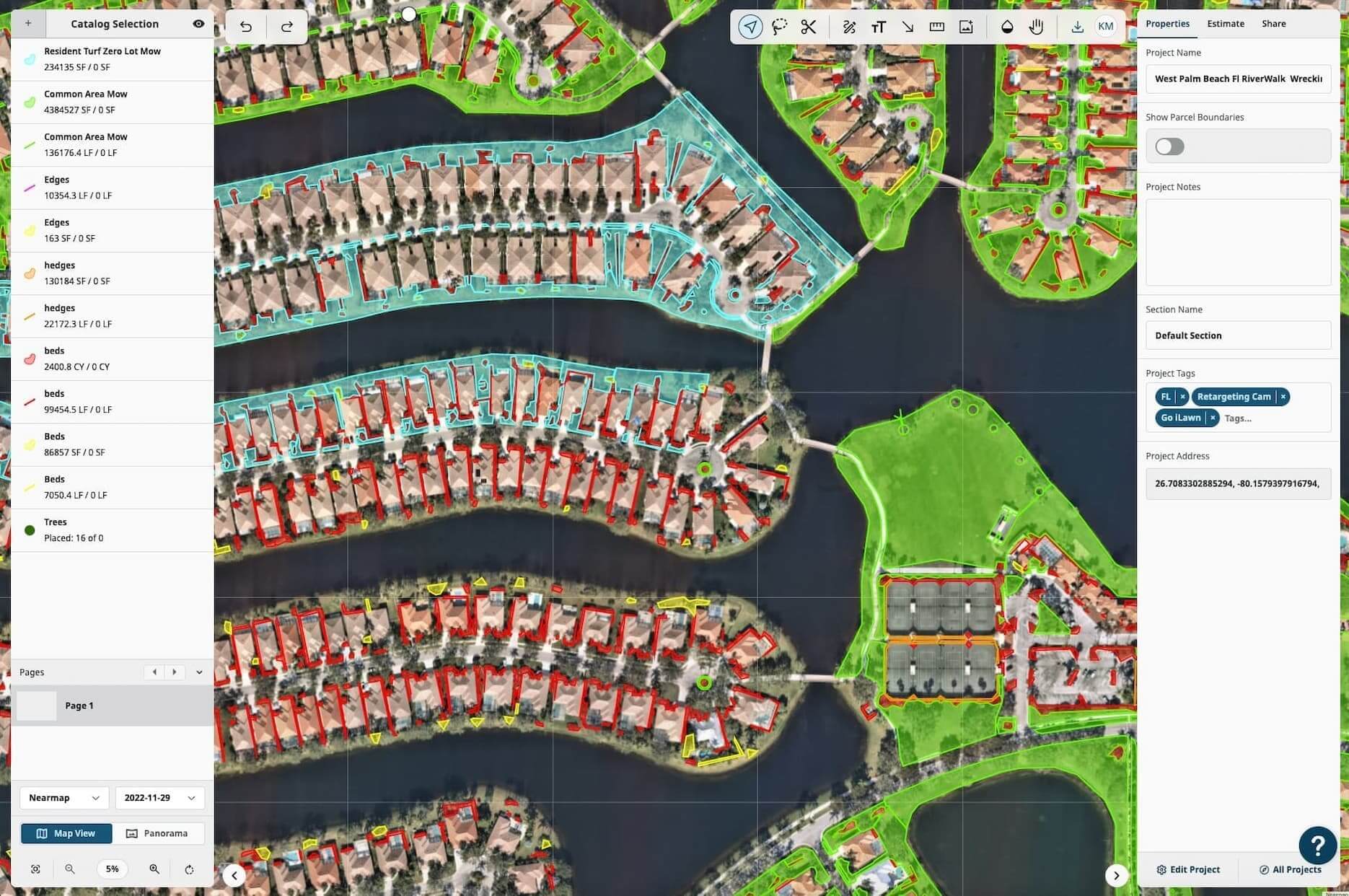
Snow management with PropertyIntel integration
Aspire connects with PropertyIntel to generate precise estimates for snow and ice management jobs and purchase the correct amount of materials. It produces detailed maps with arrows and snow pile designations so crews can clear properties quickly, safely, and with confidence. This level of detail cuts planning time and improves job accuracy.
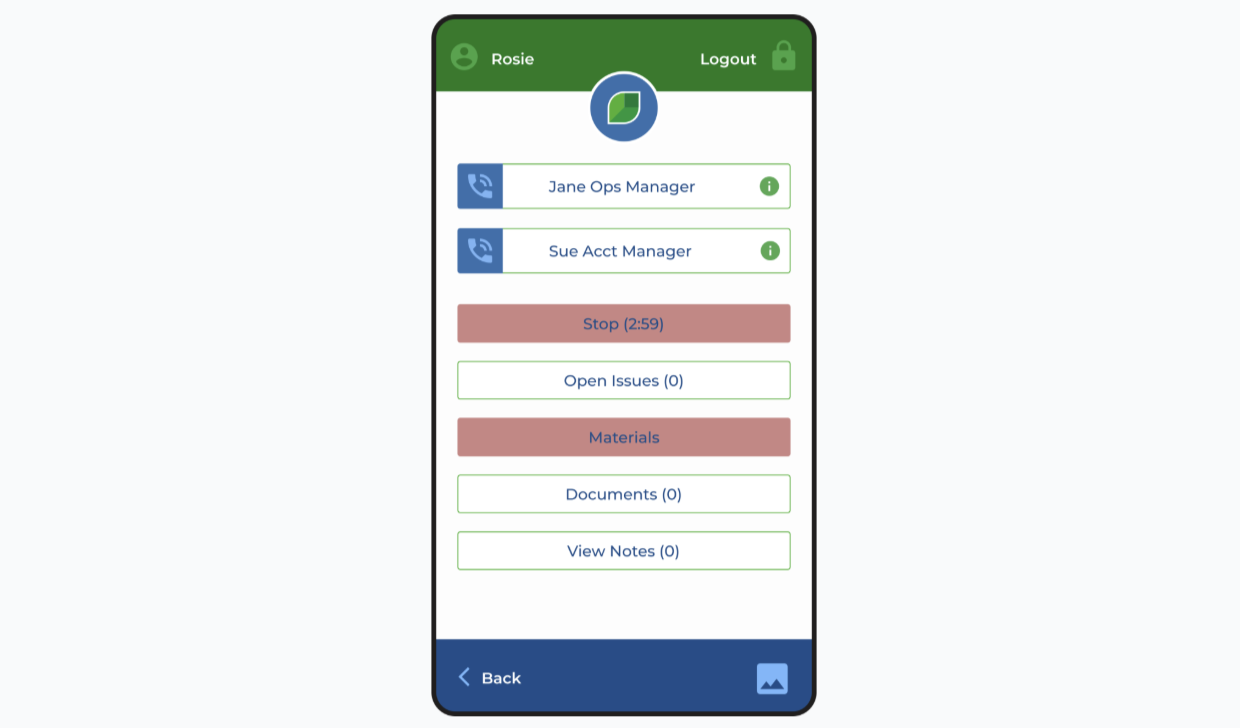
Aspire Crew mobile app capabilities
The Aspire mobile app puts all your critical information in crews' hands. The dedicated Snow Mode displays only snow-related work tickets and the required materials, making fieldwork more efficient.
Crew leaders can easily view schedules and property lists, select services, record hours, and log materials for accurate job costing later. The app also lets teams proactively remind clients of upcoming visits and adjust schedules in case of cancellations.

Cloud-based platform for real-time results
Aspire’s cloud-based system aligns your field and office teams with real-time scheduling, visual routing, and job performance insights. You see how actual costs compare to estimates, so you can adjust bids more profitably the next time. You can also speed up invoicing with searchable, filterable invoices that improve cash flow.
With Aspire’s robust software, snow contractors, landscapers, and multi-service teams benefit from clearer visibility, faster estimates, and smoother operations, positioning their businesses for success in every season.
Over to you!
With snow removal industry trends changing fast, you might feel the need to adopt every new idea and shiny tech upgrade. And that’s understandable, as there’s a lot of potential.
Weather swings harder, costs rise faster, and customers expect quicker communication and proof of service. The companies that win, however, treat technology as a tool, not a shortcut.
Pick your systems carefully, train crews properly, and build processes that align with your capacity today and your growth targets tomorrow.
Aspire gives contractors a complete system that brings scheduling, bidding, crew tracking, materials, and billing into one place. Plan smarter, work faster, and track performance in real time.
Book a demo with Aspire today and see year-round success in action.
Frequently Asked Questions (FAQs)
Curious how the trends are affecting your snow removal business? These answers highlight what contractors need to know to stay competitive.
How are climate and weather patterns impacting snow removal?
Unpredictable winters force crews to adjust their schedules, routes, and equipment on the fly. Landscaping businesses that are adding snow services now need flexible plans and real-time tracking to manage storms and meet client expectations.
What innovations are emerging in snow removal equipment?
New plows and pushers make clearing properties faster and safer. Compact UTVs and electric machines improve access to tight spaces and reduce fuel costs. Pre-wet spreaders and hydraulic wings save time and make snow and ice management more efficient for your crews.
How is AI-powered route optimization improving snow removal?
AI-powered dispatching and routing use storm predictions to assign crews and plan the fastest paths across properties. Because AI optimizes routes in seconds, crews respond more quickly, and you save on fuel and reduce waste, no matter the weather conditions.












 866-727-7473
 Schedule Demo
 390 S Woods Mill Rd #300 Chesterfield, MO 63017


