Table of Contents
Table of Contents
- Do you need a license to start a landscaping business in Maine?
- What are the types of landscaping business licenses & permits in Maine?
- Step-by-step process to get a landscaping business license in Maine
- How much does a Maine landscaping business license cost?
- What are the most common mistakes to avoid when getting a license?
- How Aspire helps landscaping businesses stay organized & compliant
- Over to you
- Disclaimer
You need to launch a landscaping business in Maine, but don’t know what’s required to get started.
If you’re looking for a comprehensive, easy-to-follow guide that explains how to obtain a landscaping business license — covering both requirements and costs — this article explains everything you need to know:
The different permits your landscaping business requires
Detailed guidance on how to apply for the licenses
The cost of securing landscaping licenses
Common errors to avoid during the process
Best ways to simplify operations and ensure the scalability of your landscaping company
Do you need a license to start a landscaping business in Maine?
No, you don’t need a general state license to start a lawn care or landscaping business. It’s one of the few states where landscaping companies can launch by registering their entity with the Secretary of State.
You do, however, need to be licensed to offer:
Pesticide application services
Tree care services
Landscape design services
You may also need to obtain a general license or related permits to run the landscaping business from the city or town you’ll be operating in.
What are the types of landscaping business licenses & permits in Maine?
If you want to start a landscaping business in Maine, here are the permits you’ll need:
General business license
In Maine, businesses that intend to become a corporation, limited partnership, or limited liability company need to register their entity with the Secretary of State.
Sole proprietors don’t need to register with the state, but the town or city may require it.
In addition, you probably need to sign up with Maine Revenue Services for tax purposes.
Arborist license
This license is required by the state if you intend to offer the following services:
Leaving the ground for pruning or trimming
Installing cabling or bracing
Diagnosing and evaluating the conditions of trees
Felling or taking down trees in developed areas
You will need to pass an exam in either landscape or utility, or both categories, demonstrating knowledge, skill, and capability before a license can be issued.
Pesticide applicator license
Landscaping companies in Maine can only provide pesticide application services if they have three categories of a commercial applicator license:
Commercial master applicator: At least one person in the company must hold this, and it can be you, the owner, a manager, or supervisor. They’re responsible for compliance, training staff, and pest control decisions.
Commercial operators: Your employees applying pesticides who must work under a master applicator.
Firm license: Enables your landscaping company to offer this service.
Landscape architect license
If you want to provide landscape design, landscape grading, drainage, or irrigation plan services in Maine, you need this license from the Department of Professional and Financial Regulation.
You can either apply by exam or by reciprocity. For exams, you’ll be required to pass the LARE exams, have a degree, and have landscape architect experience. And by reciprocity, you need to provide proof of licensure in another state and a CLARB record.
Permits and local regulations
In Maine, you’re required to check with your city or municipality for permits or licenses a landscaping business requires to operate.
For instance, Rockland demands that new businesses, sole proprietorships, partnerships, LLCs, and corporations have a business license. Portland needs one, too, along with a zoning permit.
The requirements vary from city to city, so you need to confirm what’s required where you are.
Step-by-step process to get a landscaping business license in Maine
Besides registering your business, the landscaping licenses your company needs depend on the intended services.
This section explains how to apply for the different permits, step by step.
1. Register the business
This is a must for any landscaping company in Maine, and it begins with deciding on a legal structure. The structures available include:
Sole proprietorship
General partnership
Limited liability company (LLC)
Limited partnership (LP)
Limited liability partnership (LLP)
Corporation
If you choose sole proprietorship or general partnership, you do not need to register with the Maine Secretary of State. But you may need to register with the city for a business license and Maine Revenue Services for tax purposes.
For LLCs, corporations, LPs, and LLPs, you must register with the Maine Secretary of State:
Visit the Bureau of Corporations
Click ‘Form a Business’
Select your preferred business structure and download the form shown
Complete the form and mail it to the Secretary of State, Division of Corporations, UCC & Commissions, 101 State House Station
Send the form along with the appropriate fees. LLC, LP, and LLP: $175, and corporation: $145.
You can also reserve a business name for $20 before filing, which holds it for 120 days.
Once the company is registered, you must file an annual report with the Secretary of State by June 1 each year to stay in good standing. The fee is $85.
2. Get the business tax ready
Here’s how to tax-proof your business:
Sign up with the IRS to get a Federal Employer Identification Number (FEIN). This lets you hire employees, open a business account, and pay federal taxes.
Register the business with the Maine Revenue Services online for sales tax, property tax, state income tax withholding, and unemployment contributions.
3. Apply for an arborist license
This permit can be obtained by passing an exam or by reciprocity. For either option, you need to provide proof of insurance.
By exam:
Prepare for examinations. The study guide costs $85.
Apply for the exam. It costs between $60 and $85.
Take and pass the test with 70% or higher. Once you pass, it should take several weeks to get the license.
By reciprocity:
Apply for the license. It costs $30-$45.
4. Obtain a pesticide application license
As mentioned earlier, this license has three categories: commercial master applicator, commercial operator, and firm license.
To begin, decide if you want to become the commercial master applicator or hire someone else.
If it’s going to be you, follow these steps to get licensed:
Prepare for the commercial master applicator exams. You’ll need to take a core + category exam(s) + regulations exam + oral exam.
Apply for the test online or via a PDF paper form. It costs $10 per exam for the core and category exams, and $40 for the oral exam.
Complete this form to apply for the license and pay the $105 fee/3 years.
For commercial operators, it’s pretty much the same process. The main difference is that they only need to take a core and one or more category tests.
Prepare for the commercial operator exams. You’ll need to take a core and category exam(s).
Apply for the test online or via a PDF paper form. It’d cost $10 for the core and category exams.
Complete this form to apply for the license and pay the $105 fee for three years.
With the master and operator licenses secured, you can proceed to apply for the firm’s permit — online or via a PDF paper application. It costs $300, renewable after three years.
5. Get a landscape architect license
To qualify for this license, you need to have:
An accredited degree + 2 years’ experience / A non-accredited degree + 4 years / Related degree + 6 years / No degree + 8 years
Passed the LARE exam
Next, submit your exam results, education, and work experience to the state board via CLARB.
Then, you can apply for the license online and pay a $50 application fee, a $70 license fee, and a $21 background check fee. The permit is valid for a year, so you’ll need to renew it each year to keep practicing.
If you’re licensed elsewhere, you can apply for the license by reciprocity, providing your CLARB records and the license.
6. Get local licenses
Your business may need a local license from the city where it’s located. Visit the city’s website or the clerk’s office to confirm the licensing requirements.
You can also ask older landscaping colleagues about specific requirements their businesses needed to operate in the city.
Some permits you may need include a business license, a construction permit, zoning approval, or a noise ordinance. Ensure you verify what the city demands before landscaping work begins.
How much does a Maine landscaping business license cost?
The cost involved in securing the landscaping permits typically depends on the services provided, but here’s what you can expect to pay:
General business registration
Name reservation: $20
Filing fees:
LLC, LP, LLP: $175
Corporation: $145
Annual report fee: $85
Arborist license
Study guide: $85
Exam fee: $60–$85
Reciprocity: $30–$45
Pesticide applicator license
Core + category exams: $10 each
Master applicator oral exam: $40
Commercial master license: $105 (valid 3 years)
Commercial operator license: $105 (valid 3 years)
Firm license: $300 (valid 3 years)
Landscape architect license
Application fee: $50
License fee: $70
Background check: $21
What are the most common mistakes to avoid when getting a license?
Maine has one of the simplest processes for launching a landscaping business. For the most part, a business registration can get the ball rolling.
But a few mistakes like the ones below can delay your start date or lead to fines.
1. Applying for a firm pesticide license without a master applicator permit
Maine requires businesses that intend to offer pesticide application services to have a commercial master applicator before applying for the firm license.
The correct path: commercial master applicator → firm pesticide permit or commercial master applicator → commercial operator (if multiple people would be applying pesticides) → firm pesticide permit.
Without this, your business can’t provide this service. Applying for a firm license without a master applicator can delay the application process or push your timeline back.
2. Failing to provide insurance coverage
Liability insurance is a must when providing arborist or pesticide application services in Maine.
Workers’ compensation is required when hiring workers, and vehicle coverage is required for vehicles used for business.
Applying for permits without the required insurance would delay the application or even prevent approval.
Even worse, operating without coverage can expose your business to liability and penalties if something goes wrong on a job.
3. Forgetting local licenses
State registration and permits are rarely the final stop in Maine. Many cities and towns require local licenses before your landscaping company can operate.
Skipping this step may result in fines or a stop-work order, even if your state paperwork is approved. Always check with your local municipality before launching.
How Aspire helps landscaping businesses stay organized & compliant
Getting the right landscaping licenses allows you to legally operate in Maine, but staying organized is what keeps the business running.
Between keeping crews aligned, bidding on projects, scheduling, project management, and client communication, things can quickly get complicated if you rely on manual processes.
Field service software like Aspire helps by automating and centralizing operations. It ensures you can focus on work, reducing mistakes and enabling you to be more effective.
Here are some of the ways Aspire streamlines your work.
Contract & proposal management
Building estimates while managing ongoing jobs is a lot, especially as your workload grows. How can you create accurate proposals manually when you have a busy schedule?
That’s where Aspire steps in. It lets you use established production rates and digitized property measurement to create estimates.
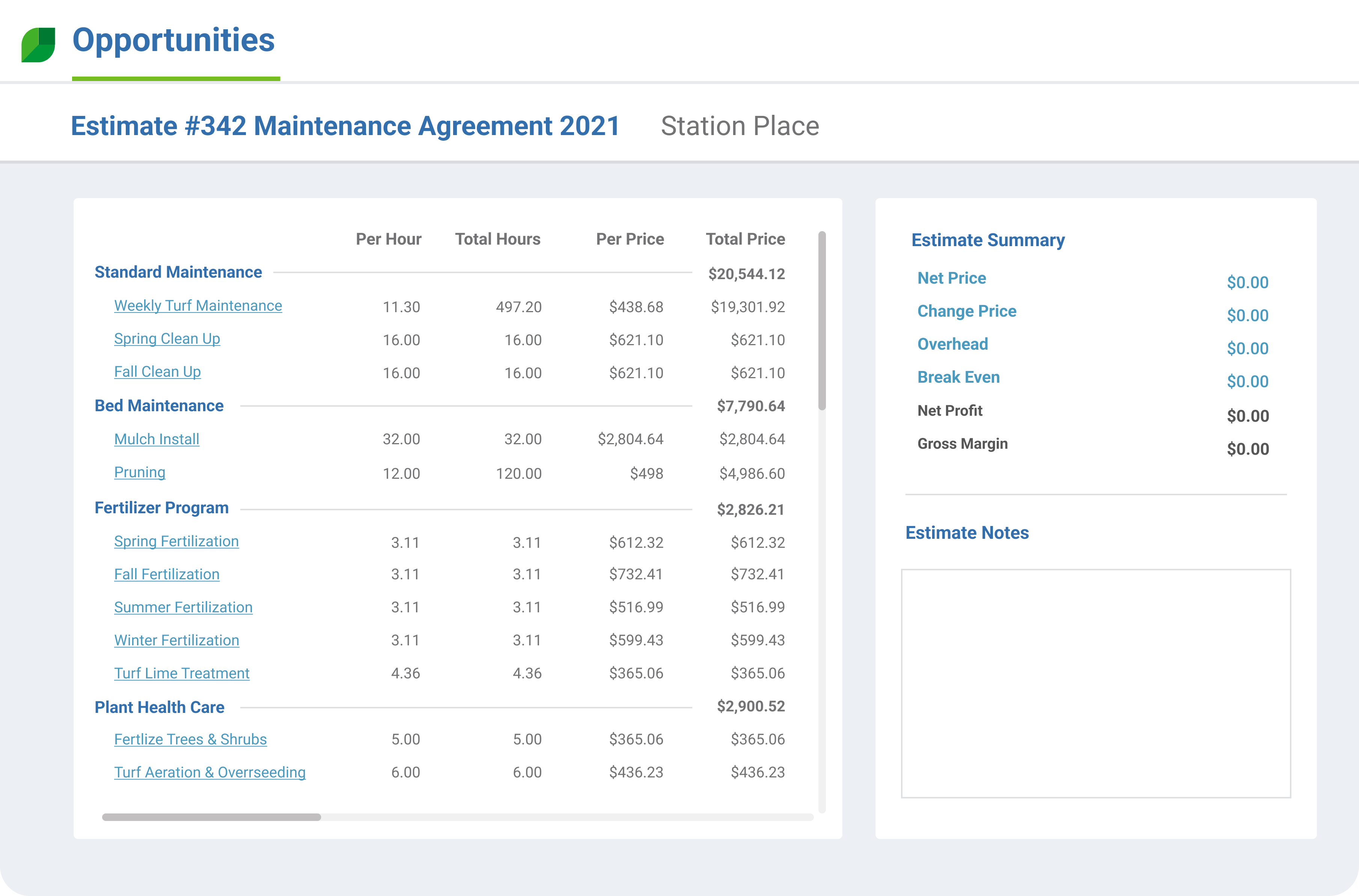
It’s like building a store with your company’s rates, markup, and profit margin. So whenever a client requests a quote or you have to bid on a project, you can quickly build an estimate.
And it doesn’t stop there. Aspire also lets you quickly build, send, and track proposals in one place, ensuring consistent pricing and clear contract terms.
This simplifies how you get new clients, making it easy to send quotes or proposals without disrupting current projects or your workflow.
Invoicing & payment processing
If you currently create and send invoices manually, then you’ve likely experienced delays, missed billings, or inconsistencies between fieldwork and what gets billed.
This ultimately impacts cash flow and business maintenance.
Aspire has an invoicing feature that lets you generate invoices from approved estimates and completed work.
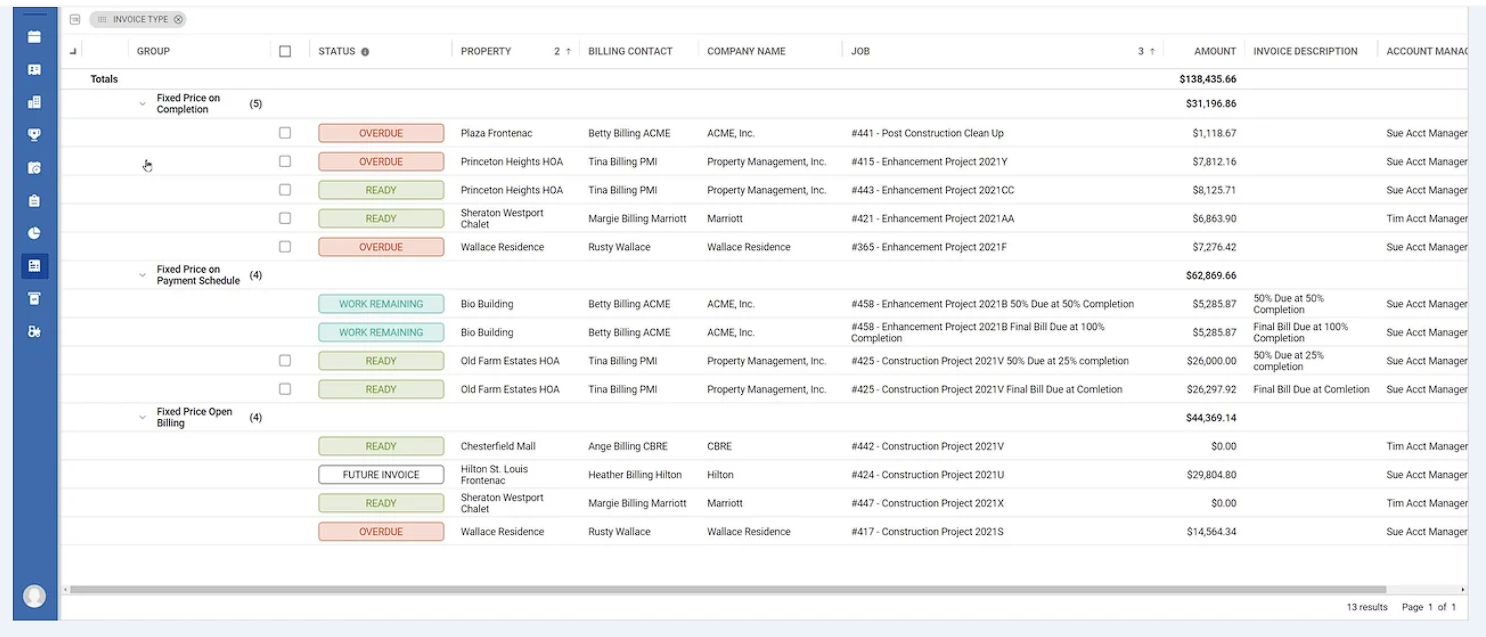
It lets you automate billing schedules based on project milestones or completion dates and track payment statuses in real time. Invoices can be set based on the project type or the client’s preference.
You can monitor the status of each invoice to know when any has been paid or is pending.
Business reporting & documentation
Running a thriving business means keeping track of different aspects of the company, including job performance, profit margin, job costs, and financial performance.
Aspire’s reporting software gives you real-time visibility into revenue, profit margins, and job performance, along with access to historical data. It provides you with the right information to evaluate the business’s health.
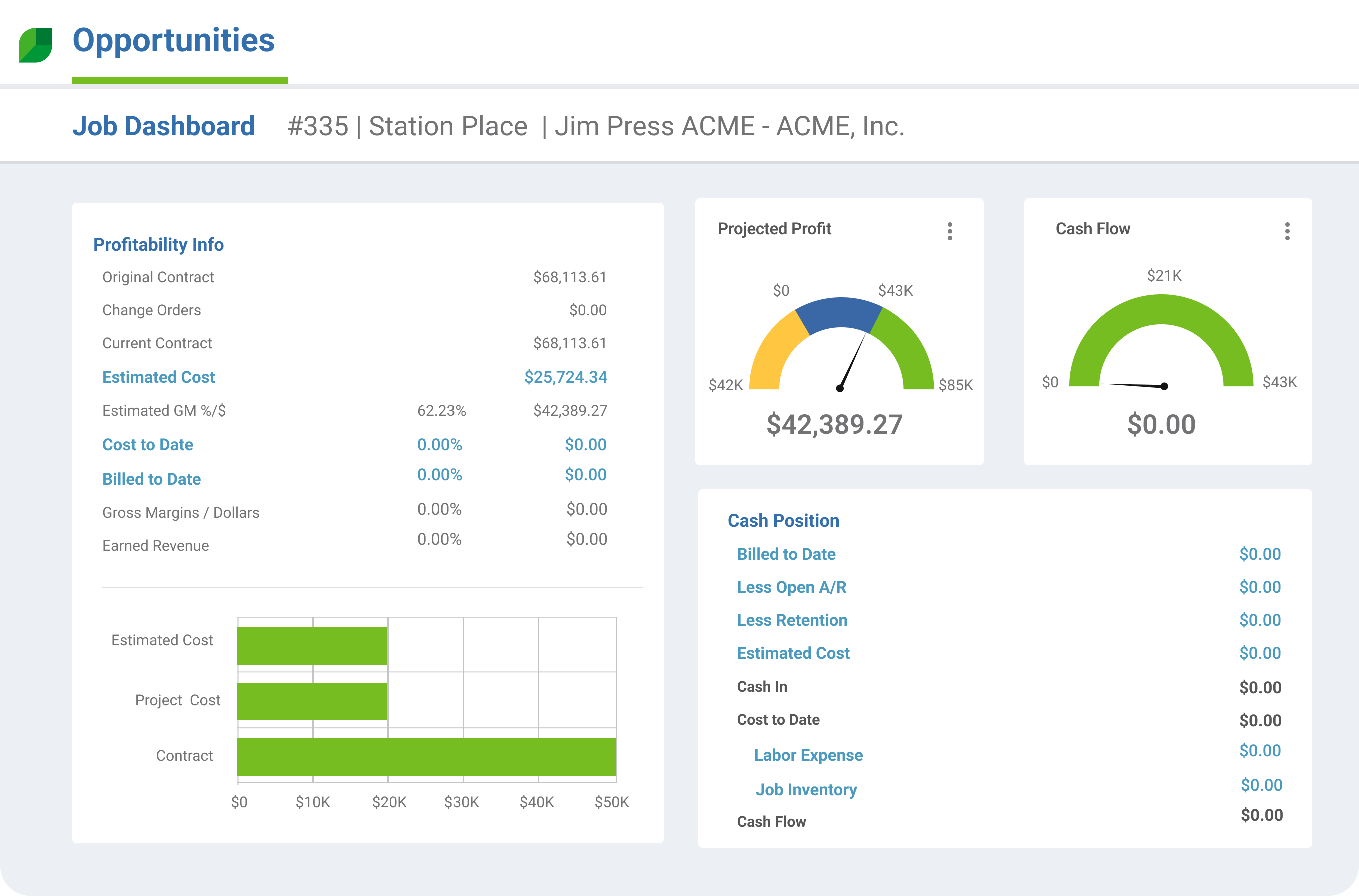
With Aspire, you don’t have to wait for reports from the field crew or admin staff, since data is centralized.
Having everything in one place means you have what you need to make informed decisions for the business.
Scheduling & job management
You know what happens when there’s no order to how you schedule jobs, right?
Let us remind you: missed deadlines, double bookings, overbooked crews, and disappointed clients.
To avoid that, you need a structured way to manage projects.
Aspire’s scheduling feature lets you plan workloads for days or weeks in advance. You can set projects based on current availability, ensuring you don’t disappoint customers.
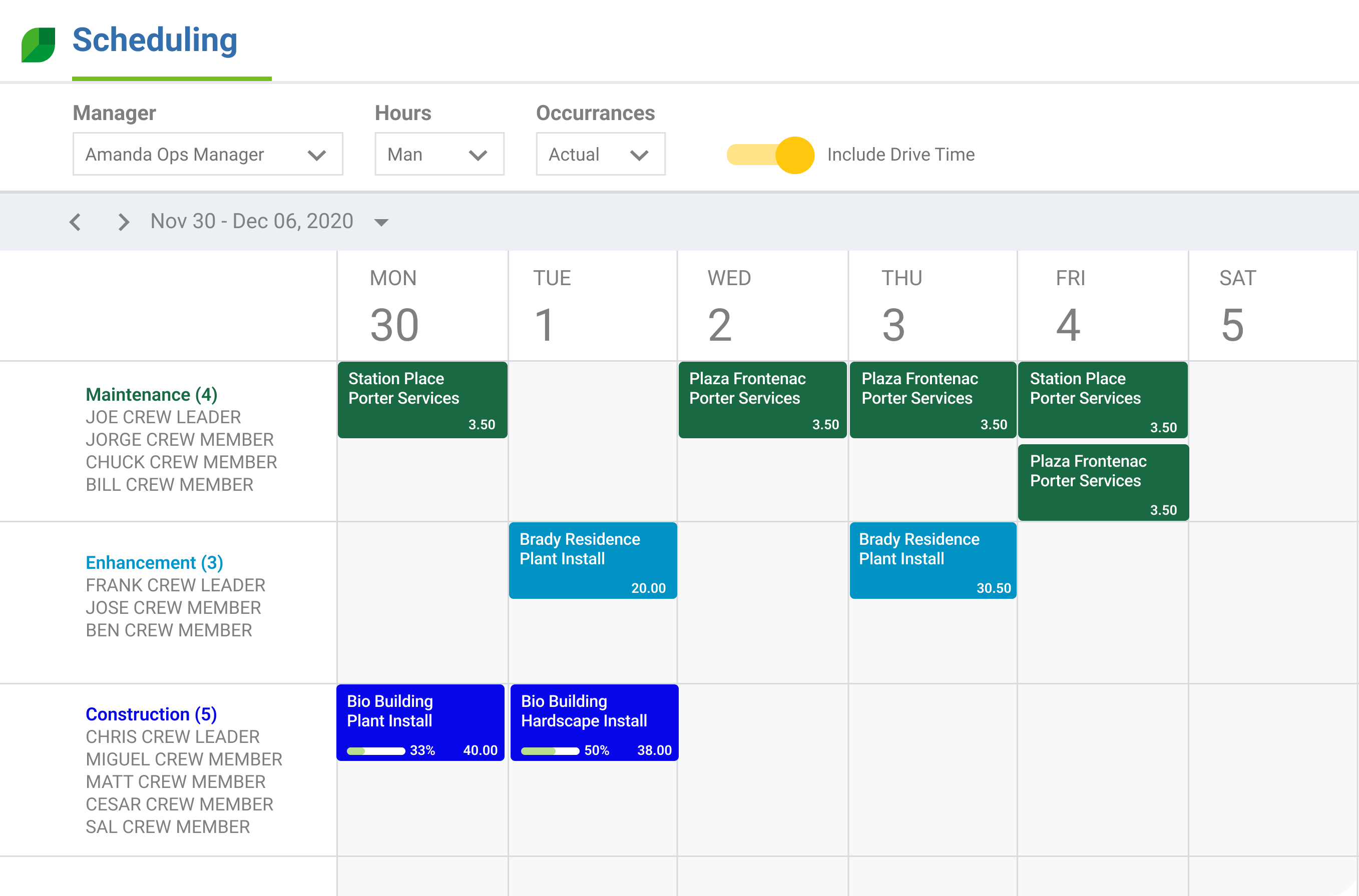
This feature also lets you track job progress, assign crews, attach job details like checklists, equipment, and even permit requirements, ensuring every project is completed correctly.
Beyond ensuring efficiency, Aspire helps you create a clear operational record, which is helpful for compliance and accountability.
Over to you
This guide has shown you how to get the licenses needed for a landscaping business in Maine. It’s pretty straightforward.
But managing the business's daily operations is where things can get complex.
You need the right systems to stay organized, keep your records, and scale the business without running into issues.
Tools like Aspire can bring order to your business, handling things from proposals and scheduling to reporting and documentation, so you can focus on growing your business with confidence.
Book a free demo with Aspire today.
Disclaimer
This article is for informational purposes only and should not be considered legal or financial advice. While every care was taken to use official sources, you should always verify requirements on Maine’s government websites.









 866-727-7473
 Schedule Demo
 390 S Woods Mill Rd #300 Chesterfield, MO 63017


