
Table of Contents
Table of Contents
- What are snow removal business grants?
- How do small business grants work?
- What types of business grants should snow removal businesses be aware of?
- How can a snow removal contractor apply for a small business grant?
- What are the funding alternatives to grants for snow removal businesses?
- How Aspire helps snow removal businesses secure grants
- Frequently Asked Questions (FAQs)
You need to grow and sustain your snow removal business, but the funds to do that have been hard to come by. The fact that it’s a seasonal business makes steady cash flow even more difficult.
Taking out a loan? Not an option, what with the high interest rates and all.
But here’s one solution to consider: business grants.
Business grants are financial assistance typically provided by private and government institutions to businesses that meet specific requirements.
It’s a good option for snow removal contractors to grow their businesses.
With about four key types of small business grants to choose from, contractors can apply for one by ensuring:
Qualifications are met
Documents are well prepared
There’s proof of how they intend to use the funds
Keep reading to learn more about this financing option and how it can benefit your snow removal business.
What are snow removal business grants?
Snow removal business grants are free funding programs awarded to companies that need money for expansion or development.
They’re typically provided by corporations, government agencies, and nonprofit organizations and come without the burden of high-interest loans or debt.
Snow removal contractors can use the money to grow their business and support operations, like:
Equipment purchase
Worker training
Marketing expenses
Operating costs, e.g., rent, electricity, water, etc.
However, to access these funds, snow removal contractors must meet specific criteria such as:
Being a minority-, women-, LGBTQ+-, or veteran-owned business
Operating within a specific community or state
Generating below a specified amount in annual gross revenue
Having a rural location
Providing employment opportunities to the community
How do small business grants work?
Grants provide non-refundable funds to small businesses for specific projects or goals, as long as the grant’s requirements are met.
Here’s how they usually work:
Identify the right opportunity: You need to find a grant that is targeted to your industry, location, business size, or purpose.
Review criteria: Evaluate the specific requirements set by the grantors. Confirm that you’re eligible and have the necessary documentation needed to apply.
Submit an application: Prepare the documents and submit a proposal with your business details and how you intend to use the funds.
Wait for approval: Grantors will review your application. If you’re selected, funds can be distributed as a lump sum or in installments.
What types of business grants should snow removal businesses be aware of?
Below, you’ll find different types of small business grants that snow removal businesses can leverage, both from government agencies and private institutions:
National Association for the Self-Employed (NASE) grant: NASE awards up to $4,000 each quarter to its members to help their business grow. The funds can be used to hire workers, market the company, or purchase new equipment.
Backing Small Businesses: This program provides a $10,000 grant and is supported by American Express. It’s for brick-and-mortar businesses located in an older or historic main street, downtown, or commercial district in the United States.
The Amber Grant: The Amber Grant awards $10,000 monthly to three women who own a business. You need to provide details about yourself and your business goals to apply.
Skip grants: Skip has multiple grant options. There’s a $1,000 instant grant available to business owners who are 18 or older. It also offers a $5,000 grant for businesses that have experienced a disaster and a $10,000 grant for companies with a Skip account.
Jobber grants: Jobber offers $10,000 to home service businesses or aspiring entrepreneurs over 18 each year.
Cartier’s Women Initiative: Women-led snow removal businesses can receive up to $100,000 with the Cartier’s Women Initiative grant.
Rural business development grants: Offered through the U.S. Department of Agriculture to small businesses in rural communities. It ranges from $10,000 to $500,000.
Minority Business Development Agency (MBDTA) grants: These government-provided grants are tailored to minority-owned businesses. Applicants should be on the lookout for grant announcements specific to their needs.
Small Business Hero program: Does your business serve a community? You could be eligible for the Intuit QuickBooks and Mailchimp’s $20,000 grant.
The Cornerstone Grant: The $10,000 Cornerstone Grant from Square is for businesses with fewer than 20 employees that have been Square sellers for at least six months.
ZenBusiness Grant: You can receive up to $5,000 if you have been a ZenBusiness user for three to six months.
Start.Pivot.Grow. Micro Grant: Start.Pivot.Grow. awards applicants $2,500 to support their business if they have been in business for at least two years, generated $50,000 or more in annual revenue, and have one or two employees.
How can a snow removal contractor apply for a small business grant?
Although different grants have different requirements, the application process for each is typically similar.
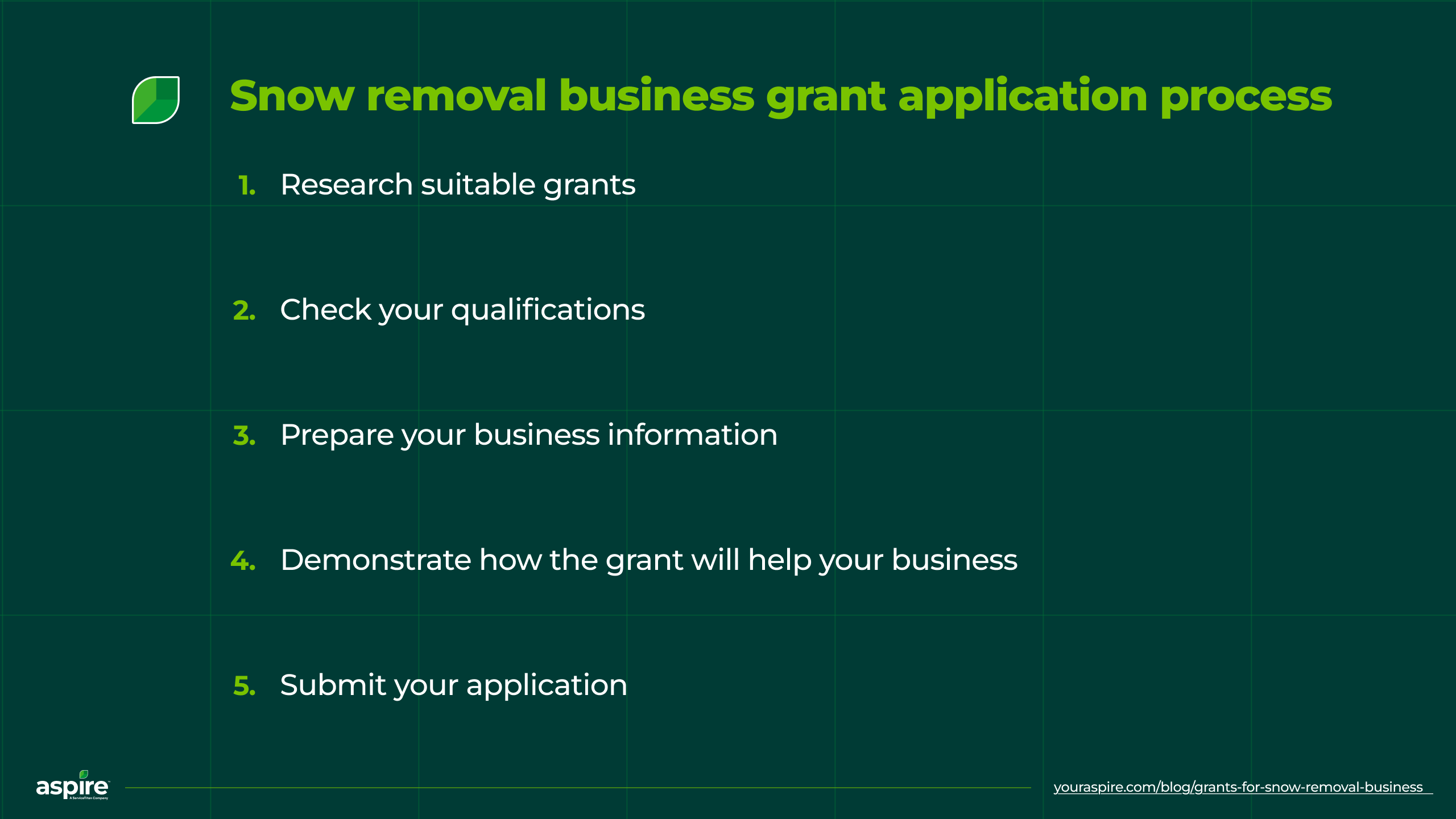
The steps to apply for a grant for your snow removal business are shown in the image below:
1. Research suitable grants for your snow removal business
Snow removal contractors must do their due diligence by researching suitable funding opportunities for their companies.
You can start with a quick Google search. Listed below are other helpful resources for grant opportunities:
U.S. Chamber of Commerce: Every week, this page is updated with a list of loans and small business grants to help grow your business.
The Minority Business Development Agency (MBDA): Here, you can explore opportunities if you’re a minority business owner.
Simpler Grants: This is a government grant database that lets you search for funding opportunities.
The Amber Foundation: An organization that supports women-owned businesses, with several grant options available.
2. Check your qualifications
Before applying for a grant, ensure your business meets the grantor’s requirements. For most grants, applicants must typically be:
A United States citizen
A permanent resident
Over 18 years old
An eligible non-immigrant
A registered business owner
Some might also require the business to:
Have been in operation anywhere from three months to two years.
Be owned by a woman, a veteran, or a member of a different minority group.
Be located in a rural community.
Be a member of their network.
Be a new or existing user of their software.
Regardless of the requirement, carefully read what’s expected of you before applying. This saves time, ensuring you apply only for those grants that you stand a chance of receiving.
3. Prepare your business information
Once you’re sure which grant to apply for, compile the necessary information to make the process easier. This could be:
Financial documents, such as employee payroll, income, and cash flow statements, details of assets or liabilities, and tax statements.
Cover letter describing how the grant money will help your business.
Business details such as the legal structure, business license, size, and business history.
4. Demonstrate how the grant will help your business
Next, you need to convince grantors that you deserve the funding over other applicants. One of the best ways to do this is to share your origin story:
What inspired you to start the snow removal business?
How has the business contributed to the community?
Is there a specific project the funds will help you achieve?
How will carrying out that project positively impact the environment and people in your community?
Put this information in a compelling cover letter or video, depending on what the application requires.
You may also want to include the business’s history and mission statement.
You can partner with a grant writer to piece together different ideas and craft a statement that captivates grantors.
5. Submit your application
Once everything is ready, submit your application to the appropriate platform. Beforehand, review all the documents to ensure they’re in order.
Let a grant writer (if you’ve hired one) review the written content and have accountants check statements for any discrepancies.
What are the funding alternatives to grants for snow removal businesses?
Snow removal businesses that are unable to find a grant still have several funding opportunities to explore.
Here are some alternative funding options to leverage:
Small business loans: You can obtain them from your financial institution or from the government through the SBA loan program. Keep in mind that you’ll need to pay a loan back with interest, unlike grants.
Business line of credit: This option provides access to funds up to a specified limit. You’ll only pay interest on what you borrow.
Crowdfunding: This option involves raising capital for your business by securing small contributions from a large number of people. It’s a good option if your snow removal business has had a significant impact on your community. People might feel compelled to contribute so you can continue the good work.
Loans from family and friends: This can be a low-interest, flexible way to obtain funding. However, it could affect close relationships if the business doesn’t perform as expected.
Angel investors: While this can be a rare funding opportunity for snow removal businesses, you could stand a chance if your company has patent-worthy technology that could revolutionize the industry.
Bear in mind that each option comes with its own terms, so it’s important to evaluate them carefully and choose one that aligns with your business goals.
How Aspire helps snow removal businesses secure grants
Let’s be clear: Aspire does not have a grant database where you can find funding opportunities tailored to snow removal companies.
However, it can be tremendously helpful before, during, and even after the grant or loan application process.
Here’s how:
Simplified financial tracking
Aspire centralizes all business financial records, allowing you to generate financial documents easily. You won’t have to struggle to find the statements needed to apply for a grant.
All data is accurate thanks to the built-in accounting integration with popular platforms like QuickBooks and Acumatica, which help ensure your financial information is error-free.
Real-time analytics and data reporting
Aspire provides insights into your business performance. You can identify the most profitable jobs and client locations with high demand, enabling you to allocate the grant’s resources effectively.
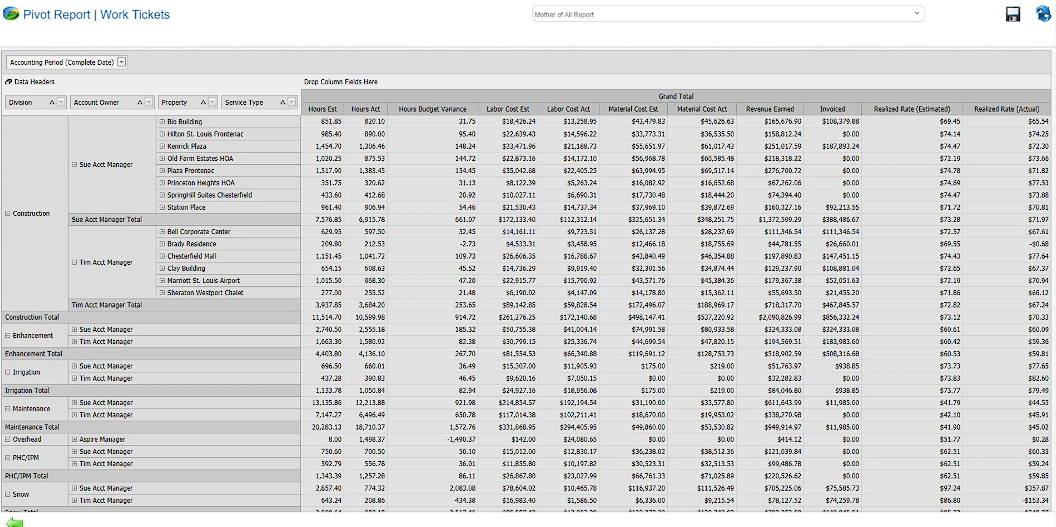
With Aspire’s customizable reporting, you also understand the different aspects of your snow removal business. You have access to data such as who your best-performing technicians are, profit and loss margins, labor costs, and more.
This data helps you maximize the grant you receive to generate more profit.
Equipment management
When the money arrives, the equipment management software helps you manage equipment and trucks to reduce service downtime. Aspire lets you track the equipment lifespan and prompts you when maintenance is due.
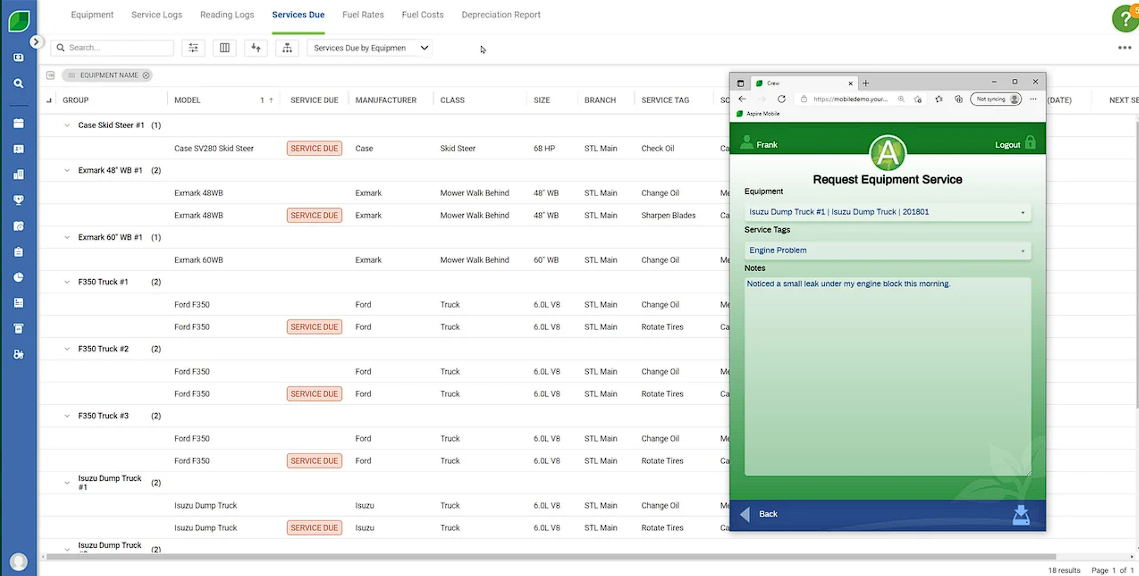
The tool can generate reports (e.g., preventive maintenance, total repairs, and service schedules) to identify equipment that requires maintenance or replacement.
Simply put, Aspire provides the financial and operational documentation needed for a grant application. It also helps you identify the client types that generate the most revenue so that you can maximize any grants you receive.
Take a look at how Aspire helps you streamline your snow removal business and position it for growth.
Book a demo with Aspire to experience everything it has to offer in real time.
Disclaimer: The information provided in this article isn’t financial advice. It’s only meant for informational purposes. Kindly seek professional counsel before making a business decision.
Frequently Asked Questions (FAQs)
What are the pros and cons of small business grants for snow removal businesses?
Here are some advantages of securing a snow removal business grant:
Repayments aren’t required.
Business shares remain entirely your own after getting funded.
Grants encourage business growth.
Grants can make your business attractive to investors, lenders, and even clients.
However, there are certain disadvantages to consider too:
Limited options for snow removal businesses.
Specific eligibility requirements you must meet to qualify for a grant.
The application process can be lengthy.
How do small business grants differ from loans?
Loans are usually repaid with interest. However, grants do not need to be repaid. They’re free funds with some obligations to meet.
Are small business grants taxable?
Most business grants are classified as taxable income, which means you have to pay tax on the money that comes in. To be on the safe side, contact the funding organization to confirm whether the grant is tax-free.
How do you qualify for a small business grant?
You may qualify for a small business grant by meeting the grant organization's requirements and applying when they’re accepting applications.
To improve your chances, demonstrate financial need or the grant’s impact on the business, and align your application to suit the funding’s purpose.










 866-727-7473
 Schedule Demo
 390 S Woods Mill Rd #300 Chesterfield, MO 63017


