Table of Contents
Table of Contents
- Common reasons to fire a snow removal client
- What steps go into canceling a snow removal contract?
- What are the legal considerations when firing a snow removal client?
- How can you fire a client politely and professionally?
- When is the right time to fire a snow removal client?
- How do you handle client reactions after termination?
- Example of a script to fire a snow removal client
- How do you avoid future client issues in snow removal?
- How to address unsatisfactory service that leads to cancellation
- Over to you!
Snow removal is a harsh business. Each winter season, crews endure long nights, bitter cold, and endless shoveling.
Yet sometimes the real challenge isn’t the work or the conditions—it’s the clients.
Maybe it’s a client who calls at inappropriate times, demanding an instant plow. Or one who complains no matter how clean the driveway is and doesn’t pay on time.
Firing a client might sound harsh, but knowing when (and how) to let go is as important as knowing how to use a snowplow. Demanding clients can take up valuable time and cost you money, both of which you can’t afford.
This guide will show you how to cancel a snow removal contract with no hard feelings, what the legal consequences are, and how to handle client reactions.
Common reasons to fire a snow removal client
Firing a client isn’t ideal, and businesses tend to avoid this if they can. But sometimes it’s inevitable, especially if you want to keep operations running smoothly and sustainably.
A problem customer can drain your time, energy, and resources, which in turn can hurt your company’s profitability and crew morale.
Here are some red flags that signal it’s time to part ways:
No or late payment: Repeated delays or refusals to pay put financial strain on your company.
Unreasonable demands: You will run into at least one customer who is impossible to please and who constantly complains that the work does not meet their 'standards.'
Safety concerns: Some requests compromise your crew's safety, such as demanding to plow on unsafe terrain, which is a deal-breaker for many companies.
Contract violations: Ignoring agreed-upon terms (e.g., the frequency of snow removal jobs and demanding more) creates unnecessary conflict.
Disrespectful behavior: A clear sign it’s time to let go is hostile or rude communication that damages trust.
If you’ve seen these signs in a client, here are the steps you need to take to cancel the contract.
What steps go into canceling a snow removal contract?
Ending a contract isn’t as easy as putting your shovel down and walking away. To protect your business reputation and avoid potential legal fallout, you need to follow a clear process.
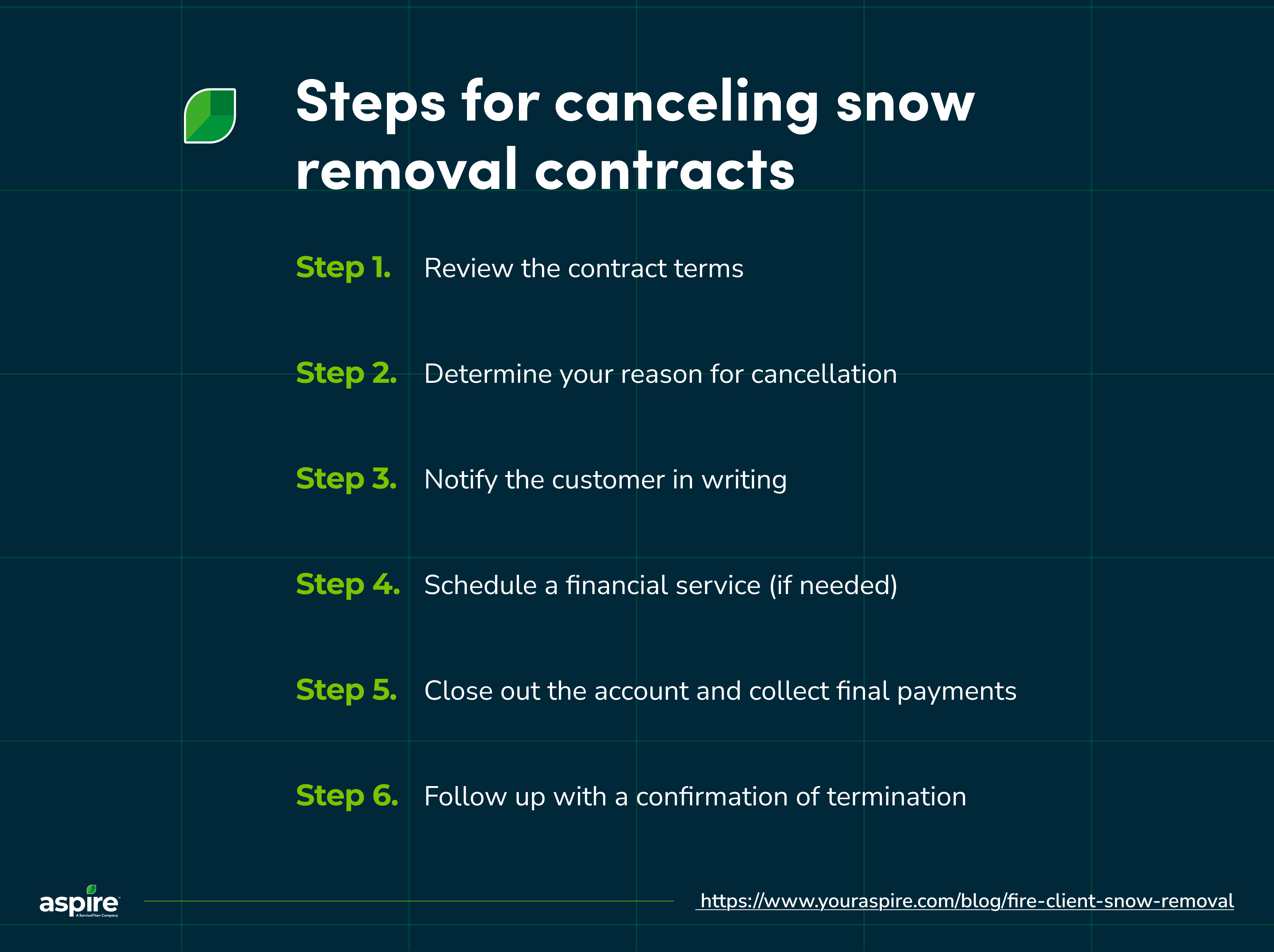
Step 1: Review the contract terms
Before taking any rash action, revisit the original snow removal agreement with the client in question to identify termination clauses, notice periods, and cancellation penalties.
Doing this helps you end a relationship without stepping into legal trouble.
These contracts outline required notice periods, such as 15 or 30 days, and cancellation fees or penalties for early termination. Not only do you avoid unnecessary conflict, but you also set the foundation for a smooth exit.
Step 2: Determine your reason for cancellation
Once you know what the contract allows, the next step is to identify why you are ending the relationship.
It’s best to have a legitimate, well-documented reason, as it strengthens your position if the customer disputes the cancellation.
Here are some common reasons for canceling a contract:
Repeated non-payment
Ongoing scope creep (client demands more than you agreed on)
Business-related changes (shifting to larger commercial accounts)
Defining your reasoning up front keeps the conversation grounded in facts rather than emotions. It also reduces the chances of misunderstandings, complaints, or legal fallout.
Step 3: Notify the customer in writing
It’s time to notify the client of the cancellation directly. While phone calls or face-to-face conversations feel more personal, a written notice, such as an email or formal letter, protects both parties.
Make sure your notice is clear, polite, and professional, and avoid emotional language. Instead, focus on the facts: the reason for cancellation (brief and to the point), the final date of service, and any next steps.
Step 4: Schedule a final service (if needed)
In some cases, the contract calls for one last service call before the relationship officially ends.
Providing a final service ensures you’ve fulfilled all your obligations and gives clients time to make new arrangements, preventing disputes over being left in the lurch.
While it’s not strictly required—depending on the contract—offering a final plow or shovel job demonstrates goodwill and leaves the door open for positive references. It protects your reputation and helps wrap up loose ends.
Step 5: Close out the account and collect final payments
Finalizing the financial side means sending out any outstanding invoices and ensuring payments are received before you close the account.
Ensure the customer understands the due date and follow up if they miss it.
Aspire’s invoicing features ensure timely, accurate invoicing that improves your cash flow. The platform provides a range of invoice options to accommodate your clients’ billing preferences and desired payment schedules.
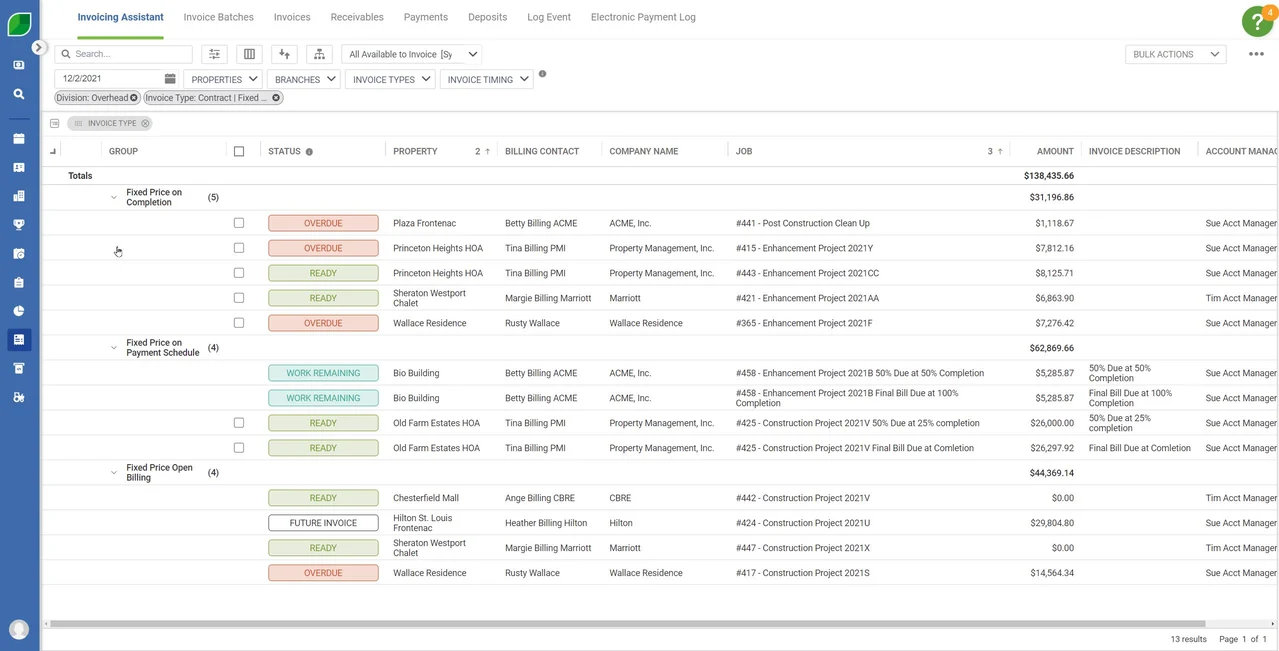
With the help of Aspire’s invoicing assistant, you can quickly identify invoices that are overdue and can search and filter invoices by date, property, or branch.
Step 6: Follow up with a confirmation of termination
After you’ve settled everything, send a follow-up message to confirm that the contract has been terminated.
This final communication provides clarity for the client and ensures there are no lingering doubts.
Keep the tone professional and courteous:
Acknowledge the business relationship
Thank them for their time
Don’t forget to retain copies of all correspondence, from initial notice to confirmation message, showing you’ve handled the termination responsibly from start to finish.
Having complete records protects your company if disputes arise later.
What are the legal considerations when firing a snow removal client?
Firing a snow removal client is a business decision that carries legal weight.
To avoid any penalties (or even lawsuits) follow the proper procedures, such as complying with local laws, maintaining detailed documentation, and understanding your contract’s termination clause.
Check your contract’s termination clause
Your contract’s termination clause is a specific section that outlines the conditions under which either party may end the agreement. It typically includes notice periods, acceptable reasons for cancellation, and any fees for early contract termination.
Understanding this clause protects you from potential disputes and ensures that the termination is handled professionally.
Know your state laws regarding service contract termination
What’s perfectly legal in one area can lead to fines or disputes in another; service contract regulations vary significantly from state to state. This affects notice requirements, fees, and consumer protection.
Make sure you are familiar with local laws. If you’re uncertain, especially if you’re working with high-value clients with complex contracts, consult a lawyer for guidance and to minimize risk.
Understand potential breach of contract risks
A breach of contract occurs when one party fails to fulfill the obligations outlined in the agreement, such as ignoring contractual obligations or terminating without proper notice.
Understanding the risks of a breach helps you take the proper steps to avoid liability, such as documenting communications.
Document everything to protect your business
Although it’s been mentioned already, this point is crucial: document everything.
Keep written records of every message between you and the client, including client issues, missed payments, and service complaints. Any communication regarding the cancellation, even detailed notes from phone calls, serves as evidence if a dispute arises.
Plus, documentation demonstrates your professionalism, showing that you handled everything transparently and in accordance with the contract.
How can you fire a client politely and professionally?
Maintaining professionalism during a contract cancellation ensures your reputation stays intact and leaves the door open for future opportunities.
Here’s how to say goodbye in a polite way:
Use clear, respectful language: Even if the client is rude and their attitude grinds your gears, avoid emotional and accusatory words at all costs.
Instead of saying, “You never pay on time,” try, “We’ve noticed several overdue payments, which makes it difficult to continue providing services.” This keeps the focus on facts rather than criticism.
Be concise and direct: Don’t beat around the bush. Clearly state the reason that the contract is ending (e.g., “Per our terms of service, we will conclude services on [date] due to [reason].”).
Being straightforward avoids confusion and speculation.
Offer assistance for a smooth transition: Suggest service alternatives, like referring the client to another provider.
This shows goodwill and professionalism and that you’re still willing to help them out.
Maintain a professional tone in all communications: It’s tempting to vent on social media about clients (even if you don’t name them), but don’t do that. Use written notices for documentation and keep your emails and letters polite.
Professionalism is key to protecting your business and maintaining a positive image.
When is the right time to fire a snow removal client?
The right time to fire a client is when the relationship harms your business, finances, or team morale. If you’re consistently not getting paid or have to deal with unrealistic expectations despite clear attempts to solve the problem, it’s a strong signal that ending the relationship, while hard, is a must.
Time the termination to coincide with contractual notice periods to minimize disruptions.
Also, try not to act impulsively during a heated moment. Instead, document the issues and prepare a structured exit. This way, you ensure the decision is fair and defensible.
How do you handle client reactions after termination?
Even if you handle everything professionally and don’t let your emotions get the better of you, endings can trigger intense reactions in clients.
From anger to confusion to disbelief, it’s essential to understand common responses and address them accordingly.
Anger
Some customers respond angrily to the news, which is the most difficult reaction to handle.
In these cases, try to stay calm and avoid arguing, even if your first reaction is to defend yourself when you’re being accused. Acknowledge their feelings briefly, then reiterate the facts:
“We understand this is frustrating, but per contract, our services will end on [date].”
Keep your tone neutral and professional to de-escalate the tension.
Threats and intimidation
This is an extreme case, but if the situation escalates, the client might respond with threats: legal, financial, or otherwise. Remain calm and do not engage in confrontational behavior.
Document all communications carefully and, if necessary, contact a lawyer before responding to avoid legal repercussions.
A measured, factual response that references your contract and prior notices protects your business.
Confusion
A milder reaction is confusion, in which clients are uncertain about the next steps or why termination is happening in the first place.
Provide clear and specific details about final services, invoices, and timelines to reduce misunderstandings about the process.
Negotiation
Some customers will try to bargain and persuade you to continue. In these cases, politely restate why you’re canceling and that the decision is final. If appropriate, offer guidance and point them toward another service provider.
For example, say, “We’re unable to continue services due to [reason], but we recommend [alternative provider] to meet your needs.”
Emotional appeals and guilt-tripping
Customers might try to appeal to your empathy or use guilt to influence your decision. Maintain your composure and professionalism by acknowledging their feelings without changing your stance on the issue.
Say: “We understand your concerns, but our decision is based on contractual terms and business considerations.”
If you don’t know what to say in your email, read on for an example.
Example of a script to fire a snow removal client
Firing a snow removal client can be awkward and uncomfortable, but the process is smoother and more manageable with a clear, professional script.
Below is a sample of an email tailored for the snow removal industry:
Subject: Notice of Service Termination
Dear [Client Name],
We appreciate the opportunity to have served you this season. After carefully considering our contract, we decided to terminate snow removal services for your property as of [final date].
This decision is based on [factual reasons, e.g., late payments]. Please ensure any invoices are settled by [due date].
Thank you for your understanding, and we wish you all the best.
Sincerely,
[Your Name / Company Name]
Here are a few tips to personalize your email:
Replace placeholder text with client-specific information.
Keep the tone polite, factual, and professional.
Avoid unnecessary explanations or emotional language.
Next up: how to avoid future client issues.
How do you avoid future client issues in snow removal?
The best snow removal companies don’t just react to bad clients; they design their business to avoid them. Preventing client issues is easier than managing disputes after they start.
This means:
Creating clear, detailed contracts: Specify service scope, pricing, payment terms, and termination policies to protect both parties and minimize disputes.
Setting expectations up front: Clearly state what you’re doing and what you're not doing. Don’t be vague about your services. Explain your availability during a heavy snowstorm, your response times, and any limitations.
Implementing a screening process: Before onboarding new clients, evaluate their history, including payment history and past experiences with other service providers. It helps you identify potential high-risk customers.
Maintaining regular communication: Keep clients informed about weather-related schedule changes, service updates, or any changes to terms, as consistent communication builds trust.
Following onboarding best practices: Provide a welcome packet or give the client an orientation, review the contract together, and answer any questions before starting the service.
Documenting ongoing service interactions: Even if the customer is nice, always track completed work, payments, and feedback. If any issues arise, you will have a clear record to defend yourself.
Establishing clear, professional boundaries early on reduces conflict and misunderstandings.
How to address unsatisfactory service that leads to cancellation
What if a client is looking to fire you? Sometimes customers can feel that service quality is lacking, so addressing performance issues helps prevent lost business and strengthens your relationship with them.
Analyze the root cause of the dissatisfaction
When a client is unimpressed with your snow removal service, it’s a signal to dig deeper and uncover what’s driving this complaint, especially if multiple clients make the same point.
Encourage your team to review service and weather records, crew notes, and any client communications related to the issue. For example, was a specific area overlooked? The dissatisfaction may be tied to unclear expectations rather than poor service.
No matter the cause, a platform like Aspire makes it easier to track service history and identify recurring issues.
Through Aspire’s intuitive dashboard, you can review all aspects of the project and assess if shortfalls are related to materials, productivity, or crew.
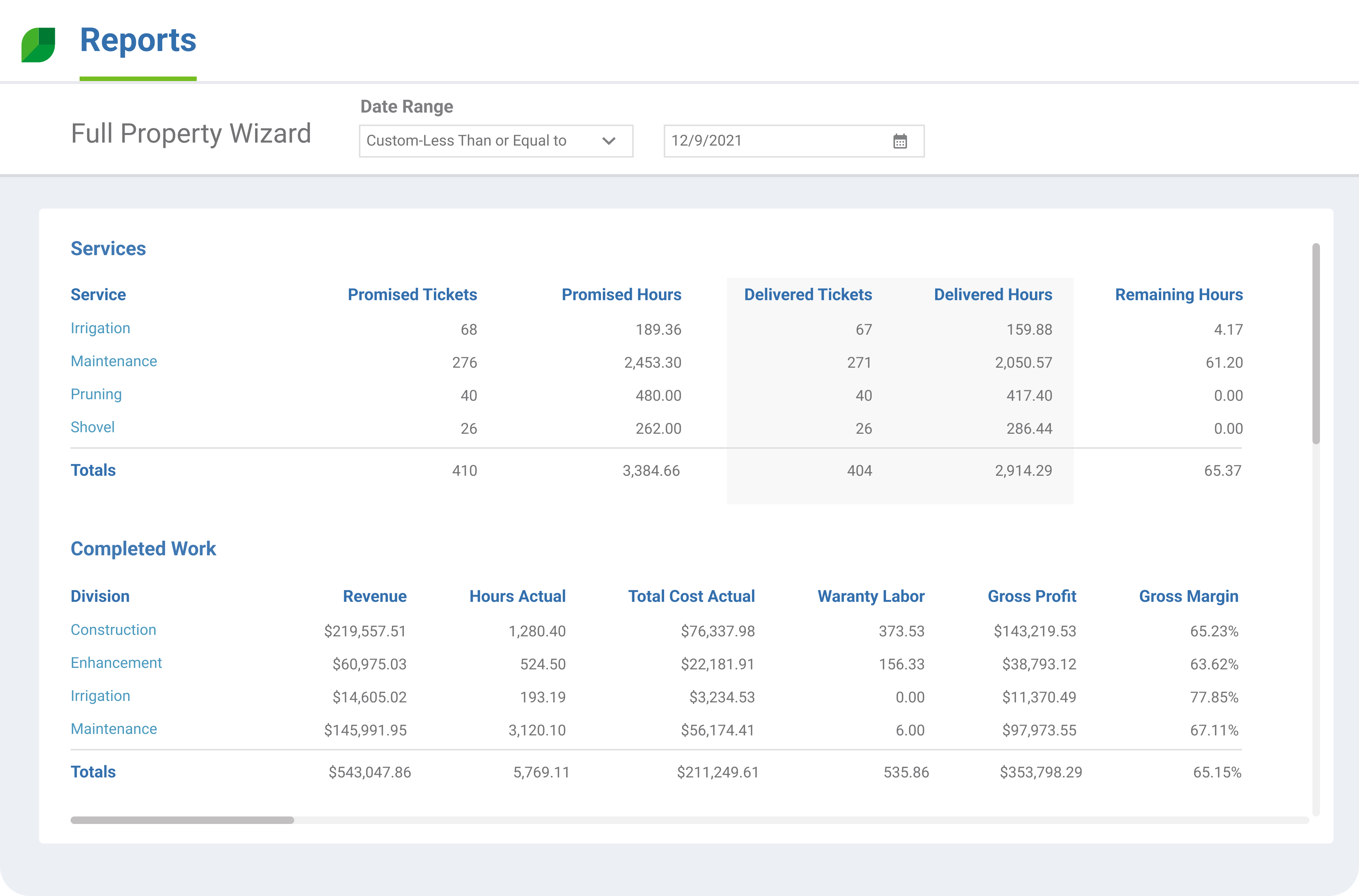
Real-time insights from Aspire help snow removal companies eliminate guesswork. As a result, they make more informed decisions and improve their operations.
Monitor service quality and team performance
To deliver consistent high-quality service, you have to monitor both service outcomes and team performance. Doing so helps you catch problems early and maintain positive customer relationships.
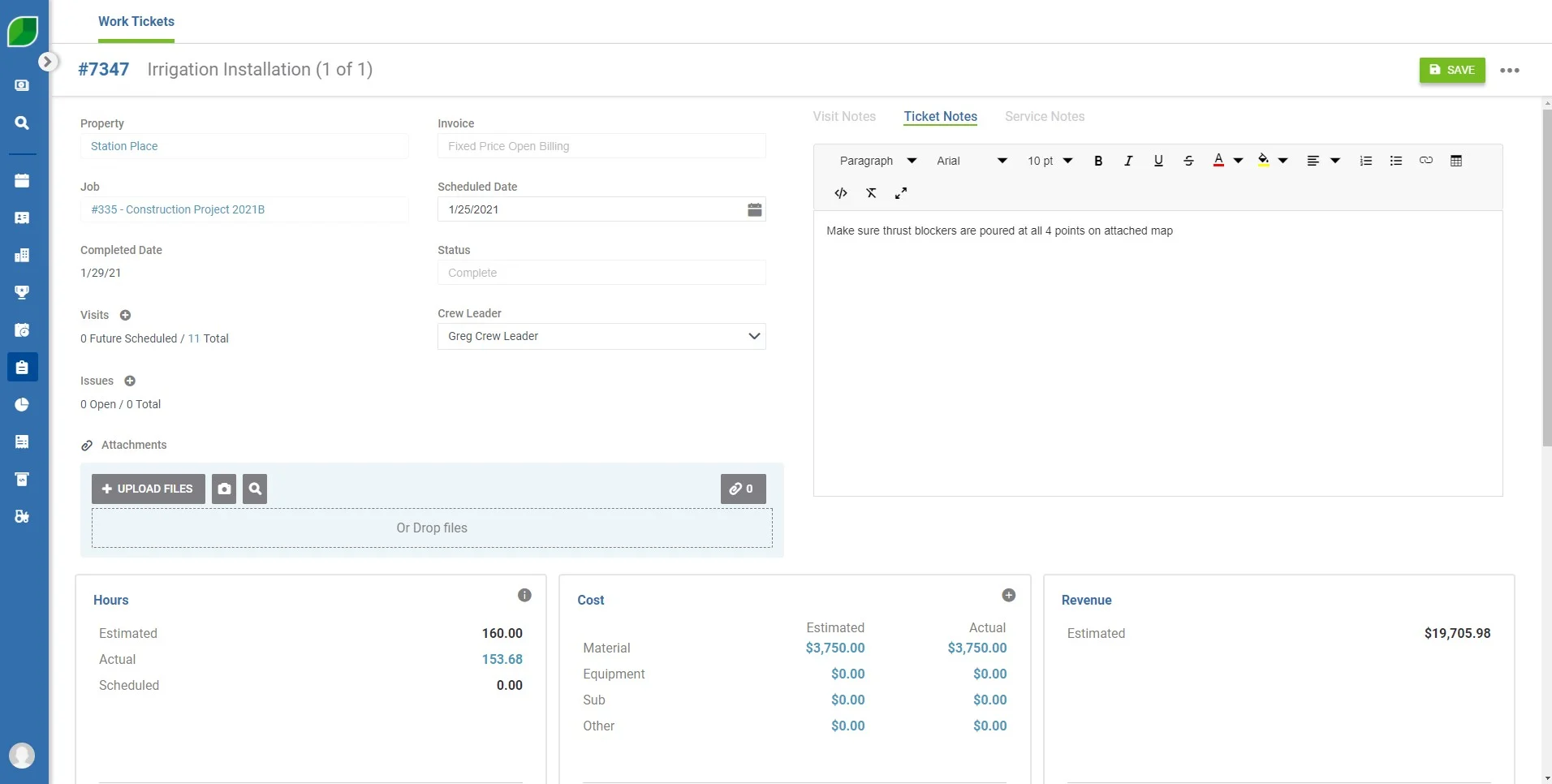
Aspire allows you to track job progress in real time through work tickets. They contain all details related to the job (hours, materials, labor costs, and equipment) ensuring accountability and profitability.
Improve client communication
To reduce misunderstandings and the potential for frustration, always clearly communicate your expectations to the client. Aspire’s customer portal can help you here.
It simplifies customer relationship management by providing visibility and three-way communication among management, customers, and field workers. All from a single customer portal.
Document and address recurring issues early
If left unchecked, recurring service issues (like delayed plowing or missed areas) quickly erode client trust.
The key to solving this is to document these problems in Aspire. You log recurring issues directly into the system, attach notes or photos, and automatically assign follow-up tasks.
This creates a clear trail of accountability so that nothing slips through the cracks. It shows your commitment to continuous improvement, which reassures clients that their concerns are taken seriously.
Over to you!
Firing a client in snow removal is never an easy decision.
However, sometimes it’s the smartest thing to do to protect your business’s profits and your sanity.
By following the step-by-step process outlined above, you’ll become a pro at parting ways respectfully while keeping your reputation intact.
And remember: Aspire is your ally in making a confident decision.
Book a demo today and discover how Aspire can streamline your operations, improve service quality, and build more sustainable client relationships.












 866-727-7473
 Schedule Demo
 390 S Woods Mill Rd #300 Chesterfield, MO 63017


