Table of Contents
Table of Contents
- Do you need a license to start a landscaping business in Maryland?
- What are the types of landscaping business licenses & permits in Maryland?
- Step-by-step process to get a landscaping business license in Maryland
- How much does a Maryland landscaping business license cost?
- What are the most common mistakes to avoid when getting a license?
- How Aspire helps landscaping businesses stay organized & compliant
- Over to you
- Disclaimer
Starting a landscaping business in Maryland?
You’re in luck. This guide breaks down everything you need to get licensed and operate legally in this state.
It covers:
Types of required landscaping business licenses and permits
Step-by-step instructions on how to obtain a license
Common pitfalls to avoid
How much a business license costs in Maryland
You’ll also learn how Aspire simplifies contract management, invoicing, job scheduling, and compliance tracking, so you can launch your landscaping business successfully.
Do you need a license to start a landscaping business in Maryland?
In Maryland, getting a landscaping license depends on the type of services you offer. The state does not require a general statewide license for basic services like mowing, trimming, mulching, or planting, so it’s easy to start a landscaping business.
However, the moment your services go beyond basic maintenance, licenses become mandatory.
For example, if your work involves hardscaping, such as installing patios, decks, fences, or driveways, you need a Home Improvement Contractor license from the Maryland Home Improvement Commission (MHIC).
Similarly, if your landscaping business handles pesticides, herbicides, and weed control treatments, you require a Commercial Pesticide Applicator certification and a Pesticide Business License issued by the Maryland Department of Agriculture.
In short, as your services expand, Maryland requires specific licenses for your business to continue operating legally.
What are the types of landscaping business licenses & permits in Maryland?
Landscaping in Maryland involves navigating a mix of state licenses, local permits, and tax registrations. Understanding which licenses apply to your services is key to staying compliant and avoiding fines.
General business license
Before offering any landscaping services, you need to register your business with the Maryland Department of Assessments and Taxation (SDAT) to obtain a local business license if the county requires it.
Many counties issue trader’s licenses or similar permits for service-based businesses, even if no specialized landscaping license is needed.
Most landscaping companies also apply for a state tax ID if they sell taxable goods like plants, mulch, or materials. If you plan to hire employees, you need an Employer Identification Number (EIN).
Landscaping contractor license
Maryland does not offer a specific landscaping contractor license. Instead, it depends on the type of work your landscaping business performs, especially when construction or structural improvements are involved.
If your work involves installations such as patios, walkways, decks, fences, or other exterior improvements, you’ll likely need an MHIC license. Maryland’s definition of home improvement is broad, and many landscaping upgrades fall under it.
Specialized licenses
Depending on your services, you need:
Commercial Pesticide Applicator License if your business applies herbicides, fertilizers with weed control, or pest treatments.
Erosion and Sediment Control Certification for larger landscaping or grading projects.
Stormwater or environmental permits if your work impacts drainage systems, wetlands, or nearby waterways.
These specialized licenses ensure that higher-risk landscaping projects are performed safely and legally, making them essential as your service offering becomes more advanced.
Permits and local regulations
Here are the most common Maryland-specific permits:
Signage permits for advertising your business
Noise ordinances that limit working hours
Vehicle and equipment regulations for commercial use
Counties and cities set their own zoning rules, so compliance at the local level is important.
For example, some residential zones restrict the use of heavy machinery, while larger jobs, such as installing drainage systems, require permits from local authorities.
Step-by-step process to get a landscaping business license in Maryland
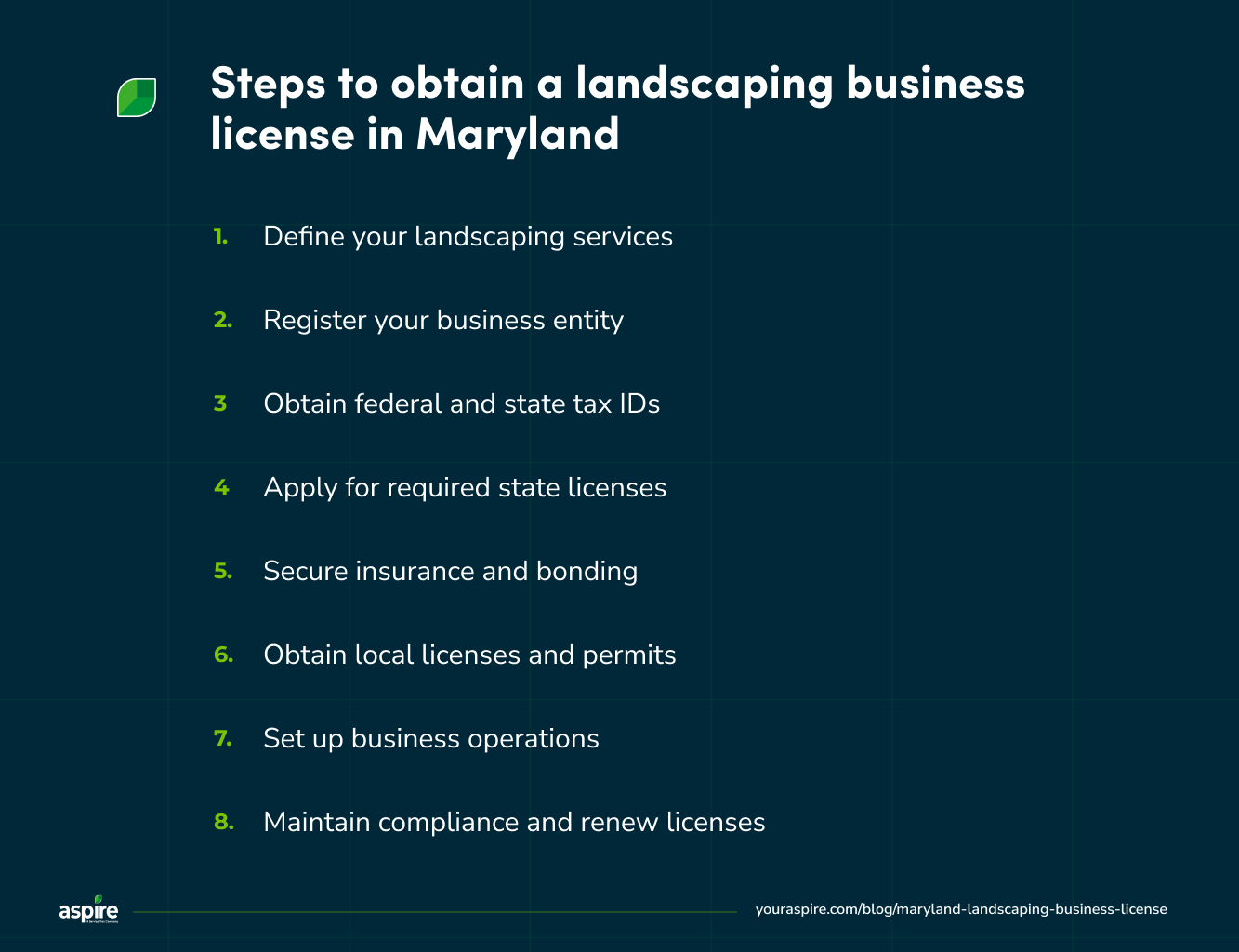
Starting a landscaping business in Maryland involves following a structured process. While the exact steps depend on your services, the path typically looks like this:
1. Define your landscaping services
Start by clearly outlining what your business will offer. Keep in mind that basic services like mowing or planting have fewer requirements in Maryland, while hardscaping or pesticide applications need additional licensing.
2. Register your business entity
Next, register your business with the Maryland Department of Assessments and Taxation (SDAT). Choose from the following structures:
Sole proprietorship: As the simplest and least expensive structure to set up, it’s ideal for individuals starting a business on their own. However, it doesn’t provide liability protection, meaning your personal assets could be at risk.
LLC: It’s one of the most common choices because it separates your personal and business assets, offering liability protection while maintaining flexible management and tax options.
Corporation: A separate legal entity that provides the strongest liability protection and can make it easier to raise capital by issuing stock. But it comes with more complex and stricter reporting, governance, and tax requirements.
This step legally establishes your landscaping company and allows you to operate in Maryland.
3. Obtain federal and state tax IDs
Apply for an EIN through the IRS if you plan to hire employees. In addition, you need to register for Maryland taxes (such as sales and use tax) if you sell materials like mulch or plants.
4. Apply for required state licenses
Depending on the services you offer, apply for the appropriate licenses:
Home Improvement Contractor license via the Maryland Home Improvement Commission for hardscaping or structural work.
Pesticide Applicator and Pesticide Business license if applying chemicals.
Keep in mind that each license has its own application process, exam, and qualification requirements, so be sure to check those before proceeding.
5. Secure insurance and bonding
Most landscaping businesses need general liability insurance to protect against property damage or injuries. For example, some licenses like MHIC require proof of insurance.
Bonding is also necessary depending on your services.
6. Obtain local licenses and permits
Check with your county or city for local requirements needed to perform landscaping services. These include a trader’s license, zoning approval, or permits for specific projects like grading or drainage work.
7. Set up business operations
Once licensed, it’s time to establish your operations, which means hiring staff, purchasing equipment, and setting up an accounting system. Make sure your contracts, pricing, and workflows align with Maryland regulations.
8. Maintain compliance and renew licenses
Finally, keep your business in good standing by renewing licenses, maintaining insurance, and following state and local laws. For example, pesticide certification requires continuing education, and MHIC licenses must be renewed periodically.
How much does a Maryland landscaping business license cost?
The cost of starting a landscaping business in Maryland varies depending on your services, licenses, and business setup.
A trader’s license (required if you’re selling items) costs around $15 to $800, while a Home Improvement Contractor license costs about $350 ($218 application fee plus $22.50 processing fee plus $100 guarantee fund assessment).
If you apply pesticides, a Pesticide Business License costs around $150, plus any exam or certification fees.
Additional expenses include:
Insurance: $300–$1,000+ annually
Exam or training fees: $50–$200
Bonding: Varies by coverage
What are the most common mistakes to avoid when getting a license?
While getting licensed in Maryland isn’t overly complicated, small mistakes can lead to delays, fines, or even suspension of operations.
Here are the most common pitfalls and how to avoid them.
1. Applying for the wrong license (or skipping it entirely)
One of the biggest mistakes is assuming you don’t need a license to operate or applying for the wrong one. In Maryland, licensing depends heavily on the services you perform.
For example, hardscaping work requires a Home Improvement Contractor license, while pesticide application requires certification.
Operating without a proper license is a serious issue. To avoid penalties or legal trouble, clearly define your services up front and match them to the appropriate licensing requirements before starting work.
2. Submitting incomplete or incorrect applications
Incomplete applications are often a setback for landscaping businesses. Missing documents, incorrect information, or failing to meet requirements significantly delay the approval process.
In addition, incomplete applications take longer to process or may be returned for correction.
To prevent this:
Double-check all forms before submitting
Include all required documentation
Respond quickly if additional details are required
3. Ignoring ongoing compliance requirements
Many landscaping businesses forget to maintain compliance after obtaining a license, which leads to fines or even license suspension. For instance, pesticide applicators need to follow strict rules around supervision and safe application practices.
Other common post-licensing mistakes include:
Letting licenses or certifications expire
Failing to maintain required insurance
Not keeping proper records
Treat compliance as an ongoing process. Set reminders for renewals, stay up to date on regulations, and maintain proper documentation to keep your business running smoothly without costly setbacks.
How Aspire helps landscaping businesses stay organized & compliant
Running a landscaping business in Maryland means juggling multiple tasks, including contracts, payments, schedules, and paperwork.
That’s where Aspire excels, helping streamline operations so you stay organized, reduce risk, and focus on growth rather than administrative work.
Contract & proposal management
Aspire’s estimating software lets you build detailed, professional proposals and contracts with accurate pricing, scopes of work, and terms, all from a single platform.
Instead of manually creating documents for every customer, teams can use standardized templates to ensure consistency and reduce costly errors or omissions.
Once approved, contracts are stored in a centralized location, making it easy to access client agreements, track revisions, and keep documentation organized throughout the project lifecycle.
Using this approach means you save time, improve accuracy, and provide clients with a more professional sales experience.
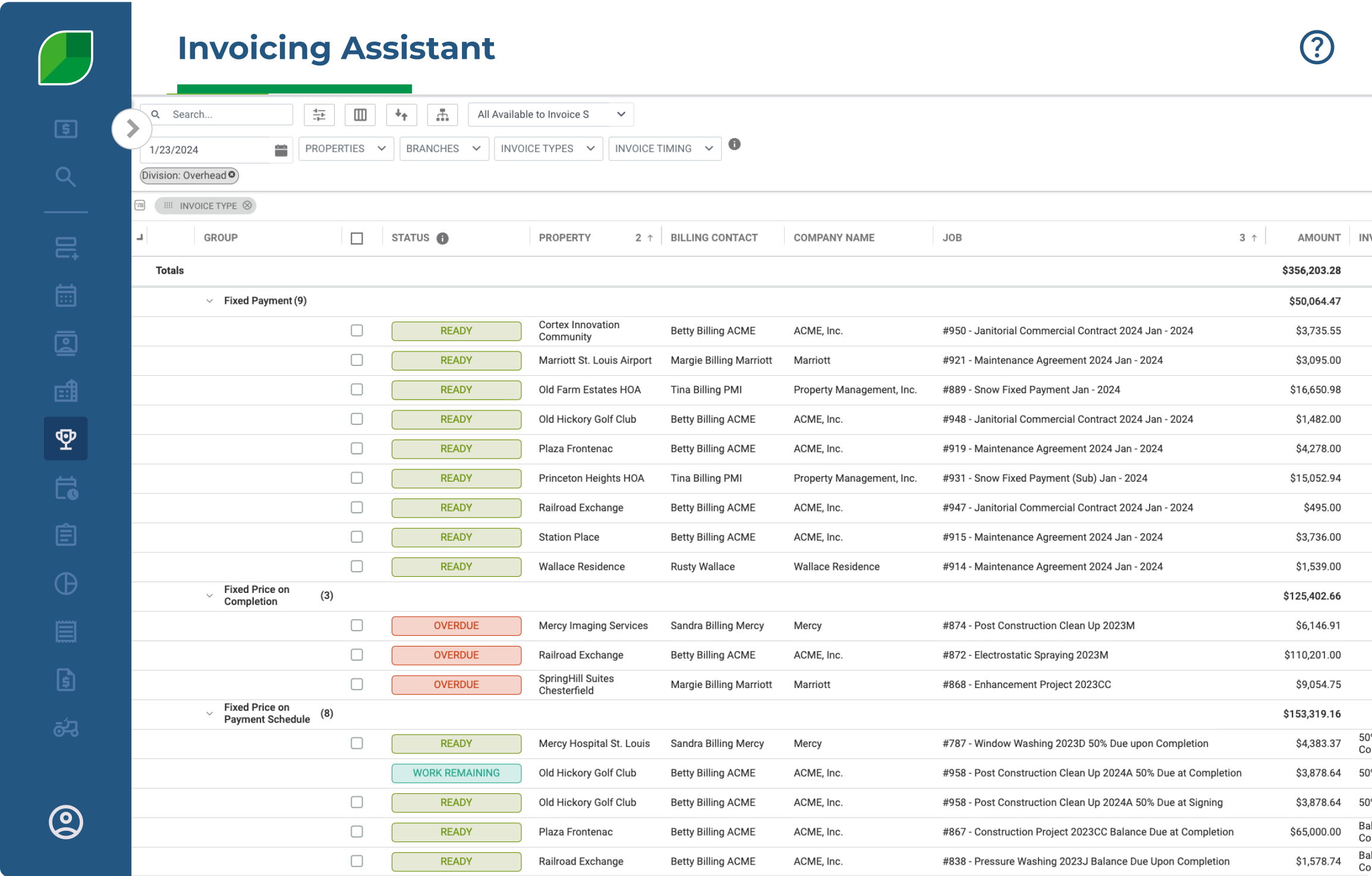
Invoicing & payment processing
Aspire’s invoicing feature simplifies the entire process by generating invoices from completed work, helping businesses reduce manual data entry and billing errors.
You can track invoices, payments, and outstanding balances from a single dashboard, making it easier to reconcile transactions and monitor cash flow. The platform also stores business documents, such as licenses or job records, ensuring critical information is easy to find.
Business reporting & documentation
Aspire provides real-time reporting that gives business owners greater visibility into financial and operational performance. You can monitor job costs, profitability, labor productivity, revenue, and other key metrics through customizable dashboards and reports.
That’s not all: this platform also maintains detailed records of jobs, invoices, contracts, and other business documents, helping you stay organized and prepared for audits or regulatory requirements.
With accurate, up-to-date reporting, your business can make more informed decisions and identify real revenue opportunities.
Scheduling & job management
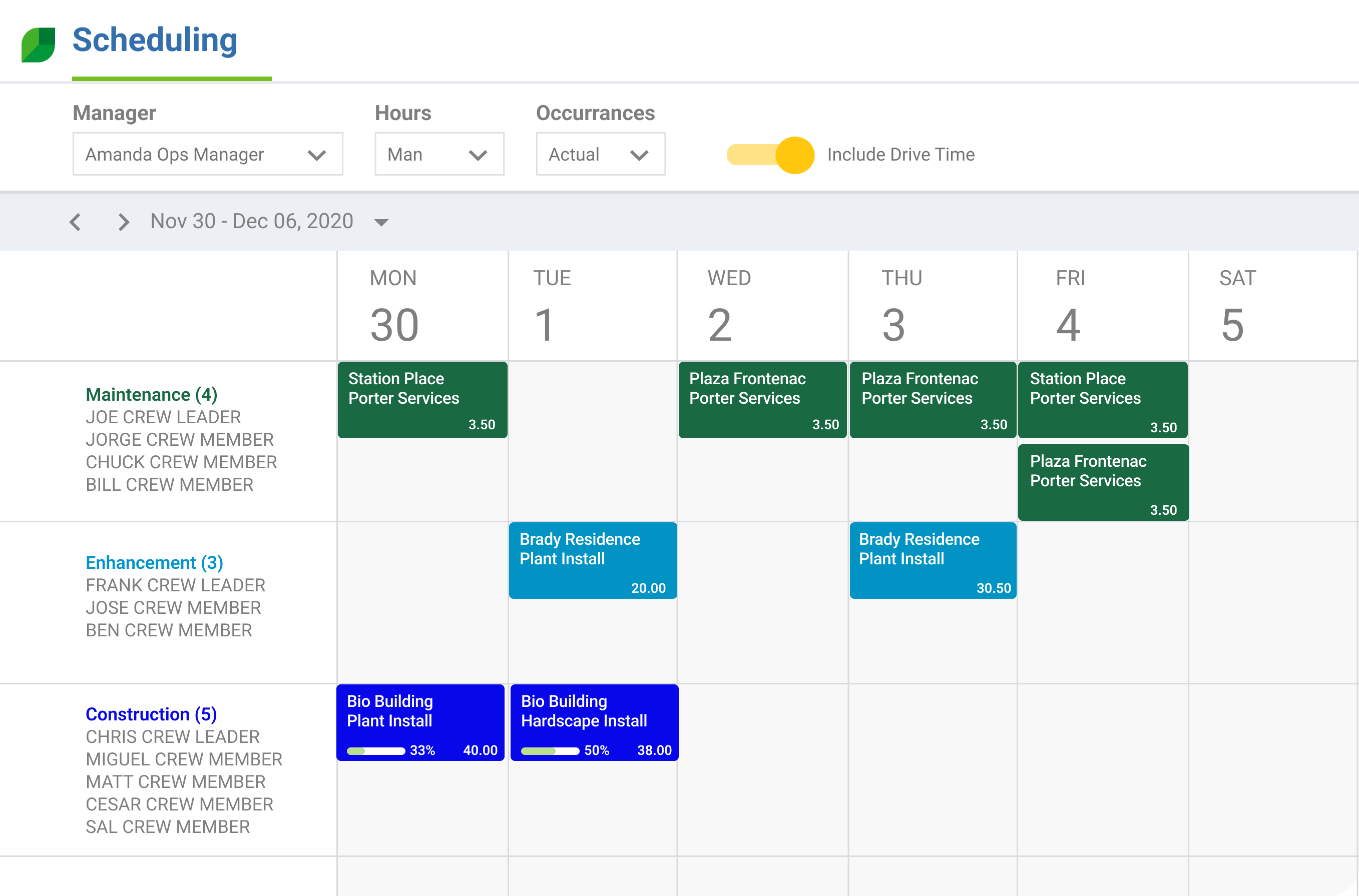
One last thing: Aspire makes it easier to schedule crews, assign work orders, and manage field operations from a single location.
Dispatchers can view technician availability, assign jobs based on location or workload, and adjust schedules in real time as priorities change.
Even better, office staff can monitor job status, track completion, and receive field updates, improving communication between teams. Aspire’s route optimization also helps reduce travel time and downtime, enabling your crews to complete more jobs while maximizing productivity.
Over to you
Starting and growing a landscaping business in Maryland means getting licensed correctly and complying with regulations, but it also comes with operational challenges.
With the right approach (and the right tools), building a successful landscaping company is entirely manageable. By understanding the requirements for operating in Maryland and putting strong systems in place, you avoid costly mistakes and build a highly profitable business.
Ready to simplify your operations and be successful from the start? Book a demo with Aspire today.
Disclaimer
This article is intended for informational purposes only and does not constitute legal, financial, or licensing advice. While we strive to provide and keep information accurate and up to date, you should verify all requirements with the appropriate state or local authorities before making any business decisions.












 866-727-7473
 Schedule Demo
 390 S Woods Mill Rd #300 Chesterfield, MO 63017


