Table of Contents
Table of Contents
- What is landscaping franchise profit?
- How profitable is owning a landscaping business?
- What factors affect landscaping franchise profitability?
- How do you calculate landscaping franchise profit?
- What are the most profitable landscaping services?
- What is the failure rate of landscaping franchises?
- What are common risks in landscaping franchises?
- How can franchise owners maximize their profits?
- Service diversification
- Niche targeting
- Cost control
- Relationship building
- Pricing strategies
- Operational efficiency
- Data-driven decision-making
- What are the best ways to reduce expenses in a landscaping franchise?
- Fuel savings
- Equipment maintenance
- Labor efficiency
- Supply costs
- Over to you!
Landscaping franchises face unique challenges in maintaining healthy profit margins, but they also have advantages that make it easier to maximize profits.
While independent businesses are challenged by building everything from scratch, franchises benefit from established networks and processes that can be tweaked to deliver even more value. In this guide, you’ll learn:
How landscaping franchise profits compare to independent business profits.
Key factors that affect profit margins at scale.
Common risks that landscaping franchises face, and how to avoid them.
Some of the most profitable landscaping services to consider, and other ways to maximize profits across multiple locations.
With the right systems and processes in place, landscaping franchises can leverage economies of scale to boost growth and profitability for owners and operators alike.
What is landscaping franchise profit?
Landscaping franchise profit is the income remaining after expenses are deducted in a franchise system. The income and expenses will be quite different for franchise owners vs. franchise operators.
Franchise operators typically pay an initial franchise fee, along with four to 12 percent of revenue in franchise royalties to the owner. Their gross profit may be the same as an independent company, but they’ll need to deduct franchise royalties and amortized initial franchise fees from net profit.
For franchise owners, gross profit comes from initial franchise fees and ongoing royalties.
This arrangement allows owners and operators to split profits while benefiting from economies of scale that aren’t possible in independent operations.
How profitable is owning a landscaping business?
Landscaping franchise profit margins normally range from ten to 15 percent. For example, U.S. Lawns’ franchisees reported average sales of $1,076,284 with a net profit margin of over 14.5%.
Compared to independently owned landscaping businesses, franchise operations give you a faster, more reliable path to good margins.
Over time, however, independent businesses can achieve higher margins by specializing in a lucrative niche. For example, lawn care generates 10–15% profit margins on average for small and medium landscaping companies, while design/build projects can achieve 25–40% margins.
Factors such as location, demand, and operational efficiency can significantly impact profits for independent and franchise companies alike.
What factors affect landscaping franchise profitability?
Understanding how different factors affect profitability can help you evaluate franchise opportunities and optimize your operations.
In addition to the service mix, other variables include:
Location and market conditions: Demand for landscaping tends to be higher in states with longer growing seasons, such as California, Texas, and Florida. Strong demand gives landscapers more pricing power, but dense competition can also suppress margins.
Client focus: Commercial contracts provide steady, recurring revenue, but often have lower margins due to competitive bidding. Residential clients often accept higher pricing for personalized services.
Operational efficiency: Franchises with streamlined operations, proper equipment maintenance, and well-trained crews can tackle more jobs per day, reducing the operational cost of each job.
Company age and business maturity: Newer franchises may incur higher startup and customer-acquisition costs, which can eat into their profit margins. Mature operations benefit from brand recognition and scale that bring repeat customers, referral networks, and higher profits.
Franchise structure: Lower royalty rates leave more revenue for the operator but reduce the profits available to the owner for investing in training and support. Territorial exclusivity can also protect against internal competition that could reduce operator profits.
As you calculate profits, keep these drivers in mind. Your direct costs, operating expenses, franchise costs, and revenue all contain clues about what factors have the most impact on your profits.
How do you calculate landscaping franchise profit?
To calculate landscaping franchise profit, subtract all direct costs, franchise fees, and operating expenses from gross revenue in a given period:
Net profit margin (%) =(Total revenue - Total expensesTotal revenue) 100
For franchise operators, revenue and expenses would include:
Revenue: All revenue from contracts and add-on services.
Expenses: Direct costs (labor, materials, and other job costs), operating expenses (such as licensing and admin costs), and franchise costs. Franchise costs include the amortized initial fee, ongoing royalties, and, if applicable, marketing fees.
For franchise owners, revenue and expenses would include:
Revenue: Total royalties collected from all franchisees, along with initial franchise fees and marketing fund revenue.
Expenses: Operating expenses usually include legal costs, training infrastructure, support staff, and technology platforms.
Both franchise operators and owners use these calculations to gauge the performance of individual locations and make decisions about expansion, pricing, and operational improvements.
What are the most profitable landscaping services?
The most profitable landscaping services will depend on your location, market, and other factors.
However, many of the most profitable services target upscale residential and commercial customers who ar willing to pay a premium for specialized skills:
Hardscaping: Stone patios, retaining walls, and walkways need specialized skills and command premium pricing. They also create opportunities for upselling lighting and landscaping additions.
Design/build projects: Custom landscape design includes both design and material fees and gives franchises complete control over the project. Their comprehensive nature justifies higher pricing and leads to the need for ongoing maintenance contracts.
Tree care: Tree removal, pruning, and health treatments need specialized equipment and permits that competitors may not have. Emergency tree services after storms are particularly lucrative.
Irrigation installation: French drains, dry creeks, and sprinkler systems can prevent costly property damage and protect gardens. They tend to appeal to clients with manicured properties that need extra care.
Lighting: Landscape lighting has low material costs, leaving more room for high profit margins. Holiday lighting services can also create seasonal revenue spikes without additional equipment.
Technology-enhanced services: Automated irrigation, lighting, and landscape systems appeal to tech-savvy customers willing to pay for convenience and efficiency.
Maintenance: Maintenance work often requires fewer resources than new installations, providing a steady stream of high-margin work.
There’s no one service that’s the perfect fit for every company. The services that bring in the most profit for your business will be the ones you can do efficiently and at scale.
What is the failure rate of landscaping franchises?
According to the Small Business Administration, approximately 32% of small businesses fail within the first two years and 51% fail within five years.
In contrast, only four percent of franchises fail within the first five years, since they come with a proven framework for success.
When landscaping businesses fail, it’s often due to a lack of business knowledge rather than a lack of landscaping skills. Franchises can offer a framework for that knowledge, which is why they tend to be less risky.
For example, estimating projects isn’t as intuitive as it seems. Without historical data to base estimates on, it can be easy to underprice jobs, hurting profitability. Franchises typically provide operators with clear guidelines for pricing services, reducing the risk of underpricing.
While franchises do have a lower failure rate than independent businesses, there are still risks to consider before you commit to a franchise model.
What are common risks in landscaping franchises?
The scalability that defines successful franchises can also create risks if it’s poorly managed. Common risks specific to franchises include:
Franchisor dependency: Franchisees have limited control when franchisors make poor strategic decisions or fail to adapt to market changes. Franchisors need to keep a finger on the pulse of markets in all the regions they operate in to protect profitability.
Territory competition: Competing franchisees in nearby territories can reduce revenue potential. New locations need to be carefully considered to optimize revenue at each.
Overexpansion pressure: Franchisors sometimes incentivize franchisees to open multiple locations too fast. Tying incentives to profitability at existing locations can help prioritize sustainable growth over speed.
Quality control: Maintaining consistent service standards gets harder with multiple crews and territories. As franchises scale, they need centralized systems to ensure quality control across locations.
Seasonal financing: Franchise royalties and fees are year-round, and operators have less flexibility to reduce overhead during slow seasons. Building extra cash reserves during peak seasons can help cover fixed obligations during slower periods.
Avoiding these issues requires effort from both the franchisor and the franchisee to protect profit margins, maintain quality standards, and scale in manageable ways.
How can franchise owners maximize their profits?
Franchise owners can maximize their profits by analyzing the performance of individual locations alongside company-wide metrics.
They can use these insights to identify what successful locations are doing right and scale those tactics across the entire network.
Franchisors profit when franchisees profit, so strategic decisions should focus on optimizing the model to support franchisee growth.
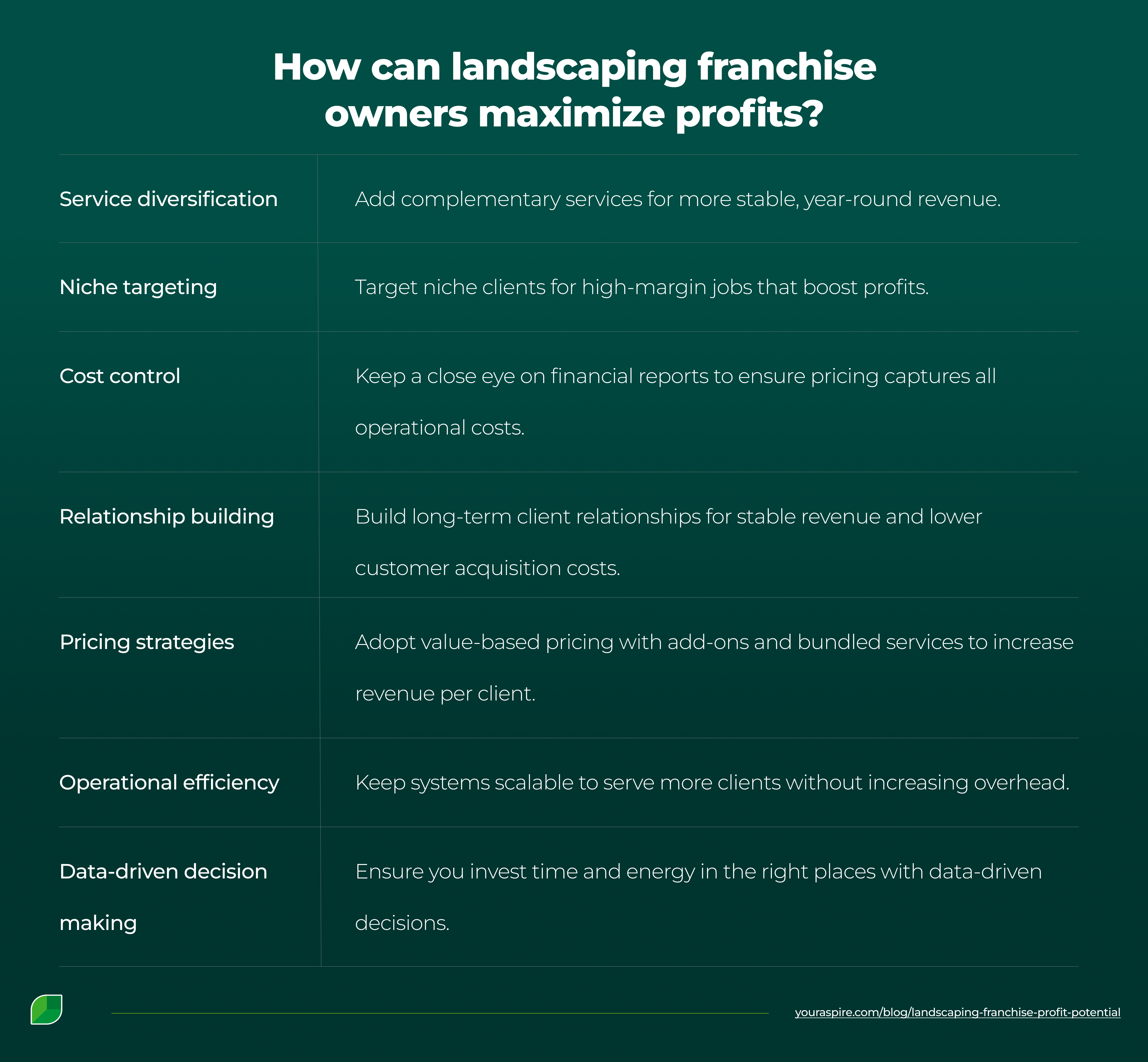
Service diversification
Adding complementary services such as irrigation, snow removal, or seasonal maintenance increases year-round revenue and appeal.
But scaling multiple services requires systems built for that complexity.
Aspire’s centralized platform makes it easier to estimate, schedule, and track job costs across diverse services and locations, with real-time financial data that enables franchisors to make quick strategic decisions.
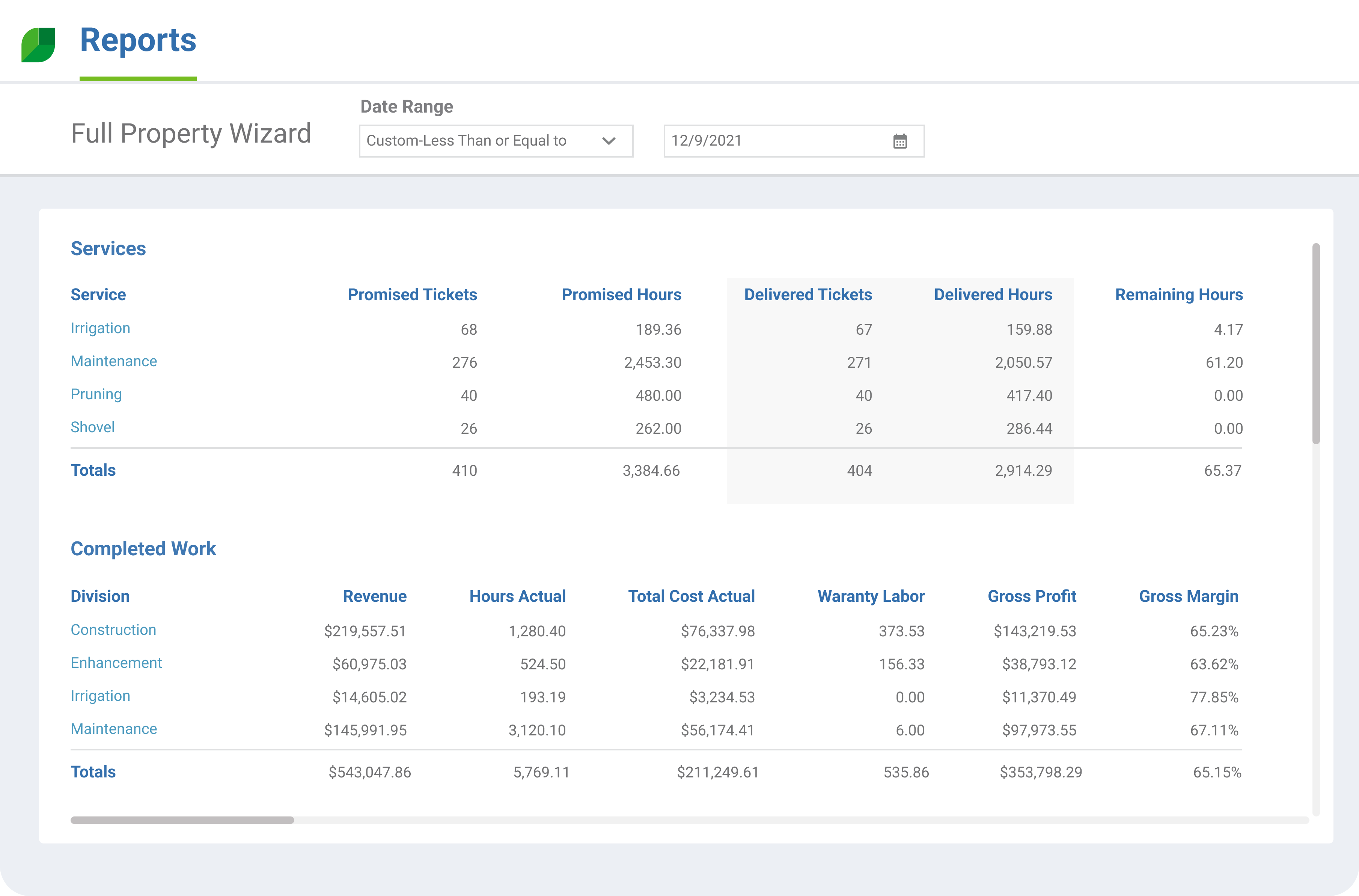
This lets franchises scale confidently, with comprehensive oversight into which services are profitable at which locations.
Niche targeting
Targeting niche clients is a key strategy for moving beyond competitive, low-margin residential work and building a more profitable business. Niche targeting could focus on clients like:
HOAs: Homeowners associations need consistent, quality landscaping to preserve property values across communities.
Commercial accounts: Curb appeal is crucial for offices and retail centers that need to attract customers and tenants.
Luxury residential: Homeowners who are willing to invest in premium, customized landscape design and maintenance.
Eco-conscious clients: Clients who value the environmental benefits of sustainable practices like native plants and water conservation.
A more specific focus can create ‘stickier’ clients and reduce customer churn because expertise commands higher prices.
Franchises can leverage proven systems and shared expertise across locations to deliver consistent, specialized service that independent businesses struggle to match.
Cost control
Keeping a close eye on labor, material, and equipment costs is critical for profitability. Accurate job costing ensures pricing is set and adjusted based on today’s reality rather than yesterday’s budgets.
Aspire’s real-time job costing and reporting tools help owners monitor project profitability and uncover hidden costs, enabling them to spot overruns before they become a systemic problem.
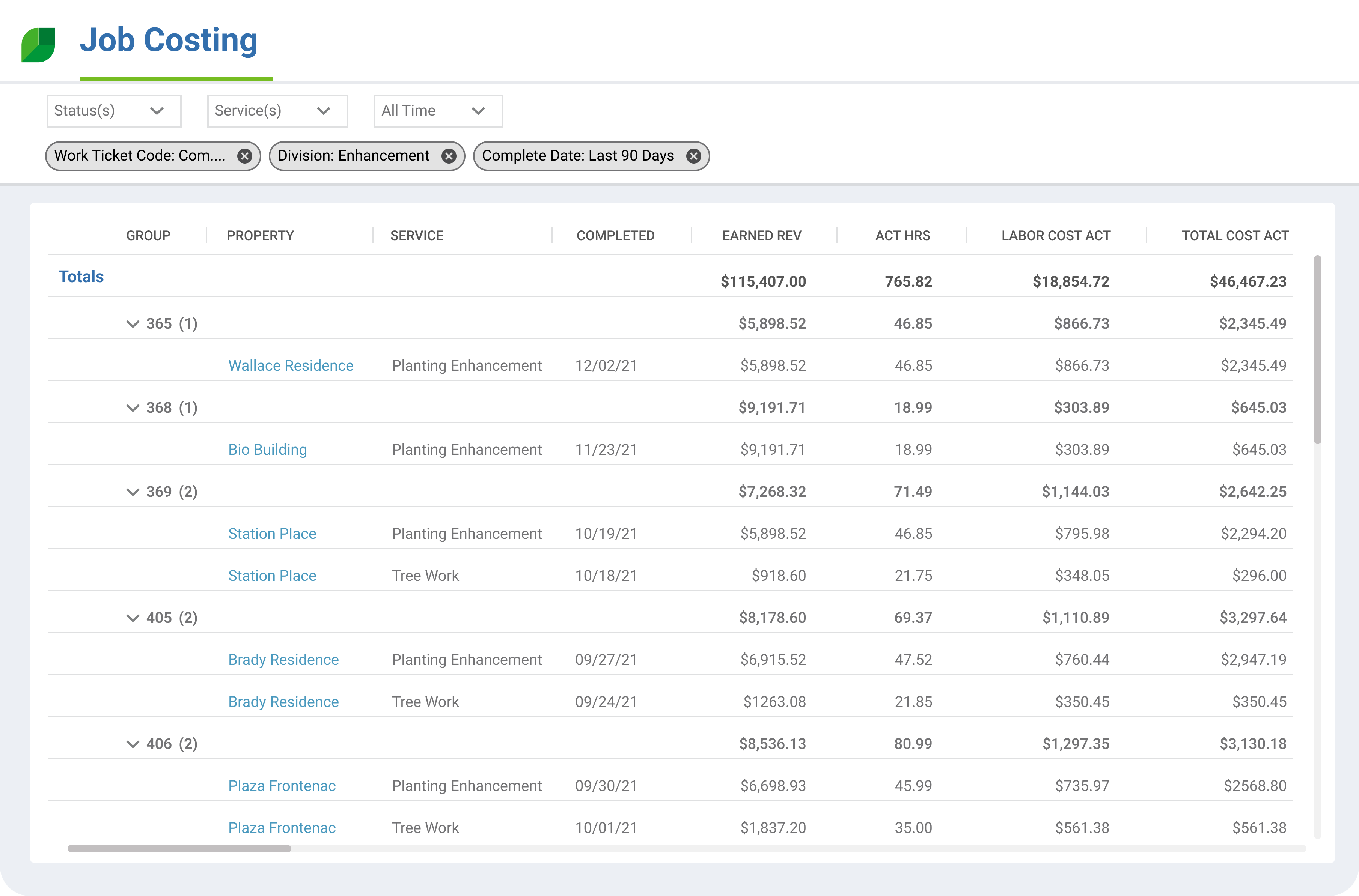
Franchisors can use this information to update company-specific bidding templates and kits, ensuring franchisees are always working from the most up-to-date guidelines for estimates.
Relationship building
Long-term client relationships are the cornerstone of a profitable business, creating recurring contracts. Familiarity with a property’s layout, microclimates, and irrigation systems also reduces the labor hours required to finish a job.
Reliable service, transparent communication, and quality outcomes build the trust that creates long-term clients.
Satisfied long-term clients are also an excellent source of referrals, testimonials, and positive reviews—creating network effects that can be powerful for franchise companies.
Pricing strategies
Another important path to higher profitability is value-based pricing. Instead of just calculating hours and materials plus a markup, value-based pricing captures the full value of your service in the client's eyes.
This can include add-on and bundled services that make customer decisions easier and help you capture more revenue per client.
Use Aspire with PropertyIntel for accurate property records, measurements, and visual assets that support multiple project types.
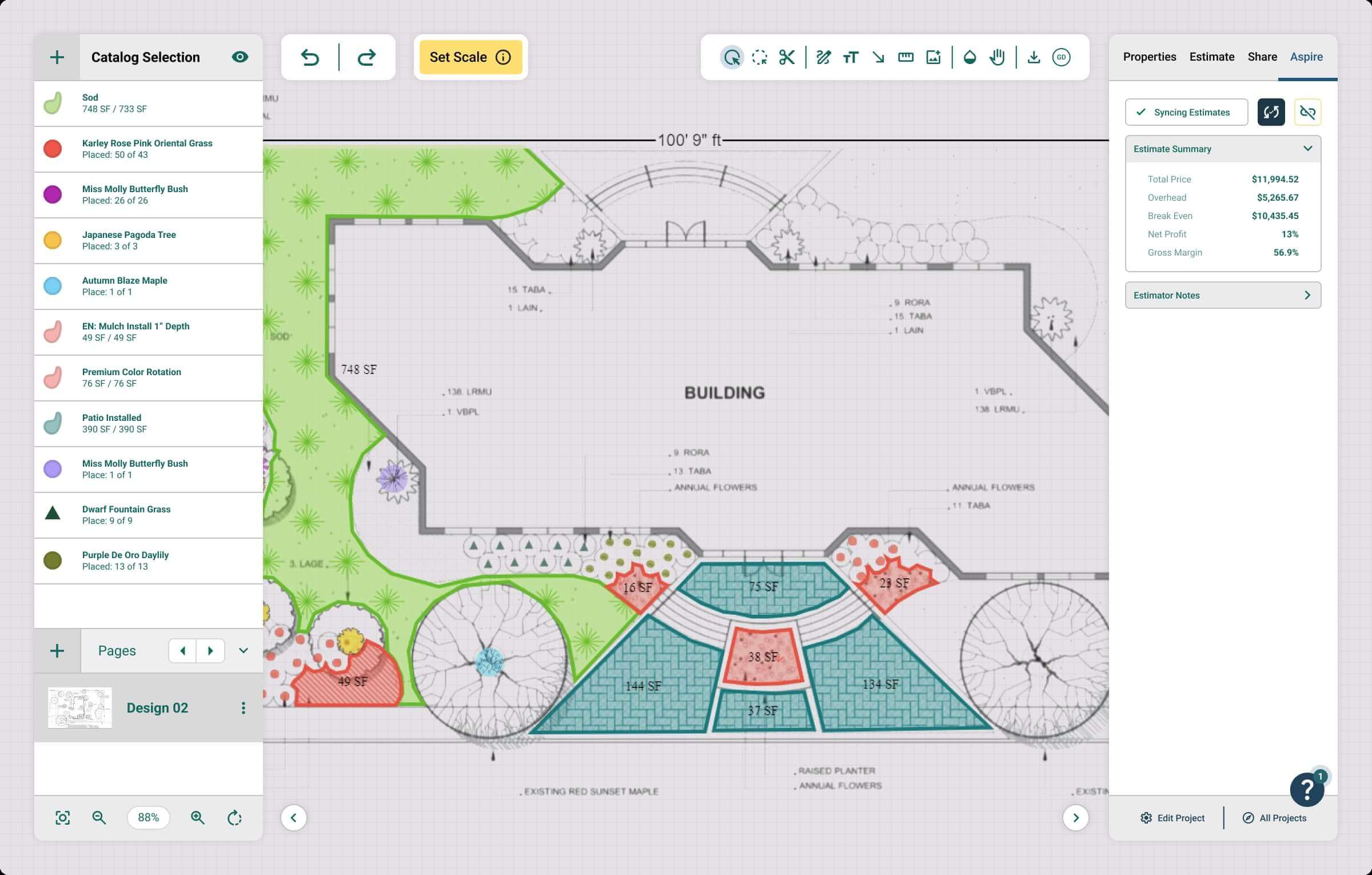
You can use those measurements, along with Aspire’s other tools, to set prices for each job and get a detailed overview of all labor and material costs with every estimate.
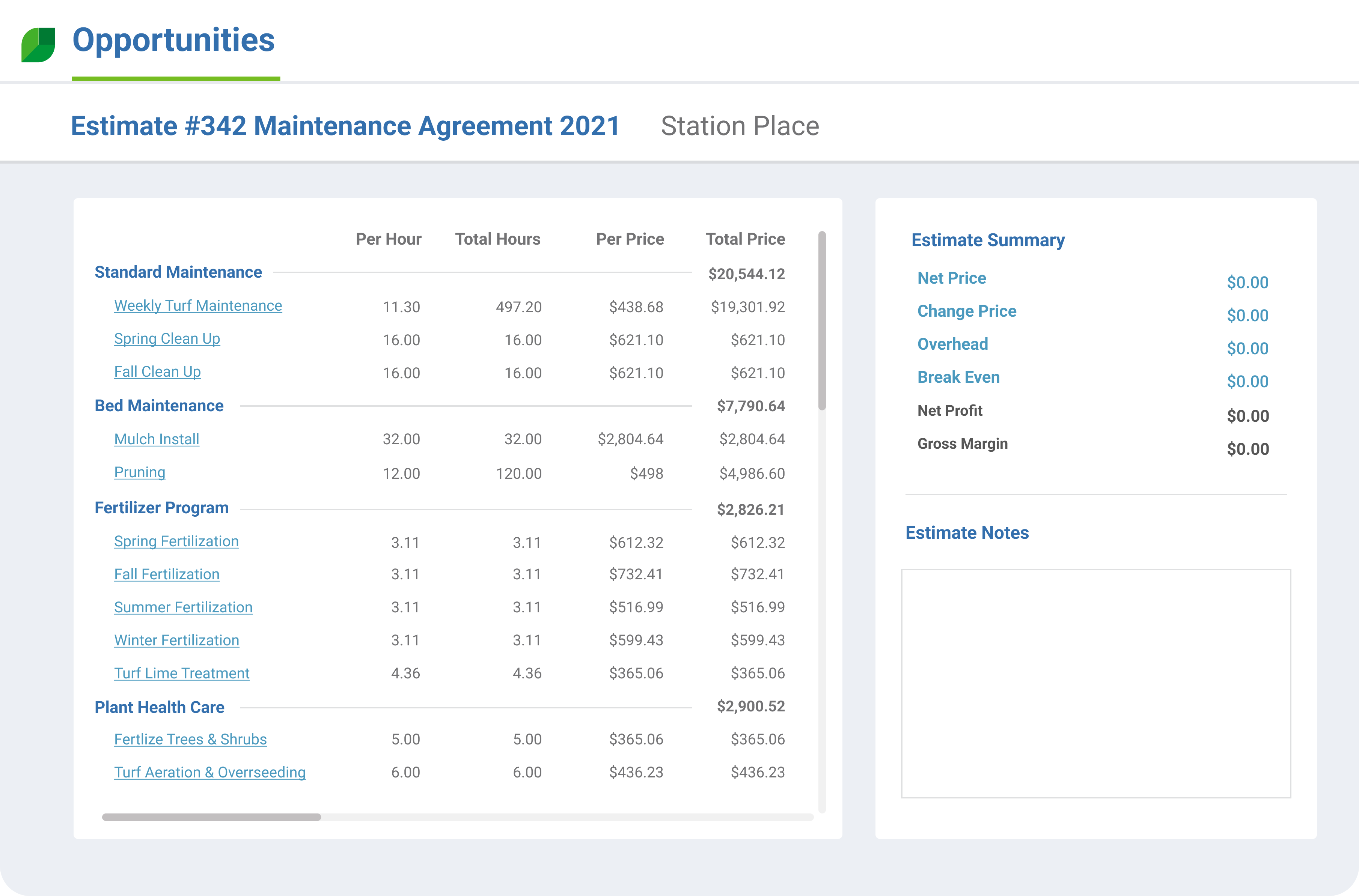
When the client receives your proposal, they’ll be able to view a detailed price breakdown and sign right from their device, reducing friction at the most critical stage of your sales pipeline.
Operational efficiency
The success of franchises hinges on their ability to scale operations. Efficiency is key to serving multiple clients without proportional increases in administrative costs.
Aspire lets you do just that with scheduling, crew management, invoicing, and CRM tools all in one system. In Aspire, signed contracts are turned into work tickets for easy scheduling, with full details for all material and labor requirements.
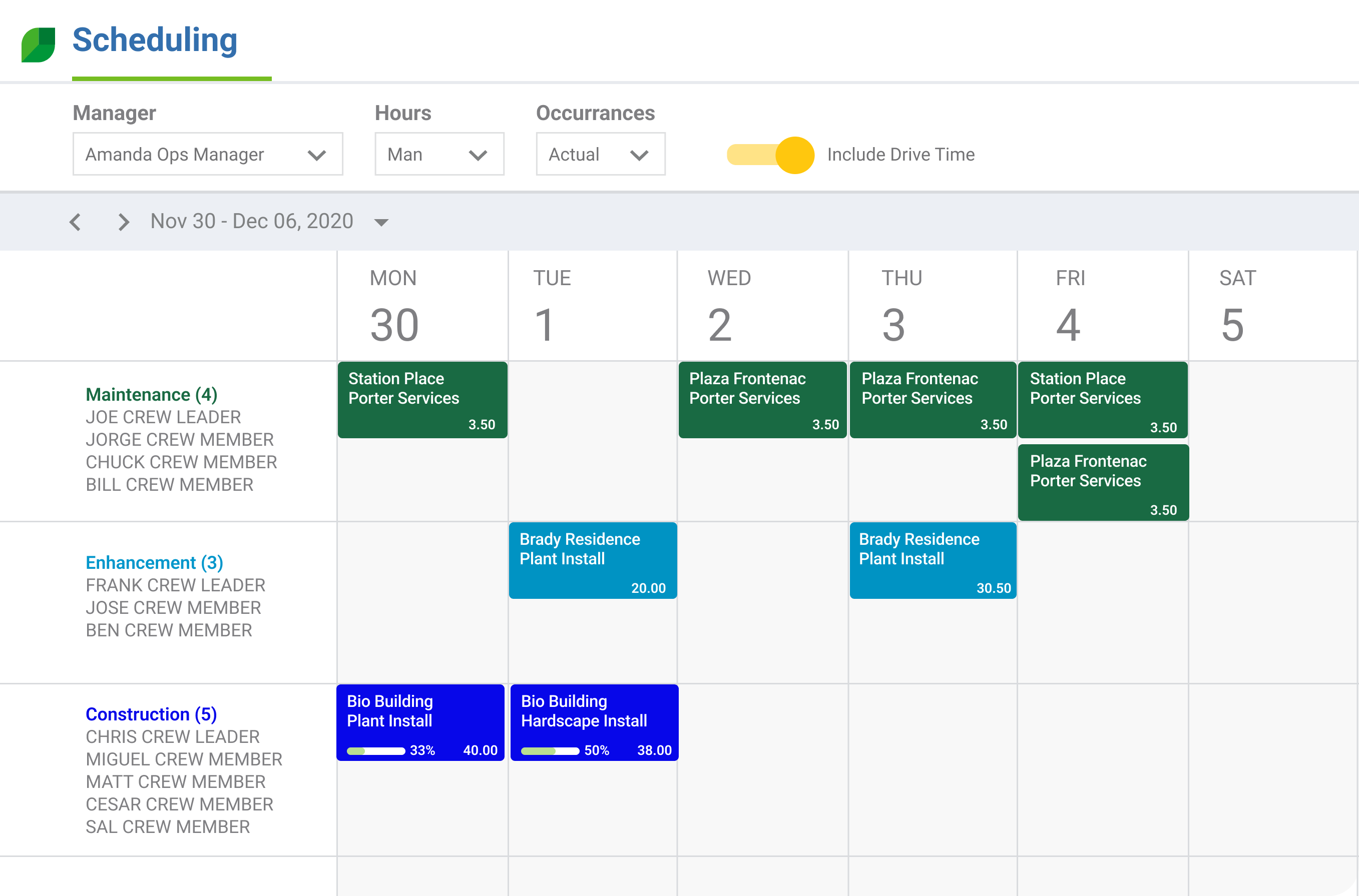
Work tickets also link to all past visits, invoices, issues, photos, and notes for full visibility into each job as it progresses.
Operators can spot ongoing issues as they arise and review records in real time, enabling quality control with fewer site visits across multiple locations.
Data-driven decision-making
Managing multiple locations can get complicated when you can’t see what’s happening on the ground. Clear data tells you where to invest your time and resources for maximum impact.
Aspire’s reporting dashboards and KPIs give franchise owners the tools they need to track performance, identify bottlenecks, and make faster, data-driven decisions.
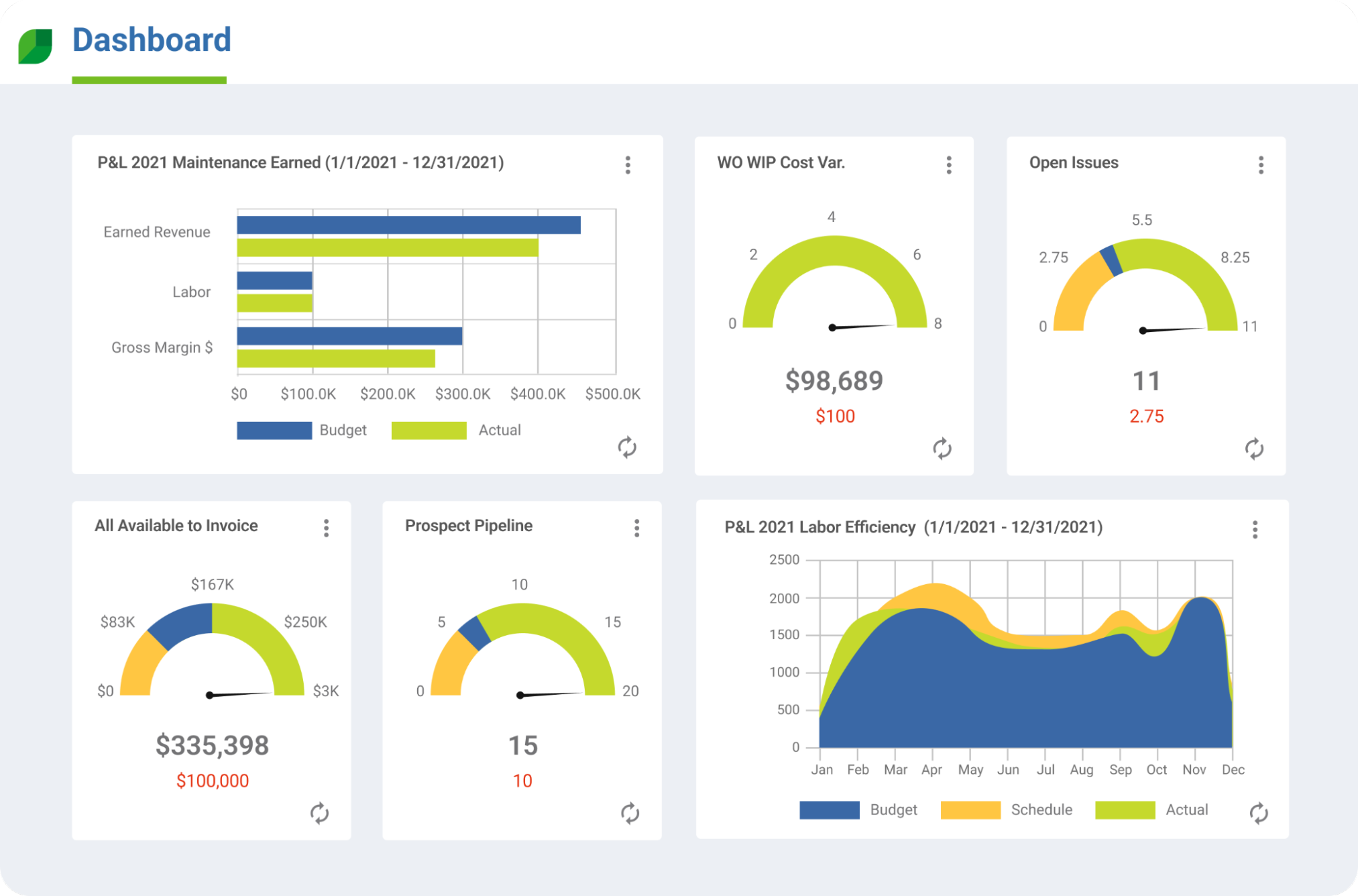
With real-time dashboards showing performance across all locations, franchise owners can quickly see what practices from high-performing locations should be scaled system-wide.
What are the best ways to reduce expenses in a landscaping franchise?
As your franchise scales, expense management gets more complex, but done right, it can be an opportunity for cost savings that independent businesses can’t achieve.
Fuel savings
Fuel costs often go unnoticed until monthly credit card bills arrive, but inefficient routes can quietly drain budgets with unnecessary mileage.
Optimizing route planning, maintaining efficient vehicles, and training crews on fuel-conscious driving can significantly lower expenses.
Equipment maintenance
Poorly maintained equipment is another cost that can seem invisible until repairs shut down operations. Scheduled maintenance across multiple locations can be tricky, but the savings compound.
Standardized maintenance schedules and tracking systems help franchise owners stay ahead of repairs across their entire fleet, extending equipment life and ensuring repairs don’t take them by surprise.
Labor efficiency
Labor is typically the largest expense in landscaping, so labor savings have the greatest potential to reduce costs. Making sure jobs are staffed efficiently can maximize productivity and reduce idle time.
Aspire’s scheduling and mobile crew management tools give you clear visibility into job assignments and progress to ensure labor hours are used effectively on every job.
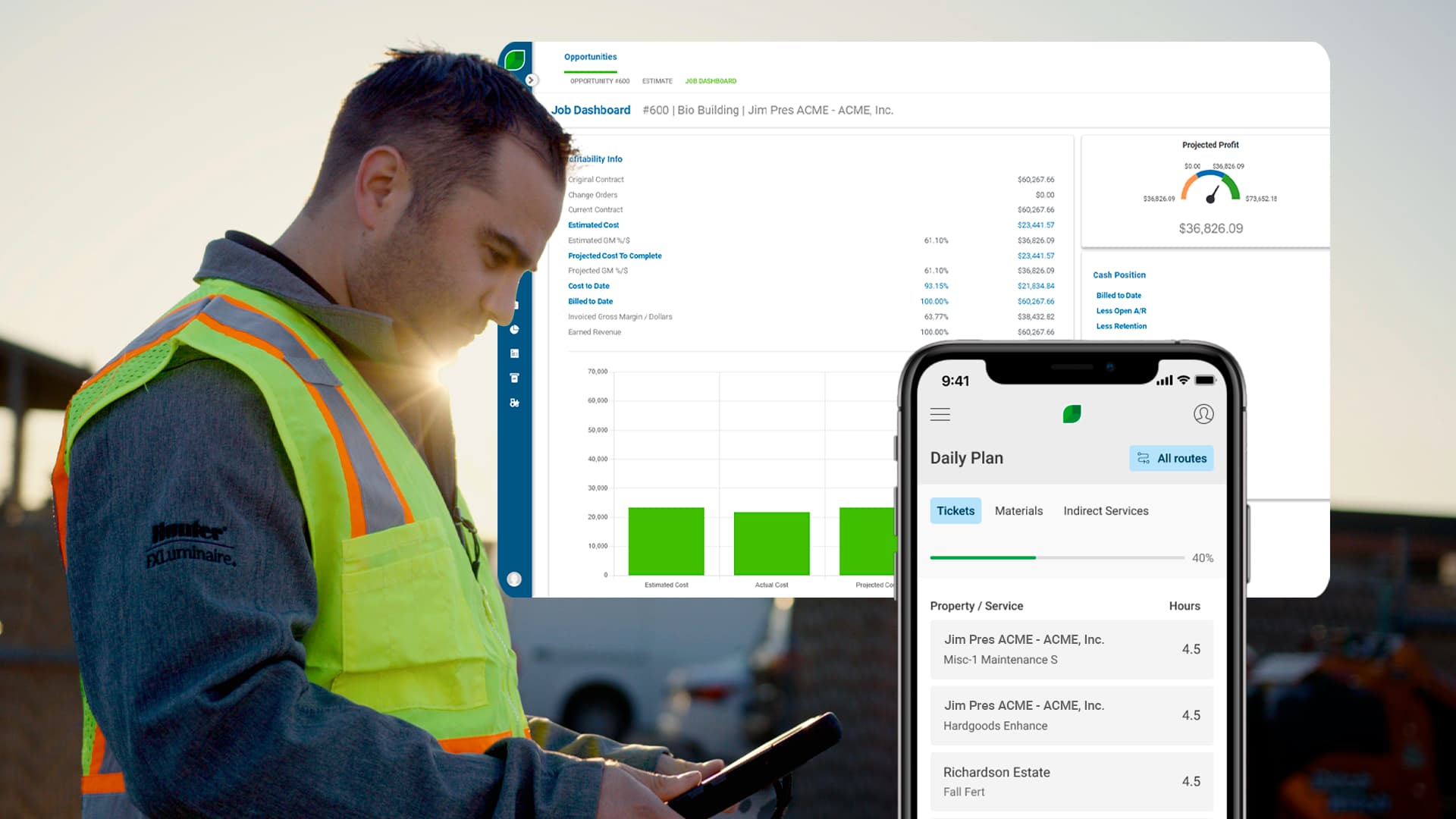
You’ll be able to see exactly when jobs are overstaffed, reducing wasted time and lowering labor costs without compromising quality.
Supply costs
Franchise networks have unique opportunities to leverage bulk purchasing power and supplier relationships that reduce material costs.
Standardizing purchasing also gives franchises tighter control of profit margins, allowing them to negotiate significant volume discounts and establish preferred vendor relationships.
Smart expense management at the franchise level reduces costs, boosting profit margins and enabling sustainable growth across the entire network.
Over to you!
Maximizing the profit potential of your landscaping franchise needs a precise balance of smart growth and operational efficiency. The right technology can put you miles ahead of competitors stuck managing multiple tools across franchise locations and struggling to scale.
Ready to optimize your franchise operations? Aspire’s end-to-end platform gives you the tools to analyze performance, scale efficiency, and make data-driven decisions that boost profitability across your entire network.
Book a demo today to learn more about how Aspire can help your business achieve more.










 866-727-7473
 Schedule Demo
 390 S Woods Mill Rd #300 Chesterfield, MO 63017


