
Table of Contents
Table of Contents
- How does the weather affect landscaping businesses?
- What are common weather-related challenges in landscaping?
- What types of weather most impact landscaping?
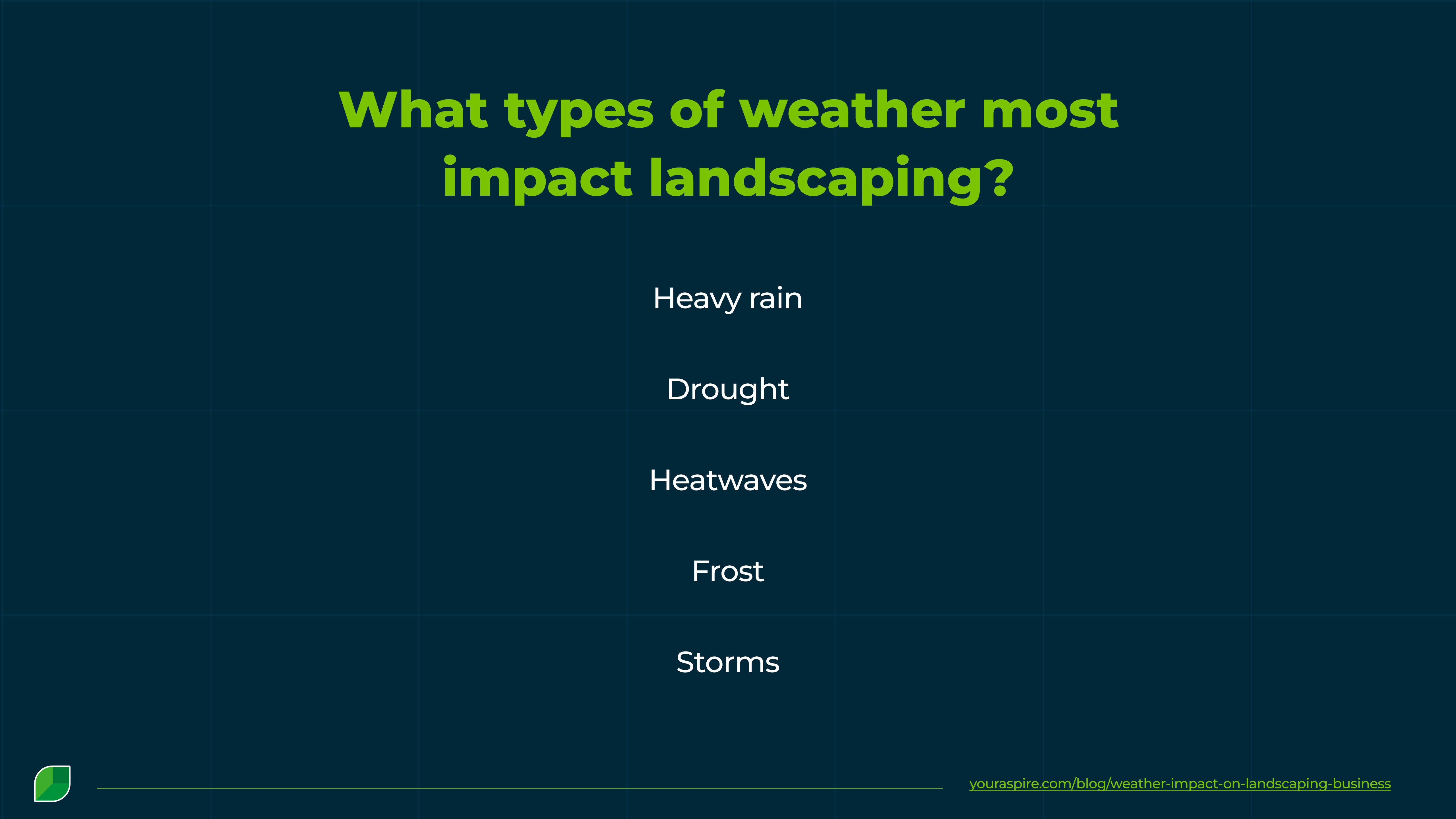
- 1. Heavy rain
- 2. Drought
- 3. Heatwaves
- 4. Frost
- 5. Storms
- How does climate change affect landscaping businesses long-term?
- How can landscaping businesses prepare for severe weather?
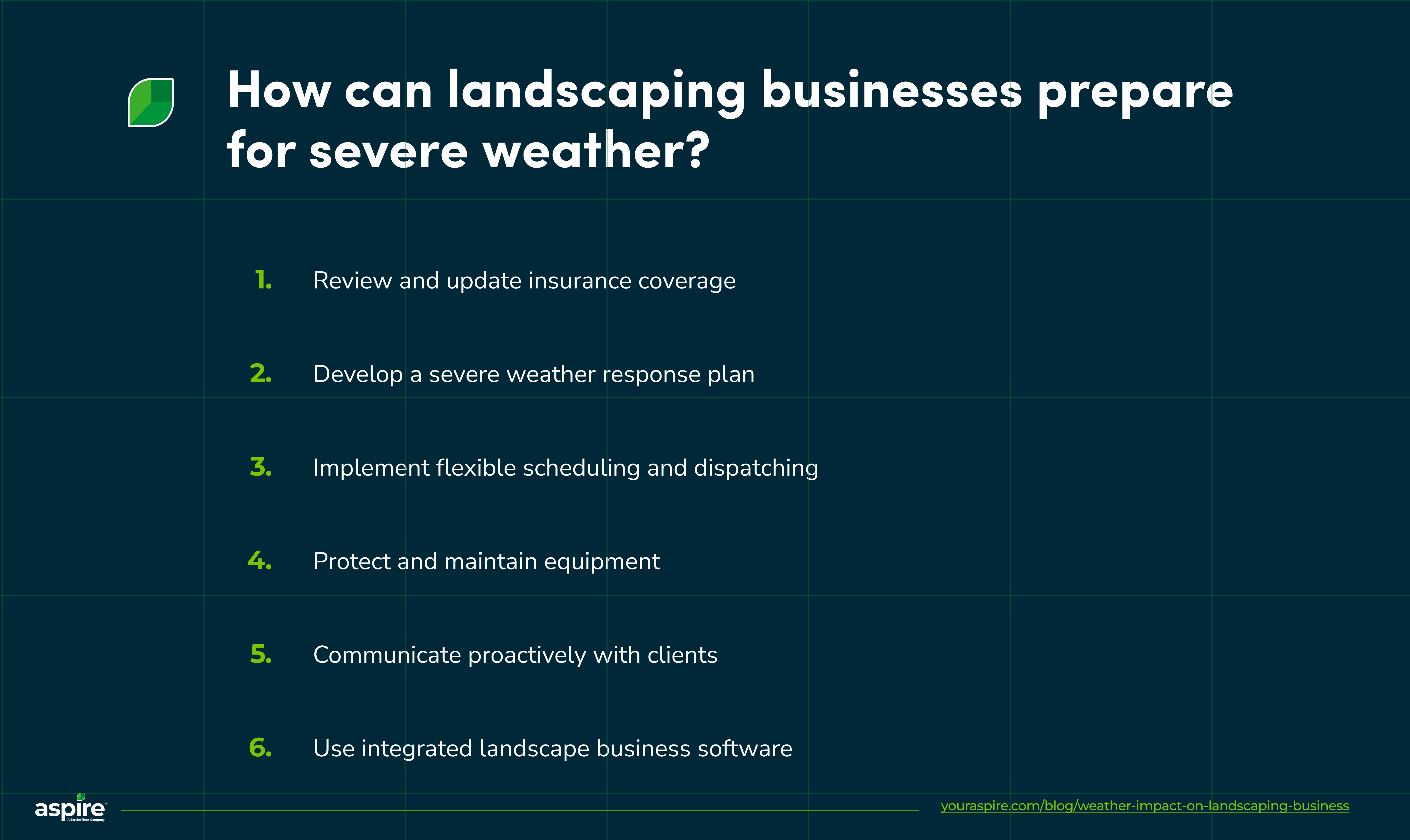
- 1. Review and update insurance coverage
- 2. Develop a severe weather response plan
- 3. Implement flexible scheduling and dispatching
- 4. Protect and maintain equipment
- 5. Communicate proactively with clients
- 6. Use integrated landscape business software
- Real-time project tracking
- Flexible resource management
- Proactive change management
- When to reschedule vs. proceed despite the weather?
- What long-term business strategies help landscaping companies thrive despite the weather?
- Over to you!
Your landscaping crew has just arrived at a job site, clocked in, and unloaded their equipment—ready to begin the day’s work. Suddenly, a storm hits.
This disrupts their schedule, makes work impossible, and creates additional costs for your company to return to the site.
That’s the thing about weather: it’s unpredictable and can quickly disrupt project timelines.
The weather’s impact on landscaping businesses can be pretty unsettling. And in an industry where precise planning and timing are critical to operations and growth, business owners must know how to weather the storms and forge ahead.
This guide unpacks the impact weather has on the landscaping industry and offers solutions to help manage the disruptions and ensure client satisfaction.
How does the weather affect landscaping businesses?
Weather significantly affects a landscaping project’s timeline, budget, and team productivity. From muddy job sites to floods that disrupt workflow or heat-stressed crews, weather conditions directly impact your bottom line.
Here’s how:
Unpredictable rainfall causes delays: The project site becomes muddy and unsafe, halting services such as laying pavers, grading, or mulching. You’d have to reschedule, which affects productivity, labor costs, and client timelines.
Extreme heat limits work: Hot days might cause landscaping crews to start earlier or reduce hours to prevent heat exhaustion. This limits the amount of work that can be done in a day.
Strong winds disrupt precision projects: Workers are unable to spray herbicides, install mulch, or handle loose materials. It can also pose a safety risk for workers when using ladders or specific equipment.
Drought or excess moisture affects plant health: Little or no rain prevents plants from growing well, requiring irrigation. Similarly, too much rain leads to erosion or root rot, resulting in rework and increased costs.
Storms damage existing landscapes: Severe weather conditions like storms or floods damage infrastructure, wash away mulch, and knock down trees. This results in cleanup, repairs, or reworks that weren’t budgeted.
What are common weather-related challenges in landscaping?
Weather conditions like storms, extreme heat, heavy rainfall, wind, or floods pose a variety of challenges for landscapers, including the plants and sites they work with.
These challenges include:
Project delays and rescheduling: Workers may have to pause work until the weather improves, causing delays and increased labor costs. In other cases, they may have to reschedule the project altogether, affecting the company’s profitability and leaving clients dissatisfied.
Plant and turf damage: Harsh weather, such as rain, flooding, drought, and extreme heat, can seriously damage plants and turf, especially when prolonged and extreme.
Equipment wear and damage: Using landscaping equipment in extreme weather is never advisable. It could be damaged, resulting in unplanned repair costs. You may even have to replace it, which increases overhead costs and reduces profitability.
Reduced or no productivity: Landscaping crews aren’t always able to work in harsh conditions. If they can, productivity is reduced (e.g., during heatwaves). Labor costs rise, yet there is no significant progress to show for it.
What types of weather most impact landscaping?
Optimal weather conditions for landscapers are characterized by adequate sunlight, mild rainfall, and moderate temperatures.
That said, certain negative weather types have a great impact on landscaping operations.
1. Heavy rain
When it pours, landscaping jobs like mowing, grading, or laying pavers are delayed.
Job sites become muddy, leading to equipment or turf damage. In addition, all that rain can cause soil compaction, which can prevent healthy plant growth and affect plant roots.
And your crew? They get drenched and can't keep working.
With these delays, you’d have no choice but to reschedule projects and prioritize indoor activities, such as:
Restocking supplies for landscaping jobs, e.g., fertilizers, spare parts, or soil.
Equipment maintenance to ensure all landscaping tools are ready for work.
Crew training and administrative tasks.
2. Drought
While too much rain isn’t great for landscaping, little to no rain is just as bad. It affects plant selection and maintenance. More specifically, drought:
Stresses and kills plants, leading to increased replacement costs and maintenance.
Halts new planting projects, reducing the demand for installation and maintenance services.
Causes parched ground, making it difficult for landscaping crews to perform tasks such as digging and grading.
Essentially, when drought goes on for too long, it affects a landscaper’s ability to maintain healthy, vibrant, and green outdoor spaces. In turn, this impacts reputation and revenue.
Here’s what you can do during a drought:
Communicate proactively with clients. Explain what they can expect and how to prepare for it.
Invest in xeriscaping which requires little to no water, and explain its benefits to clients.
3. Heatwaves
Extreme heat causes exhaustion and dehydration among workers. It requires that the crew work shorter hours to avoid the hottest part of the day.
Furthermore, it harms landscaping businesses by:
Stressing new plant installations, causing wilting to existing plants, burning, or even death.
Causing equipment to overheat and malfunction, leading to breakdowns and repair expenses.
Increasing the need for irrigation, driving up water and labor costs for watering.
Simply put, excess heat limits work hours, increases operational risks, and compromises the landscape's health.
Here’s how your business can adapt when heatwaves hit:
Adjust your work hours to avoid the peak heat of the day.
Provide constant access to cool water and electrolyte drinks.
Invest in drought- and heat-resistant plants.
Encourage deeper root growth and water plants more deeply.
Inform clients about the impact of heat on projects and the schedule.
Avoid overusing equipment during the hottest part of the day and allow it to cool before refueling or maintenance.
4. Frost
Extreme cold can harm newly planted plants and turf, complicate landscape maintenance, and damage outdoor equipment.
In fact, there’s a limit to the number of projects your landscaping business can handle in the winter months.
For instance, you can carry out:
Hardscaping projects, patio, walkway, or fire pit installations
Tree pruning and mulching to insulate roots from extreme cold
Light installation
Gutter cleaning
Snow removal
To make the most of cold weather, expand your services to include winter-friendly operations and keep clients informed of possible schedule changes.
5. Storms
Massive storms, such as hail, flooding, or lightning storms, can damage landscaping and pose serious safety risks. They could also lead to emergency cleanups, which strain the workload of landscaping crews and disrupt their schedules.
Furthermore, heavy downpours and erosion can undo weeks of hard work.
In such weather, you want to cancel and reschedule projects. If a storm hits unexpectedly, instruct your crew to stop work and find shelter immediately.
How does climate change affect landscaping businesses long-term?
You’ve heard about the different signs of climate change—rising sea levels, shrinking of the Arctic ice, and more. But it also significantly affects landscaping.
Climate change alters the weather, leading to more extreme and unpredictable conditions.
For instance, summers are now hotter, flooding, storms, and strong winds are more intense, and winters are colder.
All these shifts directly impact landscaping:
Hot weather increases the need for more water consumption.
Colder temperatures damage plants that aren’t suited to the cold.
Unpredictable weather leads to rescheduling, project delays, and increased maintenance needs.
With global temperatures rising, plant hardiness zones are shifting, as reported by Matt Kasson, associate professor of mycology and plant pathology at West Virginia University. Plants that once thrived in one region may no longer survive there, prompting landscapers to modify plant selections and landscape designs.
Prolonged droughts and water scarcity also make it challenging for landscapers to maintain traditional lawns. This results in water restrictions, pushing landscaping businesses to adopt more efficient irrigation, xeriscaping, and drought-tolerant plants.
How can landscaping businesses prepare for severe weather?
Changing weather patterns aren’t going away soon. To protect your team and maintain a successful landscaping business, you need a clear plan to prepare for and respond to severe weather.
1. Review and update insurance coverage
For landscaping businesses, insurance has moved from being a nice-to-have to an absolute necessity. Review your current policy to determine what it covers, and update as needed. This protects you from unnecessary costs and liability when the weather turns against you.
To safeguard your business from weather-related risk, you need a combination of insurance policies covering equipment damage or loss, liability, and property damage. Some examples include:
Commercial property insurance to cover damage to your office or storage buildings caused by strong winds, storms, lightning, or fallen trees.
Equipment insurance for replacing or repairing water-damaged tools after weather-related incidents.
General liability insurance to cover property damage or crew injuries.
Commercial auto insurance for damages to trucks or trailers.
Workers’ compensation for crew injuries during harsh weather conditions.
Discuss with an insurance professional to assess which policies offer the full coverage you need to protect yourself from extreme weather.
2. Develop a severe weather response plan
Create a clear protocol that outlines your crew’s responsibilities before, during, and after weather events. It ensures the team knows what to do to remain safe and minimize damage or downtime.
Here’s what a weather response plan could look like:
Designate someone to monitor forecasts and alerts via local emergency services or NOAA.
Define thresholds to pause or reschedule jobs, e.g., based on high wind warnings or proximity to lightning.
Set evacuation plans if the weather worsens on-site, e.g., power down machinery, store equipment in the truck, instruct crew members to take shelter in a nearby building or truck, and report the situation to a supervisor.
Have a communication plan. Notify crews via chat, text, or other software about changes or shutdowns. Inform clients of delays, reschedules, or potential risks. Ensure emergency contacts are readily available and regularly updated.
Create a post-storm recovery plan that documents and photographs losses for insurance purposes.
Organize emergency drills to train your staff to handle various harsh-weather scenarios.
3. Implement flexible scheduling and dispatching
When severe weather hits, the ability to quickly shift schedules is essential. Use an automated scheduling system like Aspire to pause, reschedule, or reassign jobs without confusion.
Instead of manual spreadsheets that make it difficult to inform everyone, flexible scheduling tools simplify the process.
Aspire’s scheduling software, for example, lets you plan projects and update them, extending them across several days or splitting them between different crews.
Plus, changes made to the schedule are instantly visible to the crew on Aspire’s mobile app.
4. Protect and maintain equipment
Plan to keep your equipment and tools safe from harsh weather conditions by insuring them. You also want to weatherproof them by:
Using water-resistant covers or tarps for mowers, trimmers, and handheld tools.
Applying rust-resistant spray to exposed metal parts.
Keeping electrical tools off the ground to avoid damage.
Storing equipment indoors in a dry and elevated location in case of flooding.
Draining fuel from machines when not in use, especially during storms or freezes.
Disconnecting batteries from battery-powered tools in a temperature-controlled area.
5. Communicate proactively with clients
You have to delay or reschedule a project because of the weather?
Notify clients about it as early as possible. Explain the situation, share the expected impact, and offer a revised timeline. Clear, proactive communication builds trust and reduces friction when plans change.
You can send emails or texts or leverage Aspire’s CRM for simplified, automated communication. Here’s a sample text you can use to improve transparency during a weather delay:
Hi [Client Name],
Due to current weather conditions in your area, we’ve decided to pause or reschedule your landscaping service, initially scheduled for [date].
We want to ensure your project is completed safely and with the quality you expect. Once the weather clears, we’ll follow up with a new schedule and priority update.
Thank you for your understanding, and don’t hesitate to reach out with any questions.
Best,
[Your name]
[Your Company Name]
But it’s crucial that you initiate the conversation. Don’t wait for the client to reach out, even if everyone knows the weather is bad. It’s good customer service that’s worthy of referrals.
6. Use integrated landscape business software
You’ll need a landscaping management tool to streamline operations before, during, and after severe weather. It will help you stay organized, report incidents as they happen, communicate, and respond faster in chaotic conditions.
Aspire is a good example of such software, and here’s what it helps you do, more specifically:
Real-time project tracking
Stay in control when the weather changes. Easily view your job calendar, spot which projects are impacted, and adjust crew assignments or priorities on the go.
With Aspire’s centralized scheduling calendar, you get a clear overview of your operations—who’s handling what, project duration, deadlines, and costs. This helps you make fast, informed decisions during weather disruptions.

You get to shift labor, materials, and tools to maintain productivity and reduce idle time. Plus, it allows you to instantly notify clients, subcontractors, and internal teams about changes, minimizing confusion and dissatisfaction.
Flexible resource management
Instead of manually struggling to reallocate resources, easily adjust labor and equipment needs to meet real-time project demands with Aspire.

When a storm hits, you can redeploy teams to different projects, helping you maximize productivity rather than losses. You also have insight into all the available equipment and can prevent double booking.
Overall, flexible resource management helps you adapt quickly to weather changes.
Proactive change management
Weather disruptions typically lead to project changes, resulting in increased labor, material, and equipment costs. Without proper planning, these adjustments can push you over budget and eat into your profits.
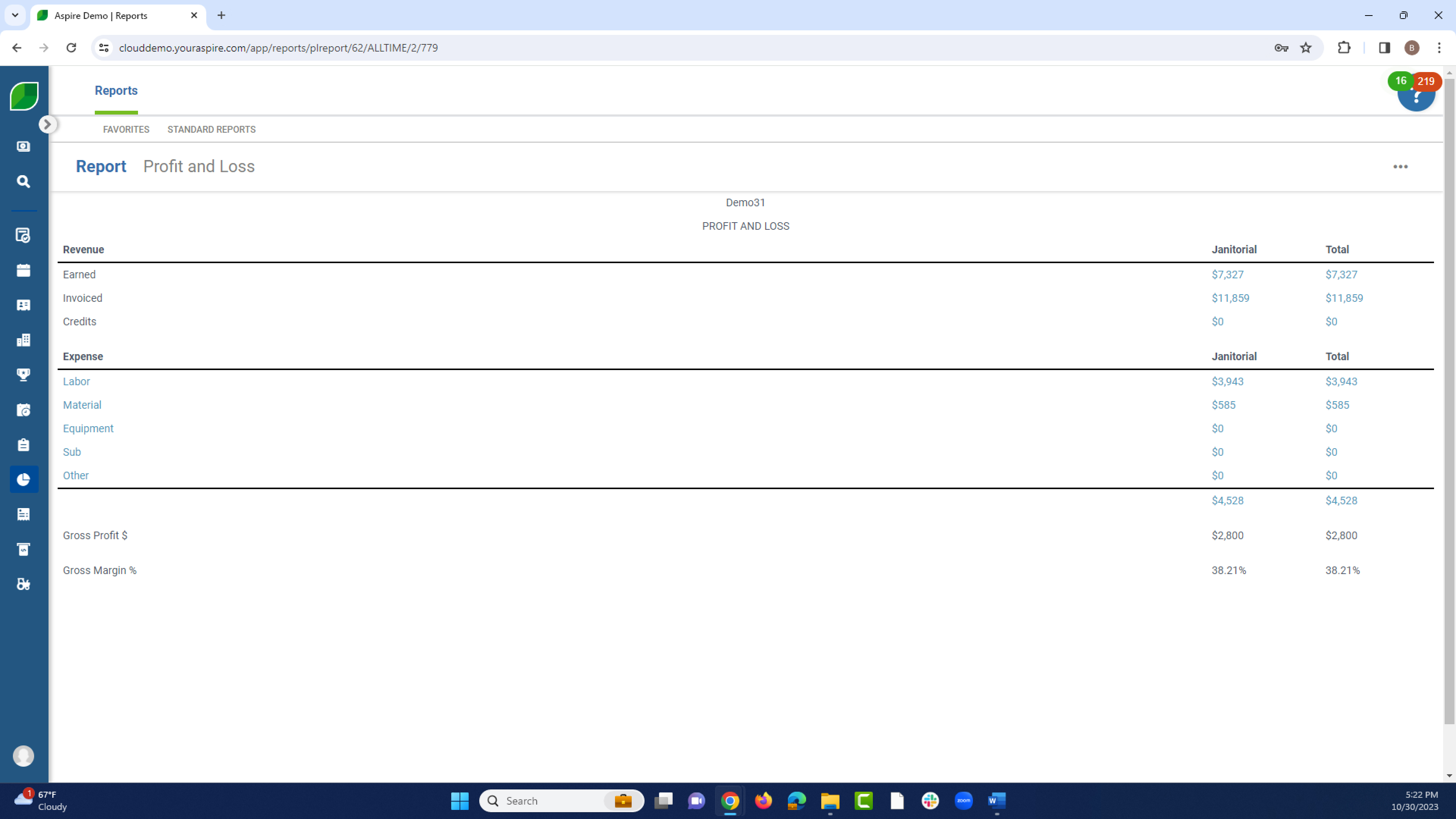
But with Aspire, you have insights into the financial impact of project adjustments, so your landscaping business remains profitable. It helps recalculate labor and material needs to prevent cost overruns.
When to reschedule vs. proceed despite the weather?
You can proceed with a landscaping project if the weather isn’t severe—not too hot or cold, just cool enough for the crew to work comfortably. Feel free to continue when there’s:
Light drizzle or rain: You can carry out tasks like mowing, trimming, planting, hardscaping, excavation, or pruning.
Cool, overcast weather: Ideal for planting, replanting, or transplanting, as it reduces water loss and plant stress.
Workable ground: The soil isn’t too soggy or soft, allowing you to perform tasks like mulching or debris removal.
Tight schedules or deadlines: Feel free to proceed with a job if you have a tight deadline and the weather isn’t too dangerous.
Proper training for crew members: Experienced staff with the right gear can work efficiently in mild weather.
However, you must reschedule projects when:
Your crew’s safety is at risk: From lightning strikes, high winds, or extreme heat, making it dangerous to be outside.
Soil and ground conditions are poor: Frozen, muddy, or waterlogged ground makes proper grading challenging. Plants and turf get damaged, causing machinery to sink.
Precision work is required: Landscaping activities involving spraying, paving, or laying sod may put your workers at risk when it’s windy or raining. As such, it’s best to reschedule.
Client property is prone to damage: When there’s risk of erosion, tire ruts, and chemical runoff, it’s best to reschedule.
There’s extreme heat or cold: It’s best to avoid such weather to protect your crew.
What long-term business strategies help landscaping companies thrive despite the weather?
To ensure your business thrives even in unpredictable weather, here’s what you need to do:
Diversify your landscaping services: Instead of focusing solely on lawn care maintenance, offer year-round services such as irrigation and drainage, xeriscaping, snow removal, leaf cleanup, or hardscaping. This allows you to maintain a stable income regardless of season or weather conditions.
Recommend sustainable practices: To reduce weather damage and maintenance needs, start using drought-resistant plants, reinforced pavers, or erosion-control solutions.
Conduct staff training: Equip your workers with the skills and expertise to adapt to various weather conditions. Organize drills on preparing for emergencies and communicating with clients. Cross-train employees so they can switch between tasks depending on the weather.
Implement flexible hiring policies: Instead of full-time employees on your payroll all year-round, maintain a mix of part-time, full-time, and seasonal workers so you can scale your workforce up or down as needed.
Invest in landscaping management software: A business management tool like Aspire helps you reschedule jobs quickly, monitor project costs to help maintain productivity and profitability, and keep crews and clients in sync. This boosts workflow and efficiency, enabling you to respond quickly when bad weather strikes.
Over to you!
The weather is a crucial factor in landscaping. To limit its impact on your business and maintain profitability, you need to understand the different weather types in your region and plan for disruptions.
You also need to proactively communicate with clients and invest in the right digital tool for seamless rescheduling and easy adaptation.
Aspire enables you to do that and improve your landscaping business’s operational efficiency.
To see how Aspire streamlines your workflow, book a free demo today.










 866-727-7473
 Schedule Demo
 390 S Woods Mill Rd #300 Chesterfield, MO 63017


