Table of Contents
Table of Contents
- Do you need a license to start a landscaping business in Nevada?
- What are the types of landscaping business licenses & permits in Nevada?
- General business license
- Landscaping contractor license
- State licenses & permits
- Local regulations
- Step-by-step process to get a landscaping business license in Nevada
- 1. Choose your business structure
- 2. Register your business name
- 3. Obtain an EIN and business license
- 4. Meet state-specific licensing requirements
- 5. Get business insurance & bonds
- 6. Pay fees & submit your application
- 7. Apply for necessary permits & certifications
- 8. Renew & maintain compliance
- How much does a Nevada landscaping business license cost?
- What are the most common mistakes to avoid when getting a license?
- 1. Skipping state-specific requirements
- 2. Not getting the right insurance or bonding
- 3. Failing to renew on time
- How Aspire helps landscaping businesses stay organized & compliant
- Contract and proposal management
- Invoicing & payment processing
- Pesticide & irrigation compliance tracking
- Business reporting & documentation
- Scheduling & job management
- Over to you
- Disclaimer
Thinking of starting a landscaping business in Nevada? If so, you’ll need the right licenses and permits to operate legally and avoid costly fines.
Nevada’s licensing requirements are among the most comprehensive in the U.S., covering virtually all landscaping jobs beyond basic maintenance.
While getting licensed can seem intimidating, it’s really just a matter of following the right process.
Read on for a comprehensive overview of everything you need to complete the licensing process and set up shop in Nevada.
Do you need a license to start a landscaping business in Nevada?
In Nevada, landscaping businesses need a Classification C-10 license issued by the Nevada State Contractors Board.
Although many other states only require a business license, Nevada’s laws require an additional contractor’s license for work worth more than $1,000 or for any work that requires a building permit.
All landscaping businesses must also:
Register with the Nevada Secretary of State for a Nevada business license.
Obtain any required local permits.
Obtain a pesticide applicator license from the Nevada Department of Agriculture.
Operating without a license can lead to cease-and-desist orders, administrative fines up to $10,000, and a prohibition on collecting payment for work. To keep your business running smoothly, make sure you understand exactly what licenses and permits you need before you start work in Nevada.
What are the types of landscaping business licenses & permits in Nevada?
Nevada requires a variety of licenses and permits for landscaping businesses at both the state and municipality levels.
General business license
All businesses in Nevada need to register for a state business license and a tax ID number.
State business license: All businesses operating in Nevada must register their business with the Nevada Secretary of State.
State tax identification number: You’ll need a Nevada state tax ID in addition to your federal employer identification number (FEIN or EIN). This is separate from your state business license, but you can register for both at the same time.
Landscaping contractor license
After registering for your business license, you’ll need a landscaping contractor license from both the state and the municipalities in which you operate:
State requirements: Landscaping businesses need a C-10 Contractor License from the Nevada State Contractors Board.
Local requirements: Nevada has a unique multi-jurisdictional contractor licensing system for municipal licenses. Once you have a state contractor license, you can apply for a combined local contractor/business license in one or multiple municipalities.
State licenses & permits
Most landscapers will need a pesticide applicator license, but you may also need water rights and environmental permits depending on your services:
Pesticide applicator license: The Nevada Department of Agriculture requires this license for applying herbicides, pesticides, or other chemical treatments.
Water rights permits: The Nevada Division of Water Resources may require permits for installing irrigation systems that use surface water sources or new wells.
Environmental permits: The Nevada Division of Environmental Protection requires permits for working near protected areas, wetlands, or when projects impact stormwater management.
Local regulations
Local municipalities will have different zoning laws, noise restrictions, and other permits to watch out for.
Zoning permits: Local zoning and building codes might restrict landscaping requirements or design.
Noise ordinances: Different municipalities set noise limits on when landscapers can use mowers and other loud equipment.
Tree removal permits: Many Nevada cities require permits for removing mature trees, especially in historic districts.
Although the variety of permits in Nevada might seem overwhelming, taking a step-by-step approach will make obtaining them much more manageable.
Step-by-step process to get a landscaping business license in Nevada
Getting your landscaping business paperwork in Nevada requires careful planning, but a systematic approach will help you navigate the process.
Below is a step-by-step walkthrough of each stage of the licensing process, from initial business formation through final license approval.
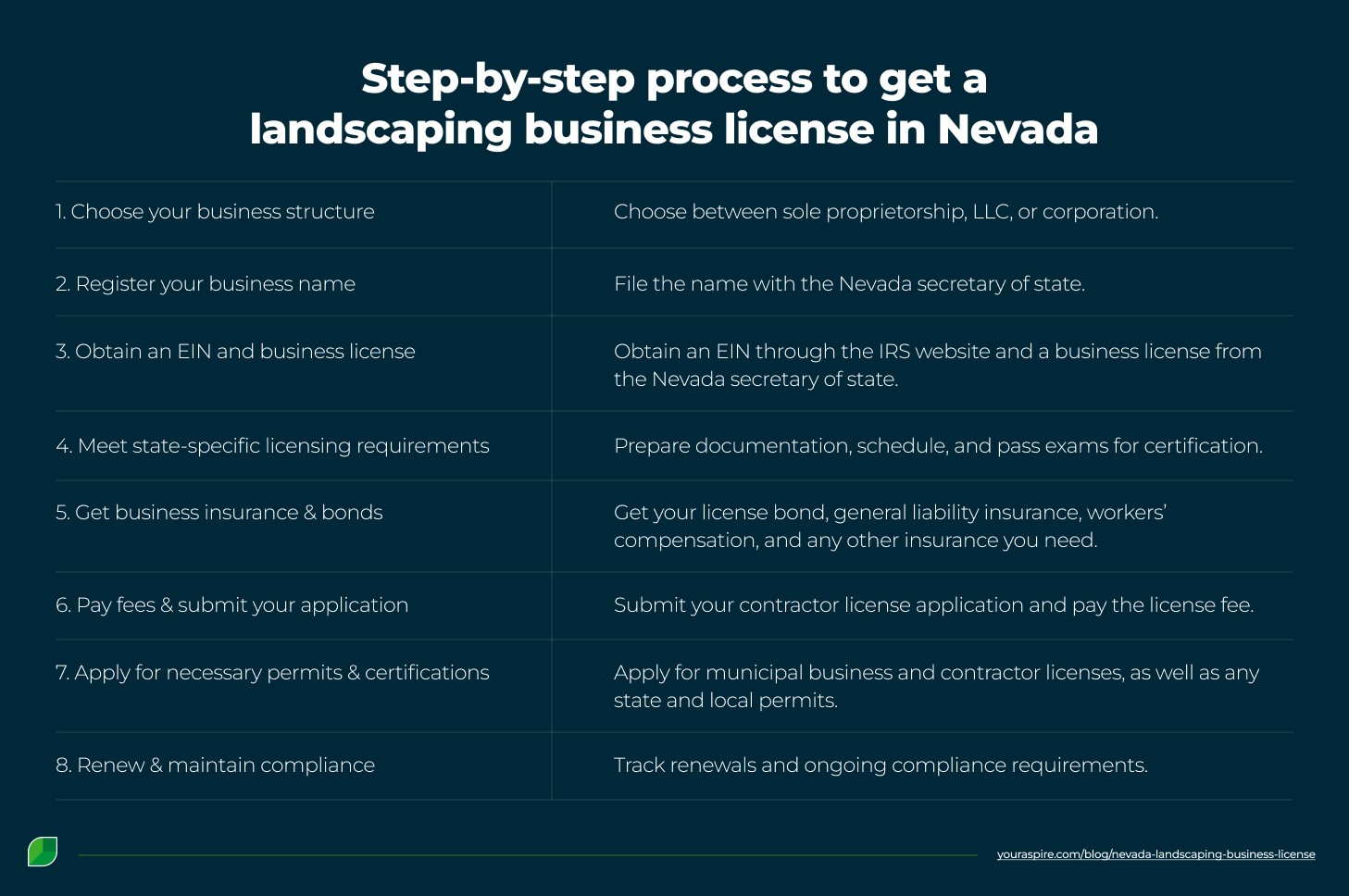
Setting up all the right paperwork can take two to four months, so be sure to allocate enough time for the whole process.
1. Choose your business structure
Choose between a sole proprietorship, LLC, partnership, or corporation based on your business needs. LLCs and corporations offer more liability protection, but sole proprietorships are less expensive.
If you’re forming an LLC, partnership, or corporation, you’ll need to register your business structure with the Nevada Secretary of State.
2. Register your business name
Choose a business name that aligns with your landscaping brand and check whether it’s available through the Nevada Secretary of State’s business search database. Register the name with the Nevada Secretary of State for LLCs and corporations, and a DBA (doing business as) name if your sole proprietorship will be operating under a different name.
It’s also a good idea to check the registration rules for counties or cities to ensure full compliance.
3. Obtain an EIN and business license
All partnerships, corporations, and LLCs must have an EIN, which you can obtain through the IRS website.
Once you have one, you can get a Nevada business license through the Nevada Secretary of State’s SilverFlume portal, which will provide the state business ID number that’s required for contractor licensing.
4. Meet state-specific licensing requirements
The Nevada State Contractors Board (NSCB) licensing process is the longest step, typically taking 30–60 days from start to finish.
First, you’ll need to prepare the required documentation, including:
Certification of Work Experience forms documenting at least four years of landscaping experience in the past ten years. College or trade school education can substitute for up to three years of the required experience.
Financial statements prepared according to NSCB requirements.
Background check authorizations for all business owners.
Submit these documents through the NSCB online portal or by mail, along with the $300 application processing fee.
Once your application is approved, you’ll be able to schedule the exams you need to pass for the license. This includes a business and law exam and a trade exam.
5. Get business insurance & bonds
After you pass the exams, NSCB will notify you of your required bond amount. You can secure a surety bond from an authorized bonding company.
You’ll also need landscaping business insurance, including general liability insurance from a Nevada-licensed insurer, and workers’ compensation insurance (or an exemption affidavit for sole proprietors).
6. Pay fees & submit your application
Once you have all insurance and bonds in order, you’ll need to submit the certificates to NSCB as proof you’ve fulfilled this requirement for your license.
At this point, you’ll also pay the $600 license fee, and the state will issue your C-10 contractor license.
7. Apply for necessary permits & certifications
You can then use your state license to apply for local contractor/business licenses in the cities where you’ll operate.
At this stage, you’ll also need to obtain any other permits, such as:
Your pesticide applicator license from the Nevada Department of Agriculture.
Local business permits for zoning compliance or specific service types.
Environmental permits and clearances, if necessary.
8. Renew & maintain compliance
Nevada contractor licenses expire every two years. You’ll need to pay an additional $600 fee each time you renew, and many other licenses require annual or biannual renewal.
Some certifications may also require ongoing education for renewal, particularly pesticide applicator licenses. Keep track of renewal dates to budget for fees and prepare accordingly.
How much does a Nevada landscaping business license cost?
Your C-10 landscaping license will cost approximately $1,000 and includes:
Application processing fee: $300
Examination fees: $95 per exam or $140 for both.
Initial license fee: $600
License bond premiums generally range from $100 to $15,000 per year, depending on the bond amount and creditworthiness.
Insurance costs tend to range between $1,500 and $7,000 annually, depending on your plans and premiums.
You should also allocate $500–$1,500 for additional permits and certifications, including municipal permits, your pesticide applicator license, and others.
Overall, expect your total costs to be $3,500 to $9,500 for initial licensing, insurance, and setup. After that, you’ll need to budget for licensing, insurance, and permit renewal fees.
What are the most common mistakes to avoid when getting a license?
Avoiding common licensing mistakes will help you stay in good standing with the NSCB. Many contractors face unnecessary delays and penalties due to easily preventable errors.
Below are a few of the most common mistakes landscaping business owners make, along with how you can avoid them.
1. Skipping state-specific requirements
Landscapers from states that don’t require contractor licenses can end up missing this crucial step. They may also neglect to obtain a pesticide applicator license, water rights permits, or environmental permits.
Reach out to the NSCB if you’re unsure about what permits and certifications you need.
2. Not getting the right insurance or bonding
You’ll be required to submit proof of insurance for your state contractor license. Failing to obtain the right insurance or bonding can delay license approval or expose you to financial liabilities for property damage, accidents, and legal claims.
Many sole proprietors also don’t realize that they need to opt out of workers’ compensation insurance rather than just omit it. To ensure your application process goes smoothly, double-check the insurance and bonding requirements before you submit.
3. Failing to renew on time
Most landscaping licenses and permits need to be renewed annually or biannually, and insurance fees are often paid monthly or annually. Fail to update them, and you could risk fines, penalties, and even license suspension.
Annual renewals can be easy to forget when you’re busy managing the day-to-day aspects of your business, but they’re crucial for its continued success.
To stay on top of renewals, you need the right operational tools and processes in place to streamline reminders.
How Aspire helps landscaping businesses stay organized & compliant
Aspire’s end-to-end landscape business software helps Nevada landscaping professionals manage compliance and contracts effortlessly while streamlining day-to-day operations.
Contract and proposal management
Create accurate estimates using customizable templates that help you stay compliant with Nevada landscaping laws.
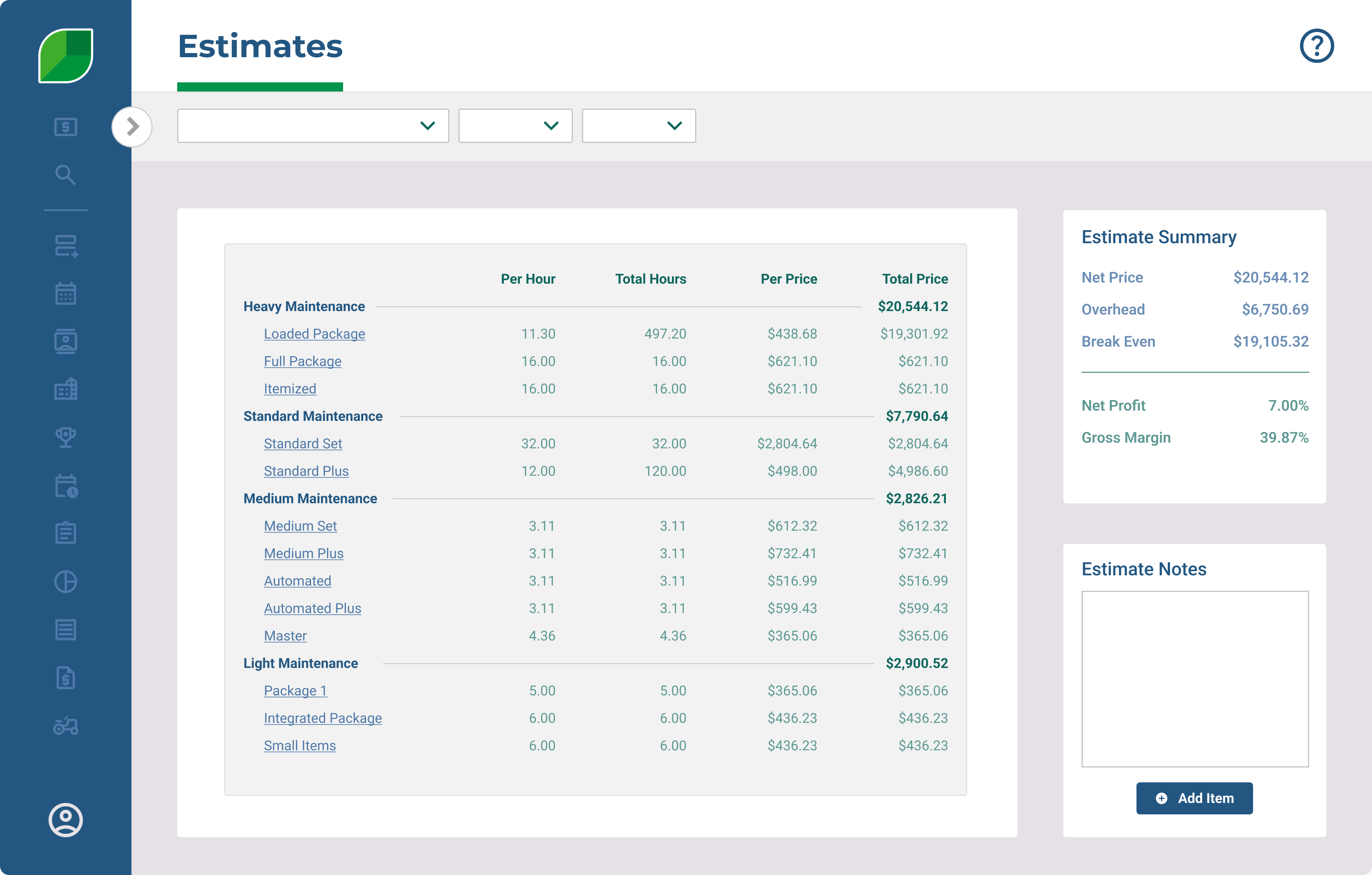
Keep track of complex service agreements to ensure contracts comply with Nevada state and municipal laws.
Invoicing & payment processing
Automate billing and payment reminders for landscaping services to maintain a healthy cash flow. Track payments and see outstanding invoices at a glance with Aspire’s invoicing assistant.
Ensure all financial records align with Nevada tax regulations to simplify state filings.
Pesticide & irrigation compliance tracking
Maintain digital records of employee certifications and training for pesticide application, ensuring compliance with environmental safety regulations and avoiding costly violations.
Track continuing education requirements for landscaping professionals to stay on top of renewals.
Business reporting & documentation
Use Aspire’s reporting features to organize expense, revenue, and payroll records for faster tax compliance.
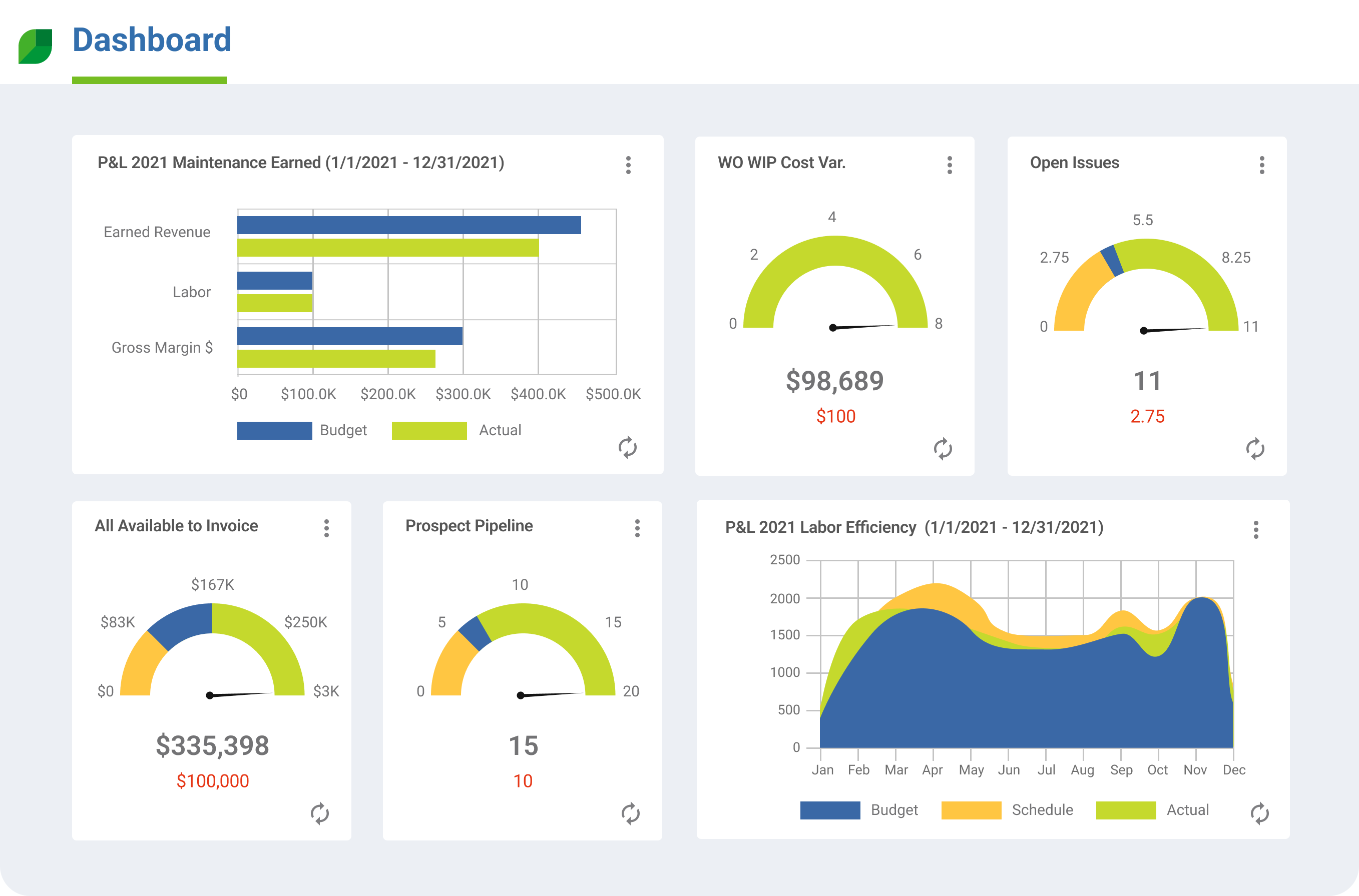
Maintain organized business records and compliance documentation, ensuring immediate access to licensing information during inspections or bid submissions.
Scheduling & job management
Aspire’s scheduling tools simplify ticket management, scheduling, and dispatch, enabling you to keep a close eye on which team members are assigned to which jobs.
Assign jobs to team members with the right certifications, and prevent municipal noise violations with a clear overview of ticket details.
Nevada landscaping laws are complex, but tools like Aspire can help make them manageable by providing clear, organized records and processes year-round.
Over to you
Setting up a landscaping business can seem overwhelming, but once you know exactly what to do, you may find it’s easier than it looks.
That’s especially true when you have the tools to help your business thrive from day one. With Aspire, your landscaping business will be set up with efficient, organized processes that make administrative work a breeze—so you can focus on steering the business in the right direction.
Ready to see Aspire in action? Book a demo today to learn more about how Aspire can help your business thrive in Nevada.
Disclaimer
This article is for informational purposes only and should not be considered legal or financial advice. While every care was taken to use official sources, you should always verify requirements with the Nevada government's websites.









 866-727-7473
 Schedule Demo
 390 S Woods Mill Rd #300 Chesterfield, MO 63017


