Table of Contents
Table of Contents
- What is a snow removal franchise opportunity?
- Why choose a snow removal franchise instead of starting independently?
- What types of snow removal franchise opportunities exist?
- How much do snow removal franchise opportunities cost?
- Who should consider buying a snow removal franchise?
- What equipment is required for a snow removal franchise?
- Over to you!
- Frequently Asked Questions (FAQs)
Winter typically hits hard in your area, and the demand for snow removal proves it.
You’ve spotted the opportunity and are weighing your options:
Option 1: Launch your own snow removal operation?
Option 2: Buy into a franchise?
Before making a decision, you want the full picture. If this is you — or maybe you just want to know whether a snow removal franchise is a viable business investment — you’re in the right place.
This guide unpacks what you need to know about snow removal franchise opportunities, including:
How snow removal franchises work
Choosing a franchise versus going independent
Types of snow removal franchises
The cost of a snow removal service franchise
What is a snow removal franchise opportunity?
A snow removal franchise is a business model that allows you to run your own business under a known snow removal company, leveraging their name, trademark, and business system.
In exchange for franchise and royalty fees, you gain access to training, operational support, and marketing resources — giving you a head start that an independent startup typically has to build from scratch.
How do snow removal franchise opportunities work?
In this model, there are two entities: a franchisor (the popular snow removal company) and a franchisee (you).
The franchisor provides you (the franchisee) with training, marketing materials, operational guidelines, a preferred equipment supplier, and ongoing support to help you launch and run a snow removal business. They typically require an initial franchise fee, an amount of cash on hand, and monthly royalties for rights to their brand.
In turn, the franchisee benefits from the franchisor’s reputation, expertise, and client base, reducing the challenges or risks associated with starting a business from scratch.
Why choose a snow removal franchise instead of starting independently?
Starting a snow removal business from scratch is hard. You have to build your strategy, chase financing, and convince people to trust a brand they’ve never heard of.
Let’s not even talk about lenders who are skeptical of funding new businesses without a track record.
Data from the Federal Reserve’s Small Business Credit Survey (SBCS) shows that of the 47% of startup employer firms that sought financing in 2023/24, only 43% of startups were fully approved, compared to 54% of older businesses that applied.
In short, independent companies need more financing and are less likely to qualify, while established businesses need it less and get approved more easily.
And without that capital, it can be hard to cover your basics, let alone grow, which is a common reason new businesses fail.
Franchises solve a lot of that. Banks back established brands, customers choose familiar names, and instead of figuring everything out alone, you get a system that’s already been tested.
This isn’t to say entrepreneurs can’t start their own snow businesses. Many do and succeed, either by starting small or bootstrapping and being aggressive with marketing campaigns.
We simply want to say that choosing a snow removal franchise removes a lot of the guesswork, giving you a proven system and support from day one.
But financing isn’t the only advantage — listed below are other benefits franchising offers.
What are the main advantages of franchise ownership?
Being a franchisee gives you the freedom of running your own snow removal business with the backing of a proven model. It’s a hard-to-find combination when starting from scratch.
More specifically, franchising offers:
Brand recognition: You’ll be capitalizing on a snow removal brand people know, making it easier for potential clients and financial institutions to trust you. You won’t struggle to attract leads.
Established systems: As a franchisee, you’re trained on how operations are handled within the franchise’s system. Things like the best ways to get and engage with clients, follow up, manage schedules, and projects are explained. This ensures you don’t have to create systems from scratch.
Faster market entry: Franchise ownership typically means you benefit from an existing customer base. If the brand has snow removal clients in the region, you can get to work as soon as possible.
Besides, brand recognition does the heavy lifting for you; when people already trust the name, converting leads into paying customers becomes a much shorter conversation.
Built-in network of franchisees to learn from: There’s a robust network you can learn from as a new franchisee, such as contractors who have already started the journey and can guide you when things get tough.
What are the potential limitations of a franchise model?
Franchising gives you the support needed to start a snow removal business, but it’s not without its limits.
Before you dive in, it’s important to know what you might lose or give up for the access it offers.
Franchise fees and royalty payments: Franchisees are required to pay a one-time lump sum and an ongoing royalty to the franchise for continued use of the brand and support. You may also need to contribute a percentage to the company’s marketing fund for regional and national advertising campaigns.
Territory limits: There are typically specific neighborhoods within your region that your snow removal business can service. Expanding into other areas without permission from the franchisor can result in a breach of your franchise agreement, which could lead to:
A formal warning
Loss of your franchise rights
Legal action or damages claimed by the franchisor
Reduced autonomy: As a franchisee, everything is based on the franchisor’s direction. There are rules and guidelines for operations, client management, and marketing, leaving little room to do things your way.
For entrepreneurs who value creative freedom and independent decision-making, this level of oversight can feel restrictive, especially as your business grows.
What support do snow removal franchisors provide?
Being a franchisee means your new business gets the support it needs to launch and grow. You plug into a system that’s been built and tested, providing:
Training on sales, operations, equipment purchase and maintenance, and customer relationship management.
Marketing materials and campaign support for digital marketing, social media, and local advertising.
Access to an established brand and customer base for your region.
Ongoing operational guidance for the business, including manuals, best practices, and tools for scheduling, project management, quality control, and customer service. This ensures consistent high-quality service and streamlined day-to-day operations.
Preferred vendor relationships and equipment sourcing.
What types of snow removal franchise opportunities exist?
Snow removal franchises have a wide range of services to offer residential and commercial clients. Here are different options available:
Sidewalk and driveway clearing: Here, you’re focused on clearing snow off pedestrian areas and small business entryways using tools like shovels, ice scrapers, brushes, and pushers. Franchises offering this service can cater to residential and commercial properties with public walkways.
Snow plowing: It involves using trucks fitted with plows to clear snow from larger areas, such as roads, parking lots for residential and commercial properties, or driveways. The goal? To ensure accessibility to properties.
Ice management: This service is ideal for preventing ice formation on a property by applying chemical agents such as salt or sand. It ensures vehicles and pedestrians are safe, reducing the risk of slips or accidents.
Snow blowing: This is another service you can provide to clients with small spaces, such as walkways, patios, or driveways. A blower removes snow from areas a plow can’t get to.
Roof snow removal: Clearing snow from rooftops to prevent ice dams, structural damage, or leaks. In high-snowfall regions, this service maintains a building’s integrity.
Equipment-heavy snow management: Here, you are a franchise focused on using heavy machinery to clear snow for municipalities, highways, or industrial clients.
Full-service property maintenance services: You offer a combination of snow removal services with ice management, along with landscaping, lawn care, and spring cleanup. Basically, it’s maintaining residential or commercial properties year-round to ensure they’re safe and attractive.
How much do snow removal franchise opportunities cost?
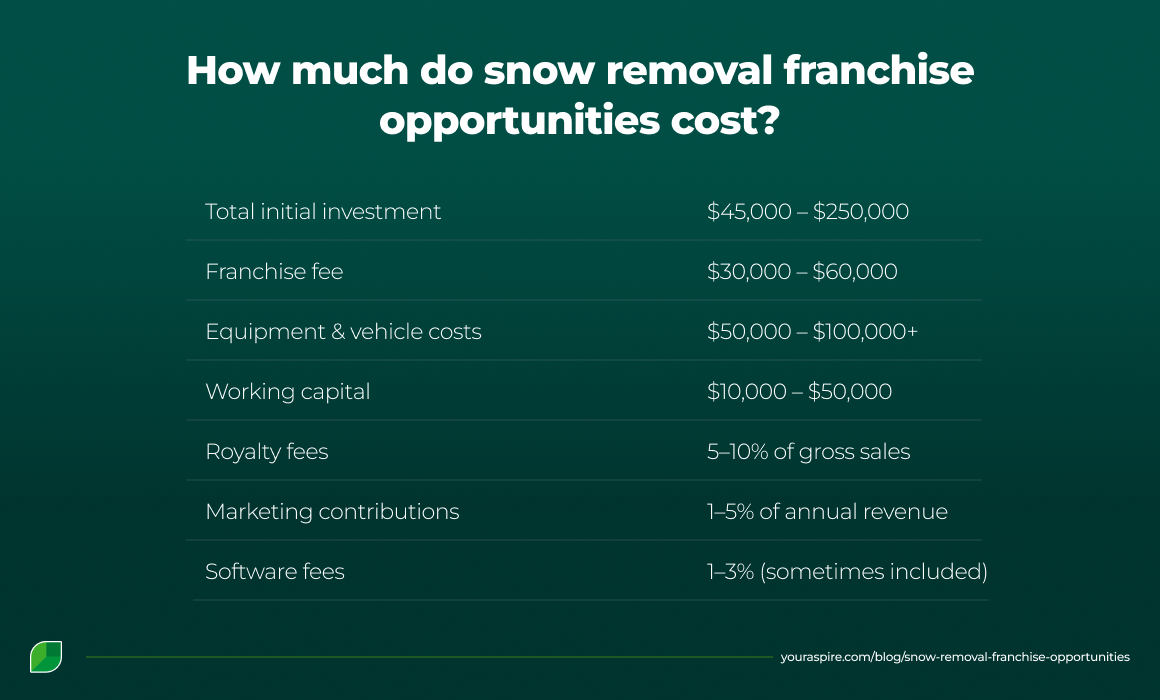
Starting a snow removal franchise costs between $45,000 and $250,000 in initial investment, which covers franchise fees, equipment, initial training programs, marketing, and working capital.
The actual costs depend on the franchisor and the specific market conditions.
At first glance, the numbers can feel overwhelming. But perhaps breaking them down makes the investment much easier to evaluate.
What is the typical franchise fee?
A franchise fee is the upfront cost you pay the franchisor to use their name, brand, and system.
For a snow removal franchise, this cost ranges from $30,000 to $60,000, depending on the brand, territory size, and level of support included.
This is your entry ticket for access to their network, initial training, operating systems, and brand name. It’s a one-time payment, separate from the ongoing fees you may pay as the business operates.
What equipment and vehicle costs should owners expect?
Equipment and vehicle costs are the largest expenses in a snow removal business, ranging from $ 50,000 to $100,000+.
You may need a truck, plows, spreaders, loaders, salt storage, and regular maintenance to keep them in good shape.
But the actual price depends on the scale of your operation, the condition of your equipment or trucks (new or used), and the markets you’ll be serving.
What are the ongoing franchise fees?
Franchises typically pay regular fees throughout the life of their agreement. They fall into these categories:
Royalties: 5-10% of the gross sales paid to the franchisor for continued use of the brand and support services.
Marketing contributions: 1-5% of annual revenue, contributing to the franchisor’s national or regional marketing fund. You benefit from brand-level advertising, but you don’t control how those funds are spent.
Software fees: Some franchisors may charge 1-3% for their proprietary software. In other cases, it’s included in the franchise fee.
What working capital is needed for seasonal businesses?
You need anywhere from $10,000 to $50,000 in liquid assets to sustain operations during the first season. This means budgeting for:
Payroll during slow or off-season
Equipment maintenance and storage costs
Insurance payments
Loan deductibles on vehicles and equipment
Who should consider buying a snow removal franchise?
You can consider becoming a snow removal franchisee if you’re someone who:
Has snow removal experience
Thrives in a fast-paced and hands-on working environment
Is looking for a lower-risk entry into business ownership
Has been a field service contractor and is comfortable with equipment and outdoor work
Is an investor looking for a scalable service business model
Needs a career change and wants to own their business
While having snow removal experience is a plus, it’s not a requirement to become a franchise owner. Why? Because the franchisor typically provides training that covers equipment operation, safety protocols, customer management, and business basics.
But if you want a successful snow removal franchise, you need the following skills to be effective:
Team management: Hiring, training, and coordinating crews for consistent snow removal service.
Operations planning: Ability to manage routes, schedules, and crews during a storm.
Customer service: Communicating clearly with clients, keeping them updated during severe weather and delays.
Sales and contract management: Knowing how to secure contracts and maintain relationships with clients is a crucial skill to have.
Time management: Responding quickly to service requests and completing jobs before deadlines.
Problem-solving: Making decisions when incidents happen during harsh weather conditions is another important ability to have.
Financial management: You also need to know how to price snow removal services correctly, track costs, and manage cash flow.
What equipment is required for a snow removal franchise?
Let’s talk about tools and equipment. To run an effective snow removal business, you need different machinery, vehicles, and tools.
Here’s a breakdown of what may be required:
What vehicles are used in snow removal operations?
There are several vehicles that snow removal businesses use, depending on the property size, terrain, and service type.
The most common are:
Pickup trucks equipped with plows, which are highly versatile and often used for residential and commercial properties
Dump trucks with plows to clear and haul snow
Skid steers and loaders for moving heavy snow
ATVs for removing snow from tight spaces, such as sidewalks and pathways
Tractors are also used for large-scale snow removal operations
What snow-clearing attachments are required?
You will need special attachments for your vehicles to clear snow off different surfaces and types of ice. Here’s what you can use:
Snow plow blade: This is arguably the most popular and essential. It’s attached to trucks, skid steers, and tractors for pushing snow off roads, driveways, or parking lots.
Salt spreaders or sanders: Used for ice management services and distributing de-icing materials to prevent ice buildup.
Snow pushers: To clear snow from tight spaces, these can be mounted on trucks or skid steers.
Snow blower attachment: Mounted onto tractors, skid steers, or ATVs to move large volumes of snow from small spaces.
Angle brooms or brushes: Used to clear light snow and improve surface finish when clearing snow from sidewalks or entryways.
What technology tools help manage snow removal operations?
You need the right tech systems running behind the scenes to have a successful snow removal business. They bring order to your operations, ensuring processes run without chaos.
Here are the tools you need for efficiency and coordination:
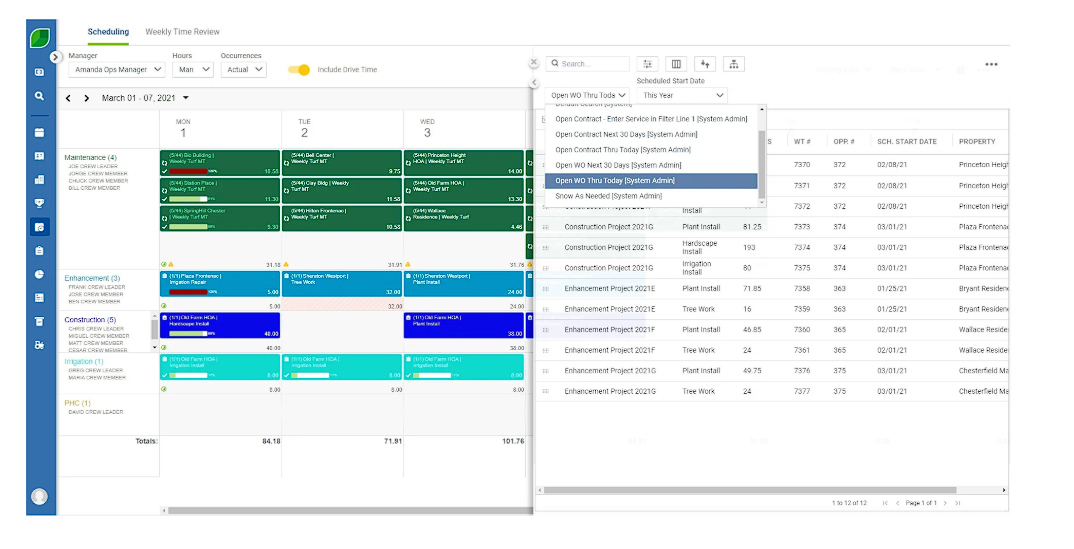
Scheduling and routing software: This helps you plan schedules, assign jobs, and optimize crew routes. A tool like Aspire’s scheduling software even lets you schedule projects once they’re won, keeping your operations centralized and managing property information in real time.
GPS fleet tracking: You need to know where your vehicles and equipment are in real time for scheduling purposes and to verify service completion. In addition, GPS tools help you with monitoring.
On Aspire, GPS tracking is combined with its equipment management and mobile app, providing visibility into vehicles and assets in the field. It also features GPS integrations that let you monitor clients' and crew members' locations, equipment usage, and activity in real time.
Weather monitoring app: Platforms like CustomerWeather help you anticipate storm activity, so you can notify clients and plan crew deployment in advance.
Customer relationship management (CRM) software: You need this to manage client communication and contracts, ensuring nothing slips through the cracks.
Aspire has a dedicated CRM feature that keeps contracts centralized, enabling you to follow up with leads, send automated messages (via email or text), track incidents, and ensure you maintain good relationships with existing clients.
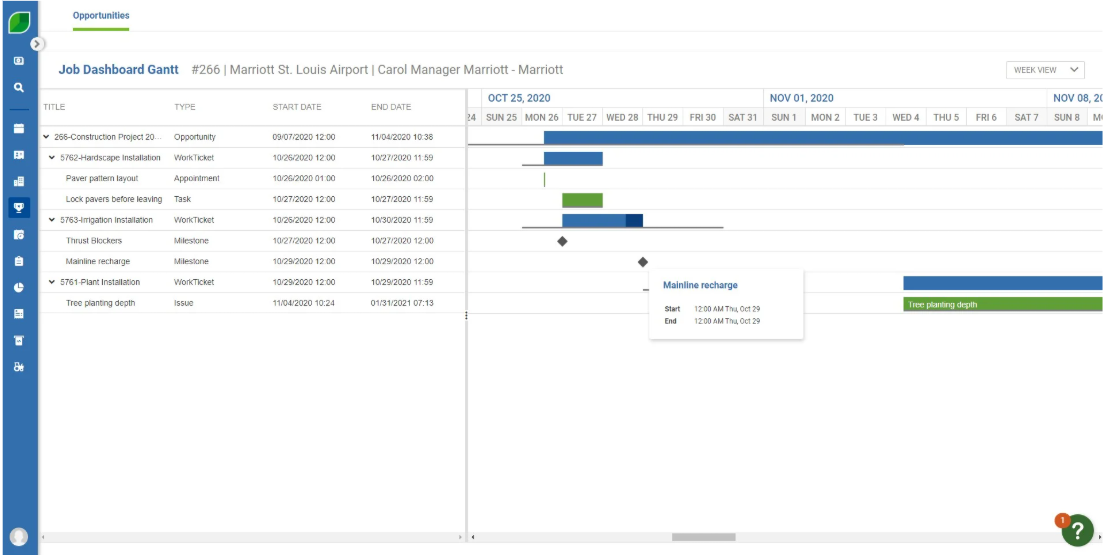
Invoicing tools: During harsh weather, with projects on the horizon and a busy schedule, manual invoicing and payment collection will eat into billable hours.
Using software like Aspire’s invoicing streamlines the process after services are completed. You can automate invoices to be sent after a project is ended or periodically. Plus, you reduce late payments and keep your financial records clean.
Mobile app for crew: This allows your field workers to clock in and out, check job details, log completed work, and communicate with dispatch from their phones. And guess what? Aspire has a mobile app that does just this. It even allows the crew to take photos or videos after a job is done.
Job costing: Using this software lets you monitor estimated project costs versus actual costs to guide future pricing. It shows if you’ve been under- or over-pricing your rates.
With Aspire’s job costing software, you have access to real-time end-to-end visibility from estimates to actual job performance.
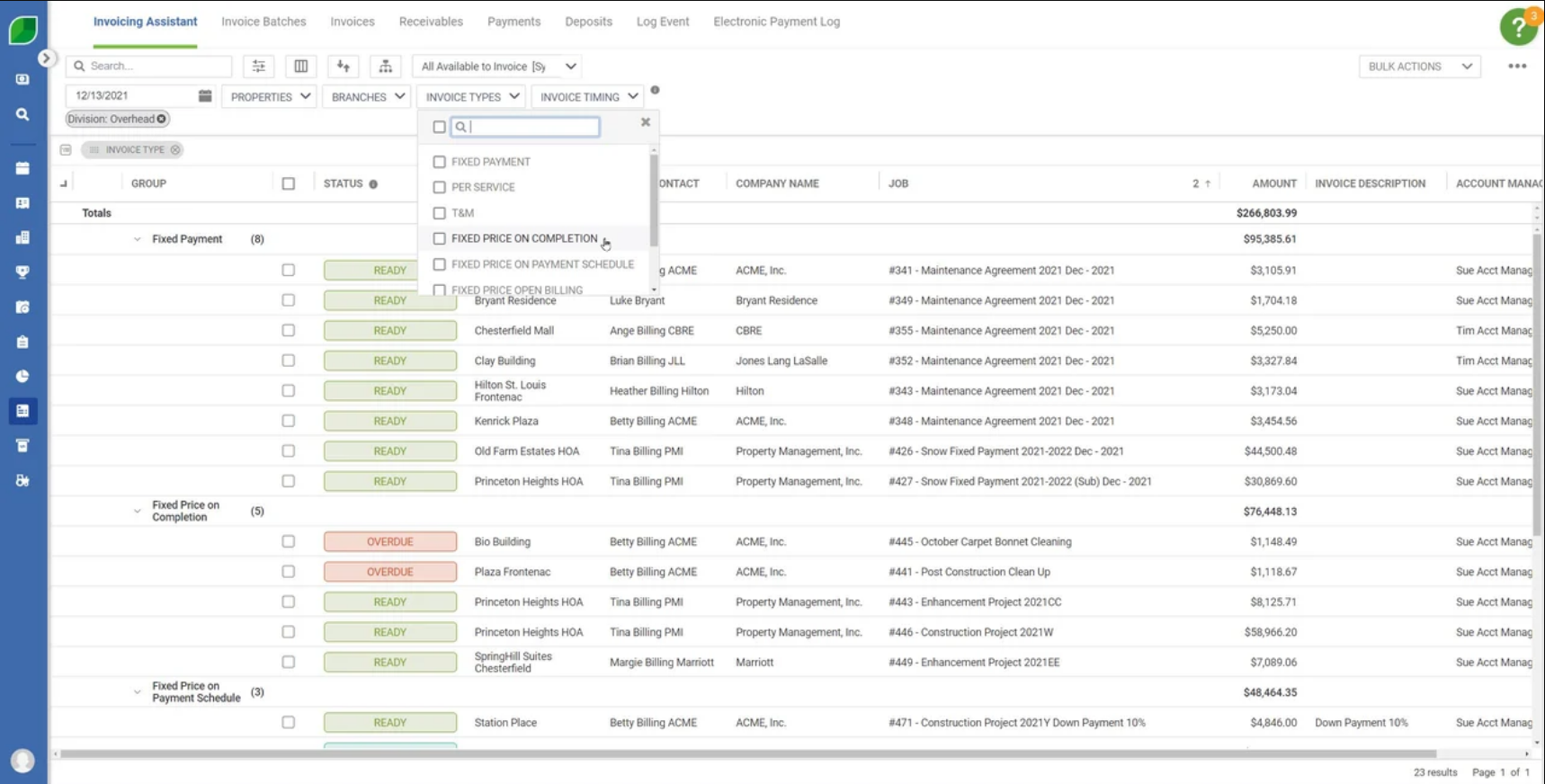
You can view job costs by crew, property, service type, or individual work tickets. Aspire lets you know whether you’re making or losing money while the job is in progress.
Over to you!
So, should you invest in a snow removal franchise or an independent business?
The decision is up to you.
A snow removal franchise gives you a unique blend of stability, growth potential, and community impact. You’re trained and plugged into an existing system that your potential audience likely knows.
But if you’re starting an independent snow removal business, you have to figure everything out from scratch: marketing, organizational workflows, contract management, client relationships, and team management.
But whether you choose franchising or an independent operation, the core challenges (dispatch, route optimization, crew management, contract tracking, weather response) remain the same.
You need a tool like Aspire to manage snow removal operations, operational support systems, revenue tracking, contract management, and scaling the business.
Want to see how it works?
Schedule a free demo with Aspire.
Frequently Asked Questions (FAQs)
How much money can a snow removal franchise make?
The actual revenue varies depending on the business location, contracts, and the number of clients.
But small businesses typically generate $50,000 - <$1 million in revenue per year, while larger businesses generate less than $5 million per year, according to SIMA.
Profit depends on efficiency, equipment costs, and snowfall levels, since heavier winters typically lead to higher earnings.
Do snow removal franchises require employees?
Not always, but most do, as the business grows. Solo operators can handle small residential routes, but employees or subcontractors are needed for commercial contracts or larger areas.
Hiring extra hands allows franchises to cover more properties, respond faster during storms, and scale operations efficiently.











 866-727-7473
 Schedule Demo
 390 S Woods Mill Rd #300 Chesterfield, MO 63017


