Table of Contents
Table of Contents
- What are the most profitable machines in landscaping?
- Which machines do landscaping businesses buy first?
- What machines should you rent instead of buy?
- What factors make landscaping machinery profitable?
- How can you calculate ROI on landscaping equipment?
- When should you upgrade your landscaping machinery?
- What maintenance practices increase machinery profitability?
- What are the common mistakes in buying landscaping machinery?
- How can you finance landscaping machinery purchases?
- How Aspire helps businesses make the most out of their landscaping machinery
Investing in the right landscaping equipment at the right stage of your business can improve profitability.
For instance, a new solo operator with a zero-turn mower can complete jobs faster than with a traditional riding mower. They can take on more clients without hiring additional hands, turning equipment costs into a pure profit margin.
As the business grows beyond maintenance to installation projects, another set of machinery is required to improve efficiency and profitability.
The right machinery doesn’t just speed up work, but it enables you to bid on higher-value contracts that were out of reach and reduces your reliance on manual labor for the most time-intensive tasks.
So, which tools deliver top value for your money?
The seven machines below represent strategic investments that landscaping businesses looking to increase efficiency and profitability can make.
What are the most profitable machines in landscaping?
To identify the top ROI landscaping equipment, this guide compiled insights from landscaping forums, YouTube channels, and operator feedback to see what’s worked for landscapers across the board.
Based on that research, here are seven machines that consistently provide the best value.
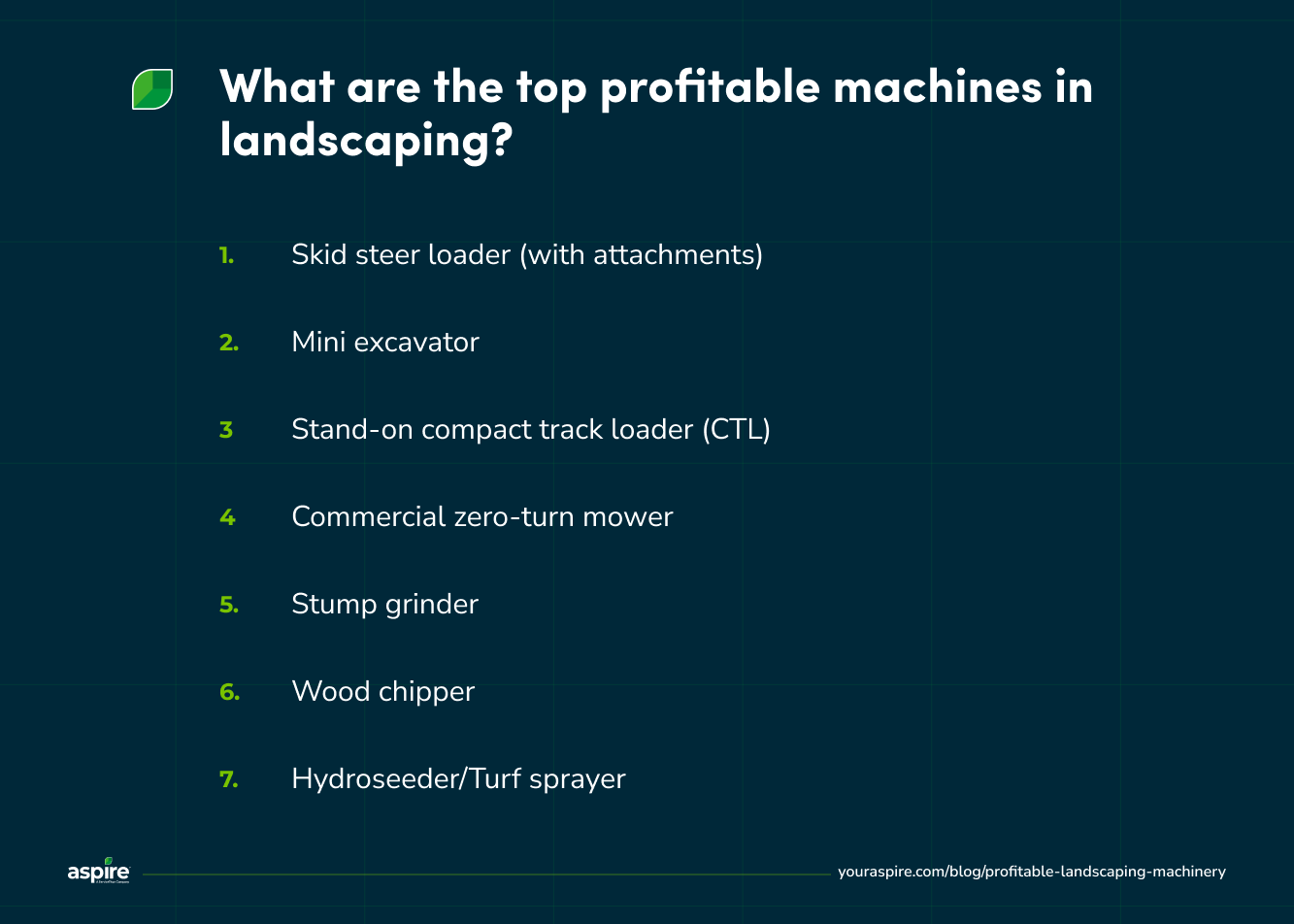
1. Skid steer loader (with attachments)
A skid steer loader is versatile and can replace multiple laborers, reducing labor costs and boosting profits.
It’s used to transport materials around a job site, dig, and grade lots. Skid steer loaders are also compatible with several attachments, enabling you to execute several landscaping projects.
They have attachments such as an auger for drilling post holes, forks to help load and unload fertilizers and plants, and buckets to haul materials away.
The skid steer’s maneuverability, compact size, and multifunctionality limit the need for additional equipment and labor, making it a high-return investment.
2. Mini excavator
It’s typical for landscaping businesses to hire different field workers to trench for drainage or irrigation lines and dig foundations on one project.
But with a mini excavator, you need a skilled operator to use the equipment for all those tasks, including moving large amounts of soil and clearing land.
It’s also useful in prepping for hardscaping projects, helping with retaining wall installations, building ponds or water features, placing large boulders, and excavating for patios or driveways.
These mini excavators can fit in small spaces (shoulder-width) and maneuver around tight areas. They provide the precision needed for complex, high-value landscaping jobs that command higher margins.
3. Stand-on compact track loader (CTL)
The ability to work on highly sensitive topography like sod or areas with sand and mud is one reason why this tool is profitable.
You can bid on projects the average landscaper may shy away from, increasing your service offering and profit margins.
It handles tasks like trenching, mulching, brush cutting, and earthmoving on sensitive terrains, enabling crews to work faster.
Another benefit of this machinery is how quietly it runs, making it a good option when working in residential areas.
4. Commercial zero-turn mower
The zero-turn mower is a favorite among maintenance landscapers because of its speed.
Compared to walk-behind mowers, this equipment slashes mowing time in half. It increases the crew’s efficiency, enabling them to complete jobs faster, reduce labor hours, and increase profitability.
The speed of this mower allows you to add more projects (on large and medium-sized properties) to your route and use it as a selling point to win proposals.
5. Stump grinder
Imagine your crew has just finished a landscape installation or tree removal project. Then the client asks if you can also remove the stump, but you either have to say no or subcontract the job.
That’s money left on the table.
This equipment allows you to offer add-on services that can boost your revenue per job, especially in regions with abundant tree coverage, where removal is essential for a property’s aesthetic improvement.
6. Wood chipper
Here’s another piece of equipment that can help generate additional revenue for your landscaping company.
A wood chipper transforms debris removal from a cost center into a profit opportunity.
It does that by:
Cutting down disposal trips: Instead of making multiple trips to landfills or yard waste facilities that increase labor hours and costs for a project, the chipper lets you turn tree branches and cuttings into mulch on-site.
Improving cleanup speed: You can use quick cleanup time as a selling point for tree trimming or storm cleanup jobs that generate significant debris.
Lowering dump fees: With the wood chipper, you won’t have to pay dump fees at landfills or yard waste facilities. You process the debris on the job site and turn it into mulch to reuse on the project or sell for profit.
Supporting high-volume work: If you’ve had to turn down tree-trimming projects because of the labor and disposal costs, this tool lets you take on more work as it can process large branches and woody debris at high speed.
7. Hydroseeder/turf sprayer
This winning combo makes landscaping installation and maintenance jobs more profitable for you.
Instead of multiple crew members hand-seeding with a spreader or laying sod on large areas, a hydroseeder can get the job done. It helps you plant grass or other vegetation on large properties by spraying a slurry mixture of seed, mulch, fertilizer, and water onto the soil.
A turf sprayer, on the other hand, takes stress off your back literally, replacing several field workers with backpack sprayers. It allows you to apply liquid treatments like fertilizers, herbicides, pesticides, and fungicides to properties.
Here’s why they’re profitable:
Covers large areas faster than manual methods, enabling you to complete more jobs in less time.
Eliminates subcontractors from your workflow, so you can keep that revenue within the business.
A single skilled operator with this machinery can get more done than five crew members in the field.
Now, should you rush out and buy all seven of these machines because they’re profitable?
Not necessarily. The most successful landscapers buy equipment strategically. They match purchases to their current business stage, test demand in their market, and rent before committing to ownership.
Keep reading to see how experienced operators typically approach equipment investment.
Which machines do landscaping businesses buy first?
While factors like finances, services offered, and available manpower play a huge role in the machines a landscaper buys, here are common choices that typically come first.
Commercial zero-turn mower: This equipment is a good start for new and existing landscapers focused on maintenance. It supports rapid mowing times, enabling crews to move through client properties in less time.
As a result, they can take on more lawn care jobs per day and increase revenue.
In a GreenPal survey of pros, the zero-turn mower was one of the top five pieces of equipment 1k landscaping professionals invested in. The survey even described it as the backbone of lawn care.
String trimmer, edger, and blower: Since most landscapers start with maintenance contracts, this commercial set is a popular choice.
The GreenPal survey revealed that these tools form the core of equipment used by landscapers.
The string trimmer is built for detailed work around obstacles, edges, and areas out of a mower’s reach. Edgers create clean lines around beds and walkways while blowers are used for cleanup and to clear debris.
Landscapers start with these tools because they are affordable and essential for daily use. There’s hardly any lawn care project you wouldn’t need them for.
Skid steer loader: As the business grows and services expand, landscapers need versatile equipment like this for multiple tasks.
It’s one machine that handles grading, material moving, digging, trenching, and demolition by simply swapping attachments.
GreenPal Pros identifies this as the second-most significant investment for landscaping businesses because it helps them expand their service offerings.
With the skid steer loader, there’s also no need to buy multiple specialized machines. Its compact size allows it to work in tight residential spaces while still taking on larger commercial hardscaping and installation projects that command higher profit margins.
Trucks: This type of machine was ranked as the most significant investment in GreenPal’s survey, and for good reason. You need a truck to transport equipment and your field crew to the job site.
Without one, it’s almost impossible to get anything done.
A strong truck lets you mount heavy equipment like dump trailers, spray rigs, or hydroseeders and tow them to project sites. This can save you from spending extra money on delivering equipment through an external service.
What machines should you rent instead of buy?
It’s great to buy new equipment, but strategic renting can also be good for your business.
For example, if you’re expanding and need to evaluate certain services, renting can help reduce costs before committing to a full-time arrangement.
If you’re dealing with seasonal work, buying a machine that sits idle for the rest of the year can be expensive, as it’ll require regular maintenance.
Below are some machines that landscapers generally prefer to rent:
Motorized aerators: Typically used fewer than six times in a year, so many landscaping businesses prefer to rent instead of buying.
Thatchers: Landscapers typically thatch every few years, so having one in storage is an unnecessary expense.
Excavators: If there are no jobs requiring digging, the equipment sits idle, increasing maintenance costs.
Plate compactor: A useful tool for hardscaping projects, but only relevant for patios and walkways.
The general rule of thumb when considering whether to buy or rent is:
Buy if it covers over 80% of your work.
Rent if the equipment is used on fewer than four jobs a year or can’t pay for itself.
What factors make landscaping machinery profitable?
If you’re stuck on whether landscaping equipment is profitable for the business or not, use the factors below as a benchmark for your decision.
Job frequency: How often will the machinery get used? Daily or weekly usage means consistent ROI. On the other hand, any tool that sits idle for a few months can cause the business to lose money.
Versatility: Tools that handle multiple tasks help you do more with less, making the team more efficient and productive.
Maintenance cost: Equipment with a low maintenance cost means more uptime and predictable operating costs.
Demand: Any tool that lets you execute in-demand landscaping jobs directly contributes to your revenue. For instance, if you have more lawn care jobs, which tool helps you get the job done more easily?
Resale value: While the resale value isn’t as important, it still matters to consider it before purchase. What can you get when you decide to sell or upgrade?
Labor cost reduction: If equipment can replace a couple of workers and reduce operating costs, it’s helping you save on labor costs and increase profit margins.
Speed and efficiency: Machinery that helps you complete jobs 2–5x faster than manual labor helps you serve more clients per day and directly increases revenue.
How can you calculate ROI on landscaping equipment?
To calculate the ROI on your landscaping machinery, you need to know its total investment and the profit it has generated.
When you’re clear on that, you can use this formula to determine the tool’s ROI:
Net Profit÷Total Investment x 100= ROI
The investment is the purchase price and setup costs. Basically, the total cost of ownership (TCO) includes everything it costs to own and operate the machinery, such as:
Maintenance and repair cost
Replacement parts
Operational downtime cost to the business
Human labor required to run, repair, or maintain the equipment
The net profit is the revenue it has generated, minus the operating costs:
Revenue generated-operating costs
So, let’s say your skid steer loader costs $150k and it has brought $70k in profit.
The ROI will be:
$70,000 ÷ $150,000 x 100 = 47%
Note: This is just an example, but any equipment that gives you a 47% ROI is a solid investment.
When should you upgrade your landscaping machinery?
It’s time to upgrade your landscaping equipment when:
The equipment keeps breaking down, causing you to miss deadlines, decline jobs, and increase the amount of money you’d typically spend on maintenance.
Your schedule is full, and you can’t take on more clients without working longer hours or hiring more hands. You might just need faster equipment.
Jobs are taking longer than expected. If the team has started going over the estimated time on jobs, the machinery may be the culprit.
There are signs of wear and damage. For your and the team’s safety, upgrade when your equipment begins to show irreparable damage, e.g., failing brakes, loose shafts, or a cracked deck on a mower.
Competitors are winning bids. If you’re losing profitable work because your competitor can complete jobs faster, it may be a sign that you need new tools.
What maintenance practices increase machinery profitability?
Want to maximize your landscaping equipment ROI?
Do these:
Train your landscaping crew
Train operators who will use the machine regularly on the best ways to use and inspect it. Teach them how to perform daily inspections and catch issues early. This can help reduce repair frequency and wear from improper use.
Perform daily and scheduled maintenance for all equipment
Assuming you’ve trained the crew on what to do, ensure they perform basic maintenance checks before work each day or even before their shift ends.
They should inspect belts and moving parts for damage, clean debris, sharpen or replace mower blades when dull, and check fluid levels.
You should also schedule routine maintenance, such as oil changes, filter replacements, lubrication, and blade sharpening, to prevent costly breakdowns and extend equipment life. Planned downtime is far cheaper than emergency repairs during peak season.
Track machine hours and service history
Use equipment management software like Aspire to log machine hours and maintenance records, ensuring servicing occurs promptly. It also helps identify underperforming equipment that requires costly maintenance, so you can make better repair or replacement decisions.
Keep the equipment clean and store it properly
Regular cleaning of your tools’ cooling systems, decks, and moving parts prevents corrosion, overheating, and sudden failure.
You also need to store the machines properly under cover, draining fuel when appropriate, winterizing engines, and protecting batteries to reduce off-season damage.
What are the common mistakes in buying landscaping machinery?
If you want to get the best out of your landscaping equipment, boost productivity, and increase revenue, you need to avoid these mistakes.
Making purchases before you need them
Tools that aren’t in use don’t generate any revenue and eat into your budget. You want to avoid this by only buying when the phones are ringing, you’re subcontracting work, or you’re turning away work. If there’s no high demand for a service, it’s better to rent equipment in the interim.
Overlooking the total cost of getting a tool
Choosing equipment based solely on the lowest purchase price often leads to higher long-term costs. A cheaper machine with poor fuel efficiency, expensive hard-to-find parts, or frequent breakdowns can cost thousands more annually in operating expenses.
Factor in fuel consumption, maintenance requirements, parts availability, and expected repair frequency before buying. Sometimes paying $2,000–3,000 more upfront for a reliable brand saves $5,000+ per year in reduced downtime and lower operating costs.
No testing
Whether you’re buying new or used equipment, test-drive it to verify its functions. You don’t want to have it delivered only to find it doesn’t match what you need.
Not being security-conscious
In the past year, there have been reports of landscaping equipment theft. If you’re investing in equipment, protecting it should be a priority.
Ensure your equipment is protected in locked facilities, install GPS tracking on high-value tools, and use wheel locks as extra deterrents.
You should also have an equipment log with their serial numbers for insurance claims and to simplify recovery. Beyond security, proper storage protects the landscaping equipment from harsh weather conditions. It reduces rust and weather wear to ensure the machine lasts long.
How can you finance landscaping machinery purchases?
Thinking about upgrading your landscaping gear, but the budget’s tight?
Or maybe you can afford it, but you want to keep that big expense from disrupting your business’s cash flow.
Here are financing options to consider:
Equipment leasing: With this option, you can get the equipment for a fixed monthly payment without owning it outright. It’s a lease-to-own option for landscaping tools. Equipment leasing has an accessible approval rate and typically offers lower upfront costs. However, the long-term cost can be high.
Landscaping equipment loans: You can take out loans from banks and lenders specifically for equipment purchase, with the tool as collateral.
This is ideal for landscapers with an existing business and consistent revenue. The equipment is yours from day one with predictable payments to the lender. But repairs or damage to it are your responsibility.
SBA loans: These are government-backed loans for business owners, which you can use to finance the purchase of landscaping equipment.
While they have favorable terms and a long repayment period, they're mainly for growing and established businesses. SBA loans are also known for a lengthy approval process, so keep that in mind when applying.
Dealer or manufacturer financing: Certain equipment manufacturers and dealers offer financing options landscapers can leverage for new purchases.
They often have promotional rates you can take advantage of. However, they have limited flexibility compared to independent lenders.
Grants and crowdfunding: While grants specifically for landscaping equipment are rare, some general small-business or field-service grants allow flexible use of funds.
These can be applied toward equipment purchases if eligibility requirements are met. Another option is crowdfunding, especially if your business has a compelling mission, community impact, or unique approach that people are willing to support.
How Aspire helps businesses make the most out of their landscaping machinery
Aspire is landscaping management software that helps landscapers take control of their business and scale profitably.
It enables growth by providing tools for bidding, estimating, job costing, scheduling, and reporting on a single platform, enhancing profitability and operational insight.
One company that experienced the level of control and growth Aspire offers is The Greenery, an employee-owned landscaping company. They wanted to transition from siloed Excel spreadsheets, pivot tables, and department-specific software to a solution that integrated operations across all teams.
More specifically, the team wanted advantages that would keep the business competitive.
After Aspire was introduced, the operations team could manage their tasks from a single location — organizing tickets, tracking hours, communicating with customers, and providing estimates.
In addition, Aspire includes a dedicated equipment management feature that provides clear visibility into landscaping equipment.
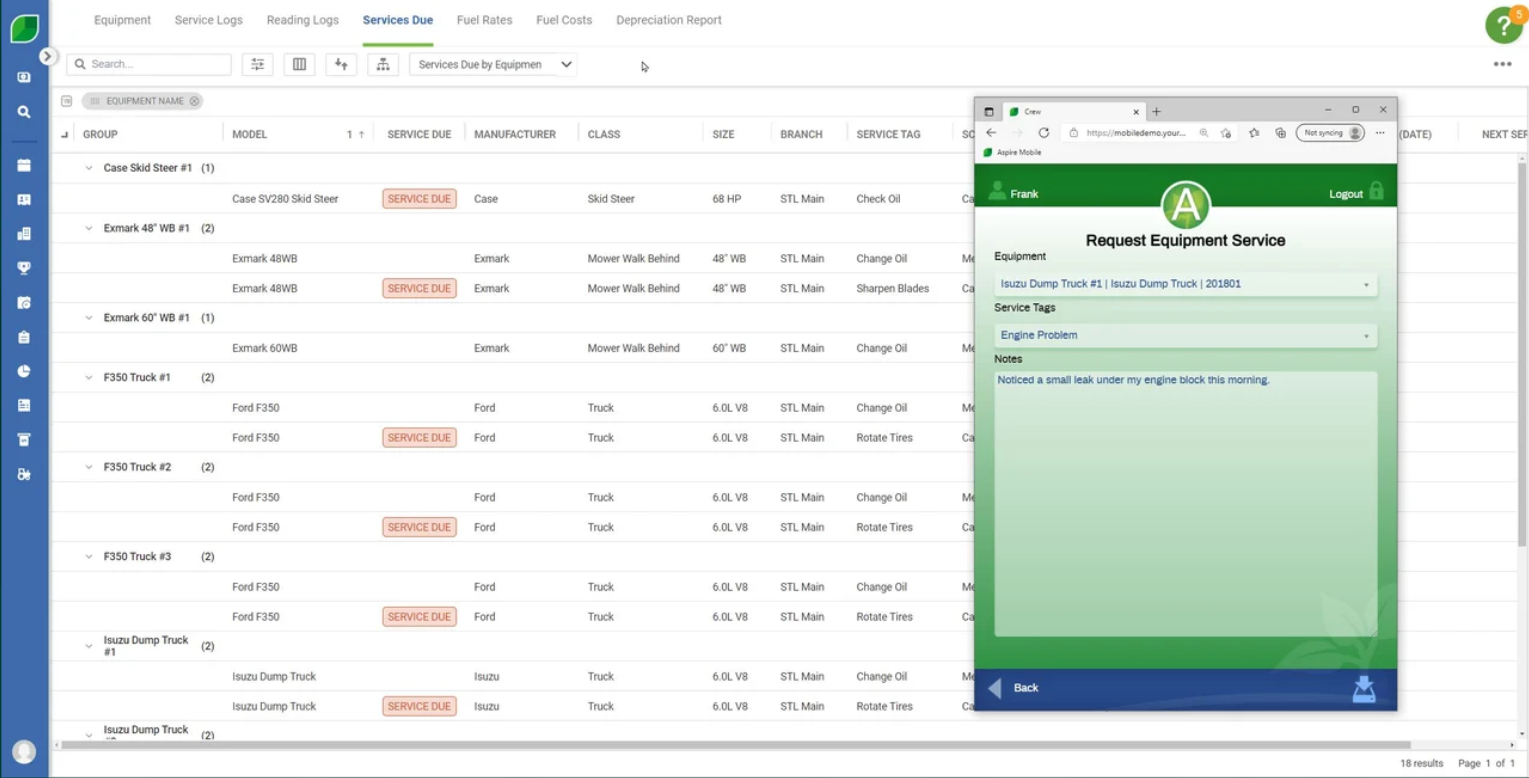
It allows you to log machinery by manufacturer, size, model, class, and route. With these tools in place, the hours logged by you or your field crews can automatically trigger maintenance alerts.
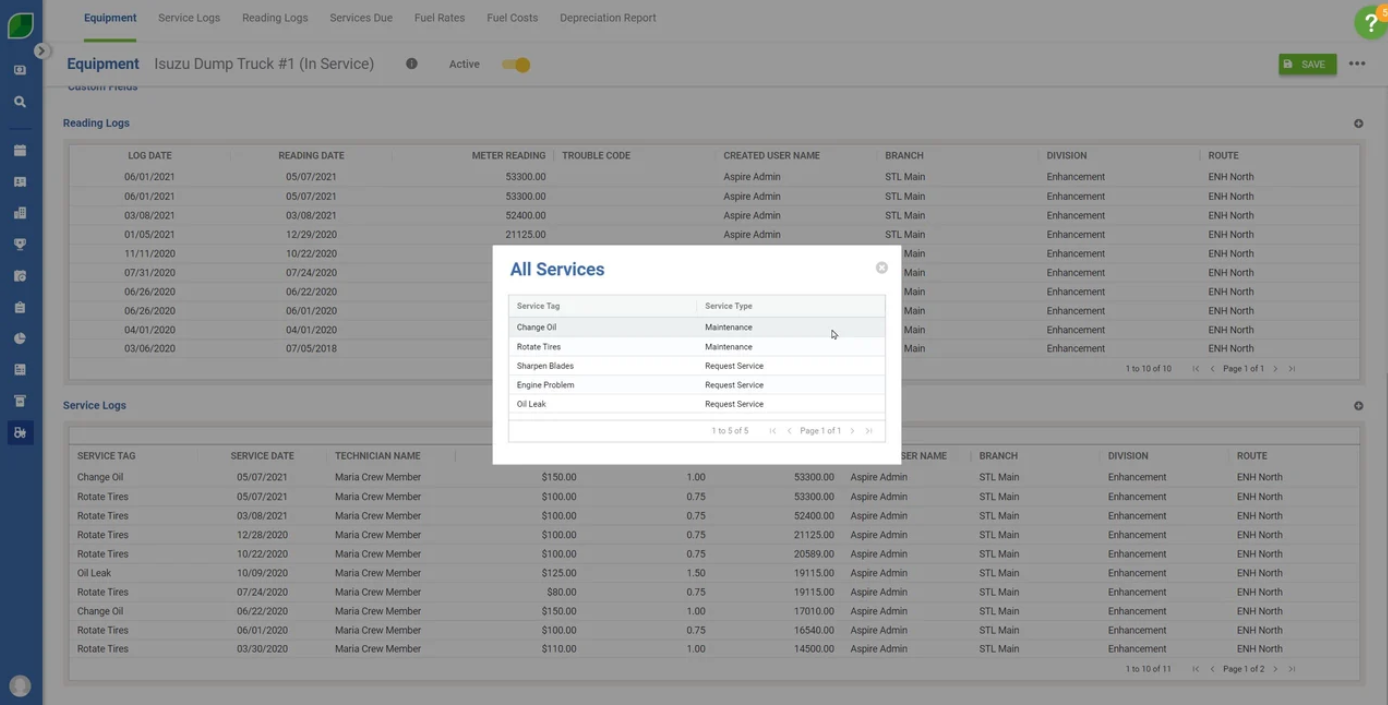
For example, if a mower needs servicing every 50 hours of use, Aspire notifies you once that threshold is reached.
Aspire’s equipment tool also tracks service details, recording the date, service type, mechanic, cost, hours, additional comments, and updated meter readings.
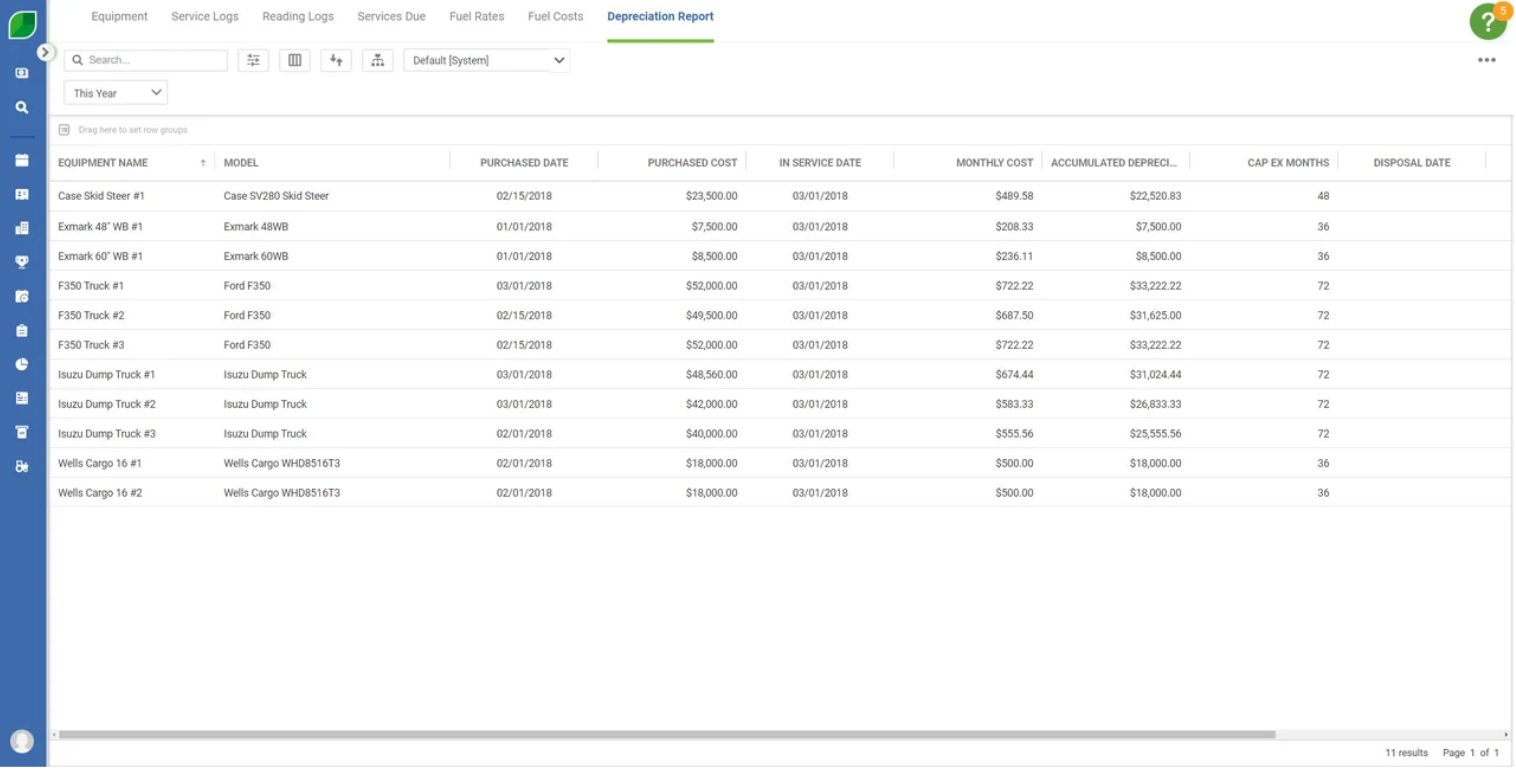
Want to know which equipment is currently in use so you can schedule projects without losing revenue? Aspire has you covered. It also helps you track the location of equipment at all times.
During tax season, Aspire lets you run depreciation reports and track disposal dates and amounts directly in the system.
The visibility this tool provides into labor and equipment performance can help you identify which jobs are in demand and decide which machines to purchase next or which jobs are actually worth taking.
See how Aspire brings all of this together. Book a free demo for a firsthand look at how it works.




 866-727-7473
 Schedule Demo
 390 S Woods Mill Rd #300 Chesterfield, MO 63017


