Table of Contents
Table of Contents
- Do you need a license to start a landscaping business in North Carolina?
- What are the types of landscaping business licenses and permits in North Carolina?
- General business license
- Landscaping contractor license
- Specialized licenses
- Permits and local regulations
- Step-by-step process to get a landscaping business license in North Carolina
- 1. Review requirements and gather documents
- 2. Submit your license application
- 3. Application review
- 4. Prepare for and pass your exams
- 5. Submit the fees to become a licensed landscaping contractor
- How much does a North Carolina landscaping business license cost?
- What are the most common mistakes to avoid when getting a license?
- 1. Not fully understanding what the license covers
- 2. Taking on projects before you’re fully licensed
- 3. Failing to renew your license on time
- How Aspire helps landscaping businesses stay organized and compliant
- Contract and proposal management
- Invoicing and payment processing
- Pesticide and irrigation compliance tracking
- Business reporting and documentation
- Scheduling and job management
- Over to you
You want to start a landscaping business in North Carolina, but don’t fully know the processes involved. You wonder what paperwork, legal requirements, fees, and licenses are needed.
Since this is your first time, you want to get everything right and avoid potential fines or issues that can disrupt your new venture.
Luckily for you, that’s what this guide covers.
It provides a comprehensive, step-by-step process on what licenses a landscaping company in NC needs, including:
The types of landscaping business licenses needed in North Carolina
How to get the business licenses
Mistakes to avoid in the process
How to stay organized and productive when operations begin
Without further ado, let’s get to it.
Do you need a license to start a landscaping business in North Carolina?
A license is required to operate a landscaping business in North Carolina, be it a sole proprietorship, partnership, LLC, or corporation.
The license allows you to legally offer professional landscaping services valued at $30k or more and helps you build trust with prospects and clients.
To become a licensed landscaping contractor, you must meet specific requirements. For solo business owners, here are the criteria to meet:
Must be over the age of 18
Submit a minimum of five reference letters (three from personal sources and two from professional ones).
Post a $10,000 surety bond or a letter of credit.
Provide employer details if available.
Submit the business name under which you’ll be operating.
Pay a non-refundable $75 application fee.
Pass the NC Landscape Contractors’ Licensing Examination. The sections you must pass include: landscape design, horticultural knowledge, and plant and pest identification.
For LLCs, corporations, and partnerships, three main prerequisites qualify you for a license:
Must have at least one employee who is a licensed landscape contractor.
Pay a $100 application fee.
Submit your most recent annual financial report.
However, you don’t need a landscaping license for:
Personal landscaping on a property you own.
Working on golf courses or farms.
Lawn care services such as mowing, edging, fertilizing, or aeration.
Federal, state, and local governments' landscape projects on public property.
Landscaping projects under $30,000.
What are the types of landscaping business licenses and permits in North Carolina?
You will need different permits and licenses to run a landscaping business in NC. Here are the most important ones:
General business license
A general business license legalizes your operation, regardless of your scope of landscaping work. It’s a requirement that shows you’re registered as an entity conducting business in the state.
It’s used for legitimacy, assuring clients that their projects are safe with a professional and enabling smooth communications with your suppliers. It is also required to construct any building, highway, public utilities, grading, improvement, or structure with a cost of over $30k.
Overall, a general business license is the fundamental step to running a commercial entity. Operating your business without one could lead to fines or closure by the authorities.
Landscaping contractor license
A contractor license is mandatory for landscaping businesses in North Carolina for anyone who offers lawn services for compensation over $30k per site within 12 months.
This license is regulated by the North Carolina Landscape Contractors’ Licensing Board, and it covers several construction and installation projects, such as:
Planting trees, shrubs, and sod
Constructing hardscape (patios, walkways, etc.)
Installing drainage systems
Landscape designs
Creating or maintaining a landscape bed
Turf installation
However, it does not cover general contracting, plumbing, electrical, or structural projects.
Specialized licenses
You'll need specific licenses to offer services like irrigation system installations or pesticide application.
For instance, to apply fertilizers, pesticides, or herbicides commercially, you’ll need a pesticide applicator license from the North Carolina Department of Agriculture and Consumer Services.
Irrigation system installation will require an irrigation contractor license from the NC Irrigation Contractors’ Licensing Board.
These specialized licenses allow you to execute various landscaping projects without fear of being penalized.
Permits and local regulations
In North Carolina, you’ll need to secure specific permits for projects that involve significant construction, such as lighting, fences, or installing large retaining walls.
You may need building permits, site or land disturbance permits, and electrical or mechanical permits.
You should visit your local building department to see what permits are needed for your projects.
Step-by-step process to get a landscaping business license in North Carolina
To become a licensed landscaping business, here’s what you need to do:

1. Review requirements and gather documents
Review the prerequisites for getting a landscaping business license to ensure all requirements are met.
Do you have reference letters? Three from personal relationships and two professional references?
Have you secured a $10k compliance bond or an irrevocable letter of credit?
Have you paid the application fee?
Do you have evidence of business identification? What is the business name under which you’ll be operating?
Have you registered and paid for the exam?
2. Submit your license application
Visit the North Carolina Landscaping Contractors’ Licensing Board to download the application form.
Fill out every section. You’ll be asked to have the application notarized by a certified notary public and have it sent with a non-refundable $75 application fee, the reference letters, original NC Landscape Contractor’s surety compliance bond with the bond power of attorney page, or an irrevocable letter of credit.
If you’ve been convicted of a crime or have a disciplinary history with an occupational licensing or certification board agency, you’ll be asked to disclose it in the application.
Once you’re done, it’s time to send the application via mail to the North Carolina Landscaping Contractors’ Licensing Board.
3. Application review
Double-check your application before sending it in to ensure everything is correct. The board will also review it for missing information and contact you if corrections need to be made.
Ensure you respond promptly for quick processing.
4. Prepare for and pass your exams
Once the board approves your application, you’ll be notified of your exam eligibility and instructions on scheduling your examinations.
You must also submit a non-refundable $150 exam fee via the exam payment form. Applicants have one year from when payment is made to take the exam.
Give yourself enough time to cover all the study materials on landscape design, plant and pest identification, and general landscape knowledge.
Come exam time, ensure you arrive early with a valid ID. A license will not be issued until you complete all three exam parts.
5. Submit the fees to become a licensed landscaping contractor
You’ve passed the exams. Congratulations! The next step is to pay a $100 licensing fee, which confirms you as a licensed landscaping contractor.
You are now authorized to take on projects worth over $30,000 in North Carolina.
How much does a North Carolina landscaping business license cost?
Budget between $500 and $850 in costs to secure a landscaping business license in North Carolina.
Here’s a breakdown of the costs associated with the license:
NCLCLB individual application fee: $75
NCLCLB corporate application fees: $100
$10,000 surety compliance bond: $100–$500 per annum
Examination fee: $150
Professional study materials: $317.72
Exam study materials: $26.81
Licensing fee for individual contractor license: $100
Business registration: $50–$125
What are the most common mistakes to avoid when getting a license?
Being a licensed landscaping contractor positions you as a true professional in the eyes of clients and prospects.
But to benefit from that credibility, you must avoid the following mistakes, as they can delay your approval or put your business at risk.
1. Not fully understanding what the license covers
North Carolina requires different permits for landscaping operations, irrigation, and pesticide application. Your business risks being fined if you assume a single license covers everything.
Research the services a specific license covers to avoid delays or legal issues.
2. Taking on projects before you’re fully licensed
While North Carolina allows landscapers without licenses to work on personal landscape projects, golf courses, farms, and provide services like mowing, edging, fertilizer, or aeration on projects valued under $30,000, that’s not always the case.
You mustn’t take on other projects before getting licensed. Not only does it lead to penalties and damaged reputation, but clients can decide not to pay you, and the law will support them.
To avoid such scenarios, take up only landscaping projects you’re legally allowed to execute while your license is being processed.
3. Failing to renew your license on time
A landscaping license regulated by the NCLCLB requires annual renewal on August 1 each year.
Missed deadlines could result in reapplying from scratch or paying reinstatement fees. Avoid this by scheduling the renewal date in a personal calendar so you don’t forget.
How Aspire helps landscaping businesses stay organized and compliant
Once licensed, you can legally take on as many landscaping projects as your scope of services allows. But without the right systems, things can quickly get chaotic, from tracking profitability to staying organized and compliant.
Aspire helps you streamline operations so you can focus on growing your business without losing control. Here’s how it does that:
Contract and proposal management
Aspire enables you to create, send, and manage professional-looking proposals. Its customizable proposal templates simplify project bidding, allowing you to close deals quickly.
You can set profitable pricing, reduce errors, and get clients to sign contracts within the platform.
With all contracts and proposals centralized, reviewing them to ensure legal compliance is easy. You can assess each contract’s scope to see if you have the necessary licenses to execute it.
Invoicing and payment processing
Has the client given you the green light for your proposal? Aspire has an invoicing feature that automates billing for your landscaping services.

With the Invoicing Assistant feature, you can invoice clients and get paid in one swoop. This ensures you have access to key financial records when you need them.
Pesticide and irrigation compliance tracking
Aspire lets you record all available licenses and certifications—whether employee- or company-owned.
Access to these digital copies allows you to maintain compliance with the North Carolina Department of Agriculture and Consumer Services regulations.
Business reporting and documentation
Aspire’s reporting feature gives you insights into everything in your company. It lets you see direct costs associated with a specific service type, a sales rep, tech, crew leader, or operations manager, so you know if the business is running at a profit or loss.
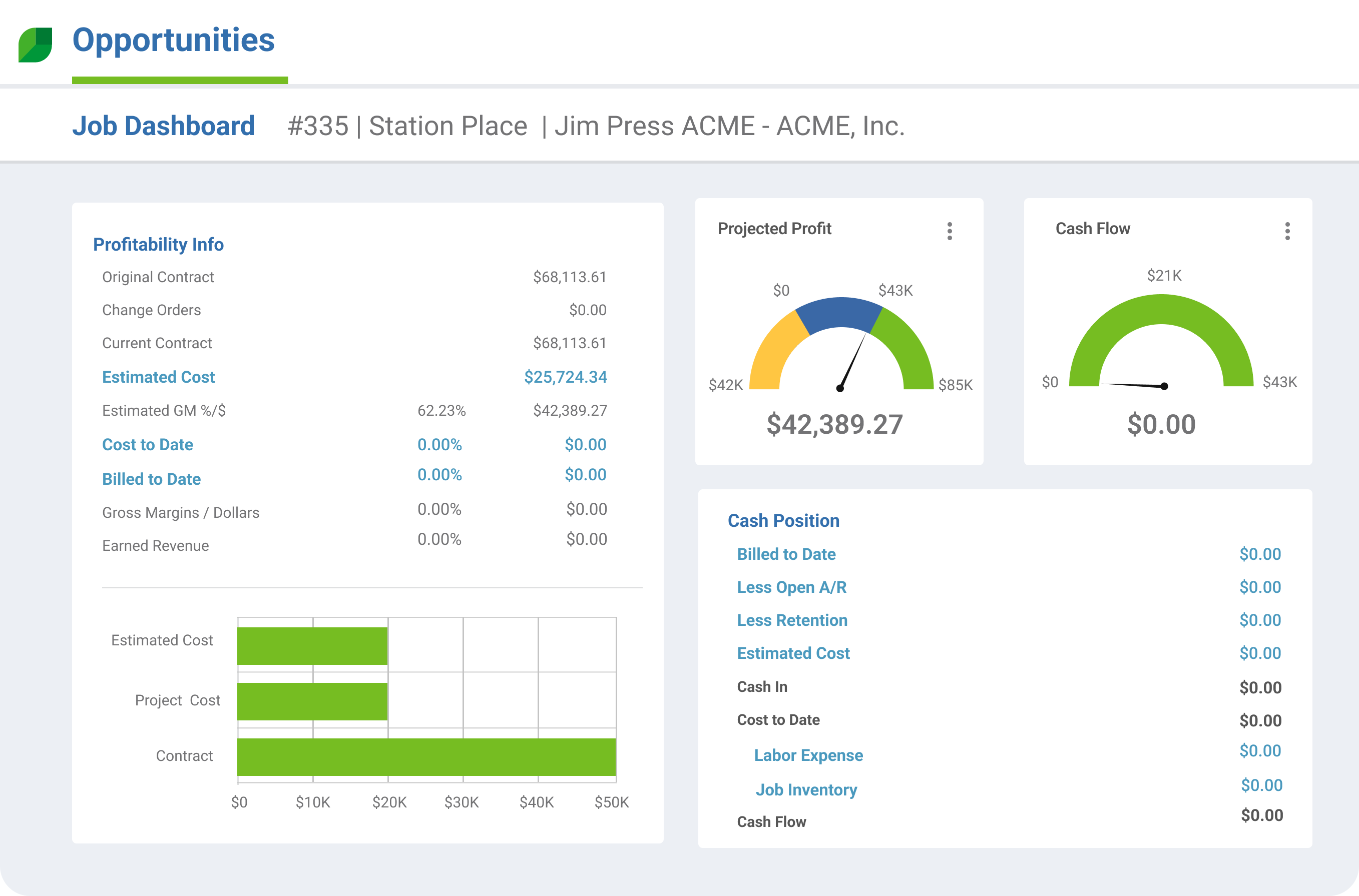
You can track your crews’ productivity, labor and material costs, expenses, tax filings, and everything you need to make smart business decisions.
Scheduling and job management
Trying to schedule projects and assign jobs manually can be a real headache. There's always the risk of sending crews to the wrong place or accidentally double-booking teams on the same day.

Aspire keeps you organized with its scheduling feature, allowing you to assign crews with the proper certification or license to an appropriate job site.
It helps you avoid scheduling conflicts that could violate laws, and to monitor job progress with ease.
Over to you
Getting a North Carolina landscaping business license legally protects you, ensures clients trust your business, and allows you to take on massive landscaping projects.
While Aspire won’t help you to obtain a license, it improves how you run and grow your business after being licensed. It manages contracts and equipment, schedules projects, tracks costs and profitability, and provides reports in real time.
Schedule a free demo with Aspire to see how it simplifies and manages landscaping operations.









 866-727-7473
 Schedule Demo
 390 S Woods Mill Rd #300 Chesterfield, MO 63017


