Table of Contents
Table of Contents
- Do you need a license to start a landscaping business in New Hampshire?
- What are the types of landscaping business licenses & permits in New Hampshire?
- Step-by-step process to get a landscaping business license in New Hampshire
- How much does a New Hampshire landscaping business license cost?
- What are the most common mistakes to avoid when getting a license?
- How Aspire helps landscaping businesses stay organized & compliant
- Over to you
- Disclaimer
You’re probably here because you want to know about the legal requirements for starting a landscaping business in New Hampshire. You are an aspiring entrepreneur or professional landscaper thinking of starting your own thing, and you want everything done by the book.
If this sounds like you, this comprehensive guide outlines everything you need to launch a landscaping company.
You’ll learn not only what’s needed, from business registrations to nursery or pesticide service license applications, but also how to complete them.
So, here’s a breakdown of the licensing process in New Hampshire.
Do you need a license to start a landscaping business in New Hampshire?
New Hampshire does not require a general state landscaping license.
However, you must register your business with the Secretary of State and obtain specific licenses depending on your services:
Pesticide applicator license (required for pesticide use)
Plant dealer license (required to sell nursery stock)
Landscape architect license (required for regulated design work)
Besides the statewide licensing requirement, you may also need specific permits from the city where your landscaping business is based.
What are the types of landscaping business licenses & permits in New Hampshire?
The types of licenses you need to run a landscaping business in the Granite State depend on the services you want to offer.
Here’s a list of the licenses you need:
General business license
To get any business done in New Hampshire, you must register with the Secretary of State and pay the required filing fees.
After that, you can apply for a tax ID from the federal government, open a commercial bank account, and obtain other licenses you may need.
Think of the general business license as the entry ticket to the business landscape in NH, allowing you to apply for commercial insurance and loans and giving clients confidence to do business with you.
Pesticide applicator license
If your work involves spraying herbicides to manage pests or invasive plants, you need an applicator permit to offer this service in New Hampshire.
According to the NH Division of Pesticide Control, there are two license categories your business will need:
Supervisory: Obtained by someone (you or a business partner) who supervises other individuals involved with pesticide application. When you get this supervisory-level license, your business will be registered at the same time.
Operational: This license is for field workers who apply pesticides under a supervisor. The state law requires that at least one member of each crew applying pesticides have an operational-level license.
Plant dealer license
You need this license to sell nursery stock in New Hampshire, whether it’s to other landscapers or directly to clients who want you to plant it on their properties.
A license covers the location where you’ll be selling from. It also facilitates communication about new and emerging plant pests, emergency response to detected pests and diseases, and consumer protection to ensure plant quality standards.
Landscape architect license
The landscape architect license permits landscaping businesses to design outdoor spaces and draw detailed plans for patios, walkways, retaining walls, and drainage systems.
You need to meet the Council of Landscape Architectural Board (CLARB) and the American Society of Landscape Architects requirements before you can apply for a license with the state.
The application requires you to provide documentation of your education, references, and experience.
Permits and local regulations
Cities and counties typically require a license or a specific permit for a business to operate in their jurisdictions.
So, you need to research the licenses required before starting operations. Here are some local requirements to consider: zoning laws, permits for pesticide application on public property, and irrigation licenses.
Step-by-step process to get a landscaping business license in New Hampshire
Once you’re ready to get the licenses you need to operate, here are the steps you need to follow:
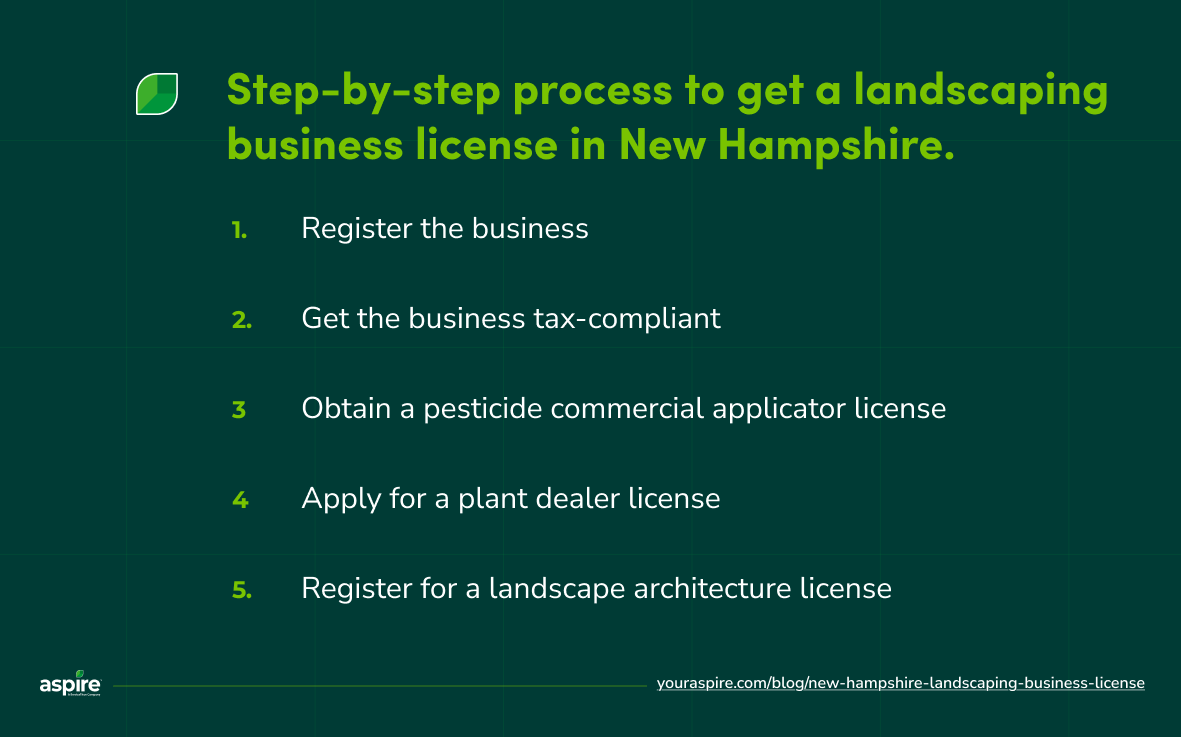
1. Register your business
New businesses need to register with the New Hampshire Secretary of State before applying for other licenses.
This can be done online or by downloading and completing a PDF form. But first, you need to decide on an entity type for your landscape business.
If you want to operate under your name, i.e., as a sole proprietorship, you don’t need to register the business. Otherwise, you do need to file a trade name.
For other entity types, such as an LLC, corporation, or S-Corp, you also need to register the business. Visit this page to choose your preferred entity and register online or on paper.
You then need to file an annual report with the SOS to keep your business in good standing.
2. Get your business tax-compliant
To stay compliant, your landscaping business needs to register with the IRS and get a Federal Employer Identification Number (FEIN). This enables you to open a business bank account, hire employees, and pay taxes.
After that, you can visit New Hampshire’s Department of Revenue Administration to get a tax license.
Here’s a breakdown of how to stay tax-compliant:
Register for the FEIN on the IRS website.
Visit the DOR website or contact the department to learn more about state taxes.
For additional information on state taxes, visit this page.
3. Obtain a commercial pesticide applicator license
You need to get supervisory and operational licenses to apply pesticides on a commercial basis.
Here’s how to get supervisory licensing:
Fill out and submit this resume form provided by the Division of Pesticide Control. Share information regarding your experience in the pesticide licensing category you want.
Wait for the department to review the information and confirm that your background and experience meet the criteria specified in the Administrative Rules.
If your resume is accepted, you’ll receive an acceptance letter with the application forms and instructions needed to complete the process.
After that, proceed to schedule a written examination administered by the Division. It costs $15 per exam. Once the written test is done, you will be scheduled for an oral examination administered by a three-person panel.
To register the business, you will need to submit the insurance certificates and the firm registration form. When you’re done with the examinations and have fulfilled all these additional requirements, a license will be issued to you, and the business will be registered.
After you secure the supervisory license and register the firm, you can obtain operational-level licensing for your workers in any or all of the categories the business is authorized to operate in.
This means they take and pass exams, which are administered each week. They need to obtain study materials in preparation for the examinations.
And then, you, as the licensed supervisor, must countersign operational license applications.
Find more information on pesticide licensing from the Division of Pesticide Control.
4. Apply for a plant dealer license
The plant dealer license lets you sell nursery stock to clients. Here’s how to apply for one.
Create your business within the Core LCP system. Set up your account for license application, inspections, and other tasks.
Once you’re logged into your account, complete the Plant Dealer Application Form. You’ll also find a renewal application form available during the renewal period.
After submitting your application forms, an inspector will review them and issue an invoice for you to pay.
Once the invoice is paid, your license will be emailed to you and available in the portal.
5. Apply for a landscape architect license
To become a licensed landscape architect in New Hampshire, you need to complete a universal application for licensure and then apply for the license by filling out and submitting this form.
You’ll need to show you have work experience in the field and provide references who can attest to that.
You also need to include official transcripts from the college or university you attended.
How much does a New Hampshire landscaping business license cost?
Wondering what it would cost to get the licenses your landscaping business may need to operate in NH?
Here’s an overview of the associated fees:
General business registration fees
Name reservation: $15-$30
Trade names (sole proprietorship): $50
Business filing: $100 (LLC and corporations)
Annual reporting: $100; late fee: $50
Pesticide business license
Exam fee: $15 per test
Licensing fee: $60
Plant dealer license
On request
Landscape architect license
Application fee: $176
License renewal fee: $176
What are the most common mistakes to avoid when getting a license?
Getting a landscaping license in New Hampshire will be much easier if you avoid the following mistakes:
1. Mixing up business registrations
In New Hampshire, businesses that require a plant dealer license must register with the Division of Plant Industry. This process is different from registering your business with the Secretary of State. Mixing them up can delay your timeline and may keep you from getting licensed.
The correct process is to register your business with the SOS and then with the Division of Plant Industry.
2. Applying pesticides without an operational license
To apply pesticides on client properties in New Hampshire, you need a supervisory license and an operational license.
Having a supervisory license without an operational license won’t let you be productive or scale the business comfortably.
The supervisor must be present at job sites at all times, as the law requires that at least one member of each crew applying pesticides hold an operational license.
So, plan to secure both licenses to ensure a smooth workflow for your landscaping business.
3. Forgetting to check local licenses
While there’s no statewide landscaping license in New Hampshire, some cities have their own requirements regarding landscaping operations.
Before launching, visit the city office or website to review what you need to run your landscaping business.
Failing to do so risks a fine or other penalty for taking on projects without the required approval.
How Aspire helps landscaping businesses stay organized & compliant
After securing the licenses your landscaping business needs and starting work, you need a system to manage all aspects of the operation and streamline your workflow.
A tool like Aspire provides features that bring order to your landscaping business, so you can focus on growth.
Here’s a glimpse into how Aspire helps you stay organized:
Contract & proposal management
Aspire has an estimation feature that makes it easy for you to create and send proposals to clients without switching between platforms.
Instead of requiring you to visit clients’ properties to take manual measurements and calculate material quantities and project costs, Aspire integrates with PropertyIntel to measure sites digitally and pull accurate pricing from a preset catalog.
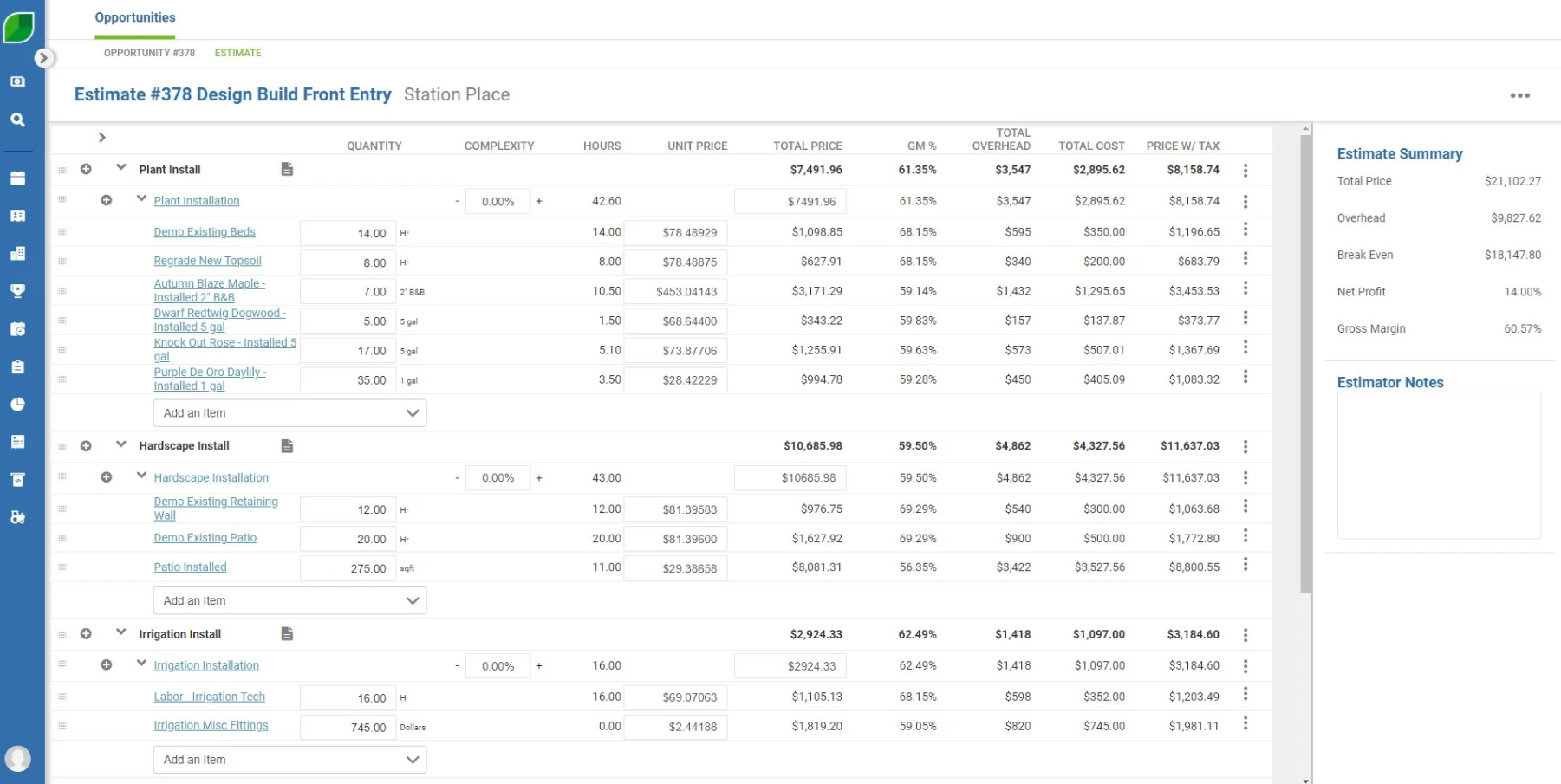
With pre-built proposal templates, you can assemble clear, comprehensive proposals by adding services, pricing, and desired profit margins, with markups and costs from your catalog automatically factored in. This helps reduce errors, save time, and present polished proposals to clients faster.
Once you’re done, the proposal can be sent to clients for approval via email or through Aspire’s client portal.
Invoicing & payment processing
Requesting payments and tracking outstanding invoices are taxing and important responsibilities for businesses that want to scale.
For a landscaping business, it can be more chaotic because you’re always in the field with little time to create, send, and track invoices.
However, with Aspire’s invoicing software, creating invoices is simplified. You won’t have to go the manual route, designing one from scratch for each client.
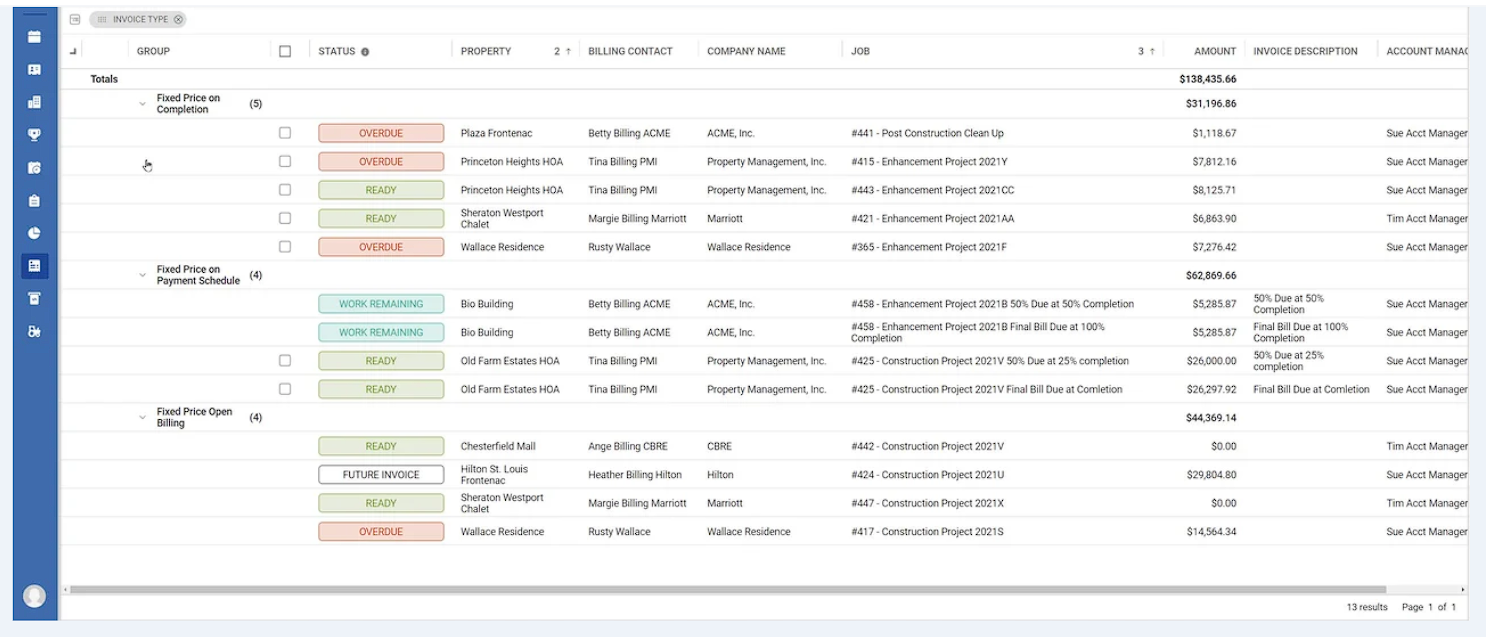
Instead, you can create and send invoices from projects and pull information from an existing estimate. With Aspire, all the data needed for the invoice is in the system, ensuring a new one is ready in minutes.
There’s an invoicing assistant that helps you track the status of each invoice, so you know when they’re paid, pending, or overdue. You can also receive payment by credit card, check, or debit card.
Business reporting & documentation
As you probably know, landscaping is a seasonal business, and knowing your most profitable services can help refine your business offer. This helps you identify which services to focus on, which licenses to renew, and which skills to hire for.
But how do you know which landscaping services are the most profitable or most in demand?
Aspire’s reporting feature lets you monitor everything that happens in your business, making it easy to pull the information you need anytime.
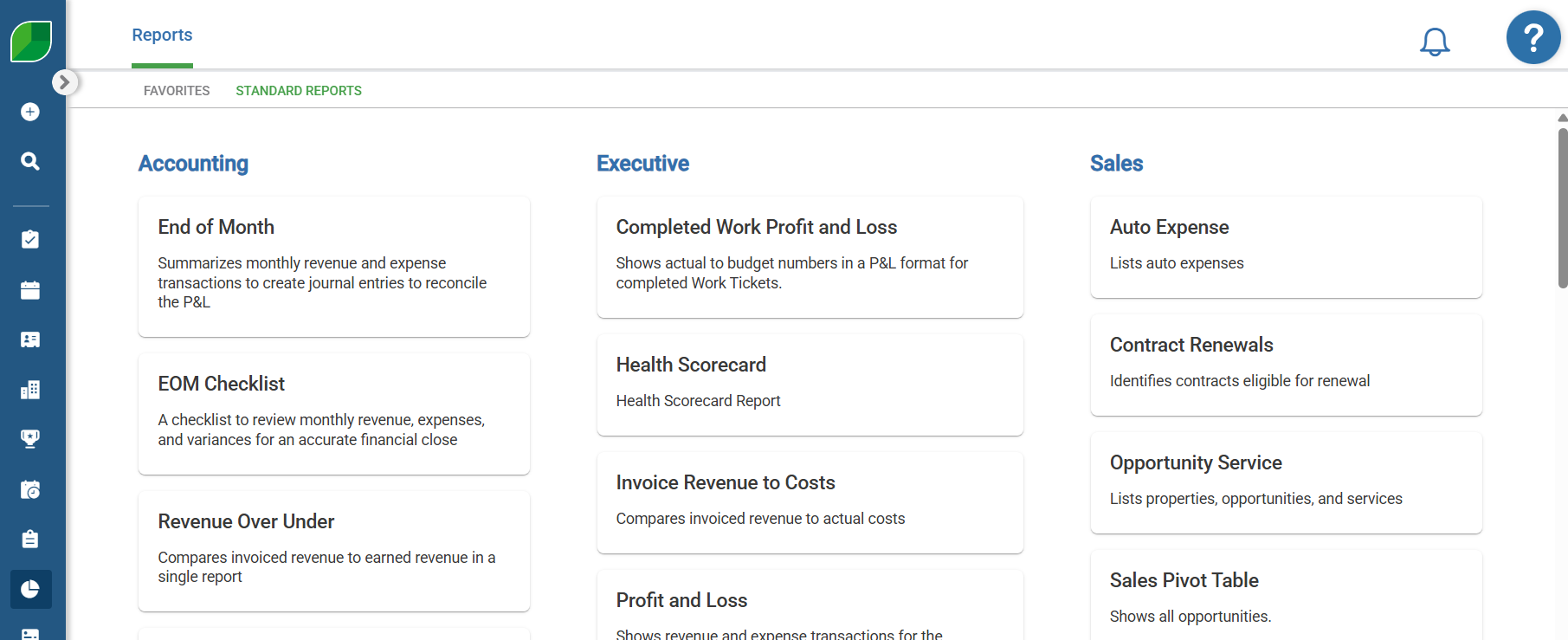
It provides insights into every aspect of your landscaping operation, including field workers’ productivity, new leads, existing contracts, invoiced revenue relative to earned revenue, business expenses, and opportunities.
With this feature, it’s like going through an online database for your landscaping operation. This ensures you have all the information needed to make the right decisions.
Scheduling & job management
Keeping things organized includes having a structure for scheduling jobs, assigning projects to teams, and keeping things on track.
Aspire makes this simple with its scheduling feature. It allows you to manage projects once they’re approved by clients, ensuring a smooth workflow.
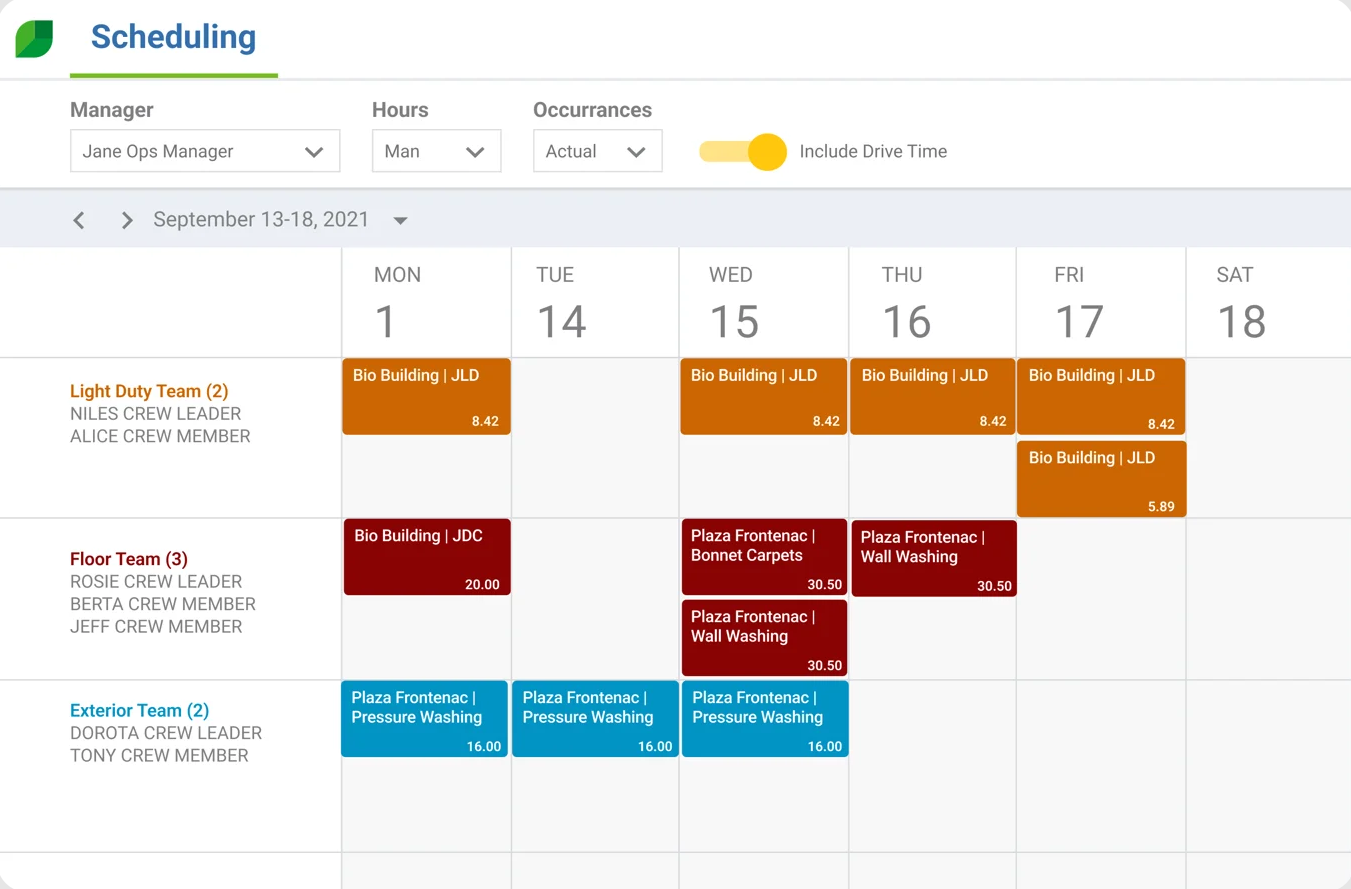
You can set the project's start and end dates using your current schedule as a baseline and assign crews to the project.
Plus, Aspire lets you modify the schedule as needed, design checklists for field crews to follow, optimize drive time, and monitor projects’ progress in real time.
This way, you can avoid double-booking, keep clients happy, manage resources efficiently, and maintain organized project workflows.
Over to you
Need to start your landscaping business in New Hampshire fast?
First, you need to register your business with the state. Then, apply for licenses depending on the landscaping services you intend to offer.
Sounds pretty straightforward, yes?
In addition to the licenses, your landscaping business will benefit from an organized system that keeps operations running smoothly and helps you grow.
Aspire’s landscaping management software comes with all the features your business needs to stay organized. It helps you prepare proposals, send invoices, schedule and manage jobs, monitor job progress, and get detailed business reports.
Book a free demo to see how Aspire can transform and improve your landscaping business.
Disclaimer
This article is for informational purposes only and should not be considered legal or financial advice. While every care was taken to use official sources, you should always verify requirements with the New Hampshire government's websites.












 866-727-7473
 Schedule Demo
 390 S Woods Mill Rd #300 Chesterfield, MO 63017


