
Table of Contents
Table of Contents
- What types of landscaping business licenses and permits are there in Arizona?
- General business license
- Landscaping contractor license
- Transaction privilege tax (TPT) license
- Pesticide applicator license
- Step-by-step process to get a landscaping business license in Arizona
- 1. Choose a business structure
- 2. Select your landscaping business license classification
- 3. Pass the required exams
- 4. Complete background checks and submit IDs
- 5. Obtain a surety bond
- 6. Pay the required fees and complete the application
- 7. Monitor your application
- 8. Receive the license
- How much does an Arizona landscaping business license cost?
- What are the most common mistakes to avoid when getting a license?
- 1. Incomplete and incorrect applications
- 2. Skipping tax and insurance steps
- 3. Failing to determine the right license classification you need
- How Aspire helps landscaping businesses stay organized and compliant
- Contract and proposal management
- Invoicing and payment processing
- Pesticide compliance tracking
- Business reporting and documentation
- Over to you
- Disclaimer
Do you need a license to start a landscaping business in Arizona?
Landscapers do not typically require a license to start their business in the Grand Canyon State. However, an Arizona Registrar of Contractors’ license is required if your services include construction work totaling $1,000 or more in labor and materials, and a permit is required to execute the job.
You’re exempt from a license if your scope only covers lawn, garden, shrub, and tree maintenance.
A landscaper might also be exempt from getting a license if the words ‘not a licensed contractor’ are included in every advertisement. But that might mean little to no business for you.
Simply put, you need a license for construction projects worth $1k or more.
What types of landscaping business licenses and permits are there in Arizona?
To legally operate a landscaping business in the Copper State, here are the licenses you’ll need:
General business license
Arizona does not require a statewide general business license. However, many cities and towns require a local business license or registration. You’ll need to check with your city or county (e.g., Phoenix, Tucson, Mesa) to see if a license is required to operate in that area.
Keep in mind that there is no universal state license that exempts you from local licensing.
And if you operate the landscaping business under a name other than your legal name, it must be registered (i.e., ‘Doing Business As…’ or ‘DBA’) with the Arizona Secretary of State.
Landscaping contractor license
If you're a landscaper looking to take on projects worth $1,000 or more, such as installing or removing sprinkler systems, irrigation, or paving, you will need a contractor license.
You can get this license from the Arizona Registrar of Contractors, and it comes in three categories:
R-21: For residential hardscaping and irrigation systems.
C-21: For commercial hardscaping and irrigation systems.
CR-21: A combo license for both residential and commercial work.
To snag this permit, you'll need to ace both the Statutes and Rules exam (SRE) and a trade-specific exam.
Transaction privilege tax (TPT) license
Want to sell goods such as plant materials, sod, and fertilizers?
You will need this permit to do that legally. Arizona’s TPT is a gross receipts tax levied on businesses. While it’s not a valid sales tax, it does cover sales of tangible goods.
It’s also required if you perform contract-type services, such as installations, hardscape, or irrigation, because this is classified as a taxable contracting activity.
The Arizona Department of Revenue issues the TPT license, which is required even if your city does not require a business license.
Pesticide applicator license
This is compulsory if you offer application services for herbicides, fertilizers, or insecticides. It’s also necessary when using restricted-use products.
The Arizona Department of Agriculture issues the pesticide applicator license, and it requires that applicants have:
At least two years of pest control experience
Previously held an applicator certification for at least two out of the last 10 years
Good moral records and are open to background checks
You also need to pass the core exam and one category exam to get this license.
Step-by-step process to get a landscaping business license in Arizona
Now that you’re all caught up with the different permits the business needs, here’s how to secure a business license in Arizona and kickstart your company.

1. Choose a business structure
First, select the proper legal structure for your business. Depending on your vision for the company, consider whether forming a sole proprietorship, an LLC, or a corporation is ideal for your plans.
If you want to go solo, a sole proprietorship is a good fit. You may have to file a DBA name as required by law.
However, a corporation or LLC is better if you want to separate yourself from the business and partner with others. This option protects you from liability and affects your tax liability, as you could benefit from various tax cuts and reductions.
2. Select your landscaping business license classification
Depending on their target audience, Arizona landscapers can choose from three types of licenses.
Want to focus on residential clients? The R-21 classification is the best option.
If your business is strictly commercial, you can use the C-21 classification.
However, if you want to serve both residential and commercial clients, you need the CR-21 dual license.
To qualify for any of them:
Designate a qualifying party with at least four years of experience
Pass the SRE and trade exam
3. Pass the required exams
Landscapers must pass the SRE and trade exam by 70% or more to get a license.
The SRE course covers Title 32, Chapter 10, of the Arizona Revised Statutes and Title 4, Chapter 9, of the Arizona Administrative Code. The exam itself costs $54, and you have a single attempt to pass it, taking it via GMetrix.
The trade exam, on the other hand, typically covers landscaping trade questions and is taken via the PSI platform. It costs $66 for one examination and $116 for two.
You only have three attempts to pass the trade exam. If you fail, you have to wait 30 days to retake each time. And after the fourth or subsequent times, you have to wait 90 days to retake the exam.
4. Complete background checks and submit IDs
The Arizona Registrar of Contractors (ROC) requires applicants and the qualifying party to submit their fingerprints and be willing to undergo a criminal background check.
You also need to submit government-issued IDs along with your application.
This data is crucial, as it allows the agency to verify that applicants are not currently on probation or parole and are 18 or older, in accordance with its requirements.
5. Obtain a surety bond
Next, get a contractor bond to protect your clients, business, and the state. The bond ensures clients are compensated if you or your employees do substandard work, to improve trust and accountability.
And it shields you from trouble when incidents arise, covering claims without risking the business or your personal finances.
It’s a requirement of the ROC, and without it, the Registrar won’t issue your landscaping license.
6. Pay the required fees and complete the application
Landscapers need to pay between $720 and $850 in fees to get their license from the ROC.
After that, visit the ROC Online Customer Portal or mail the required documents (e.g., exam results, bond, felony disclosure, IDs, and background checks) to complete the application.
7. Monitor your application
ROC will review your application and notify you if anything is missing. Depending on the application’s accuracy and completeness, this can take a few weeks to a few months.
8. Receive the license
Once the review is done, the license will be issued, and you will become legally permitted to perform landscaping operations in Arizona.
After receiving the license, your responsibilities include renewing the license on time, filing taxes, and updating your business information in accordance with Arizona state and local laws.
How much does an Arizona landscaping business license cost?
If you’re ready to secure the landscaping business permit, here’s how much you can expect to spend in Arizona:
General business license fees
Costs $20-$1,000+ per annum, depending on the city
Requires you to operate in a specific region legally
Annual renewal
Contact the local government office to confirm the accurate price
Landscaping contractor license
Special Commercial and Residential License (CR-21):
Application fee: $100
License fee: $380
Recovery fund assessment: $370
Total: $850
Commercial License (C-21):
Application fee: $100
License fee: $480
Total: $580
Residential License (R-21):
Application fee: $80
License fee: $270
Recovery fund assessment: $370
Total: $720
Examinations
SRE exam: $54 for a single attempt
Trade exam: $66 per examination and $116 for two attempts
New transaction privilege tax (TPT) license: $12 and applicable city fees
Pesticide applicator license
Individual applicator, covering the person applying the pesticides: $50 per person.
Business applicator license required to offer the service: $150 and $50 for the designated certified applicator.
Core exam costs: $75.
Each category exam: $50.
What are the most common mistakes to avoid when getting a license?
In Arizona, different cities have different rules for getting a license. A simple misstep can cost you time and money, putting your business at risk.
To help you stay clear of errors, here are common mistakes business owners make when trying to secure a license and how to avoid them:
1. Incomplete and incorrect applications
Forgetting to include key documents such as bonds, IDs, business formation documents, or proof of insurance in the application can delay the review.
Failing to pay the correct application and license fees or miscalculating bond fees can also result in extended reviews.
To avoid sending incomplete or incorrect applications, leverage the Arizona Registrar of Contractors’ checklist to confirm you have everything needed to apply.
2. Skipping tax and insurance steps
Aside from bonds, landscaping companies need general business insurance and workers’ compensation insurance. This legally safeguards the company, clients, and workers from incidents. Forgetting to secure this insurance exposes you to huge expenses if there’s litigation.
Remember that Arizona requires a specific tax license for landscaping products and services; operating without one can lead to fines and back payments.
One of the best ways to mitigate this is to partner with an agent or an experienced landscaper who understands the process and can walk you through it.
3. Failing to determine the right license classification you need
With license codes like CR-21, C-21, or R-21, you can get confused about which one you need.
If you take on a residential project with only a commercial contractor license (C-21) you may face fines or be shut down.
It’s important you’re clear about your business’s niche in advance so you know which license classification is appropriate.
How Aspire helps landscaping businesses stay organized and compliant
While you wait for your business license to be issued, have you considered how you will manage your landscaping company and maintain a streamlined workflow?
It is challenging to run a landscaping business using spreadsheets and multiple separate apps. Not only will you struggle to navigate the different tools, but accessing data in real time to make informed decisions will also prove quite tricky.
The way out?
Invest in a landscaping management tool, such as Aspire, to centralize operations.
Here’s how Aspire empowers you to stay organized and manage your business more efficiently:
Contract and proposal management
Simplify how you bid on jobs and close deals with Aspire’s contract feature. You can access customizable, professional-looking proposal templates to send to customers.
Clients can easily understand the project's scope and associated costs, and sign off on the contract without leaving Aspire. To ensure compliance, you can review contracts or proposals to determine whether any require special permits.
Invoicing and payment processing
When it’s time to make and manage payments, count on Aspire to simplify billing for your landscaping services with its invoicing feature.
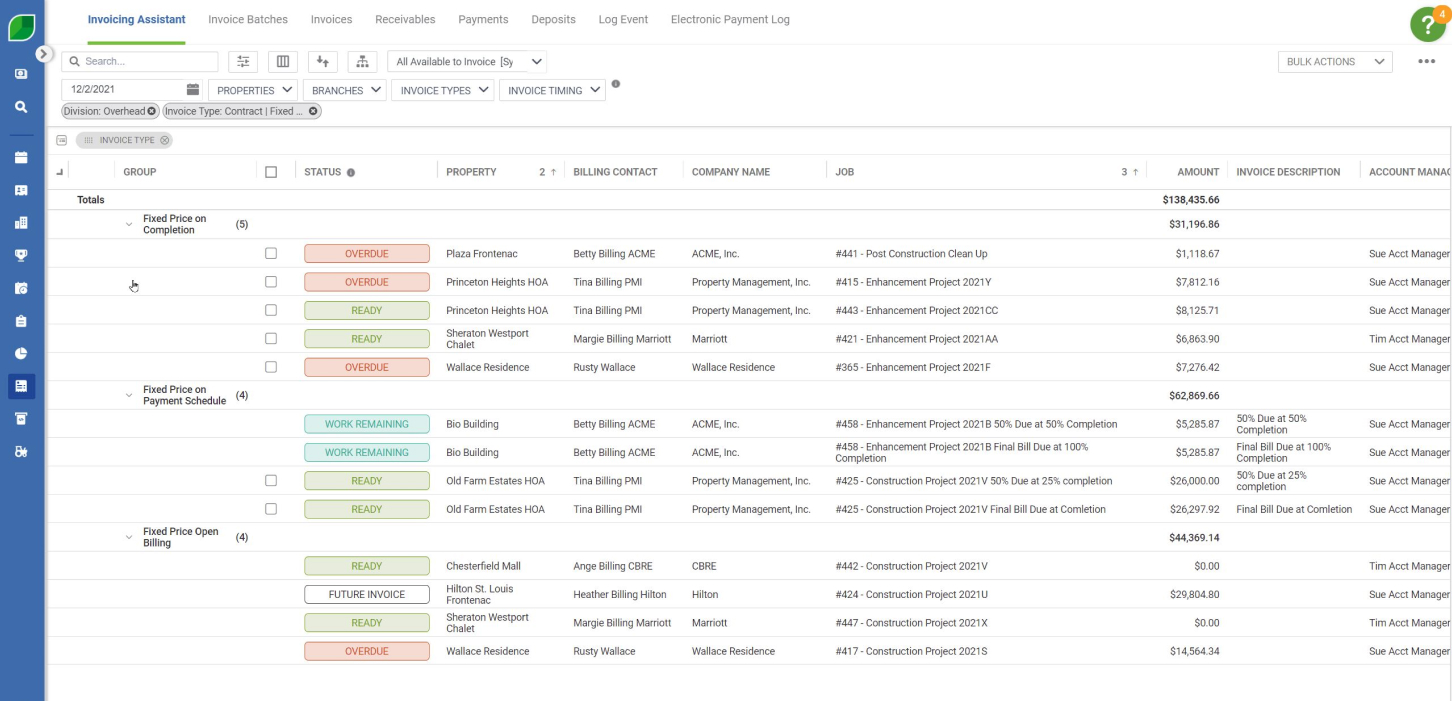
Once clients have accepted your proposal, you can send them an invoice from Aspire and receive payments directly on the platform.
Additionally, you can track every bill associated with the business, from what’s outstanding to paid invoices, and other financial data.
Pesticide compliance tracking
Want to take on pesticide application projects? You’ll need a license to do that, and Aspire lets you monitor valid licenses and certifications for employees or the company.
With such data at your fingertips, you know which projects the company can undertake and which employee is right for the job. This way, you can be sure you’re always compliant with the Office of Pest Management’s requirements.
Business reporting and documentation
Aspire’s reporting feature provides a direct overview of information such as client retention rate, total cash inflow and outflow, work inventory, current losses, and direct costs.
Think of it as a meter that helps you read whether the business is profitable or running at a loss.
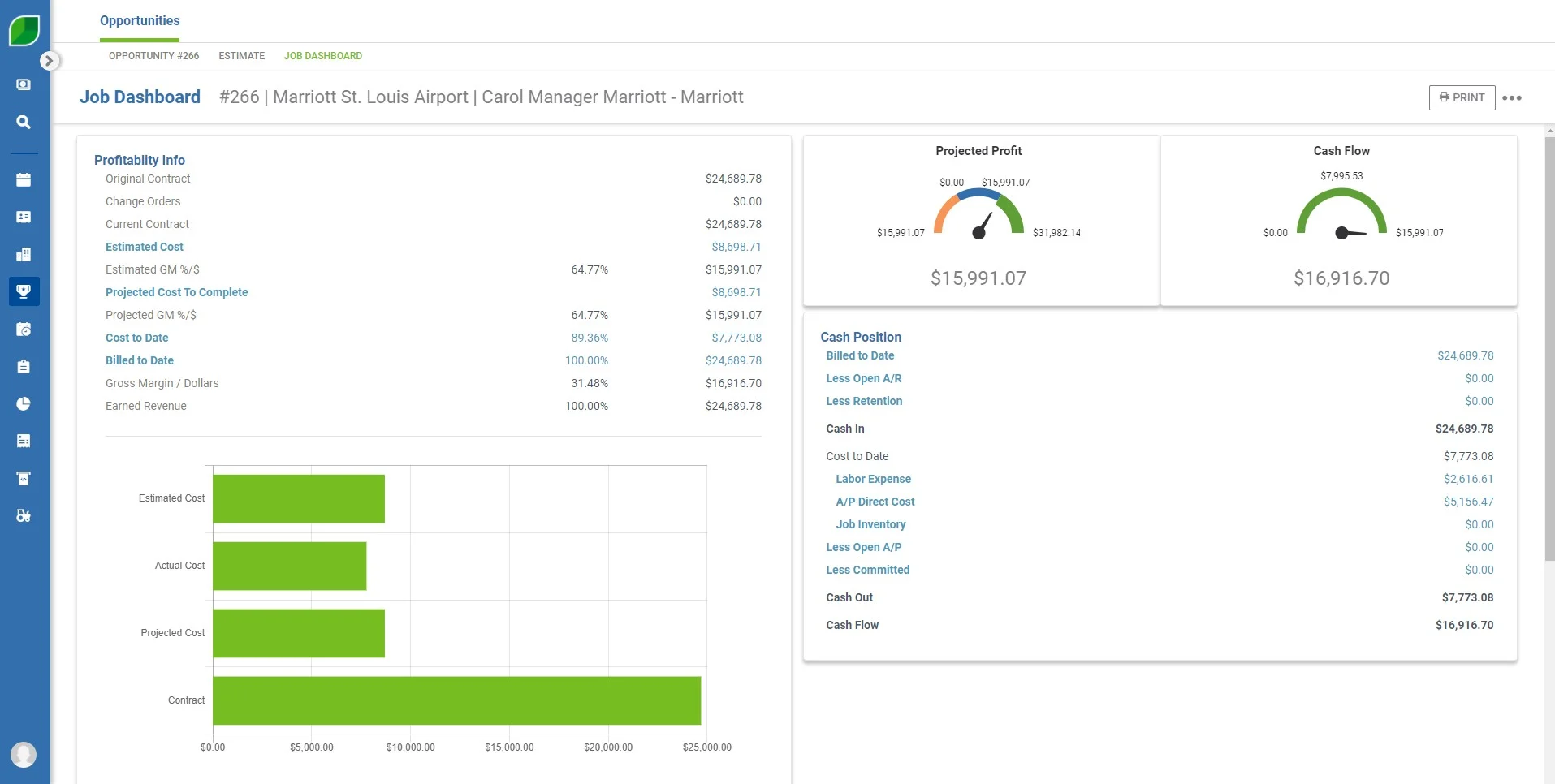
It lets you track additional data, such as:
Labor and material costs
Employee productivity
Tax filings
Project profit, and more
Over to you
This guide outlines the permits required to start a landscaping business in Arizona.
Take it a step further by investing in Aspire, a landscape management tool that lets you take control of the business, maintain strong client relationships, and grow the company.
It literally does everything—creating proposals, receiving payments, following up, scheduling and assigning projects, monitoring employees’ performance, managing projects, and generating reports.
Book a demo to get detailed insights into how Aspire helps landscaping businesses manage operations and scale up.
Disclaimer
This article is for informational purposes only and should not be considered legal or financial advice. While every care was taken to use official sources, you should always verify landscaping business license requirements on the Arizona government websites.









 866-727-7473
 Schedule Demo
 390 S Woods Mill Rd #300 Chesterfield, MO 63017


