
Financial due diligence tells you what a landscape company earned.
Operational due diligence tells you whether those earnings are repeatable and at what cost.
Most acquirers skip the ops audit, then spend the first year post-close discovering what it would have revealed in two weeks.
The P&L looked clean. Then you ran the branch for 90 days.
You acquired a $5M landscape company in March.
The seller's P&L shows an EBITDA of 14%.
Financial due diligence confirmed the numbers, the quality of earnings report validated revenue recognition, and the accountants signed off on the margin calculation. The deal closes, and you project $700K in annual EBITDA rolling into your platform.
Ninety days later, you discover the operational reality that financial due diligence (DD) missed entirely.
Crews are averaging 22% more hours than estimates:
The estimator built bids using 2019 production rates that were never updated as crew composition changed, properties evolved, and scope expanded.
Jobs the seller reported as profitable generated that profit only because actual labor costs were never compared to estimated hours at the job level.
The estimator hasn't updated production rates in three years:
Estimates reflect assumptions about crew efficiency, equipment capability, and service scope that drifted away from reality as the business evolved.
Nobody connected the estimating to actual production data because the systems don't talk to each other.
The owner personally managed the top eight accounts representing $2.1M in annual revenue:
None of those relationships have written contracts. They're handshake agreements renewed annually through personal calls the departing owner made directly to property managers.
The institutional knowledge about client preferences, service expectations, and relationship history lives entirely in the owner's head and walks out the door at close.
Real EBITDA is closer to 9%, not 14%:
The 5-point gap on $5M is $250K in annual margin you paid a multiple on but will never see.
The tech tax on EBITDA that operational inefficiency creates was invisible in financial statements, but becomes painfully obvious once you take operational control. Financial DD confirmed the company's historical earnings.
Operational due diligence would have revealed whether those earnings were repeatable under new ownership.
The Four Pillars of Ops Due Diligence for Landscape Acquisitions
Provide a clear diagnostic framework that acquirers can execute in two weeks to reveal operational reality hidden beneath financial statements.
Pillar 1: Estimating integrity
How does the target company estimate jobs?
Are production rates based on actual data or assumptions from five years ago that nobody validated, as crew composition changed and equipment evolved?
Pull 10 completed jobs and compare estimated versus actual hours, materials consumption, and subcontractor costs at the task level.
If the variance exceeds 10% consistently, their margin is fiction built on estimating assumptions that drift from reality, and you're about to inherit the systematic underpricing that legacy inaccuracy creates.
Request the production-rate library they use for estimating and cross-reference it against actual job completion data from the past 12 months.
If they can't produce comparable datasets, that's the answer.
Pillar 2: Labor and crew economics
What's the real labor burden rate?
Many smaller operators undercount total labor costs, missing workers' comp true-ups, vehicle allocation, equipment depreciation, and benefits that only surface during annual reconciliation.
Ask for crew utilization data showing billable hours versus total paid hours across all crews for the trailing 12 months.
If they can't produce it, that indicates operational data quality problems that extend beyond labor tracking.
A company running at 55% crew utilization, versus your 72% platform standard, has a $300K-plus labor efficiency correction ahead on a $5M book. That gap won't close without systematic time tracking and production management that the seller doesn't currently have.
Pillar 3: Client concentration and contract structure
What percentage of revenue comes from the top five clients?
Are those relationships contractual with written service agreements, or are they handshake arrangements renewed annually through personal relationships that the departing owner manages?
If one property manager represents 30% of revenue and their contract is a verbal agreement with the selling owner, that's $1.5M in revenue that could walk at renewal when the relationship transfers.
Factor the client retention risk into your valuation model and your integration planning.
Request copies of the top 10 client contracts and interview the account managers who service them to understand relationship depth, property manager expectations, and whether institutional knowledge exists beyond the owner's personal relationships.
Pillar 4: Systems and data quality
Can the target produce a job profitability report by service line within 48 hours?
If the answer involves Excel exports, QuickBooks reconciliation, and a week of manual data compilation, their operational data infrastructure can't support the reporting cadence your platform requires for real-time margin visibility and variance management.
That's not necessarily a dealbreaker, but it's an integration cost you need to model into the first-year budget because system migration and data unification will take longer and cost more than financial DD revealed.

What This Looks Like in Aspire
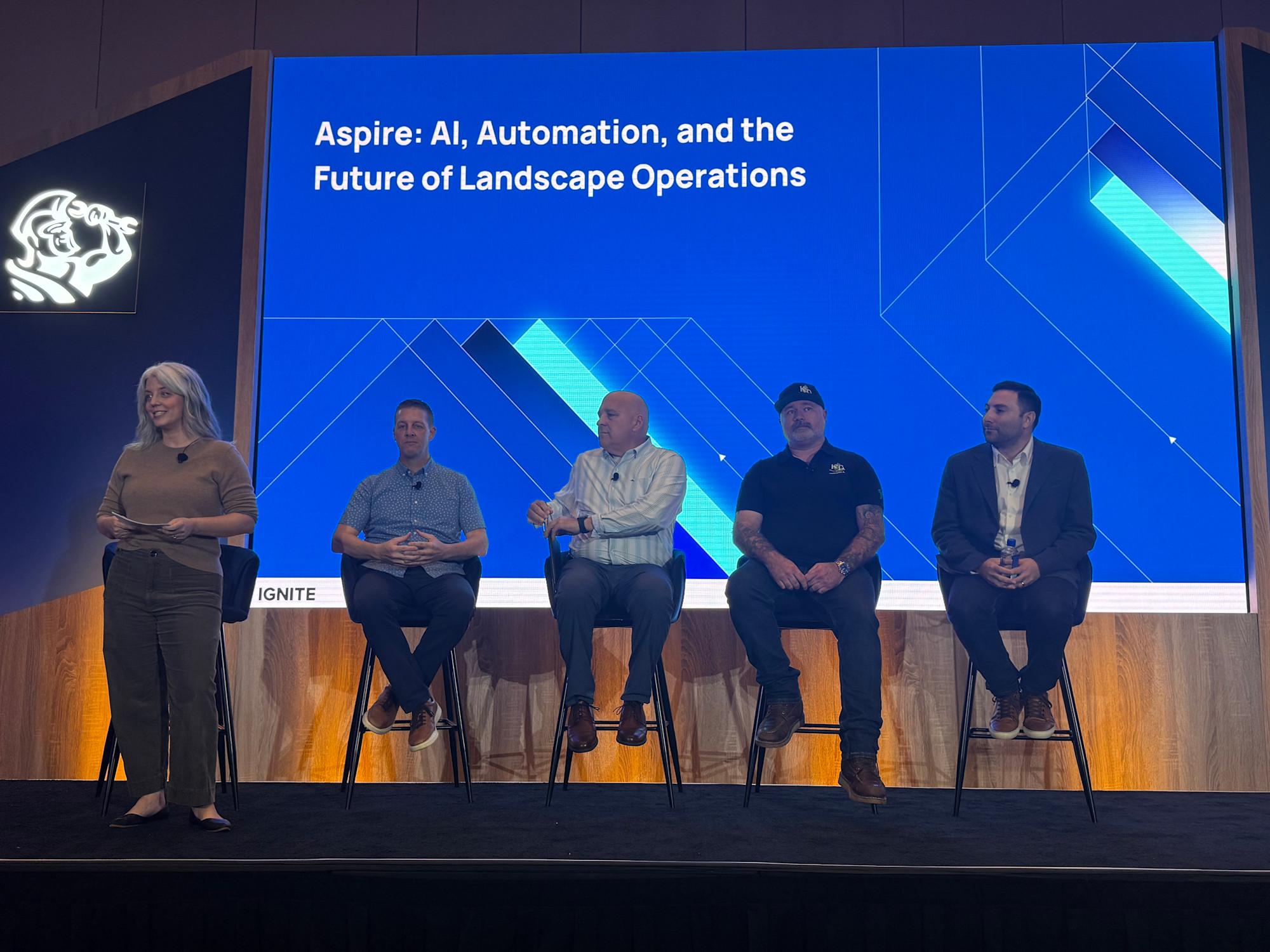
Aspire validates operational assumptions during integration and reveals the truth that due diligence should have uncovered.
Post-close, Aspire's integrated estimating, time tracking, and job costing workflows reveal the operational truth within the first reporting cycle:
Actual versus estimated hours by job surface immediately once crews start tracking time through the platform instead of paper timesheets or informal logging.
The estimating variance that financial DD missed becomes visible in the first month of consolidated reporting, when job costing aligns with actual labor consumption.
Margin by service line gets calculated using your cost allocation methodology, not the seller's legacy assumptions, validating or correcting what due diligence represented.
Production-rate libraries and variance dashboards give the acquiring team immediate visibility into estimating accuracy, crew utilization, and margin by service line across the acquired branch:
Compare the seller's claimed production rates against actual crew performance data from the first 30 days under unified systems.
Crew utilization calculations automatically show billable hours versus total paid hours, surfacing the labor efficiency gap that operational due diligence should have quantified before close.
Real-time job profitability reporting replaces the week-long Excel compilation process that prevented the seller from knowing which jobs actually made money.
The platform doesn't prevent bad acquisitions, but it accelerates the discovery of operational reality that determines whether the deal delivers projected returns or becomes an expensive lesson in why ops DD matters.
Stop Buying Rearview Mirrors
Financial due diligence confirms what a landscape company has earned historically.
Operational due diligence reveals whether those earnings are repeatable under new ownership and what it will cost to achieve the margin profile the deal model assumes.
Your next Letter of Intent should include an ops due diligence workstream with the same rigor as financial DD.
The best acquirers don't discover operational reality 90 days post-close.
They engineer due diligence processes that reveal margin sustainability, labor efficiency, and data infrastructure quality before the deal closes, and they adjust valuation or integration planning accordingly.
The difference between acquisitions that deliver projected returns and acquisitions that destroy value often comes down to what ops DD would have revealed in two weeks if anyone had bothered to ask the questions.
Book a demo to see how Aspire helps acquirers validate operational performance from day one.





 866-727-7473
 Schedule Demo
 390 S Woods Mill Rd #300 Chesterfield, MO 63017


