Table of Contents
Table of Contents
- Do you need a license to start a landscaping business in Mississippi?
- What are the types of landscaping business licenses & permits in Mississippi?
- Step-by-step process to get a landscaping business license in Mississippi
- How much does a Mississippi landscaping business license cost?
- What are the most common mistakes to avoid when getting a license?
- How Aspire helps landscaping businesses stay organized & compliant
- Over to you
- Disclaimer
You’re ready to start your landscaping business in Mississippi, but the licensing process stops you. There’s no single license to apply for, and the requirements are scattered across multiple state agencies, local offices, and regulatory bodies.
As a new landscaping business owner, that fragmented system makes it difficult to know what applies to you before you take on your first client.
This guide covers everything you need:
Whether Mississippi requires a landscaping license
The types of licenses and permits that apply to your services
A step-by-step process to get licensed and registered
How much a Mississippi landscaping business license costs
Common mistakes to avoid when getting licensed
Let’s get to it.
Do you need a license to start a landscaping business in Mississippi?
Mississippi has no single statewide landscaping license. However, that does not mean you can operate without credentials.
Starting a landscaping business in Mississippi requires:
Registering your business entity with the Mississippi Secretary of State
Obtaining a local privilege license from your city or county
Securing specialized state-issued credentials based on the services you offer
The specific licenses you need depend entirely on what your business does.
Basic lawn maintenance services, such as grass mowing, do not require a state-issued license. However, once your services expand into planting, grading, chemical application, tree work, or large-scale construction, you will need additional permits from multiple state agencies.
Read on for the breakdown of every license and permit that applies to Mississippi landscaping businesses.
What are the types of landscaping business licenses & permits in Mississippi?
Mississippi landscaping businesses deal with licensing across multiple agencies and jurisdictions. Here’s a breakdown of every license and permit category that applies:
General business license
Every landscaping business in Mississippi needs basic registrations before pursuing any specialized license.
This includes:
Business entity registration with the Mississippi Secretary of State. LLCs, corporations, and partnerships must file formation documents before operating legally.
Employer Identification Number (EIN) from the IRS, required to hire employees, open a business bank account, and file payroll taxes.
Mississippi state tax ID from the Mississippi Department of Revenue, required if your business sells taxable goods or services.
Privilege license from your local city or county government, required before you can operate in that jurisdiction. For example, Jackson, Gulfport, and Hattiesburg each have different licensing and permit requirements. One city may require a local business privilege license, while another may also require zoning approval.
Landscaping contractor license
Here are the required contractor licenses depending on the scope of your service and landscaping projects:
Landscape Horticulturist License: The Mississippi Department of Agriculture and Commerce (MDAC) issues this license to landscapers who plant, transplant, or install landscape materials at residential, commercial, or institutional properties.
Without this license, you cannot legally advertise as a landscaper, solicit bids, enter contracts, or collect payment for planting services.
Mississippi State Board of Contractors (MSBOC) License: Required for commercial landscaping, grading, or beautification projects exceeding $50,000 or residential projects exceeding $10,000. On commercial sites, this classification covers hardscaping (retaining walls, walks), drainage, and grading work.
Specialized licenses
Beyond the core contractor licenses, several additional state-issued licenses apply depending on your services:
Commercial Pesticide Applicator License: The MDAC Bureau of Plant Industry issues this certificate to landscapers who apply pesticides, herbicides, or fertilizers for commercial purposes. In addition, you need to pass a Core exam and at least one category-specific exam.
Tree Surgery License: Required for tree pruning, trimming, fertilizing, and removal beyond incidental landscape work. Issued by MDAC and requires passing an exam and carrying liability insurance of at least $100,000.
Landscape Architect License: Required for businesses offering landscape design services with sealed plans. The Mississippi State Board of Architecture governs it.
Permits and local regulations
Local permit requirements in Mississippi vary by city and project type. Here are the common permits landscaping businesses need:
Building permits for structural landscape features like retaining walls, patios, and drainage systems.
MDEQ Construction Stormwater General Permits for projects that disturb the land. The Small Construction Permit covers 1 to less than 5 acres, while the Large Construction Permit handles projects 5 acres or larger.
Backflow prevention permits for irrigation systems connecting to the public water supply.
Zoning approvals for commercial landscaping projects in regulated areas.
Contact the city clerk’s office or local planning department in the city where you plan to operate before starting your business.
Now, let’s see exactly how to obtain these licenses and permits.
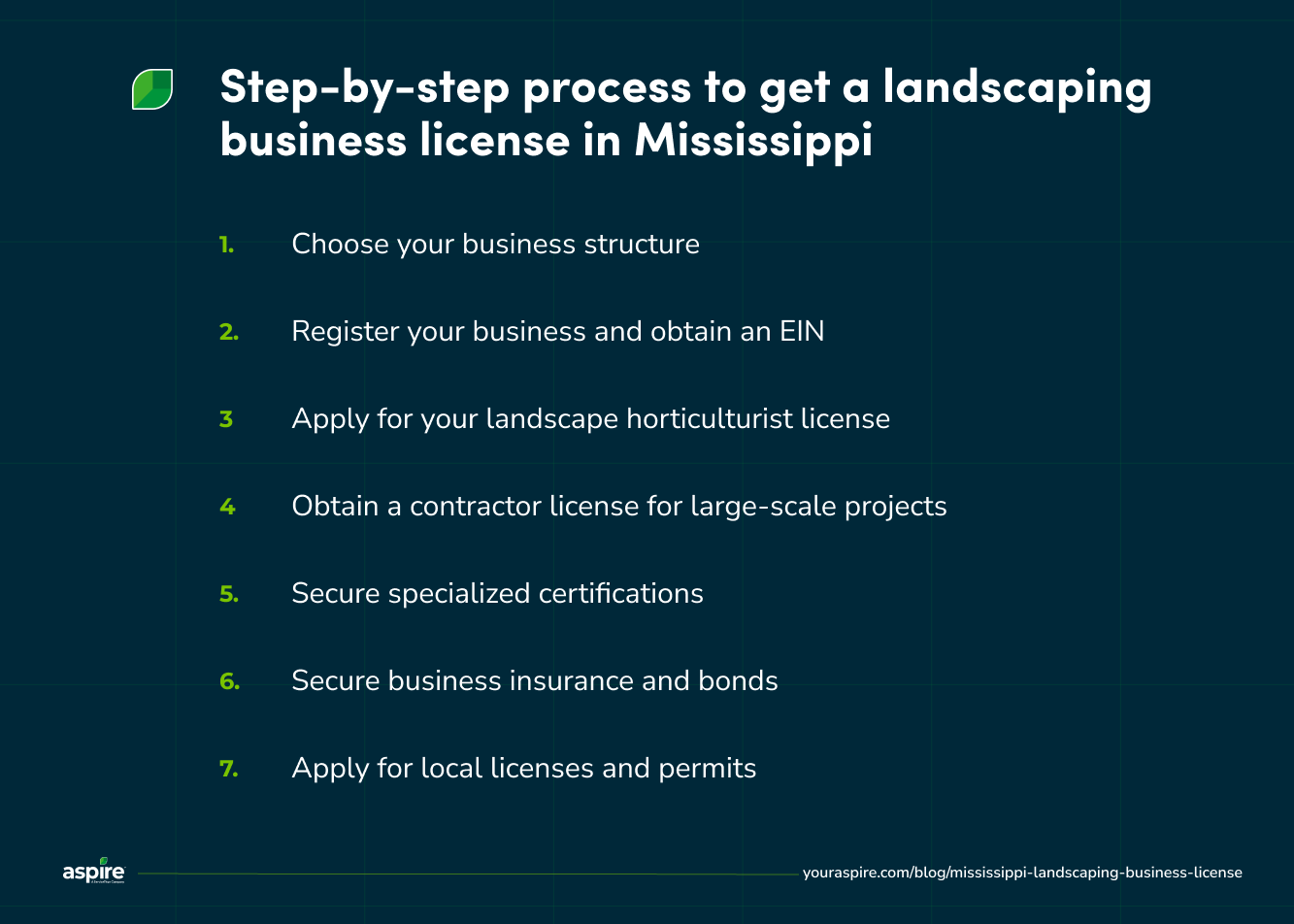
Step-by-step process to get a landscaping business license in Mississippi
Follow each step to avoid delays and missing licenses.
1. Choose your business structure
Your business structure determines your tax obligations, liability exposure, and administrative requirements. Before filing any paperwork, you should settle these issues.
The main options for a Mississippi landscaping business include:
Sole proprietorship: The simplest structure, requiring no formal filing but offering zero personal liability protection. If the business faces legal action, your personal assets are exposed.
LLC: Protects personal assets while keeping taxes straightforward. The most practical choice for small landscaping operators.
Partnership: Works well when launching with a co-owner, splitting responsibilities, profits, and liabilities between two or more people.
Corporation: Delivers the strongest liability protection but comes with more complex tax and reporting obligations. Best suited for businesses planning to scale significantly.
2. Register your business and obtain an EIN
Register your business with the Mississippi Secretary of State. LLCs file a Certificate of Formation while corporations file Articles of Incorporation.
Also, if you want to operate under a name different from your legal business name, register a DBA (Doing Business As) name with the Mississippi Secretary of State at the same time.
Next, apply for a Federal Employer Identification Number (EIN) through the IRS website. The application is free and takes about 15 minutes. You need an EIN to:
Hire employees
Open a business bank account
File payroll taxes
Finally, register with the Mississippi Department of Revenue for a state tax ID if your business sells taxable goods or services.
3. Apply for your landscape horticulturist license
Any business that plants, transplants, or installs landscape materials in Mississippi needs a Landscape Horticulturist License from the MDAC Bureau of Plant Industry.
Here’s how to get one:
Download and complete the License Exam Application from the MDAC website
Submit the application along with a $1,000 surety bond
Wait for written approval, which includes your exam location, date, and a list of recommended study materials
Pass the first part of the Landscape Horticulturist Exam, which tests your knowledge of plant materials used in the landscape (49 questions, 70% passing score)
Pass the second part of the exam, which tests your knowledge of horticultural practices and Mississippi’s Landscape Horticulturist regulations (80 multiple-choice questions, 70% passing score)
Receive your license approval from MDAC
If you fail the exams and want to retake them, you can submit the Exam Retake Application and pay the fees.
The exam is paper-based and administered on the second Tuesday of January, April, July, and October at Mississippi State University’s main campus in Starkville or directly at the Bureau of Plant Industry (BPI) office. The license is free to obtain but requires renewal every three years, accompanied by an updated surety bond.
The Landscape Horticulturist exam cannot be taken on a computer due to its testing format. So plan around the quarterly testing schedule.
4. Obtain a contractor license for large-scale projects
Landscaping projects that cross specific dollar thresholds require a separate license from the Mississippi State Board of Contractors (MSBOC):
Commercial projects exceeding $50,000
Residential projects exceeding $10,000
The MSBOC application process requires:
Passing the MSBOC trade exam for the Landscaping, Grading, and Beautification classification
Submitting a non-refundable application fee: $400 for commercial applications, $50 for residential applications
Providing proof of general liability insurance ($300,000 per occurrence, $600,000 aggregate for commercial projects)
Submitting a completed application with supporting financial documentation
MSBOC accepts checks and money orders for application fees but does not accept cash payments.
5. Secure specialized certifications
After getting the core licenses, apply for any additional state certifications your services require:
Commercial Pesticide Applicator License: Apply through the MDAC Bureau of Plant Industry. Pass the Core exam and at least one category-specific exam.
Tree Surgery License: Apply through MDAC. Requires passing the tree surgery exam and providing proof of liability insurance of at least $100,000.
Landscape Architect License: Apply through the Mississippi State Board of Architecture if your business offers design services with sealed plans.
6. Secure business insurance and bonds
Before your first crew heads out, have these types of insurance in place:
General liability insurance: No state minimum for the Landscape Horticulturist License, but large commercial general contractors or property managers commonly require $1,000,000 per occurrence and $2,000,000 aggregate.
Workers’ compensation insurance: Required under Mississippi law for businesses with five or more employees.
Commercial auto insurance: Covers vehicles transporting crew, equipment, and materials between job sites.
Surety bond: $1,000 minimum for the Landscape Horticulturist License.
7. Apply for local licenses and permits
After securing state-level credentials, contact the city or county clerk’s office in every jurisdiction where your business plans to operate.
Most Mississippi municipalities require a privilege license before you take on jobs. Key cities to check:
Jackson: Contact the City of Jackson for local business license requirements.
Gulfport: Apply for a privilege license through the Gulfport City Clerk’s office.
Hattiesburg: Contact Hattiesburg City Hall for local licensing and zoning requirements.
For projects involving land disturbance of one acre or more, apply for a Stormwater Construction General Permit through the Mississippi Department of Environmental Quality (MDEQ) before starting any physical work.
How much does a Mississippi landscaping business license cost?
The total cost of getting licensed in Mississippi depends on the services you offer and the size of your projects. Here’s what to budget for:
Business registration
LLC or corporation filing: Varies by structure (typically $50 or less)
EIN: Free
State tax ID: Free to register
Landscape Horticulturist License
Application and paper exam: Free
Surety bond: $1,000 minimum
MSBOC contractor license (for commercial projects over $50,000 or residential projects over $10,000)
Commercial application fee: $400, non-refundable
Residential application fee: $50, non-refundable
General liability insurance: $300,000 per occurrence and $600,000 aggregate minimum
Specialized certifications
Commercial Pesticide Applicator License: Free for paper exams, $55 per exam for computer-based testing
Tree Surgery License: Free for paper exam, plus $100,000 minimum liability coverage
Self-study materials: Sold separately through the Pesticide Safety Education Program
Local licenses
Privilege license: Varies by city
Insurance
General liability: $400 to $1,500 annually for small businesses
Workers’ compensation: Required for businesses with five or more employees
What are the most common mistakes to avoid when getting a license?
Here are the most common mistakes new landscaping business owners make and how to avoid them.
1. Assuming no statewide license means no requirements
Many new operators hear “Mississippi doesn’t require a general landscaping license” and stop there. That assumption is expensive.
Service-specific licenses still apply based on what your business actually does. Planting or installing landscape materials without a Landscape Horticulturist License is illegal, even though basic lawn mowing requires no license at all.
2. Missing the quarterly exam schedule
The Landscape Horticulturist exam is only administered four times a year, on the second Tuesday of January, April, July, and October, at Mississippi State University.
Miss a testing date, and the next opportunity is three months away. That delay can push back your entire launch timeline.
Submit your license exam application well ahead of your target testing date, and note the exam date.
3. Underestimating the contractor license threshold
Many landscaping projects creep past the MSBOC licensing thresholds without owners realizing it. A separate MSBOC contractor license is required for a single hardscaping or irrigation job worth more than $10,000 on a residential property or $50,000 on a commercial property.
Taking on a project above these thresholds without the license puts the entire contract at risk. Check every project’s value against MSBOC thresholds before signing a contract, not after work begins.
4. Letting bonds and licenses lapse
A surety bond or license that expires mid-project creates an immediate compliance gap. The landscape horticulturist license expires three years after issuance and requires an updated surety bond for renewal.
In addition, the MSBOC licenses require annual renewal.
Track every license and bond expiration date with calendar reminders from day one.
Beyond obtaining your licenses and permits, you need to optimize your landscaping business operations to grow your profits.
Thousands of landscapers use a field service management platform like Aspire to streamline, automate, and optimize their business operations.
How Aspire helps landscaping businesses stay organized & compliant
Aspire’s landscape business software brings every aspect of your landscaping operations into one place for greater effectiveness and profitability.
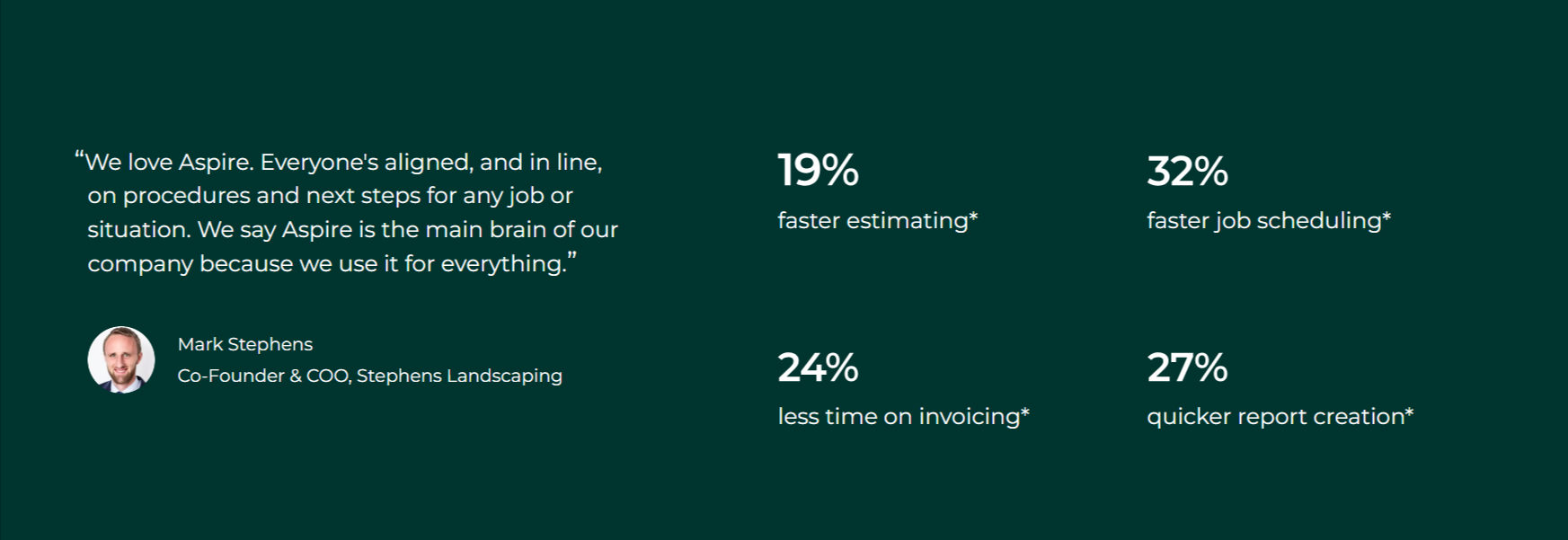
See the features that make it possible:
Contract & proposal management
Aspire’s contract and proposal tool stores every service agreement in a single centralized system.
You can also create and share proposals for lawn maintenance, planting, hardscaping, or chemical application services, then attach proof of insurance, surety bonds, and licensing credentials directly to each one.
This matters because compliant paperwork protects your business when a dispute arises.
Invoicing & payment processing
Aspire automates billing for recurring maintenance contracts and sends invoices individually or in bulk through email or the client portal.
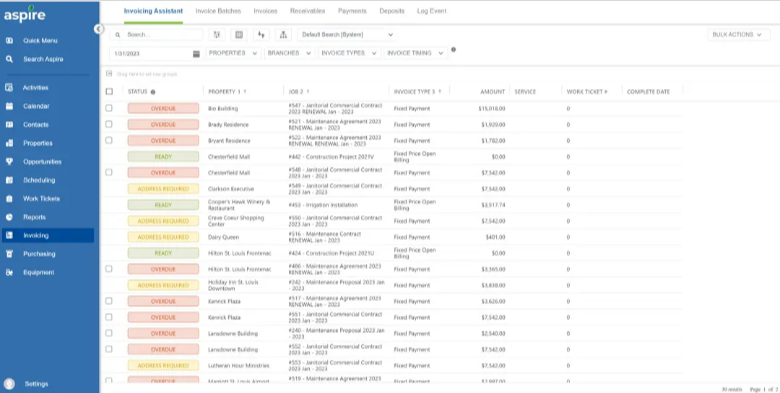
The platform also tracks payments and revenue across multiple service locations, simplifying Mississippi tax filings by providing organized, accurate financial records.
Business reporting & documentation
Aspire’s reporting tool provides timely business performance insights through detailed dashboard visualizations and reports.
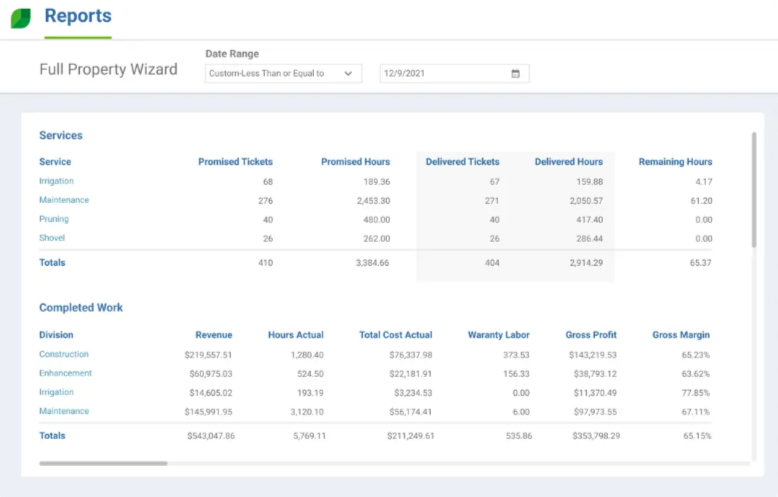
In this context, the tool helps you:
Access job costing data instantly without waiting for end-of-month reports
Track license renewals and bond expiration dates from a single dashboard
Monitor crew performance, material costs, and project profitability in real time
Generate custom reports on financials, sales, and KPIs without manual data entry
Scheduling & job management
Aspire’s scheduling tool keeps operations running on time. You can:
Assign jobs based on employee certifications, ensuring only licensed applicators handle chemical treatments
Use drag-and-drop scheduling to update crew assignments and routes in real time
Track project timelines and crew availability across all active job sites
Sync last-minute schedule changes directly to the crew’s mobile app, eliminating confusion in the field
Over to you
Now, you don’t have to guess any longer. You know the licenses and permits that apply to your services, what each costs, and which mistakes derail other operators before they even start.
Register your business, lock in the right state and local licenses and permits, and launch with the confidence that no city inspector or client dispute can catch you off guard.
Book a demo with Aspire and see how the platform keeps licensed landscaping businesses organized and compliant as they grow.
Disclaimer
This article is for informational purposes only and should not be considered legal or financial advice. While every effort was made to use official sources, you should always verify requirements on the Mississippi government websites.








 866-727-7473
 Schedule Demo
 390 S Woods Mill Rd #300 Chesterfield, MO 63017


